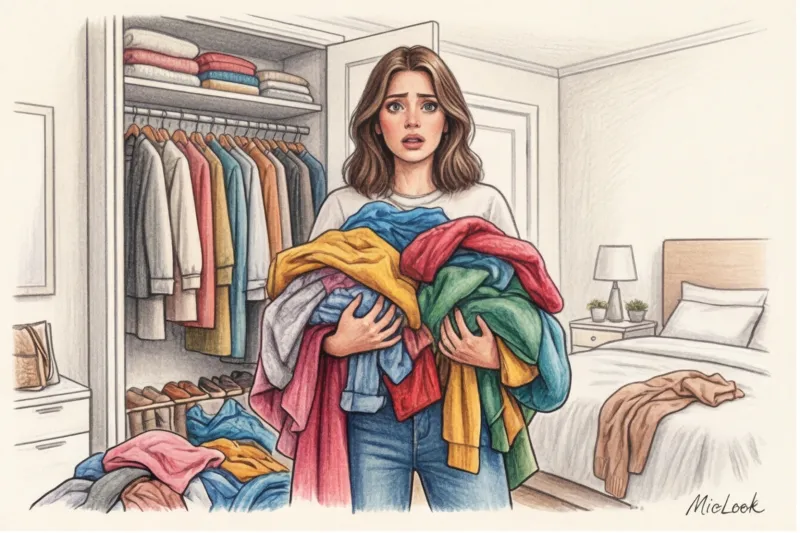
Why the question of "where to donate old clothes" is more important than buying new ones
Did you know that every second, an entire garbage truck of textiles is burned or sent to landfills worldwide? According to a large-scale study by the Ellen MacArthur Foundation (2023), the scale of overproduction has reached a critical point. Today, the statistics are sobering: approximately 85% of all clothing produced worldwide ends up in landfills. We've become masters at buying, but we're completely inept at letting go of things. In fact, what... Where to donate old clothes , shapes your personal style and awareness much more than buying another trendy jacket.
Over 12 years of working as a personal stylist, I've developed an ironclad rule: a cluttered wardrobe isn't a sign of a wealth of choice; it's a guarantee of morning decision paralysis. The psychology of clutter is brutal. Old, outdated, or ill-fitting clothes physically block the formation of your new look. You open the door and see dense rows of hangers, but your brain only registers visual noise and fatigue.
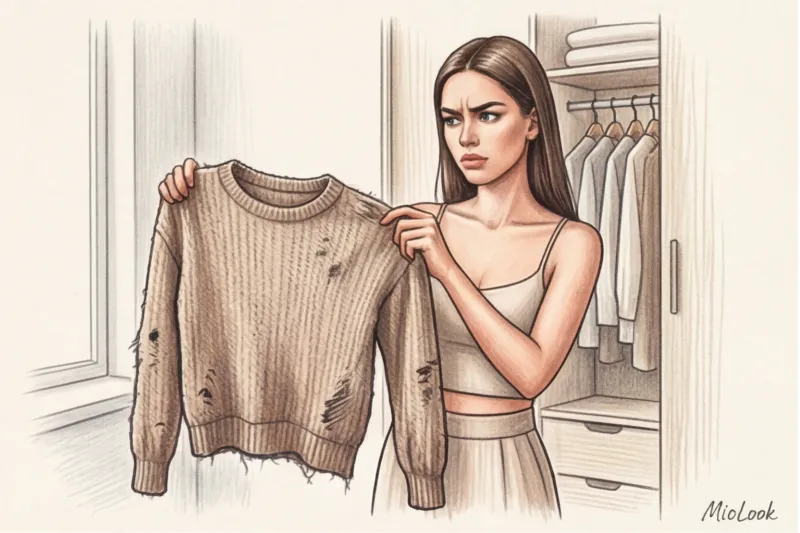
I see clients feeling guilty about unworn items, and it prevents them from moving forward. A €150 cashmere sweater, bought on impulse three years ago, stares reproachfully from the top shelf, forcing them to wear their tried-and-true but boring hoodie again and again out of frustration.
To break this cycle, we need to incorporate the concept of the "life cycle of a garment" into our lives. It's time to acknowledge the fact: your personal responsibility for your clothes doesn't end with the pleasant beep of the checkout terminal or the receipt of your package. Every skirt, T-shirt, and pair of shoes should be properly "offboarded." Purchasing is only the first step. Active wear, proper care, and, finally, eco-friendly disposal are all equally important parts of this process.

There's a direct, inextricable link between eco-friendly decluttering and creating a functional base. It's impossible to build a perfect basic denim wardrobe Or a simple work capsule while your shelves are occupied by stretched-out knits and dresses that "will come back into style someday." By freeing up physical space, you make room for stylistic analysis.
That's why I begin any work on my image with a complete audit and sorting. If you're having a hard time deciding to part with your belongings, I recommend quickly digitize your wardrobe using the app MioLook Simple wear statistics reveal the harsh truth: most of us regularly wear only 20% of our closet contents. The remaining 80% is dead weight, long overdue for conversion from liability to asset by recycling, reselling, or donating to charities.
Stylist's Algorithm: 4 Categories to Sort Before Submission
Sorting out your wardrobe isn't about meditating over every T-shirt, waiting for a spark of joy. It's a precise logistical operation. And like any operation, it requires proper preparation and strict selection criteria. We can't make decisions about recycling or selling items based on sentimental memories. We need a system.
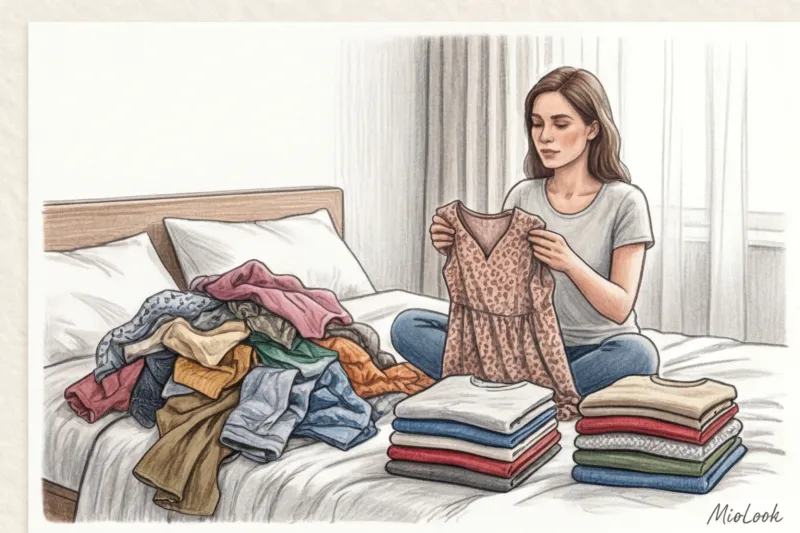
Preparation begins with the washing machine drum. It is important to wash and dry absolutely all items. Before you start sorting. Sorting used clothes is a fatal mistake for three reasons. First, odors and wrinkles distort your perception: even a perfect cashmere sweater will seem like a rag if it's been sitting in a laundry basket. Second, you won't see the true picture of defects (will that coffee stain come out?). Third, neither resale platforms nor charities accept unwashed items—this is a basic rule of respecting the work of others.
There was a turning point in my practice when I realized why my clients were stuck during debriefings. They'd pick up an item and start thinking. To eliminate emotion, I introduced a decision-making matrix.
My professional life hack, which allows me to sort over 200 items in just an hour, is to use a mobile rail and four packs of neon stickers (green, yellow, blue, red). We don't discuss each item. I take it out, we evaluate its condition using the checklist, and then immediately apply the sticker. No stacks on the bed where things get mixed up. Only vertical sorting and color coding. This turns this emotionally taxing process into an assembly line chore.
The main filter in this matrix is The 12-month rule This is a brutal, but the most honest criterion for assessing wearability. If you haven't worn an item for a year (meaning it's missed all four seasons), the likelihood of you wearing it again is close to zero. Your brain will throw up excuses: "I'll lose weight," "maybe I'll wear it on vacation," "it's expensive silk." But the numbers are relentless. If you have a habit of digitizing your closet, you can check this instantly. Girls using MioLook , they simply open the statistics: the app shows, without emotion, that the pants have been worn 0 times in 365 days. This is the perfect reason to part with the item.
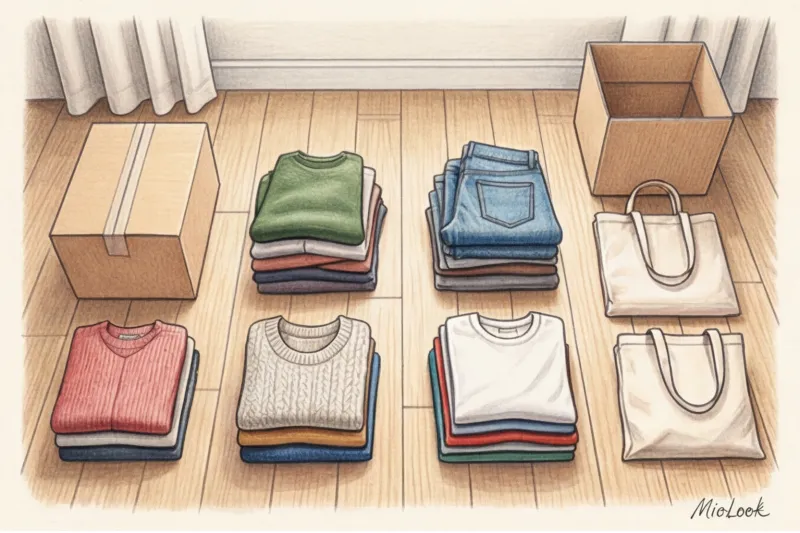
Category 1: Monetization (Resale and consignment shops)
This is where clothes that can make you real money go (under the green sticker). Liquidity is the key criterion here. Mid-range brands (COS, Massimo Dutti, Arket) and premium brands (Acne Studios, Ganni) sell well. Mass-market items like basic Zara T-shirts aren't profitable to sell individually; they're best sold in bundles.
Pay special attention to shoes, bags, and outerwear. They should be in perfect or near-perfect condition. For example, a classic wool coat without signs of wear easily sells for €80–€150, while scuffed leather ankle boots won't sell for even €15.
It is important to distinguish vintage and just old clothes A '90s slip dress with a perfectly cut bias is a liquid vintage piece. And a 2014 collection synthetic blouse in an acid color is simply a dated old item that belongs in the second or third category.
Category 2: Charity (Donation)
Yellow sticker. This is for basic items in good condition. Strict rules: no stains, no holes, no damp odor. Donate items that don't suit your personal style but are completely functional. The foundations are especially in need of clean children's clothing and warm outerwear (down jackets, coats, hats).
There's a strict etiquette for donating items that many people forget. Charity isn't like throwing away trash. If a shirt has just one missing button, a broken zipper pull, or a split underarm seam— This is a reason to transfer the item to the third category. (recycling). People in difficult life situations often don't have the thread or money to go to a tailor. Donate only what you can wear right now and look good in.
Category 3: Recycling (Secondary Raw Materials)
A blue sticker signifies the end of an item's life cycle in its current form. This is the largest category when you're honest. Favorite sweatpants with stretched knees, T-shirts with stubborn deodorant stains, sweaters covered in pilling, and long sleeves with stretched collars go here.
We also mercilessly throw away knitwear with holes, old underwear (washed!), torn tights, and unpaired socks in this category. Unusable household textiles also go here: washed-out bed linens, old towels, and fabric scraps. At sorting stations, these items are shredded into regenerated fiber and turned into industrial cleaning rags or soundproofing for construction.
Category 4: Upcycling and repair
The red sticker is the hope category. This is where your truly favorite items (the 20% of your wardrobe that you wear 80% of the time) go, but they have defects that it is possible and necessary Fix it at the tailor's. A hem that's falling off, pants that are too long, a broken zipper on a perfectly good skirt.
Customization is a huge trend these days. In the spirit of Maison Margiela's collections, visible darning or repurposing an old men's jacket into a cropped jacket transforms a boring basic into a unique statement piece. And here's another stylist tip: before sending a hopelessly damaged designer item for recycling (Category 3), trim off any high-quality hardware. Beautiful horn or metal buttons cost between €3 and €10 each, and storing them in a special box won't take up any space, but it will one day save your new cardigan.
Access to MioLook for €0.99 — one-time payment
A smart AI stylist will analyze your items, find blind spots, and select the perfect looks from what you already own.
Get access — €0.99 onceWhere to sell old clothes for money: a resale guide
Treat your wardrobe like an investment portfolio. According to a 2023 report from analytics agency ThredUp, the global resale market is growing three times faster than traditional retail. When it comes to deciding where to resell old clothes for maximum profit, it's important to understand that successful selling requires a strategy, not just randomly uploading photos online.
Choosing a platform: where your items have the greatest liquidity
You can't sell mass-market and high-end luxury on the same platforms—they have completely different audiences. Divide your items into segments:
- Avito: An ideal ecosystem for quick sales of mass-market (Zara, H&M, Mango) and mid-market items. Easy-to-understand basic clothing, children's clothing, and sportswear are all excellent sellers here.
- Oskelly and TSUM Collect: Niche platforms with strict authentication. Branded bags, premium shoes, and iconic outerwear are best sent here. These platforms charge a commission but guarantee authenticity, which is crucial for items priced over €300.
- Local thrift and consignment shops: An option for those who value time more than money. You deliver your items in a bag, and the store handles the dry cleaning, removal, and sale, taking 30-50% of the receipt.
Visual Merchandising at Home: How to Remove Clothes
I had a particularly revealing case. A client was unsuccessfully trying to sell a classic double-breasted Zara jacket. Her first ad showed the item casually tossed on a yellow sofa, photographed in the evening by the light of a yellow chandelier. The price was €10. She hadn't received a single message for a month. We changed our approach: we carefully steamed the jacket, hung it on a minimalist wooden hanger, photographed it against a smooth white wall by the window (strictly in daylight!), and added a close-up shot of the hardware. The result? The same jacket was sold for €30 on the very first evening.
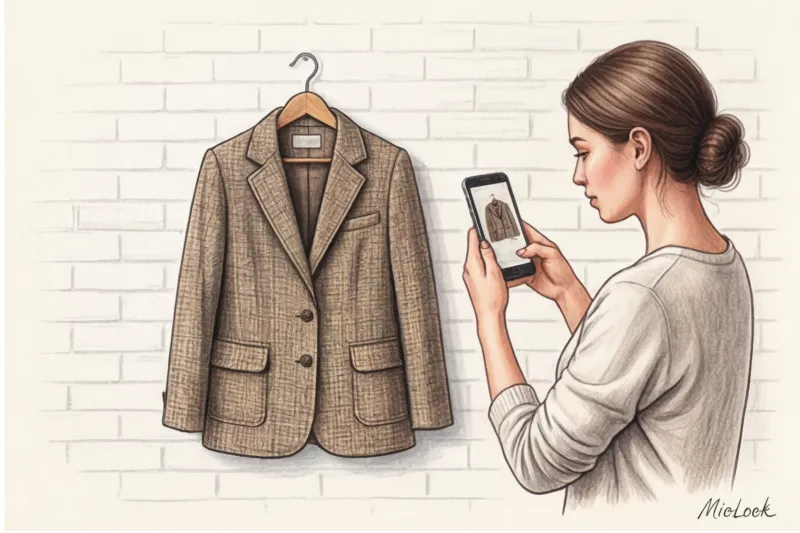
The stylist's secret is simple: the customer pays not for the fabric, but for the image of their future look. Never take off your clothes on the floor or under colorful blankets. The light should be natural (from a window), and the garment should be perfectly ironed.
Pricing formula for weekly sales
The most common mistake is judging an item based on your emotional attachment. To close a deal within 7 days, use a strict algorithm:
- An item with a tag (never worn) — 50–60% of the original price in the store.
- Perfect condition (worn 1-3 times) - 30-40% of retail.
- Good condition with signs of wear - no more than 20%.
Before publishing, research your competitors on the platform. If a similar dress is listed for €50 by five sellers, set the price at €45—the search algorithms and price filters will work in your favor.
Offline Monetization: Swaps and Garage Sales
If online shopping seems too overwhelming, consider garage sales and swap parties. These days, they're not just a way to get rid of excess clothing but also a powerful networking tool. You can rent a rail at a local market for €15-€20, bring your capsule collection, and spend a weekend connecting with people who share your aesthetic. This format is especially effective for vintage and statement pieces with complex cuts, which buyers want to try on before buying.
To avoid confusion about what has already been sold and what is set aside for swap, I highly recommend digitizing this process. Upload items intended for sale to MioLook and create a separate virtual "Going Out" capsule. This will allow you to clearly see how much of your wardrobe you're clearing out and how much budget you'll free up for future, more informed purchases.
Charity Without Illusions: How to Give Away the Right Way
Let's start with the harsh but necessary truth. Donating washed-out underwear, tights with drawstrings, or sweaters with stubborn stains to relief funds isn't saving the planet. It's disrespectful. A toxic myth has become deeply ingrained in society: "Any clothes will do for the poor, they don't have a choice" But the reality of the industry is that funds spend colossal amounts of money every year—sometimes hundreds of thousands of euros—simply on taking your waste to landfills.
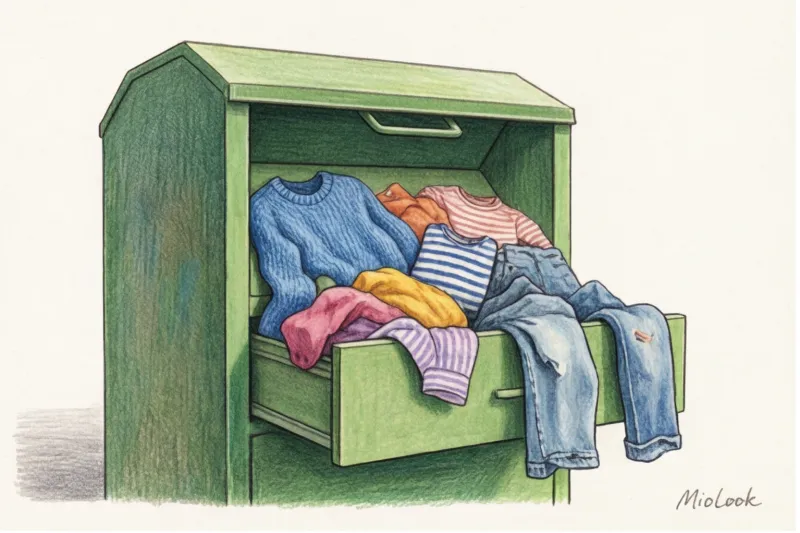
According to statistics from large non-profit organizations for 2023, approximately 30% of the contents of street collection boxes are completely unfit for wear. Charities are forced to pay for the labor of sorters and the logistics of disposing of items that people are too lazy to take to the recycling bin. A stylist's golden rule: if you'd be embarrassed to lend something to a close friend, it definitely doesn't belong in a bag for those in need.
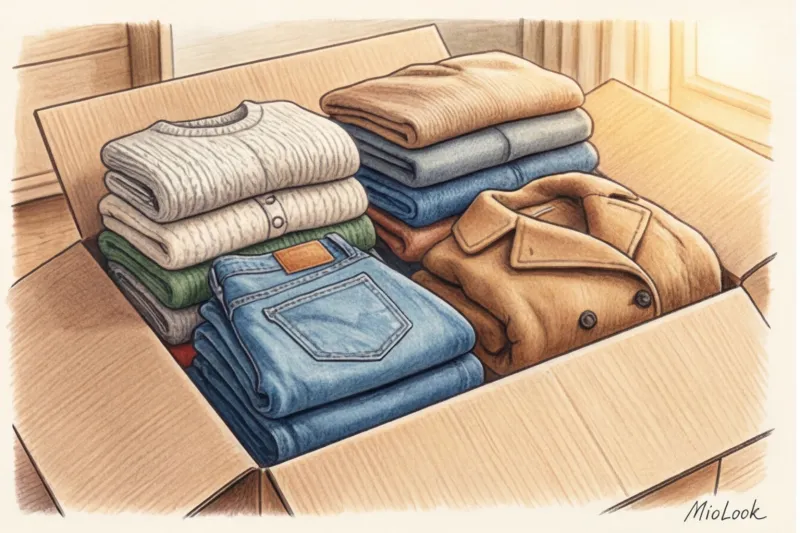
If you're looking for a place to donate old clothes without the risk of them ending up in a landfill, choose a reputable organization. Trusted projects—such as the Vtoroye Dykhanie (Second Wind) and Dobrye Veshchy (Good Things) foundations, or reliable local initiatives—have built a transparent infrastructure. They don't simply hand out items on the street. All donations undergo careful sorting: branded mass-market items in excellent condition go to charity shops (the proceeds finance the foundations' work), while durable basic clothing is sent to regional social welfare centers.
But my favorite strategy is targeted donations. You'd be surprised how much demand there is for a highly specialized wardrobe if you donate it specifically:
- Business attire: Formal suits, shirts, and pencil skirts are essential at transition centers. A classic jacket can be a decisive factor in an interview for someone returning to normal life.
- Warm jackets and sturdy shoes: Down jackets, thermal underwear, and waterproof boots are literally lifesavers in winter. They should be delivered directly to shelters and organizations that help the homeless.
- Wedding and evening dresses: They are accepted by specialized social projects that organize graduations for orphans or weddings for low-income couples.
To break the endless cycle of buying and donating, I recommend taking digital control of your wardrobe. By digitizing your items, MioLook app , you'll begin to see your true needs. Artificial intelligence will tell you that you already have three identical blue sweaters and save you from buying a fourth, which would also end up in the trash in six months.
And one final, purely technical detail: packaging requirements. Why do all the foundations write in all caps in their instructions that bags must be tightly tied? This isn't a whim, but a matter of logistics. The boxes are located on the streets or in vestibules. An untied T-shirt bag is an open door to moisture. If water or snow gets inside, mold will destroy not only your sweater but the entire batch of donations in the container within 24 hours. Furthermore, when unloading, items from open bags spill out, get dirty, and instantly go from the "aid" category to the "rags" category.
Access to MioLook for €0.99 — one-time payment
Start creating perfect looks with the help of artificial intelligence and buy only what you will wear.
Get access — €0.99 onceRecycling Old Clothes: What's Really Happening in the Containers?
For years, mass-market giants have been feeding us a beautiful but dangerous illusion: you bring a bag of worn-out clothes to the mall, receive a discount coupon, and your old polyester dress magically transforms into a new eco-friendly collection. In reality, this was classic greenwatching—trade-in programs served more of a marketing purpose, stimulating new purchases, than an environmental one. Investigations by European journalists using hidden GPS trackers mercilessly exposed the truth: a significant portion of the textiles collected in this way were not sent to high-tech factories, but rather compressed into bales and dumped in giant landfills.
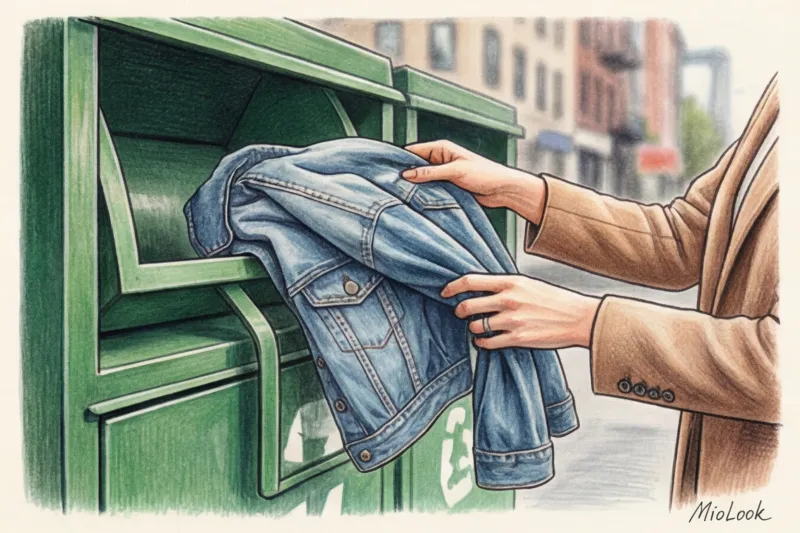
So what's really happening when you search, Where to donate old clothes , and take hopelessly damaged items to specialized containers run by reputable recycling operators? The path of your washed-out, coffee-stained T-shirt is entirely pragmatic. On the sorting belt, it's classified as unsaleable goods and sent to an industrial guillotine. Workers will cut off the fittings and stiff seams, and the main knitted fabric will be chopped into standardized squares. This is how you get wiping rags—an indispensable consumable purchased by the thousands by printing houses, auto repair shops, and factories to wipe machine oil off their machines.
But why not make a new T-shirt out of an old one? In the fashion industry, textile-to-textile recycling remains a technological utopia: today, less than 1% of all clothing worldwide is recycled this way. Recycling's main enemy is blended fabrics. Chemically separating the micro-woven cotton fibers from the polyester is prohibitively expensive (the process costs thousands of euros, € per ton). Therefore, mechanical recycling is used in 99% of cases. fraying Powerful drums with spikes literally tear the fabric into individual threads. This aggressive process critically damages and shortens the fibers. The resulting regenerated yarn is so weak that it cannot be woven into a new shirt without adding at least 60% virgin material. The shredded material is ultimately downcycled, turning it into construction felt, mattress padding, or car sound deadening.
Shoes, however, are a technological nightmare in their own right. A typical modern sneaker consists of 40–65 different components: polyurethane foam, genuine leather, rubber, Kevlar, and plastic. All of this is firmly cemented together with strong adhesives. Automating the separation of such a "pie" into clean fractions is virtually impossible today, and manual labor renders the process economically unfeasible. This is why most old shoes are, at best, shredded and turned into rubber crumb for sports court surfaces, and, at worst, burned as an alternative fuel in industrial furnaces.
Understanding how complex and energy-intensive recycling is completely changes the way we approach shopping. It's much more environmentally friendly to build a well-thought-out capsule wardrobe from the start, digitizing it. MioLook , where you can see how things fit together in advance, rather than hoping that a green recycling bin will wipe out all our impulse purchases.
Where You Shouldn't Donate Clothes: 5 Major Mistakes
The first time I went backstage at a large textile sorting center, the head technologist showed me a pile of damaged items ready to be thrown into the oven. It turns out that donors' good intentions regularly turn into local environmental disasters. Let's look at five fatal mistakes that turn your donation into ordinary trash.
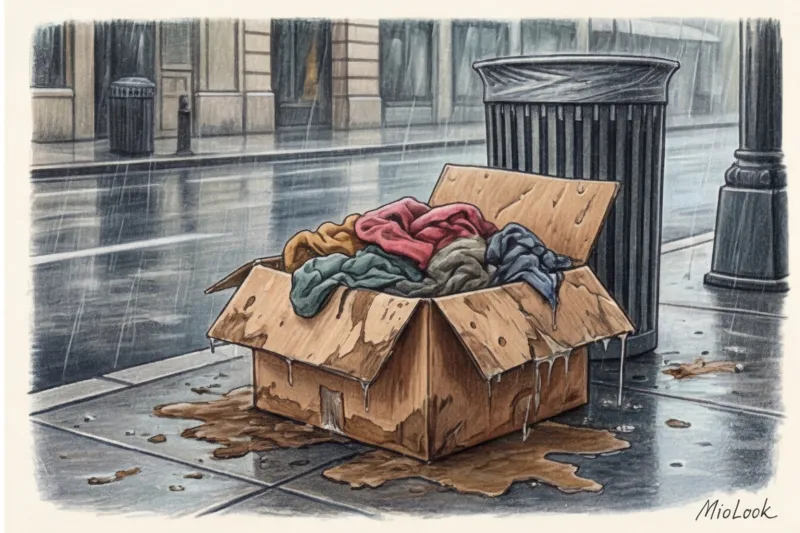
- Leaving bags near trash bins. A bag of neatly folded items left in the yard "for those in need" is a classic utopia. Textiles absorb the odors of decay from neighboring containers within 30 minutes. And the first rain or stray rodents (rats love to build nests in warm knitwear) destroy the items within a couple of hours. Weather and unsanitary conditions leave no chance—it's a direct route to the landfill.
- Sending dirty or wet items. A rule written in the tears of volunteers around the world.
An official warning from an expert: just one damp T-shirt or underdried sports bra can trigger the formation of black mold in a closed container. Spores spread rapidly. A single damp item can force recycling centers to landfill up to 100 kg of potentially usable clothing from an entire container.
- Transfer of items with expired shelf life. Yes, clothing has a lifespan too. Jackets, bags, and pants made of polyurethane (faux leather) last an average of 3-5 years, after which the material undergoes chemical degradation and begins to crumble. If an item starts to crumble in your closet, don't bring it to the box—volunteers will have to clean out the polymer confetti. Inventory via MioLook It's great for tracking the age of your wardrobe: if your faux leather jacket is more than five years old, the system will clearly show that its life cycle has objectively ended.
- Attempt to donate high heels to homeless shelters. Charity is driven by strict functionality. The demands of outdoor life require hours of walking and often the inability to dry clothes. Giving suede stiletto heels or evening sandals to organizations that help homeless people is tactless. They need sturdy, waterproof, flat footwear, such as trekking boots or winter sneakers.
- Ignoring seasonality when transferring directly to small regional funds. Large hubs have warehouses for long-term storage, but local initiatives are suffocated by a lack of space. Bringing summer sundresses in November or heavy sheepskin coats in July is a disservice. Renting every square meter of storage space costs money, and out-of-season items literally eat up an organization's meager budget.
Your ideal image begins Here
Join thousands of users who look flawless every day with MioLook. Digitize your wardrobe and make informed decisions!
Get access — €0.99 onceA Digital Approach: How to Avoid Clothes Hoarding in the Future
Instead of another recycling logistical scheme, let's look at the numbers. A study by the Swedish RISE Institute (2022) found that to fully offset the carbon footprint of one basic cotton T-shirt, it would need to be worn at least 50 times. But textile industry statistics are merciless: the average consumer wears an item only 7-10 times before discarding it. The most environmentally friendly way to solve the recycling problem is simply to avoid buying things that will soon become a burden.
Today's global shift from Fast Fashion to conscious Slow Fashion doesn't require asceticism or a complete abstinence from shopping. It requires modern technology. Digitizing your wardrobe is a process where you transfer the contents of your shelves to your smartphone, stop guessing in the mirror, and start working with pure data.
Once your entire closet is laid out in plain sight, a clear picture emerges. You may sincerely believe that your style is all about romantic flowing dresses, but objective statistics will show that 80% of the time you wear straight jeans and architectural jackets. This is a profound understanding of your real, not imagined, self. "style formulas" radically reduces the number of impulse purchases during seasonal sales.
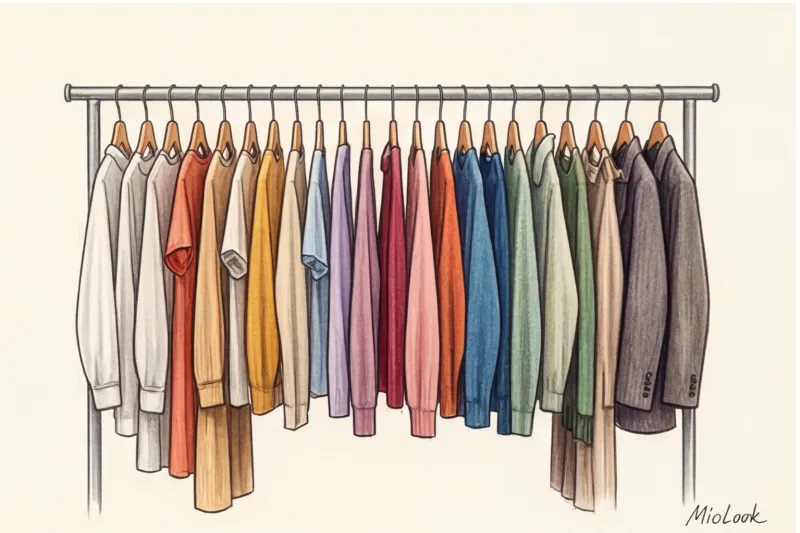
There is a sobering metric in the stylists’ arsenal that I highly recommend everyone use – wear analytics, or Cost Per Wear (CPW) This is your main psychological stopper at the checkout. The formula is simple: divide the item's price by the realistically expected number of purchases.
Mathematics proves the absurdity of fast fashion: a trendy €30 mass-market top that you wear to two parties (CPW = €15) costs your budget five times more than a quality €150 cashmere sweater that you wear 50 times during the cold season (CPW = €3).
Of course, it's impossible to keep all the closet combinations in your head, and this is where AI integration comes in. I've long since accustomed my clients to a digital planning format. For example, through Smart wardrobe in the MioLook app You can take a photo of a potential purchase right in the fitting room. The algorithm will instantly analyze your database and show you which items will pair perfectly with this new item.
The golden rule of tech-shopping: if the app can't create at least three or four functional looks with a new item from what you already own, it stays on the hanger in the store. This filtering ensures you buy only items that fit 100% into the capsule collection. As a result, your items will last a long time, meaning you won't have to search for information on where to donate old clothes in your city for a long time.
Checklist: An Eco-Friendly Weekend Wardrobe Cleanup Plan
Theory without practice is just entertaining reading. Over 12 years of working as a personal stylist, I've developed an immutable rule: the wardrobe decluttering process shouldn't be spread out over several days. Otherwise, it will inevitably devolve into a paralyzing chaos of half-unpacked boxes, where evening dresses lie side by side with stretched-out T-shirts.
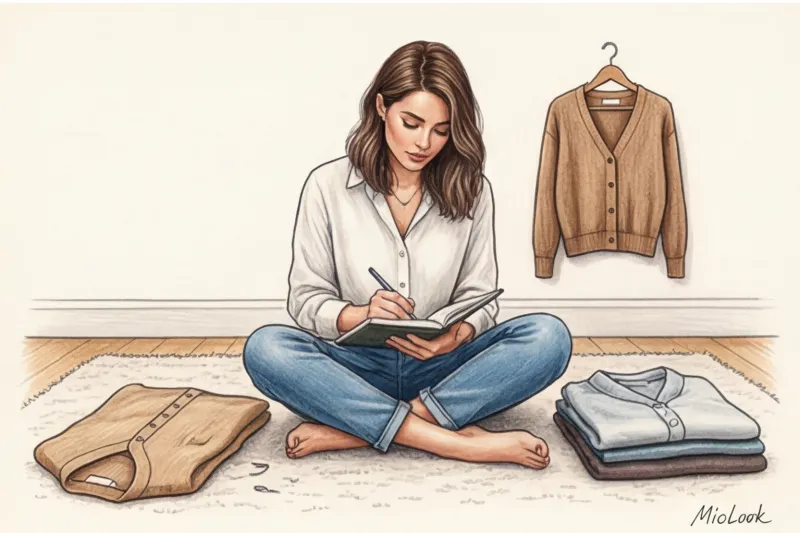
I suggest you act like true professionals. Take a screenshot of this step-by-step process, book the next Saturday in your calendar, and begin the process of completely clearing out your wardrobe. I promise, the feeling of relief afterward will be incredible.
Step 1: Preparation (boxes, bags, steamer, phone for photos)
The success of any logistics operation depends on the preparation of the "infrastructure." Empty your bed or large dining table—this will become your main sorting center. Purchase heavy-duty trash bags with a capacity of at least 120 liters (thin ones will tear under the weight of denim) in advance, and assemble three or four rigid cardboard boxes for the safe transportation of shoes and bags.
My personal productivity secret: be sure to have a powerful steamer ready, clean your phone's camera lens, and turn on a rhythmic playlist. Your emotional state and technical preparedness directly impact how quickly you'll part with your things.
Step 2: Ruthlessly sort by the "4 categories" matrix
At this stage, we physically remove everything from the closet. Absolutely everything, including those hidden in covers on the top shelves. We pick up each item and spend exactly 10 seconds making a decision. We sort them according to the familiar matrix: monetization, charity, recycling, and upcycling/renovation.
The main pitfall here is creating that treacherous fifth pile of "I'll think about it." Experience shows: if you hesitate for more than a minute, the item has already outlived its usefulness in your closet. Your updated wardrobe should consist solely of 100% certainty.
Step 3: Resale Photoshoot
The fatal mistake 90% of my clients make at the initial stage is carefully placing the items they've selected for sale in a bag, thinking, "I'll take photos next weekend in good light." Believe me, that bag will sit in the corner of the hallway until next year.
Act now. The item is already in your hands, and the steamer is hot. Hang a heavy cardigan or jacket on a simple wooden hanger, find a plain wall opposite a window, and take 5-6 candid shots (general view, close-up shots of the label with the composition, the hardware, and any minor imperfections). Set a reasonable price: for example, basic jeans in perfect condition quickly sell for €15-20, while a cashmere jumper from COS or Massimo Dutti can easily sell for €45-60. Post your ads immediately.
Step 4: Travel to containers/post offices
Bags of discarded textiles have a magical ability to take root in your entryway. Once sorting is complete, the bags should be tightly double-knotted. Open online maps ahead of time and decide where to donate old clothes, plotting the most logical and shortest route.
First, we stop at pickup points or post offices to send the first parcels to customers from resale platforms. Then we head to the approved charity boxes, and finally, we drop off the rags in specialized recycling containers. Finish the job the same day.
Step 5: Digitize the rest
Congratulations, you've freed yourself from visual noise and the heavy burden of guilt over idle items! But to avoid returning to the starting point of total clutter in six months, we need to implement a working system. The remaining, perfectly filtered core of your wardrobe needs to be digitized.
Take photos of your favorite basic and accent pieces (either on yourself or in a layout format) and upload them to MioLook According to a 2023 study by the University of Leeds, consumers who regularly keep digital records of their belongings reduce impulse purchases by 34%. The app will visualize your everyday color palette and allow you to create new looks with just one click, while enjoying your morning coffee.
Sustainable style doesn't necessarily mean a wardrobe made entirely from recycled organic cotton. It's a functional system that works for you every day, where every item earns its value, and any excess is disposed of in a timely and sustainable manner.
Guide Chapters
What to Make with Old Clothes: Premium Upcycling
Forget boring patchwork rugs. We'll show you how to transform high-quality but outdated items into designer pieces.
Where to Donate Old Underwear: A Recycling Guide
The bottom drawer of a dresser often causes stress when sorting through a wardrobe. We'll explore how to eco-friendly dispose of old bras, socks, and nylon tights.
How to return items: advice from a stylist
How to say goodbye to clothes to make room for a new style. A stylist's tips for mindful and eco-friendly wardrobe decluttering.
Swap parties: exchanging old clothes for new ones
Tired of storing things you don't wear? Find out how fashion swaps work and how to update your wardrobe without spending a single euro.
Where to Donate Old Shoes: A Guide to Eco-Friendly Recycling
Recycling shoes and bags is much more complex than recycling clothing. Learn how to properly declutter your wardrobe and dispose of old accessories sustainably.
Removing Old Clothes from Your Home: The Best Services
Sort out your closet, but the bags of clothes are still sitting in the hallway? We'll tell you how to get rid of the dead weight without trips to collection centers.
How to get rid of unnecessary things without regrets
A full closet, but nothing to wear? We explore the psychology of clutter and learn how to eco-friendly say goodbye to clothes you no longer wear.
Clothing collection bins: how to find the nearest one
Get rid of unnecessary items with a positive impact on the environment. A practical guide from a stylist on preparing clothes and finding collection boxes.
Where to sell clothes for money: resale and consignment shops
Storing unworn items is a waste of money. Learn how to properly declutter your wardrobe and where to sell old clothes profitably.
Where to donate clothes to charity: foundations
Not sure how to properly part with unwanted items? We'll tell you how to properly clear out your closet and which trusted organizations offer free donations.
Torn items: where to recycle clothes
Are you saving torn t-shirts and sweaters for the dacha? Find out how to properly dispose of damaged items and where to find textile recycling centers.