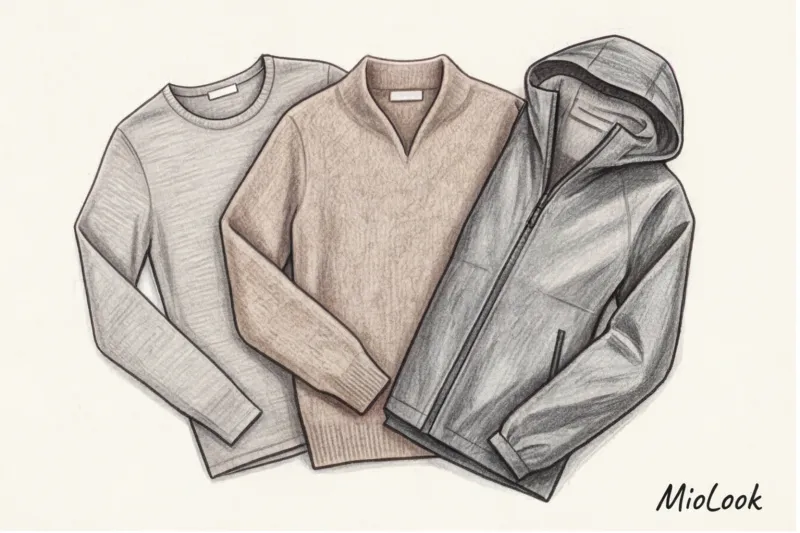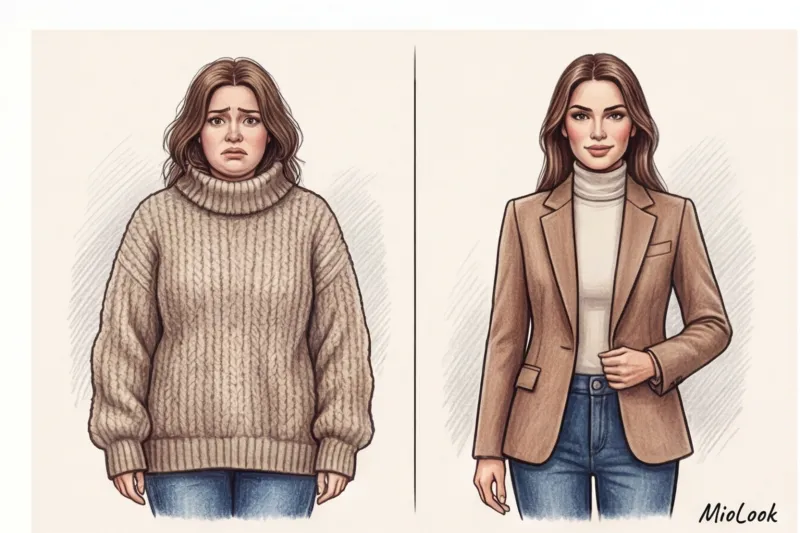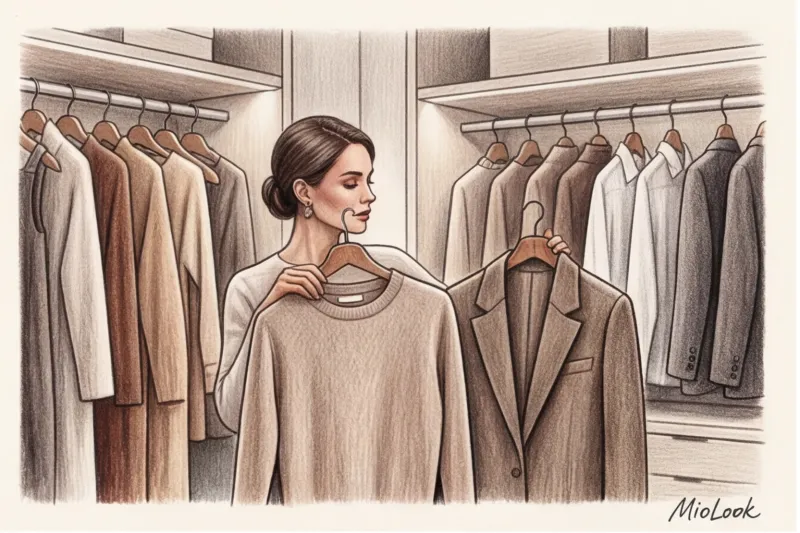
You know what question I get asked most often as the cooler season approaches? "Julia, how can I wear three layers without freezing and looking like a square chest of drawers?" Most women are afraid of layering because previous experiences have left them feeling clumsy and bulky.
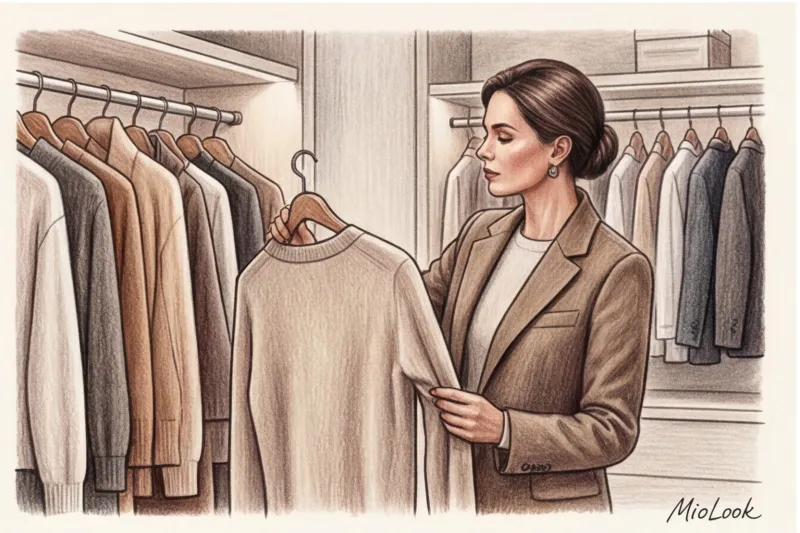
We discussed the basic principles in more detail in The complete guide to layering: how to cover up your figure in style But today I want to go further and talk about premium wardrobe architecture. The concept of micro-layering, where the key role is played not by the number of items worn, but by their weight, texture, and innovative composition.
Many people think that Basic items for layering — just an old cotton T-shirt and any loose sweater. This is a fatal mistake that ruins elegance. Let's figure out how to create stylish "armor" that protects, slims, and looks expensive.
Style Architecture: Why Layering Basics Are an Investment, Not a Waste
The difference between the "cabbage" effect and premium micro-layering lies in the physics of fabrics. Mass-market fabrics often offer us items that are beautiful on their own, but are completely unsuited to working together. Cheap acrylic or stiff polyester create colossal friction, cling to each other, and add two centimeters of bulk with each layer.
I had a telling case in my practice. A client, a top manager at an IT company, loved wearing oversized cotton sweaters over classic shirts. The silhouette was bulky. By replacing this heavy garment with a sheer cashmere turtleneck under a structured jacket, we visually "shed" 5 kilograms in ten minutes in the fitting room. She felt warmer, but her bulk was reduced by a third.
The Three-Layer Rule: The human brain interprets up to three visible layers of clothing (e.g., turtleneck + shirt + jacket) as a "sophisticated, thoughtful, and elegant look." Layers four and five almost always relegate you to the "sloppy" category.
By investing in the right foundation for layers, you're investing in your psychological comfort. As we discussed in the article about basic wardrobe for an executive , clothes should be your support, and not a source of irritation due to sleeves constantly riding up.
Stylists' Secret Rule: How to Mix Textures Correctly
Now I will destroy the main myth that glossy magazines have been spreading for years. Never use a basic cotton t-shirt as a first layer under knitwear. Why? Cotton has a high coefficient of friction and is excellent at trapping moisture. Wearing it under a wool sweater creates a sandpaper effect—the fabrics don't slide, the top layer bunches up, and you feel cramped.
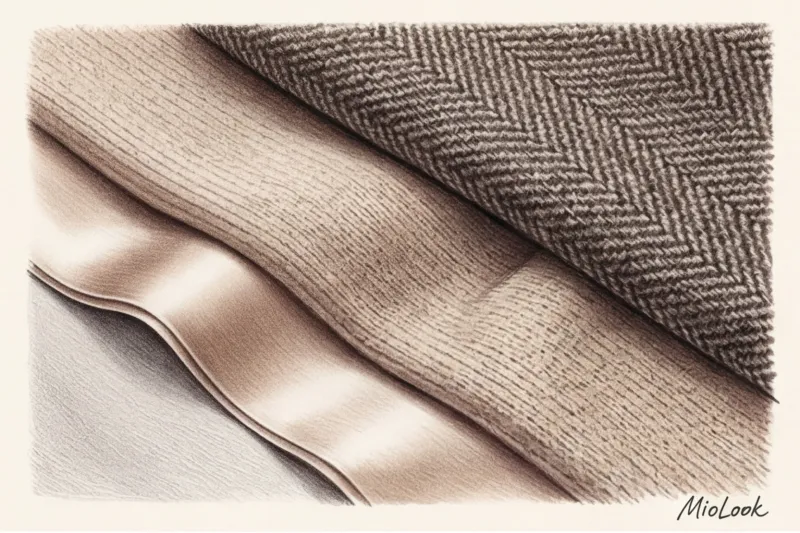
According to research by the Japanese corporation Toray (2023), which creates smart textiles, the ideal first layer should be less than 1 millimeter thick and have a completely smooth surface. Italian artisans from Loro Piana and Brunello Cucinelli have been using this principle for decades: the bottom layer should always flow.
Remember the formula for flawless layering: Smooth → Textured → Dense.
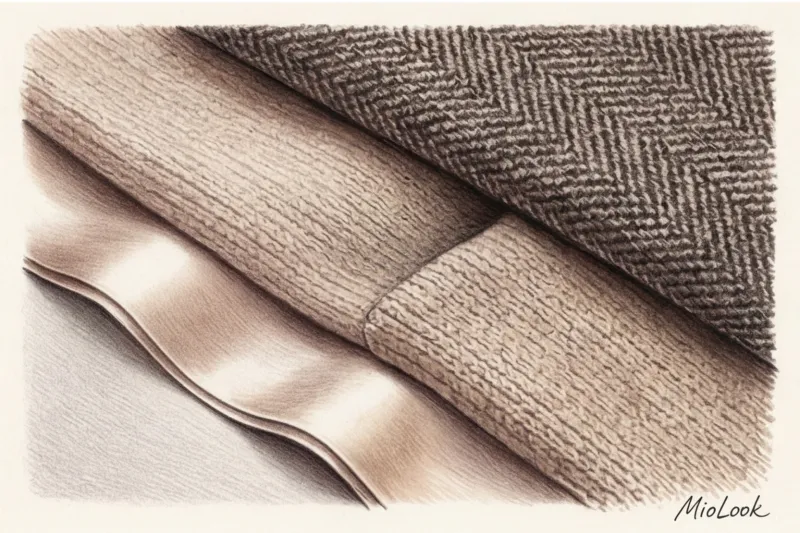
- Smooth (towards the body): Silk, viscose, cupra, micro-merino. Provides slip.
- Textured (middle layer): Cotton poplin, cashmere, fine wool. Provides warmth and breathability.
- Dense (top layer): Tweed, thick suiting wool, leather. Holds its shape and gathers the silhouette.
Another marker of a classy look is the collar and cuff rule. The bottom layers should protrude no more than 1.5–2 centimeters from the top layers. This creates a subtle, graphic outline that highlights your attention to detail.
Your perfect look starts here
Join thousands of users who look flawless every day with MioLook. A smart algorithm will help you create your capsule look.
Get access — €0.99 onceLayering Capsule: 10 Premium Essentials
Let's put together a skeleton that will cover 90% of your needs during the cold and transitional seasons. When choosing these items, we focus on a semi-fitted cut. Overtly oversized layers will ruin any attempt to wear a jacket over them, and overly tight pieces will choke your breath.
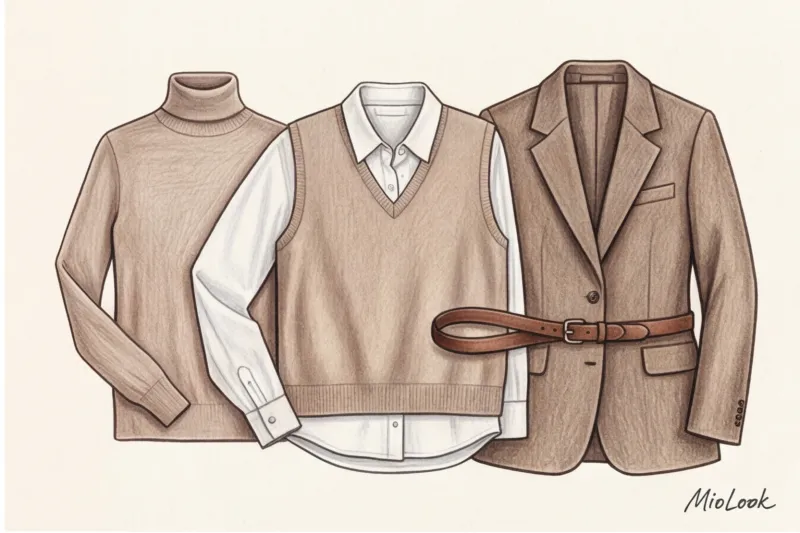
Calculate the cost of these items using the Cost-per-Wear formula. A premium merino turtleneck for $200 that you'll wear 60 times per season (CPW = $3.3) is far more cost-effective than a $40 acrylic dud that'll end up in the trash after the third wash.
First Layer: Second Skin (Items 1-3)
These items come into contact with the body. Skimping on them is a crime against your own comfort.
- Silk or viscose top with wide straps. It's not for warmth. It's meant to allow a shirt or thin jumper worn over it to slide freely without catching on your underwear.
- Ultra-thin merino wool turtleneck. Look for the "up to 16 microns" label or the "silk + cashmere" composition. It should be as thin as 40-denier tights, but as warm as an oven. It's perfect for layering under dresses and shirts.
- Smooth long sleeve top made of high-tech thermal fabric. With a deep U- or V-neckline, it's indispensable when you need to layer a silk blouse discreetly.
Second Layer: Structure and Geometry (Things 4-7)
This is where we create the character of the look. The second layer should have enough room to accommodate the first layer, but not hang loosely.
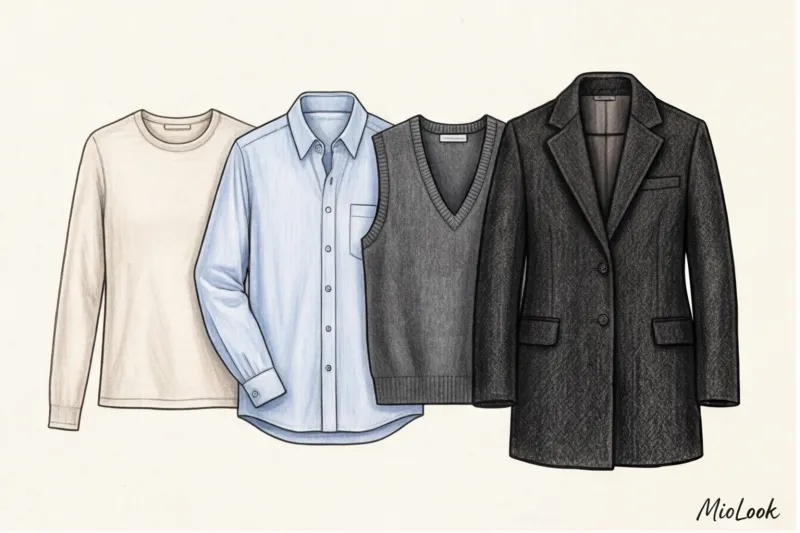
- A thick shirt made of poplin or oxford. Personal test drive: I made clients wear shirts under jackets for eight hours at the office. The conclusion? Only heavy cotton maintains its collar shape by evening. Soft viscose, under the weight of the jacket, gives way by lunchtime, turning you from a boss into a tired intern.
- Cashmere or wool vest, straight cut. A brilliant layering invention. It keeps your chest and back warm without adding bulk to your sleeves, making it easy to layer over any jacket.
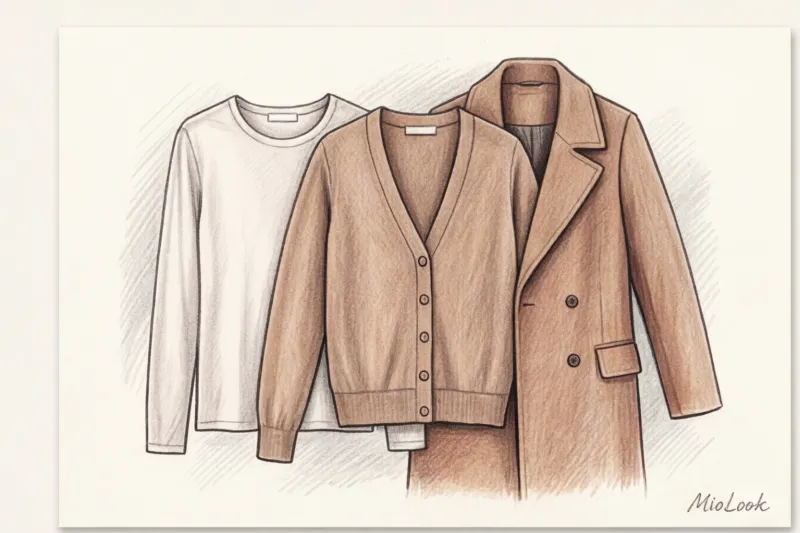
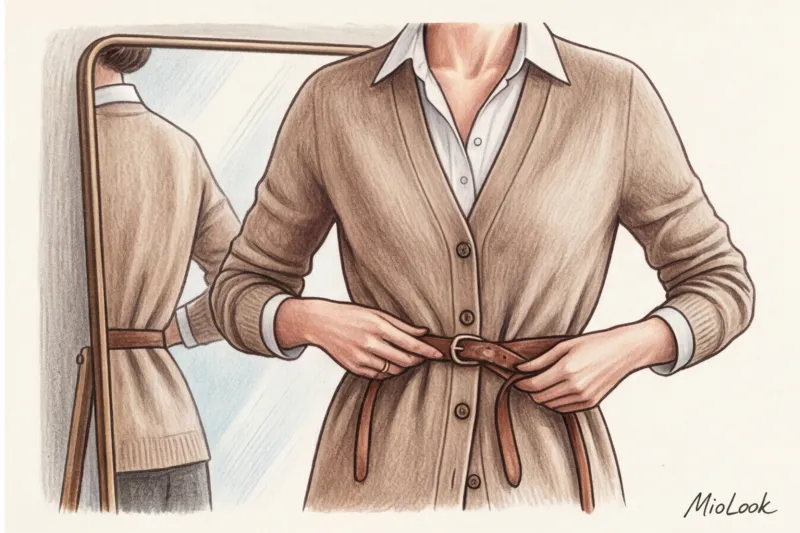
- Plain knit cardigan with buttons. Strictly V-neck (it stretches the neck when worn with a shirt underneath). Avoid voluminous braids if you plan to wear it under a coat.
- A loose yet structured jacket. With a defined shoulder line. If the shoulders are soft, layering will create a drooping Pierrot silhouette. You can read more about this in the guide about creating a capsule wardrobe.
Third Layer and Accents: Completing the Look (Items 8-10)
The final touches that bring the whole structure together.
- Classic loose trench coat. Pay attention to the armhole - it should be deep enough to allow you to raise your arm when you are wearing a turtleneck and jacket.
- Woolen robe coat (double-face). Double-face technology (without a rigid lining) makes the coat flexible. It gently hugs your layers without creating a rigid spacesuit.
- Thin leather belt (1.5 - 2 cm). A vital tool! Layering makes the waist appear smaller. A belt worn over a jacket or long cardigan brings the figure back into proportion.
Perfect Micro-Layering Formulas: 3 Statement Looks
Theory without practice is dead. Let's see how these things work together in real life.
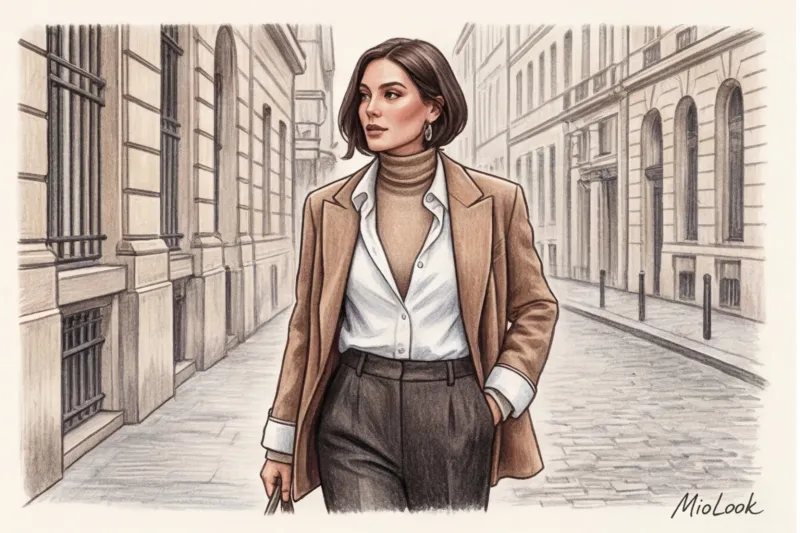
Office Formula: Strictness with a Twist
Silk top + thick shirt + structured jacket.
Put on a top, then a shirt over it (unbutton the top three buttons to create a vertical line). Put on a jacket on top. The key trick: pull the shirt cuffs out from under the jacket sleeves and fold them up, overlapping the edge of the jacket sleeve. This instantly adds 100 style points and keeps the sleeves at the desired height.
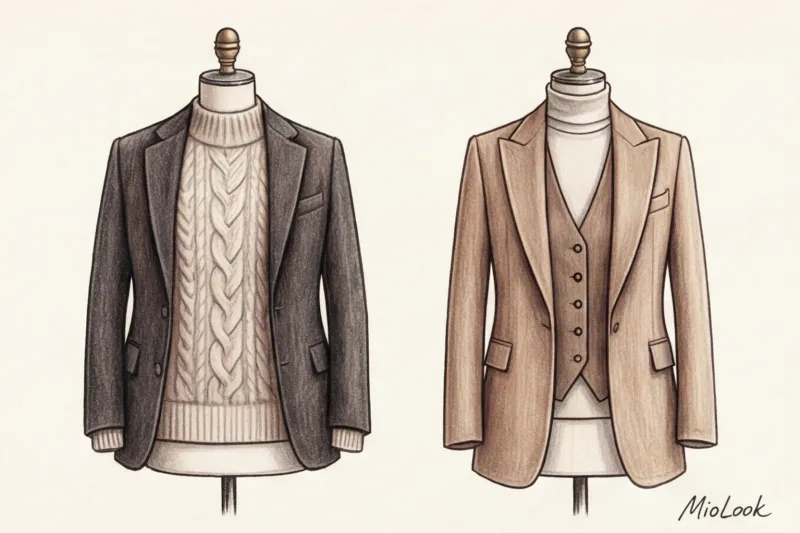
The Formula for Casual Chic: Weekend in the City
Thin turtleneck + open shirt + wool coat.
Perfect for an exhibition or a late brunch, a turtleneck provides warmth, and a heavy shirt (denim or corduroy) works as a lightweight jacket indoors. If you want to visualize this look before buying, try smart wardrobe feature in MioLook - this will save you a lot of time.
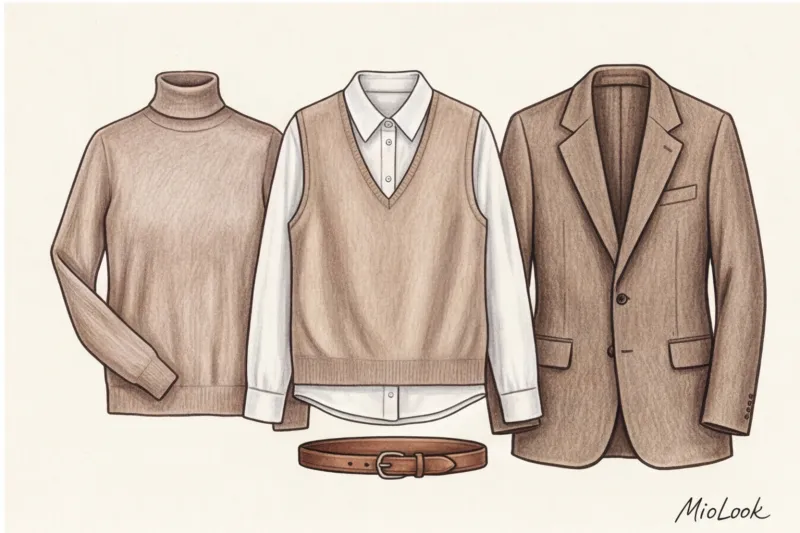
Cold Weather Formula: Elegant Insulation
Long sleeve + cashmere vest + jacket + belt over the jacket.
When it's freezing outside and you need to look put-together at the office, a vest will add texture and warmth, while a belt will tie all the layers together into a feminine hourglass silhouette.
Ready to get started?
Try the MioLook free plan—no commitments required. Artificial intelligence will help you create dozens of layered looks from your items.
Get access — €0.99 onceChecklist: Mistakes That Turn a Layered Look Into a Messy Face
Even perfect things can go wrong. In my 12 years as a stylist, I've seen hundreds of attempts to create a look "like Pinterest" that fell flat against the basic laws of geometry.
- Error 1: The layers are of the same length. If your shirt, vest, and jacket all end at the same hip line, you've cut your figure in half and widened your hips. Layers should end at different heights, creating a cascade.
- Mistake 2: Thick under thin. Never wear a heavy shirt under a thin viscose jumper. The buttons, seams, and pockets will show through. The rule is always: from thin to thick.
- Mistake 3: The armhole of the top layer is too narrow. I'll be honest: micro-layering It doesn't work If there's not even a millimeter of air between the layers, you'll look out of place. If your jacket is bursting at the seams on your biceps because of the sweater underneath, you won't look stylish, but rather like you've outgrown your clothes.
Getting Started: A Smart Base Building Action Plan
There's no need to rush to the store and buy all 10 items right now. Start with an honest inventory. Pull out all your "basic" items. Get rid of T-shirts with crooked side seams, sweaters with pilling, and shirts with collars that look more like rags.
Invest in the perfect base layer first—that delicate merino turtleneck or slip-on top. The fit of this base layer determines the overall look. According to a 2024 McKinsey study on mindful consumption, women who switch to premium base layers reduce impulse purchases by 40% because they finally feel comfortable in what they already own.
Elegance doesn't require sacrifice or discomfort. It simply requires an understanding of fabric physics and a few clever decisions. Create your stylish armor wisely, and let your wardrobe work for you, not against you.