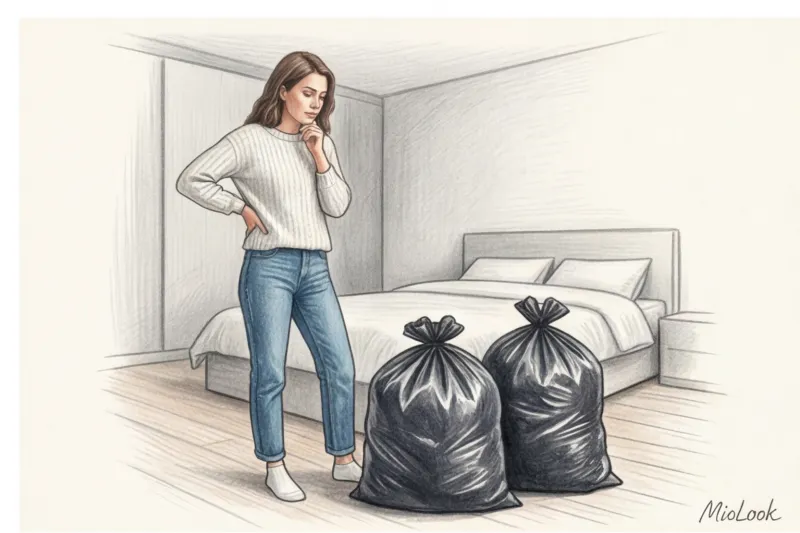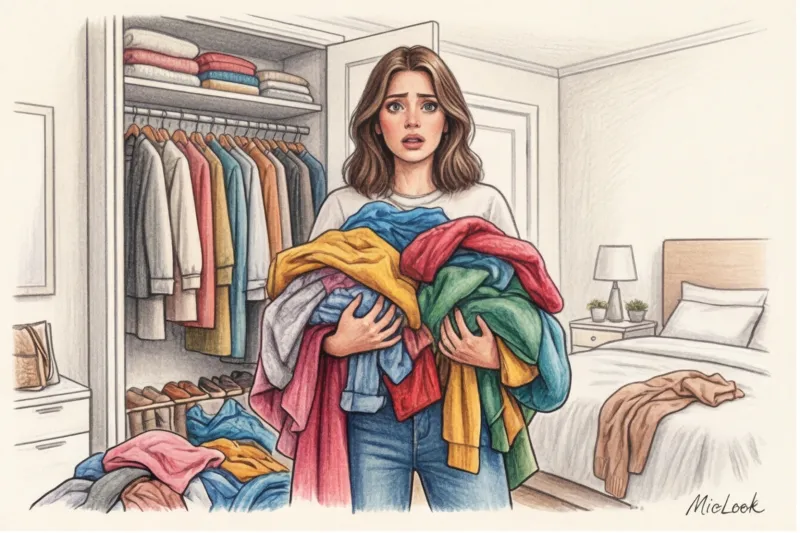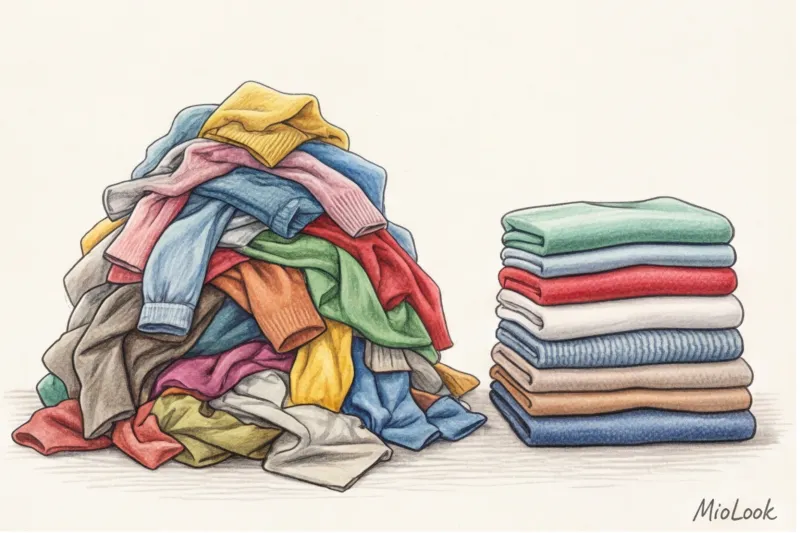
You open your closet, and a veritable avalanche of fabric literally spills out onto you, leaving you with nothing to wear again. Sound familiar? In my 12 years as a personal stylist, I've seen this scene hundreds of times. We're used to savoring the process of buying new things: the rustling bags, the boutique smell, the anticipation of a new look. But when it comes time to part with our clothes, we simply stuff them into a black trash bag and, with a sense of accomplishment, toss them into the nearest bin. And then we wonder why our new style just won't gel.
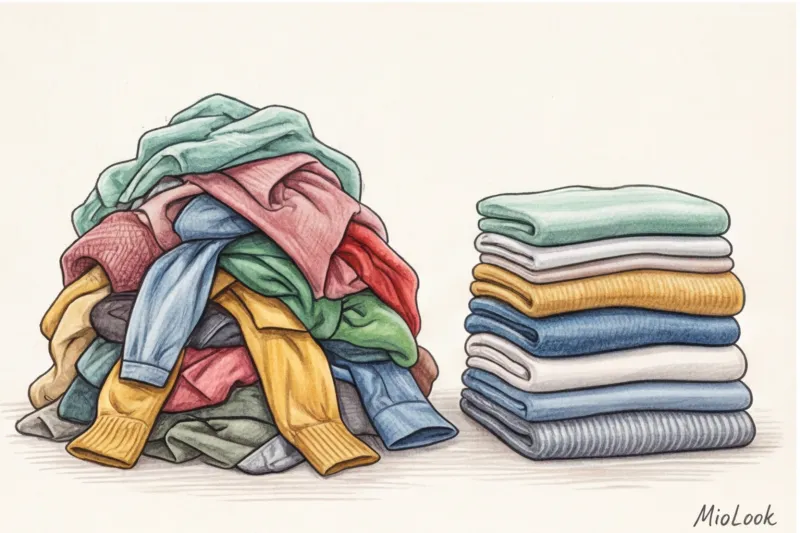
I call the process of saying goodbye to things “wardrobe offboarding.” in what condition should I return my items? Donating to charity or recycling directly reflects your respect for your own style. We wrote more about global textile routes in our guide. Where to donate old clothes: recycling rules , and today I want to talk about the other side of this process.
The Magic Container Illusion: Why Every Detail Matters
Many sincerely believe that the metal box on the street corner has magical powers. Throw a stretched-out sweater in there, and somewhere on the other side of the world, someone in need will gratefully put it on. Unfortunately, the reality of sorting centers is harsh.
According to a 2023 report by the Ellen MacArthur Foundation, every second, a truckload of textiles is burned or sent to landfills worldwide. Of all the clothing donated to charities, only 10–15% is resold or distributed to those in need. The rest, if not properly prepared, becomes expensive waste.
One of my clients, Anna, kept a luxurious €400 cashmere cardigan on the shelf for three years with a huge moth hole in plain sight. "I'll give it to charity, it's cashmere after all!" " she said. I had to explain to her gently but firmly: no one would mend this hole. For the foundation, this cardigan was a financial burden due to disposal. Until we "released" this item according to the recycling rules, Anna couldn't afford to buy new basic knitwear.
"The main rule for a stylist: respect your old clothes as much as new. How you end the life cycle of an item in your closet shapes your fashion karma and makes room for conscious choices."
If you feel like your closet is overflowing but don't know where to start, I recommend reading this guide. How to Quickly Digitize Your Wardrobe: A Weekend Plan.
Access to MioLook for €0.99 — one-time payment
A smart AI stylist will select the perfect look based on your real wardrobe.
Get access — €0.99 onceA Tough Wardrobe Audit: Charity vs. Recycling
Before you take your bags to the dumpster, stop kidding yourself. Ask yourself one ruthless question: "Would I wear this right now if I were offered €100?" If the answer is "no" due to the item's condition, it's headed straight to recycling, not to a new owner.
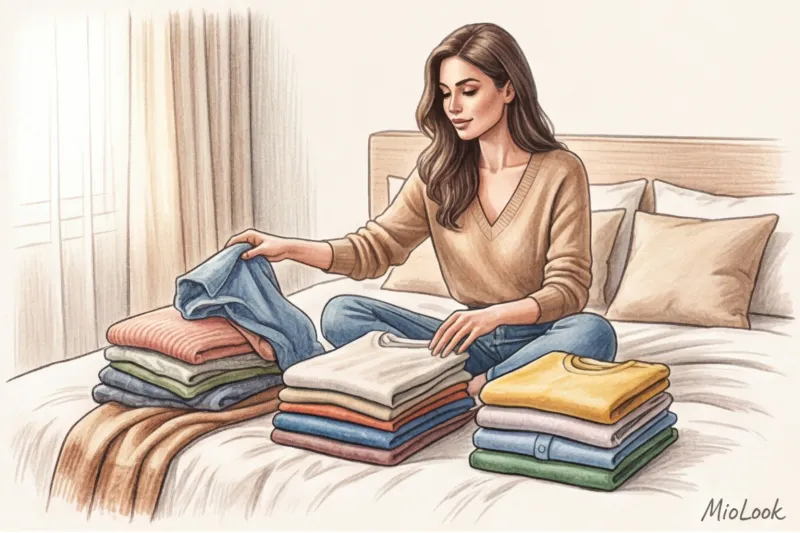
I always divide things into two strict categories:
- Category A (Second hand): The garment is in perfect to very good condition. No pilling, no fraying on the collars and cuffs, and no discoloration under the arms.
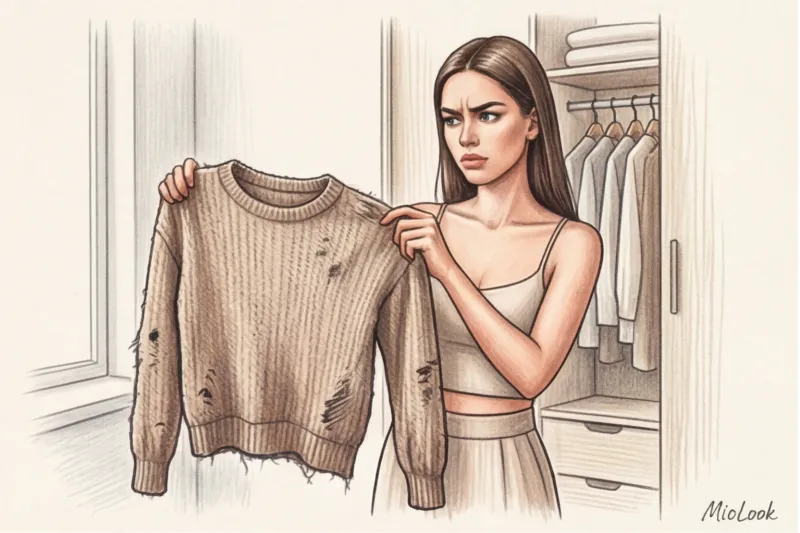
- Category B (Recycling): Cotton, linen and synthetic shirts with stubborn stains, holes or heavy wear.
I'm sharing a professional stylist's lifehack: how to check an item for critical wear? Hold a T-shirt or dress up to a bright light (like a window). If you see the fabric become translucent at the elbows, knees, or between the thighs, the fiber structure has deteriorated. You shouldn't give such an item to someone else.
What won't they accept? Blended fabrics in terrible condition. A T-shirt made of 70% polyester and 30% cotton is incredibly difficult and expensive to recycle. If it's stained, it's, unfortunately, destined for the landfill.
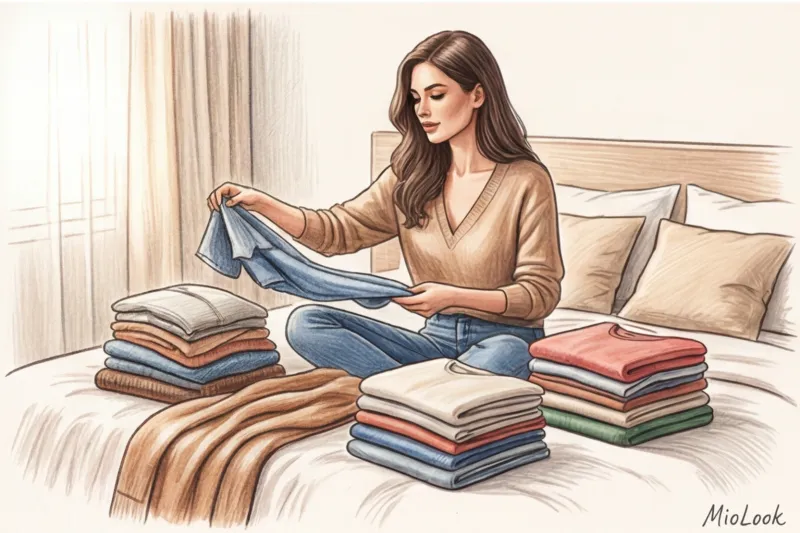
Stylist's checklist: what condition to put items in containers in
Believe it or not, a single missing button reduces an item's chances of being reused by almost 80%. Fund staff (like large foundations like Oxfam or Charity Shop) simply don't have the time to deal with minor repairs.
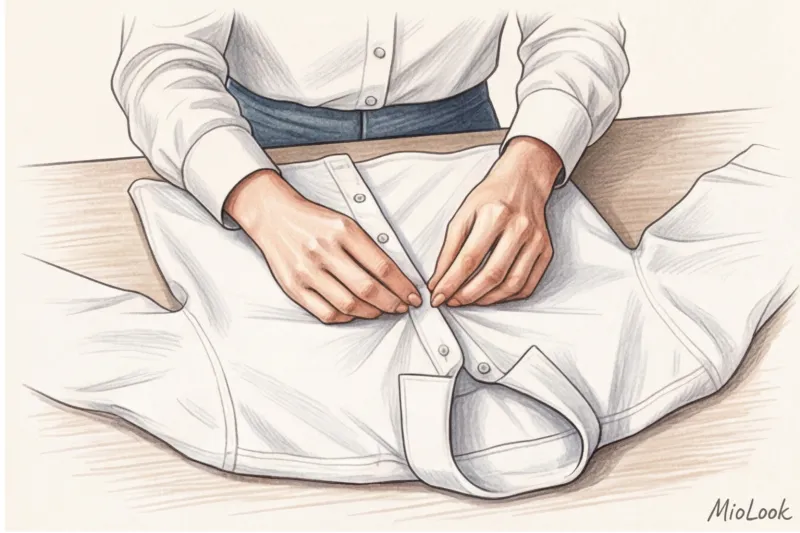
Here is my mandatory preparation protocol:
- Washing is the base. Items must be freshly washed. If you're donating perfectly good pants that have been sitting in your closet for two years and have absorbed the smell of old dust, they may be rejected. For information on how to properly condition difficult fabrics before donating, read this article. How to wash linen clothes so they don't shrink.
- Total cleanout of pockets. A forgotten paper napkin, a wet antibacterial mask, or an open lipstick in a jeans pocket during baling can destroy a dozen other good things nearby.
- Fittings control. Fasten ALL buttons, zippers, and hooks. An exposed metal zipper on a jacket will act like a saw, tearing through the delicate silk and knit fabrics of its neighbors in the container.
- Micro-repair. Sewing on a button takes 3 minutes. Trimming the lint with a machine takes 5 minutes. This minimal effort ensures that your denim basic capsule The one you no longer like will find a new happy owner and won't be wasted.
Ready to get started?
Try MioLook's free plan for smart wardrobe organization—no commitment.
Get access — €0.99 onceToxic "aid": what should absolutely not be placed in boxes
I'll be harsh here, but it's necessary. The myth that "someone needs it more, even with a hole in it" is a toxic attitude. Disposing of outright trash under the guise of charity shifts the responsibility and costs of disposal onto non-profit organizations.
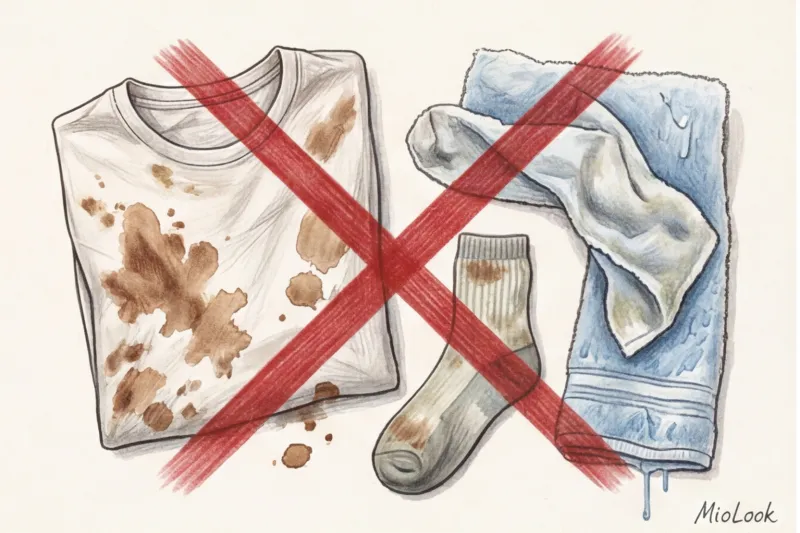
The first time I visited the sorting warehouse of a well-known foundation, I was shocked. Do you know what a sorter's worst enemy is? Humidity.
A single, slightly moldy T-shirt or jeans, left half-dried after washing and thrown into a closed box, can contaminate up to 50 kilograms of nearby clothing with mold spores within a couple of days! All of this waste goes straight into the oven. This is no exaggeration; it's the physics of closed spaces.
What else is strictly prohibited (unless it's new items with tags):
- Underwear, socks and tights (basic hygiene rules).
- Swimsuits (even if you wore them once on vacation).
- Clothing with traces of construction paint, fuel oil, machine oil, or blood. Such stains cannot be recycled.
Special training: shoes, bags, and status accessories
Shoes and accessories are subject to entirely different laws of physics. If you simply throw two sneakers into a bin, they're guaranteed to separate on the sorting belt. Even artificial intelligence can't find the right pair in a mountain of three tons of shoes.
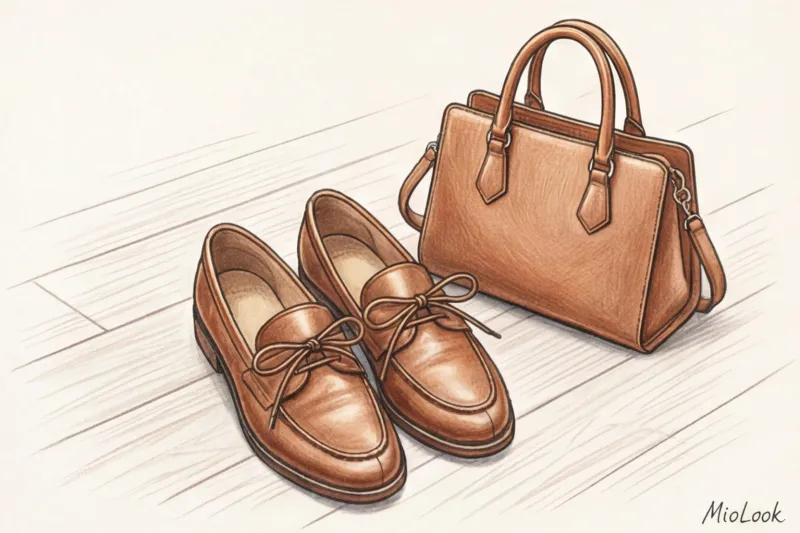
Always tie your shoes together with laces. If you don't have laces (for example, loafers or ballet flats), wrap them tightly with masking tape or a tight rubber band. This rule saves thousands of pairs from becoming litter.
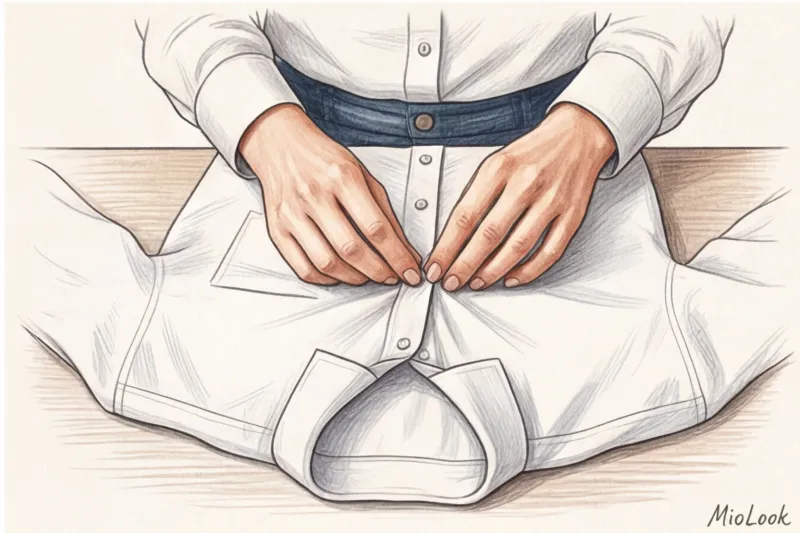
Before donating, lightly stuff bags with craft paper or newspaper to prevent them from losing their shape under the weight of other items. It's best to wrap accessories in cloth.
Now, about high-status items. If you're getting rid of a vintage silk scarf, a luxury leather belt, or a bag priced between €300 and €1,000, don't throw them in a general, anonymous box. It's better to donate such items to specialized resale platforms or niche vintage projects. In a general store, the delicate silk will simply tear, and the item will lose all value.
The Psychology of Breakups: How to Let Go and Embrace a New Style
The hardest part of offboarding is overcoming the "I paid a lot for this" syndrome. This cognitive bias causes us to keep dresses we hate in our closets simply because they cost €200.
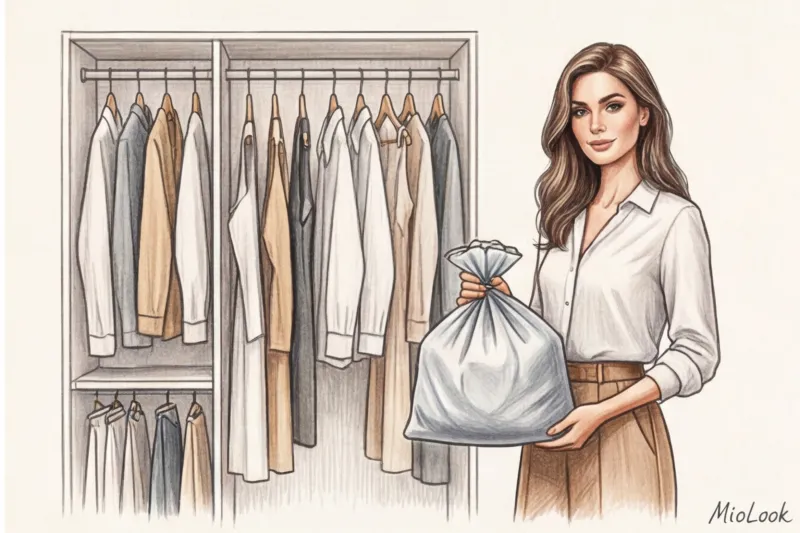
One day, a client and I were going through her wardrobe. She was clutching a tight jacket she'd bought five years ago for a previous job. "But it's expensive!" "She was almost in tears. I suggested she perform a beautiful transfer ritual. We carefully steamed the jacket, cleaned it with a roller, folded it beautifully into a clear, heavy-duty bag, and attached a sticker: "Dear Jacket, Seeking an Ambitious Hostess for Interviews".
Packaging has a therapeutic effect. Use sturdy, transparent bags. Label the bag separately as "Rags/Recycling" and "Clothing in Good Condition." This will not only save fund workers hours of work but also put a beautiful end to your relationship with these items.
Physically clearing out space in your closet instantly clears your mind. You suddenly see clearly what you really need: maybe it's cottagecore summer capsule , or maybe strict office capsule for a new stage of life.
Part with your clothes gracefully. Every properly donated item is more than just an eco-friendly gesture. It's an act of respect for yourself and your future, more conscious style.
Your perfect look starts here
Join thousands of users who look flawless every day with MioLook. Organize your wardrobe in one click.
Get access — €0.99 once