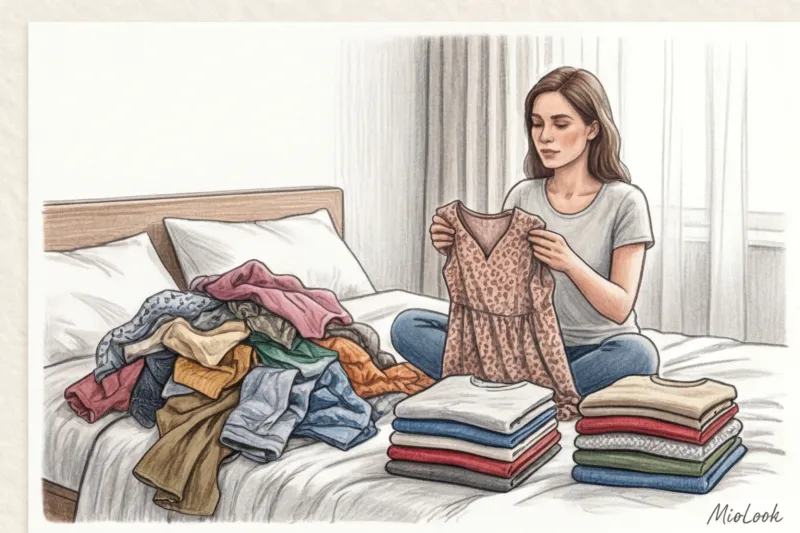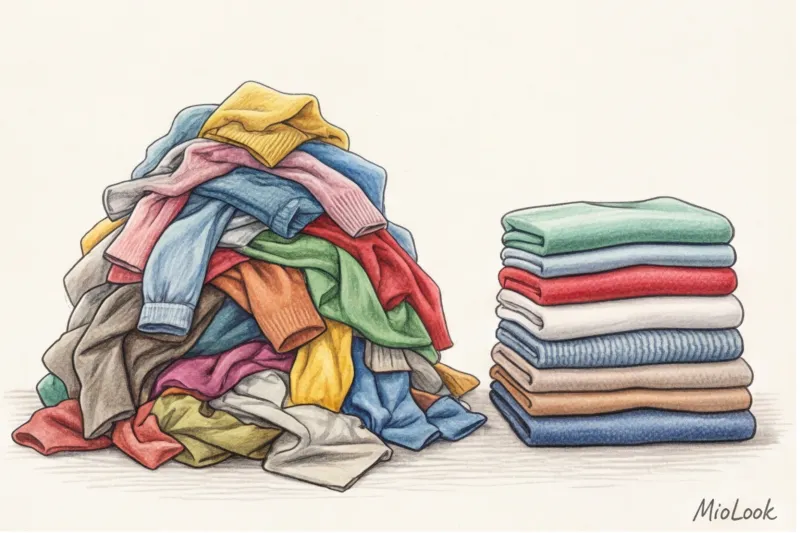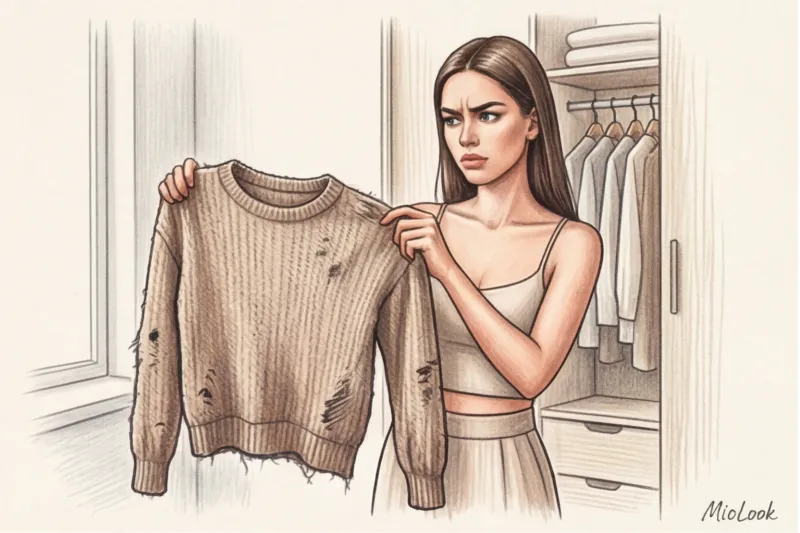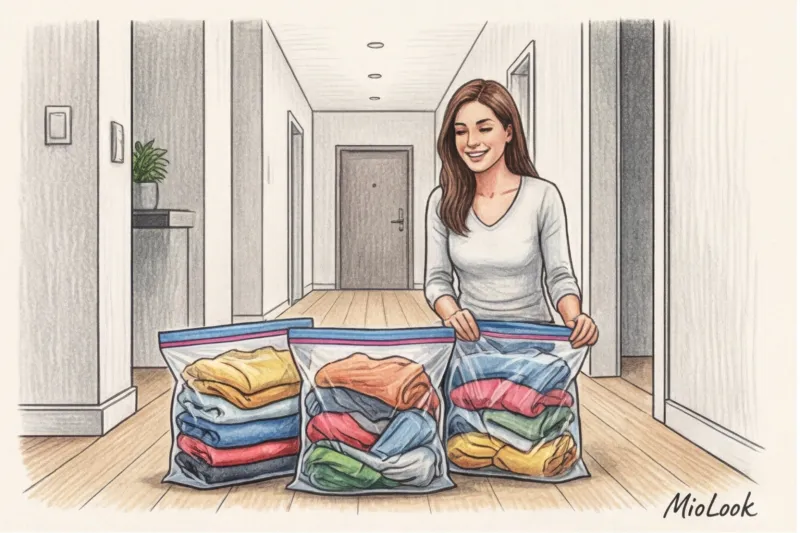
Have you ever seen those huge blue IKEA bags stuffed to the brim with sorted clothes in your hallway or bedroom for six months? You've done a thorough inventory, put away the stretched-out H&M sweaters and outdated Zara dresses, but they're still there. You trip over them every day, feeling a little guilty. Over 12 years of sorting through wardrobes, I've discovered a clear pattern: not one of my clients has been able to establish a new personal style while the old clothes were still physically in their apartment.
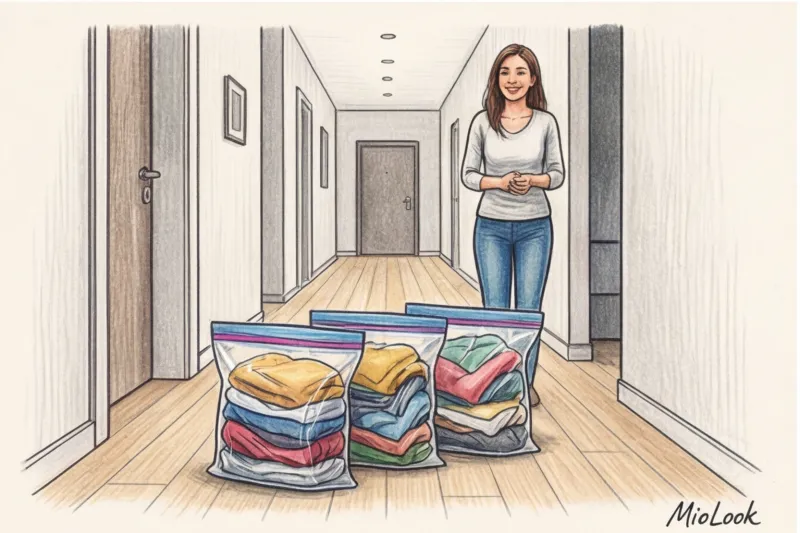
That's why removing old clothes from the house — it's not just a tribute to eco-trends, but a radical and highly effective tool for psychological relief and style development. And while we've already covered global textile routes in detail in our The complete guide to recycling old clothes , today I want to talk about "last mile" logistics. How to get rid of dead weight without wasting your weekends, stress, and gas on trips to collection points.
Why removing old clothes from your home is the key to smart decluttering
My client Anna's story is very revealing. We put together a stunning new work capsule, but a month later she admitted she still found herself pulling on old jeans and a shapeless cardigan in the morning. Why? Because four bags of "donation" clothes blocked her view of the mirror, reminding her every day, "I haven't finished the job." Once we called an eco-taxi courier, the problem was solved within two hours. The next day, Anna wore her new suit to the office for the first time.
There's a "zero friction rule" in styling and organizing. If getting rid of things requires finding a special container on the other side of town, lugging heavy items into the trunk, and then sorting everything in the rain near the dumpster, you won't do it. Your brain sabotages complex tasks.
As long as sorted items remain within the perimeter of your home, they poison the space. Psychologically, your closet still feels "full," even if the items are in bags on the floor. Only by handing over responsibility to a logistics service right at your door do you put an end to the decluttering process.
Access to MioLook for €0.99 — one-time payment
A smart AI stylist will select the perfect look from your remaining favorite items.
Get access — €0.99 onceHow to organize the removal of old clothes from your home: algorithm and logistics
The mechanics of most collection services (whether charities or commercial eco-taxis) are incredibly simple: you submit a request on the website, choose a convenient time slot, pack your items, and a courier picks them up from your door. No travel or backbreaking.
However, there's a nuance that many people forget: volume. A courier won't come to your place just to pick up a single T-shirt bag with two t-shirts. Logistics costs money. The average minimum volume for a pickup is 5-10 kg of clothing, or one full 120-liter construction bag. If you have less, it might be worth teaming up with a friend or neighbor to collect the required weight.
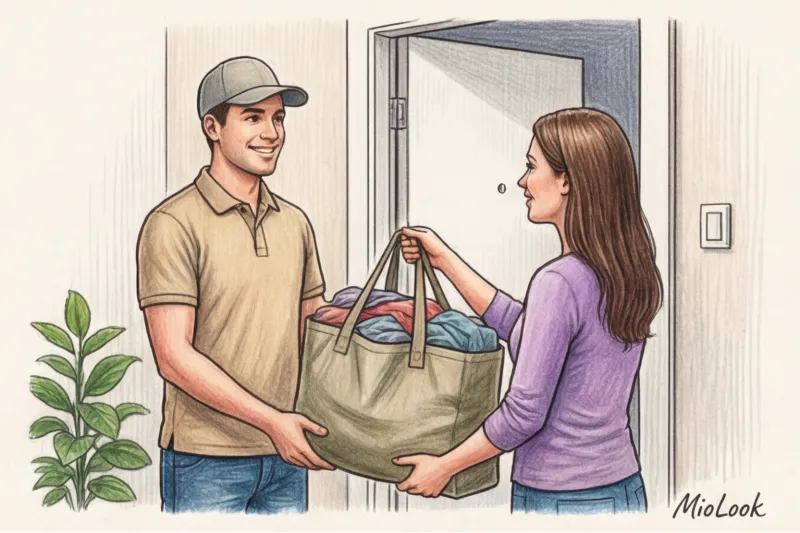
Paid vs. Free Eco-Taxis: What's the Difference?
In my practice, clients often complain: "Why should I pay €10-15 to have my things taken away? I'm donating them to charity!" Let's explore this mechanics.
- Free removal: Large foundations are willing to take items for free only if the items are truly large (15-20 kg) or if they are highly liquid items in perfect condition that they can sell quickly.
- Paid removal: Paying for the removal of textile waste and rags is a completely normal European practice. You pay for the courier, the gas, and, most importantly, the subsequent sorting and recycling of unsaleable mass-market items. This is your fair eco-contribution for years of consuming fast fashion.
Where do the items go: charity, second-hand, or recycling?
When the courier picks up your bags, their journey has just begun. According to statistics from major European sorting organizations (such as Oxfam and similar organizations), clothing is divided into three main categories:
- Charity and second-hand (about 15-20%): Items in excellent condition are sold at charity shops. These sales cover the logistics and labor costs of sorting.
- Direct charity (about 20-30%): Basic, warm and practical clothing without defects is sent directly to those in need.
- Recycling and rags (up to 50% or more): Stretched T-shirts, stained and pilled items are chopped into wiping rags for factories and auto repair shops, or disassembled for regenerated fiber (for furniture stuffing and building materials).
The Resale Illusion: Why It's More Profitable to Hand Over Mass-Market Items to Couriers Than to Sell Them
Now let's move on to the most pressing issue. I constantly hear this myth: "It's a shame to throw it away. I'd rather slowly sell all my old H&M, COS, and Zara items on resale platforms and recoup some of the money." Let me shatter this illusion with some basic math.
According to the report Ellen MacArthur Foundation (2023) on the life cycle of textiles, fast fashion items lose up to 70% of their value the moment you cut off the tag. About 80% of the average woman's wardrobe waste consists of basic mass-market items, which have absolutely no secondary liquidity.
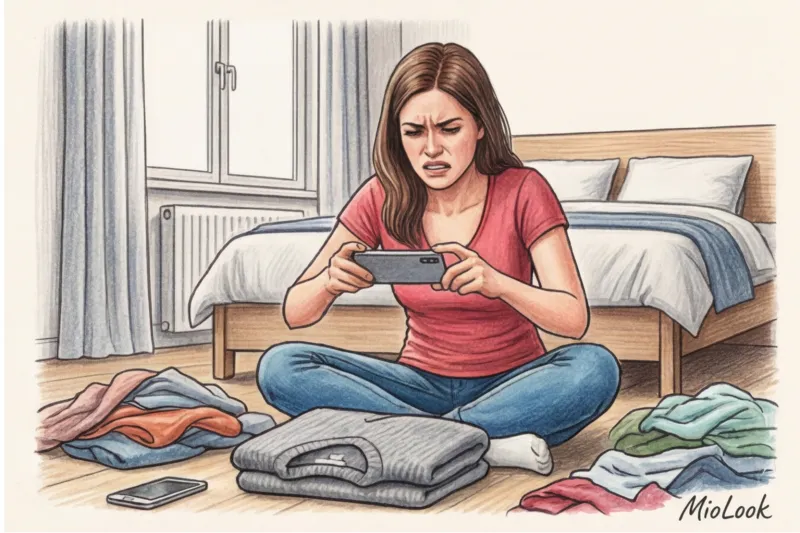
Let's do the math. You want to sell a blouse from H&M for €5. To close the deal, you need:
- Iron the item and take good photos in daylight (15 minutes).
- Measure the back length, sleeves, shoulder width and write a description (10 minutes).
- Answer questions from potential buyers (“Can I have a photo of myself?”, “Will you give it to me for €3?”) (10 minutes).
- Pack your items and walk to the departure point (20 minutes).
So, you're wasting almost an hour of your personal time. If your hourly rate is, say, €25, then selling a blouse for €5 puts you in the red. Plus, you're left with emotional burnout and an apartment that's become a waiting room.
"Economically and psychologically, it's a hundred times more profitable to pay a courier €10 to remove four bags of old clothes than to spend six months stumbling over them trying to 'earn' pennies by selling off unsold items."
What is really costs Selling? Luxury, premium brands, high-quality outerwear, shoes in perfect condition, and leather bags. Everything else is mercilessly collected and sent to a collection service.
Your perfect look starts here
Join thousands of users who look flawless every day with MioLook, investing time in themselves instead of sorting through clutter.
Get access — €0.99 onceStylist checklist: how to prepare your items for the service's arrival
To ensure the removal goes smoothly and your items are truly useful or recycled, they need to be properly prepared. There are strict rules for this, too.
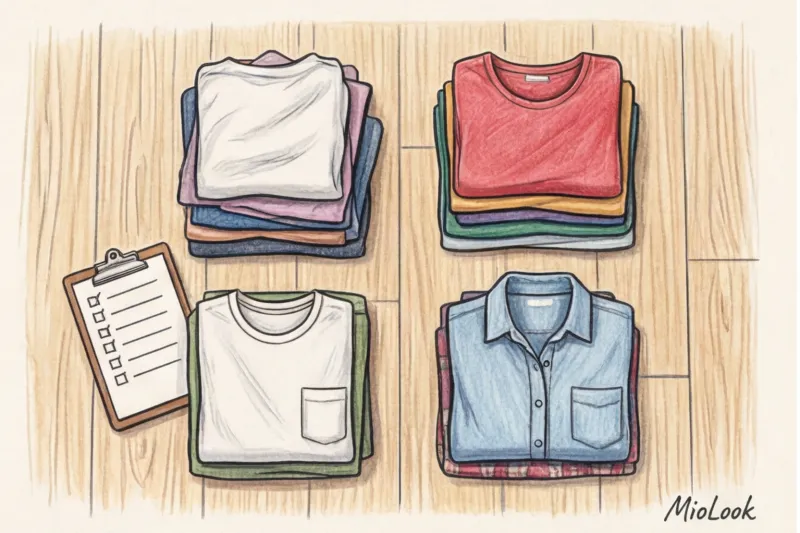
1. Washing: an absolute must-have
There's a pernicious myth that "anything goes for recycling; they'll grind it up anyway." This isn't true. Remember: even items you throw away for recycling need to be washed. If you put a damp sports shirt in a bag, it will become moldy in a confined space within a couple of days. At the sorting center, one such moldy item can contaminate the entire 100-kilogram bale with spores—and the whole thing will go straight to the landfill. No one will wash your clothes at the factory.
2. Sorting before delivery
Different services have different rules, but in most cases, you don't need to separate good clothes and rags into separate bags—the sorters will still sort everything manually. Just make sure there are no receipts, headphones, or paper napkins left in your pockets (they will crumble and ruin the fabric).
3. Proper packaging
Thin 30-litre garbage bags or branded supermarket bags are the worst choice.
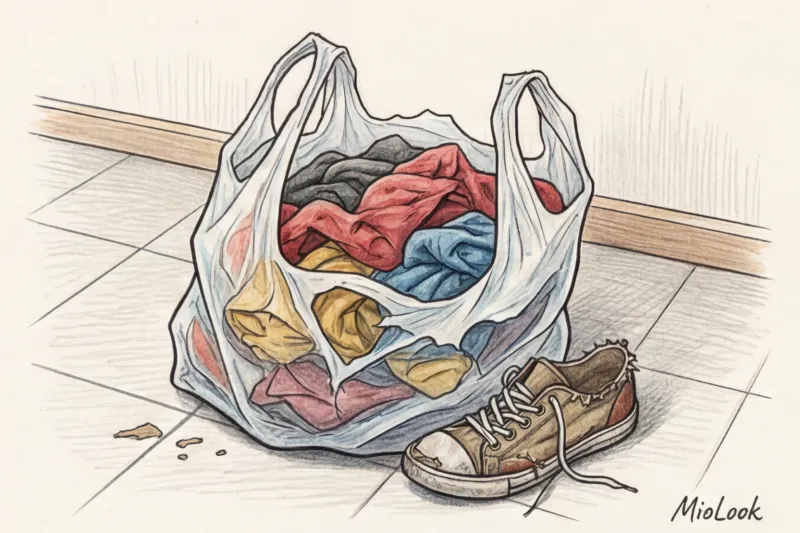
They're guaranteed to rip when the courier handles them or burst in the back of the truck. Use durable polypropylene construction bags, heavy-duty garden waste bags (120 liters and larger), or zip-up tote bags (like the blue FRAKTA bags, if the service agrees not to return them).
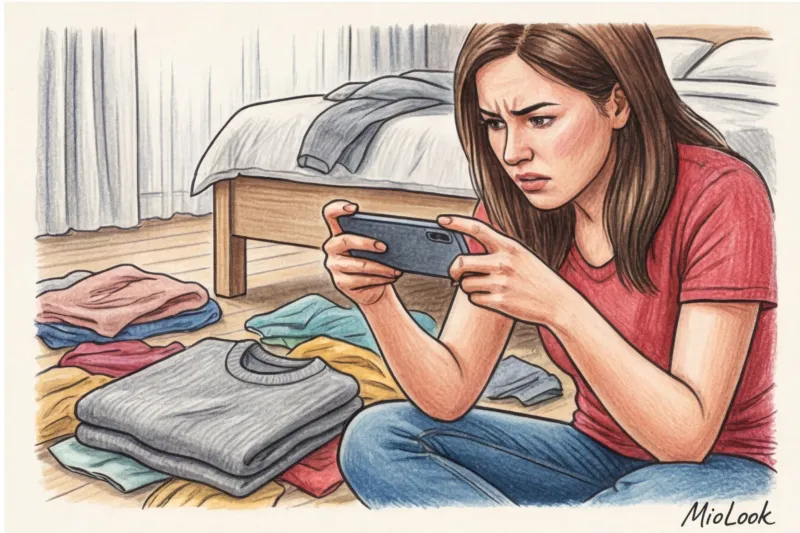
4. Shoes and accessories
If you're donating shoes, be sure to tie the pairs together with laces or wrap them tightly with tape or rubber bands. A single shoe lost on the huge sorting belt cannot be sold or recycled—it's considered trash.
Common mistakes when ordering the removal of old clothes
Even with the best intentions, mistakes can happen. Here's an honest list of limitations (when removal services NOT will help):
- Handing over underwear and nylon tights: Most recycling centers do not accept used underwear (except new items with tags) due to sanitary regulations. Tights, due to their complex composition (nylon and elastane), are extremely difficult to recycle. Check this with the specific recycling center in advance.
- Items with chemical contamination: Clothing soiled with fuel oil, construction paint, motor oil, or hazardous chemicals cannot be recycled. It should be disposed of in your regular trash.
- Wet items: As we've already established above, moisture = mold = spoiled batch. Only return completely dry textiles.
Let Your Closet Breathe: How to Avoid Filling Empty Shelves with New Clutter
When the courier picks up your packages, you'll experience an incredible feeling of lightness. Your closet will finally breathe. You'll see empty shelves and the clothes you truly love wearing.
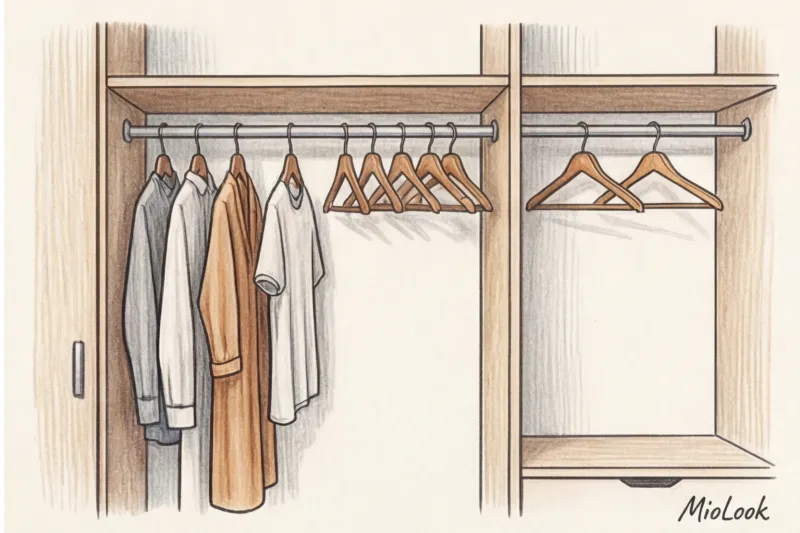
The biggest mistake at this stage is rushing off to shop the next day in a frenzy to "fill in the gaps." Don't do that. Give yourself an emotional detox for at least two weeks. Live with a half-empty closet.
Analyze why you got rid of those items. Were they impulse buys on sale? Were they the wrong color? Was the fabric the quickest to pill (for example, cheap acrylic instead of high-quality cotton or thick viscose)? Make a note of these mistakes so you don't repeat them.
To ensure a systematic transition to a smart wardrobe, I recommend my clients digitize their remaining basic items right away. An app is ideal for this. MioLook You simply take a photo of your clothes, and artificial intelligence analyzes them and suggests dozens of new combinations from what you have. already exists You clearly see what exactly is missing to complete your look (for example, a high-quality structured jacket), and you go to the store with a clear list, rather than just another spontaneous T-shirt.
Taking your clothes out of the house is the difference between your past chaotic shopping and a conscious style. Value your time, entrust the heavy lifting to professionals, and make room in your closet only for the pieces that work for you 100%.