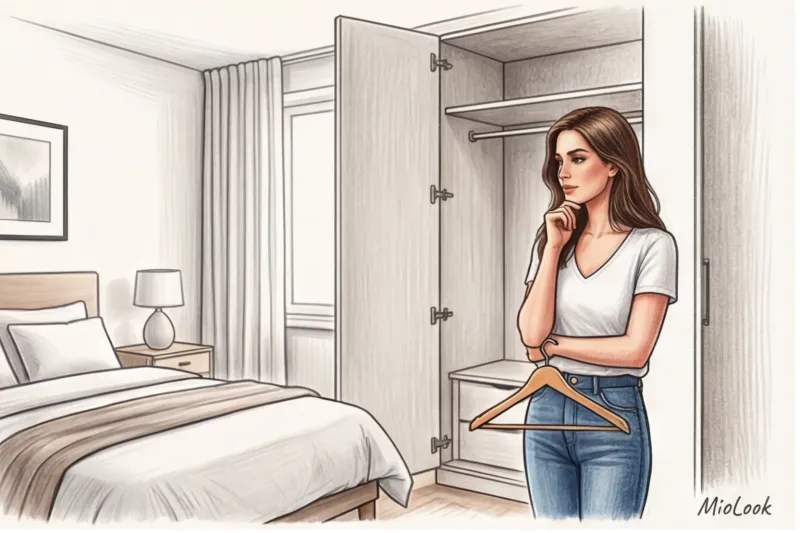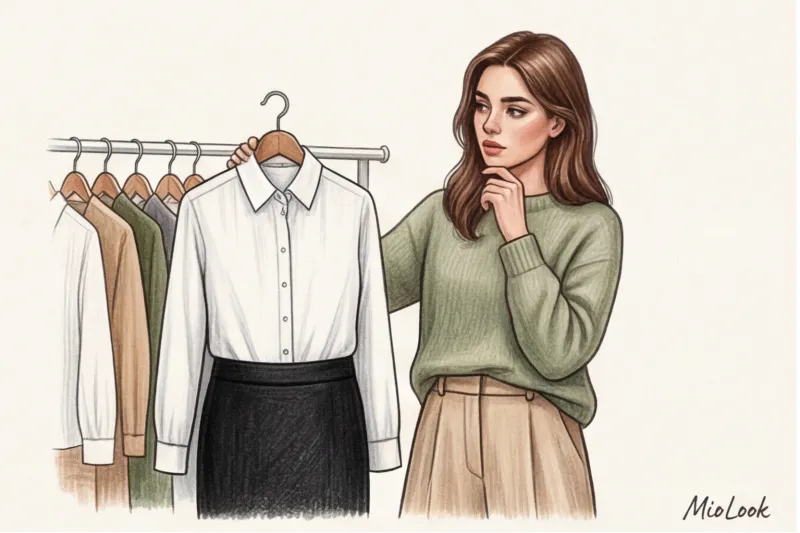
"Open your closet right now. How many of your clothes have you worn in the last month?" I ask every new client this question. Over 12 years of working as a stylist and regularly traveling between Paris and New York Fashion Weeks, I've come up with a sad but ironclad statistic. Nine out of ten closets are filled with clothes that absolutely don't go together. Women spend thousands of euros on "universal lists from glossy magazines," and then every morning they stand before their open doors with the same thought: a full closet, but nothing to wear.
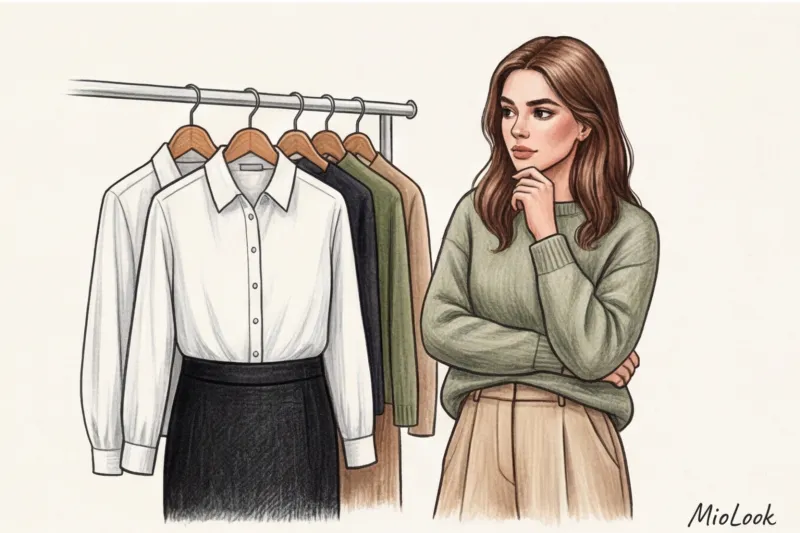
If you're tired of that morning panic, it's time to ditch the cookie-cutter advice. Today I'll tell you, How to create a basic wardrobe from scratch , using not the abstract fantasies of fashion editors, but mathematics, a rigorous analysis of your lifestyle, and cost-per-wear calculations. We've already covered style architecture in more detail in our A complete guide to a woman's basic wardrobe , but here we will focus on pure practice and a step-by-step algorithm.
The Myth of the One-Stop List: Why You Don't Need a White Shirt
Remember those endless magazine lists of "10 Things Every Woman Must Own"? White shirt, black pants, beige trench coat, pencil skirt. This set originated in 1985, when the brilliant Donna Karan introduced the "Seven Easy Pieces" concept. For the '80s, when women were becoming increasingly integrated into the corporate world, this modular system was revolutionary.
But we don't live in 1985. The problem with standard lists is that they suggest you dress like a flight attendant, completely ignoring your natural complexion, body type, and, most importantly, your real life.
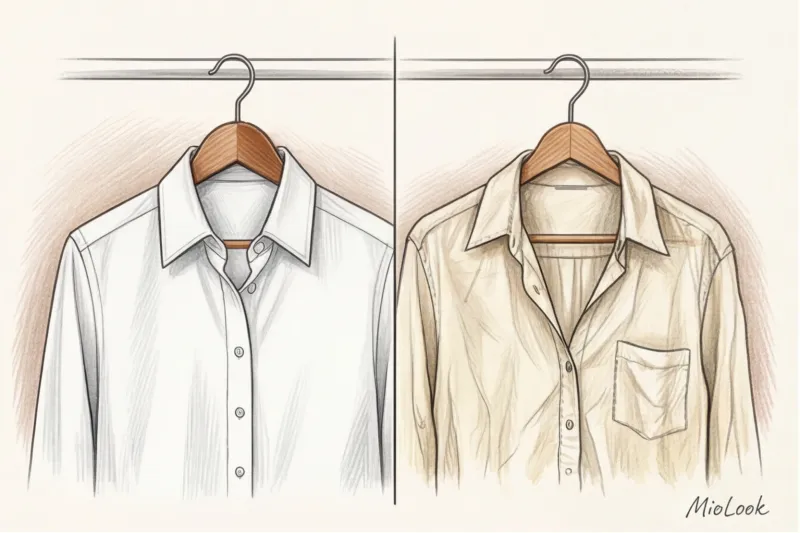
Let's take the main fetish of stylists and theorists—the classic white shirt made of stiff cotton. In my experience, this item visually "kills" the portrait area of approximately 50% of women with Slavic and soft European appearances. The crisp white color (optic white) is too contrasting: it highlights the slightest fatigue, dark circles under the eyes, and uneven skin.
"The ideal base for you might not be white, but ecru, butterscotch, or even deep navy. A base isn't the color of a garment. A base is its function in your closet."
Step 1. Lifestyle Analysis: Building a Diagram of Your Reality
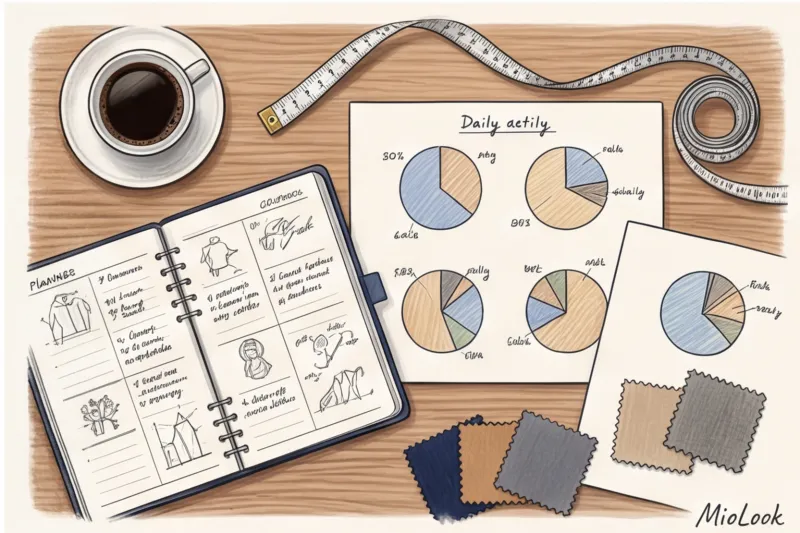
It's impossible to understand, How to create a basic wardrobe from scratch If you don't know what kind of life you're building it for, it's not worth it. A freelancer's database, a young mother's database, and a top bank manager's database are three completely different, non-intersecting universes.
One of my clients, a remote IT developer, once proudly showed me her newly purchased "essentials" for 500 euros: two crisp blazers and tailored pleated trousers. Perfect pieces. But she hadn't worn them even once in a year, because her reality was Zoom calls and working from specialty coffee shops. Her true essentials should have been premium cashmere joggers, heavyweight T-shirts, and oversized chunky-knit cardigans.
The 14-Day Rule: How to Track Your Real Needs
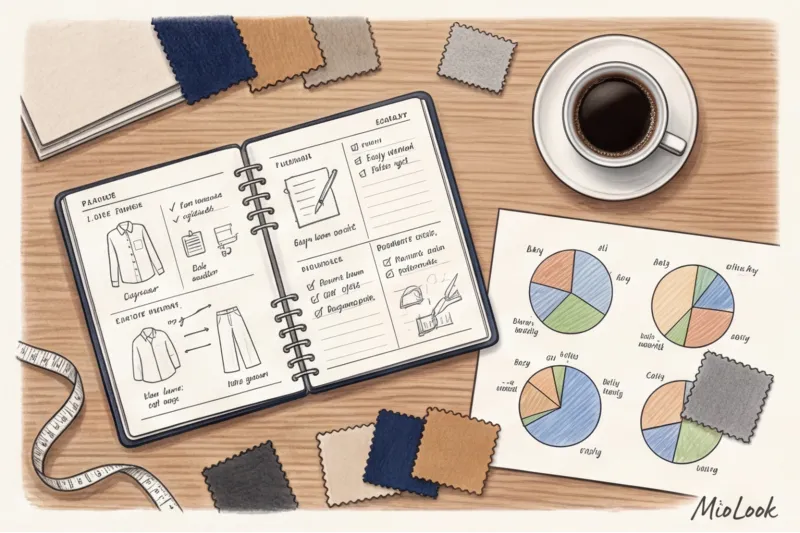
To avoid making similar mistakes, I offer my clients a simple task. For two weeks (14 days), take a photo of yourself in the mirror before leaving the house or starting your workday. Don't try to dress up for the photo—capture reality.
In two weeks, take a look at the gallery. You'll be surprised, but you'll see a clear pattern. You'll notice the styles you subconsciously reach for when you need comfort, and the shoes you choose most often. These are the silhouettes that should form the basis of your personal capsule wardrobe, not what trends dictate.
Access to MioLook for €0.99 — one-time payment
A smart AI stylist will analyze your preferences and select the perfect look for every day.
Get access — €0.99 onceStep 2: Wardrobe Review: Getting Rid of Clutter Without Regret
You can't build a modern house on a rotten foundation. Likewise, it's impossible to create a functional foundation if your closet is filled with visual clutter. Emotional attachments to clothes ("I'll lose weight for summer," "They were a gift from my ex," "It's a shame to throw them away, they were expensive") are the main enemy of good taste.
According to a large-scale study by Barnardo's, the average woman wears a purchased item only 7-10 times, after which it settles in her closet as dead weight. This is a disaster for both the environment and your wallet.
The Four Box Method and Cost Per Wear Formula
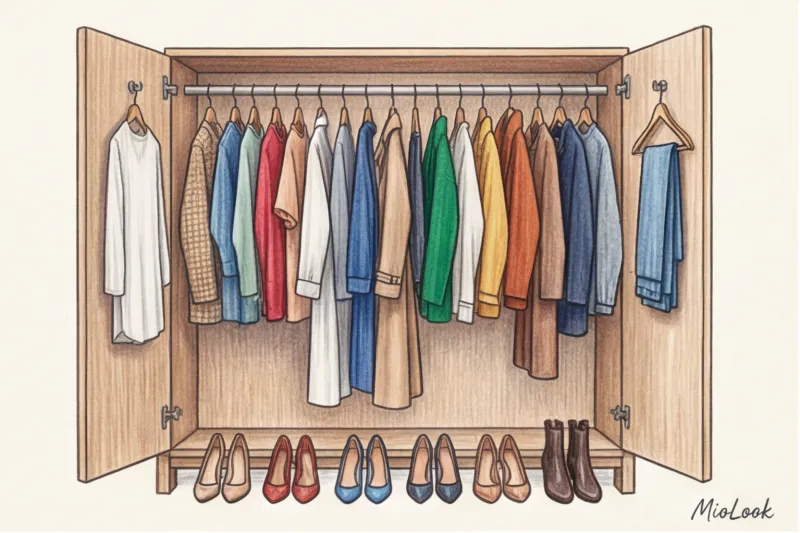
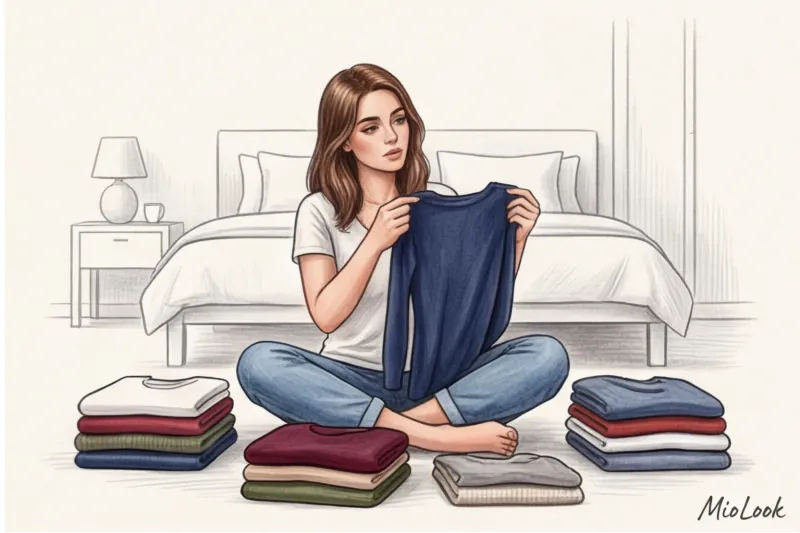
Remove absolutely everything from the closet. Prepare four boxes (or bags) and sort them strictly:
- Leave: things that fit perfectly right now (not after 5 kg), are relevant and make you happy.
- Repair/Re-sew: Anything that requires dry cleaning, button replacement, or tailored alterations. Give yourself exactly 7 days to do this. If not, throw it away.
- Give/Sell: Items in good condition, but not your style or size. Resale platforms are working great these days.
- Throw away (recycle): clothes with pilling, stains, stretched collars.
To justify investing in new basics, always use the formula Cost Per Wear (CPW) – cost per wear The formula is simple: divide the item's cost by the expected number of wears. A pair of high-quality leather loafers for $200 that you'll wear 100 times over two seasons costs $2 per wear. A $40 ultra-fashionable mass-market top that you'll wear twice to a party and then forget about costs $20 per wear. Basic items should always have the lowest CPW.
Step 3. Color Architecture: Choosing Your "Fundamental" Shades
The word "basic" is inextricably linked in many minds with gray and black. This is a huge mistake. Black is one of the most difficult colors to master. It absorbs light, highlights signs of aging, and requires impeccable tailoring to avoid looking cheap.
Instead of all-black, I recommend turning to deep, refined shades that are just as versatile but look significantly more expensive. Deep navy, rich wine/burgundy, dark chocolate, or the right khaki are luxurious alternatives to black. When choosing shades that flatter your complexion, be sure to consider your natural contrast (more on this in our capsule creation guide ).
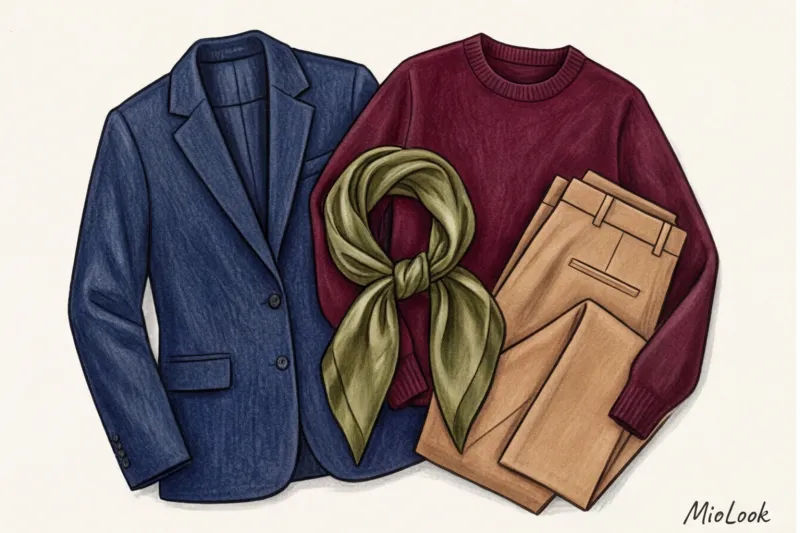
The 3+2 formula for perfect combinatorics
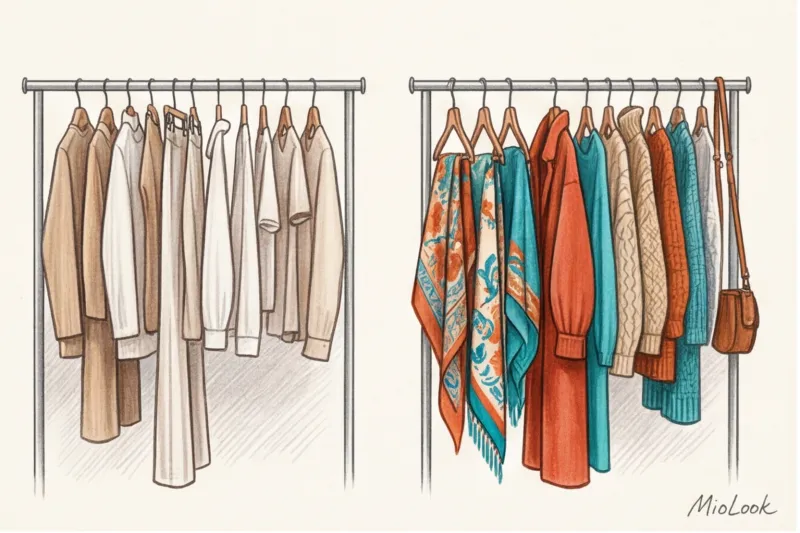
To make things easy to combine with your eyes closed, use the 3+2 color matrix:
- 3 neutral (primary) colors: We use them for outerwear, trousers, skirts and basic shoes (for example, camel, dark blue, milky).
- 2 accent (but calm) colors: for tops, sweaters, scarves and bags (for example, muted emerald and wine).
This formula ensures that any top in your capsule will not clash in color with any bottom.
Your perfect look starts here
Join thousands of users who organize their wardrobe every day with MioLook.
Get access — €0.99 onceStep 4. Basic Wardrobe Matrix: The Formula for Ideal Proportions
A basic wardrobe should work like an expensive construction set. There's a statistical rule, the 80/20 (Pareto principle), that works flawlessly in fashion: we wear 20% of our clothes 80% of the time. Our job is to make those 20% impeccable in cut and fit.
A basic item doesn't mean "boring" or "inconspicuous." The relevance of the cut is everything. A skinny, cropped, mid-thigh jacket from 2012 and a modern, structured, straight-cut blazer are two completely different pieces, although both could technically be called a "basic black jacket."
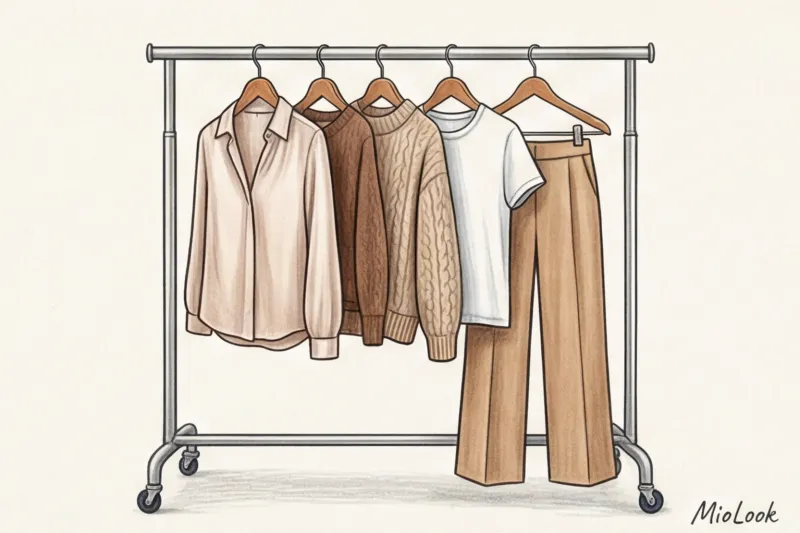
The "one bottom – three tops" rule
This is a golden rule of stylists that will forever rid you of the problem of a lack of outfits. For every basic pair of trousers, jeans, or skirt in your closet, there should be at least three (and preferably four) different top options.
Why is this so? Firstly, hygiene: we wash T-shirts, blouses, and shirts after one or two wears, whereas jeans or wool pants last longer without washing. Secondly, visual perception: when interacting with people, the first thing they notice is your appearance. If you come to the office three days in a row in the same perfect pair of palazzo pants, but then swap your silk blouse for a cotton shirt, and then for a cashmere jumper, it will seem like you have a huge wardrobe.
Investing vs. Saving: What a Basic Wardrobe Is Built On
The main secret of industry insiders is the High/Low principle (a combination of expensive and inexpensive). You don't need to buy everything you need from a high-end luxury brand. It's important to know what you can afford to spend a significant portion of your budget on, and what's more reasonable to buy from mass-market stores (Zara, COS, Uniqlo).
Investment positions (High):
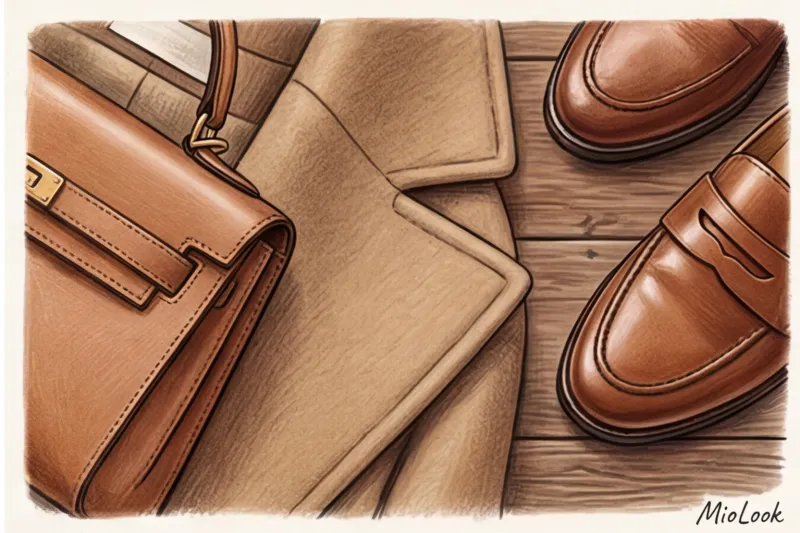
- Outerwear: The coat should contain at least 70% wool (ideally with some cashmere for softness), otherwise it will become covered in pills within a month.
- Shoes and bags: A structured bag made of thick leather and high-quality ankle boots elevate the entire look. Cheap hardware on a bag will ruin even an expensive suit.
- Ideal jeans: dense denim without elastane that holds its shape.
Savings items (Low):
Cotton T-shirts, tank tops, and trendy accessories for a single season. And herein lies the main style secret: how to look Old Money without spending millions? Take a budget-friendly but very thick white T-shirt from Uniqlo (look for a cotton weight of at least 180 g/m² with a proper, non-stretchy collar) and wear it under an expensive, well-tailored jacket from Massimo Dutti. The effect will be stunning. But if you wear a cheap, flimsy jacket over a €300 designer T-shirt, you'll look sloppy.
Checklist: How to create a basic wardrobe from scratch without buying too much
So, you've analyzed your lifestyle, cleaned out your closet, and decided on a color palette. Now, before you open your browser or hit the mall, commit this routine to memory:
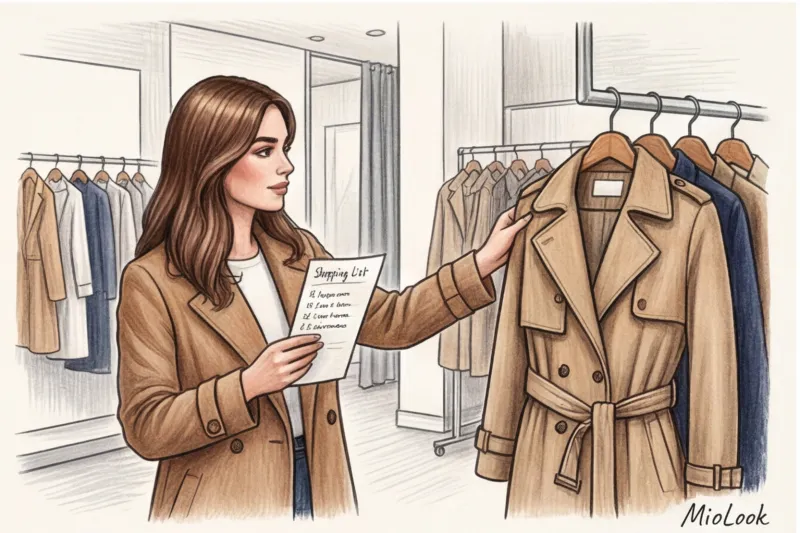
- Create a strict shopping list. Never go to the store looking for "something new." Look for a specific item: "high-waist, straight-leg dark blue jeans."
- Observe the pause rule. This is crucial. Don't try to buy your entire wardrobe in one weekend. After trying on 10 pairs of pants, shopping fatigue sets in, your brain gives up, and you buy an unnecessary, compromised item just to get the process over with.
- Digitize your wardrobe. To know exactly what you will wear with a new item, use apps. MioLook You can upload photos of your items and create looks right on your phone. An AI stylist will tell you whether this sweater will really fit into your capsule wardrobe.
Access to MioLook for €0.99 — one-time payment
Start creating your perfect capsule wardrobes with AI now.
Get access — €0.99 onceA basic wardrobe isn't a museum piece or a set of rules set in stone. It's a living, flexible tool designed to serve your goals, save you time in the morning, and give you a feeling of absolute confidence. Start with an honest assessment of your habits, implement the "one bottom, three tops" formula, and you'll be surprised how quickly the phrase "I have nothing to wear" disappears from your vocabulary.