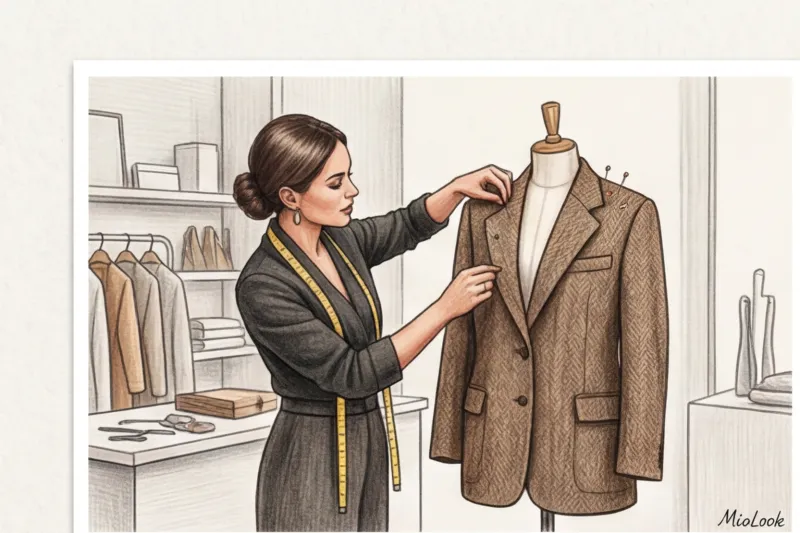
Let's start with an honest confession. When most women hear the word "upcycling," they picture denim string bags or oven mitts crookedly sewn from stretched-out T-shirts. As an image consultant and colorist, I shudder at such DIY projects. If you're looking for ideas, What to make from old clothes If you're expecting rug weaving tips, this article will disappoint you.
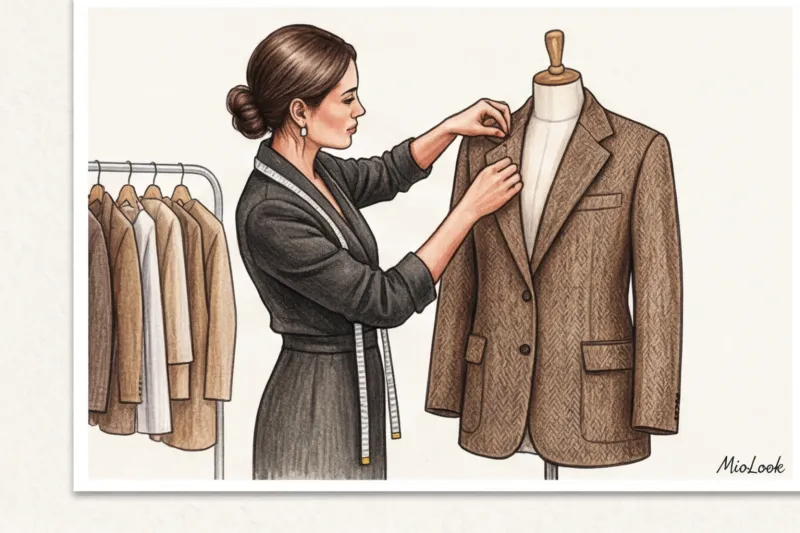
Today we'll be talking about premium redesign. How to transform a high-quality but outdated item into an exclusive designer piece that looks more expensive than mass-market staples. But before you grab the scissors, you need to conduct a proper closet audit: some items are actually easier to donate to charity or recycle. We covered this in more detail in our a complete guide to the rules of recycling and disposal of old clothes.
The Psychology and Economics of Upcycling: Why Repurposing the Old Has Become the New Luxury
Popular wisdom holds that "upcycling is cheap alterations for those looking to save money." After 12 years of working with clients' wardrobes, I've learned that this is fundamentally wrong. Today, custom-made vintage garments are the new luxury. Why? Because finding the perfect fit in a store is nearly impossible, and mass-market fabrics are becoming thinner every year.
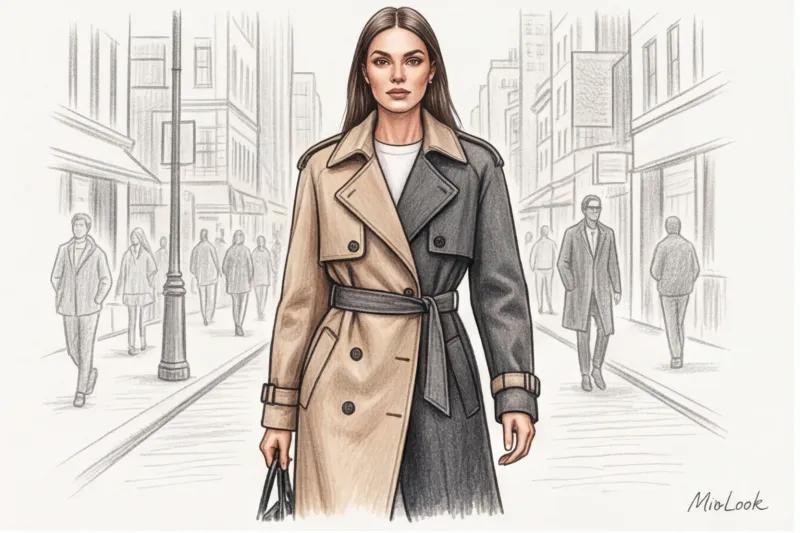
Global fashion houses have long since elevated deconstruction to an art form. Think of the philosophy of Maison Margiela or the Marine Serre shows, where old silk scarves and denim are transformed into new, complex architectural forms. This isn't an attempt to save money; it's a statement of an intelligent approach to style. In the terminology of conscious consumption, there's the concept of "offboarding" a wardrobe—the process of eco-friendly parting with things. And upcycling is its ultimate expression.
"Extending a garment's life by just nine months reduces its carbon, water, and waste footprint by 20-30%. We're not just saving a favorite skirt; we're changing the fashion economy." — From the WRAP UK (Waste and Resources Action Programme) 2023 report.
Let's do the math. A high-quality men's jacket made of 100% thick wool will cost you approximately €80-€120 to remake at a reputable tailor. A similar new jacket with the same composition and quality of fittings in the mid-up segment (for example, in the premium lines of COS or Massimo Dutti) starts at €250-€400. You'll get a tailored garment tailored to your measurements for two to three times the price.
Access to MioLook for €0.99 — one-time payment
A smart AI stylist will select the perfect look from your updated items.
Get access — €0.99 onceWhat to do with old clothes: a stylist's rule for assessing a piece's potential
In my practice, I have a strict rule I call the "Tailor's Matrix." We always weigh two parameters: the quality of the fabric and the relevance of the cut. Only those items where the fabric is superior to the cut are redesigned.
If you have thick cotton (180 g/m² and above), heavy silk, cashmere, or Italian wool, but the cut is hopelessly stuck in 2012, it's an ideal candidate for transformation. You're paying a tailor to work with premium materials. But if the item is made of thin, squeaky polyester, loose acrylic, or the fabric is prone to pilling, feel free to recycle it. Spending €50 altering cheap synthetics is unprofitable.
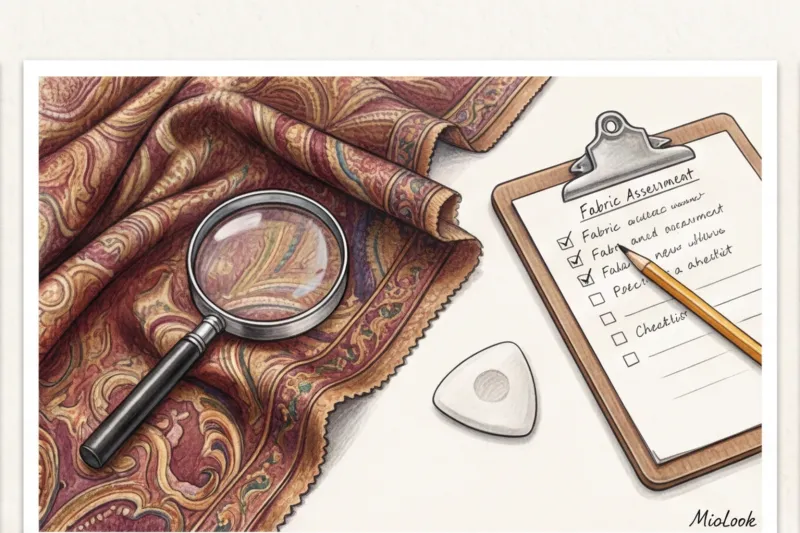
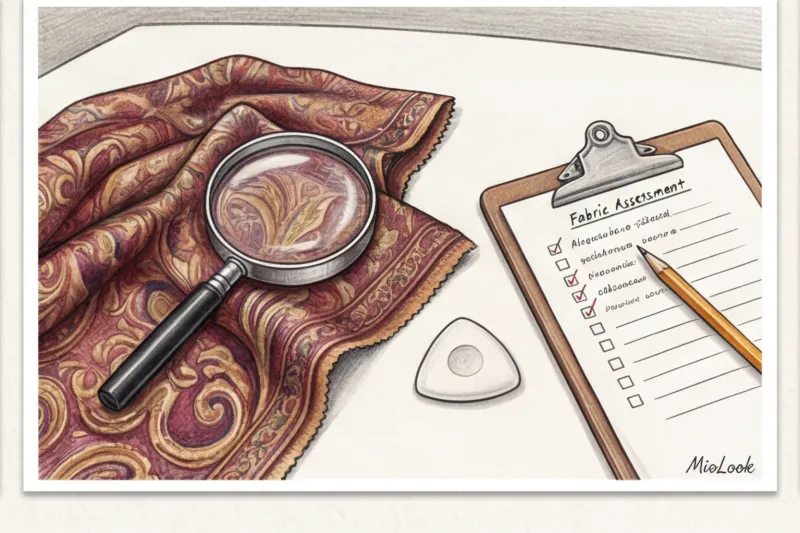
Here's my professional life hack before heading to the tailor: test the fibers for "fatigue." Gently tug the fabric diagonally (on the bias). If it doesn't return to its original shape but remains deformed, you can't sew with it—the seams will become wavy. And don't forget about the hardware! Vintage horn buttons and high-quality metal zippers from Riri or YKK are often more expensive than the garment itself. If you do throw out an old coat, cut off the buttons—they'll save more than one basic cardigan.
Top 4 Status Transformations: Ideas Without the "DIY" Effect
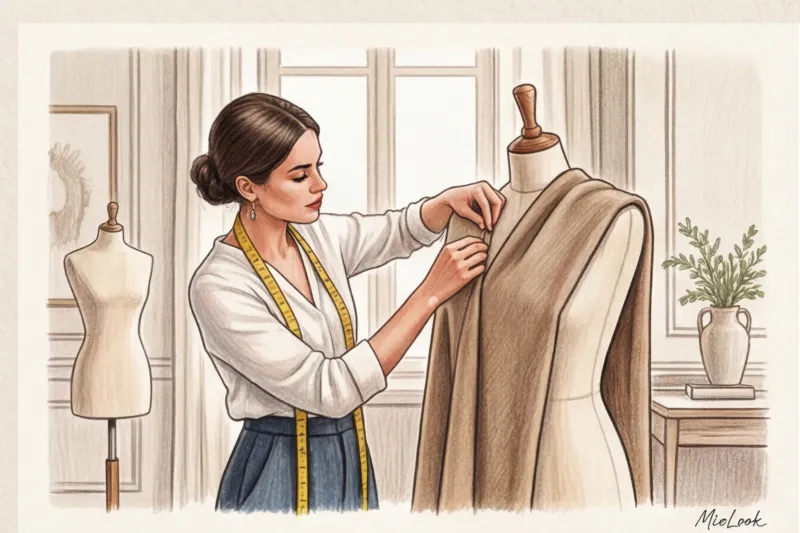
The main principle of our transformations is that we create fashion that's relevant. For these projects, I strongly recommend finding a good seamstress/designer, rather than trying to do it yourself with kitchen scissors if you don't have the skills.
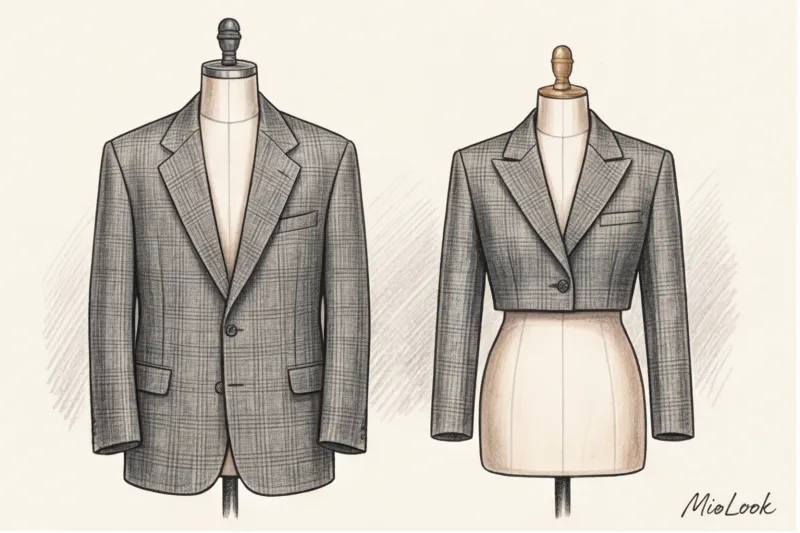
From a hyper-oversized jacket to a structured crop jacket
Men's blazers from the '90s or those you bought during the hyper-oversized trend a couple of years ago often look heavy these days. If they make your shoulders look boxy and your height is reduced, there's only one solution: an architectural crop.
The tailor shortens the length to the waist (or slightly higher, to the lower ribs), completely reworking the shoulder line, making it firmer yet proportional. The remaining fabric from the hem is used to finish the new edge. This crop jacket integrates flawlessly into smart-casual looks: wear it with high palazzo pants or midi skirts made of thick satin.
Your perfect look starts here
Join thousands of users who look flawless every day with MioLook.
Get access — €0.99 onceComplex shirt architecture: color blocking and asymmetry
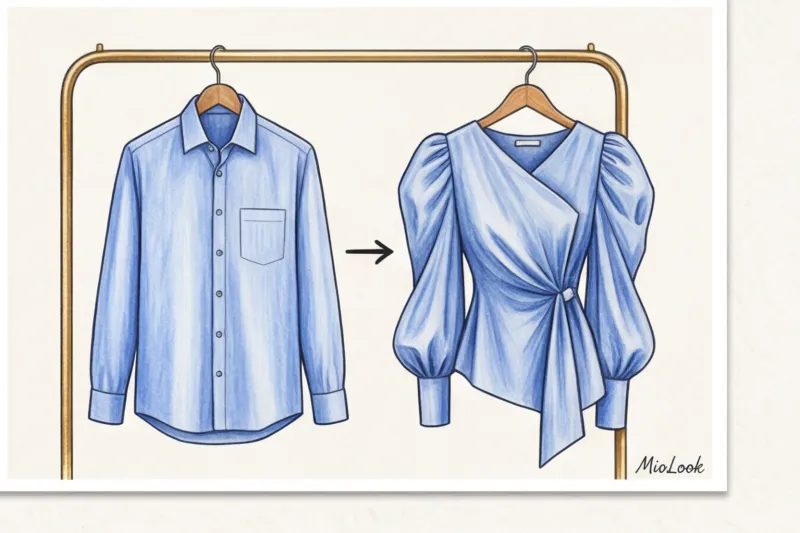
Men's shirts and basic women's shirts have a weak spot: the collar and cuffs wear out first, while 90% of the excellent fabric on the back and front remains perfect.
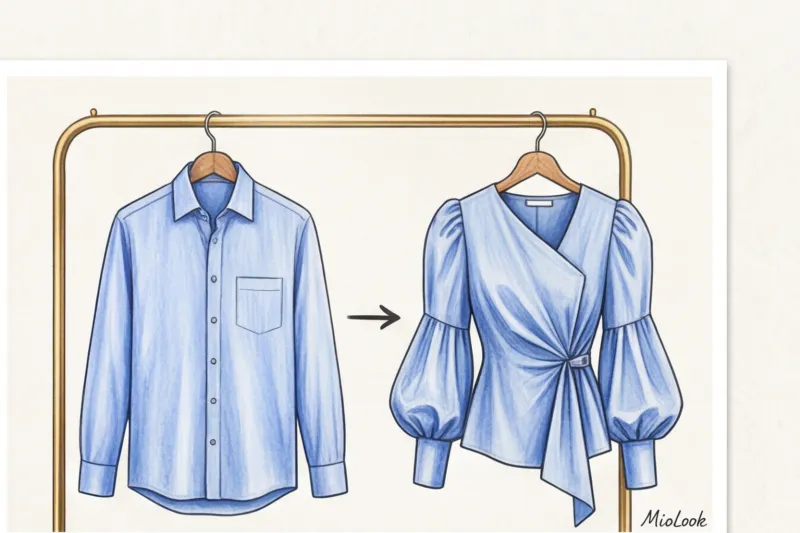
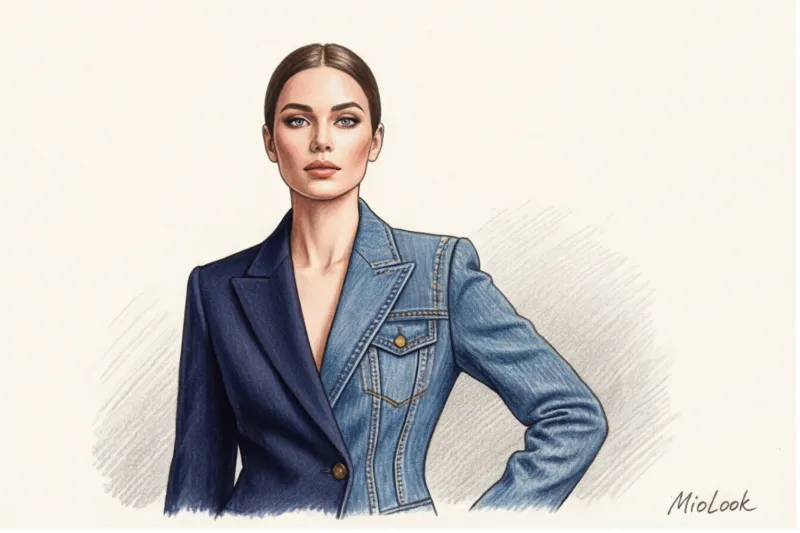
What do we do? We combine two different shirts (for example, a classic light blue and a white pinstriped one) into one designer piece in a Frankenstein-chic style. One half is light blue, the other striped. If the collar is damaged, it can be completely ripped off, transforming the shirt into a minimalist blouse with a V-neck or mandarin collar. This statement piece adds a lively and dynamic touch to a basic wardrobe.
Denim Alchemy: From Outdated Skinny Jeans to a Maxi Skirt or Corset
Don't throw away your outdated, form-fitting skinny jeans made of thick denim (without a large percentage of elastane). The global trend for long denim skirts with front slits has been going strong for several seasons now and shows no sign of fading.
An experienced tailor can create a chic maxi skirt from two pairs of old jeans in a similar or contrasting shade. An alternative option for the more daring is a denim corset. It's a gorgeous accent layer worn over an oversized white shirt or a basic turtleneck, instantly adding a sophisticated, layered look.
A second life for premium knitwear (cashmere, merino)
It's every woman's worst nightmare: a cashmere sweater that's shrunk after being washed improperly and now only fits a ten-year-old. It's impossible to restore the size, but cashmere is too precious to throw in the trash.
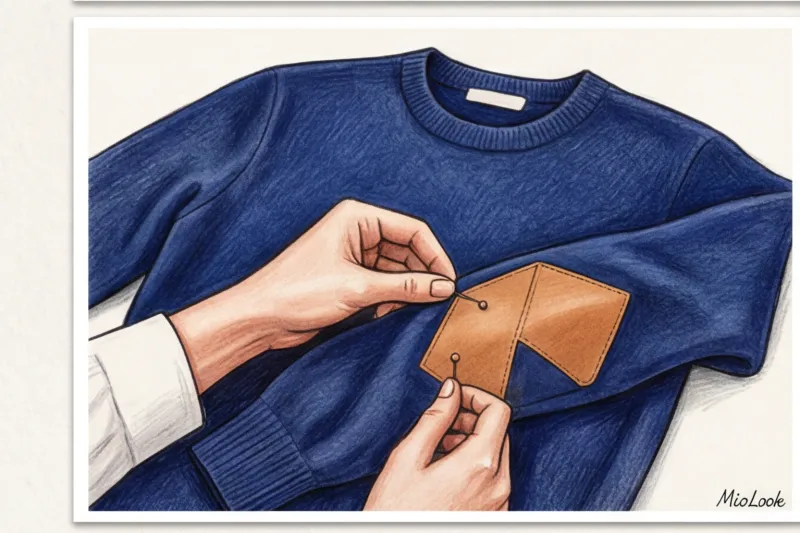
Felted cashmere makes luxurious, windproof winter accessories: mittens, stylish balaclavas, or bibs (with detachable collars). And if the elbows of a high-quality merino cardigan are worn through, don't be too quick to write it off. Contrasting leather or suede patches (for example, cognac on a navy background) will transform it into an old-money or college-preppy style.
Upcycling in a Business Style: Saving Your Office Wardrobe
Business dress codes (even the more relaxed business casual ones) don't tolerate sloppiness. How can you adapt repurposed items for the office? The secret lies in impeccable edging and the right accents.

I had a revealing case. One of our clients left a permanent coffee stain on the hem of an expensive Italian blouse made of thick tussah silk. The garment cost around €350, and the deep emerald color perfectly complemented her contrasting appearance. We didn't bother with intricate embroidery over the stain. We sent the blouse to a tailor, where the stylist used the undamaged fabric from the back and sleeves to create a luxurious ascot scarf and a pair of pocket squares (pashas) for her jackets. This emerald scarf became her signature piece during negotiations.
Another common request is for a classic pencil skirt that's become too tight or feels boring. Adding a high slit with a contrasting silk lining or a thick striped trim on the sides not only modernizes the cut but also visually elongates the silhouette.
Checklist: Is it worth altering an item or is it time to say goodbye to it?
As a colorist and stylist, I implore you: don't waste time and money on a piece just out of pity. Run your upcycling candidate through this checklist:
- Testing for fabric fatigue: Look at the item in daylight. Are there any stubborn stains, shiny scuffs on the elbows, or the smell of an old wardrobe that didn't go away after dry cleaning? If so, throw it away.
- Colors and your color type: Has the pigment faded? If black has turned gray-brown, and dark blue has become dusty, the garment will make your face look tired. I often see girls investing in altering a jacket whose color frankly ages them.
- Profitability: Find out the cost of the work. If reworking a mass-market skirt costs €60, and a new one of the same quality costs €40, upcycling is pointless (unless the fabric has immense sentimental value to you).
- Match current figure: You can almost always take a garment in by 1 or 2 sizes. Re-sewn is extremely difficult if you don't have enough fabric in the seams. Never alter something with the idea that "I'll lose weight and then wear it."
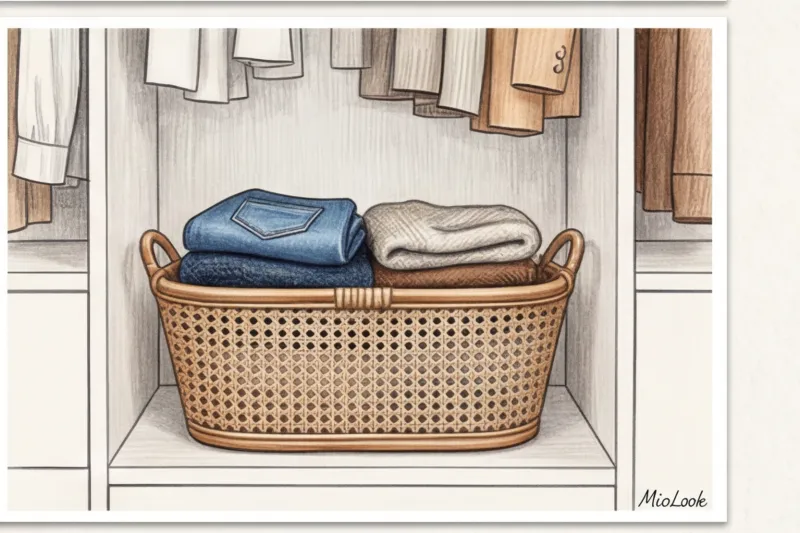
If you answered "no" to at least two of these questions, we'll recycle the item wisely. This doesn't work when the fabric has completely exhausted its physical life.
Ready to get started?
Try the MioLook plan for free—no commitments required. Upload your wardrobe and discover new combinations.
Get access — €0.99 onceConclusion: Your personal contribution to conscious fashion
Returning to the main idea of our hub article: proper recycling and thoughtful upcycling are the hallmarks of a mature, intelligent approach to personal style. You stop being a passive consumer of what brands dictate and become a co-creator of your wardrobe.
Premium upcycling makes your style truly unique. No one else at your next gathering will have the same asymmetrical shirt or cropped jacket, because they're custom-made, just for you.
This weekend, take stock of your closet. Find two or three pieces made from excellent fabric that you haven't worn in over a year due to outdated cuts or minor imperfections. Find a reputable tailor and try to create something completely new from them. The best wardrobe isn't one where things are falling off the shelves, but one where every item contributes 100% to your image.