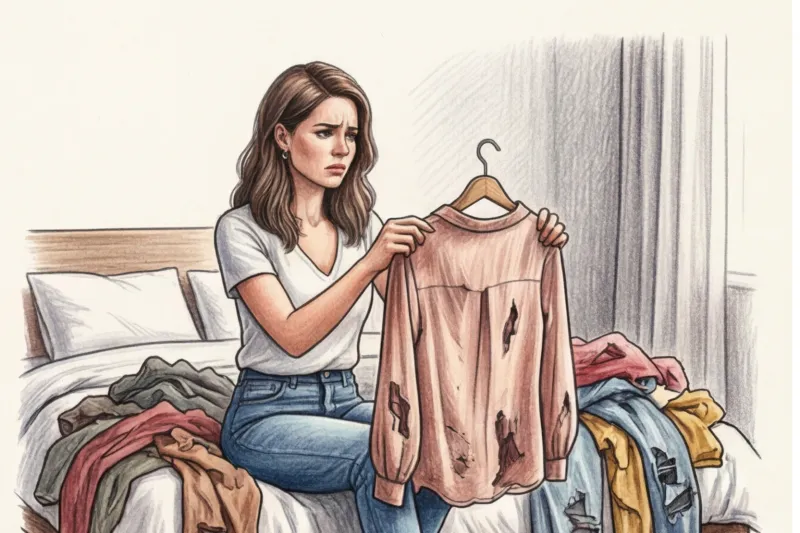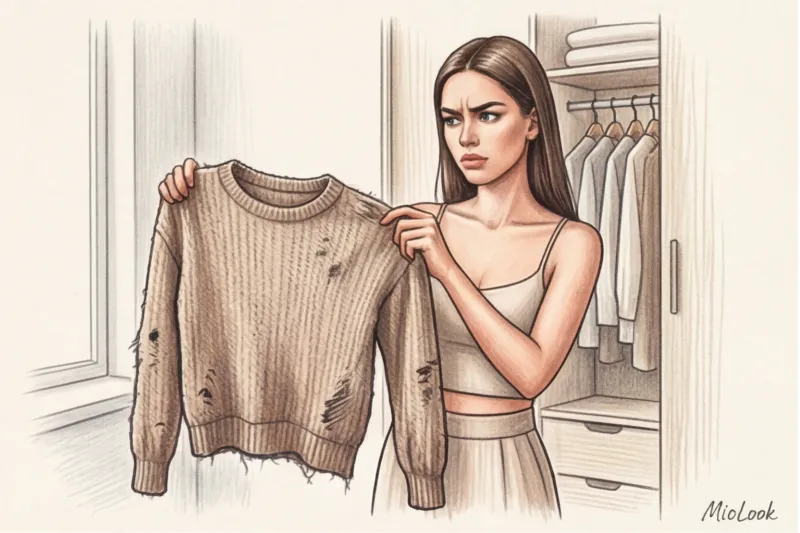
Last week, I was sorting through a client's closet and came across a separate bottom shelf, modestly covered by a door. Inside, a tightly packed lump of fifteen sweaters, pilled and full of holes, lay a stack of irreparably stretched T-shirts. My questioning glance at her sighed, "These are for trips out of town. Or if we're planning a renovation." Have you ever noticed a similar pattern in yourself? We're terrified of parting with damaged items, storing them away for years.
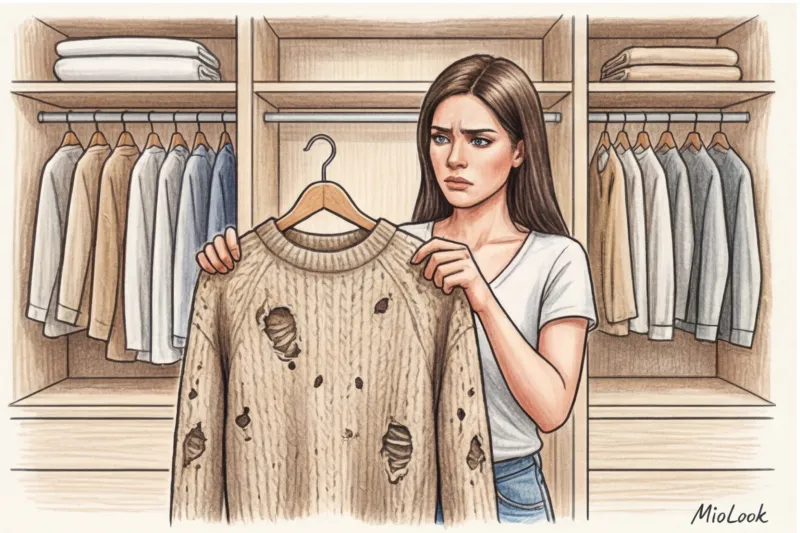
The truth is, this textile clutter isn't just taking up space—it's blocking your personal style. We covered basic sorting in more detail in our the complete guide to getting rid of old things Today, I want to explore the most difficult and non-obvious step: where to recycle clothes when they've completely lost their marketable appearance, and why knowing how to properly recycle ("offboard") items is just as important as knowing how to buy them.
The Psychology of "Loungewear": Why Ripped Clothes Have No Place in the Closet
Every morning, when we open our closet, our brain processes visual information. If a third of the shelves are filled with flawed clothes you'd never wear outside, you inevitably experience "decision fatigue." It feels like your closet is overflowing, but there's nothing to wear.
The habit of leaving washed-out T-shirts and frayed jeans "for home" is a hidden sabotage of your self-esteem. Looking sloppy at home, justifying it by saying "no one will see," is a message to yourself: I don't deserve beauty and comfort in my private life.
Over 12 years of practicing as a stylist, I've come up with an ironclad rule: a wardrobe only starts working after ruthless "offboarding." In the appendix MioLook I often show my clients this brutal statistic: on average, we only wear 20% of our closet contents. The rest is dead weight. Knowing when to recognize when a piece has outlived its usefulness and discarding it sustainably paves the way to creating a truly functional capsule wardrobe.
Access to MioLook for €0.99 — one-time payment
A smart AI stylist will select the perfect look based on your real wardrobe and help you identify items you haven't worn in a while.
Get access — €0.99 onceWhere to recycle clothes: How modern collection points work
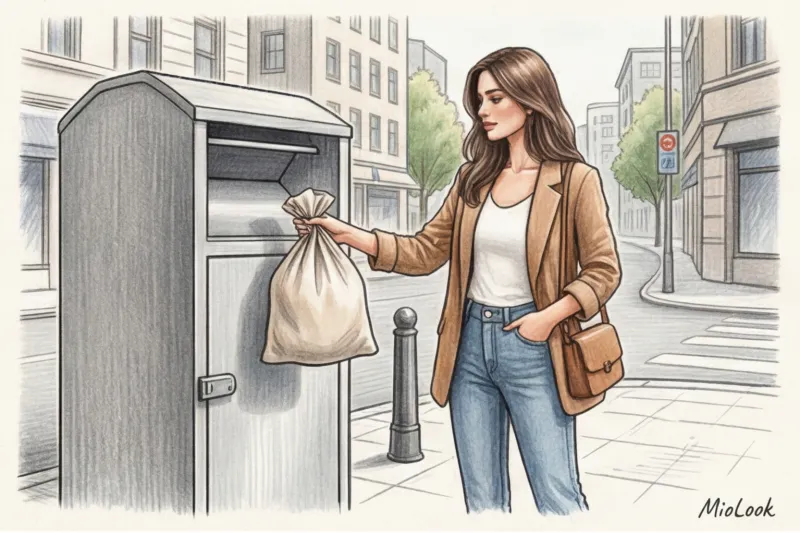
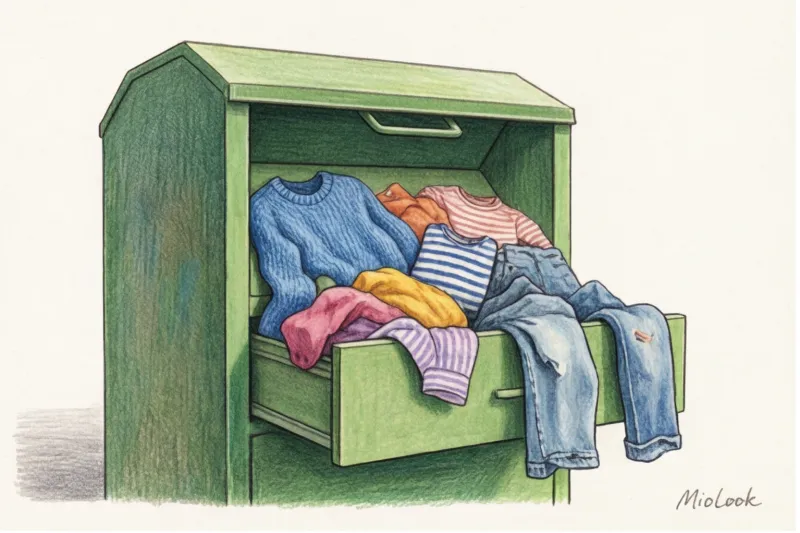
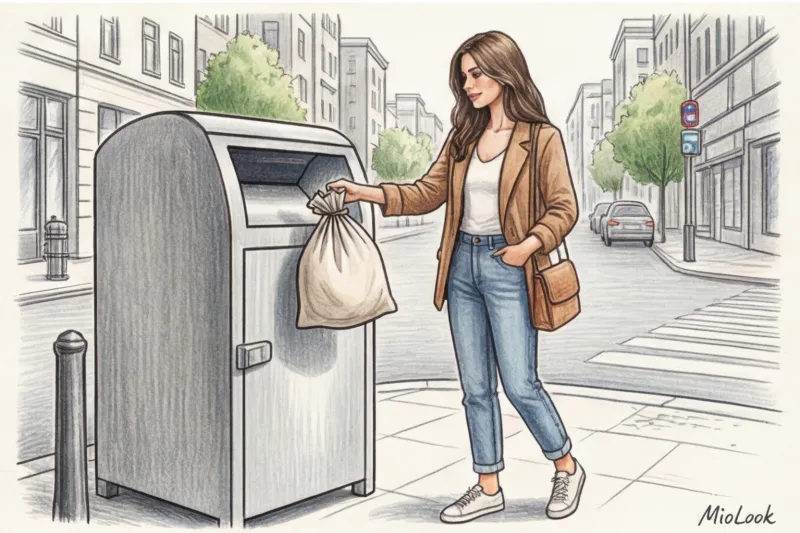
The main myth I encounter is that people think only perfect dresses with tags can be thrown into charity bins. This is no longer true. Large international and local textile collection initiatives (for example, bins in shopping malls or eco-centers) have a strict double-sorting system.
When your package arrives at the warehouse, staff manually separate items into two categories: good condition (good condition for charity or second-hand stores) and rags (Clothes with permanent stains, holes, and pilling). Where can I recycle clothes in your city? Check out any online eco-habit map (recyclemap)—even small towns have textile recycling bins these days.
According to a 2023 report by the Ellen MacArthur Foundation, approximately 85% of discarded clothing worldwide still ends up in landfills. However, a full-fledged recycling (recycling an old T-shirt into a new one) accounts for only 1% due to the technological complexity of the process. So where do the torn T-shirts go from the container? Downcycling. Machines chop the fabric, remove the trimmings, and turn the raw material into either wiping rags for printing houses and factories, or regenerated fiber, which is used for mattress stuffing and car soundproofing.
What's acceptable for rags, and what's tossed? A stylist's checklist
Not all recycled items are equally beneficial for the environment. Complex compositions are a major challenge for recyclers. For automated systems to break down fabric into fibers, they require a predictable material. If your favorite jeans contain more than 5% elastane (which is often the case in skinny jeans), industrial knives will simply get stuck in the rubber threads. Mechanical recycling of such blended fabrics is currently economically unviable.
Green light: fabrics ideal for recycling
- Natural mono-materials: 100% cotton, linen, viscose, natural wool, and cashmere. They are ideal for twilling.
- Home textiles: Old bed linen, terry towels and tablecloths - factories love them for their high absorbency (ideal for wiping rags).
- Basic denim: classic jeans without stretch. If you collect basic denim wardrobe , choose 100% dense cotton - it lasts longer and is recycled without residue.
Stop list: what will spoil the entire batch of recyclable materials
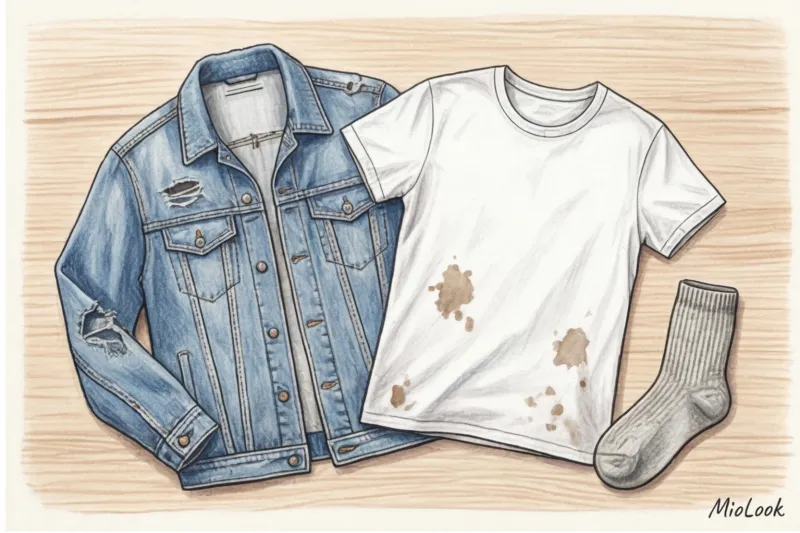
- Underwear, nylon tights, socks and swimsuits (they are not accepted due to sanitary standards and are 100% synthetic).
- Clothing covered entirely in sequins, beads or rhinestones.
- Polyurethane products (artificial leather) - they crumble and cannot be recycled.
This list has one hard exception If your old, perfectly-made cotton shirt is stained with machine oil, fuel oil, or toxic paint, it won't be accepted, even after ten washes. The chemicals will contaminate other fabrics in the container, and the bag will go straight to the landfill. This is the rare case where the item will actually have to be thrown in the regular trash.
Your perfect look starts here
Join thousands of users who look flawless every day with the MioLook app.
Get access — €0.99 onceInstructions: How to properly prepare damaged items for return
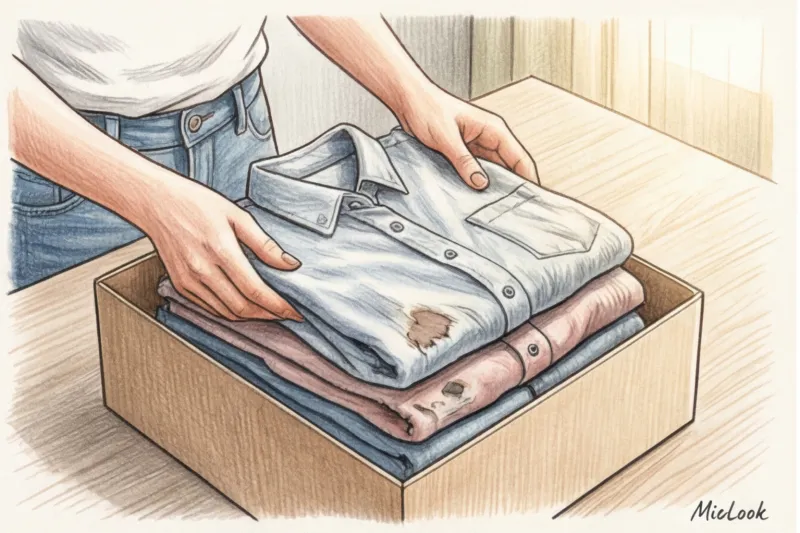
Preparing items for recycling takes exactly 15 minutes, but many people stumble at this step, finding it too complicated. Let's look at a practical, step-by-step plan.
- Mandatory washing. This is basic respect for people. At the first stage of sorting, items are sorted by hand. Even torn rags need to be washed. By the way, if you're in doubt, How to wash linen items Before delivery - just use a quick cycle at 30 degrees without air conditioning.
- Don't waste time on fittings. People often ask: should buttons, zippers, and tags be cut off? No! Industrial magnetic separators and vibrating screens do an excellent job of separating plastic and metal from fabric. Save time.
- The rule of hermetic packaging. Place dry items in a sturdy bag and tie the handles securely with a double knot. The containers are stored outdoors, and if the bag rips, the textiles may become damp from condensation, mold, and become unsuitable for recycling.
Home Offboarding System: How to Stop Accumulating Clutter
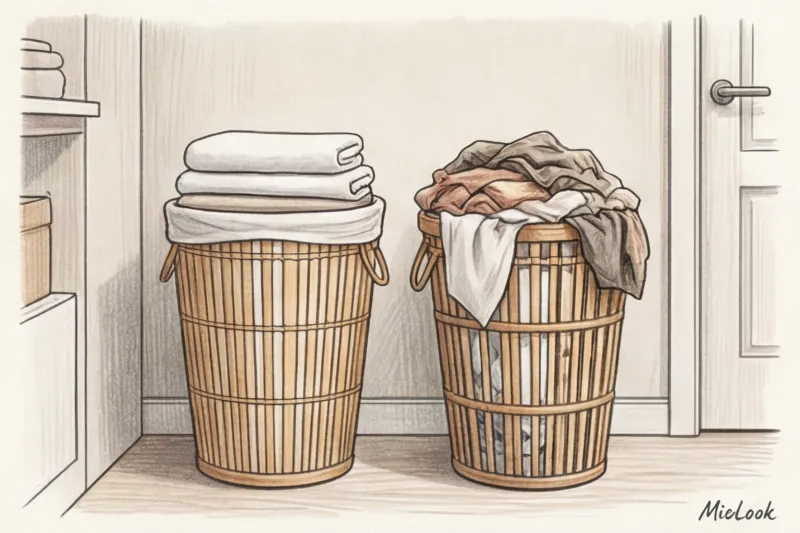
Forget about the infamous "bag full of bags" or the far corner of your closet. Offboarding your belongings should become as routine as sorting plastic or grocery shopping.
I have implemented the method in my practice Quarantine basket Next to my washing machine, I have an elegant bamboo basket that doesn't visually detract from the interior. As soon as I take a T-shirt out of the machine and notice a coffee stain hasn't come out, or I spot a hole in my jumper that can't be repaired, it goes into this basket instead of back on the hanger.
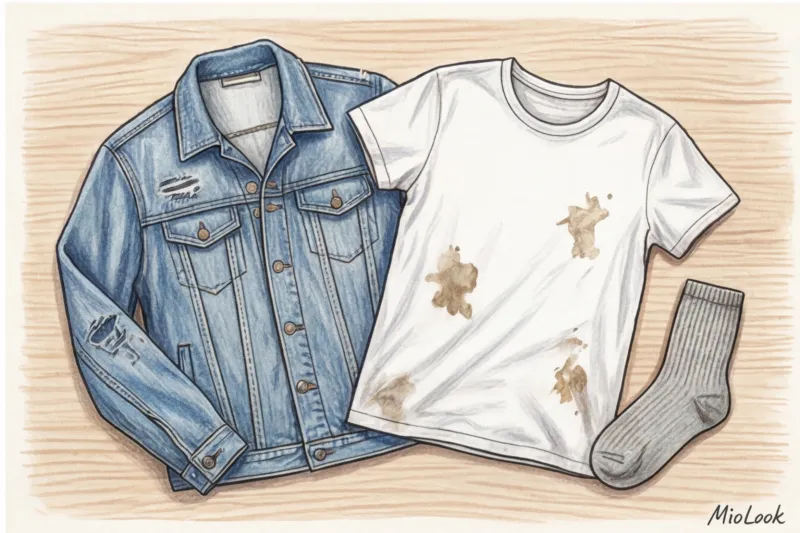
Integrate this process into your seasonal decluttering. Every three months, when you put away your summer clothes and pull out your warm sweaters, simply take the accumulated bag from the quarantine bin and toss it in your trunk or bag. Throwing it in the nearest bin on your way to coffee takes just a couple of minutes, but the psychological effect of clearing your space is priceless.
Ready to get started?
Try the MioLook plan for free—no commitments required. Digitize your wardrobe in a weekend and get rid of unnecessary items.
Get access — €0.99 onceAn Eco-Friendly Capsule Wardrobe: How to Shop with the Future in Mind
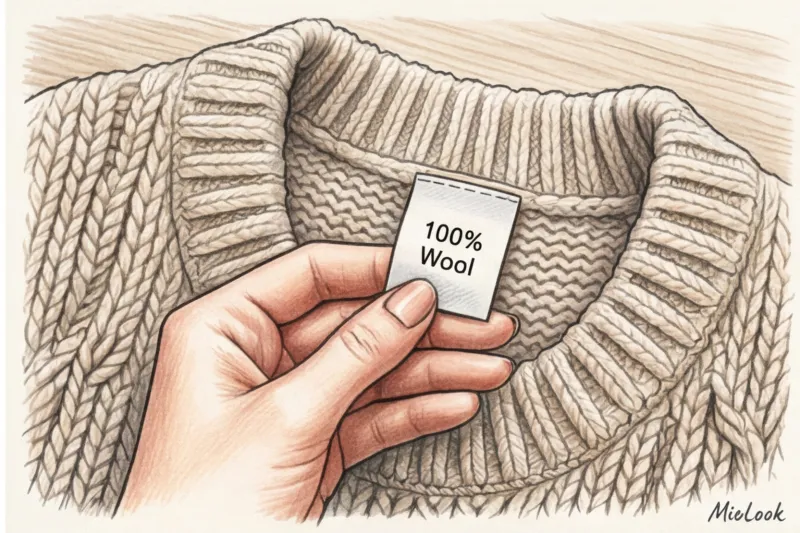
Building a smart wardrobe starts long before the checkout. Modern fashion is moving toward the concept of "circular design," where designers consider how a garment will be recycled in five years. And you, as a consumer, can vote for this approach with your wallet.
Instead of buying a complicated blend blouse (e.g., cotton + polyester + acrylic + elastane), which will become a permanent waste after the first puff, invest in pure blends. For example, for a Friday dress code at the office where everyone wears jeans, but you want to look a little more put-together, choose a crisp shirt made of 100% Tencel or viscose. By the way, Tencel care instructions They are quite simple and can be processed very well.
A quick analysis of the numbers shows that a conscious approach dramatically reduces your clothing budget. Instead of five thin acrylic sweaters for €25 each, which will pill within a month, you buy one basic jumper made of thick cotton or wool for €100–120. It looks expensive, lasts for years, and when it finally loses its shape, it can safely be thrown into the trash bin, closing its eco-friendly cycle.
Getting rid of damaged clothes isn't an act of waste, but a final, beautiful chord in a garment's life. By clearing your hangers of what no longer suits you, you make room for new stylish choices and self-respect in the present moment, not someday "at the dacha."