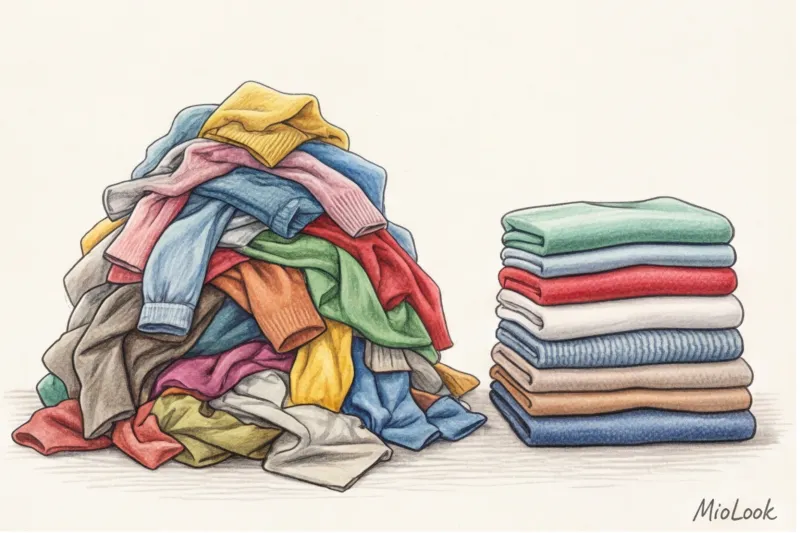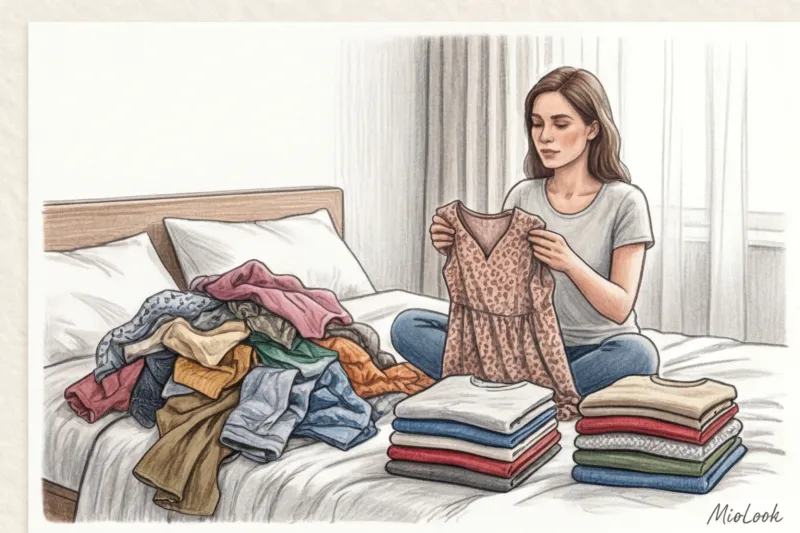
Six months. That's exactly how long my client from Munich carried three huge black bags of clothes in the trunk of her SUV. Every time we called, she'd sigh guiltily: "Katarzyna, I honestly want to give them away, but I don't know where. Shoes aren't allowed in one box, tattered items in another, and mine is all mixed up." Sound familiar? We spend hours choosing the perfect sweater, but when it comes time to part with the clothes, we're stumped.
I wrote more about global eco-friendly recycling processes in our complete guide. Where to donate old clothes: recycling rules But today we'll talk about the purely practical side. I'll give you a clear stylist's protocol: how to prepare things and how to find containers for collecting clothes so that your knitwear actually benefits and doesn't end up in a landfill at the expense of a charity.
Why Finding Clothes Bins Is Only Half the Battle
In my personal shopping experience, I have a firm rule: it's impossible to build a functional wardrobe in a closet filled with "old" clothes. This is the so-called offboarding problem. You're looking at a €120 Massimo Dutti dress that you wore once three years ago. You can't bring yourself to throw it in the trash (and rightly so), and it's unclear who to give it to. As a result, it continues to take up valuable space.
According to a major report by the Ellen MacArthur Foundation (2023), approximately 85% of all clothing produced globally ends up in landfills. The irony is that a huge portion of these items were not thrown directly into the trash, but rather collected with good intentions but with gross violations of sorting regulations.
"Throwing old, dirty clothes into a charity bin with the thought, 'They throw away that kind of stuff in the village,' is a disservice. Charities spend thousands of euros every month on commercially hauling your trash to landfills. Good clothes and rags require completely different approaches."
Freeing up space isn't just about cleaning; it's the first step to dressing mindfully. And it needs to be done right.
What types of clothing containers are there: choosing the right one
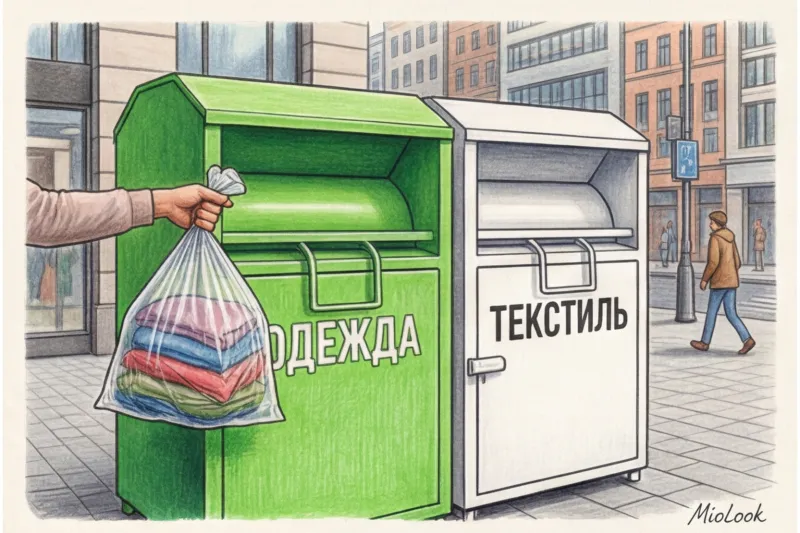
Over 12 years of decluttering wardrobes, I've tested a variety of recycling methods. Mass-market giants like H&M and Zara once accepted any bags at the checkout in exchange for discount vouchers. Now this system has evolved: brands are installing their own clothing collection containers right in their stores. But it's important to understand the differences between these types.
Charitable foundations and second-hand shops
These containers are usually found on streets, in residential areas, or near shopping centers. Their main purpose is to collect clothes that can be worn immediately, without repair or dry cleaning.
Where do these items go? Some (basic warm clothing, men's flat shoes) are sent directly to those in need. Others (fashionable dresses, designer items in excellent condition) are sold in partner charity shops. Proceeds, ranging from €10 to €50 per item, go to fund the foundation's programs.
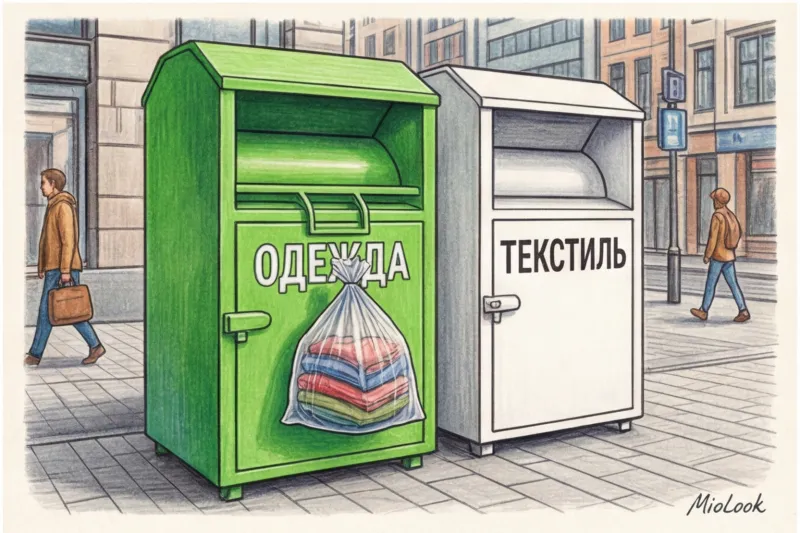
The main rule: We only send here things that you wouldn't hesitate to offer to your friend.
Boxes for recycling rags
These are specialized containers for collecting clothes that have outlived their usefulness. Washed-out T-shirts, sweaters with pilling, torn jeans.
This is where the magic of industrial recycling happens: items are sorted by composition (cotton separately, synthetics separately), the fittings are cut off, and they're sent to the shredder for fiber removal. Your old long-sleeve T-shirt can be turned into excellent car seat padding, construction insulation, or industrial cleaning cloths for factories.
Access to MioLook for €0.99 — one-time payment
A smart AI stylist will select the perfect look from the items left over after sorting.
Get access — €0.99 onceInstructions: How to find the nearest box in your city in 5 minutes
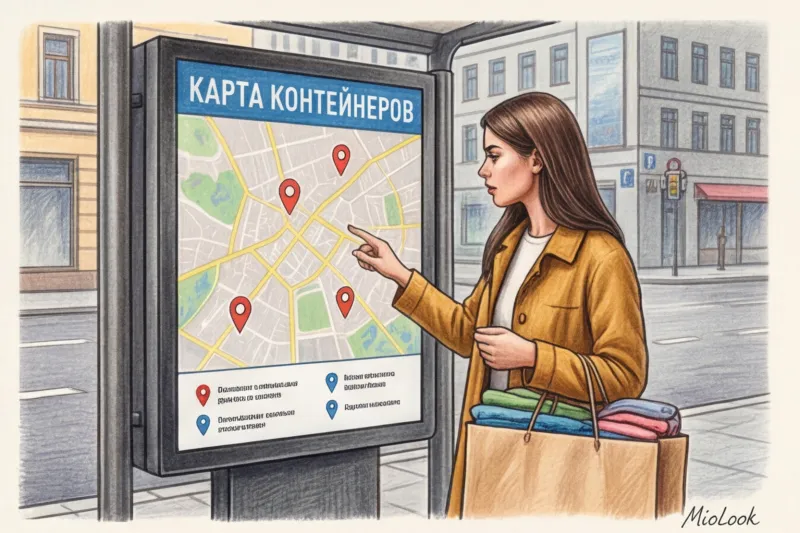
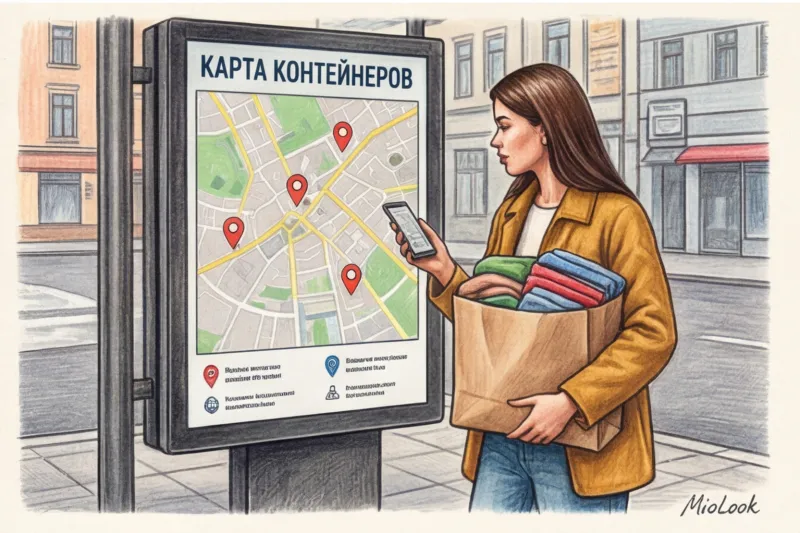
I forbid my clients from going "somewhere to look for a box" without a clear address. This is a guaranteed way to get the packages back home. Here's my tried-and-true search algorithm:
- Use correct search queries. In Google Maps, Yandex.Maps, or 2GIS, don't just type "clothing." Enter: clothing collection points , textile recycling or charity container.
- Check eco-cards. Interactive platforms like Recyclemap are a goldmine. Volunteers regularly update the status of bins using color codes (open/full/cleaned).
- Know the "fishing spots". Most often, clothing collection containers are installed in the parking lots of large supermarkets, in the courtyards of modern residential complexes, in art clusters, or on the ground floors of large shopping centers (near the escalators leading to the parking lot).
Advice from practice: Always, always check the box's current status by checking reviews on maps before leaving, sorting them by newness. Containers are often dismantled due to vandalism or relocated. There's nothing more frustrating than lugging 10 kilograms of clothes to a blank brick wall.
The Hard Truth from a Stylist: How Not to Put Things in a Container
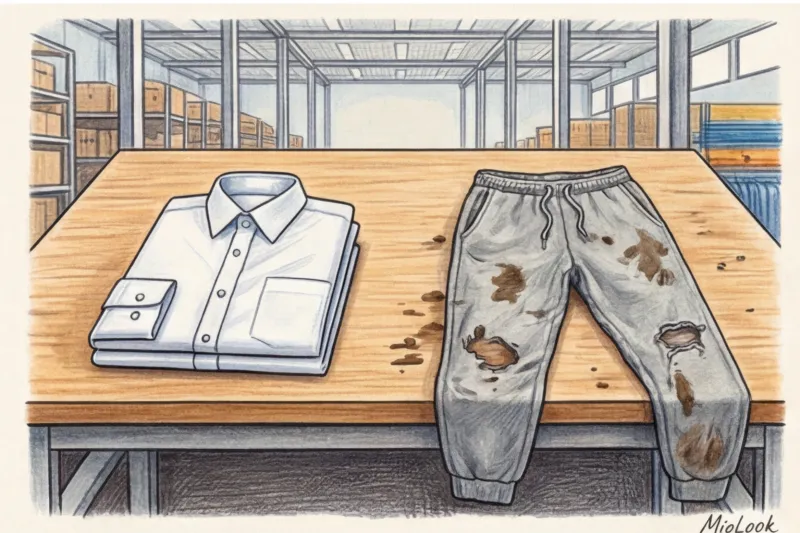
The statistics are stark: only 10-15% of items dropped off at street bins are suitable for resale or wear. The rest is a pain for sorters.
I often speak with representatives of charitable initiatives, and their main problem is moisture and mold. If you throw a half-dried T-shirt into a bin after washing, within a couple of hot days inside the metal bin it will become covered in mold. The spores will instantly spread to nearby items. Eventually, the entire bin (which amounts to hundreds of kilograms of clothing) ends up in a landfill. Your half-dried T-shirt has literally destroyed the donations of dozens of other people.
The second disaster is shoes in bulk. Shoes are sorted on huge conveyor belts. If you simply throw a pair of leather shoes into a bin, one will go to the recycling section, and the other will be lost at the bottom. A single shoe is of no use to anyone—it's 100% trash.
Your perfect look starts here
Join the thousands of users who look flawless every day with MioLook after a smart closet cleanout.
Get access — €0.99 onceChecklist: Preparing Container Bags According to the Rules of a Conscious Wardrobe
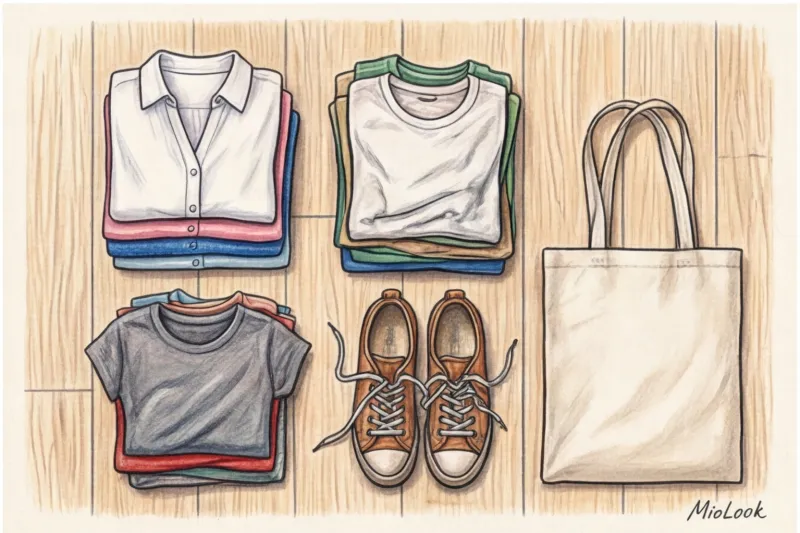
To ensure your efforts don't go to waste, use this checklist every time you review your wardrobe. As soon as you digitize your wardrobe , parting with unnecessary things will become much easier.
- Wash and dry until crisp. No coffee stains, perfume smells or damp collars.
- Empty your pockets. In my experience, clients have dropped off office keys, AirPods, and even folded €50 bills in the boxes. The sorters won't look for the owner of the lost items.
- Tie the shoes. Tie the laces of your right and left shoes tightly. If you don't have laces, secure them tightly with tape or a rubber band.
- Use strong, tied bags. Don't throw things loose. A thick garbage bag (60-120 liters) will protect fabric from dirt at the bottom of the container.
- Make two different categories. Bag #1: "In Good Condition" (put it on and go). Bag #2: "Rags" (holes, pilling, stretched knees—mark it "For Recycling" with a marker, and the sorters will thank you).
Once you've gotten rid of the clutter, it's time to analyze the remaining inventory. To avoid buying unnecessary items again, I recommend loading the remaining items into MioLook — a smart algorithm will show you which elements are really missing to complete your looks.
What to do with the clothes collection containers that are not accepted?
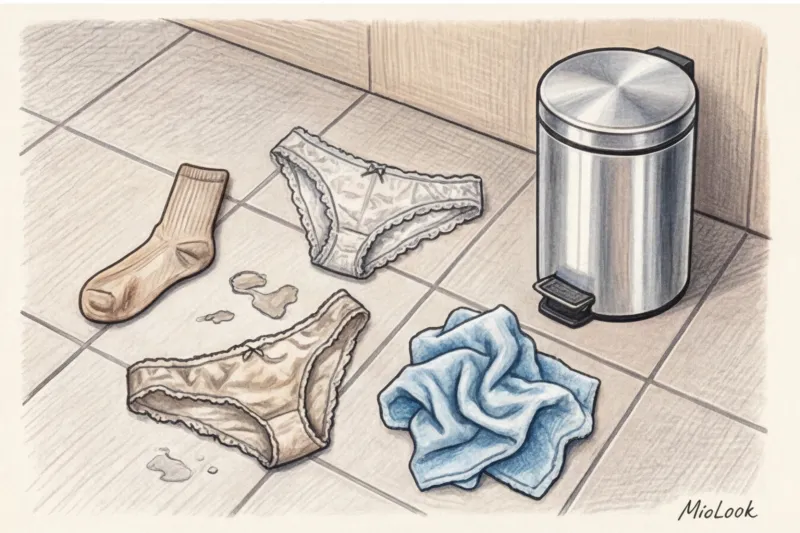
There are certain categories of textiles that clothing collection containers categorically reject (and this is clearly indicated on their fronts). These include: used underwear, nylon tights, old swimsuits, socks with holes, and items made of natural fur. Recycling these materials is either too expensive or technologically impossible with standard equipment.
But there's a solution here, too. Some lingerie brands (like Intimissimi) periodically run promotions: they accept old bras from stores, sending them for soundproofing, and offer a coupon for €5–€10 in return.
For old bed linens, terry towels, and blankets, there's a less obvious but excellent alternative: city animal shelters. They're always in need of textiles for bedding and cleaning their enclosures. Important limitation: Shelters don't accept clothing with buttons, zippers, or sequins (animals might swallow them), so there's no point in bringing old jeans, but they'll happily accept a washed-out cotton towel.
When I finish a wardrobe review with my clients, I always repeat one thought: style awareness begins not at the boutique checkout, but at the moment of eco-friendly parting with an item. Once you find the right container for your clothes, you'll put an end to the problem of "hanging" items forever and finally give your closet some breathing room.