

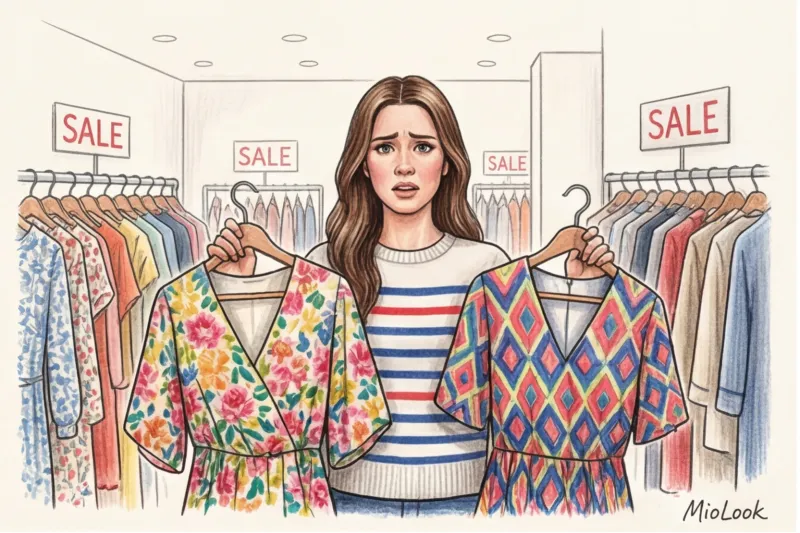
Why We Actually Buy: The Psychology of Impulse Shopping
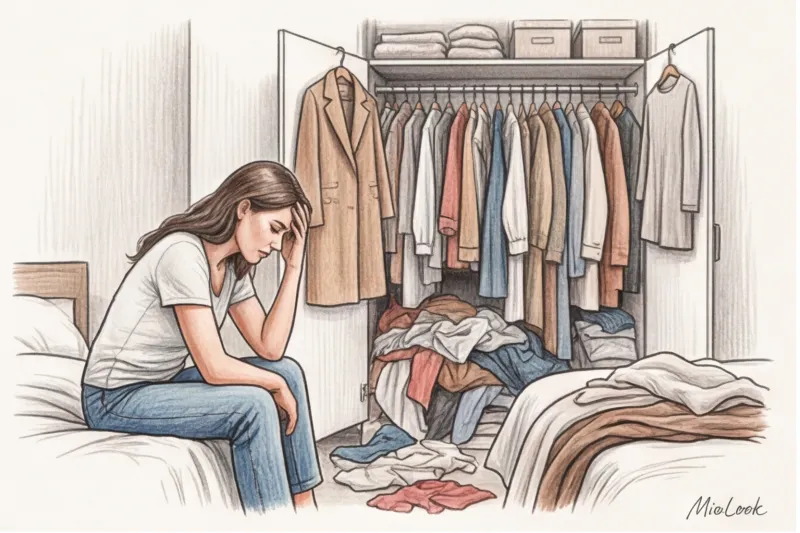
Over 12 years as a stylist, I've seen hundreds of women's closets. Do you know what 90% of them have in common? The closet doors are barely closed, the hangers are tightly pressed together, and yet every morning the owner experiences the agonizing feeling of having absolutely nothing to wear. One day, a client of mine from Paris, a top manager with a brilliant analytical mind, tearfully confessed to me while sorting through her clothes: "I just don't understand why I keep buying these silk blouses when I've been working from home for two years. Teach me..." How to stop buying unnecessary things "Because this closet is literally suffocating me." We're used to blaming such breakdowns on weak willpower or frivolity, but as a journalist who has spent many years studying the fashion industry from the inside, I can confidently say: the truth is far more complex, deeper, and more interesting.
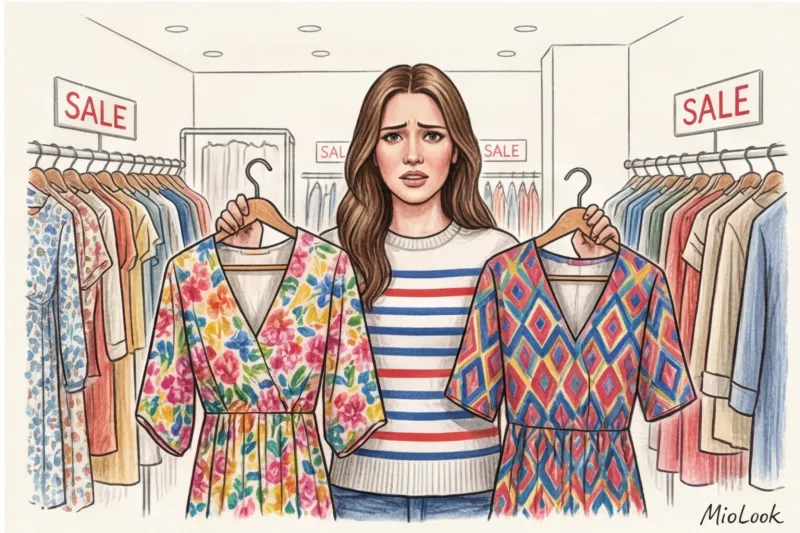
Let's debunk the offensive myth of the notorious "weak willpower" once and for all. Our compulsion to accumulate isn't a lack of character, but an ancient evolutionary mechanism of foraging that has ensured the survival of our species for millennia. For our distant ancestors, finding and preserving surplus resources was the key to survival in an unpredictable environment. Today, the wild savannah has transformed into glittering shopping malls, and the search for rare roots has become a hunt for the perfect cashmere sweater or baguette bag. Your brain is literally programmed to reward you for successfully "obtaining" a valuable resource. The fashion industry has simply masterfully learned to push these primordial buttons.
The neuroscience of shopping provides the key to understanding why the joy of a new purchase fades so quickly. It's scientifically proven that the anticipation of an item brings us far more pleasure than the actual possession. Renowned research by Stanford University neuroscientist Robert Sapolsky shows that the release of dopamine—the hormone that generates anticipation and motivation—peaks precisely when you anticipate a reward, not when you receive it. When you take an item to the checkout or click "Checkout" in an online store, your brain has already received its maximum dose of chemical happiness. Neurophysiologically, you no longer need the item itself—its mission is accomplished. This is why luxurious dresses and shoes can sit in bags for years, never seeing the light of day.
"Shopping isn't always about clothes. Eight times out of 10, we're not buying fabric or cut, but the version of ourselves we desperately want to be at a given moment in our lives."
In pop culture, this is commonly referred to as "retail therapy," and modern psychology recognizes it as a valid tool for emotional regulation, not just a bad habit. When we experience stress, we try to buy the emotional state we lack. When we buy a $400 architectural jacket, we're paying for the illusion of confidence and authority before a challenging presentation. When we buy a flowing floral dress from Zimmermann, we're paying for the dream of ease and a carefree vacation on the Riviera that we haven't had in three years. We're buying status, peace of mind, comfort, or belonging to a certain class. And without recognizing this pattern, our wardrobe quickly turns into an expensive graveyard of unfulfilled ambitions. By the way, if you're interested in how to project success without impulsive spending, I recommend checking out our secrets of a status wardrobe.
The Diderot Effect and the Infinite Chain of Purchases
There's a classic example in the history of fashion and consumer psychology that brilliantly explains how just one "perfect" purchase can ruin your budget. It's the so-called Diderot effect. In the 18th century, the famous French philosopher Denis Diderot received a luxurious scarlet robe as a gift. It was so magnificent that the old furniture in his study suddenly seemed unbearably shabby compared to the new addition. Diderot replaced the chair, then the desk, then the tapestries on the walls. Ultimately, that single new robe completely transformed the interior and plunged the philosopher into serious debt.
In a modern woman's wardrobe, the Diderot effect looks like this: you buy stunning emerald shoes in a complex shade. When you get home, you realize with horror that none of your basic dresses complement them. You return to the boutique to find a suitable dress. The new, more elegant silhouette requires a different, more structured bag, and over it, a coat of the right length so the hem doesn't look sloppy. This endless chain of purchases begins every time we purchase a single item without considering the context.
How can you break this financial vortex? The answer lies in a rigorous, systematic approach at the planning stage. Before buying a bold statement piece, ask yourself: "What items already in my closet can I create at least three different outfits with?" In my practice, I teach my clients to visualize their outfits in advance. A great tool for this is the Smart Wardrobe feature in MioLook , where you can digitize your items and instantly check whether a new skirt will fit into your current base, without forcing you to buy five more items.
The Dopamine Trap: How Sales Hack Our Brains
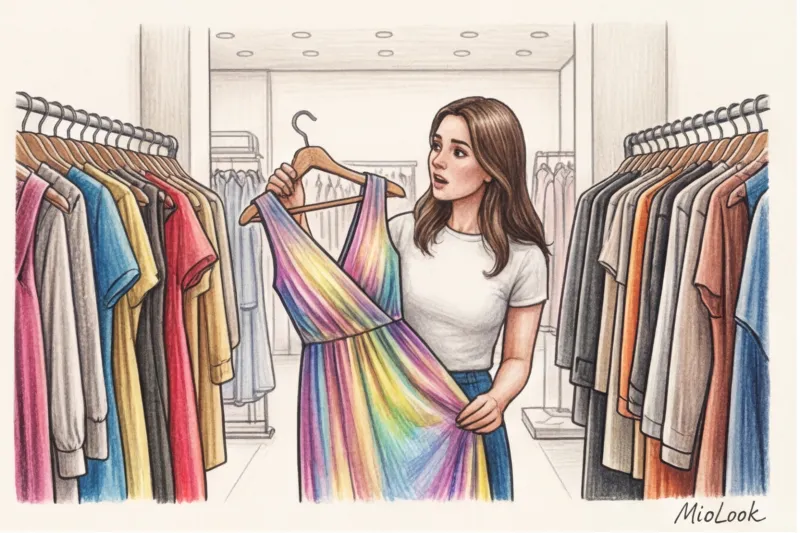
Seasonal sales and periods like Black Friday are a distinct, highly sophisticated form of retailers' psychological warfare. Among professional marketers and stylists, we often use the term "Sale Goggles." Have you ever noticed a strange phenomenon: an item you wouldn't even consider at full price during the peak season suddenly seems incredibly stylish and "absolutely essential" once you slap a neon-red price tag with "70% off" on it?
This is where pure physiology comes into play. The sight of an aggressive discount and artificially created scarcity ("last size left!") literally paralyzes the prefrontal cortex—the area of the brain responsible for logic, critical thinking, and long-term risk assessment. Simultaneously, the amygdala and the pleasure center are activated. Our heart rate quickens, and we experience the euphoria of an ancient hunter who has caught a large prey. Both mass-market and premium brands are well aware of this mechanism and ruthlessly manipulate it.
The most dangerous mental trap of sales is the illusion of a bargain. Our brain is cunning: it convinces us that we're not spending money, but earning it. But let's turn to the ruthless mathematics of style. If you bought a designer asymmetrical skirt at 70% off for €150 instead of the original €500, but it's still hanging in your closet with the tag intact because it doesn't suit your lifestyle, you haven't saved €350. You've lost 100% of your money—that's all €150. This is the brutal truth I have to explain almost every time I review my wardrobe. Real savings come from buying the perfect basic item at full price that you'll happily wear a hundred times, not from acquiring five "great bargain" trophies that will become mere monuments to your dopamine addiction.
Ideal Self Syndrome: The Main Cause of Excessive Things
I bet if you took stock of the clothes in your closet right now that still have the tags on or have only been worn once, you'd discover a curious pattern. Most of them don't fit into your daily routine. Behavioral psychologists call this phenomenon "buying for the sake of it." 'Fantasy Self' It is precisely on this fictitious person that we sometimes spend the lion's share of our budget.
Your fantasy self is your idealized avatar. This is the woman you dream of becoming in a parallel universe: she attends theater premieres every weekend, drinks espresso on terraces in immaculate white trousers (and never spills coffee on them), does Pilates at 6 a.m., and hosts dinner parties. Dr. Carolyn Mair, in her book, The Psychology of Fashion (2018), brilliantly notes that clothing often serves as a cognitive tool for us, trying to bridge the gap between who we are and who we want to appear.
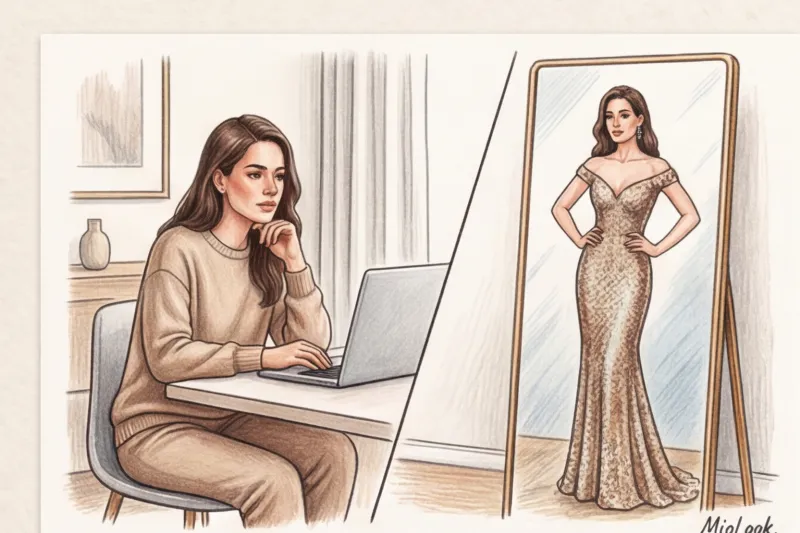
This creates a critical wardrobe conflict: we buy clothes for life that we don't have. A classic example from my consultations: a successful freelance designer working from a home office whose closet is overflowing with silk evening slip dresses. Or a young mother on maternity leave who, out of inertia, continues to buy formal three-piece office suits because she yearns for her corporate identity and status.
"The difference between aspirational shopping and a utilitarian approach lies in the object of investment: in the former, you fund your illusions and buy hope; in the latter, you invest in your own daily comfort."
Aspirational shopping is insidious because buying something gives us the instant illusion that we've already become this new version of ourselves. Bought Alo Yoga leggings? That means you're almost ready to go to the gym. But reality always prevails.
I had a very revealing case with a client, a top executive at a major consulting firm. She adored shoes and hoarded 10-centimeter-high Jimmy Choo and Prada pumps. Her fantasy self was a powerful woman from the TV series "Suits," clicking her heels across the marble floors of skyscrapers. But what about reality? In reality, her workday consisted of dashing between business centers, taking the subway to avoid traffic jams, and taking 10,000 steps a day. She spent 90% of her time on her feet in ballet flats and loafers. We calculated that she spent over $5,000 on stilettos, which she wore twice a year, while her everyday flats were worn out and cheap, because she "didn't want to spend a lot of money on boring shoes."
Real Lifestyle Audit: Your Time Chart
To break the vicious cycle of buying for a fantasy life, we need to face the cold hard facts. I always make new clients complete a sobering practical exercise: creating a pie chart of their actual time allocation.
Take a piece of paper and write down all 168 hours of your week. Subtract the time spent sleeping (let's say 56 hours). You're left with 112 hours of active time. Now, honestly, without embellishment, categorize them: How many hours do you sit in an office with a relaxed dress code? How much time do you work from home on your laptop? How much do you walk the dog or play with the kids in the park? And how many hours per month (divide by 4) do you actually spend at social events or in the theater?
The next step is to compare the resulting diagram with the contents of your closet. This is where critical discrepancies can be identified. If the diagram shows that 65% of your time is spent working remotely and doing household chores, while 50% of your closet is made up of delicate silk blouses and pencil skirts, you have a clear reason why you're "full of clothes, but nothing to wear." By the way, if you're not a fan of hand-drawn diagrams, you can easily digitize your items using smart wardrobe analytics feature in MioLook The algorithm will automatically analyze your categories and show you in percentages where you have an overabundance and where there is a severe shortage of basic elements.
The main secret of a conscious and rational wardrobe lies in strict adherence 80/20 rules We should invest 80% of our clothing budget in areas where we spend 80% of our time.
It sounds logical, but in practice, we do exactly the opposite. We'll easily spend €300 on a dress for a friend's wedding (which we'll wear once), but we'll be hesitant to spend €100 on the perfect, thick, well-fitting white T-shirt or quality cashmere joggers—things we'll live in every day. Once you shift your spending focus from your "Fantasy Self" to your real self, the need for constant compensatory purchases will dramatically decrease. You'll start feeling great every minute of an ordinary Tuesday, not just on those rare holiday evenings.
Digitize your wardrobe in a couple of clicks
Find out the real balance of items in your closet. MioLook's smart AI stylist will help you identify gaps in your wardrobe and create everyday looks from what you already own.
Get access — €0.99 onceWardrobe Anatomy: How to Stop Buying Unnecessary Items
In 2023, the "No-Buy Year" trend took over social media. Tens of thousands of women publicly vowed to freeze their credit cards and avoid shopping malls. However, according to statistics from behavioral psychologists, the vast majority of such radical experiments end in a major relapse within three or four months. Why? Because the same law applies to consumer psychology as to nutrition: a strict diet inevitably leads to compulsive overeating.
When we set ourselves uncompromising limits and ultimatums, the brain perceives this as a threat to survival and a resource deficit. Your attention is artificially focused on the "forbidden fruit," and at the slightest moment of weakness—be it stress at work or the seasonal blues—a breakdown occurs, during which you buy three times as much of what you don't need. To really understand, How to stop buying unnecessary things We need to fight not the very fact of purchasing through prohibitions, but completely change the architecture of decision-making right in the fitting room.
The first step to this transformation is a radical paradigm shift. We must stop quantifying our wardrobe. "I only have five sweaters, I need one more." ) and start thinking in terms of the "combinability index." In professional styling, we never evaluate a garment in isolation, no matter how magnificent it may appear on the hanger. As Miuccia Prada so aptly noted, clothing only gains its true meaning in context. The main problem with modern wardrobes is so-called "orphans": striking, vibrant pieces that hang like dead weight because they require completely specific, missing companions.
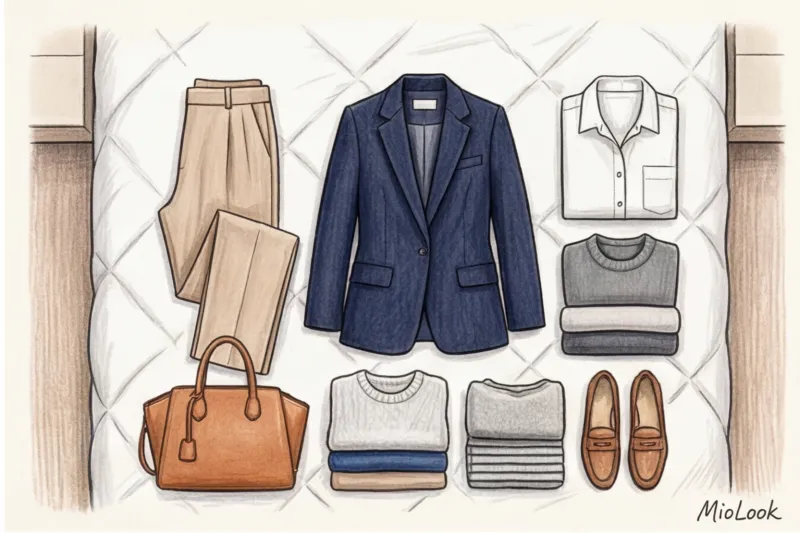
This is where the "Rule of Three Looks" comes into play. It's not just popular advice, but a rigorous, mandatory filter that professional image consultants use before approving any purchase from their clients. It goes like this: If a new item can't be combined into at least three completely different, complete outfits with what's already hanging in your closet, it stays in the store No promises like "I'll buy her the perfect pants next week."
Let's say you're holding a luxurious, statement tweed jacket. Let's run some analytics: could you wear it with your favorite straight jeans and a basic T-shirt for Sunday brunch? Yes. With a silk midi skirt and ankle boots for an evening at the theater? Absolutely. Will a smart turtleneck and palazzo pants be suitable for an important work meeting? If the answer to the third question is unanswered, you're potentially wasting your money. To automate this process, I always recommend that my clients digitize their assets. By uploading a photo of their database to the "smart wardrobe" feature in the MioLook app , you can put together visual collages of potential new items in just a couple of minutes, turning off your emotions and turning on cold stylistic calculation.
Cost Per Wear (CPW) Formula: The Mathematics of Mindfulness
If the "rule of three looks" is responsible for stylistic integration, then the Cost Per Wear (CPW) formula is the pure mathematics of mindfulness. This term, which has become the gold standard of fashion analytics, completely revolutionizes our perception of what constitutes "expensive" and "cheap." The formula is crystal clear:
CPW (Cost Per Output) = Cost of the item / Number of outputs in it.
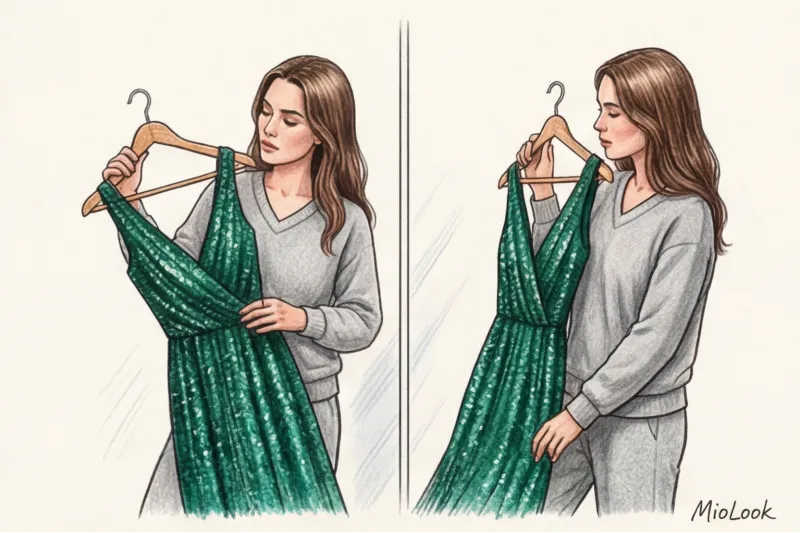
Let's do some real-world calculations. You buy a trendy asymmetrical sequin dress from a popular high-street store for $50 for a corporate New Year's party. You wear it exactly once, snap a photo for social media, and then it settles forever in the back of your closet, awaiting the next appropriate occasion (after all, it's not customary to wear the same statement piece twice at parties). Its CPW is $50.
On the other hand, you invest $200 in an impeccably tailored white shirt made of thick, shape-resistant cotton from a brand like Theory, COS, or Toteme. You wear it to the office under a blazer, throw it over a top on vacation, and wear it with jeans on the weekend. Conservatively, we estimate that you'll wear it 50 times in the first year. Its CPW is only $4.
The paradox that's so hard for our brains to accept when they see red price tags is that "expensive" premium cotton is 12 times cheaper than "budget" disposable polyester. According to a large-scale global market study by the Ellen MacArthur Foundation (2021), the average number of times an item is worn has decreased by 36% globally over the past 15 years. We are literally drowning in cheap but financially unsustainable clothing. The habit of mentally counting the CPW at the checkout is a powerful antidote to fast fashion. You shift from endless consumption to wise investment in your own comfort.
Marketing tricks that make us spend more
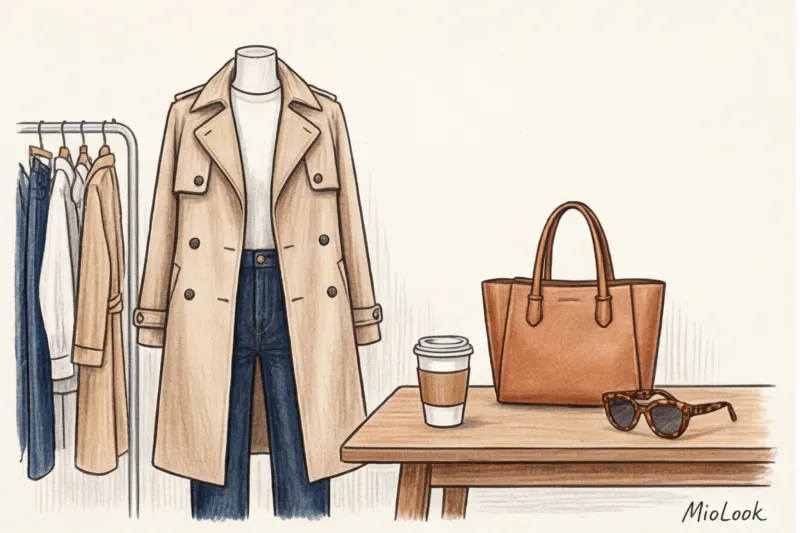
Have you ever noticed how large department stores almost never have windows or wall clocks? This isn't an architectural accident, but a classic example of the "Gruen Effect." Named after architect Victor Gruen, who designed the first indoor shopping mall in 1956, this phenomenon describes a state when a deliberately confusing layout causes shoppers to completely lose track of time and spatial orientation. You go in looking for a specific beige trench coat, and an hour later you find yourself in the accessories section holding three silk scarves. Logic gives way to emotion, and we shift from purposeful search to impulsive absorption of visual impressions.
But spatial disorientation is only the first stage. Then sensory marketing comes into play. The tempo of background music in mass-market products is often set at 120 beats per minute: this rhythm forces you to move faster between tracks and make hasty decisions. And signature brand fragrances directly affect the receptors, bypassing critical thinking and creating a subconscious feeling of exclusivity.
As an industry insider, I'd like to reveal the biggest secret of fitting rooms: light temperature. It's the key to colossal sales. Premium boutiques use soft, diffused frontal lighting with a color temperature of exactly 3500-4000 Kelvin (warm neutral) and additional side panels. This lighting scheme works like a retouch in glossy magazines: it blurs nasolabial folds, evens out skin tone, removes under-eye shadows, and makes you look rested and luxurious. You try on a €1,200 jacket and fall in love not with the fabric, but with your own perfect reflection. Meanwhile, fast fashion often uses harsh overhead lighting: it creates harsh shadows on the face, enticing you to buy the item quickly to compensate for the discomfort and flee the fitting room. The problem is that at home, under standard household lamps at 2700K, the magic of an expensive jacket suddenly evaporates.
The lighting in the fitting room doesn't sell you clothes, but the illusion of a better version of yourself. As soon as you remove the item from this carefully orchestrated space, the magic is shattered.
While offline stores manipulate us through physical sensations, online, artificial scarcity reigns supreme. Aggressive red "Only 1 item left in your size" signs or ticking timers in your shopping cart are the digital equivalent of a predator on the savannah. Such visual triggers instantly activate the amygdala, triggering an acute attack of FOMO (fear of missing out). Under stress, the analytical center shuts down: we completely forget about both the combination index and the Cost Per Wear formula, discussed in the previous chapter.
To protect yourself from these tricks, you need to take a break. When a website screams that the discount will expire in 15 minutes, take a deep breath and close the tab. I always advise my clients to focus on facts, not emotions, in such moments. Simply open the smart wardrobe feature in MioLook and look through your actual inventory to see for yourself: you already have three basic sweaters, and you don't really need a fourth one, even one with a discount timer.
Access to MioLook for €0.99 — one-time payment
Start creating perfect images with the help of artificial intelligence
Get access — €0.99 onceThe Decluttering Myth: Why Spring Cleaning Invokes Shopping
In 2019, while covering the influence of popular culture on consumption for a European publication, I noticed a disturbing statistic: the peak of fast-fashion sales strangely coincided with the global craze for tidying up. Let's call it the "Kondo Paradox."
We're used to thinking that ruthlessly getting rid of bags of clothes is the first step to mindfulness. In reality, radical purging creates a dangerous psychological "blank slate trap" effect. By throwing out clothes, we don't just clear out shelves; we physically free ourselves from the guilt of wasted money and impulsive purchases. The closet is empty, our conscience is cleared, and our brain gives the green light for another massive shopping spree. At this point, we're incredibly vulnerable to marketers, driven not by a genuine need, but by the euphoria of the resulting empty space. We feel like we've thrown out our bad shopping habits along with the old, stretched-out sweaters.
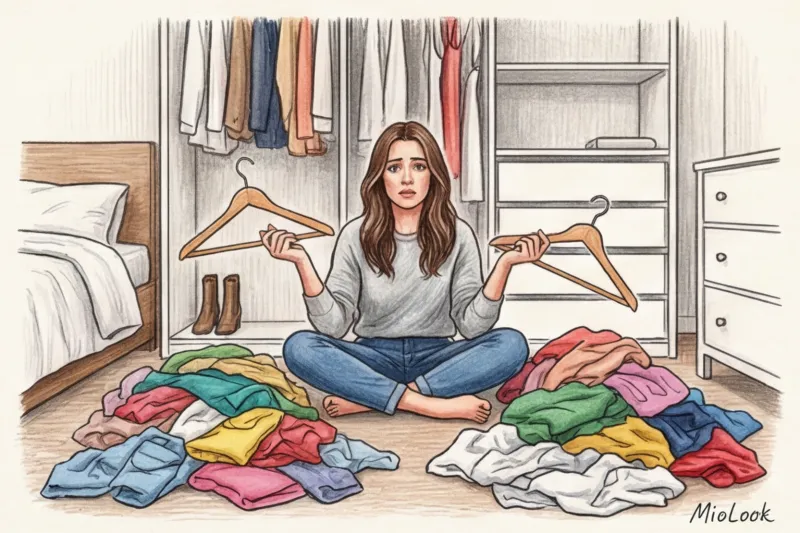
"Feeling guilty about an overstuffed wardrobe is a natural brake on our consumer appetite. By removing this brake through aggressive decluttering, we risk relentlessly shopping," notes behavioral analyst and fashion psychology researcher Emma Ross (2021).
Sound familiar? You solemnly recycle ten hastily purchased polyester blouses and immediately decide that now you absolutely need "new, perfect basics." Data from the Journal of Consumer Psychology confirms this trend: after getting rid of the old, we, with a clear conscience, rush to buy the perfect white T-shirt made of thick organic cotton for €120 or a flawless trench coat for $400. We naively believe that this investment is definitely worth it. In reality, we simply justify this expenditure by claiming that we are building a "capsule," although in reality, we quickly fill the resulting space. And the vicious cycle of hoarding begins all over again.
The secret of that, How to stop buying unnecessary things The key isn't in the trash bag, but in taking a break. Instead of ruthless disposal, I suggest using a "quarantine" strategy. Collect the clothes you're hesitant about into opaque boxes, tape them shut, and put them away on the attic for exactly three months.
If you haven't thought about your stashed tweed jacket during this period, it's truly time to say goodbye to it. But if the need arises, you'll return the item to your active wardrobe consciously, understanding its true purpose. To prevent this process from becoming a blind spot, it's helpful to keep a digital record. Upload photos of your "quarantine" clothes to MioLook app By assigning them archive status, you'll always be able to see what resources you already have before you hit the "pay" button at the next online store.
A Practical Guide: 5 Steps to Mindful Shopping
According to WGSN, a 2024 analysis, over 60% of clothing purchases are made spontaneously—most often in the evening, when our self-control is depleted. Do you know what tool most effectively protects my clients' budgets? Not strict asceticism, but introducing micro-pauses between stimulus and reaction. I've developed a simple five-step protocol that turns impulsive spending into a well-considered decision.
Step 1: The 24-72 Hour Rule and Digitizing Your Desire
The next time your hand reaches for the "Pay" button, stop. Your job is to digitize desire Add an item to your cart, choose a size, and then... just close the tab. Give yourself 24 to 72 hours to think about it. Stanford neuroscientists have long proven that the maximum release of dopamine occurs in the moment of anticipation of a purchase, not after the transaction. By adding an item to your virtual cart, you already receive a chemical reward without spending a cent. Spoiler: after three days, 80% of these carts will remain abandoned.
Step 2: Maintaining a Wishlist with Addition Dates
If an item has stood the test of time, it goes on your global wishlist. Key rule: be sure to pin it date added This psychological trick creates the illusion of ownership: the brain calms down, realizing the object is fixed and won't disappear. Review the list once a month. I regularly observe how the desire to own a trendy €350 jacket evaporates without a trace after three or four weeks, giving way to genuine bewilderment: "Why did I even need that?"
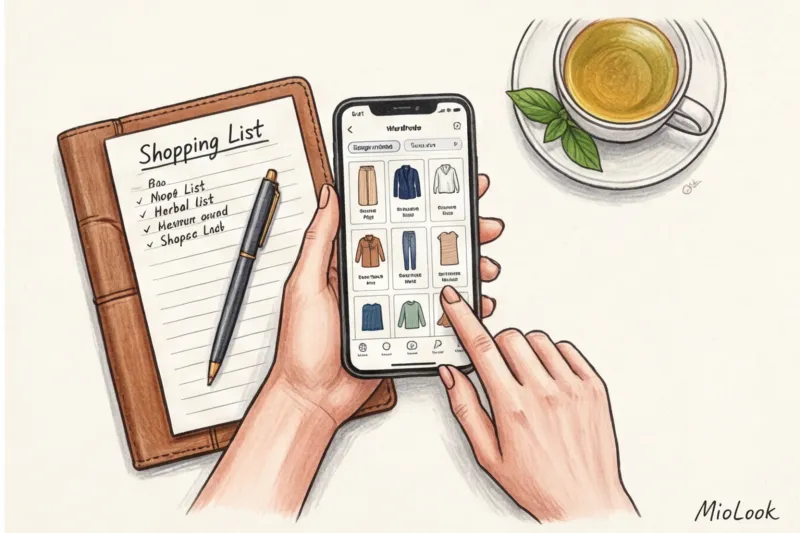
Step 3: Shop Your Closet Technique
Before heading to a boutique or opening a marketplace, shop your own closet. Try recreating your desired look using what you already own. Falling in love with an influencer's oversized sweater and midi skirt look? Pull out your own pieces with similar silhouettes and try them on.
"Often we want to buy not the item itself, but a new styling formula. Borrow the idea, not the clothes"—that's the professional mantra I always repeat to my clients when preparing their wardrobes for Fashion Week.
Step 4: Unsubscribe from triggers
Brand newsletters and influencer feeds are masterfully designed machines for creating false needs. They sell you lifestyle, making you believe that without these specific ankle boots, your fall will be a style failure. Do a digital detox: unsubscribe from promotional newsletters and hide the posts of those bloggers whose content triggers FOMO. Eliminate visual noise to discover your true taste.
Your ideal image begins Here
Join thousands of users who look flawless every day with MioLook.
Step 5: AI and Wardrobe Management AppsIn the age of digital wardrobing, relying solely on visual memory is a luxury that leads to unnecessary spending. Use modern technology for virtual fitting and analytics. By uploading your items to the "smart wardrobe" feature in MioLook , you get an objective picture of your assets. Before buying new pants, you virtually add them to the app and check: will they work with your current clothes? If the artificial intelligence can't find a pair from your closet, the item is guaranteed to sit on the shelf as dead weight.
Self-Care Without a Credit Card: Alternatives to Retail Therapy
Cognitive behavioral therapy (CBT) offers an effective tool for working with impulse control, which brilliantly explains how to stop buying unnecessary things. Before buying another cashmere sweater or designer bag for a quick mood boost, experts recommend conducting an internal check-up using the system HALT.
This abbreviation stands for Hungry, Angry, Lonely, Tired (Hungry, Angry, Lonely, Tired). A deep analysis of triggers reveals that the vast majority of unplanned spending occurs precisely at moments of vulnerability. We mindlessly scroll through marketplaces after a grueling workday (Tired) or head to the mall when we feel socially isolated (Lonely). At such moments, the brain searches for the fastest and most socially acceptable way to get a dose of neurotransmitters. Awareness of this mechanism is your main defense. You don't need new €250 ankle boots; you're simply physically exhausted and in need of some quality rest.

To outsmart your brain in times of stress, I highly recommend creating a personalized "menu of joy" This should be a tangible, physical or digital list of 10-15 activities that are guaranteed to bring you pleasure, but don't involve acquiring new material objects. Divide it into categories: from quick five-minute practices to full-fledged plans for a free evening.
The key goal of this tool is to intelligently redirect dopamine flow. Instead of buying band-aids, try investing the same amount in body care, education, or unique experiences. If you're willing to spend €150 on a trendy mass-market dress you'll wear a couple of times, redirect that budget to a relaxing massage, a floatation session, or a full-body checkup.
Feeling a strong need for something new? New knowledge and neural connections are a great way to quench this thirst. A yearly subscription to a high-quality educational platform, an architecture masterclass, or a ticket to a great theater premiere will cost less than a pair of designer sneakers, but will provide a much deeper sense of satisfaction. In my personal practice, implementing such a "menu" has helped dozens of clients cut their impulse shopping expenses by almost half. The feeling of quality self-care and new skills builds lasting self-esteem that can't be bought in any boutique.
Conclusion: From quantity to status and personal branding
Do you know what the main difference is between a woman who's always on sale and one whose style is considered impeccable? It's the level of visual noise. Watching glossy editors and buyers on the sidelines of Milan Fashion Week, I've long since learned an insider secret: the closets of the industry's most stylish and influential people are strikingly compact. When readers ask me, How to stop buying unnecessary things I propose shifting the focus from exhausting financial control to building your own image.
We're used to associating abstaining from mindless shopping with deprivation and boredom. But let's face it: mindful shopping isn't about saving for the sake of saving, and certainly not about strict restrictions. It's about deep self-respect and a completely different quality of life. It's a long-awaited shift from being a confused shopper, driven by marketing gimmicks, to becoming a strategic curator of your own personal brand. You no longer try to "numb" the stress of a hard day's work with $29 polyester blouses. You buy only what's worthy of your body, your time, and your status.
"Your wardrobe isn't a warehouse of fabrics, but your personal PR agent, working for you even when you're silent" – that's how I usually begin my wardrobe decluttering workshops.
And here a logical question arises: how exactly does a minimalist yet mathematically precise wardrobe enhance your status in the eyes of others? Social psychology provides the answer. British fashion researcher Joan Entwistle, in her work "The Fashion Body" (2015), demonstrates that high-quality texture, perfect fit, and overall grooming are perceived by the brain of others in milliseconds. A structured jacket made of thick merino wool for €450, worn twice a week, conveys stability, confidence, and professionalism. But ten mismatched, trendy jackets from the mass market, bought in a shopping frenzy, create only a sense of fuss and visual instability.

To make this transition from chaotic consumption to a curated style as smooth as possible, you need to rely on facts. Your brain will resist and demand quick dopamine purchases, so I strongly recommend relying on digital tools. After uploading your essentials to MioLook , you'll clearly see your true "golden reserve" and those gaps that truly require thoughtful investment. The app acts as your personal, impartial stylist, preventing you from buying more black pants if the system shows you already own five.
Let's distill this paradigm shift into three simple rules that will change the way you approach things:
- From quantity to weight: It's better to have one thing that works for you 100% than ten that require stylistic compromises.
- From Impulse to Strategy: Each purchase should meet a real, not an imaginary, need in your current schedule.
- From consumption to curation: You don't just buy clothes, you collect a collection that reflects your values.
One of my clients, an architect from Berlin, admitted after six months of working according to this principle: "Camilla, I spent a third of my money on clothes, but my colleagues started asking if I'd gotten a raise. I look more expensive, even though I have significantly fewer clothes." This is the magic of a strategic approach to your image.
My final message to you: invest in style, not in random trends. Microtrends are a means for corporate enrichment; their shelf life expires after exactly one season. Your personal style is your social capital, which only increases in value with age. Let every item on your hanger be a manifestation of your confidence, not a monument to a moment of weakness in the face of a red price tag.
Guide Chapters
A Year Without Buying Clothes: Challenge Rules and Results
A radical yet healing step for your wardrobe. Learn how to endure a style detox and find your true self without buying anything new.
Shopping as a Stress Reliever: Green Alternatives
Is your closet overflowing with price tags, but you're not feeling any joy? We explore why we buy based on emotion and how to find an eco-friendly alternative to retail therapy.
How to Ditch the Mass-Market Clothing: A Stylist's Advice
A full closet, but nothing to wear? Find out why giving up fast fashion isn't asceticism, but a conscious shift to a new level of quality.
Black Friday: How to Avoid Buying Unnecessary Items During Sales
Mass sales are a well-thought-out sales system, not a lavish celebration. We'll explore how to keep a cool head and a sturdy budget during the season of massive discounts.
Your Closet and Budget: How Decluttering Your Wardrobe Saves Money
A closet audit isn't just a simple cleaning; it's a deep financial analysis of your habits. Find out why forgotten items are eating into your budget and how to stop it.
The 30-Sock Rule: How to Estimate the Real Value of an Item
Cheap clothes are too expensive. We'll explore how to apply the 30-Wear Rule and the Cost Per Wear formula for smart and eco-friendly shopping.
Why I Buy Clothes and Don't Wear Them: A Stylist's Analysis
Is your closet overflowing with clothes with tags still attached? We'll explore the psychological reasons behind mindless purchases and learn how to shop mindfully.
A Smart Clothing Shopping List: How to Create a Season-Long Clothing List
Tired of a closet full of clothes you have nothing to wear? Learn how to plan your seasonal shopping properly and avoid mental traps.
Impulse Clothing Buying: How to Stop It Once and For All
A practical step-by-step guide from a personal stylist that will help you stop buying unnecessary things for your "fantasy self."
How to stop buying clothes that don't fit: tips
We'll explore why we buy clothes for an ideal life, not for the real one. Practical advice from a stylist will help you make informed wardrobe choices.
An app for tracking clothes in your wardrobe against duplicates
Why do we buy a sixth identical blouse, and how can we stop it? A stylist explains how a digital catalog can help you avoid unnecessary spending.
Frequently Asked Questions
What is your color type?
Find out your seasonal color type and choose clothes that highlight your natural beauty.
About the author
Try MioLook
on your own photo
Start building outfits from the clothes you already own — and see each one on yourself.
Get access — €0.99Related Articles
Emotional Shopping: How to Stop Buying Unnecessary Items
We'll explore what emotional shopping is and why we try to buy happiness. Learn ...
How to Stop Buying Unnecessary Clothes: Tips from a Stylist
Is your closet overflowing with clothes, but you still have nothing to wear? Lea...
How to Stop Buying Unnecessary Clothes: Mindful Shopping
Shopping diets don't work. Learn how to overcome the "closet full, nothing to we...
How to stop buying unnecessary clothes and save money
Standard advice from glossy magazines won't prevent impulse purchases. Learn a p...