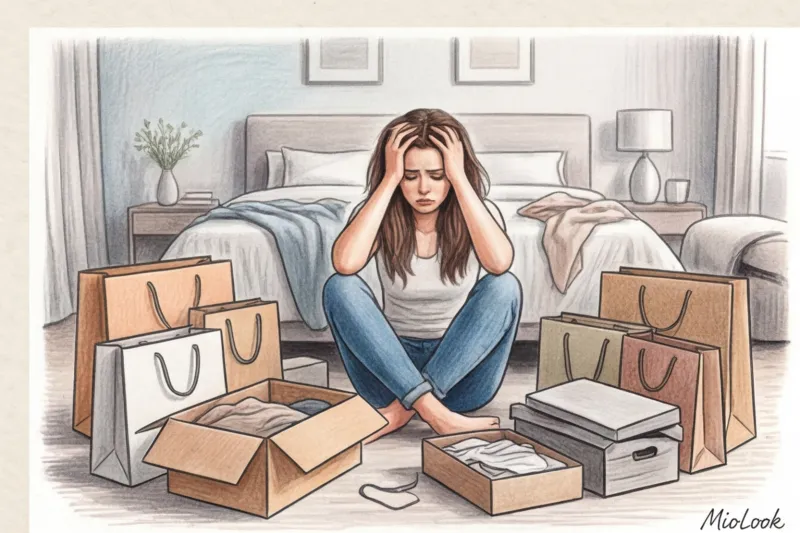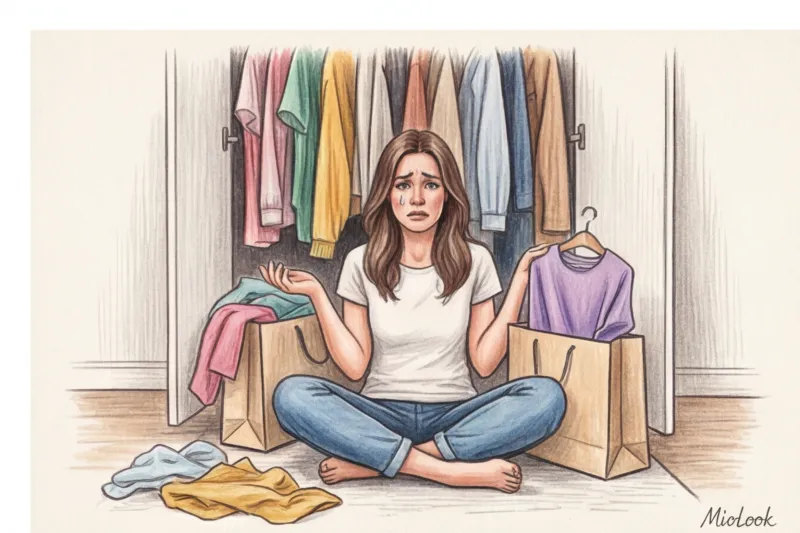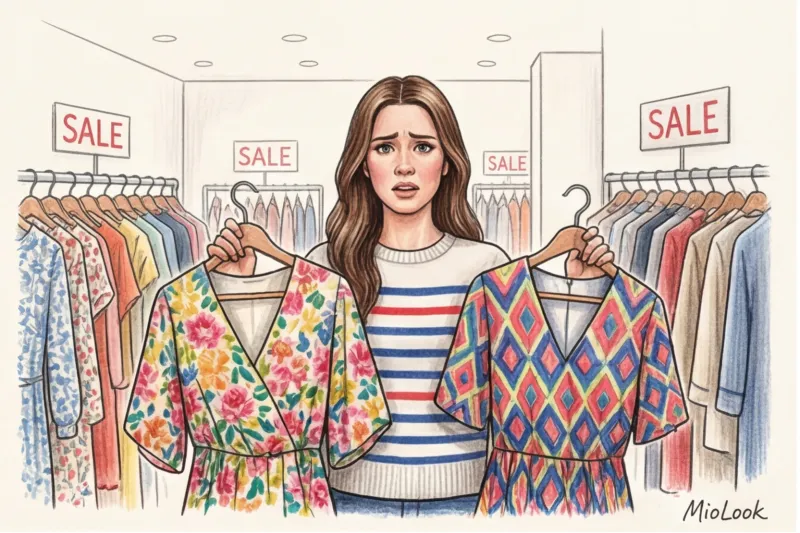
Over 12 years as a personal stylist, I've seen hundreds of closets in every corner of the world—from compact New York lofts to spacious villas on Lake Como. And you know what 80% of them have in common? An entire rack of clothes still bearing cardboard price tags. These aren't just bad purchases. They're the material remains of tough workweeks, family squabbles, and underlying anxiety. Shopping as a stress reliever has become for many of us the fastest way to get an injection of joy into our grey everyday lives.

We discussed the neurobiology of this process and the evolutionary roots of foraging in more detail in our complete guide. How to Stop Buying Unnecessary Things: The Psychology of Shopping Today, I want to talk about practice. If you, like me, are an aesthete and a visual person, advice like "just take a hot bath" during times of stress only elicits a condescending smile. We need beauty. But how can we achieve this dose of aesthetics without turning our closet into a warehouse of unwearable clothes?
Shopping as a stress reliever: Why we choose the checkout line over meditation
When stress levels skyrocket, we lose our basic sense of security. At this point, the brain desperately searches for a way to regain control of reality. And what could be more controllable than the process of choosing: this color or that? Silk or cashmere? Card or cash? Purchasing gives us instant, albeit illusory, control over our lives.
Neuroscientist Robert Sapolsky brilliantly explains this mechanism in his lectures: the greatest release of dopamine occurs not at the moment of possession of a thing, but at the moment of anticipation When you carry a beautiful paper bag embossed with your favorite brand's logo, your brain has already received its reward. That's why the next morning, that luxurious sweater often gets relegated to the back of the shelf, no longer evoking any emotion.
"We don't buy things. We buy the version of ourselves we want to become: calmer, more confident, and more successful. But clothes don't change our inner state for more than a couple of hours."
Access to MioLook for €0.99 — one-time payment
A smart AI stylist will select the perfect look.
Get access — €0.99 onceThe Illusion of Renewal: What Happens to Your Wardrobe After "Therapy"
The hidden cost of impulse buying isn't measured solely by bank statements. The main problem is an overflowing closet, which paradoxically evokes the classic feeling of "I have absolutely nothing to wear." The statistics are relentless: we wear 20% of our clothes 80% of the time. This is Pareto's Law, which applies to every other closet I've ever sorted through.
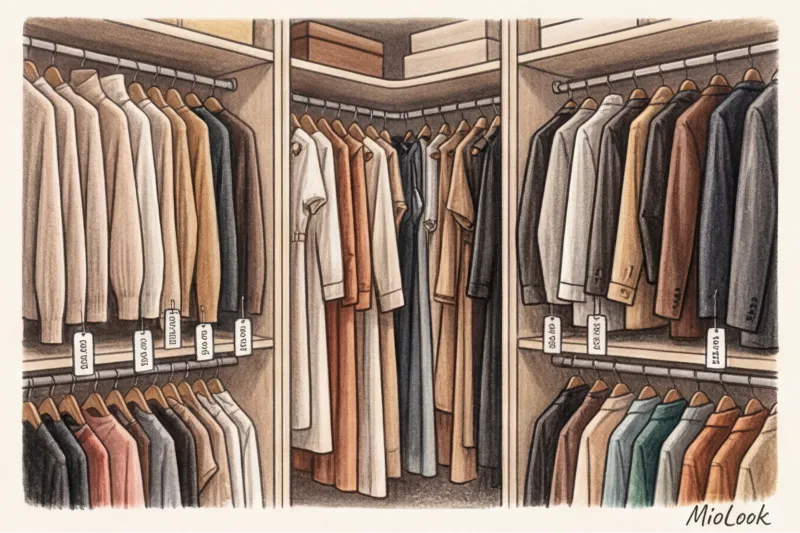
During a consultation in Milan, my client—a top manager at a major IT company—and I found 14 mass-market T-shirts with the tags still intact. She admitted she'd bought them after tense board meetings. Each T-shirt cost around 30 euros. That's a total of 420 euros—the price of a pair of exquisite handcrafted loafers or a classic Hermès silk carré.
Moreover, the visual noise from clothes you don't wear increases background cortisol levels. You open your closet, see evidence of your emotional breakdowns, feel guilty—and the cycle continues. Stress leads to shopping, and the results of shopping trigger further stress.
Refocusing: 5 Eco-Friendly Alternatives for Aesthetes
I'm absolutely convinced that suppressing our desire for beauty is useless and even harmful. The common advice to "just stop going to stores" is as "effective" as telling us not to think about a polar bear. Instead of banning ourselves from engaging with fashion, we need to raise the bar.
The concept of an eco-friendly approach to style is about role reversal. Stop being thoughtless. consumer and become curator your own collection. Below, I'll share five practices that provide a powerful rush of aesthetic dopamine while saving you money and closet space.
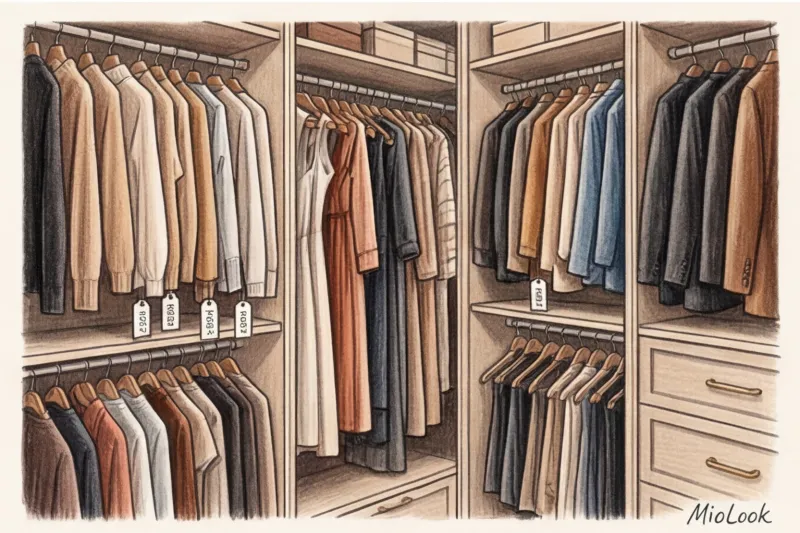
Inventory as an Art: Collecting New Capsules
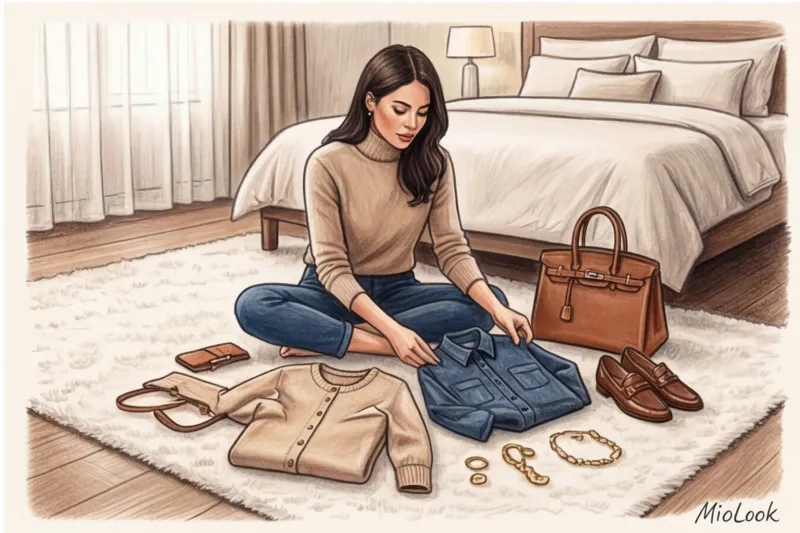
The most underrated boutique is in your own bedroom. Shopping in your closet is a skill you can practice. Pull out the things you've forgotten about and try looking at them outside of your usual patterns.
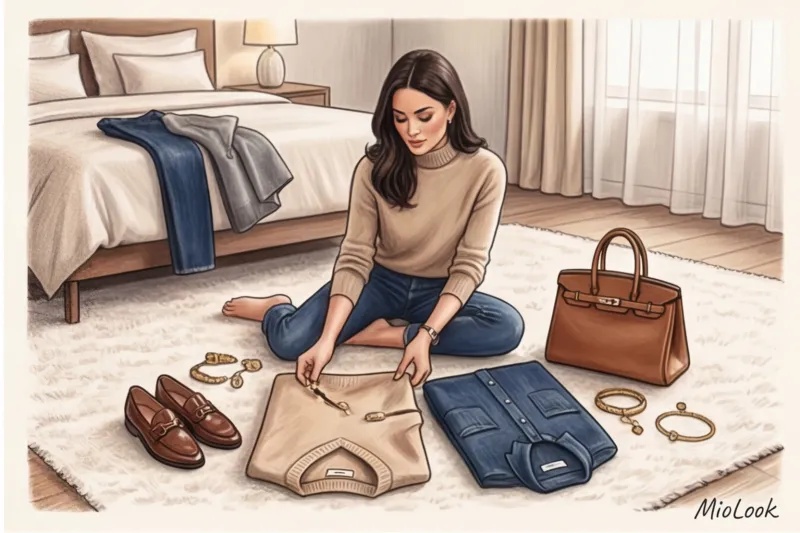
The secret is in subtle combinations. Wear a summer silk slip dress over a tailored wool turtleneck. Tie a classic men's shirt narrowly at the waist and add a statement necklace. Turn this into a creative session: put on some good music, pour a glass of wine, or brew your favorite tea, and be sure to take photos of your best looks in the mirror. This process is a brilliant substitute for a trip to the fitting room.
If you have trouble visualizing combinations in your mind, use technology. You can digitize your items and upload them to MioLook A smart algorithm will help you create dozens of new outfits from what you already have, completely satisfying your need for novelty.
Investment Care: A Spa Day for Luxury Items
Manual labor has proven psychotherapeutic effects. Replace browsing online stores with a ritual of caring for the prestigious items you already own. It's a deeply meditative process.
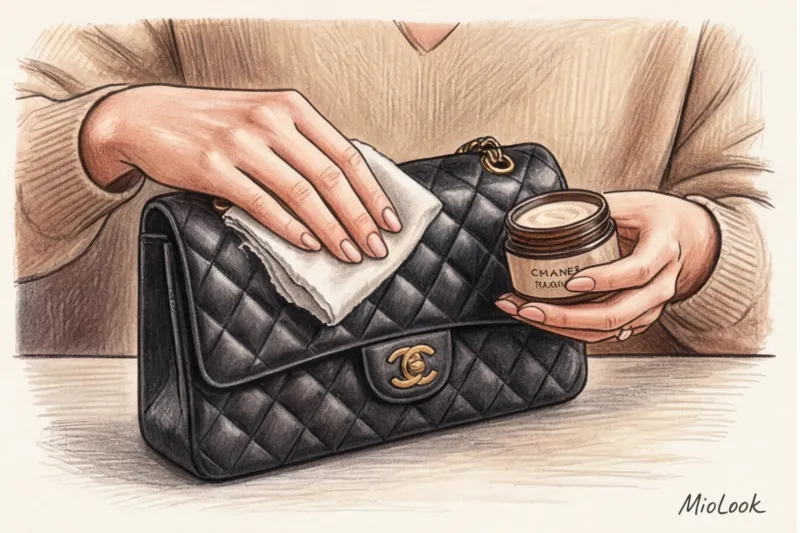
Take a special cream with beeswax and polish your favorite leather bags. Use a special natural bristle brush to status cashmere coat Hand wash delicate silk with a special liquid detergent. Caring for quality materials brings us back to the here and now, and prolonging the life of expensive accessories feels like an act of deep self-respect.
Your perfect look starts here
Join thousands of users who look flawless every day with MioLook.
Get access — €0.99 onceCurator Syndrome: Deep Research Instead of Quick Purchase
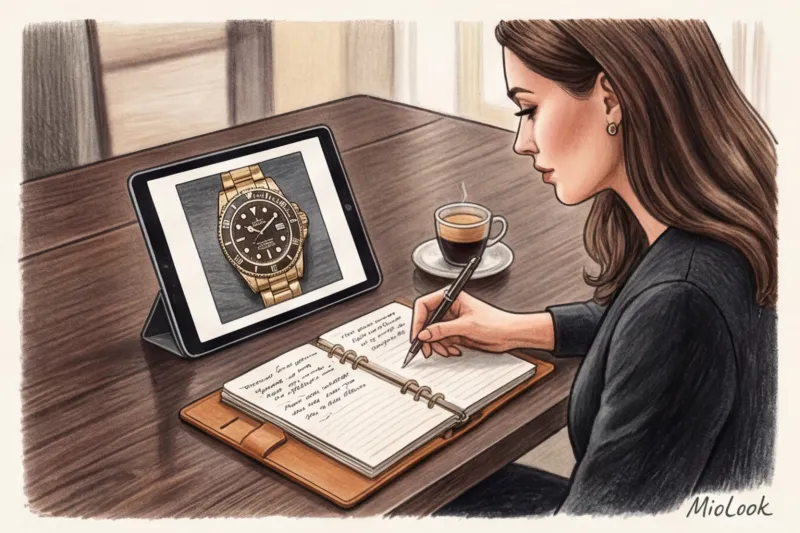
As we've already established, the brain reacts to the search for an item just as actively as the purchase itself. Trick your neurobiology: dive into deep research. If you're stressed and want to buy a bag, don't open a high-street store website. Go to auction houses or fashion encyclopedias.
Learn the difference between Epsom grain calfskin and Togo leather. Read the history of iconic watch models. Create a detailed mood board or wishlist on Pinterest. Exploring the history of brands and tanning methods provides immense aesthetic pleasure. Make a promise to yourself: "I'll buy this, but only in 30 days, if the desire still exists." In 90% of cases, the impulse fades within a week, leaving you with new knowledge and a budget intact.
If you must buy: how to turn a setback into an investment
Of course, we're human beings. Sometimes the need to treat yourself to something new outweighs any rational argument. That's normal. But if you decide to spend money for the thrill of it, do it like an investor, not like a roulette player.
My golden rule: "Less is more." Instead of five cheap, impulse purchases from the mass market (which will fade after three washes), buy one item of uncompromising quality. According to a McKinsey & Company report (2024), conscious consumption in the premium segment is currently growing precisely due to a shift away from fast fashion in favor of investment pieces.
Let's calculate Cost-per-Wear (Cost per Outing). That same Milan client I mentioned repurposed her emotional shopping budget. After a month of browsing through archives, she bought the perfect vintage bag for €3,000. Yes, that sounds like a daunting amount. But she's been wearing that bag almost every day for three years now (around 900 outings). The cost per outing was €3.30. Meanwhile, an impulse buy of €100, worn once to a corporate event, still costs €100 per outing.
Invest in high-quality leather base , timeless accessories, a classic watch, or a good belt. These items are not subject to microtrends and will delight you for decades.
To be fair, I'll point out an important limitation: this analytical approach does NOT work if shopaholism has progressed to the clinical stage of compulsive disorder. In such cases, the help of a specialist, not a stylist, is required.
Checklist: How to Stop Yourself Before an Impulsive Payment
When I'm shopping with clients, I often see their eyes light up at the sight of a 50% discount on an item they absolutely don't like. For such cases, I've developed a rigorous professional self-control algorithm.
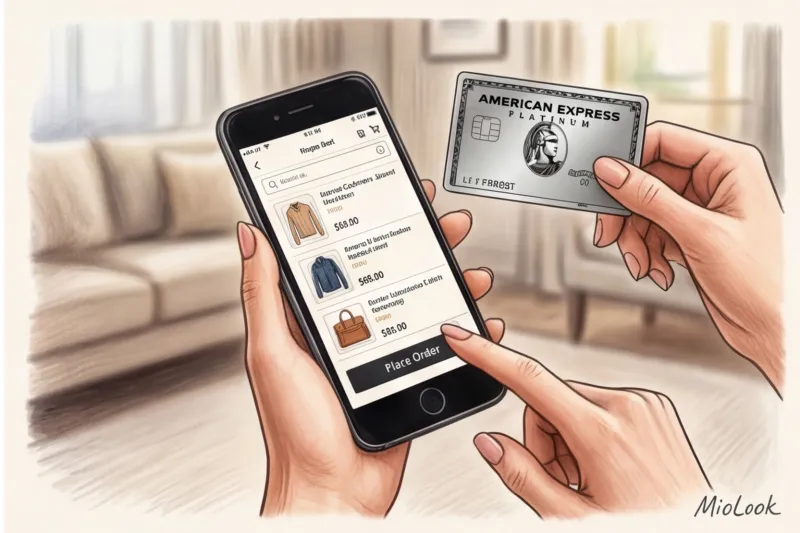
Ask yourself three questions at the checkout (or before entering the CVC code):
- "What from my current wardrobe will I wear this with tomorrow?" If you can't instantly come up with at least three ready-made looks in your head without having to buy the "right" shoes or trousers to go with the item, the item stays in the store.
- "Would I buy this at full price?" This question is the perfect test of honesty. If the answer is "no," then you're not buying the item itself, but the joy of getting a good deal.
- "What emotion am I trying to buy right now?" How are you feeling right now? Fatigue? Loneliness? The desire to hide? Clothes can't hug you or solve problems at work. They can only beautifully disguise the symptom.
My favorite technique is - pause practice Leave the item at the checkout and ask to hold it until the evening. Or simply close the virtual shopping cart tab for exactly 24 hours. If you wake up the next day with a clear, calm understanding that you need this item, buy it without guilt.
Conclusions: From spontaneous spending to a conscious style
Using shopping as a stress reliever isn't a crime. We live in a hectic lifestyle, and sometimes a beautiful silk blouse is just the little something that can quickly lift your spirits at the end of a tough week. The only question is who's in control: you, your wardrobe, or your emotions, your credit card.
Building a truly prestigious, high-end wardrobe requires the cool head of a curator, not the heated emotions of a weary consumer. Quality always trumps quantity, and a conscious pause before buying saves more money than any seasonal sale.
Instead of aimlessly scrolling through online stores this evening, I offer you a practical task. Open your closet and choose just one shelf—for example, the one with knitwear. Take out all the items, carefully refold them, and set aside anything that needs dry cleaning or minor repairs. I guarantee: by the end of this fifteen-minute process, your stress level will decrease, and the desire to buy "something new" will disappear.