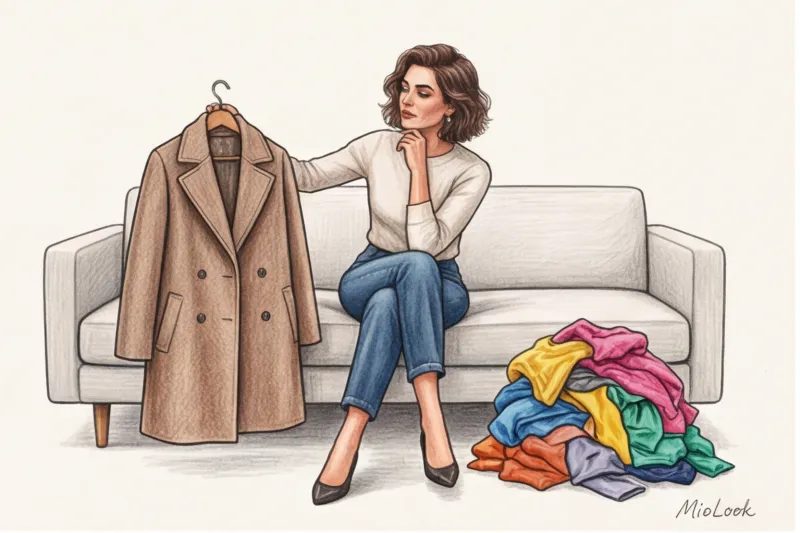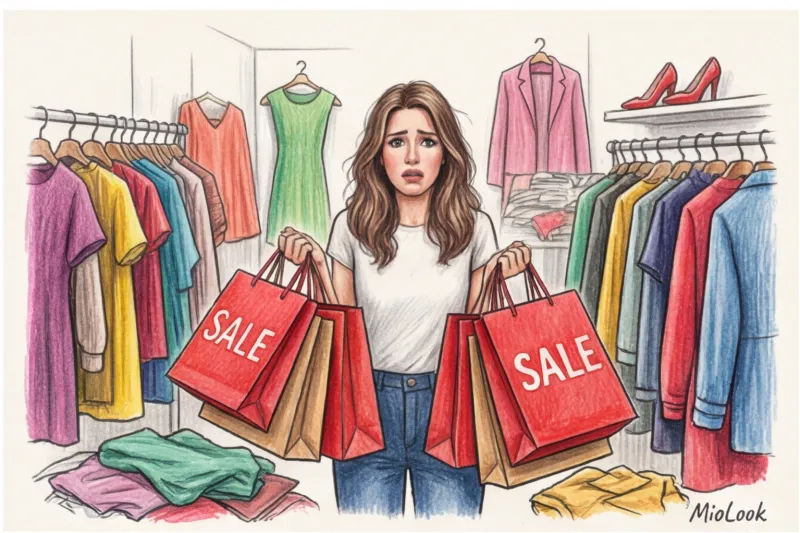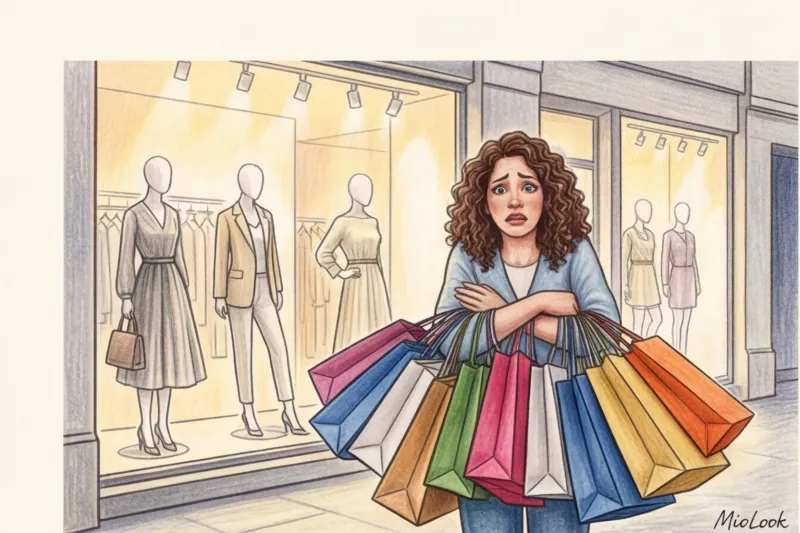
Every November, I witness the same scene in department stores like Galeries Lafayette: elegant women who would normally meticulously choose the perfect shade of beige trench coat suddenly transform into frantic hunters. They snatch neon sweaters two sizes too small and oddly shaped bags from the rails simply because they have a red tag with the magical inscription "-70%." According to McKinsey's 2024 "The State of Fashion" report, more than 40% of clothes bought in seasonal sales are worn exactly once, after which they end up in a landfill or gathering dust on the back shelves.
As a fashion journalist, I've seen the underbelly of retail over 12 years of covering Fashion Week. Brands don't do charity work. Mass sales aren't celebrations of unprecedented generosity, but rather a mathematically calibrated distribution system. We've explored in detail why our brains so easily fall into this trap in our article. the complete guide to the psychology of shopping.
Today we'll talk about practice. The key skill of the modern consumer is understanding, How to avoid buying unnecessary things at sales , turning the chaos of Black Friday into a tool for targeted, investment-based investments in your style.
The Anatomy of a Sale: Why We Lose Control on Black Friday
Neuroscientist Robert Sapolsky brilliantly explains how dopamine works in his lectures: the maximum release of the pleasure hormone occurs not at the moment of receiving a reward, but during the period of its anticipation In the context of shopping, this means that you get your biggest dose of joy the second you see the red crossed-out price and take the item to the checkout.
During sales season, the architecture of retail spaces is designed specifically to suppress analytical thinking. Have you noticed how the music changes during sale days at mass-market stores (from H&M to Zara)? It gets louder and more rhythmic, around 120-130 beats per minute. This artificially increases your heart rate, forcing you to move faster and make impulsive decisions. The rails are intentionally overcrowded, creating the illusion of scarcity and competition ("If I don't buy this blouse now, the girl behind me will take it").
Your perfect look starts here
Join thousands of users who look flawless every day with MioLook.
Get access — €0.99 onceRetail Secrets: What the Fashion Industry Hides from Shoppers
Now let's move on to the most counterintuitive fact that marketers will never tell you. A 70-80% discount is often applied to items other than the regular collection that haven't sold.
For major events like Black Friday or outlets, many brands produce special capsules (made-for-outlet) These are items that visually replicate the main line's hits, but are made from radically cheaper materials in other factories. That's why a "cashmere" sweater from a famous brand bought at a clearance sale ends up covered in pills by the evening of the first day of wearing it.
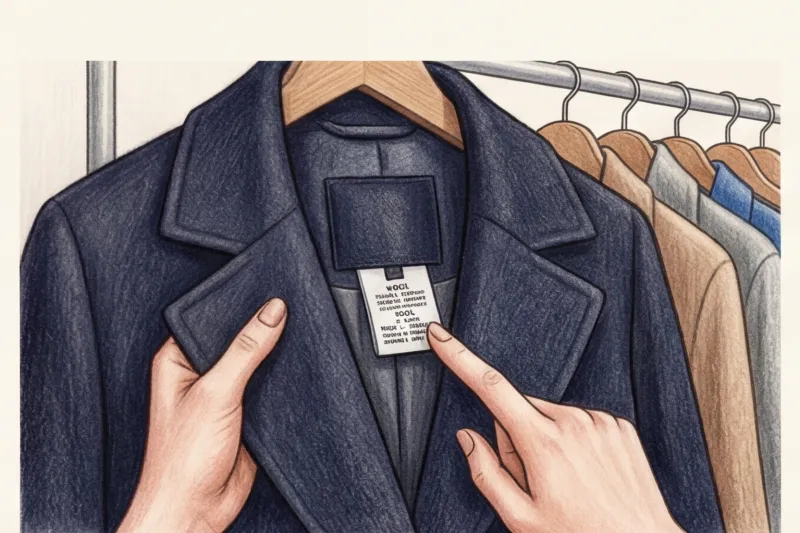
How to recognize an item created specifically for sale
In my practice, when reviewing wardrobes, we often uncover such "Trojan horses." Here are three specific ways to spot them:
- Article analysis: Many premium and mid-market brands (such as Massimo Dutti or COS) mark their outlet items with special symbols on the sewn-in tag (extra letters, dots on the tag, or a different font color than the regular one).
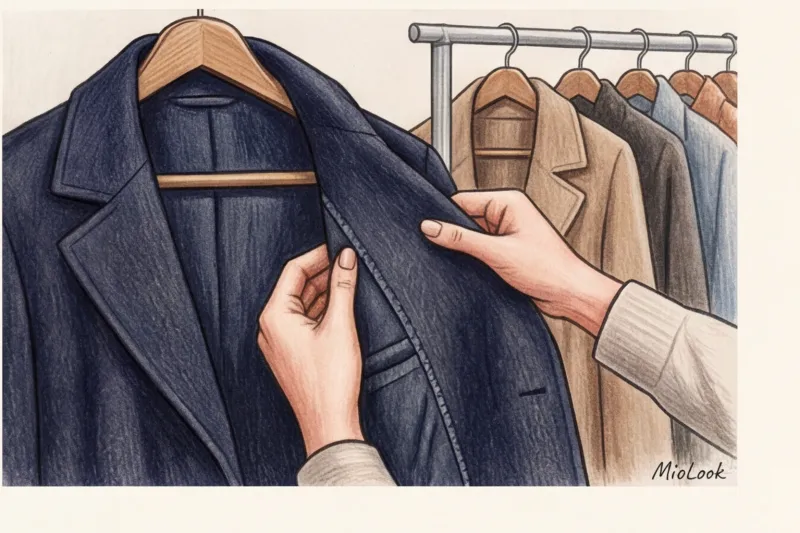
- Tactile and light test: High-quality viscose or wool always has a density. Hold the fabric up to a store light—if the outline of your fingers is clearly visible through it (and this isn't the design's intention), it's a fabric of lower density.
- Fittings and lining: This is the number one way the manufacturer cuts corners. Plastic buttons without engraving, snaggy zippers without the YKK marking, and, most importantly, the lack of lining in jackets or the use of cheap, squeaky polyester instead of viscose—all are clear indicators of cost-cutting.
The main question: how to avoid buying unnecessary things during sales?
Three years ago, a client, a financial director from Milan, approached me. Her closet looked like the warehouse of a luxury boutique: about 80% of the items had red tags. She bought excellent silk blouses at a 60% discount, saying: "For that kind of money, let it hang there. I'll wear it someday." The problem was that these random items with crazy prints didn't fit at all with her strict dress code and basic trousers.
The paradigm shift is to buy not the “best buy” but "solving your wardrobe problem".
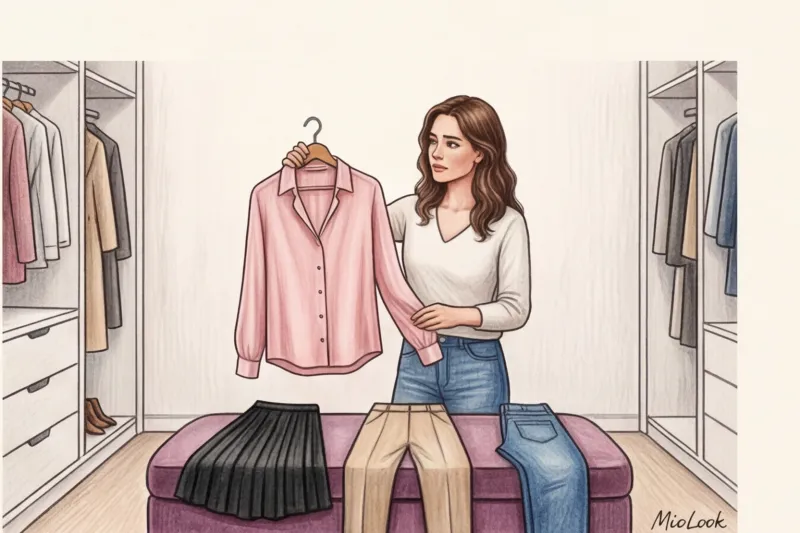
I always make my clients use the "three images" formula Pick up an item with a yellow price tag? Great. Now name out loud three specific items from your current closet that you'll wear it with tomorrow. Not "I'll need to buy a skirt to go with this one," but specifically from what you already have. If the three looks don't come together in 10 seconds, the item goes back on the rail. You can digitize your items in MioLook and check right in the fitting room how many real combinations the algorithm will offer.
Access to MioLook for €0.99 — one-time payment
A smart AI stylist will choose the perfect look for you.
Get access — €0.99 onceWardrobe audit before the sale season: prepare like a pro
Statistically, we wear only 20% of our belongings 80% of the time. The rest is dead weight, bought on impulse. Going shopping without taking inventory first is like going to the supermarket hungry and without a list: you'll buy chips instead of vegetables.
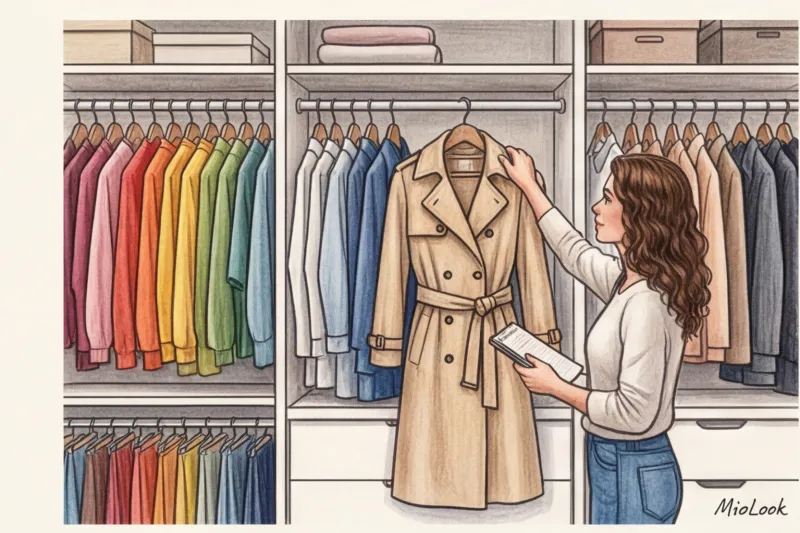
A week before Black Friday, clear out your closet. Your goal is to find "wardrobe gaps." For example, you might have a gorgeous pleated skirt and great wool trousers, but you don't wear them in winter because you don't have a thick, structured jacket or a basic, thin cardigan to pull the look together. That merino wool cardigan should be the number one item on your shopping list.
To maintain balance, implement a strict rule: "One thing in, one thing out" If you buy a new coat at a discount, the old one should be recycled, donated to charity, or resold.
Online Shopping Pitfalls: How to Avoid Impulse Shopping Carts
While music and crowded spaces can be overwhelming in offline environments, e-commerce utilizes dark UX design patterns. Countdown timers ("discount expires in 00:15:32"), aggressive pop-ups, and messages like "There are 12 people watching this right now." are created with one purpose in mind - to make you feel FOMO (fear of missing out).

How to combat this? Practice digital hygiene. The day before the sales start, remove linked bank cards from all your favorite online stores and disable Apple Pay/Google Pay in your browser. Why? To add friction to the shopping process. While you're reaching for your wallet, pulling out your card, and manually entering 16 digits, your prefrontal cortex will have time to kick in and ask, "Do I really need a fifth gray sweatshirt?"
The second rule for online is 24-hour basket quarantine Gather all the things you want into a basket, close your laptop, and go to bed. In the morning, 80% of those "urgent needs" will seem ridiculous.
What's Really Worth Investing In During Black Friday
Ignoring sales completely is as much of a mistake as buying everything in sight. Sales are leverage. And that's where the index comes into play. Cost-per-wear (CPW) — price for one exit.
The math is simple: a classic 100% wool coat for $400, bought on sale for $250, and worn 150 times over three years (CPW = $1.60) is a brilliant investment. A trendy polyester blouse for $30, worn once to a corporate event (CPW = $30), is a waste of money.

During sales, I recommend completely ignoring the mass market and focusing exclusively on premium items and tailored pieces:
- Outerwear: Wool coats, high-quality, tight-fitting trench coats, genuine leather jackets.
- Premium fabrics: Cashmere (look for 2-ply or 3-ply twist), heavy silk with a density of 19 momme, 100% merino wool.
- Shoes: Classic leather loafers, basic Chelsea boots, structured tube boots.
Let's be honest: this advice has its exceptions. If you urgently need a bridesmaid dress in a specific lavender color for one evening, investing in a $500 silk dress is pointless—in this case, a discounted mass-market dress will work in your favor. But the basics should be built from the best materials you can afford.
Status accessories with a red price tag
Accessories add visual value to an entire look. Black Friday is the perfect time to hunt for leather belts with minimalist hardware, classic watches, and rugged, structured bags.
What's a no-no? Ultra-trendy micro bags (remember the Jacquemus Le Chiquito craze), neon-colored styles, or bags lavishly covered in logos. These items become outdated within a single season, and the brand sells them off precisely because the trend is dead.
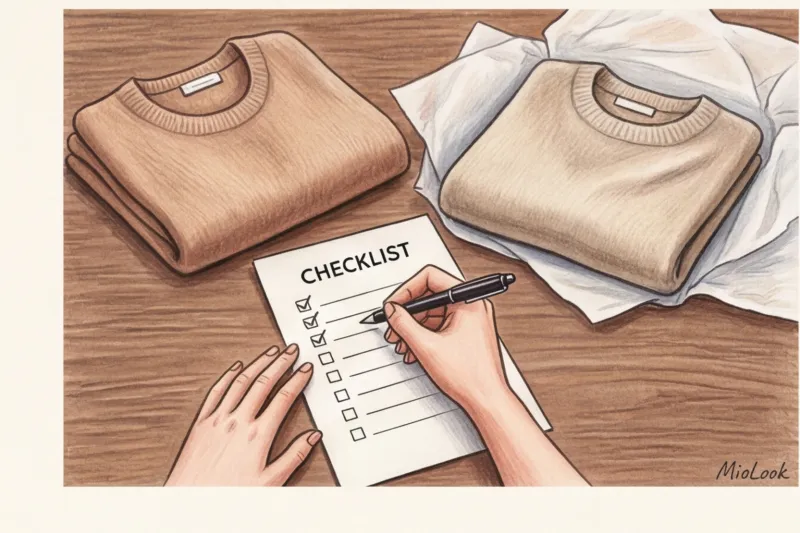
A Mindful Shopper's Checklist: 5 Steps to Take Before Checkout
Based on real-life concerns from my clients, I've put together a tough but sobering checklist. Before you tap your card at the terminal or press "Pay," ask yourself these five questions:
- Do I need this thing for my real life or my fantasy life? (Stop buying floor-length evening dresses if your maximum social outing is Friday night pizza with friends.)
- Would I buy this at full price? (If the answer is "no", then you like the discount, not the item itself.)
- Does this fit my current size right now? (Buying clothes "for weight loss" is a veiled form of self-harm and money-wasting.)
- Am I ready for complex care? (A silk blouse will require dry cleaning or gentle hand washing with a special detergent. Do you have enough time for this?)
- Can this be returned? (Many stores change their return policies for items marked Final Sale. Make sure you have a way out.)
True style isn't measured by the number of items in your closet or the discount on your receipt. It's about opening your closet in the morning and feeling the peace of mind that every item in there works for you, not you for it. Make Black Friday your financial tool, not a marketing ploy.