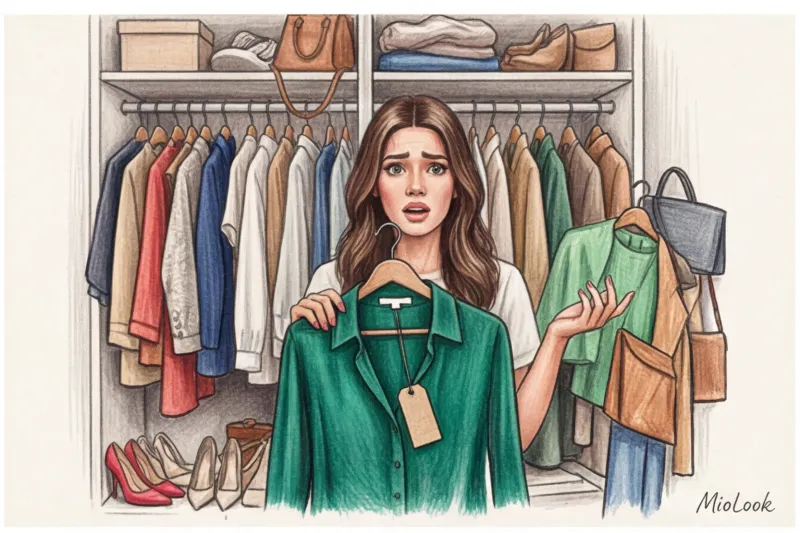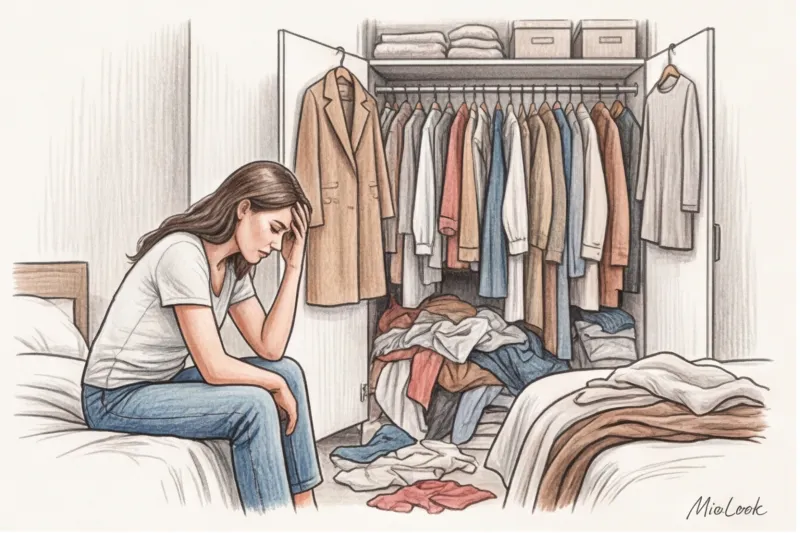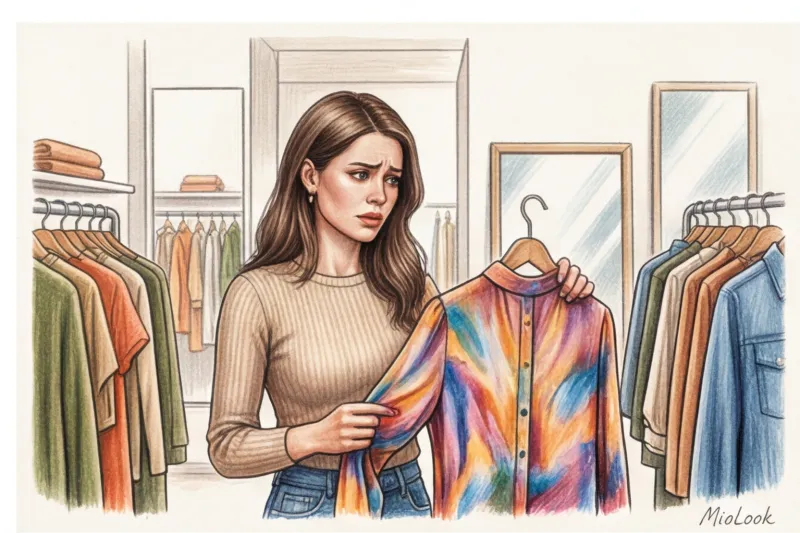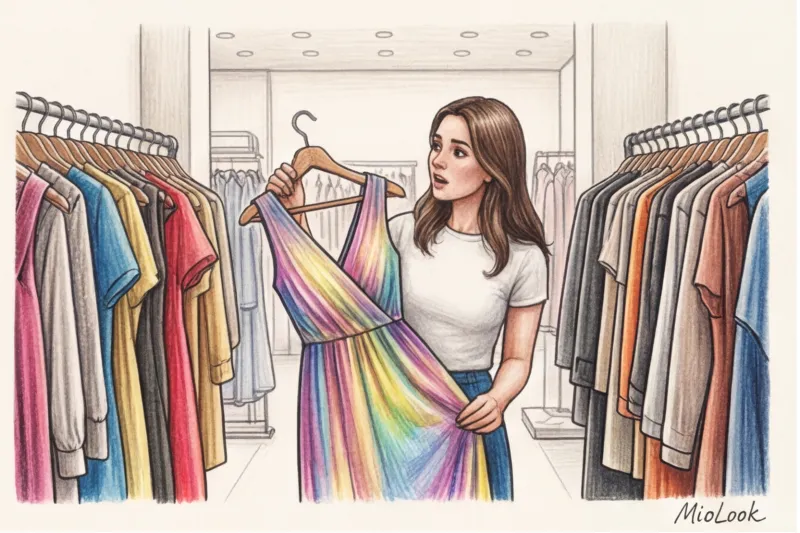
A month ago, I was sorting through a new client's wardrobe. At the bottom of her enormous closet, we found 43 new items. They still had the cardboard tags attached. The total cost of this "graveyard of unfulfilled hopes" was just over €1,300. When I asked her how this had happened, she simply shrugged: "I went in for coffee, saw the 'Sale' sign, and everything was a blur."
If you regularly find yourself asking yourself, How to stop buying unnecessary clothes , standard glossy magazine advice like "unsubscribe from newsletters and wait 24 hours" won't help you. Brand marketing has long since learned to bypass these basic barriers. We've already covered the basics of sustainable shopping in our A complete guide to creating a basic wardrobe on a budget , but today I want to offer you a completely different approach.
As a textile expert and stylist, I don't believe in willpower. I believe in math, understanding fabric composition, and rigorously auditing your habits. Let's explore an algorithm that will break your emotional attachment to unnecessary items right in the fitting room.
Why Willpower Doesn't Work: The Anatomy of an Impulse Buy
We rarely buy a simple piece of fabric sewn together. More often, we buy an emotion, a stress reliever after a hard day at work, or an image of our "ideal self." It's pure behavioral economics: the bright lights of stores, rhythmic music, and red price tags trigger a powerful dopamine loop in the brain.
According to McKinsey & Company's 2024 clothing life cycle report, the average mass-market item is worn only seven times before it loses its appearance or is discarded. Fast fashion brands are laying down This short production lifespan. They're not selling you quality, but the quick pleasure of novelty.
Fighting this with restrictions ("just don't go to Zara") is futile—the brain perceives the ban as stress and demands even more reassurance. User analytics MioLook reveals a striking figure: women who transition from a strategy of "fighting themselves" to digitalization and systematic analysis of their wardrobes reduce their clothing spending by 40% in the first year. No restrictions whatsoever.
The Illusion of Savings: Why Sales Cost Us the Most
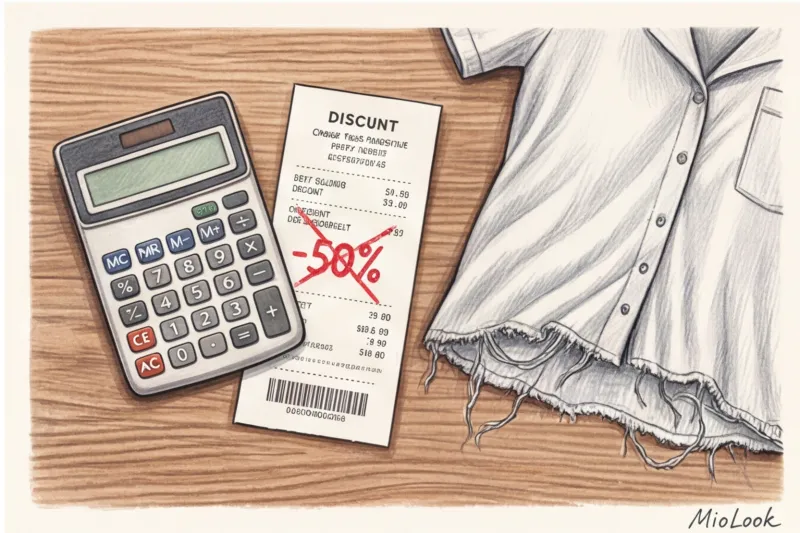
The brain is easily fooled by crossed-out numbers. You see a sweater for €30 instead of €100 and feel like you've "earned" €70. In my experience, 80% of the things I buy that end up hanging in my closet for years are bought during sales.
Sales are the most expensive way to buy clothes. Buying something you don't need at 70% off isn't saving money; it's a complete waste of money.
In the world of stylists there is a golden rule - the formula Cost Per Wear (CPW) , or cost per wear. It's calculated simply: divide the item's price by the number of days you wear it.
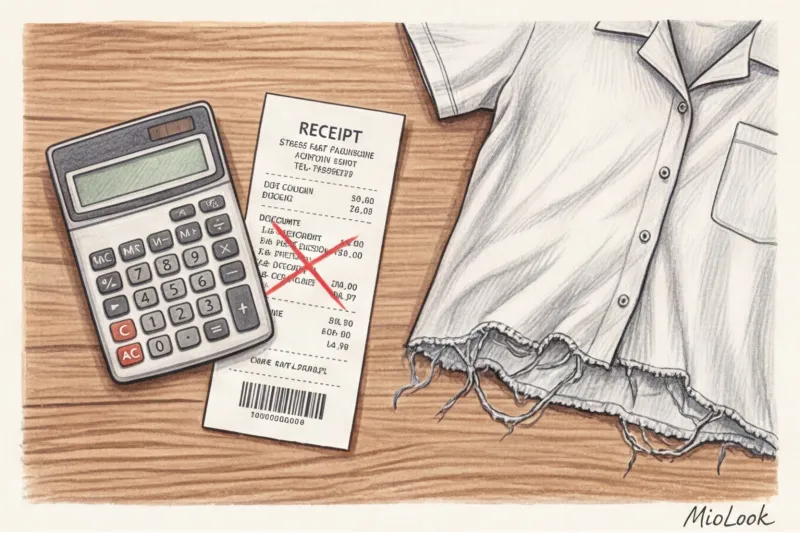
Let's compare two scenarios. You buy a trendy acrylic sweater on sale for €25. It pills after three washes. Your CPW = €8.30 per wear. At the same time, you buy a perfect basic wool-blend jacket for €150 and wear it to the office twice a week for two years (approximately 200 times). Your CPW = €0.75. Cheap items cost you 10 times more.
Your perfect look starts here
Join thousands of users who look flawless every day and save money with MioLook.
Get access — €0.99 onceHow to Stop Buying Unnecessary Clothes: The "Tactile Sobering Up" Method
The most powerful tool I use to combat impulse buying during shopping experiences is my knowledge of materials science. Stores use precisely directed lighting, making even the cheapest polyester shine like premium silk. My job is to bring the client back to reality.
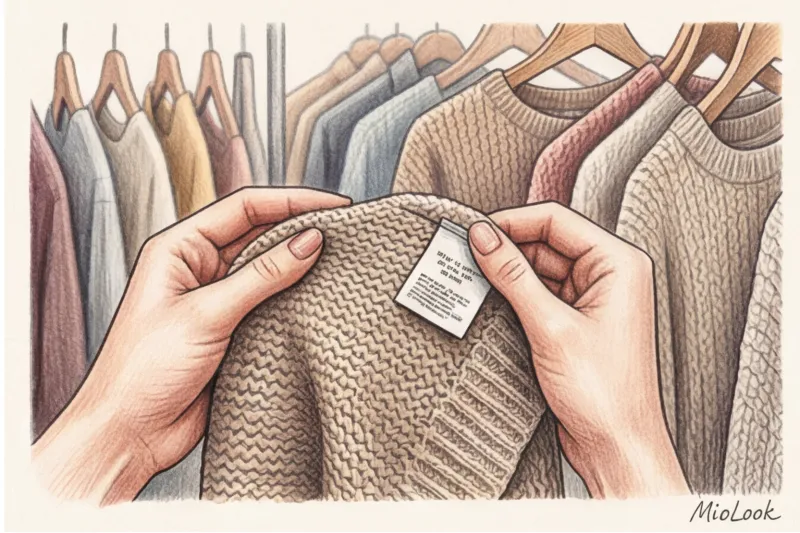
We read the composition as a financial contract
Never take an item to the checkout without checking the inside side seam. The composition tag is the garment's passport, revealing everything about its future. Buying a 100% acrylic sweater for €60 is the worst investment you can make. Acrylic doesn't keep you warm, makes you sweat, and is guaranteed to pill in areas of friction within two weeks.
If you want to understand which materials are really worth the money, check out our guide about fabrics that look expensive Look for cotton with a minimum weight of 180 g/m², viscose (ideally with 5% elastane to maintain shape), or a wool blend with no more than 20-30% synthetic fiber—it's only needed for durability.
Fitting Room Stress Test: How to Check Quality in 10 Seconds
If you are satisfied with the composition, carry out three quick tests:
- Crease test: Squeeze the fabric in your fist for 5-7 seconds, then release. If it's still wrinkled like paper, imagine how you'll look after an hour of sitting in the office. Leave it at the store.
- Seam test: Gently (without overdoing it) tug the fabric where the side seams meet. If you can see threads and needle holes when held up to the light, the garment will unravel after the first wash.
- Hardware assessment: Brands often skimp on details. If a pair of €80 trousers has a thin plastic zipper that snags on the hanger, or cheap, flimsy buttons, the manufacturer has skimped on the entire manufacturing process.
Analyzing Your "Ghost Items": Finding Shopping Triggers
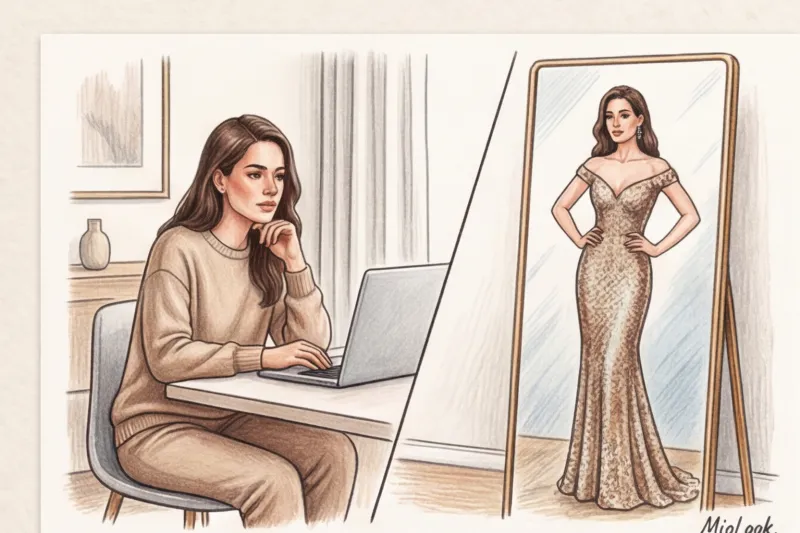
We all have "ghost clothes"—clothes bought for a life we don't live. One of my clients, a young mother on maternity leave, regularly bought tight pencil skirts and stiletto heels, even though her real routine consisted of strolling through the park. (By the way, if this is you, check out our collection.) comfortable and stylish shoes for walking with a child ).
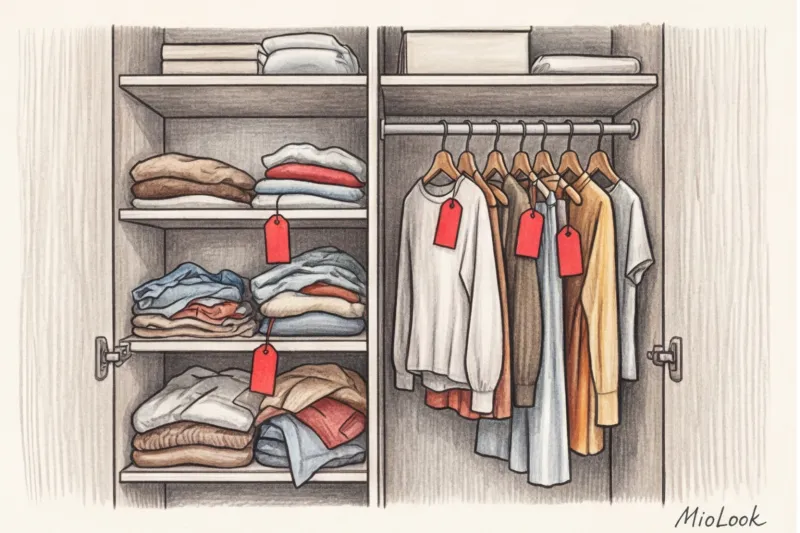
Take out all the clothes you haven't worn in the last year from your closet. Lay them out on your bed and look for a pattern. Are you buying sequins because you're feeling festive? Are you stocking up on formal suits in an attempt to feel more important at work? Understanding your true lifestyle is the best antidote to overspending.
Ready to get started?
Try the MioLook free plan—no commitments required. Digitize your wardrobe and discover your shopping triggers.
Get access — €0.99 onceThe Rule of Three Looks: A Filter for Every New Thing
Never buy a single item. This is a luxurious, often expensive wardrobe item (for example, a skirt with an intricate print) that requires new shoes, a special top, and a matching bag. Ultimately, one impulsive purchase leads to a chain of unplanned spending.
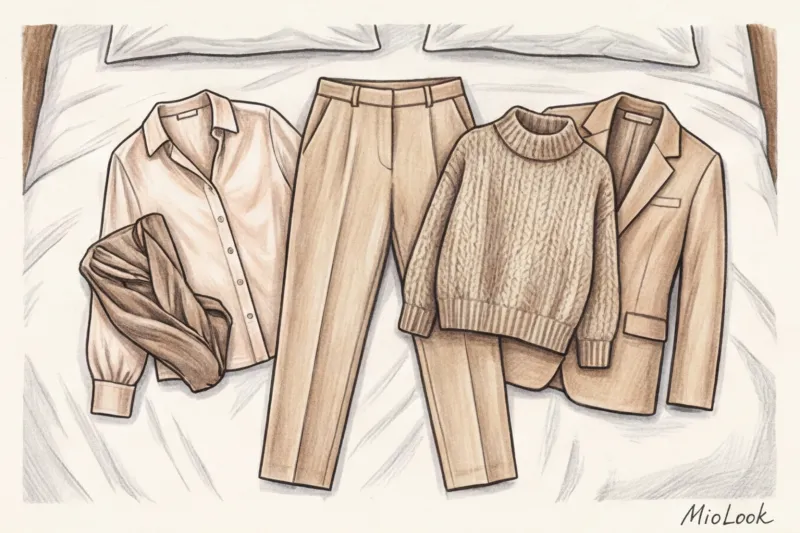
I use a strict rule with my clients: mentally create at least THREE different looks with a new item, using ONLY the clothes already in your closet. Can't think of three options for the office, a walk, and a meeting with friends? The item stays in the store. This rule works great when you're deciding What to invest in in your wardrobe so that purchases really pay off.
Fair Limit: This rule doesn't work for special occasions (wedding dresses or ski suits) or evening wear. But for everyday essentials, it's perfect.
Digital Wardrobe and Planning: A Smart Approach
Have you ever noticed yourself buying your fifth white T-shirt or matching pair of blue jeans? It stems from the illusion of "I have nothing to wear," which really means "I don't remember what I own."
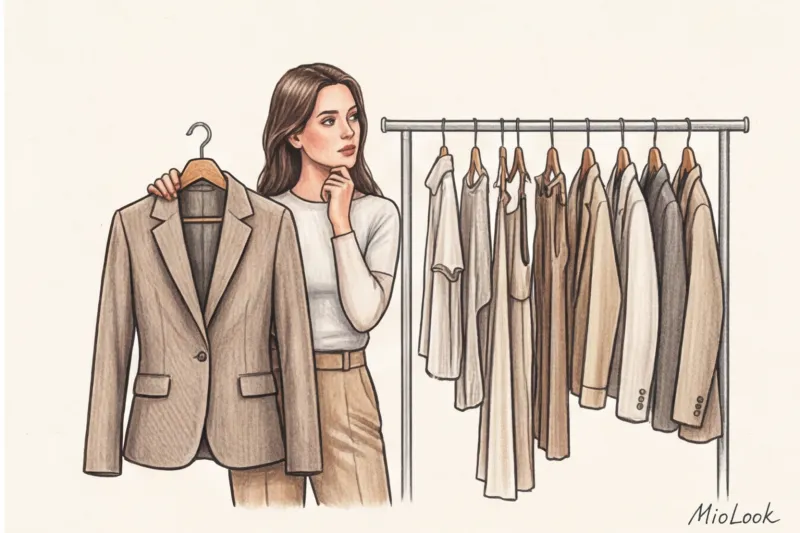
My top tip for 2025 is to digitize your closet. When you can see all your items visually on your smartphone screen, the magic of impulse shopping wears off. App MioLook Not only does it let you upload photos of your clothes, but it also uses an AI stylist to create ready-made capsule collections. While you're in the fitting room, you simply open the app and check: do you really need that gray cardigan when you already have two similar ones you don't wear?
A Mindful Shopper's Checklist: Going to the Store Without Risk
Let's summarize the practical steps that will save you stress and budget in the hundreds of euros per year range:
- A shopping list is your bulletproof vest. Never go to the mall "just to look." Write down in your notes: "black straight-leg jeans, beige plain sweater." If it's not on the list, don't try it on.
- 24-hour rule for online. Filled your shopping cart on the website? Close the tab until tomorrow. The dopamine rush will subside, and the next day you'll delete half the items. (The exception is rare, one-of-a-kind vintage drops, but this doesn't apply to mass-market items.)
- The tactile test is paramount. Crumple the fabric, check the seams, read the tags.
Having fewer, but higher-quality items isn't just about saving money. It's about freedom from the morning panic in front of your closet. You stop wasting money on other people's trends and start investing in your own comfort. Buy things for the life you live today, not for the one you might have next year.