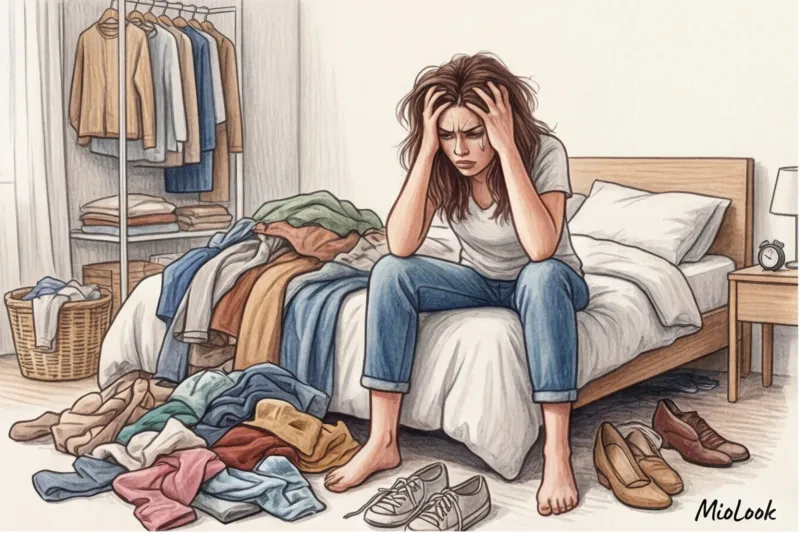

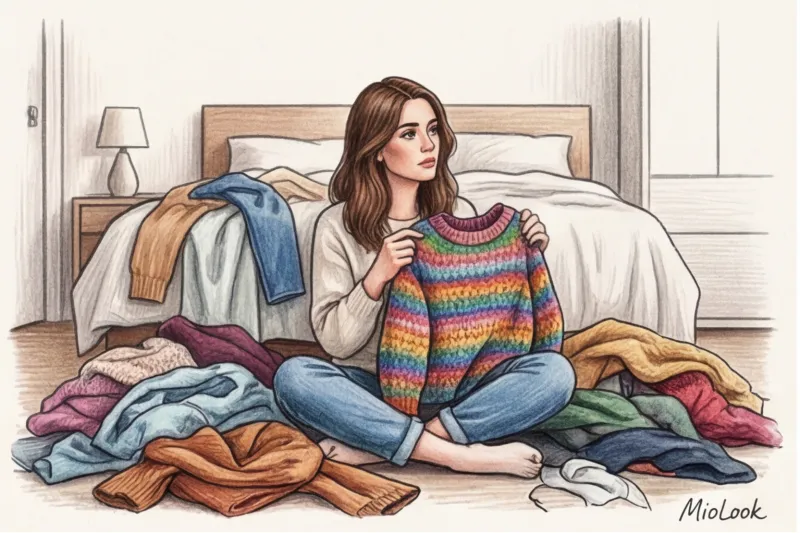
One of my clients, Anna, genuinely believed she had "absolutely nothing to wear" to the office. When we pulled all her clothes out onto the bed to sort through, we discovered 14 white shirts. Fourteen. And not a single basic, heavy cotton t-shirt to tone down the formality of her business suits. Sound familiar? In 12 years of working as a stylist and colorist, I've seen this scenario hundreds of times. We buy emotions, but we wear things.
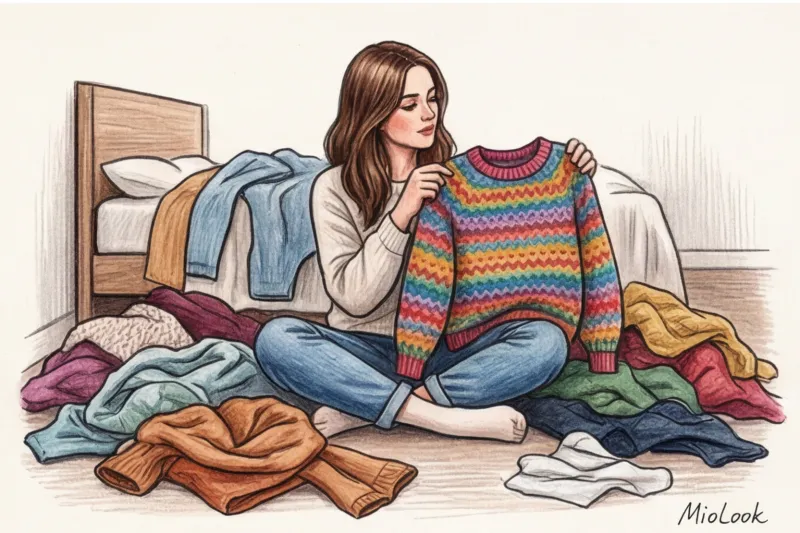
It is at these moments that I offer my clients a radical but healing step: to begin a year without buying clothes It sounds like financial austerity or punishment, but trust me: it's a powerful style detox and an intensive course in finding your true self. We've covered in more detail why we accumulate mountains of unnecessary textiles and how our brains work in a shopping mall in our the complete guide to the psychology of shopping And today we'll look at the purely practical part: how to endure this marathon and emerge from it in impeccable style.
What exactly is the "No Clothes Shopping Year" challenge?
Let's debunk the biggest myth right away. This isn't a savings marathon for the sake of a mortgage (although that's a nice bonus). The fast fashion industry, churning out 52 micro-collections a year, is terrified of mindfulness. Brands like Zara or H&M sell us less fabric than ready-made, pre-packaged solutions. But according to stark statistics, women actively wear only 20-30% of the items in their closets. On average, an item is worn only 7-10 times before being thrown away, donated, or forgotten on a back shelf.
As a practicing colorist, I always point out one thing: that "workable" 20% of your wardrobe usually includes items in your natural shades. When the color perfectly illuminates your face, you forgive even slightly outdated cuts or pilling on the sleeves. The point of this challenge is a paradigm shift. You stop consuming other people's ideas and start getting creative with the materials that have already passed your personal audition.
Key Rules: How to Survive a Year Without Buying Clothes
If the number "365 days" gives you a panic attack, take a breath. No one's forcing you to start with a marathon. Try a sprint: 3 or 6 months. I went through this myself, and my personal best was 8 months of complete shopping abstinence. It was during this time that I learned to masterfully layer, pairing summer dresses with thick autumn turtlenecks.
The fundamental rule of the first week is total digital hygiene, or the "unsubscribe" rule. You need to unsubscribe from all fashion brand emails and hide fashion influencer Stories. In my experience, this simple step reduces impulsive desires by 80%. You simply don't physically know that Massimo Dutti has released a stunning new cashmere collection, and therefore your brain doesn't generate the urge to buy it.
What to do with the freed-up budget? Redirect it to experiences. Take a ceramics class, buy a massage, or buy theater tickets. Your nervous system should get used to getting endorphins not from the rustling of branded bags, but from real life.
Hard Ban vs. Exception System
Here I'll share a counterintuitive tip that flies in the face of most minimalist bloggers. A strict ban like "buy nothing at all" is a trap. It's a surefire way to relapse. Just as a strict no-carb diet ends with you eating cake at night by the fridge, a ban on all purchases will leave you waking up at the checkout counter in the 13th month with a pile of unwanted T-shirts.
The most successful challenges are based on a so-called "green list." You write down in advance what you can and should buy. Typically, this includes underwear, tights, socks, and even replacements for critical items that have broken down (for example, if the sole of your only winter boots has cracked, you go buy new ones instead of freezing for the sake of the idea).
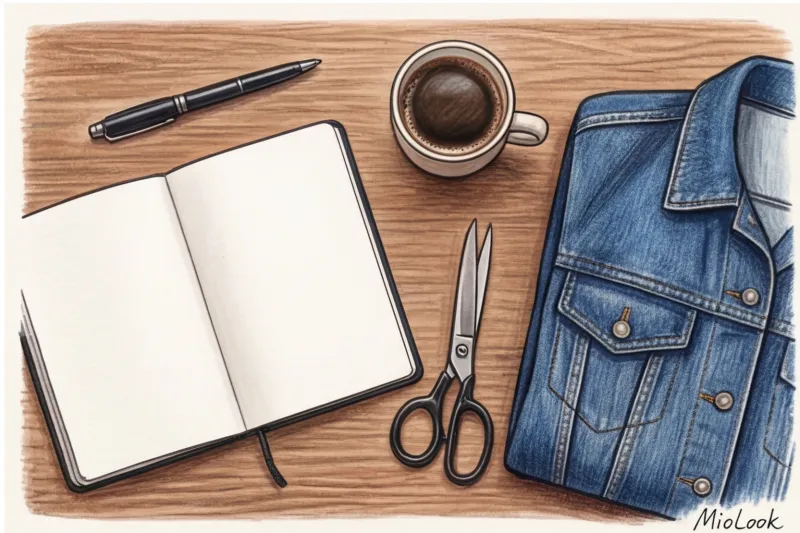
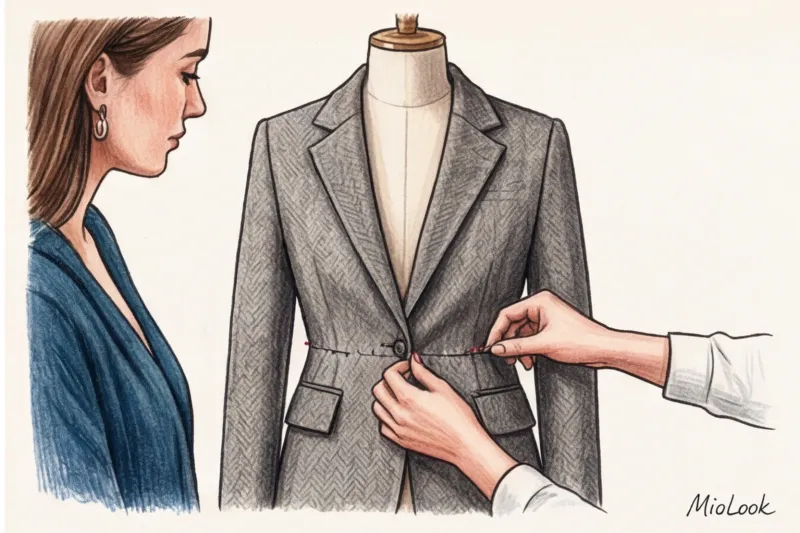
A great life hack: replace shopping with a tailor. Tailoring old clothes works wonders. Tuck the waist of a vintage jacket or shorten jeans to match your favorite heel—it's a legal way to update your wardrobe without breaking the rules.
Access to MioLook for €0.99 — one-time payment
A smart AI stylist will select the perfect look from your items, so you always know what to wear.
Get access — €0.99 onceDopamine Traps: Why We Find It So Hard to Stop
Why do we feel an almost physical withdrawal when we walk past shop windows? It's not a matter of weak willpower, but evolution. Neuroscientist Robert Sapolsky brilliantly explains this mechanism in his lectures: the maximum release of dopamine occurs not at the moment of receiving a reward, but at the moment of its release. anticipation Our brain rewards us for "getting the catch."
From the perspective of ancient instincts, hunting down the perfect merino sweater on a marketplace evokes the same chemical response as our ancestors' successful foraging for berries. The problem is, the dopamine rush ends the moment you cut off the cardboard tag and place the item on the shelf. The joy fades. The item becomes routine.
To outsmart your brain, give it a different challenge. Get a dopamine rush from creating unexpected combinations. Pair a silk skirt with an oversized men's hoodie and chunky boots. Your brain will perceive this challenge as a puzzle, and a successful outcome as the "catch."
What happens to your wardrobe (and you) month after month
Based on my work with clients who have gone through this process under my guidance, I've developed a typical psychological profile for a challenge participant. Forewarned is forearmed.
Months 1-3: Withdrawal and Phantom Shopping
The hardest stage. The habit of scrolling through shopping apps out of boredom while stuck in traffic hasn't gone away. "Phantom shopping" begins: you obsessively add things to your cart without clicking the checkout button. The "I have nothing to wear" syndrome intensifies to the extreme because the old problem-solving algorithm is blocked. It's during these months that you make your first disgruntled attempts to peer into the far corner of your closet.
Months 4-8: The Age of Stylistic Discovery
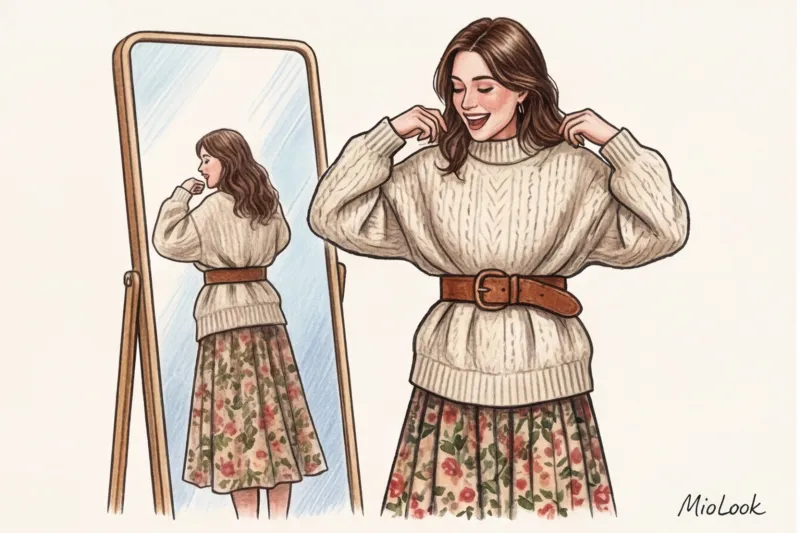
The brain resigns itself to the new rules of the game and begins to work differently. That same client, Anna, suddenly discovered that her white shirts could be worn backwards, knotted at the waist, or layered as a lightweight jacket over a crop top. You discover the power of accessories: a wide belt over a voluminous sweater or a bright scarf transforms the silhouette of basic pieces beyond recognition.
Months 9-12: Developing Personal Style
Shopping is completely erased from the list of weekend activities. By this point, your style DNA has crystallized. You clearly understand: "I don't wear pencil skirts, no matter how fashionable they are" or "my comfortable base is thick denim and a loose fit." A feeling of incredible lightness sets in—things no longer possess you.
Hidden Results: What You Get Beyond the Money You Save
The challenge's main benefit is immunity to imposed microtrends. You stop fussing over the Pantone Color of the Year if you know that peach makes your face look sickly pale. You begin to distinguish your real needs (need a warm jacket for dog walks) from those invented by marketers (need a third pair of Cossack boots for a festival look).
As a colorist, I adore this stage with my clients. During the challenge, women instinctively reject items in colors that don't suit them. Why does this happen? Because without the fresh-from-the-shop effect, an item in a different shade simply ceases to be pleasing to the eye. All that's left is a clean, complimentary base.
The impact on the planet can't be ignored either. According to a 2023 report by the Ellen MacArthur Foundation, the fashion industry's transition to a circular economy and extending the lifespan of clothing by just nine months reduces its carbon and water footprint by 20-30%. You're literally voting against overproduction.
Your perfect look starts here
Join thousands of users who look flawless every day with intelligent wardrobe selection.
Get access — €0.99 onceStylist Checklist: How to Prepare Your Closet for the Challenge

If you've decided to jump into the game, don't rush headfirst. Preparation is 80% of the battle. Here's the process I use for professional wardrobe reviews:
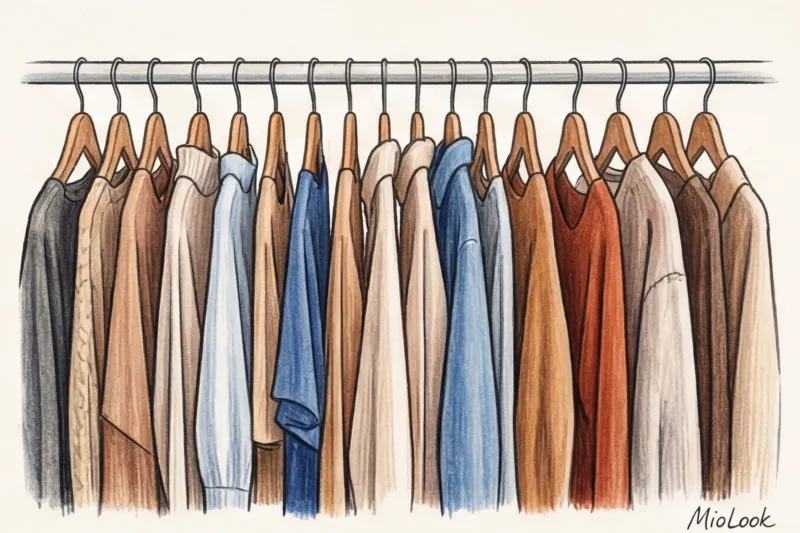
- Total inventory by category. Take absolutely everything out of your closets. You need to know your assets by sight. To avoid forgetting cool things, add them to MioLook virtual wardrobe — the application will help to structure chaos.
- Repair and dry cleaning. Restore something that's been waiting for its time. Take a coat with a broken button to be repaired, or a sweater with a stain to the dry cleaner.
- Creating your own lookbook. Spend one evening putting together and photographing 20 flattering outfits. When you oversleep on Wednesday morning, you won't have to think—you'll just open your photo gallery.
- Off-season cleaning. Vacuum-seal your winter sweaters this summer. Keep them out of sight. When you take them out in six months, they'll give you that dopamine rush from the novelty effect.
How to overcome the challenge without buying up half a shopping center
Danger awaits you at the finish line. There's a so-called "spring effect": after a year of abstinence, a person relapses and sweeps up store shelves, undoing all the internal work.
To avoid this, create a conscious wish list with clear justification. Want to buy a classic beige trench coat? Write it down. If the desire still lingers after a month, write down three specific pairs of shoes and five bottoms you'll wear it with. If the puzzle doesn't fit, cross it out.
Ideally, this challenge should gradually transition you to the concept of a capsule wardrobe as a lifestyle. Implement the ironclad rule: "One in, one out." Buy a new sweater (because the old one is hopelessly pilled)—the old one goes for recycling.
An important disclaimer. I'm always honest with my clients: this challenge is NOT for everyone. If you're currently going through a period of dramatic body changes (pregnancy, extreme weight loss) or a major social role shift (moving from freelancing to a strict corporate office), a strict shopping ban will only harm you. In such situations, you need to rebuild your wardrobe, but do so with the utmost thought.
A year without shopping isn't about deprivation, but about getting to know your true self. You suddenly realize that you don't need another "trendy blouse" to feel attractive. Your style is already hanging in your closet—you just need to give yourself the time and courage to see it.