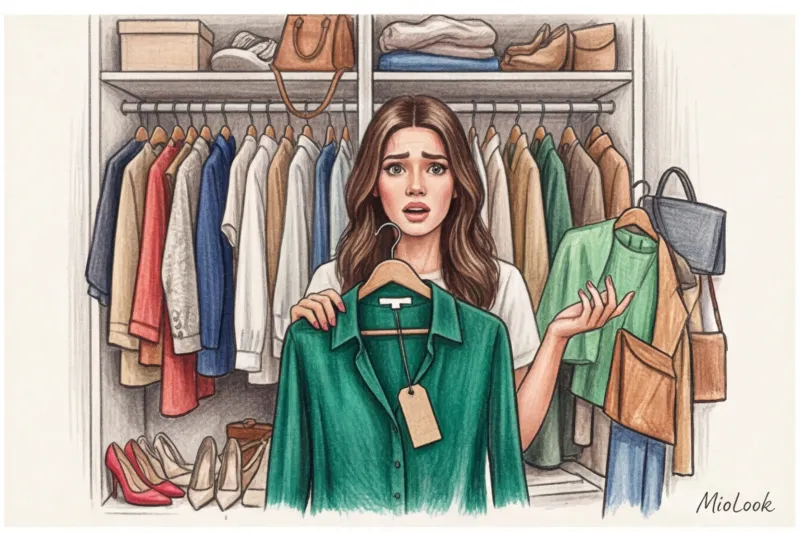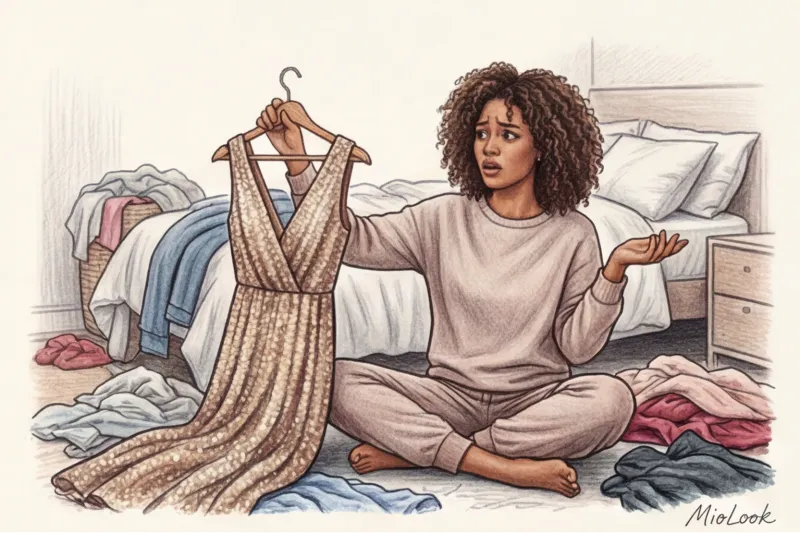
My client, Marie, is a top manager at an analytics company in Paris. Over the course of two years of working remotely, she bought fifteen luxurious silk blouses. Do you know how many times she wore them? Not once. Marie spent her phone calls in her favorite basic hoodie, while the expensive blouses, still with tags, hung in her closet like a monument to the life she wanted to live but didn't. If you're constantly searching for an answer to the question of how to get rid of impulsive clothing purchases for good, you've come to the right place. Over 14 years of working as a personal stylist, I've learned the most important thing: we unsuccessfully treat the symptoms while ignoring the cause of closet chaos.
We have already discussed the psychological mechanisms of shopaholism in more detail in our The complete guide: how to stop buying unnecessary things and understand the psychology of shopping In this article, I offer you a purely engineering, practical approach to your wardrobe. No trivial advice like "just show willpower" or "unsubscribe from brand newsletters."
The Fantasy Self Trap: Why We Buy Things for a Life We Don't Live
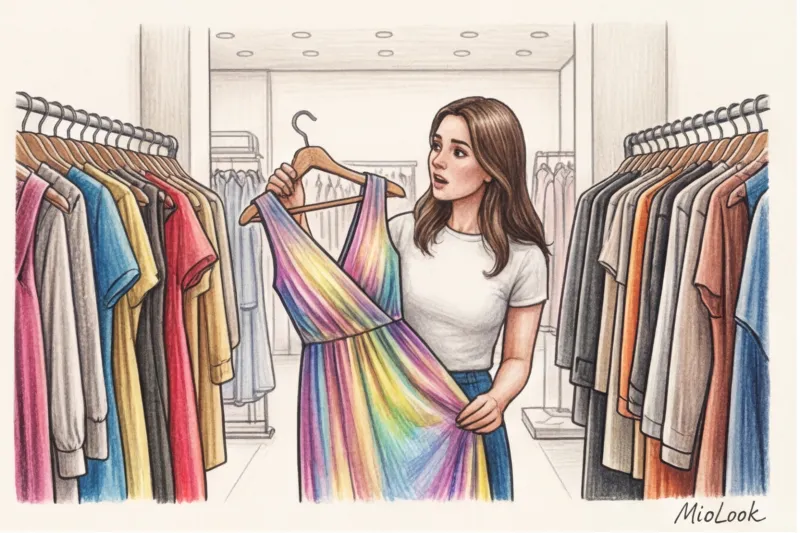
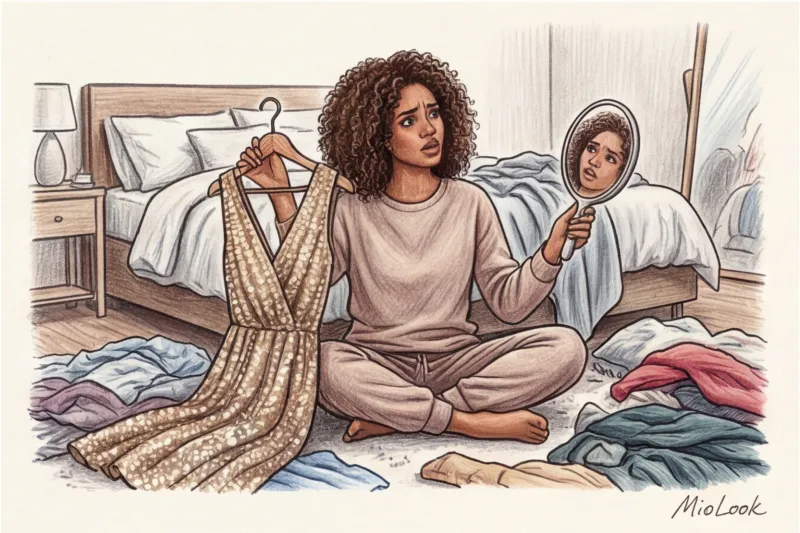
Think back to your last purchase, still hanging with the tag. Chances are, you bought it not for your true self, but for your "fantasy self." We buy sequined evening dresses while working from home, or strict three-piece suits while working at an IT company with a jeans-only dress code. We think buying a dress will magically transform us into a socialite.
“We don’t buy the fabric or the cut itself, but the promise of the life in which we will need this thing” – this is a rule I repeat at every wardrobe review.
Stanford University neuroscientist Robert Sapolsky explains this mechanism beautifully in his lectures on dopamine. Levels of the pleasure hormone peak not at the moment of possession, but in the anticipation of purchase. By the time you take the bag to the checkout, your brain has already received its dose of joy. At home, the item becomes just a piece of fabric.
To break this loop, I ask my clients to create lifestyle chart Draw a circle and divide it into sections proportional to your time: 60% office, 20% walks with the kids, 10% sports, 10% social events. Then open your closet. If evening wear takes up half your closet space, and you only go to the theater once every six months, you're subsidizing your fantasies at the expense of reality.
The Biggest Stylists' Myth: Why the "Wait 24 Hours" Rule No Longer Works
Open any glossy magazine and you'll see this advice: "Before buying something, put it aside for 24 hours." As a practitioner, I can officially state: in most cases, this doesn't work. In fact, it's harmful.
Strict "shopping diets" (when you forbid yourself from buying clothes for a month or a year) almost always end in a rebound effect. In my experience, eight out of ten clients who tried to "stick to it by willpower" broke down during huge sales, buying bags of clothes. The mere anticipation only intensifies the dopamine craving.
A pause only makes sense when it's filled with analytics. During these 24 hours, you shouldn't "suffer." You should conduct an audit. The only reliable cure for impulse buying is a digitalized wardrobe and precise knowledge of your metrics, not blind discipline.
Access to MioLook for €0.99 — one-time payment
A smart AI stylist will select the perfect look and help you organize your wardrobe.
Get access — €0.99 onceImpulse Clothing Buying: How to Stop It Forever in 5 Steps
Let's move from theory to the algorithm that I use when creating business capsule wardrobes for your clients. This method allows you to maintain your love of fashion while eliminating the financial and emotional costs.
Step 1: Take inventory and digitize your wardrobe
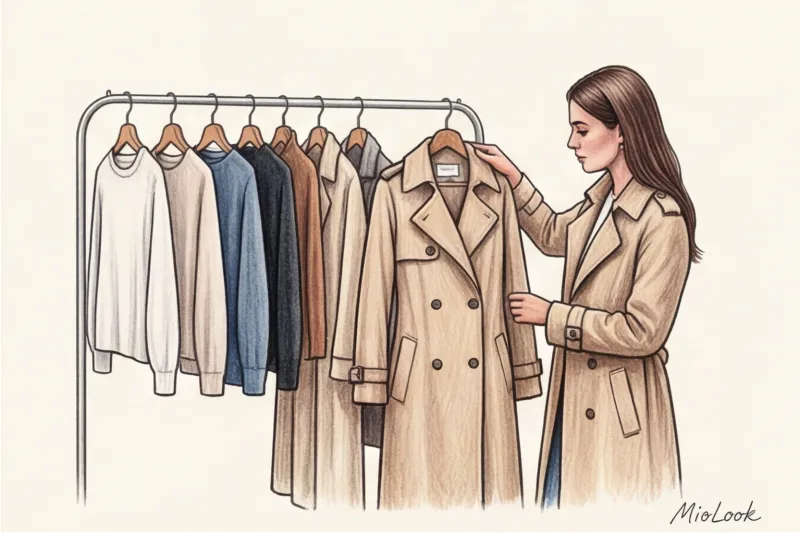
You can't control what you don't measure. Statistically, most women actively wear only 20-30% of their wardrobe. The classic Pareto principle in action: we wear 20% of our clothes 80% of the time. The rest is dead weight.
I recommend the pile method: put absolutely everything on the bed. Separate them into categories (bottoms, tops, dresses) and digitize them. Once you can see them clearly in the app MioLook Even though you already have four perfect white shirts, your brain physically refuses to buy a fifth.
Step 2: Implement Cost Per Wear Metrics
Forget the price tag. The only number that matters in styling is CPW (Cost Per Wear). The formula is simple: the item's price plus care costs, divided by the number of days you wear it.
- Example 1: A basic cashmere sweater from a premium brand costs $200. You wear it 50 times over two seasons. CPW = $4 per outing.
- Example 2: A trendy polyester dress from a mass-market store for $40. You wore it once to a party and then fell out of love with it. CPW = $40.
Calculating the CPW right in the fitting room is instantly sobering. A cheap item turns out to be the most expensive in your closet. It's important to note the honest limitation: the CPW metric. doesn't work for highly specialized clothing (wedding dress, ski suit), where function and protocol are more important than frequency of use.
Step 3. The 3-Image Rule: Compatibility Test
Any new item must undergo a rigorous filtering process before being paid for at the checkout. You must mentally (or in the app) create at least three different outfits with it. are already hanging in your closet.
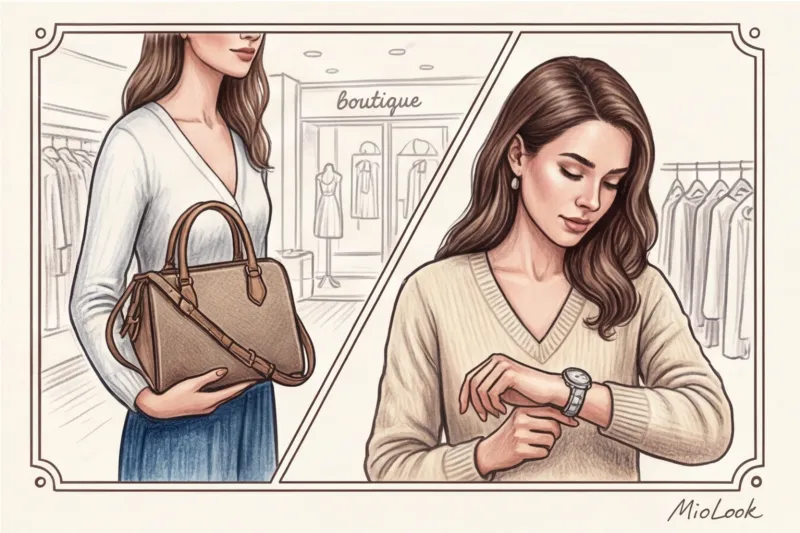
If a stunning statement skirt requires you to buy new shoes, a matching top, and a different bag, that's not a purchase. It's a financial drain that will lead to an endless cycle of spending.
Twin Thing Syndrome: Why We Keep Buying the Same Thing
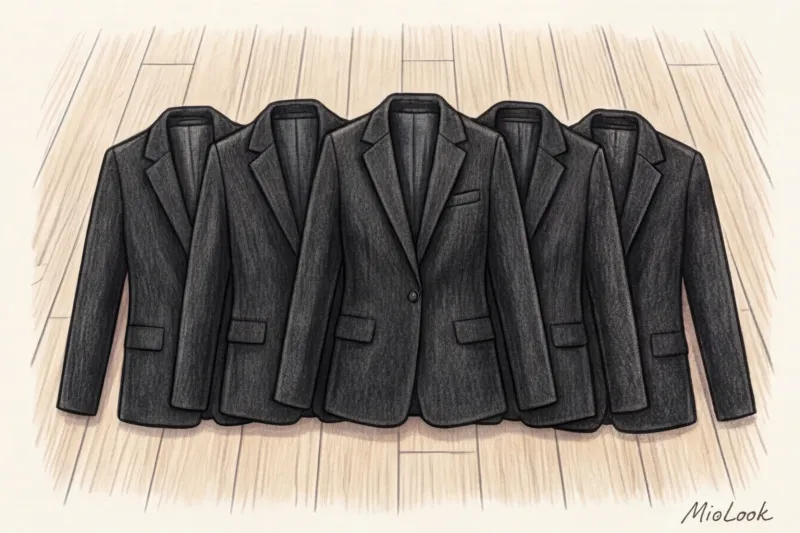
One day, while sorting through a client's wardrobe, we found six identical black double-breasted jackets, from Zara to COS. Three of them still had tags. This is a subtle form of impulse shopping—buying "safe" duplicates.
Why does this happen? Fear of leaving your comfort zone. If you don't know, How to find your clothing style , your brain clings to a tried-and-true pattern. You feel like you have nothing to wear, so you go to the mall and buy black pants again because "well, they'll definitely go with everything."
The solution lies in the capsule approach. A capsule eliminates duplication of basic functions. If you have one perfect black jacket in your closet that fulfills your business layering needs, you simply don't need a second one. This frees up money for purchasing high-quality women's leather business bag , which will raise the status of the entire image.
Your perfect look starts here
Join thousands of users who look flawless every day with the help of MioLook's smart algorithms.
Get access — €0.99 onceSale Triggers: Safety Tips During Discount Season
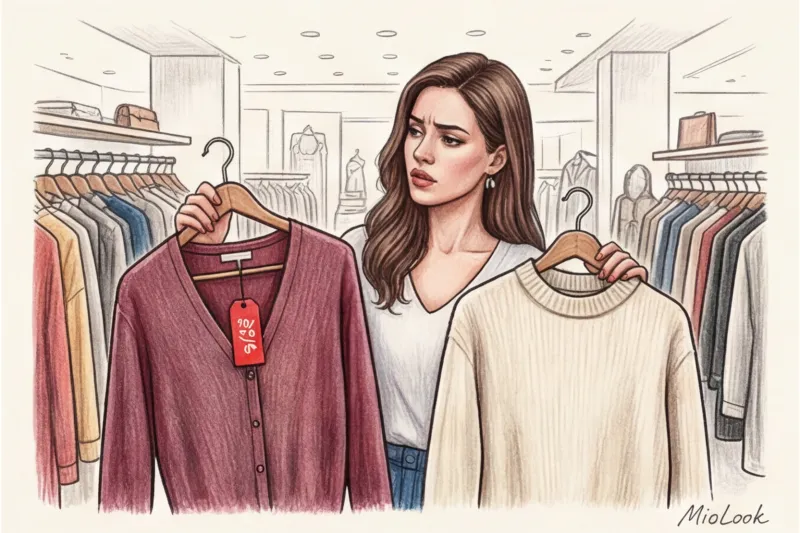
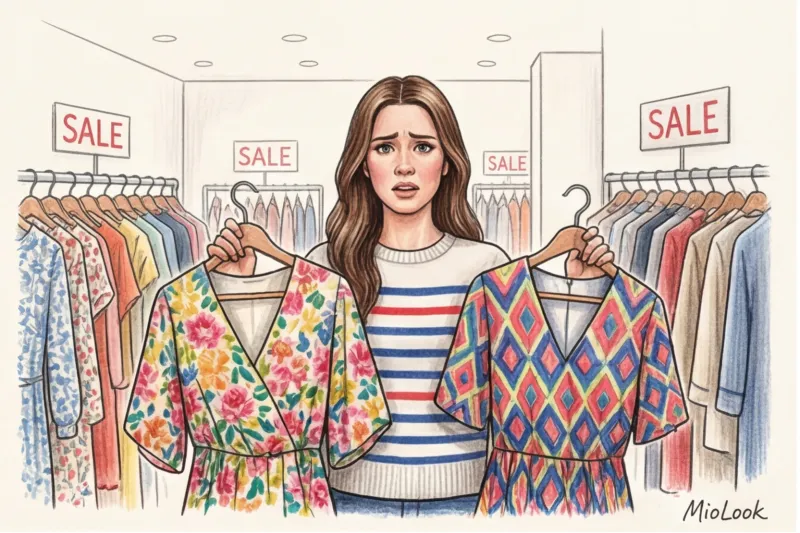
The magic of red price tags disables our critical thinking. FOMO (fear of missing out) kicks in. According to a 2022 study by the Ellen MacArthur Foundation, the average mass-market item is worn only 7-10 times before being tossed. And the lion's share of this trash is looted from clearance sales.
I have a golden question that I make my clients ask themselves during sales: "Would I buy this item right now if it was on sale at full price?"
If the answer is "no," you're not buying clothes. You're buying the discount itself. A discount is a brand's marketing tool for getting rid of unsaleable inventory, not a gift to you personally. True style isn't measured by the size of the discount.
Plan B: What to do if you've succumbed to the urge and bought too much
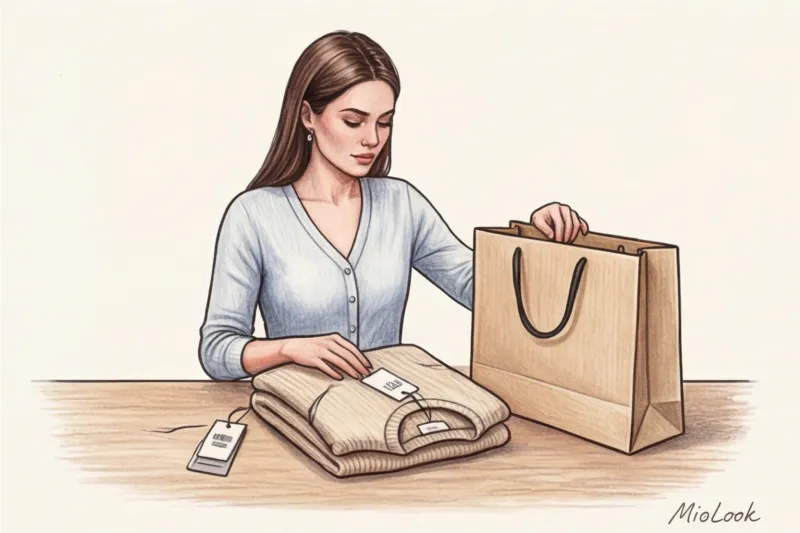
Let's be honest: everyone has breakdowns, even stylists. The first thing to do is to relieve the guilt. Beating yourself up is counterproductive; it will only increase your stress levels, which will make you want to "eat away" more shopping.
If the item still has the tag, return it to the store without any fuss. You have the legal 14 days. Many women are embarrassed about returning items, considering it a sign of weakness. Quite the contrary! Returning unsuitable clothing in an eco-friendly manner is a sign of maturity and the ultimate in financial control.
If you can't return it (for example, because you tore off the tag or bought the item abroad), try integrating the complicated purchase into your routine. Even the craziest leopard print top can be "calmed down" by wearing it under a smart, straight-cut men's jacket paired with straight-leg blue jeans. Give the item a chance to earn its CPW.
A conscious buyer's checklist (save it to your phone)
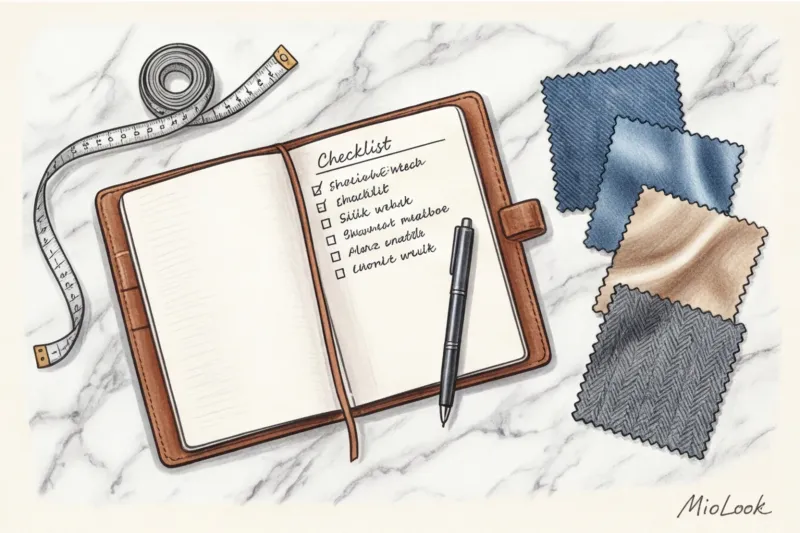
Before you head to the checkout or hit the "Pay" button online, check out these five tips. This will prevent you from wasting money:
- Is this a replacement for a worn out base or does it fill an empty niche in my capsule?
- Will I be able to create 3 different looks with her from what I already have?
- Does it fit my real lifestyle (not a fantasy one)?
- Am I prepared to care for this material (dry cleaning, steaming silk)?
- Would I buy this at full price?
Eliminating impulse purchases isn't about depriving yourself of joy. It's about shifting your focus. You stop collecting random items and start building the architecture of your personal style. Start not with a trip to the mall, but with an inventory of the treasures already hanging in your closet.