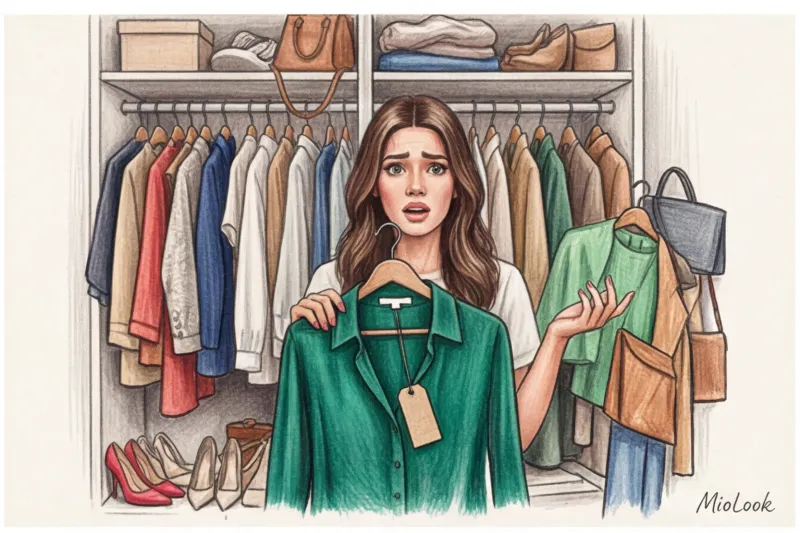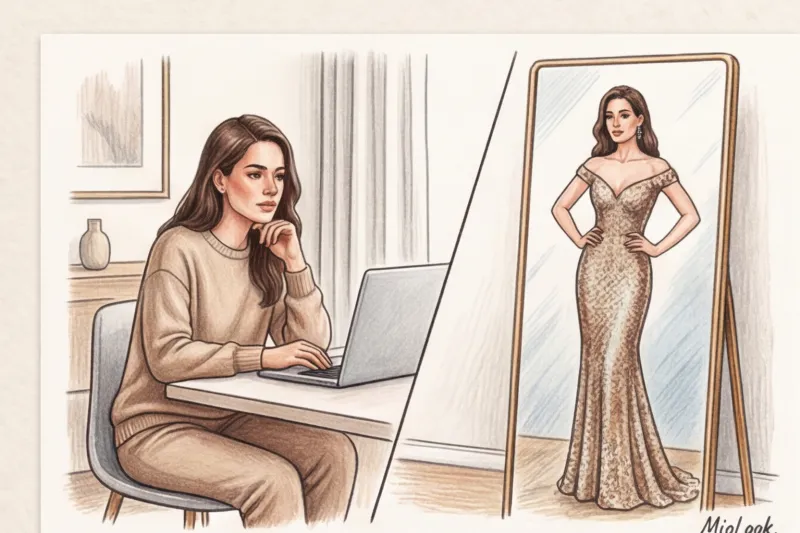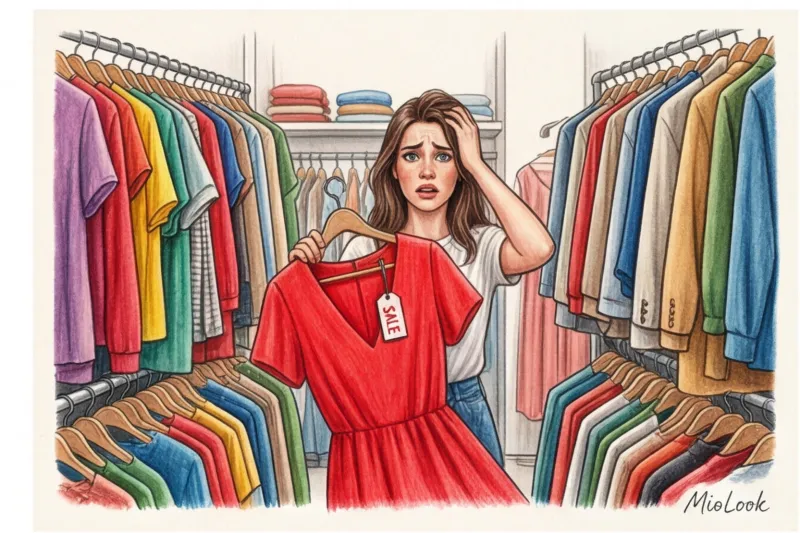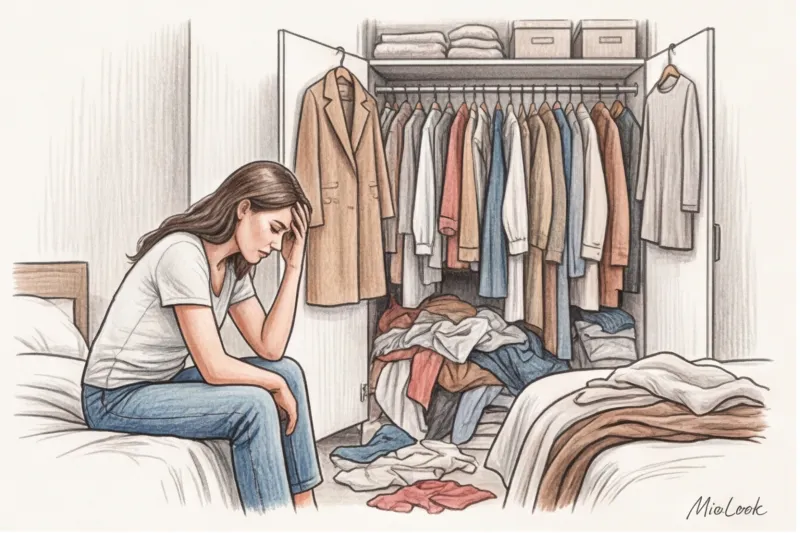
A few years ago, a client named Anna came to me for a wardrobe review. She worked remotely as a project manager, but her closet was filled with fifteen silk cocktail dresses with the tags still attached. When she greeted me, she was wearing a baggy hoodie and joggers. "Julia, I have absolutely nothing to wear," she sighed, looking at this parade of sequins and silk. It's at this point that we encounter the classic "Fantasy Self" trap. And if you're reading this, it means the question of... How to stop buying unnecessary clothes , it's time for you too. We've covered the mechanics of such purchases in more detail in our the complete guide to the psychology of shopping , but today we will move on to tough but effective practice.
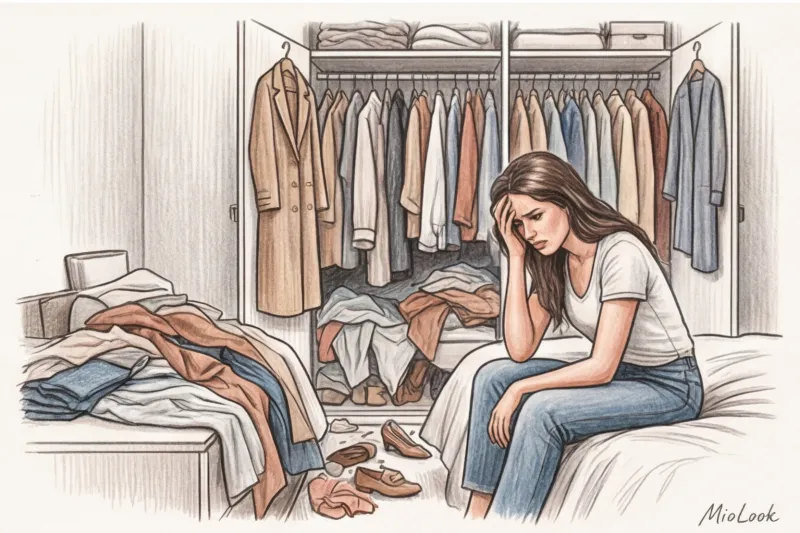
Let me be clear: diets don't work. Neither food diets nor shopping diets. If you simply forbid yourself from buying new things, you'll break out at the first seasonal sale. Over 12 years of working as a stylist, I've learned the most important thing: to cure impulsive shopping addiction, you need to not restrict yourself, but radically raise your standards.
The Psychology of Impulse: Why We Keep Buying Things
Have you ever noticed this strange paradox: the more clothes pile up on the hangers, the harder it is to put together an outfit in the morning? In behavioral economics, this is called the "Paradox of Choice." An excess of options simply blocks our ability to make decisions, causing so-called decision fatigue.
But why does your hand automatically reach for the "Place an order" button? It's all about the dopamine loop. Neurobiological research, particularly the work of Professor Robert Sapolsky, proves that the maximum release of dopamine occurs not at the moment of possession, but at the moment of anticipation We're not buying just another cashmere sweater. We're buying the illusion that this sweater will bring comfort, peace, and perfect autumn walks with coffee into our lives.
Brand marketing masterfully exploits our fatigue and desire for a quick dose of joy after a hard day at work.
The Diderot Effect and the Fantasy Self Trap
Let's return to my client Anna and her cocktail dresses. Buying clothes for a life you don't live (or live twice a year) is a key symptom of the "Fantasy Self" trap. And then the famous Diderot Effect comes into play. After buying one new item (for example, a pair of luxurious pumps), you suddenly realize your old trousers don't go with them. You buy the trousers, need a new blouse, and a bag to go with the blouse. One purchase sets off a never-ending spiral of consumption.
Practical exercise: Draw a circle and divide it into sectors that reflect how you actually spend your time (70% casual office, 20% weekends with the kids, 10% restaurants). Now look at your closet. Most women have the exact opposite proportions.
Access to MioLook for €0.99 — one-time payment
A smart AI stylist will select the perfect look based on your real-life rhythm.
Get access — €0.99 onceParadigm Shift: How to Stop Buying Unnecessary Clothes
Instead of telling yourself, "I can't buy clothes," try shifting your focus to the concept of exclusivity.
Your wardrobe is a closed VIP club. And for a new item to be admitted, it must pass rigorous face control. 95% of what hangs in mass-market stores is simply unworthy of crossing your threshold.
Buying fewer items becomes a natural side effect when you start demanding absolute perfection from your clothes: Italian wool craftsmanship, Swiss precision tailoring, and French casual elegance. Once you begin to understand how viscose with 5% elastane wears compared to cheap polyester, you'll simply lose the urge to buy everything.
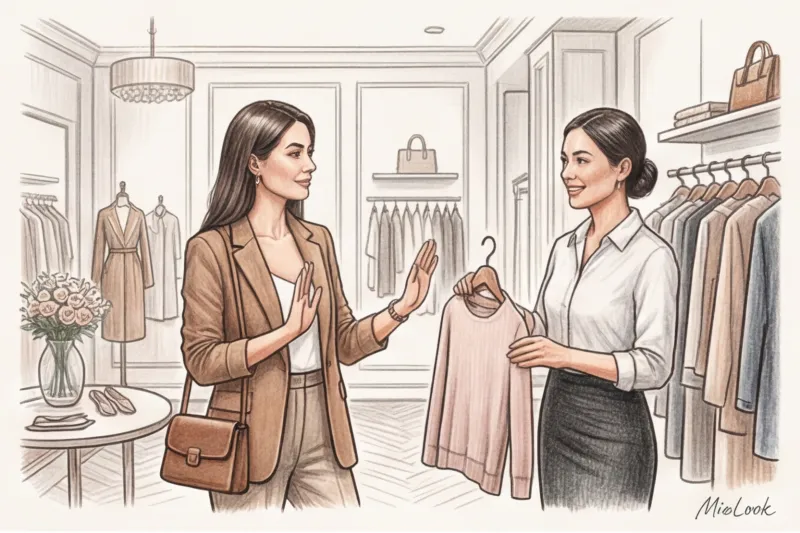
The "face control" principle for new things
The rule is simple: it has to be an absolute "Yes," or a resounding "No." If an item requires compromise ("I need to lose 2 kg," "I need a special seamless bra for this that I don't have," "I'll wear it if I take it in a little"), it stays in the store.
Always conduct tactile test Close your eyes and touch the fabric. If it squeaks under your fingers, becomes staticky, or simply doesn't feel physically satisfying to the touch, don't buy it. No amount of clever tailoring can save a garment that feels uncomfortable.
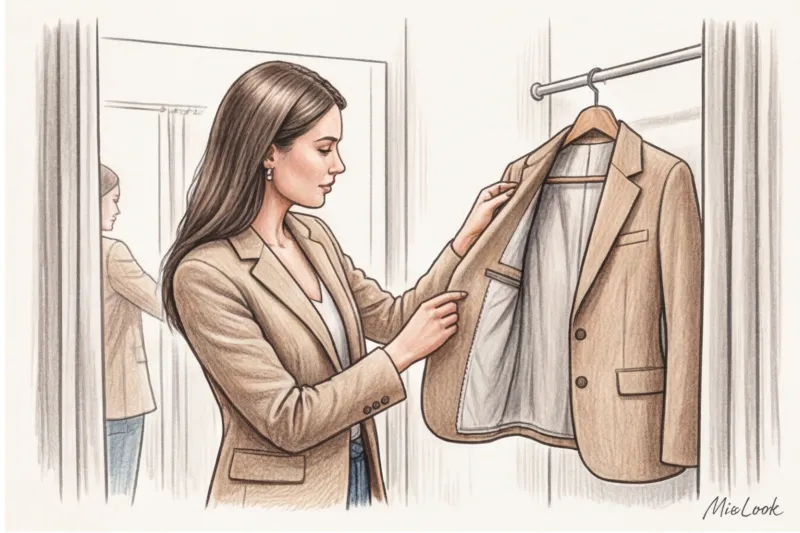
An Investment Approach to Wardrobe: Math vs. Shopaholism
Many of my clients pride themselves on getting a "bargain" during sales. But here's a less obvious fact: sales and discounts make your wardrobe look cheap and cluttered. Trying to save money by buying budget-friendly luxury items and items with red "70% off" tags is the main reason for that overstuffed closet with nothing to wear.
The only correct way to estimate the value of an item is a mathematical model. Cost-Per-Wear (CPW) Or the price of exit. Let's calculate it together.
Scenario A: You buy a trendy polyester jacket from a high-street retailer (say, H&M or Zara) for €30. Due to the cheap fabric and mediocre fit, you wear it three times a season, after which it starts to pill. Your CPW: 10 € per exit.
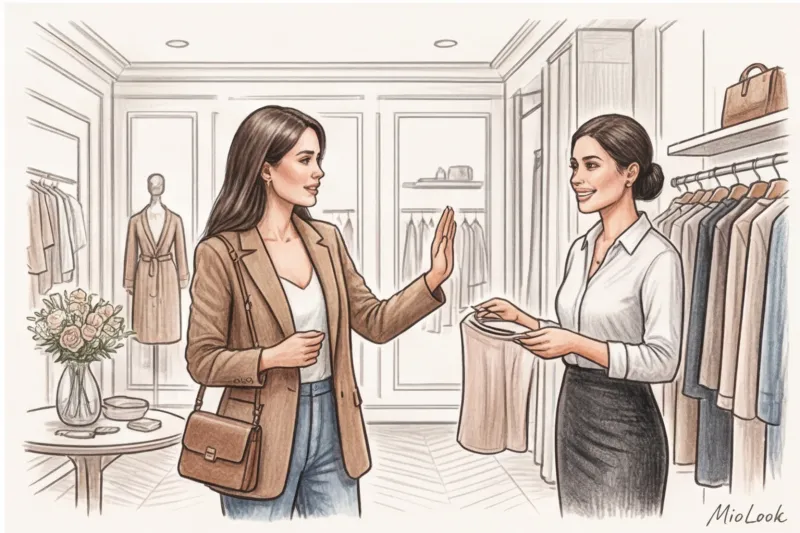
Scenario B: You invest in a perfectly tailored 100% merino wool blazer from a premium brand for €400. You wear it to work, to meetings, with jeans on the weekends—at least 100 times over three years. Your CPW: 4 € per exit.
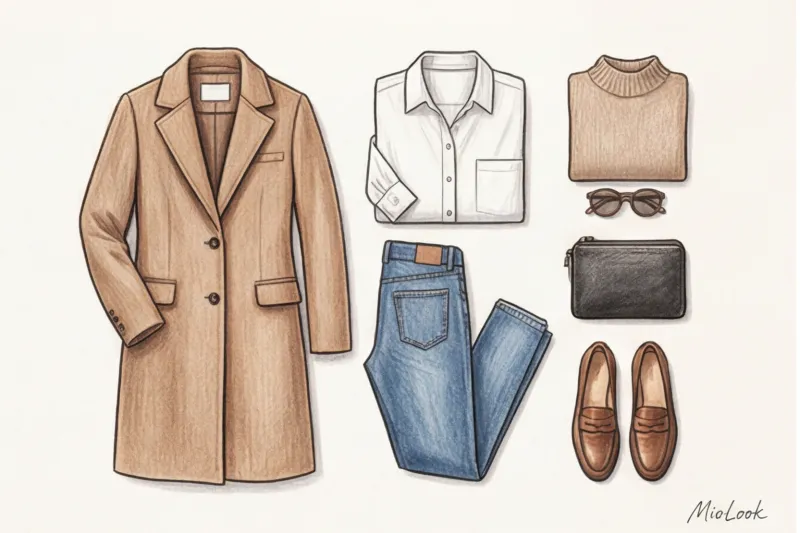
According to a McKinsey & Company research report, the average modern item is worn only 7-10 times before ending up in a landfill. The math is ruthless: an "expensive" basic item is cheaper than a pile of penny-pinching, one-off pieces.
Your perfect look starts here
Join thousands of users who look flawless every day with MioLook, while wisely calculating the cost of their wardrobe.
Get access — €0.99 onceAnatomy of a Fitting Room: Hidden Retail Pitfalls
As an industry insider, I can confidently say: fast fashion stores are designed to rob you of critical thinking. Music tempos of around 120 beats per minute force you to move faster. Harsh overhead lighting and cramped stalls create a feeling of discomfort—you want to grab the item and run to the checkout.
Luxury boutiques (like Massimo Dutti or COS in their prime locations) employ a different approach: warm 2700K lighting that leaves skin flawless, lounge chairs, and slow music playing at 60 bpm. They're designed to relax you so you'll spend more.
How to avoid being fooled by lighting and mirrors? "Stress test in the fitting room" Don't just stand in front of the mirror. Sit on a ottoman (does your skirt ride up to a critical point?). Raise your arms (does your shirt stay tucked in?). Walk around (do your pants bunch up in your crotch?). The difference between "looking great on a mannequin" and "feeling comfortable in real life" is colossal.
The Three Looks Rule: A Practical Filter for Mindful Shopping
Imagine you're standing at the checkout counter with a charming emerald sweater. Before you take out your card, ask yourself one question: "Can I, right now, in my mind, create at least three different looks with this sweater using the items that they're already hanging in my closet?
- A sweater + my basic blue jeans + loafers? Yes.
- Sweater + wool palazzo pants? Yes.
- A sweater over my silk slip dress? Yes.
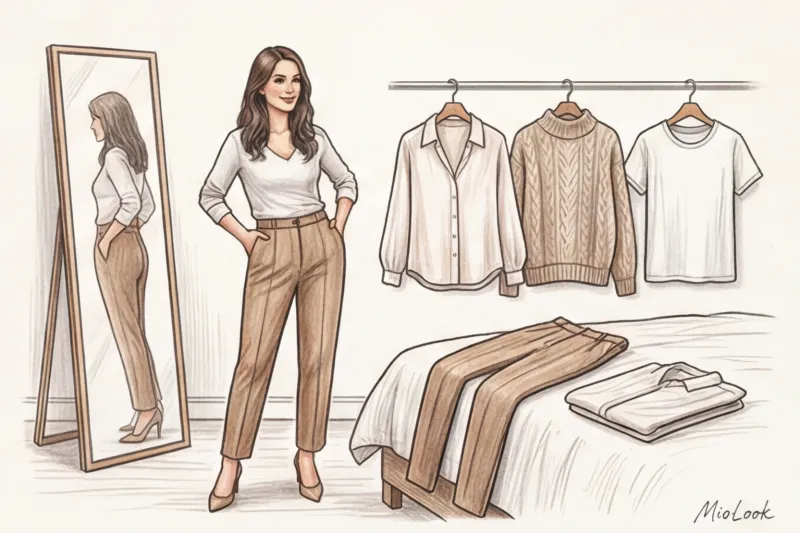
If the answer is "no" or "I need to buy another pair of pants for that," put the item away. The functional capsule concept is your main safeguard against accidental purchases. Of course, I must admit the limitations of this method: it doesn't work for highly specialized clothing If you're buying a ski suit or dress for a Black Tie dress code, you don't need to incorporate it into three casual outfits. But for 95% of your base, this rule works without fail.
For online shopping, use the 24-hour rule (and for carts over €300, the 7-day rule). Leave the items in your cart and close the tab. Most often, the next day you won't even remember what you were going to buy.
Ready to get started?
Try the MioLook free plan—no commitments required. Artificial intelligence will help you create a capsule wardrobe where everything coordinates perfectly.
Get access — €0.99 onceInformation Detox: Protection from Aggressive Marketing
The first physical step you should take this evening is to unsubscribe from all clothing brands' emails and delete fast fashion apps from your phone. It's like keeping a cake on your nightstand while trying to lose weight.
There's a crucial paradox here that marketers rarely talk about: brand loyalty programs aren't designed to save you money. They're designed solely to reduce the time between your transactions The notification about the expiring €15 bonus forces you to spend €150 to avoid experiencing FOMO (fog of missing out).

Clean out your social media feed. Unfollow influencers whose content is based solely on daily unboxings and endless consumption. Avoid those who teach styling, care, and investment strategies.
From Shopping to Styling: Rediscovering Your Closet
The most exciting shopping experience is shopping in your own closet. Stop looking for new things and start looking for new combinations. That same white shirt you only wore to the office with a pencil skirt can look incredibly stylish when layered over a turtleneck, unbuttoned to the waist, and accessorized with a vintage belt.
To make this process less chaotic, you need to digitize your wardrobe. When you add your items to smart apps like MioLook , you get an objective picture of reality. Visualizing 20 different tops on your smartphone screen instantly cures the "I have nothing to wear" panic.
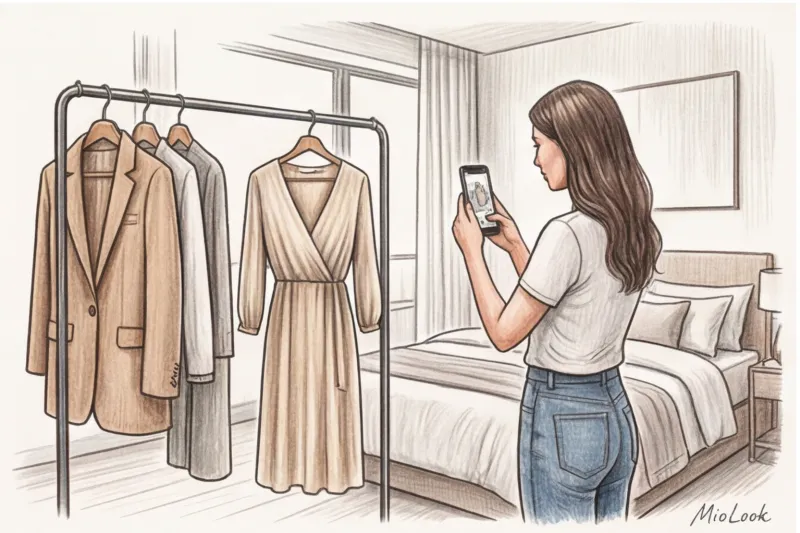
A mindful wardrobe isn't about asceticism and deprivation. It's about respecting yourself, your time, and your money. Stop subsidizing the fast fashion industry and start investing in your status. When every item in your closet fits perfectly, is made of high-quality fabric, and reflects your real life, the need for constant shopping disappears. You already have the best—why settle for less?