Why Regular Lists Don't Work (and How Our Brains Trick Us)
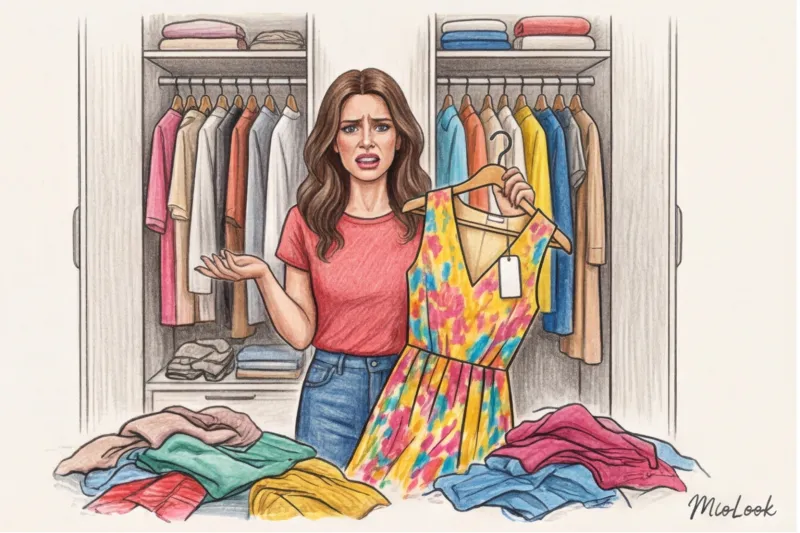
A couple of years ago, I was sorting through the wardrobe of a client in Milan. Maria worked remotely five days a week, but her closet resembled the window display of an evening boutique: luxurious silk slip dresses, vertiginous stilettos, sparkling tops. And almost all of it still had the tags intact. "I bought this for future occasions," she sighed, sitting on the floor in her favorite, but now faded, joggers. Sound familiar?
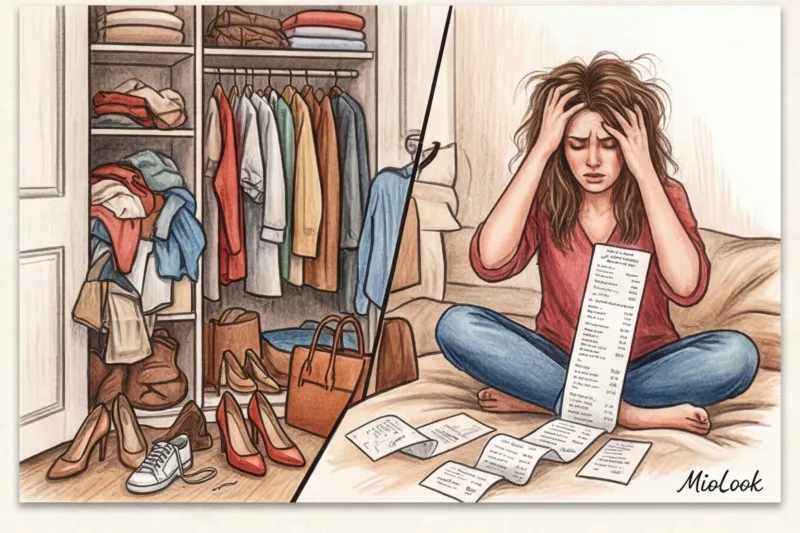
Every season, we promise ourselves to be smart about our shopping. But when it comes down to it, and the question arises: here's the perfect clothes shopping list, how to put it together so the clothes will actually be worn—our system fails. We write "buy formal trousers" in our notes, and come home with a leopard-print blouse.
The reason for such "dead" wardrobes isn't a lack of taste, but rather the traps of our brains. I've already discussed this in more detail in our guide. How to Stop Buying Unnecessary Things: The Psychology of Shopping Stanford University neurobiology professor Robert Sapolsky brilliantly explains this mechanism in his lectures: dopamine is released not at the moment of receiving a reward, but at the moment of its expectations The process of searching for a dress for a fantasy life where you drink cocktails on the terrace every evening gives the brain a powerful rush. A rational plan to buy boring but necessary turtlenecks kills that rush.
We shop for the woman we want to be, ignoring the woman we are every day. To break this dopamine loop, we need a fundamentally different approach to wardrobe planning.
Access to MioLook for €0.99 — one-time payment
A smart AI stylist will select the perfect look for your real life, not your fantasy one.
Get access — €0.99 onceStep 1: Reality Audit Using the Stylist Method (Spoiler: Don't Throw It All Out)
Let's be honest: a complete closet cleanout before the season is the worst thing you can do to your style. When glossy magazines advise you to "get rid of everything you haven't worn in a year," they send you into a panic. You stare at your half-empty closet, feel a severe lack of clothes, and... go buy half the mass-market stuff, repeating the same mistakes.
Over 12 years of working as a stylist, I've developed a different algorithm. I call it the "Favorite Twenty" method.

The Oxford Study of Consumer Habits (and the Pareto Principle in fashion) reveals a stark statistic: women wear only 20% of their wardrobe 80% of the time. Your goal isn't to throw out the 80% of "unwanted" items, but to examine those 20% of your favorites. Pull out the items you wear to the point of holes. Lay them out on your bed and ask yourself:
- Textile: Is it always soft knitwear? Or do you prefer thick linen that holds its shape?
- Cut: Do you instinctively gravitate toward oversized pieces or do you choose fitted silhouettes?
- Blind spots: What exactly are these favorite pieces missing to give them a new sparkle? Perhaps your impeccable wide-leg jeans just need a structured belt and the right shoes.
"Your ideal style already lives in your closet. It's just buried under a pile of impulse buys. Find your wardrobe core, and the shopping list will write itself."
Fair Limit: This gentle audit method DOESN'T work in only one case: if your size has changed dramatically (by three sizes in either direction). In this situation, you'll unfortunately have to put the old database away and build the capsule from scratch. In all other cases, we work with what we have.
Charting Your Life: Managing Your Budget
One of the most common mistakes my clients make is disproportionately distributing their budget. Remember Maria from the beginning of this article? Her life diagram consisted of 80% working on her laptop on the couch and walking the dog, and 80% of her wardrobe consisted of red carpet outfits.
The secret to the Mediterranean approach to style, which I love so much, is its everyday elegance. Italian and Spanish women look stunning on a Tuesday morning over an espresso because they invest in everyday clothes rather than saving their style for a special occasion.

Take a piece of paper and draw a pie chart of your typical week (or month). Divide it into sections: office, remote work, weekends out of town, sports, dates/evenings out. If the office takes up 60% of your time, then exactly 60% of your shopping budget should go there. This simple mathematical step is more sobering than any persuasion.
Step 2: Wardrobe Matrix – a clothing shopping list and how to create it correctly
Now we move on to the technical part. Writing down abstract concepts like "I need jeans and a sweater" is a recipe for failure. A proper clothes shopping list, as they teach in styling schools, is always based on a three-category matrix.
- Database update (30% of the list): These are things that have broken down. But we don't write "white shirt," but rather very specifically: "Straight-fit men's shirt, poplin, 100% cotton, 120 g/m² or more, no elastane, brand like COS or Massimo Dutti".
- Bundle items (50% of the list): The most important element, which we'll discuss below, is the pieces that tie your existing wardrobe together.
- Accent trends (20% of the list): Something to spice things up: colorful tights, a trendy bag, or leopard-print loafers.
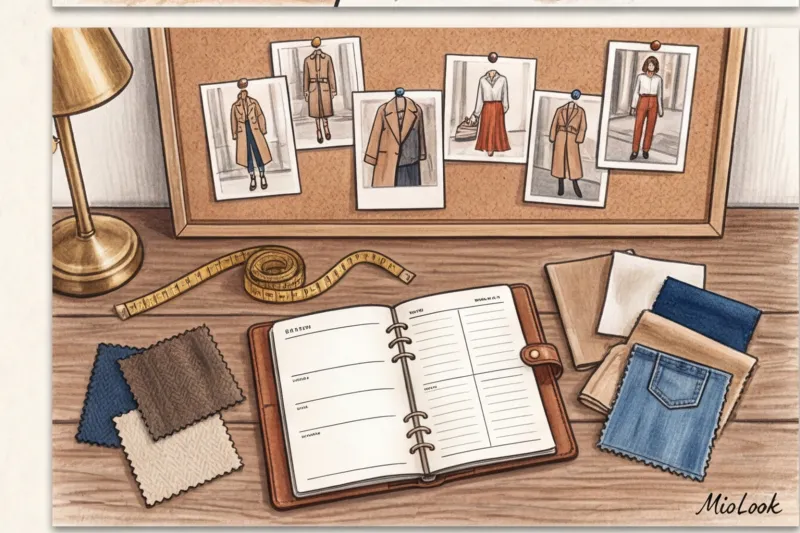
Before opening your banking app, create a mood board. Take screenshots of the items you plan to buy and visually compare them to photos of items in your closet. Doesn't match proportionally? Cross it out without regret.
Ready to get started?
Try MioLook's free plan—upload your items and let AI create the perfect capsules for you, without any extra purchases.
Get access — €0.99 onceSecret Weapon: "Links" instead of a boring base
I'm going to refute the most common advice in glossy magazines. "Start your list with the basics: a white T-shirt, blue jeans, a beige trench coat" is a mistake. Buying only bland basics leads to incredible boredom. Your brain doesn't get the dopamine boost from the perfect white T-shirt, and a week later you're tempted to buy a sequin dress that doesn't go with anything.
The list should start with bridge pieces What is it? Imagine you have a pair of old, slightly tired blue jeans and a plain black turtleneck. Wearing them together, you feel like a gray mouse. But add a complementing piece—for example, a structured houndstooth tweed jacket with gold buttons—and these two basics instantly transform into a classy look.

A tie-in piece often features a print or a bold texture (leather, suede, heavy tweed) that complements the colors of your base. One well-chosen printed blouse can bridge the gap between your business trousers, your favorite jeans, and your summer skirt. Invest in bridges, not just bricks.
The Three-Image Rule is the ultimate filter for your list.
Every item on your smart list must undergo rigorous customs inspection. I call this the Three Looks Rule. If you can't immediately create at least three different outfits for a planned purchase in your head (or in an app) using items ALREADY hanging in your closet, it's immediately crossed off.
This rule protects you from buying "single items." A single item is a sneaky wardrobe parasite. You buy a complicated asymmetrical skirt, bring it home, and realize none of your shoes go with it. You go shopping for new ankle boots. Then you discover that this style requires a special crop top. And so you've spent the budget on a full-length capsule collection on one impulsive desire.
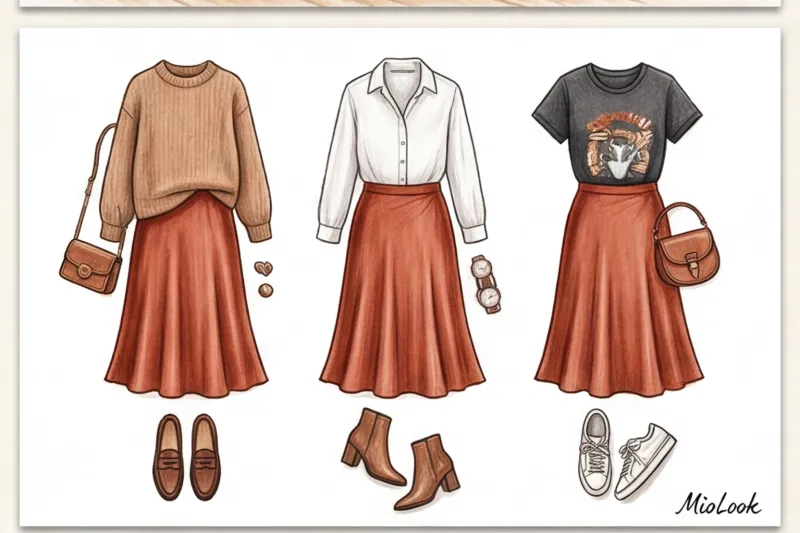
Last season, my client Anna was eager to buy a neon fuchsia dress, succumbing to the spring trend. I suggested an alternative—a deep terracotta silk midi skirt. Anna was hesitant, but we tested it using the rule of three looks. The skirt paired perfectly with her oversized gray sweater (brunch look), crisp white shirt (for the casual office), and black silk top with thin straps (for evening). The terracotta skirt became the star of her season, and the neon dress would have hung by the tag.
Investing Smart: The Cost Per Wear Formula
No professional list is complete without a budget. But it's not the price tag that counts, but rather the cost per wear (CPW).
The formula is extremely simple: Price of the item ÷ Estimated number of wears = CPW.
The #30Wears campaign, launched by eco-activist Livia Firth, encourages people to honestly ask themselves before every purchase: "Will I wear this at least 30 times?" The environmental statistics are alarming: the average mass-market item is worn only seven times before ending up in a landfill.
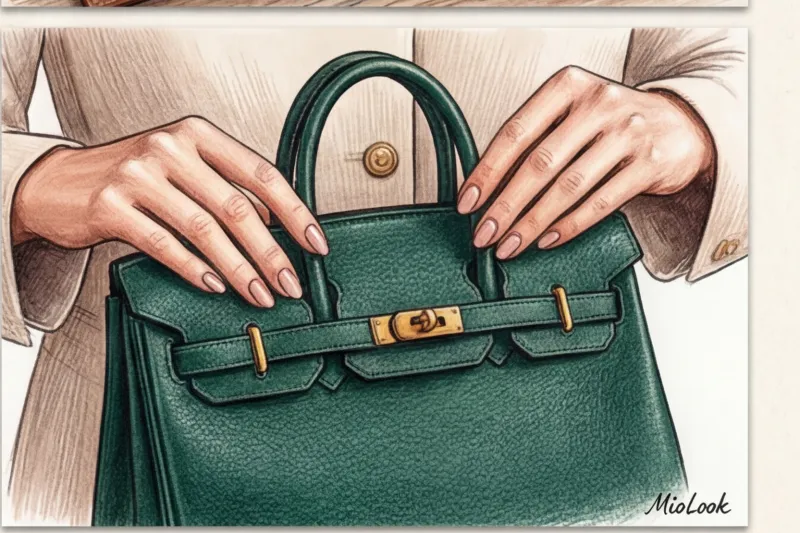
Let's do the math. A trendy $50 faux leather bag that you'll wear to three parties will cost you $16.60 per outing. A classic, structured $350 genuine leather bag that you'll carry to work 200 days a year costs $1.75 per outing. The expensive item ends up being ten times cheaper!
Therefore, your shopping list should have a clear division of budgets:
- Maximum investment: Outerwear, bags, shoes, glasses, and watches are the anchors of the look, elevating even a basic sweatshirt to a luxurious level.
- Middle segment: Denim, jackets, knitwear.
- Austerity: Microtrends for one season, white T-shirts, beachwear.
Checklist: Your Pre-Shopping Action Plan
Smart shopping isn't about boring restrictions. It's about the amazing feeling of freedom from the stress of "a full closet, but nothing to wear." To reinforce this, here's your final action plan:

- Analyze your favorite 20% of things and find what they lack for new combinations.
- Draw a diagram of your life and distribute your budget according to your actual employment.
- Write a list, dividing it into the base, the accents and, most importantly, bundles of things Describe the fabric and cut in as much detail as possible.
- Run each position through the Rule of Three.
- The main secret: Let the list sit for 24 hours. If the next day you can't remember half the items you've written on it, you definitely don't need them.
Knowing how to create a wardrobe strategy is a skill that can save you thousands of dollars and hundreds of morning nerves. Implement the "bridges" rule instead of blindly buying basics, and you'll notice how your wardrobe will start working for you, rather than you working for it.
Your ideal image begins Here
Join thousands of users who look flawless every day with MioLook. Digitize your wardrobe and create smart shopping lists.
Get access — €0.99 once