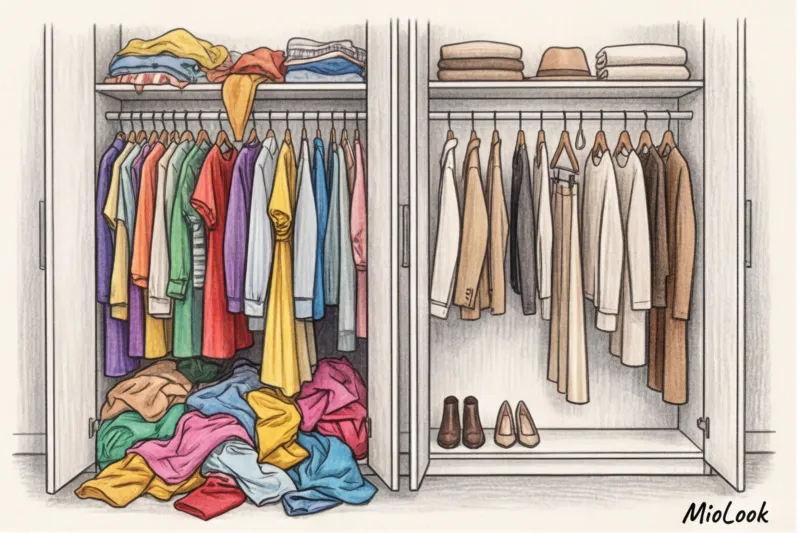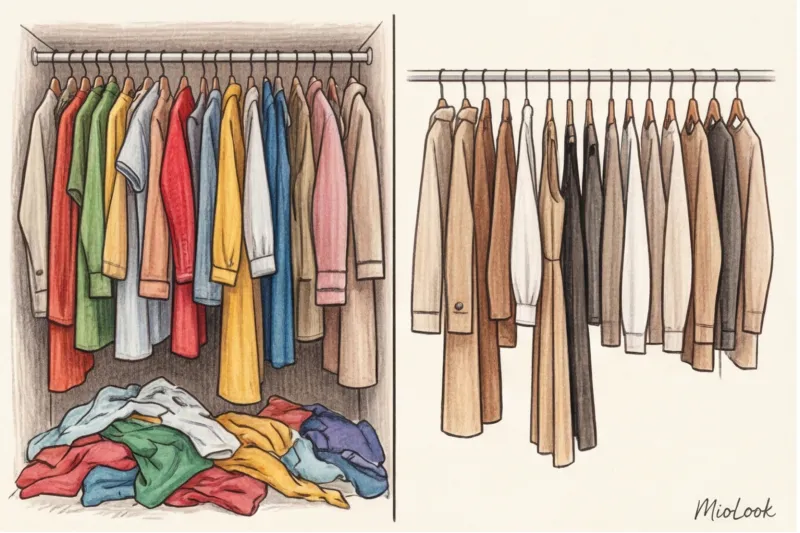

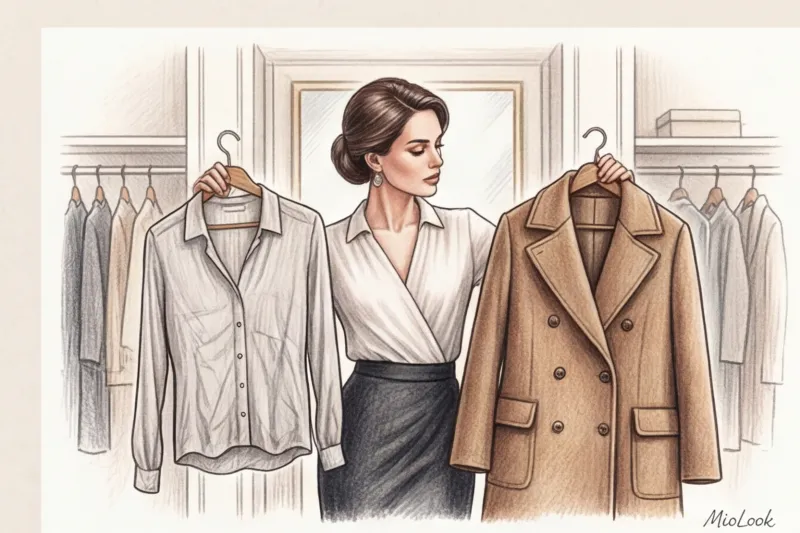
Let's be honest: a closet full of clothes that don't bring you joy isn't the result of your inattention, but a brilliantly planned business model of fast fashion giants. Over 12 years of working as a personal stylist, I've learned one key rule: giving up mass-market fashion isn't a willpower exercise, and certainly not asceticism. It's a deliberate attempt to raise your "sensory standards."
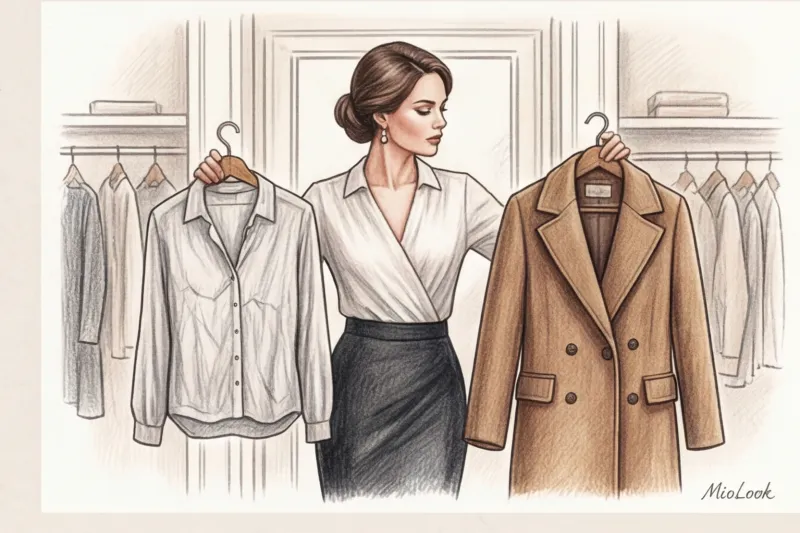
When you accustom your body to flowing Italian silk, precise cuts, and weightless cashmere, fast fashion simply stops producing a dopamine rush. It becomes physically and aesthetically unappealing. Many of my clients ask, How to give up mass-market clothing and avoid breaking the bank at the next sale. The secret lies not in prohibitions, but in understanding the true value of things and the psychology of consumption. We discussed the neurobiology of impulse buying in more detail in our basic guide: How to Stop Buying Unnecessary Things: The Psychology of Shopping.
The Illusion of Savings: Why Fast Fashion Is Too Expensive
There's a myth that mass-market fashion saves us money. In reality, fast fashion is the most expensive way to dress, because you're constantly buying the illusion of new clothes that lose their shape after just one wash.
In styling we use the concept Cost-per-wear (cost per outing). Let's do the math. Let's say you bought a trendy polyester dress at a high-street store for $50. You wore it twice—to a corporate event and to a restaurant—and then it started pilling or you just didn't like it. The cost per outing was $25. Now let's take a classic, well-cut wool jacket for $800. You wear it to the office, to meetings, and layer it over a slip dress in the evening. Over three years, you've worn it at least 100 times. The cost per outing is only $8.
According to a 2022 report by the Ellen MacArthur Foundation, mass-market clothing is worn on average only 7-10 times before being thrown out or forgotten at the bottom of a closet. We pay not for clothes, but for a moment of emotion at the checkout counter.
I recently audited my client Elena's wardrobe. Over three years, she spent on impulse purchases at Zara, H&M, and Mango a budget that would have been enough to buy a Hermès Kelly bag on the secondary market or completely renew her basic wardrobe at Loro Piana. The hidden costs of fast fashion are colossal: constant dry cleaning of cheap fabrics, rapid loss of shape, machine depilling, and the endless need to buy "replacements" for worn-out items.
Access to MioLook for €0.99 — one-time payment
A smart AI stylist will select the perfect investment look and help you digitize your wardrobe.
Get access — €0.99 onceSensory Detox: How to Reprogram Yourself for Quality
Deliberately limiting yourself is a failing strategy. Our brains are too fond of novelty. Customers stop buying mass-market items not because they decide to cut corners, but when their skin physically refuses to wear squeaky polyester after experiencing the right material.
I call this method "tactile calibration." I give my new clients the task of going to a Brunello Cucinelli, Loro Piana, or The Row boutique. Don't buy anything. Just spend an hour there. Touch the baby goat cashmere, try on trousers made of the finest summer wool, feel the flow of heavy mulberry silk. And on the way back, stop at any fast fashion store and try on a similar suit.
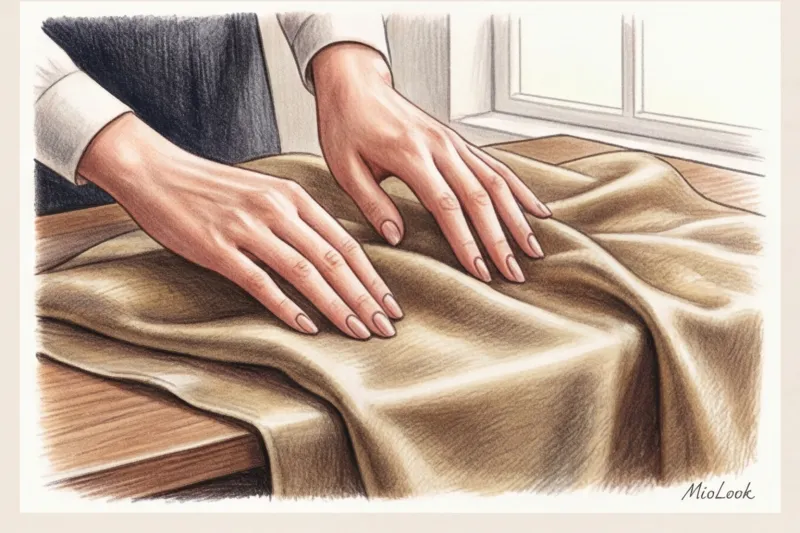
The difference in body sensation is colossal. Cheap synthetics don't breathe, disrupt thermoregulation, and often become staticky. When you create this sensory gap in your perception, the question of how to give up mass-market clothing disappears. The body itself chooses comfort.
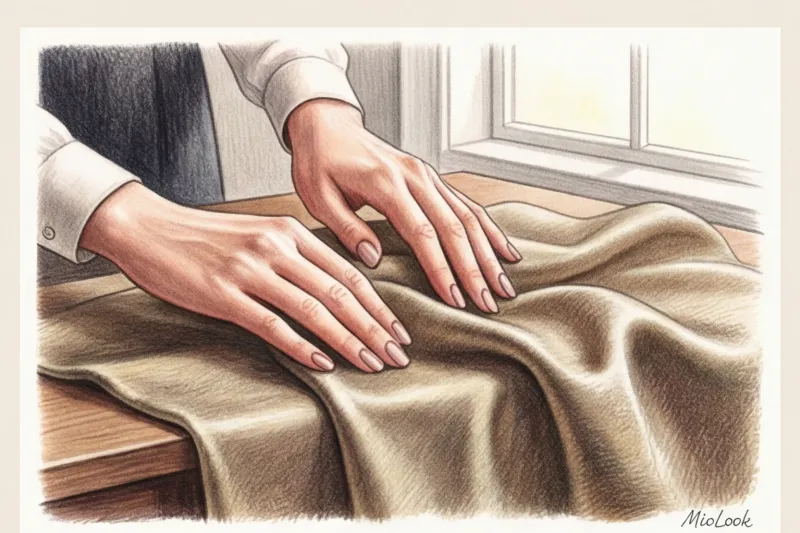
The Anatomy of a Premium Garment: Cut, Seams, and Patterns
An investment piece differs from a disposable one on the inside. Mass-market clothing skimps on everything that isn't visible to the eye in the fitting room. A prime example are men's and women's classic jackets.
In fast fashion, the front of a jacket is glued with a special fabric (interlining) under pressure to maintain its shape. After the first professional dry cleaning or exposure to heavy rain, the glue can come off, leaving permanent bubbles on the lapels. In the premium segment and bespoke tailoring, traditional interlining is used. crinoline — a layer of horsehair and canvas, sewn on with thousands of hand stitches. It "remembers" the contours of your body and only gets better over time.
Pay attention to stitch density. Luxury items typically have 12-14 stitches per inch, while mass-market items typically have only 7-8. A sparse stitch density breaks more quickly and creates a rough seam.
How to Ditch the Mass-Market Clothing: A Step-by-Step Strategy
Transition to consciousness capsule wardrobe It requires a systematic approach. It's like switching to a healthy diet—you can't just throw everything out of the fridge without making a plan.
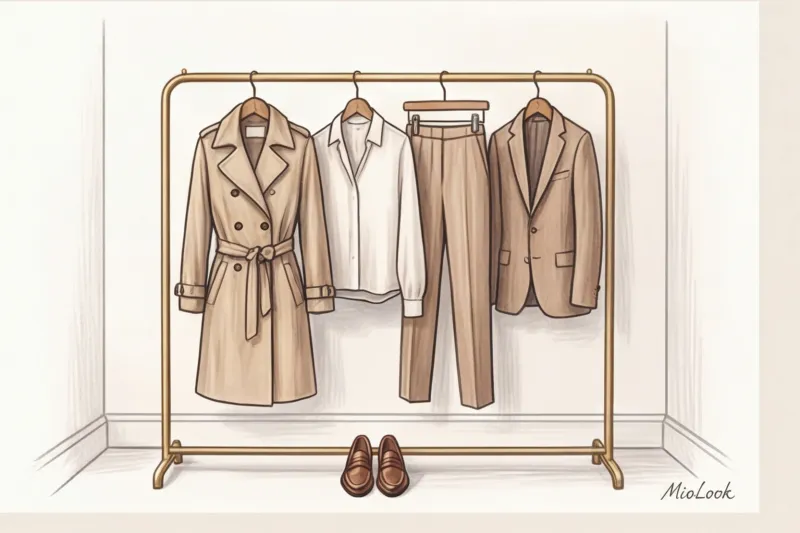
- Audit of "dead capital". Remove from your closet absolutely every mass-market item you've bought in the last year and worn less than three times, especially those still with tags. Calculate their total value. In my experience, one client had 50 impulse buys with tags still hanging in her closet. Their combined value equaled the cost of the perfect Max Mara 101801 cashmere coat, which she'd "only dreamed of," believing it was prohibitively expensive.
- The One Thing Rule. Make a deal with yourself: instead of five spontaneous purchases for 3-5 thousand euro, you buy exactly one targeted investment per season. One pair of impeccable leather loafers instead of three pairs of uncomfortable faux leather shoes.
- Removing triggers. Unsubscribe from all fast fashion brand newsletters. Delete their apps from your phone. Don't go to shopping malls "just to kill time." Fast fashion marketers use aggressive algorithms to create an artificial sense of scarcity ("Only 2 left!").
But there is also a fair limitation: This advice doesn't always work. If you're experiencing significant weight loss (pregnancy, dieting) or your lifestyle has changed temporarily and radically, buying expensive investment pieces isn't practical. During such periods, high-quality mid-market or basic cotton items (such as those from Uniqlo) are a perfectly reasonable choice.
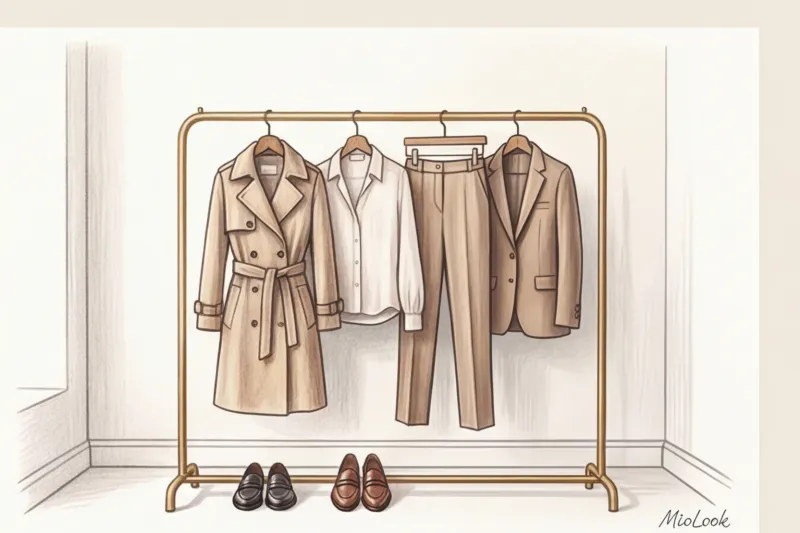
Your perfect look starts here
Join thousands of users who look flawless every day with MioLook, without spending money on unnecessary things.
Get access — €0.99 onceThe secondary market and local ateliers: where to look for prestigious items
Giving up fast fashion doesn't mean you have to shop exclusively at boutiques on Avenue Montaigne. Today's resale market is a gateway to luxury at premium mass-market prices.
Platforms like Vestiaire Collective, The RealReal, and trusted local resale boutiques offer authentic pieces at huge discounts. My best investment is a vintage Yves Saint Laurent jacket from 1995, bought in a secret Parisian shop. The shoulder line is perfect, the wool is thick, the lining is incredible. Items made 20-30 years ago are conceptually superior in terms of craftsmanship to modern collections, because the industry wasn't yet geared toward micro-trends back then.
The second alternative is custom tailoring. Find a reputable tailor. A pair of high-quality Italian wool trousers, tailored exactly to your measurements, will cost you the same as a pair of polyviscose trousers at Massimo Dutti, but the fit will mark you out as someone with impeccable taste. A perfect fit is a key indicator. quiet luxury.
Relapses and triggers: what to do if you're drawn to sales
We're all human beings. I sometimes catch myself tempted to buy something bright and inexpensive after a hard day at work. Stress is the main driver of mass-market shopping. We don't go to the store for clothes; we go for the illusion of control and a quick fix.
Renowned neurobiologist Robert Sapolsky (2017) has proven that the maximum level of dopamine is produced not at the moment of receiving a reward, but at the moment of its anticipation How do you use this? Use the "48-hour shopping cart" method. Add items to your online shopping cart, choose sizes, combine colors—give your brain that dopamine rush from the "hunt" process. But close the tab for exactly two days. In 95% of cases, after 48 hours, you won't even remember what was in that cart.
If the thirst for novelty is unbearable, invest in accessories. The right silk scarf, textured leather belt, or new pair of glasses will refresh your basic looks far more effectively than your tenth dubious blouse.
Ready to get started?
Try MioLook's free plan—upload your items and let AI create new looks from what you already own.
Get access — €0.99 onceChecklist: 5 Questions to Ask Before Buying an Investment Item
I give this short checklist to every client who's decided to embrace a conscious style once and for all. When you're at the checkout (online or offline), ask yourself these five questions:
- Will I be able to create at least 5 looks with this item? (Make sure it fits into your capsule and doesn't require you to buy new shoes and a bag.)
- Will I wear this in 3 years? (Micro-trend test).
- Does this item require special underwear or complex care? (If your dress requires a special invisible bra that you don't have, or the fabric wrinkles at the first glance, you won't wear it.)
- Am I willing to pay to have this item repaired if it breaks? (An indicator of the value of a thing for you personally).
- Am I buying this for the thing itself or for the momentary emotion? (Answer honestly whether you are trying to “shop away” fatigue.)
Giving up mass-market fashion isn't a loss, but a tremendous gain. You regain the time you wasted endlessly scrolling through online stores, the money you lost on small purchases, and the confidence that you look flawless in any situation. Invest in quality, respect your body, and remember: you're too beautiful to wear clothes made for just one season.