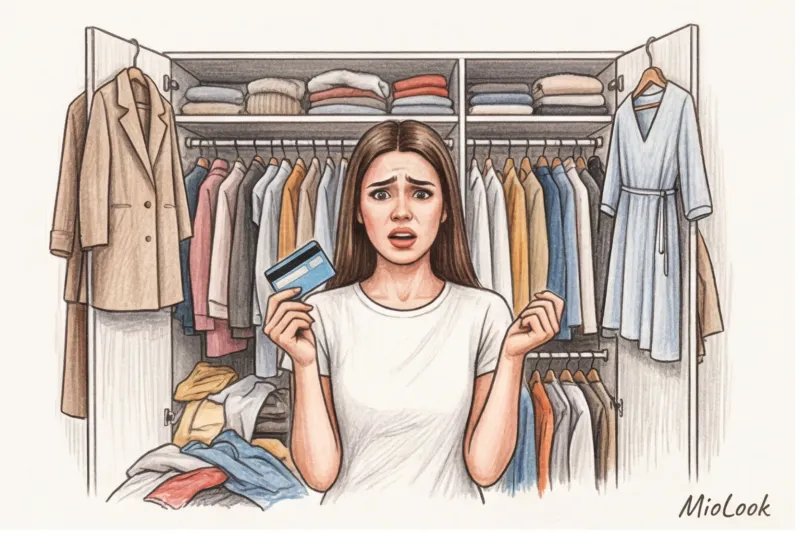

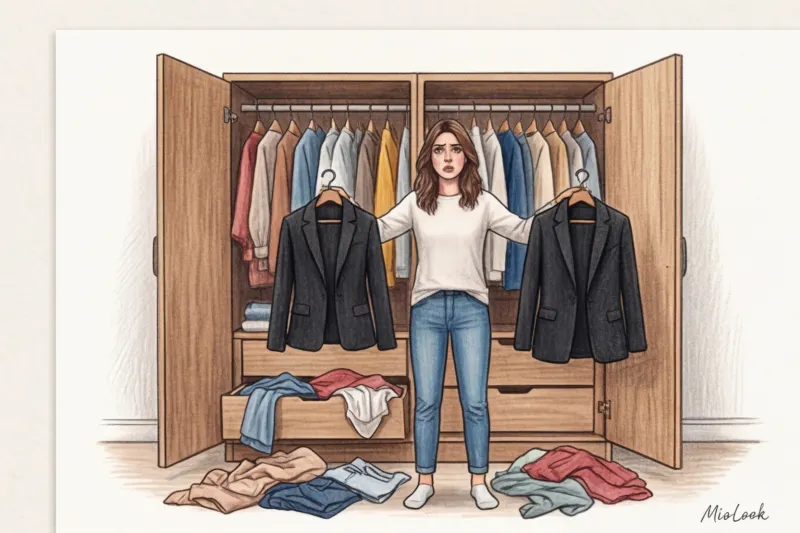
Do you know how much money is hanging dead weight in your closet right now? Take a look. You'll likely see tightly packed hangers, stacks of sweaters, and maybe a couple of shoe boxes. According to a McKinsey study on the circular economy (2024), the average European woman regularly wears only 20-30% of her wardrobe. The remaining 70% is frozen capital, items that simply take up space and collect dust.

Over 12 years of working as a personal stylist, I've learned one hard truth: most people perceive a closet review as a simple process of decluttering or a way to free up a shelf for new dresses. But a true closet audit isn't about cleaning. It's a deep financial analysis of your own mistakes that forever changes your consumption patterns. Understanding how a closet review saves money is the very inoculation against impulse shopping. We discussed the neuroscience of this process in more detail in our complete guide. How to Stop Buying Unnecessary Things: The Psychology of Shopping.
The Hidden Cost of Chaos: How Clutter in Your Closet Is Stealing Your Money
The main problem with an overcrowded closet is the formation of what's known as a "blind spot." When clothes are hung too tightly, your brain is physically capable of processing and remembering only the 30% of clothes that are visible or on top. The rest simply ceases to exist for you.
Last year, I was sorting through the wardrobe of a client in Berlin. She complained that she had absolutely nothing to wear to the office and was planning to spend a hefty sum on basic knitwear. When we emptied the entire contents of her enormous closet onto her bed, we discovered six identical black COS turtlenecks. Six! Why was this? Every time an old turtleneck got lost in the dark depths of the back shelves, the client would experience stress in the morning before a meeting and go buy a new one.
Besides the turtlenecks, we found three Zara items with the tags still attached that were exact duplicates of her favorite cardigans. The total cost of this "blind spot" was over €450. And that's money that was completely wasted.
The visual clutter of your closet can trigger severe decision fatigue. You stare at a mountain of clothes, can't quickly put together an outfit, feel frustrated, and jump to the false conclusion: "I need new clothes."
This is how morning stress ends with you buying another safe (but completely unnecessary) sweater during your lunch break.
The Mathematics of Style: Why You Need to Calculate Cost Per Wear
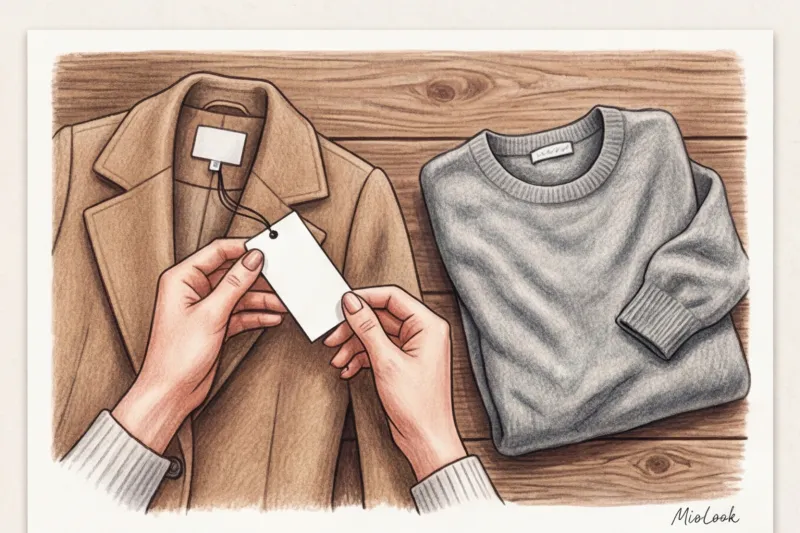
If you want to understand where your budget is going, you'll need to familiarize yourself with the Cost Per Wear (CPW) metric. It's the key financial tool for any savvy stylist.
The math here is ruthless. Imagine you bought a stunning, sparkly dress from Zara for €60 for a New Year's office party. You wore it exactly once, and now it hangs in your closet. Its cost per outfit is €60. On the other hand, you buy the perfect, basic wool trousers from Massimo Dutti for €120. You wear them to the office twice a week for six months—that's roughly 50 outfits. Their CPW is only €2.40 per outfit.
When I first started strictly tracking my CPW for my own purchases, my approach changed dramatically. I stopped buying cheap €10 T-shirts on sale at H&M (which would fall apart after two washes and cost me €5 per outing) and started investing in quality shoes. My classic €150 leather loafers, which I've been wearing almost every day for three seasons now, dropped in value to just a few cents per outing.
The process of inventorying forces you to physically pick up each item and honestly ask yourself: how many times have I worn this? You begin to see your most disastrous "bargain" purchases in numbers, and this insight is more sobering than any saving.
"The Wardrobe of Your Imaginary Life": Your Biggest Financial Hole
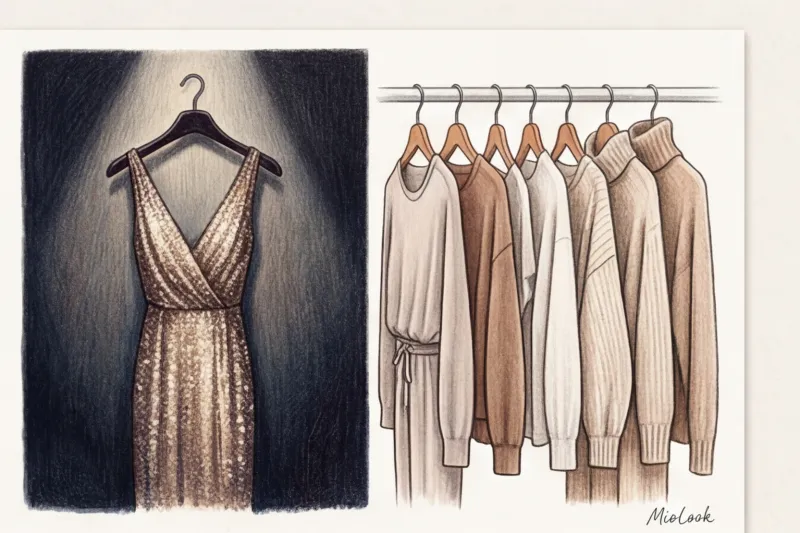
In shopping psychology, there's a concept called the Fantasy Self. This is the ideal version of you who goes to bohemian exhibitions, attends dinner parties, or, conversely, runs marathons in the morning. The problem is, you often buy your wardrobe for this ideal version, not for the real you.
A WGSN consumer behavior study (2023) revealed an interesting mechanism: buying something for your imaginary life produces a powerful release of dopamine. The brain gets pleasure from anticipation A new life, not the clothes themselves. This is where the silk slip dresses in the closet of a remote IT freelancer or the formal three-piece business suits of a stay-at-home mom come from. As a stylist, I see this disconnect constantly.
A wardrobe review mercilessly highlights this disparity. You lay out your clothes and suddenly realize: 80% of your real time is taken up by routine (working from home, walking the dog, going to the supermarket), but 50% of your money is invested in cocktail dresses and uncomfortable stilettos. Recognizing this fact is the first step to stopping funding your illusions. If you work in a corporate environment, you need something that works. business capsule wardrobe , and not the fifth pair of jeans with rhinestones.
Your perfect look starts here
Join thousands of users who look flawless every day with MioLook, creating capsules from what they already own.
Get access — €0.99 onceThe Resale Myth: Why Resale Apps Won't Save Your Budget

Now I'm going to bust one of the most popular and harmful myths of modern shopping: "I'll buy this trendy thing, and if I don't wear it, I'll just sell it on Vinted or Avito."
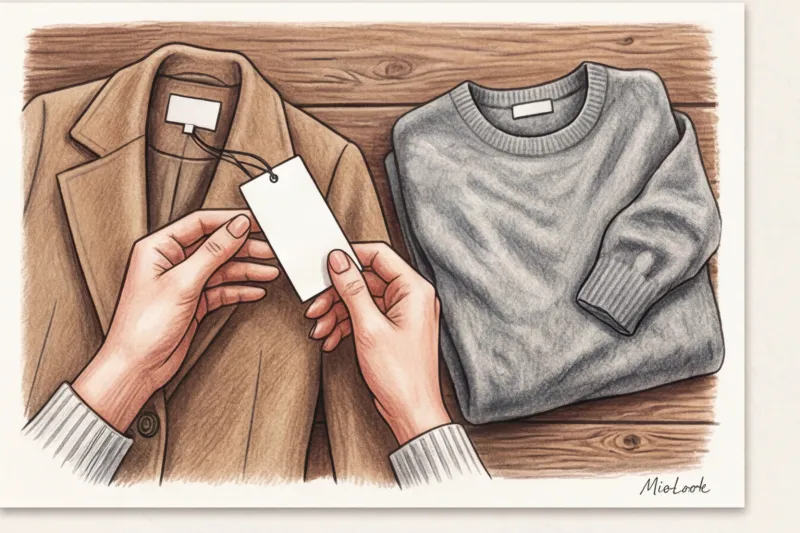
As a practitioner, I declare: this is a financial trap. Yes, resale platforms are a great tool for eco-friendly wardrobe disposal, but they they don't return You get your money in a significant amount. Let's be honest. To sell something, you need:
- Take the time to take quality photos in daylight;
- Take accurate measurements (half-waist circumference, sleeve length);
- Answer endless questions in chats (“Will you give me a 50% discount?”);
- Pack the item and go to the departure point.
And for all this effort, the refund rarely exceeds 15-20% of the original price of the item in the mass market (the premium segment holds its price slightly better, but even there the losses are colossal). Moreover, the "virtual" money that settles in your account in the app doesn't psychologically register as real. So what happens next? You spend it on the same random and unnecessary second-hand goods right within the platform.
Real savings don't come from trying to monetize your mistakes for pennies. They come from an honest wardrobe audit that prevents future senseless spending.
How Regular Wardrobe Review Saves You Money Right Now
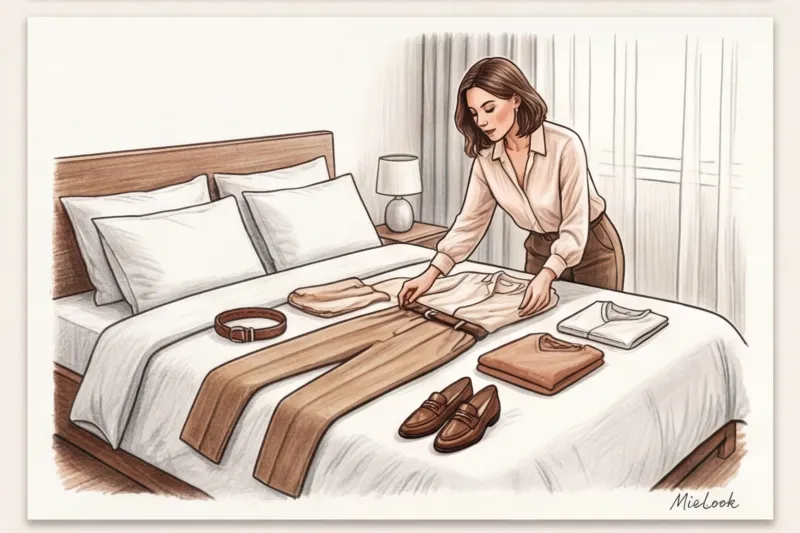
So, how exactly does the physical process of sorting through your belongings save you money? The secret is that proper decluttering turns into a shopping experience within your own closet. You don't go to the mall for new experiences; you find them in your own home.
To consolidate this result and avoid having to keep all the new combinations in your head, I highly recommend digitizing your items. You can upload them to the app. MioLook — a smart AI algorithm will analyze your database and suggest dozens of fresh looks from what's already on your hangers. But before you can digitalize your wardrobe, you need to filter it manually.
Inventory of "stand-ins" and forgotten gems
Never sort through your wardrobe by removing items one by one. Unload everything. Then start strictly grouping them into categories: gather all the white shirts, all the black pants, all the blue jeans. This is when you'll truly see your excess basics.
The second important task is to identify "sick" soldiers. Often, we don't wear a perfectly good, expensive skirt simply because a button has come off, or a luxurious coat that needs to be dry-cleaned. Replacing a button costs pennies, and dry-cleaning will cost €15-20. Buying a new, identical item will drain hundreds of euros. Restoring what you already own is the fastest way to save money.
Making a shopping list "from the back"
When you see the whole picture, you begin to understand why half your clothes are lying around. Usually, the problem isn't that you have too few clothes, but rather a lack of "connecting pieces." These are the elements that unite disparate items into a cohesive look.
For example, you have five great oversized blouses and a few high-waisted pants, but you don't wear them because they look baggy. You don't need new blouses. What you need is one high-quality, medium-width leather belt that will tie your silhouette together. A targeted purchase of the right tie-in piece can revive 10-15 old pieces.
Access to MioLook for €0.99 — one-time payment
A smart AI stylist will select the perfect everyday look from your favorite items.
Get access — €0.99 onceChecklist: Smart Shopping Rules After a Closet Overhaul
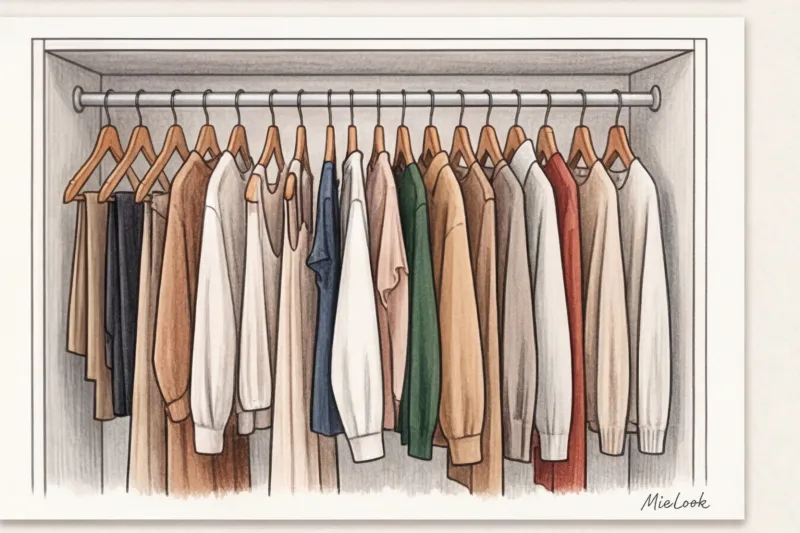
To ensure the financial benefits of your decluttering don't disappear within a month, you need strict filters for new purchases. Here's my professional set of rules that I share with my clients:
- The 3-bow rule: Never buy an item if, right in the fitting room (or while looking at your smartphone screen), you can't mentally create at least three outfits with it from what ALREADY is in your closet.
- The 24-hour pause rule: This is a law for online shopping. Once you've filled your cart, close the tab. Only return to it the next day. Believe me, in 80% of cases, the urge to buy will disappear along with your morning coffee.
- Fantasy Self Quota: Limit your budget for "fantasy life" items (feathers, sequins, ultra-trendy corsets) to 5-10% of your total clothing spend.
- Invest in workhorses: Spend your budget wisely. Spend more on items you'll wear often: the perfect pair of heavyweight denim jeans, quality basic merino knitwear (Uniqlo or COS are excellent choices), and good leather shoes. And feel free to cover fleeting microtrends with budget-friendly finds.
An important disclaimer: it must be acknowledged that this checklist doesn't work If you're experiencing acute stress or hormonal imbalance, shopping becomes pure therapy at these moments, an attempt to get a quick endorphin rush, and no amount of logic can stop you. Trying to apply rational rules in this state will only increase your feelings of guilt. But in 90% of ordinary life situations, this system will become your financial shield.
The main rule: how to consolidate financial results

A wardrobe review isn't a one-time event. To ensure a successful system, conduct a comprehensive inventory exactly twice a year: at the junction of the warm and cold seasons (in April and October). This habit will allow you to enter the new season with a clear understanding of your assets and avoid panic-stricken shopping sprees at the first frost.
True thriftiness isn't a manic search for the cheapest T-shirt on sale. It's the ability to calmly pass up items in your wardrobe that won't be worth every penny you invest in them. Set aside the next weekend, brew a coffee, turn on your favorite music, and conduct an honest inventory of your closet. You'll be surprised how much richer (both literally and figuratively) you'll feel by Sunday evening.