Stereotypes and Reality: Why the "Only 100% Natural" Rule Is Hopelessly Outdated
"Does it contain polyester? Then I won't even try it on!" I hear this phrase so often during shopping trips. We're used to obsessively searching for the coveted "100% cotton" or "100% wool" labels, sincerely believing that only pure gifts of nature are worthy of our wardrobes. But let's be honest: when we discuss synthetic fabrics pros and cons , it's time to admit that the "only natural" rule is hopelessly outdated.
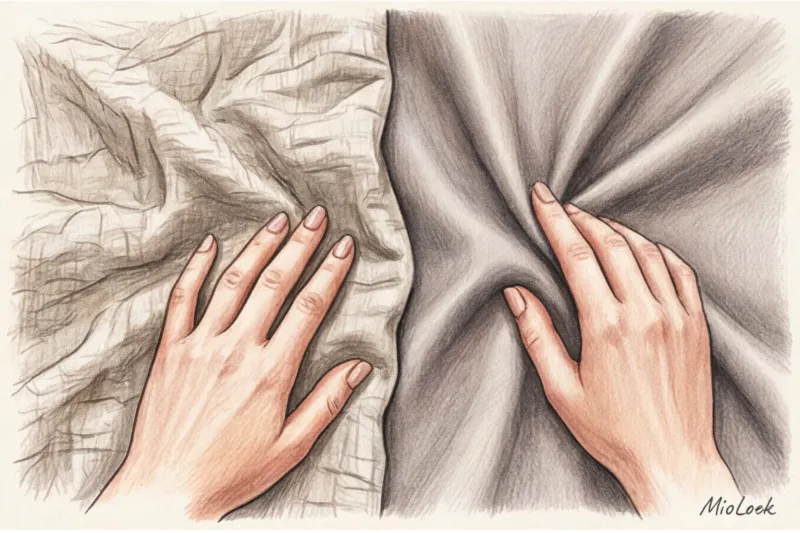
The myth that any synthetic material is cheap, non-breathable, and harmful to the skin dates back to the 1990s. Back then, the market was flooded with low-quality "glass" polyester, which effectively trapped the body in a greenhouse, and the clothes themselves sparked and shocked. But textile technology has advanced greatly, and today, 100% natural materials aren't always synonymous with a flawless appearance.
I have a telling story from my personal experience. Several years ago, I was preparing a client for a presentation at a major international conference. We chose a stunning 100% linen business suit. In the fitting room, it looked like the epitome of Italian chic. But reality proved harsh: after a taxi ride and then an hour in the speaker's chair, the trousers developed deep, unsightly creases, and the jacket lost its shape. Dressing for the stage, in front of cameras, and a busy office environment requires completely different solutions.
This is where the concept comes into play "blended fabric" (or blend) It's a technologically advanced formula where different fibers work synergistically, compensating for each other's shortcomings. Over the years of working as a stylist, I've developed an ironclad rule: the clever addition of synthetic fibers doesn't ruin a garment, but rather saves it.
The main secret of a smart wardrobe: 100% natural fabric offers a luxurious tactile sensation, and the right blend with synthetics guarantees a flawless appearance 24 hours a day.
A striking example from my recent cases: a client-manager approached me because she could not put together a neat office wardrobe Her expensive, high-status trousers made of 100% fine wool were mercilessly stretching at the knees and buttocks by lunchtime. I replaced them with high-quality blended wool with added elastane and polyester. The result? A perfect fit from early morning until late evening. Incidentally, such durable items are much more pleasant to digitize. MioLook - They serve as a reliable base for years, relieving you of the need for regular purchases and reducing tired of choosing clothes.
If you still think polyester is reserved exclusively for the mass market, just take a look at high-end luxury boutiques. Premium brands like Prada and Max Mara consciously and proudly use high-tech synthetics in their collections. Prada's famous nylon bags and raincoats cost €1,500 and up, while iconic coats often feature polyamide or high-tech viscose. They don't do this for the sake of saving a few cents on production costs. Synthetics in luxury act as an invisible scaffold: they maintain their shape, prevent color fading, and greatly extend the life of expensive items.
Synthetic fabrics: pros and cons: what manufacturers are keeping quiet about
According to the annual report of the international organization Textile Exchange (2023), more than 54% of global fiber production today is polyester. In fact, half of our clothing is literally made from petroleum. And before we start mindlessly blacklisting such items, we need basic textile literacy.
The first thing I teach in my image courses is a strict division of concepts. Synthetic Fabrics (polyester, acrylic, nylon) are synthesized from petroleum products. This is pure chemistry and plastic. But artificial Fabrics (viscose, tencel, cupro) are made from a natural raw material—wood pulp—which is simply chemically treated. This is why viscose breathes, while polyester does not. This is a fundamental difference that mass-market brands prefer not to explain to customers.
When considering the pros and cons of synthetic fabrics, we must acknowledge that the fashion industry is dependent on oil for more than just low cost. Synthetics have powerful technological advantages, the most important of which are phenomenal wear resistance and shape retention. A garment made with the right synthetic fiber won't stretch out at the knees and elbows. Furthermore, synthetic fibers permanently fix dyes: a neon pink polyester top won't fade or lose its brightness even after fifty washes. Add to this the ease of care (toss it in the machine, hang it up, no ironing required) and affordability, and we have the perfect material for fast fashion.
But this coin has a dark side, and we pay for it with our own comfort.
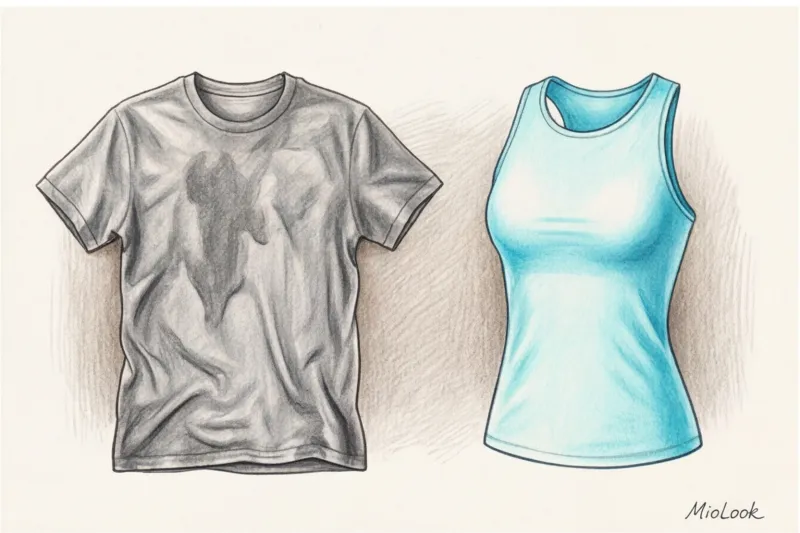
The main enemy of our body when wearing synthetics is catastrophically low hygroscopicity (Moisture absorption capacity). Let's look at the physics of fabrics: lab tests show that natural cotton can absorb up to 20% of its own weight in moisture, linen up to 12%, and polyester a measly 0.4%. That's why wearing a 100% polyester blouse feels like a greenhouse. The fabric creates a completely impenetrable barrier: the body releases moisture to cool itself, but the moisture can't evaporate through the plastic threads. It stays on the skin, body temperature rises, and hyperhidrosis sets in. If this problem is relevant to you and you're tired of choosing a wardrobe for "tough" days, I highly recommend reading my article. What fabric doesn't show sweat stains? , where I analyze life-saving textures and colors.
Besides the sauna effect, synthetics have no thermoregulation properties: they're cold in winter and unbearably hot in summer. They accumulate static electricity (that annoying popping sound and your skirt sticking to your tights). And finally, there's the environmental aspect: according to research from the University of Plymouth, every machine wash of a single polyester garment releases up to 700,000 microscopic plastic fibers into wastewater, which aren't captured by wastewater treatment plant filters.
Ingredients Dictionary: Who's Who on the Label
Knowing how to read labels is your best defense against bad purchases. The front of the tag, labeled "Premium Knitwear," means nothing. The truth is hidden in the inside side seam.
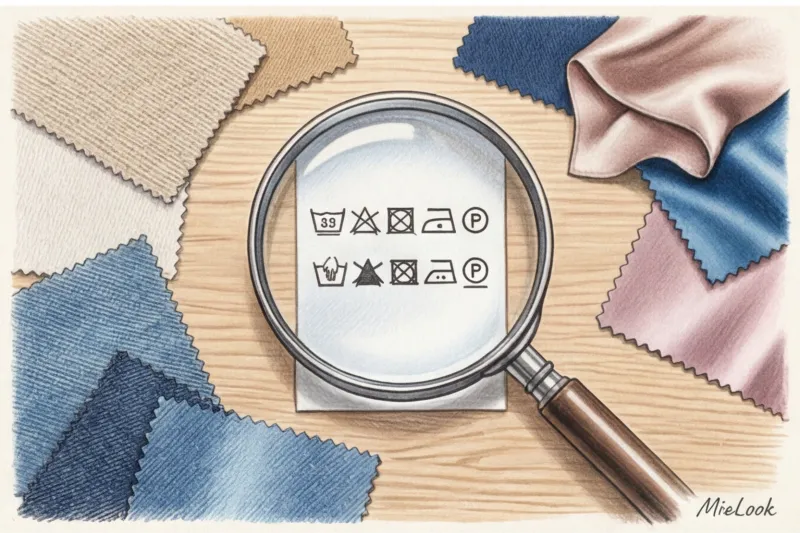
To help you feel confident in any store, I've compiled a short glossary of the most common synthetic ingredients. Remember the role each plays:
- Polyester - frame and strength. This is the most common synthetic material. In small doses (up to 20-30%) in suiting or coat fabric, it acts as a reliable backbone. It prevents the wool from deforming, prevents creases under the knees, and protects the garment from quickly wearing out. Polyester blends are your friend; polyester alone, close-fitting, is your enemy.
- Elastane / Spandex / Lycra - stretch and fit. These are highly elastic fibers (essentially rubber threads). What makes them unique is that even 2-5% of their composition can dramatically alter the properties of a fabric. Thanks to elastane, jeans fit comfortably around the hips, and a cotton shirt allows for unrestricted shoulder movement and returns to its original shape after stretching.
- Polyamide / Nylon - incredible wear resistance. This fiber was developed as an alternative to silk, but it surpasses it in tensile strength by tens of times. It is polyamide that makes the thinnest yet most durable nylon tights possible. It is always included in exquisite lace, sports bras, and swimsuits, as it withstands friction well and is not damaged by salt or chlorine.
- Acrylic is a cheap and dangerous imitation of wool. While I can justify polyester, acrylic is on my personal stylist stop list. It's the cheapest synthetic fiber, visually fluffed to resemble cozy sheep's wool or mohair. Mass-market stores love to sell 100% acrylic sweaters for €30-40. The problem is that acrylic offers absolutely no warmth (you'll freeze in it outside), creates a greenhouse effect indoors, and most importantly, due to the short length of the fiber, it becomes covered in monstrous, unremovable pilling after just two weeks of wear.
Synthetics aren't an absolute evil, but a powerful tool in the hands of technologists. The trick isn't to avoid them at all costs, but to understand For what It is added to a specific item: for your comfort or to save the manufacturer money.
Digitize your wardrobe and save on shopping
Tired of buying things that quickly become unsightly? Upload your wardrobe to MioLook. Our AI stylist will analyze your items, suggest ideal combinations, and help you avoid impulse purchases made from low-quality materials.
Get access — €0.99 onceThe Anatomy of the Ideal: Golden Formulas for Compositions for Different Wardrobe Items
Do you know what question my clients ask me most often when we go shopping for the first time? "Darina, just tell me: what percentage of polyester should the tag say for an item to be acceptable?" And every time, I'm forced to disappoint them because There is no universal answer: the ideal composition depends on the purpose of the item.
You'll agree that the requirements for a coat you wear while standing at a bus stop in November and a blouse you wear for eight hours in a stuffy office are completely different. When evaluating the pros and cons of synthetic fabrics, we should think not in terms of "good" or "bad," but in terms of functionality. The modern textile industry offers a brilliant technological solution: using synthetics as an invisible "frame" for delicate materials.
Take, for example, premium cashmere or fine silk. These fibers have incredible tactile properties, but they are extremely delicate and fragile. Add just 5-10% high-quality nylon to them, and it will act like reinforcement in concrete. The synthetic thread will support the structural load, prevent elbow grease, and protect the expensive yarn from wearing out quickly—all without you even feeling it.
My main advice: stop searching for the mythical 100% everywhere. Right now, I'll give you verified proportions that you can screenshot and use as a checklist in the fitting room.
The perfect composition for a business suit and trousers

A business suit is clothing that's subjected to tremendous mechanical stress. You sit, cross your legs, lean on the table, and your bag strap rubs against your shoulder. This is where pure wool can let you down.
One of my clients once invested €350 in luxurious, wide-leg 100% wool trousers for everyday office wear. The result? After two months, her inner thighs had developed telltale abrasions, leaving holes, and her knees had become treacherously stretched. If we'd known the right formula back then, these trousers would have lasted for years.
For winter and demi-season suit The gold standard looks like this:
- 70–80% wool — is responsible for the status appearance, thermoregulation and color depth.
- 20–30% polyester or polyamide — that same protection from abrasion. It's this percentage that prevents trousers from wearing through between the legs and a jacket from getting shiny at the elbows.
- 2–5% elastane — provides comfort. A jacket with elastane won't restrict your movement when you're reaching for a folder or driving.
WITH summer business wardrobe The rules of the game are changing. Pure linen or cotton in an office setting turns into a disaster: you get to work and your suit looks like you slept in it. The formula for the perfect summer suit: a base of linen or cotton, plus 20–40% viscose (it removes the natural stiffness of linen, making the fabric flow beautifully) and a little bit of high-quality polyester (prevents total wrinkling, allowing the item to maintain a presentable appearance).
Knitwear and sweaters: how to avoid pilling
There's nothing more frustrating than an expensive sweater that's covered in unsightly pilling after a week. In the textile industry, there's a concept called pilling index It depends on the fiber length and the degree of twist. Short fibers in natural wool are released when rubbed, curl into balls, and ruin the entire look. Synthetics, being long, continuous fibers, can either save the situation or make it worse.
Remember the golden rule: The sweater should contain no more than 30% synthetics If you see 50% acrylic or polyester on the label, feel free to hang the item back on the rail. This jumper guarantees a sauna-like effect: you'll sweat in the cold, and once you enter a room, you'll immediately freeze due to a disruption to your thermoregulation system.
Here's the formula for a durable, warm, and tactilely pleasant jumper worth hunting for in the €80 to €150 price range:
- 70% merino wool - does not itch, warms perfectly and looks noble.
- 20% silk or viscose — add delicate shine, incredible softness and reduce frizz.
- 10% nylon (polyamide) — the very same frame that firmly fixes the merino and silk fibers, preventing them from rolling into pellets when rubbed against outerwear.
Stylist's advice: when you add new knitwear items to your MioLook smart wardrobe , don't hesitate to fill out the "Composition" field. After a couple of seasons, the app's statistics will clearly show you which brands and fiber ratios in your closet last the longest, maintaining their perfect appearance.
Jeans and casual basics
Let's talk honestly about denim. It's common among fashion purists to praise it. selvedge denim — heavy, authentic 100% cotton jeans, woven on old shuttle looms. Yes, they fade beautifully and form individual creases. But wearing them every day is a challenge. They're stiff, they can chafe your skin for the first few weeks, and after a big lunch, the button will dig mercilessly into your belly.
When it comes to a comfortable everyday wardrobe for an active woman, the ideal jeans formula is: 98% cotton and 2% elastane (or spandex) Cotton provides the texture of real denim and a density that conceals figure nuances. And just 2% elastane allows for comfortable sitting, bending, and breathing. Important: don't use 5% or 8% elastane, otherwise the jeans will turn into shapeless jeggings that will stretch out at the knees after your first walk.
Another stumbling block in basic wardrobes is T-shirts. Have you ever noticed how after a couple of washes, the side seams of some shirts start to twist, sliding toward the stomach or back? This happens due to the diagonal tension in the threads of cheap 100% cotton jersey.
The secret to a T-shirt that will retain its shape and tight fit at the neck even after twenty machine washes is its composition. 95% cotton and 5% elastane This small percentage of synthetics acts as a "shape memory": the fibers stretch when you put the item on and instantly return to their original position when you take it off.
Viscose, cupro, tencel: artificial fabrics that are better than natural ones
Have you ever noticed how often sales assistants in stores proudly declare, "Don't worry, it's not synthetic, it's viscose!"? At this point, the customer usually breathes a sigh of relief, without even thinking about the real deal. While exploring the pros and cons of synthetic fabrics, we often overlook an entire category of materials that offers the best of both worlds. It's time to dispel this major textile misconception: synthetic fabrics are not petroleum products.
They are made from completely natural raw materials (cellulose, i.e., wood or plant fluff), but using a chemical process. While synthetics are liquid plastic spun into threads, artificial fabrics are dissolved and processed wood. And their properties are often superior to those of cotton or linen.
As a colorist, I love classic viscose (Viscose or Rayon) for its phenomenal ability to retain pigment. Unlike cotton, which quickly fades, viscose retains its vibrant color for years. It breathes as easily as premium cotton and flows like natural silk. It's ideal for luxurious summer dresses.
After 12 years of reviewing wardrobes, I've come up with an ironclad rule: if you want to know the true status of a jacket or coat, just turn it inside out. This is the ultimate marker of a garment's status.
In mass-market jackets priced at €50–€70, the lining will always be 100% polyester. You put on such a jacket and within half an hour you're in a greenhouse: the outer suit fabric struggles to breathe, while the polyester lining completely blocks moisture. In the premium segment (€300 and up), the lining is made exclusively of 100% viscose or cupro. This ensures ideal temperature regulation, allowing the expensive wool to "work" its magic.
Try MioLook
for free
Start creating perfect images with the help of artificial intelligence
Get access — €0.99 onceIf viscose is the queen of dresses, then modal and its more subtle version micromodal — an absolute lifesaver for underwear. According to research by the Swiss Textile Institute (2022), modal absorbs moisture 50% more effectively than cotton. Moreover, it doesn't become stiff and "wooden" after the tenth wash, unlike classic cotton T-shirts. If you're looking for a first layer that feels like a second skin, look for these names on the tag.
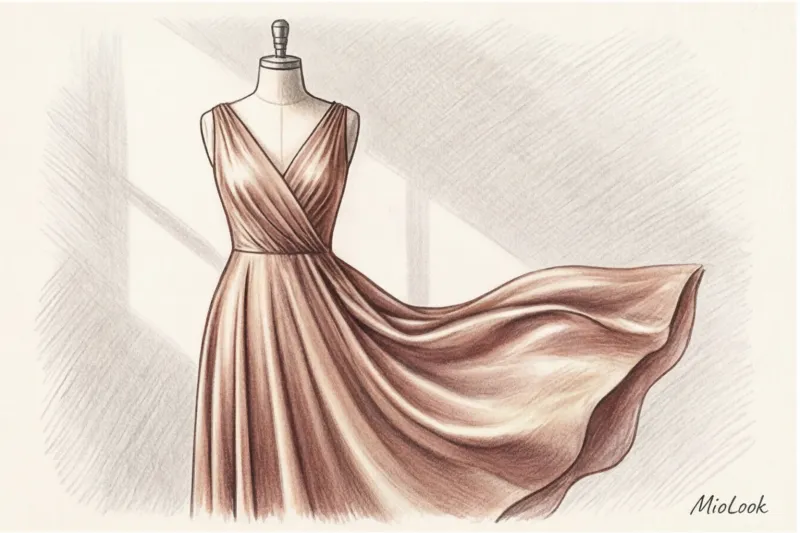
Finally, the major league of man-made fibers is Tencel (aka Lyocell) and Cupro Tencel is made from the wood of the Australian eucalyptus tree, while cupro is made from the finest cotton linters that envelop the cotton seeds. Cupro is often called "vegan silk." It feels like peach skin—soft, slightly velvety, yet incredibly flexible. It drapes beautifully, creating luxurious, flowing silhouettes.
Sometimes customers complain, "Why does a Tencel summer shirt cost €150? It's not even real silk." The answer lies in the technology and eco-friendliness. Lyocell production (the original patented Tencel is produced by the Austrian company Lenzing) uses an expensive, closed-loop process: an organic solvent is reused over and over again, without polluting the water. When you buy these items, you're paying for the highest technology, hypoallergenic properties, incredible durability (Tencel is stronger than cotton when wet), and a refined matte sheen that doesn't fade after washing.
Red flags: when to avoid buying products containing synthetics
During every wardrobe audit, there comes a time when we pull out the big black trash bags. After 12 years of practice, I know in advance what goes in there first: items whose composition was doomed to failure from the start.
When weighing the pros and cons of synthetic fabrics, we often forget the most important thing: the material should serve its purpose, not create new problems. There are specific textile formulas that I call "red flags." If you see them on the label, don't hesitate to return the item to the hanger, no matter how attractive the price or fit may seem in the fitting room.
100% Acrylic: The Illusion of Warmth and Merciless Mathematics
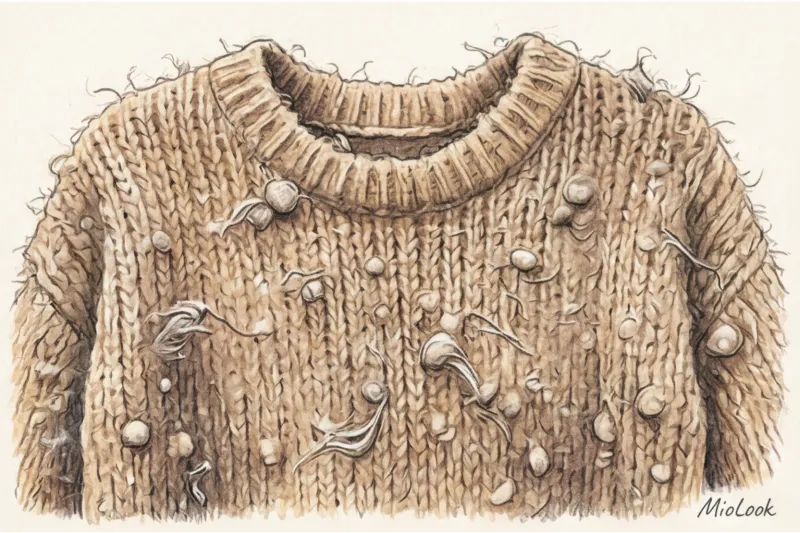
I categorically forbid my clients from buying sweaters made of 100% acrylic. This material was created as a cheap, visual imitation of wool, but its physical properties are exactly the opposite. Acrylic offers absolutely no warmth in freezing temperatures, but in a heated room, it instantly creates a sauna-like effect.
But the main problem is wearability. The structure of acrylic yarn is such that after just two weeks of active wear, a sweater inevitably becomes covered in dense, untidy pilling. And here we come across the merciless Cost Per Wear formula. A mass-market sweater for €40 will lose its appearance after five wears—your CPW will be €8. For comparison, a basic cashmere jumper with 10% nylon will cost around €150, but will last at least 80 wears (CPW = €1.80). If you digitize your items using smart wardrobe at MioLook Statistics will show this truth in the very first season: cheap acrylic is the worst investment, only cluttering up shelves.
100% Polyester near the body: greenhouse effect in the first layer
A windproof polyester trench coat is one thing, but a 100% polyester blouse, slip dress, or turtleneck that sits next to the skin is quite another. This is an absolute no-no for the first layer.
The problem is that basic polyester fibers are non-hygroscopic (they don't absorb moisture). When in contact with the skin, their natural thermoregulation is disrupted. The result? A sweaty odor appears after just an hour of wear, even if you use a strong antiperspirant. Worse, the constant friction of harsh synthetic fibers against damp skin is a surefire way to contact dermatitis and rashes on the back and décolleté.
50% Cotton/50% Polyester Proportion: Cardboard Armor Effect
A 50/50 ratio is often found in men's and women's office shirts, as well as in inexpensive bedding. Marketers sell this as an advantage: the fabric wrinkles less and is easy to iron.
In practice, this ratio creates a stiff, uncomfortable "armor." Cotton and polyester fibers have different densities and react differently to body temperature. With an even 50/50 ratio, the fabric loses the softness of cotton and acquires the squeaky plasticity of polyester. The shirt feels stiff, completely undraped, and causes discomfort with every movement. The ideal balance for a shirt that holds its shape but remains "lively" is a maximum of 15-20% synthetic fiber to 80-85% cotton.
Shoes and bags: not all eco-leather is created equal
When discussing synthetics, we can't ignore accessories. These days, the proud term "eco-leather" is slapped on everything, but chemically, these may be two completely different materials.
High-quality eco-leather is polyurethane (PU). It has a microporous structure, meaning it truly breathes, adapts to the shape of your foot, remains soft in cold temperatures, and doesn't crack for a long time. Cheap leatherette, on the other hand, is made of polyvinyl chloride (PVC). This is a solid oilcloth that doesn't breathe at all. If you buy PVC shoes, your feet will start sweating within 15 minutes, and in subzero temperatures, the material will quickly become creased and cracked. Always read the ingredients on the box or inner tag: invest in 100% PU and categorically avoid PVC.
High-tech synthetics: fabrics of the future worth investing in
Who would have thought twenty years ago that technologies developed for conquering Alpine peaks and deep-sea diving would become the foundation of an elegant everyday wardrobe? As we once again weigh the pros and cons of synthetic fabrics, it's this category of innovative materials that forces us to acknowledge: the chemical industry has made a quantum leap, and ignoring it is simply unprofitable.
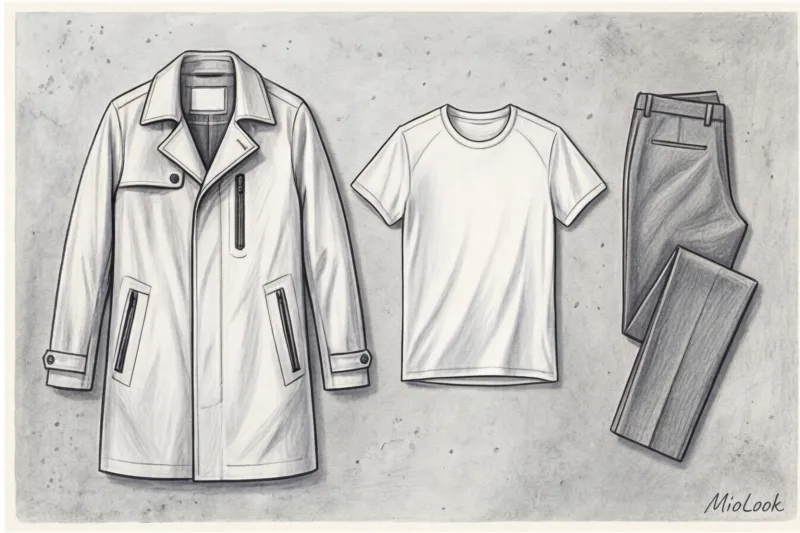
Today, the line between hiking gear and urban fashion has become completely blurred. Materials like fleece (originally created by Polartec as a weightless and hydrophobic alternative to sheep's wool) and membrane fabrics have radically changed the way we dress in winter and fall. Outdoor and sporty chic styles have proven that clothing can protect against the elements without turning you into a clumsy, sluggish person.
The true magic of membrane clothing, like the legendary Gore-Tex, lies in pure physics: the material's micropores are 20,000 times smaller than a drop of water, but 700 times larger than a vapor molecule. The result? You stay dry in the pouring rain, yet your body breathes freely, completely eliminating the sauna effect.
This technological revolution has given rise to a completely new trend—tech-wear in business style. If we're putting together modern smart casual for women (which is essentially the ultimate style guide for the office and city life), we can't do without "smart" fabrics. In the fast pace of the big city, we need trousers with a special Teflon coating that repel dirt and splashes from passing cars, and cotton shirts with a "Smart" label. non-iron The latter are created with the addition of innovative polymers that fix the fibers at the molecular level: such a shirt requires no ironing and retains a crisp, fresh look even after a ten-hour workday. And waterproof and windproof trench coats made of high-tech polyamide (similar models can be found at premium minimalist brands in the €150–€300 range) look absolutely classic, but protect from the elements better than a heavy drape coat.
Your ideal image
it begins Here
Join thousands of users who look flawless every day with MioLook.
Get access — €0.99 onceBut let's touch on another important topic: recycled polyester (rPET). Green leaf tags in mass-market products literally scream environmental awareness. But is this truly saving the planet or just clever marketing?
As an expert, I try to be objective. Yes, producing rPET from plastic bottles requires 59% less energy than creating virgin polyester (according to research by the Swiss Federal Office for the Environment), and it does help clean up ocean waste. However, marketers are glossing over one nuance: recycled synthetics still release microplastics when washed. My personal strategy and advice to clients: Invest in rPET outerwear — jackets, parkas, trench coats, which we wash extremely rarely. But avoid buying underwear or t-shirts made from recycled plastic.
Want to learn how to skillfully integrate these high-tech items into your everyday capsules so they don't clash with your overall style? Try uploading your items to MioLook A smart algorithm will help you create looks in which innovative synthetics will work exclusively for your comfort and status.
Stylists' Tip: Quick Fabric Test Right in the Store
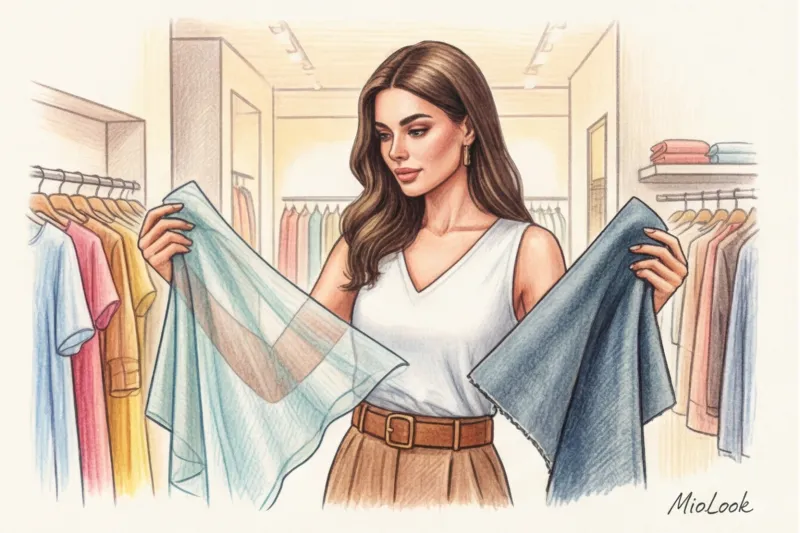
So, you're standing in the fitting room with a stunningly tailored dress or jacket. The price tag is tempting (say, €80), and the obvious question is spinning in your head: should you buy it or not? This is where theory ends and the harsh reality begins. To weigh it objectively synthetic fabrics pros and cons For a specific item, I always conduct a quick textile audit with my clients during shopping sessions. It takes exactly 30 seconds, but it saves them from months of disappointment.
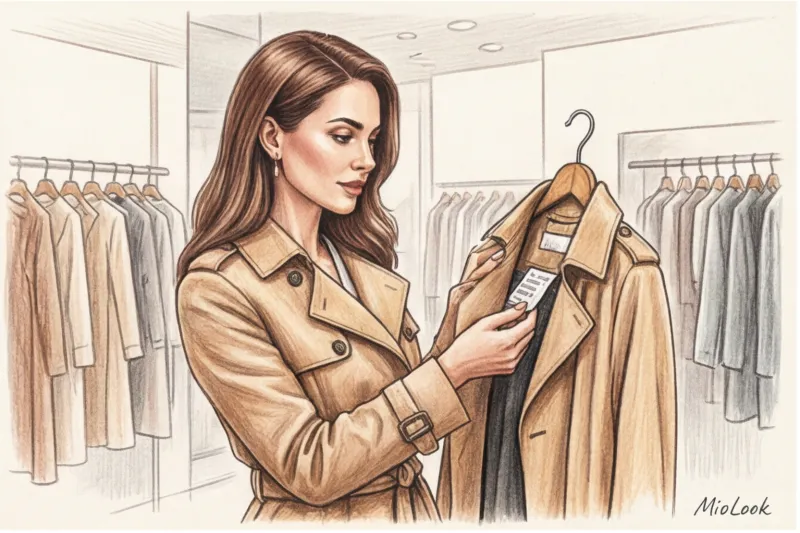
While studying design in Europe, one of my materials science professors liked to repeat, "The eyes can deceive, but the hands never do." Here's a step-by-step algorithm I recommend using before every checkout.
Visual Light Test: Looking for a Cheap Glitter
Step one: hold the fabric up to the fitting room lights (they're usually harsh and cast a harsh, directional light). Low-quality polyester will immediately reveal itself with a sharp, almost glassy glare, which cheapens the entire look. High-quality materials—even 100% high-tech synthetics or viscose—have a matte sheen or a soft, diffused shimmer, reminiscent of natural silk. If the item shines like candy foil, leave it on the hanger without regret.
Tactile test: wrinkle resistance and elastane quality
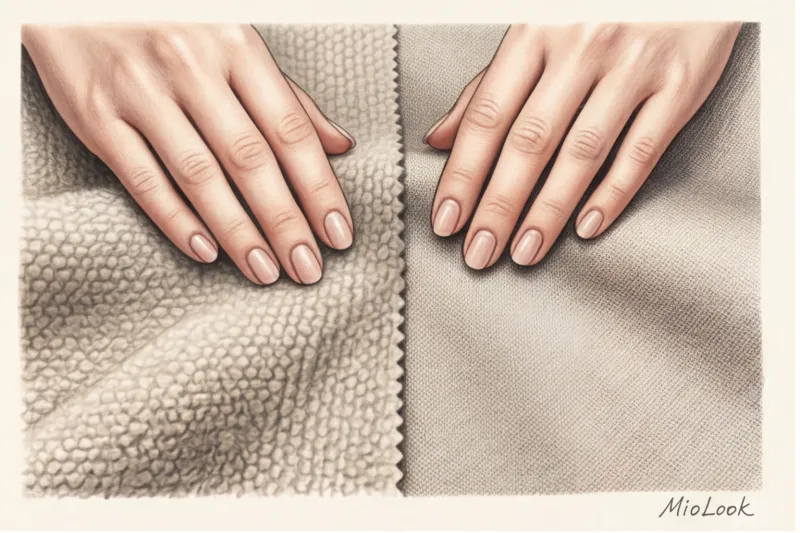
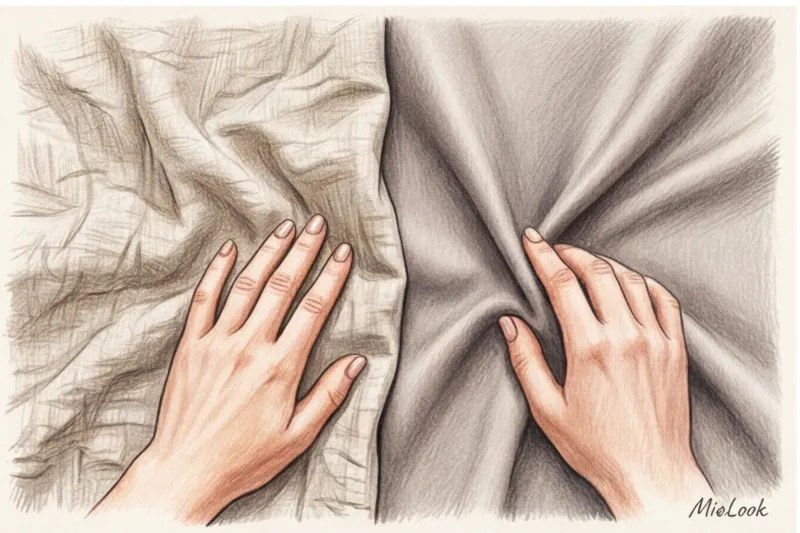
Step two is the crash test. Firmly squeeze the hem of the garment in your fist, hold it for five seconds, and then release quickly. This allows you to instantly determine the level of wrinkling and the presence of good elastane. If the fabric remains "chewed up," like newspaper, it lacks elasticity. By midday at the office, you'll look incredibly unkempt. If the fabric instantly straightens out without creasing, you have a great blend. This is especially important for trousers in the €50-€150 price range, where mass-market brands often skimp on the quality of elastic.
Static Test: Material Conflict
Step three. Quickly rub the fabric against itself or against your trousers. Do you hear a slight crackling sound? Does the fabric stick to your hands? This indicates a complete lack of anti-static treatment. Such a skirt is guaranteed to collect all the dust in the world and creep up as you walk. We've covered how to elegantly solve such problems in the office in detail in this article. Tights: Business Etiquette , but overall it is better to stop the problem at the purchasing stage.
Seam testing: tear test
Step four: assess the tension points. Gently (without excessive force!) tug the fabric in opposite directions near the side seam with both hands. The synthetic threads used to sew clothes are incredibly strong. If the fabric itself is loose or of poor quality, the slightest tension will cause the thread to cut through the material, leaving tiny holes. As soon as you sit down in such a dress, the maximum pressure will be on the armholes and hip area, and the fabric will simply come apart at the seam.
Bottom line: read between the lines
The brand can be written on a cardboard tag in huge letters Premium Eco Silk , but the truth always hides on the little white tag sewn into the inside side seam. Our inspection always leads to the same result: the tag is your best friend. Don't be lazy and check the inside seam of your garment.
My final piece of advice: make analyzing ingredients a habit, not a chore. Over time, your fingers will learn to determine the quality of an item with your eyes closed.
By the way, I highly recommend taking a photo of this inner tag when sorting through your wardrobe. Adding your items to your digital closet through MioLook Be sure to include the composition in the product information. After just one or two seasons, the app will help you compile invaluable personal analytics: you'll clearly see which fabrics in your wardrobe last for years and are worth every penny, and which are recycled after the third wash. Stop fearing synthetics, but don't let manufacturers sell you plastic at a luxury price.
Guide Chapters
What fabric is sportswear made of and why?
Why is premium cotton the worst choice for fitness? Find out how high-tech synthetic fabrics protect your skin during workouts.
Is recycled polyester marketing or good?
Clothing brands are actively using recycled polyester, promising to save the planet. Learn the truth about rPET from a textile expert: greenwashing, microplastics, and the challenges of recycling.
Is it okay to wear synthetic underwear every day?
Are you used to thinking that lace and microfiber are bad for your health? We'll debunk the myths about modern fabrics and explain why cotton is sometimes the worst choice.
Polyamide: What Kind of Jacket Fabric Is Used For? The Benefits of Synthetics
Why are premium down jackets made from 100% polyamide? We explore the benefits of modern synthetics for winter and why you shouldn't chase natural fabrics.
How to wash synthetics: secrets for care without damaging items
The longevity and luxurious appearance of clothing depend 80% on proper care. Learn the professional secrets of washing and ironing synthetic fabrics.
What fabrics produce pilling and how to avoid it
Even an expensive coat can be ruined by one wrong bag. We explain how professional buyers test fabrics for pilling.
Can you wear synthetics in summer? Which fabrics breathe?
We're debunking the biggest myth about summer wardrobes. Find out why modern synthetics are no longer an enemy in the heat and which artificial fabrics will keep you cool.
What kind of fabric is acrylic? Why is my sweater pilling and not warm?
Why isn't 100% cashmere always practical, and why shouldn't synthetics be feared? We explore the composition of knitwear and discover how to choose the perfect warm sweater.
Polyester: The Pros and Cons of 100% Synthetic Fabric in Clothing
Debunking the myths about the fashion industry's biggest villain. Find out why clothing made with polyester often outperforms 100% natural fabrics.
Ideal Fabric Composition for Clothing: How to Read Labels
Why aren't 100% linen or cotton always the best wardrobe choices? We explore how smart synthetics help garments maintain their shape and look their best.
How Much Elastane Should Jeans Have: A Stylist's Guide
Think stretchy jeans are the most comfortable? Find out why too much spandex can ruin your figure and how to choose denim that won't lose its shape by evening.