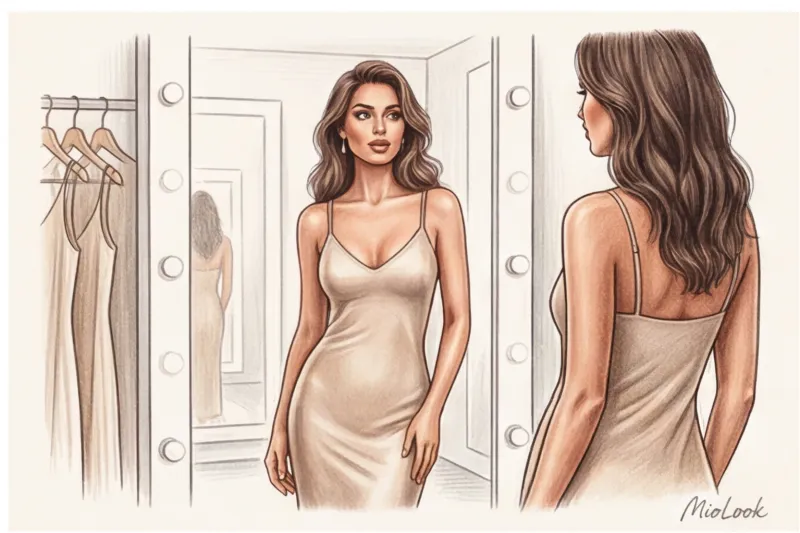
Recently, a client came to me in utter despair. She'd bought a stunning silk slip dress for €350 for an important evening event. But as soon as she put it on, the look was hopelessly ruined: beneath the thin, flowing fabric, the thick, textured seams of her favorite cotton briefs were treacherously visible. When I asked her why she hadn't chosen smooth, seamless underwear, she replied, "But synthetics are bad for your health! Are they really that bad?" Can I wear synthetic underwear? more than a couple of hours?
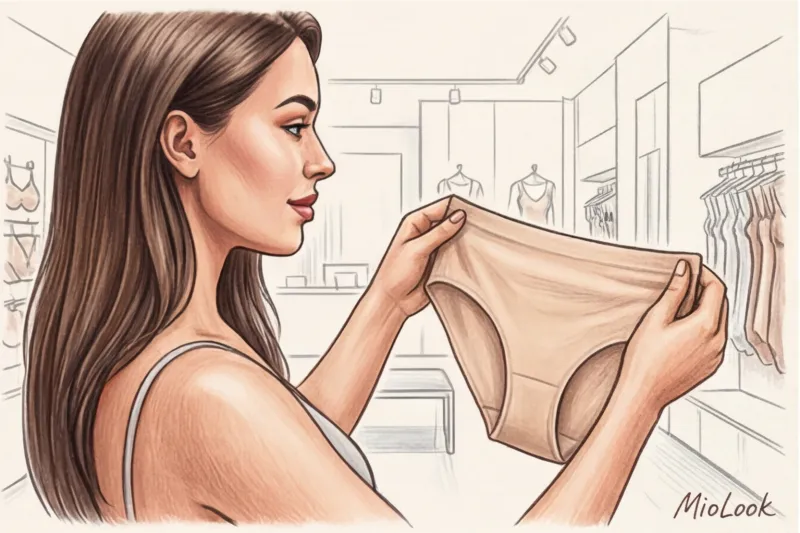
I encounter this fear in every third woman when sorting through their wardrobe. We're used to demonizing synthetic fabrics, forgetting that the textile industry has made great strides. We discussed the evolution of materials in more detail in our A complete guide to the pros and cons of synthetic fabrics , but today let's talk about the most delicate of things. In fact, 100% cotton is the worst choice for form-fitting office wear, hot summers, and sports. And high-tech synthetics have long been the salvation for a stylish silhouette.
Stereotypes from the 90s: Is it okay to wear synthetic underwear every day?
Let's be honest: where does this panic about synthetic fabrics come from? It dates back to the '90s, when the markets were flooded with cheap, "glassy" polyester that was impermeable, static-prone, and created a greenhouse effect. If you wear panties like that today, you're guaranteed to get skin irritation.
But modern polyamide and elastane underwear have nothing in common with that plastic horror. According to a 2023 study by Textile Exchange, modern multichannel synthetic fibers wick moisture away from the body 40% more effectively than traditional cotton. That's why you'll never find cotton underwear in top-brand professional sportswear lines. Cotton can absorb up to 27 times its own weight in moisture, and most importantly, it holds it. You sweat—your underwear stays wet.
Why do gynecologists criticize the style, not the fabric?
The medical consensus (including recommendations from the American College of Obstetricians and Gynecologists (ACOG)) currently boils down to one thing: the problem lies not so much in the composition of the main fabric of panties, but in their style and hygiene. Doctors are raising the alarm about underwear that is too tight, tight elastic bands that impair pelvic microcirculation, and the overuse of thongs.
The narrow strip of fabric in a thong (even if it's made from the most expensive organic cotton) acts as a bridge for bacteria when walking. Therefore, closed-back basic briefs made from high-quality, breathable microfiber are paradoxically much safer for everyday wear than tight cotton thongs.
Microfiber, polyamide, and lace: understanding the compositions on the labels
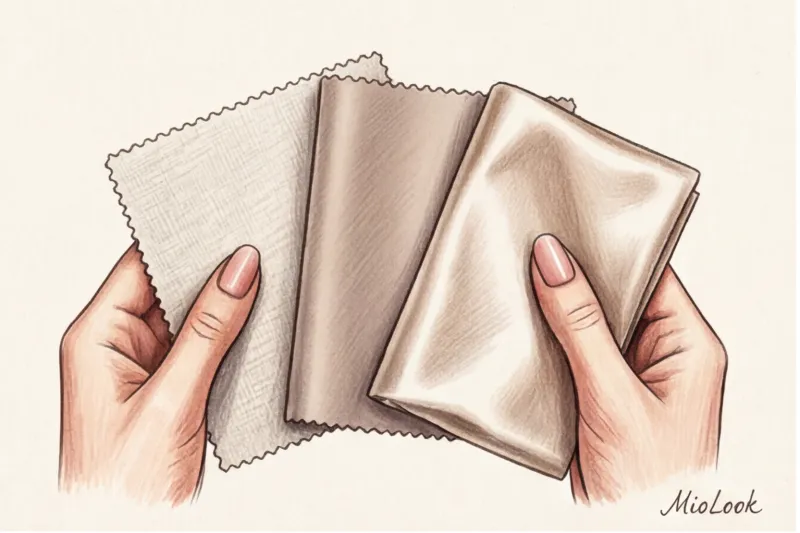
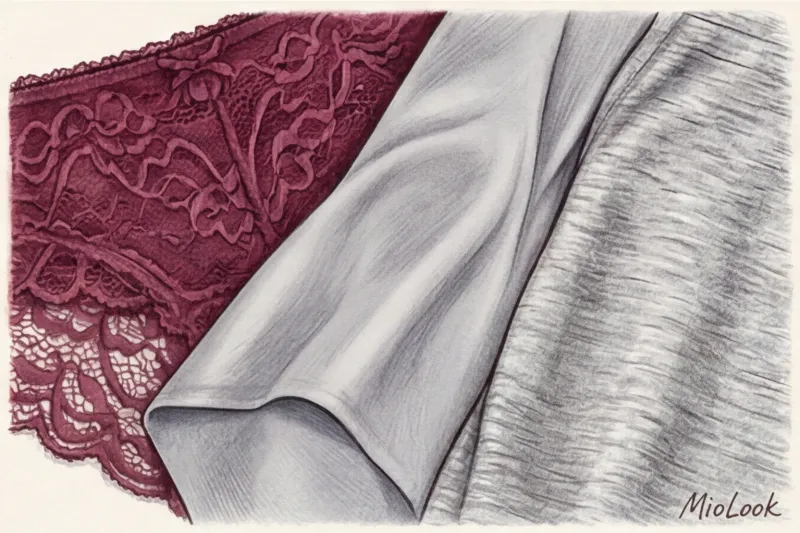
When you pick up a pair of seamless nude panties from Intimissimi or Oysho, you feel the fabric like a rose petal. It's microfiber—a material whose threads are tens of times finer than a human hair. It feels like a second skin, doesn't cling to clothing, and instantly wicks away moisture.
Polyamide and elastane (spandex) are the framework of your underwear. Did you know that even "pure cotton" panties from H&M or Zara always contain 5% to 10% elastane? Without it, the fabric will stretch at the knees (or, in this case, the buttocks) after just two hours of wear. I conducted a personal test: after 20 washes, basic cotton panties from H&M had lost their shape and started pilling, while mid-range polyamide microfiber panties (around €15 each) looked like new.
"High-quality synthetic lace shouldn't itch. If you feel itchy when trying it on, it means the manufacturer skimped on the finishing of the thread. Look for flat seams and a soft texture—good lace is always pliable."
Synthetic lace is often criticized for its stiffness. But this is purely a matter of price and brand quality. Cheap lace made of stiff polyester with rough seams can really chafe delicate skin. Choose stretchy lace with soft scalloped edges.
Your perfect look starts here
Join thousands of users who look flawless every day with MioLook. This smart assistant will help you create a capsule wardrobe with the right lingerie.
Get access — €0.99 once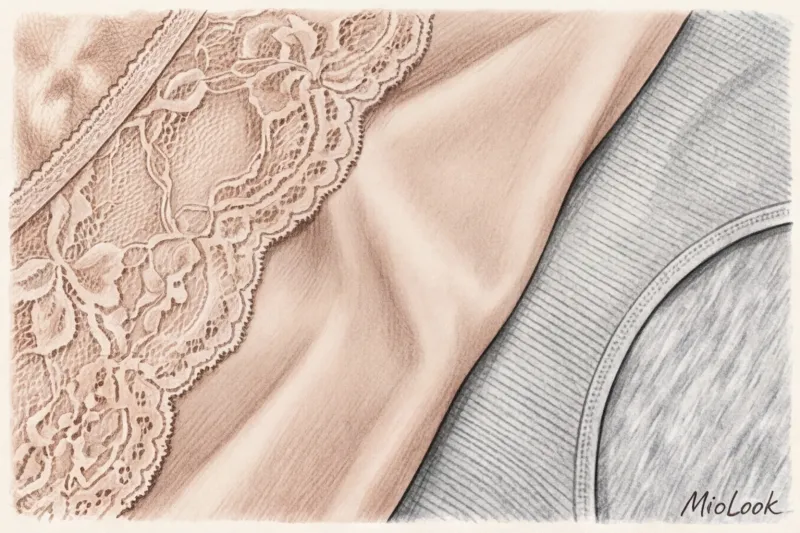
The Golden Rule of Safety: Cotton Gusset
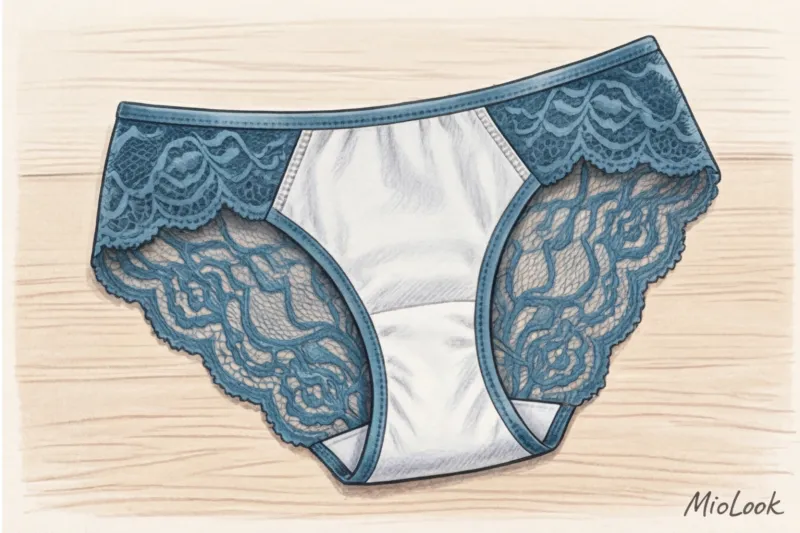
And so we come to the main secret that reconciles stylists' love of synthetics with doctors' demands. It's the gusset—a small fabric insert in the crotch area of panties. It's your personal climate control.
My strict rule as a stylist: if a piece of lingerie doesn't have a 100% cotton gusset, I forbid my clients from buying it for everyday wear. I call such items "15-minute lingerie" (for those special romantic occasions). The rest of the time, it's this small cotton detail that ensures proper hygroscopicity and a healthy microclimate in those critically important areas.
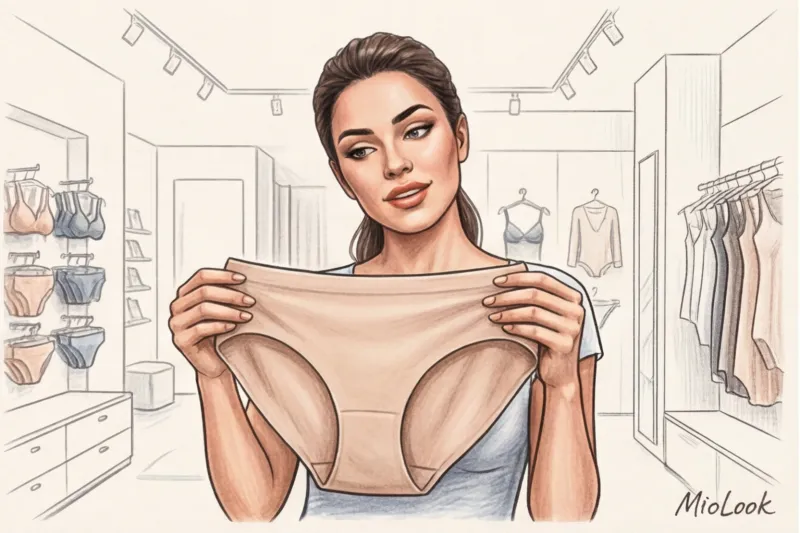
How can you check the quality right in the store? Turn the panties inside out. The gusset should be sewn neatly, without any rough, protruding seams along the edges that will chafe when walking. In premium and good mid-range panties (€20–€40), the front edge of the gusset is often hidden (seamless).
The Invisible Front: When 100% Cotton Will Ruin Your Business Look
Let's get back to the style. In professional circles, there's a term called VPL—Visible Panty Lines. This is when the elastic bands and tight seams of cotton underwear literally cut the buttocks in half under pants or a skirt. Believe me, nothing cheapens a look more than this definition.

Over 12 years of practice, I've learned that fine fabrics (silk, satin, Super 100s suiting wool, viscose) are completely intolerant of textured cotton. We were once preparing a top manager client for a business photo shoot for Forbes. She was wearing a pair of perfect light-colored fine wool trousers for €400, but underneath, thick cotton shorts were visible. Her look looked sloppy. We literally saved the shoot by running to the nearest mall and buying basic seamless nude microfiber briefs made from laser-cut microfiber for €12. The difference was dramatic—the trousers fit perfectly.
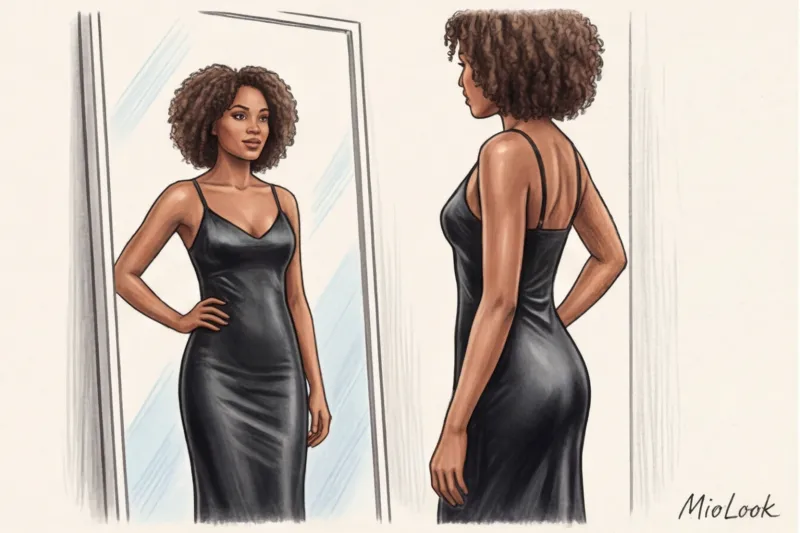
If you are loading your wardrobe into MioLook To create your own look, the smart selection system will remind you: smooth synthetics are the perfect choice for bodycon knit dresses, light-colored trousers, and flowing skirts. Save cotton for thick jeans and joggers.
A stylist's guide to choosing and washing synthetic underwear.
Seamless underwear is often criticized for bunching up under clothing. And here's a fair point: thin, low-waisted laser microfiber really isn't ideal for all body types. If you have a prominent tummy (which is perfectly normal!), these panties will roll down, no matter how perfectly you choose the right size. In this case, your choice is a mid- or high-waisted style with a wide, folded elastic edge.
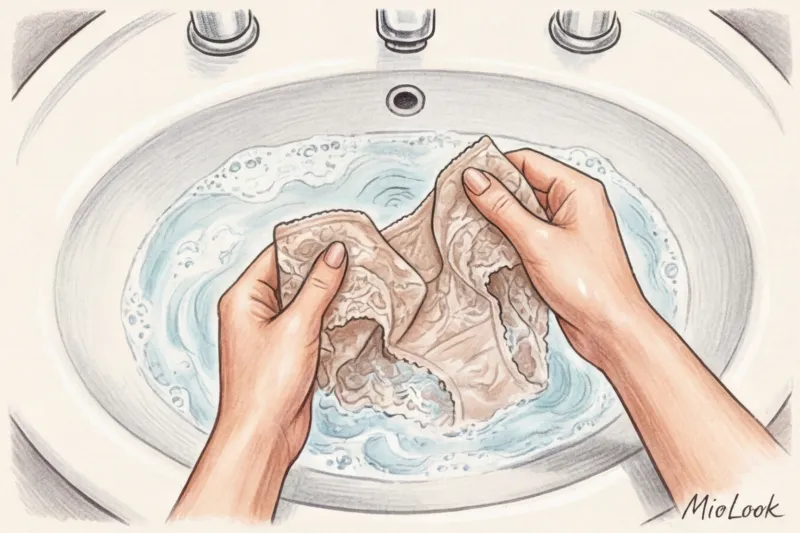
When it comes to care, the main enemy of elastane and microfiber is high temperatures. Have you ever noticed thin white elastic starting to stick out of your favorite lace? That's the elastane breaking down. Synthetics should never be washed at 60 degrees Celsius or dried on a hot radiator.
My personal life hack: I wash expensive lace and fine microfiber in cool water (no hotter than 30°C) using... regular, mild baby shampoo. It doesn't contain harsh enzymes that can damage delicate fibers. And be sure to use special mesh laundry bags—they protect the laundry from rubbing against the drum and the fasteners of other clothes.
Checklist: 4 signs that this underwear can be worn every day
- The presence of 100% cotton gusset. No exceptions.
- Flat or laser seams. Run your finger along the seams from the inside - they should not feel like a hard scar.
- The fabric stretches in four directions (4-way stretch). It should adapt to your movements, not resist them.
- No traces. If red, indented stripes remain on your skin in the evening, your underwear is too small or the elastic bands are too tight.
Linen Wardrobe: How Much Microfiber and Cotton Do You Really Need?
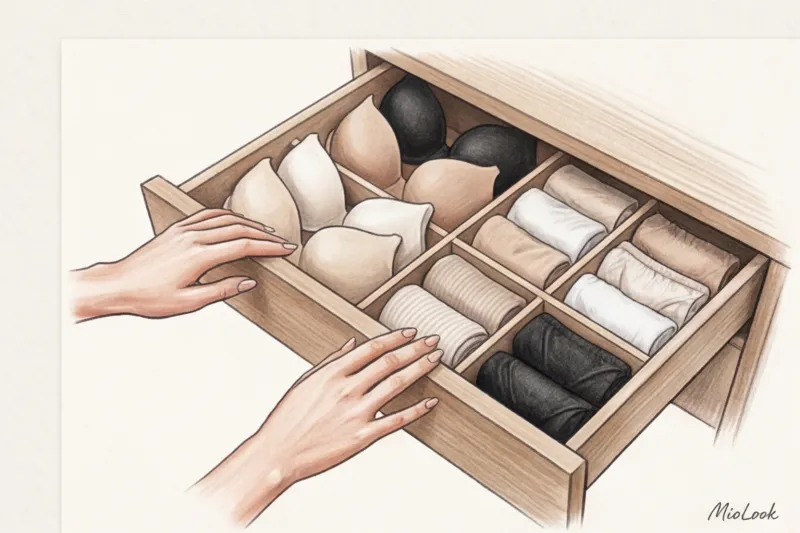
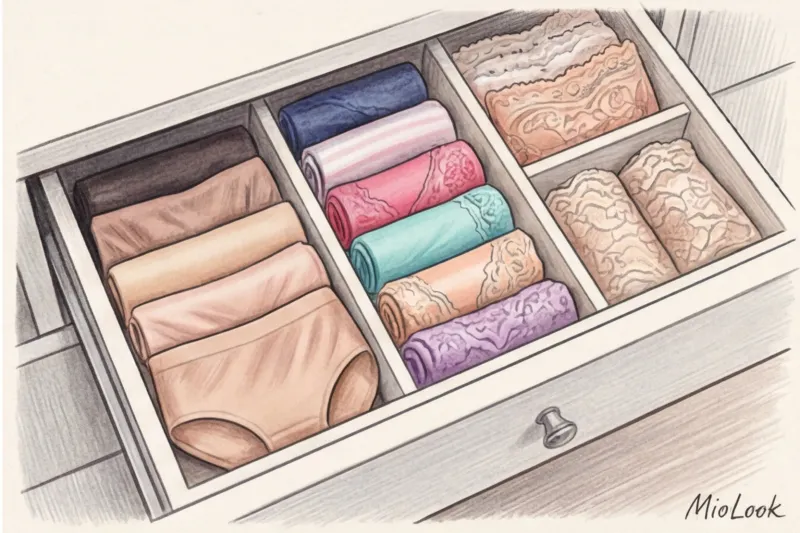
There's no need to go to extremes and throw out all your cotton. A smart underwear wardrobe is built on balance. I suggest the following distribution formula to my clients: 50% seamless microfiber, 30% cotton and 20% lace.
Half of your drawer (that same 50%) is functional basics. These include smooth, seamless briefs, shorts, and Brazilian shorts made of polyamide and elastane. They should be nude (a perfect match for your skin tone). Cotton (30%) is ideal for home, sleep, and walks in loose sweatpants and fleece-lined tracksuits. And finally, the remaining 20% is intricate lace, bright colors, and statement pieces to set the mood.
Speaking of color, do you know why wearing white underwear under a white shirt or summer pants is a major rookie mistake? White under white fabric creates a stark contrast with your skin, and the contours of your underwear literally glow through your clothes. Counterintuitive advice from a stylist: If you don't have nude underwear to go with a white blouse, try red (closer to burgundy). It will blend with your skin tone and be completely invisible. But with light-colored pants, only a smooth nude is suitable.
Ready to get started?
Try the free plan—no commitments required. Organize your wardrobe and create stylish outfits every day.
Get access — €0.99 onceTo sum it up: fearing synthetic underwear in 2024 is as pointless as giving up smartphones because of radiation. Modern high-tech fabrics are designed to make your life more comfortable and your looks more luxurious and polished. The main rule is to always look for a cotton gusset, pay attention to the fit, and remember that under the thin fabric of your clothes, your underwear should be a completely invisible ally, not the main character.