One day, a new client of mine categorically declared, "I don't wear synthetics! Take this dress away." She was holding a stunning, flowing slip in a rich olive shade, costing around €250. The tag stated: 100% cupra (a premium variety of viscose). She was certain she was looking at a cheap, plastic-like silk that would instantly make her sweat.
As a stylist, I encounter this misconception every week. I'm often asked point-blank: Is viscose synthetic or not?? And every time I explain the truth about this unique fabric, I see genuine surprise. We discussed the myths surrounding its composition in more detail in our A complete guide to the pros and cons of synthetic fabrics , but it is viscose that deserves a separate, detailed analysis.
Let's settle this question once and for all and figure out why this fabric is a real salvation for your summer (and not only) wardrobe, if you know how to choose it correctly.
Is viscose synthetic or not? Debunking the biggest textile myth.
Short answer: No, viscose is not synthetic. But it's not a natural fabric in the traditional sense (like linen or wool). So what is it?
In the textile industry, there's a clear distinction that 90% of buyers and, unfortunately, even sales consultants confuse. According to the International Classification of Textile Fibers (ISO 2076), fabrics are divided into three main groups:
- Natural: grow in nature (cotton, flax) or are produced by animals (wool, silk).
- Synthetic: They are made from petroleum products (polyester, acrylic, nylon). Basically, they are plastic.
- Artificial: They are produced from natural raw materials, but using artificial (chemical) methods. Viscose is one of these.
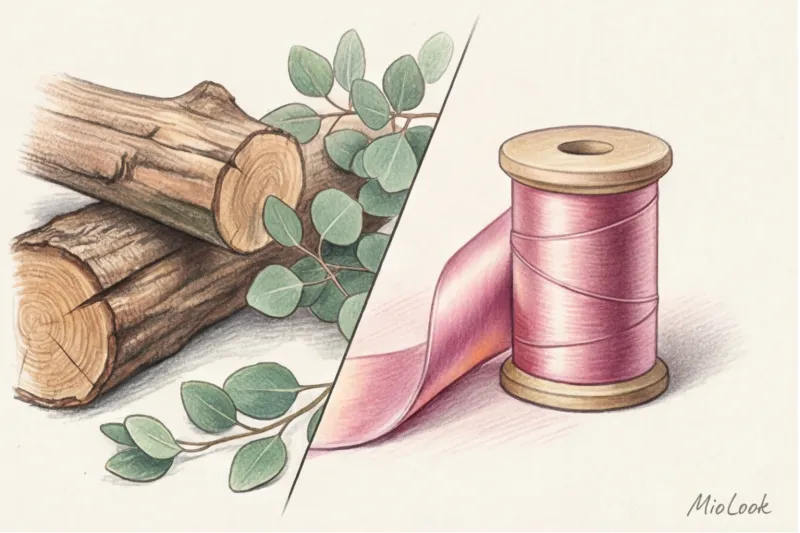
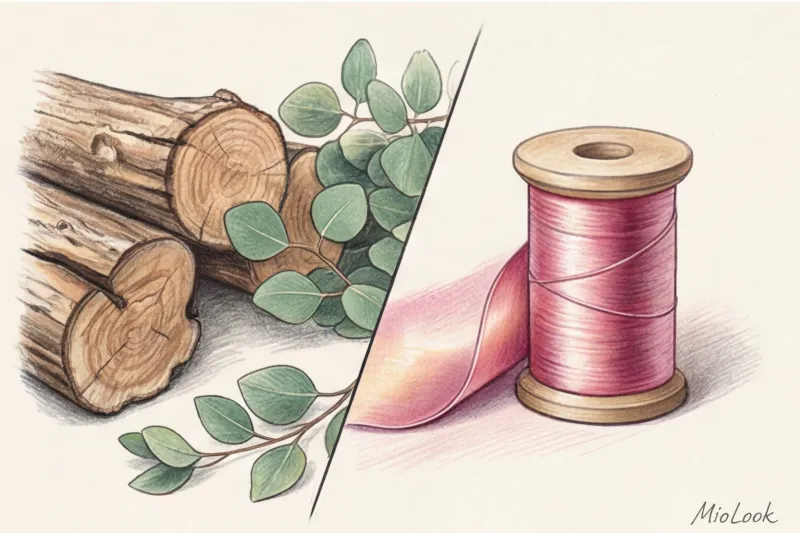
The base of viscose is natural wood cellulose (most often pine, spruce, or eucalyptus). The wood is ground into chips, boiled in a special chemical solution until it forms a thick paste, and then forced through very fine screens. The resulting threads harden—and voila, we have viscose.
The best analogy for understanding viscose is a sheet of paper. Paper is made from trees, but you won't find ready-made A4 sheets growing on branches in nature. Paper has a natural base, but it's artificially created. The same is true for viscose.
Why is viscose often confused with cheap polyester (and why it's unfair)
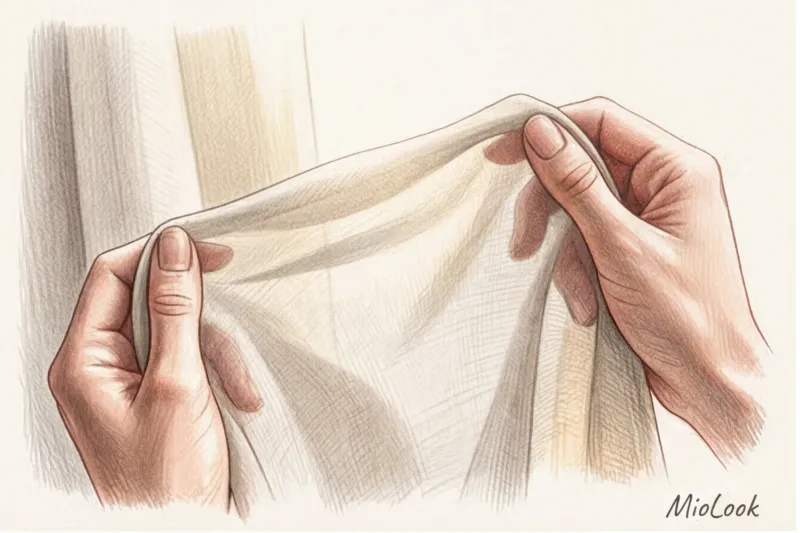
Confusion arises in the fitting room. Regular, thin viscose has a smooth texture and a slight sheen, visually resembling inexpensive polyester. However, the physical differences between these fabrics are colossal.
Do a simple breathability test. Put on a 100% polyester blouse at 25°C—and you'll feel the greenhouse effect: the fabric doesn't let air through, trapping moisture on your skin. Now try viscose. It breathes as freely as the best cotton.
Herein lies my favorite paradox, which I love to tell my clients before the summer holiday season. Did you know that Viscose absorbs moisture 50% better than cotton This isn't marketing, but a proven laboratory fact. That's why a high-quality viscose staple dress will keep you cooler and more comfortable in the July heat than a thick cotton sundress that takes hours to dry.
Why does viscose sometimes get a bad reputation? It's because of mass-market tricks. Manufacturers often blend 20% viscose with 80% polyester or acrylic, write "VISCOSE BLEND" in large letters on the label, and then the buyer, sweating in such a garment, blames it all on the viscose. Always read the ingredients thoroughly.
Your perfect wardrobe starts here.
Tired of studying labels and misreading ingredients? Let MioLook's artificial intelligence analyze your wardrobe.
Get access — €0.99 onceTypes of viscose: from budget staple to luxurious cupra
Viscose is a true chameleon in the textile world. By varying the thread thickness and processing technology, the same cellulose can be used to create fabrics that imitate wool, cotton, linen, or heavy silk.
Modal and Micromodal: Everyday Luxury
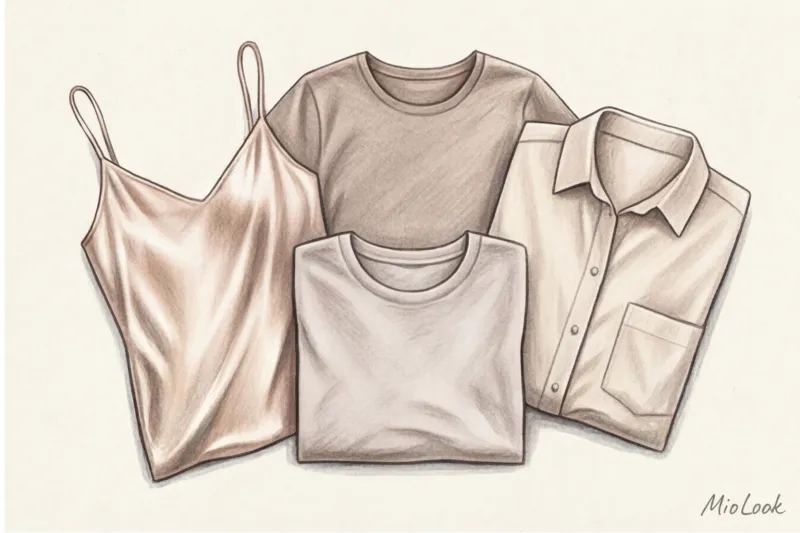
This type of viscose is produced primarily from beech wood. Modal is incredibly soft—it literally melts in your hands. It's an ideal choice for high-quality underwear, turtlenecks, and basic t-shirts.
The main advantage: unlike regular cotton, modal is virtually pilling-free and doesn't fade even after a dozen washes. A basic micromodal T-shirt will cost you around €40–€80, but it will look classy for much longer. More details about this material can be found in our article. about the properties of modal fabric.
Tencel (Lyocell): An Eco-Friendly and Durable Choice
Tencel (the commercial name for lyocell from the Austrian company Lenzing) is the gold standard in sustainable fashion. It is made from Australian eucalyptus wood using a closed-loop process: 99% of the chemical solvent is recycled, without polluting water.
Tencel is the most durable of all viscose types. While regular viscose wrinkles easily, Tencel is resilient. It's a brilliant material for summer wide-leg trousers, shirt dresses, and soft jackets. We've covered its properties in detail in our guide. on the pros and cons of Tencel.
Cupra: Vegan Silk for a Statement Wardrobe
Cupro is made not from wood, but from the finest cotton fluff that remains on the cotton seeds. It is the most expensive, noble, and capricious variety of viscose.
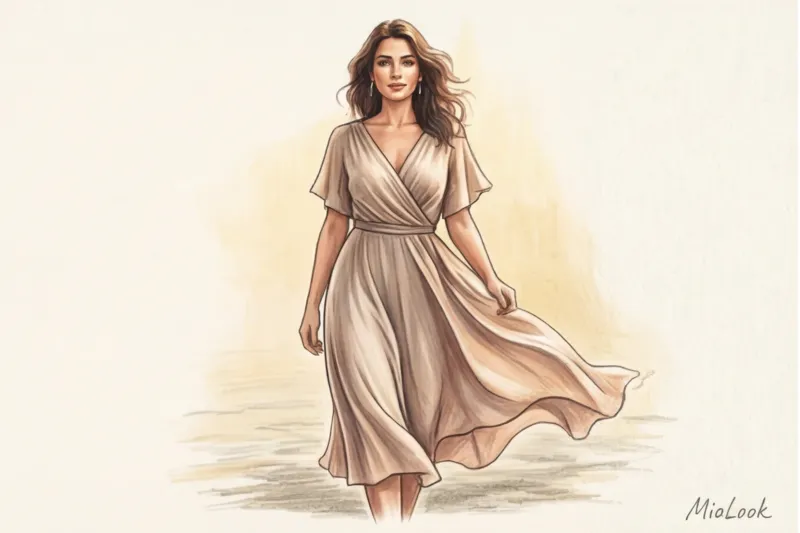
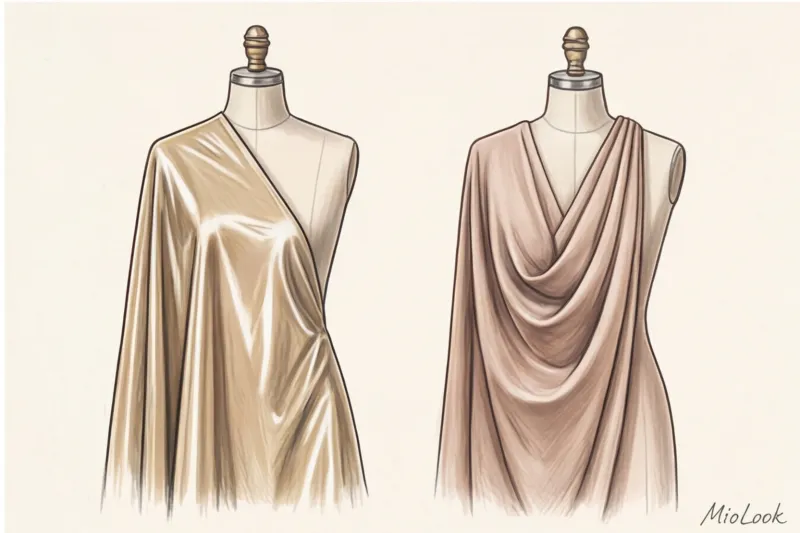
I was once putting together a capsule collection for a client invited to a summer wedding in Tuscany. She dreamed of a silk slip dress, but was apprehensive: silk doesn't forgive a drop of sweat or an accidental spill—it stains immediately. I suggested a cupra dress. It offered the same fantastic, fluid drape and a refined matte sheen, but was more moisture-resistant and breathable. None of the guests realized it wasn't real silk.
The Pros and Cons of Viscose in Your Wardrobe: A Stylist's Honest View
Like any material, viscose has its own specific characteristics. If you understand its weaknesses, you'll never be disappointed with your purchase.
Undeniable advantages:
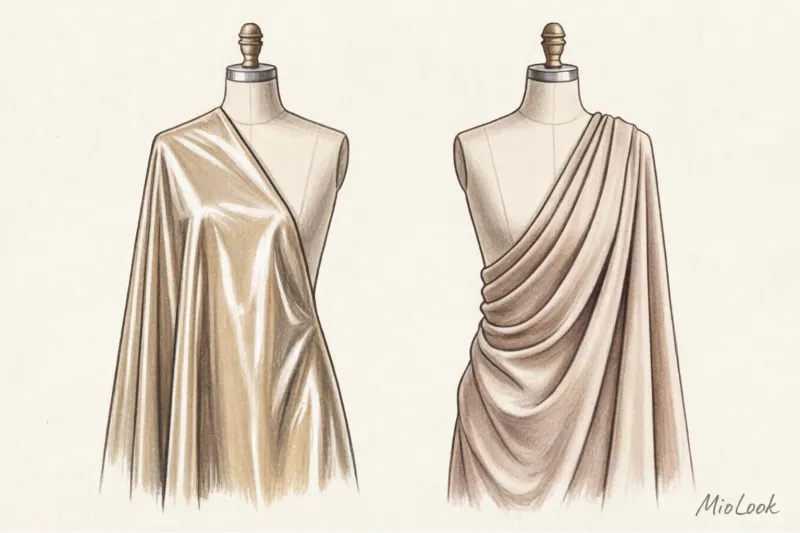
- Perfect drape. The fabric falls in beautiful, heavy folds and “flows” over the figure, while dense cotton often stands upright, adding visual volume.
- Color rendition. Viscose fibers deeply absorb dye. A black viscose dress will remain jet black, while a cotton one will turn gray after a season.
- No static. Unlike polyester, viscose does not become electrified and does not stick to tights.
Hidden disadvantages:
- Severe wrinkling. If it's regular viscose staple and not tencel, be prepared for creases after sitting in the office for a long time.
- Vulnerability when wet. When wet, viscose loses up to 50% of its strength (more on this below).
- Risk of shrinkage. When washing in hot water, the item may become 1-2 sizes smaller.
When does viscose NOT work? If you need a crisp, form-fitting business jacket with a defined shoulder line, viscose is soft and will flow off your figure. For sculpted silhouettes, consider thick wool or cotton.
How to properly care for viscose items so they don't shrink 2 sizes
"I washed my blouse, and it's as stiff as plywood!" I hear women complain. Don't panic, it's pure physics. When wet, the cellulose fibers swell, and the fabric actually stiffens. Once it dries, the softness returns. But viscose is vulnerable when wet.
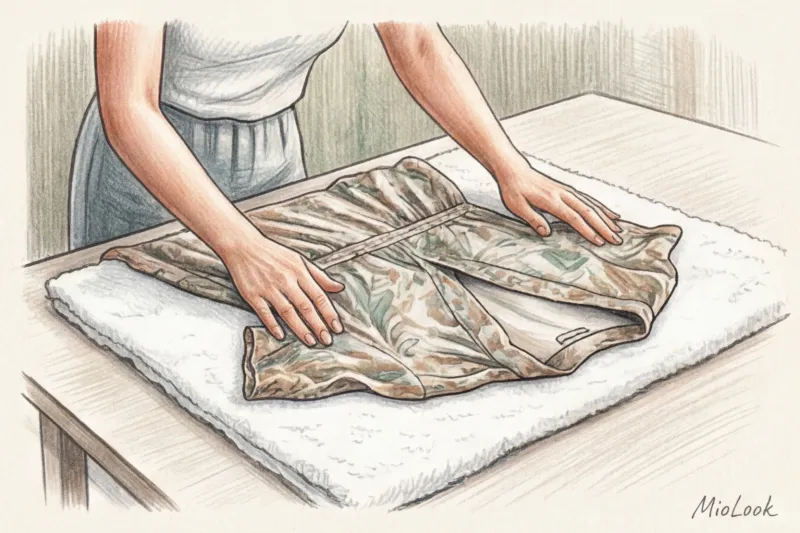
My main rule as a stylist: Never wring wet 100% viscose If you twist the fabric too much by hand or set the machine spin cycle to 1000 rpm, the fibers will simply tear at the microscopic level, and the garment will be permanently deformed. I've seen dozens of ruined dresses that were warped at the seams after being washed too aggressively.
Action Plan for care:
- Machine wash only on a delicate cycle at temperatures up to 30°C. No hot water.
- Spin - maximum 400-600 rpm (or manual wringing with light squeezing through a towel).
- It is better to dry clothes horizontally, especially heavy dresses, so that they do not stretch under their own weight.
- You need to iron from the reverse side, while the item is still slightly damp (or use a steamer).
By the way, to avoid having to keep all these rules in your head, I recommend adding your things to the "smart wardrobe" feature in MioLook The app helps you track the ingredients in your clothes and create the perfect capsule wardrobe.
Pre-purchase checklist: how to choose a quality viscose item
Now that you know the theory, let's put it into practice. As a stylist, I always do three quick tests right in the store before taking an item to the checkout.
1. Visual test for matte finish
Look for a refined matte sheen (like pearls). If an item has an unnatural, glassy sheen under store lights, it's likely a result of cheap finishing or low-quality polyester.
2. Tactile compression test (my favorite)
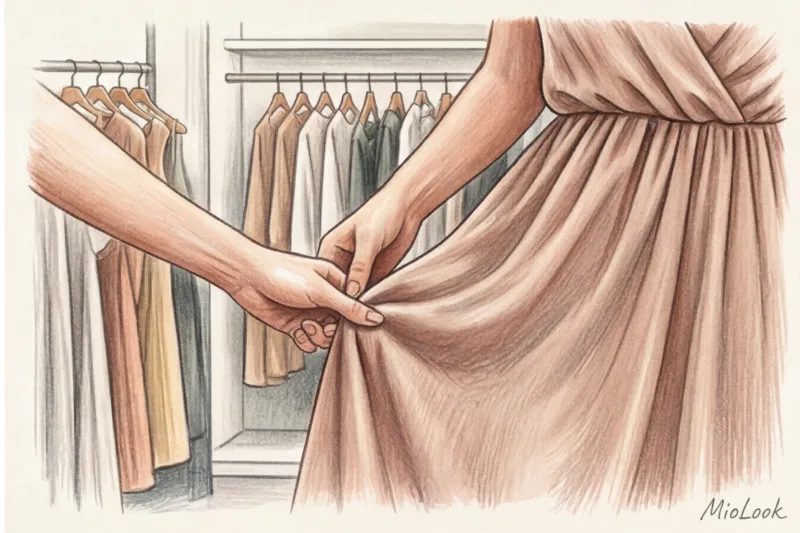
Take the edge of the item (for example, the hem of a dress) and squeeze it tightly in your fist for 10-15 seconds. Then release. If the fabric instantly turns into a "chewed-up paper" with hard creases, don't buy it. You'll be exhausted ironing it, and after a car ride, it will look untidy. High-quality viscose (especially Tencel) will straighten out in a couple of seconds, leaving only a slight wave.
3. The magic of blended fabrics
Don't be afraid of synthetics in small doses; they make viscose ideal. For a basic office wardrobe (read more about which in business capsule guide ) the ideal formula is: viscose (60-70%) + polyester (20-30%) + elastane (5%) Polyester will eliminate wrinkles and make the trousers durable, elastane will provide comfort while moving, and viscose will maintain breathability.
Access to MioLook for €0.99 — one-time payment
A smart AI stylist will select the perfect look based on your measurements and the items in your wardrobe.
Get access — €0.99 onceSummary: Is viscose worth investing in?
Absolutely yes. Viscose is a smart choice for the modern woman seeking a balance between the comfort of natural fabrics and the elegance of flowing silhouettes.
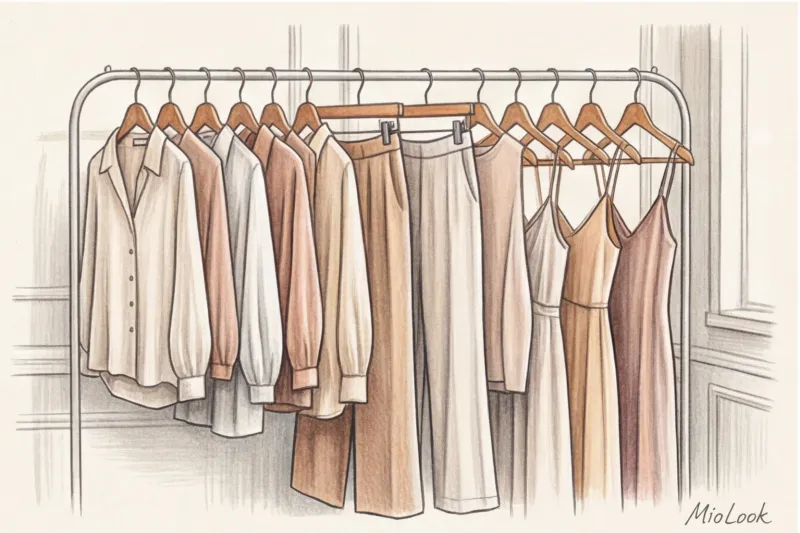
This is the perfect fabric for the summer heat, layered looks, and feminine dresses that gently accentuate the figure. Don't be afraid of the word "viscose" on the tag; be wary of improper care and unscrupulous mass-market manufacturers.
The main rule I want you to remember is: Viscose is not plastic, it is transformed nature Treat it with gentle delicacy (like good paper that doesn't withstand wringing or boiling water), and it will reward you with incredible comfort and an expensive appearance.