Can you wear synthetics in summer? Debunking the biggest myth of the 90s.
We're standing in the fitting room. My client is holding a luxurious, flowing midi dress in a refined olive shade, costing around €180. She's in love with the silhouette. But as soon as she glances at the inside tag, the dress flies back onto the hanger in disappointment. "Isabella, this is 30% polyester! I'll melt!" Sounds familiar, doesn't it?
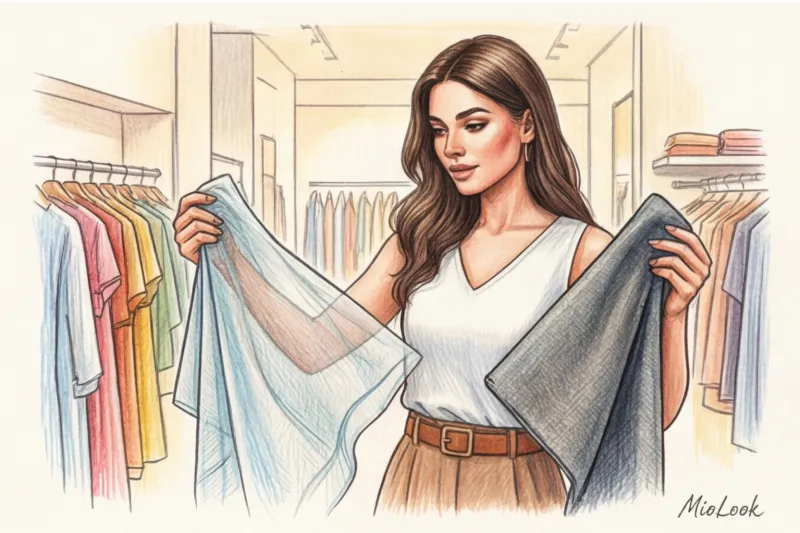
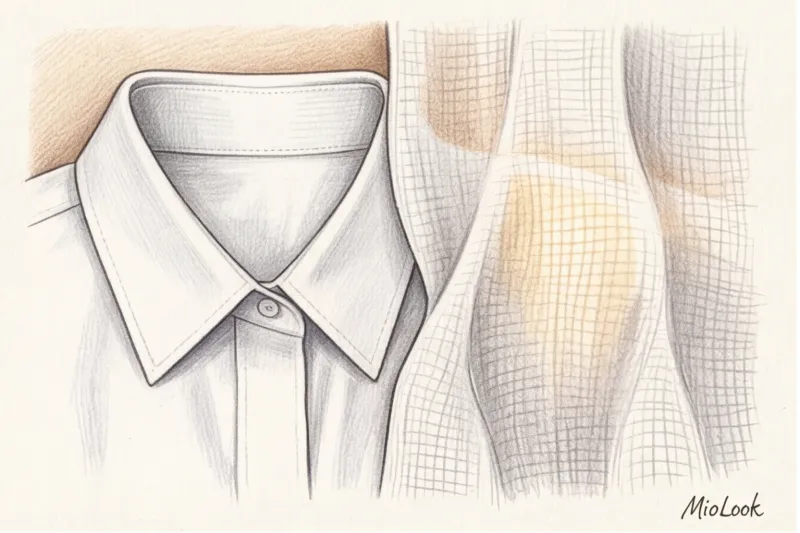
Many women ask me the same question every June: Can you wear synthetics in the summer? Or are we doomed to perpetually wrinkled, rough linen until September? Our fear of the word "polyester" stems from deep psychological trauma from the '90s, when the market was flooded with cheap, squeaky, "glassy" blouses that instantly left you sweating. We discussed the evolution of these materials in more detail in our complete guide: Synthetic fabrics: pros and cons: the whole truth.
However, today the textile industry has made great strides. The main heat paradox that shocks my new clients is this: at 35°C, dense 100% cotton can become your worst enemy. Research Hohenstein Institute (2022) In the field of clothing physiology, it has been proven that cotton fibers are capable of absorbing up to 27% of their own weight in moisture, but they dry disastrously slowly.
In extreme heat, a thick cotton shirt acts like a wet compress: it absorbs sweat, becomes heavy, clings to your back, and blocks air circulation. Meanwhile, modern micropolyester, created using sportswear technology, wicks moisture to the surface of the fabric in seconds, where it evaporates instantly, cooling the skin.
What was once the exclusive preserve of marathon runners' gear is now widely used by brands from Zara and COS to the premium segment. The technological composition makes all the difference.
Man-Made vs. Synthetic Fabrics: What's the Real Difference?
To stop fearing labels, we need to draw a clear line between the terms that mass-market products often (and wrongly) lump together. According to the report Textile Exchange Materials Market Report (2023) , confusion in terminology forces consumers to abandon the most comfortable summer solutions.
Let's give a quick chemistry primer in simple terms:
- Synthetic fabrics (polyester, nylon, acrylic, elastane) are created entirely in the laboratory through synthesis from petroleum products. They are literally liquid plastic, stretched into ultra-fine threads.
- Artificial fabrics (viscose, modal, cupro, lyocell/tencel) are made from natural raw materials - wood pulp, fluff or cotton residues, but are put into production artificially, industrially.
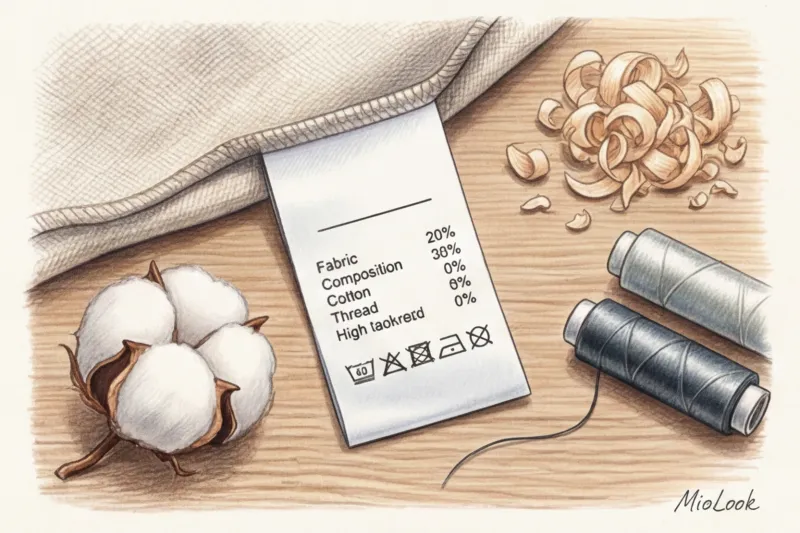
Considering viscose a synthetic is a grave mistake. In terms of breathability and hygroscopicity, artificial fibers often surpass natural silk and cotton because their structure is specifically designed for human comfort.
Which synthetic fabrics breathe best in hot weather: Top 4
If you're looking for relief from the city heat, look for these four items on the tags. They form the basis of a proper summer wardrobe.
- Lyocell (aka Tencel). The absolute king of the summer season. Made from Australian eucalyptus wood, it has an incredible cooling effect on the skin and natural antibacterial properties. A lyocell dress for €90 will make you feel more comfortable than a cotton one for €300.
- Modal. Advanced viscose made from beech wood. Unlike regular cotton, modal doesn't fade from sweat or deodorants, doesn't lose its shape after twenty washes, and remains incredibly soft. Ideal for basic T-shirts.
- Cupro. "Vegan silk," made from cotton fluff, flows luxuriously and has a delicate matte sheen. A major bonus for summer: sweat stains are virtually invisible on the dark cupro.
- Viscose. Lightweight, breathable, and affordable. The only caveat is to pay attention to the weave density. For temperatures up to 30°C, choose a thin, semi-transparent staple-weave viscose.

Your perfect look starts here
Join thousands of users who look flawless every day. Upload your items, and the algorithm will suggest hundreds of stylish combinations based on the weather.
Get access — €0.99 onceThe Perfect Summer Formula: How Stylists Read the Label
In my practice, I very rarely buy my clients items made from 100% natural fabrics for summer. Why? Because pure linen, after an hour-long car ride, looks like you slept in it. Pure cotton stretches at the knees and elbows. True shopping mastery is finding the right blends.
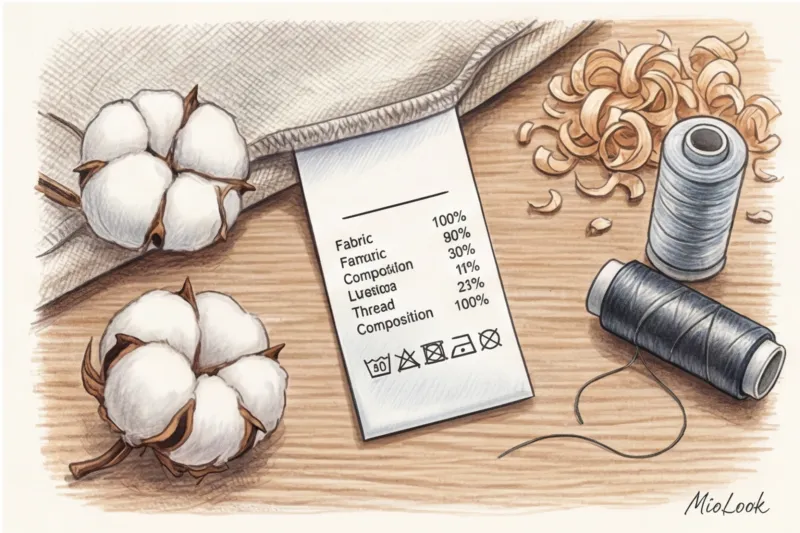
The golden ratio of the ideal summer item looks like this: 70-85% breathable base (linen, cotton, viscose) + 15-30% high-quality synthetics (micropolyester, elastane).
The synthetic additive here acts as reinforcement in the concrete. It doesn't block oxygen, but it radically changes the physics of the material:
- Anti-crease: The 20% polyester in a linen suit ensures that you'll leave your desk with straight trousers, not a bunched-up crotch.
- Durability: Summer clothes are washed twice as often. Blended fabrics don't shrink or twist at the side seams.
- Anatomy: 2-5% elastane is absolutely necessary in bodycon dresses and tops to allow the garment to move with the body rather than restrict it.
To avoid confusion in stores, you can transfer photos of the tags of your items and the "smart wardrobe" feature in MioLook so that the system itself analyzes the seasonality of your cabinet based on its composition.
Toxic Synthetics: What You Should Never Wear at 30°C
For the sake of objectivity, I must set strict boundaries: not all synthetics are beneficial. My defense of polyester doesn't extend to the budget segment of €30–€50, where brands skimp on the fiber's technology.
Last year at Milan Fashion Week, I watched a woman wearing a stunning 100% wild silk jacket literally collapse from heatstroke. When we helped her remove the jacket, the cause became obvious: the lining was made of 100% cheap, non-woven polyester. One flawed detail completely blocked the properties of the expensive outer layer, creating an impenetrable spacesuit.

What should you absolutely avoid in summer:
- Acrylic. It's imitation wool. Wearing a thin acrylic knit top in the summer is like wrapping yourself in plastic wrap. It doesn't absorb moisture or allow air to pass through.
- Smooth shiny polyester. If the fabric feels like thick plastic (often found in cheap slip dresses), avoid it. Look for rough textures or crisscross weaves.
- Untreated nylon. A great material for windbreakers, but a terrible choice for summer blouses, as it is not at all hygroscopic.
Summer Business Style: When Blends Save Your Reputation
Business dress code in July is always a minefield. On the one hand, you need to look classy and maintain a crisp shoulder structure in your jacket. On the other, you don't want to break out in a sweat during an important presentation.
When I style top executives and speakers for summer business conferences, I impose a strict ban on 100% linen. The harsh reality is this: relaxed, rumpled linen looks stylish on the Forte dei Marmi promenade, but in a Moscow City or Dubai boardroom, it creates a sense of untidiness and loss of control.

For the business capsule I use the following formulas:
- Thin "cold" wool (tropical wool) + 2-3% elastane. Paradoxically, the ultra-thin wool thread perfectly insulates the body from external heat, and elastane allows freedom of movement.
- Linen 60% + Viscose 40%. A perfect balance. Linen adds texture and class, while viscose adds heaviness, causing the fabric to flow beautifully and straighten under its own weight.
- Cotton + Polyamide. The best choice for formal office shirts. Polyamide repels moisture, preventing those telltale dark circles on your back and underarms.
Ready to rethink your summer wardrobe?
Try the MioLook free plan—no commitments required. Upload your business capsules and receive fresh styling ideas every day.
Get access — €0.99 onceIsabella's Checklist: How to Test Fabric for the Greenhouse Effect in the Store
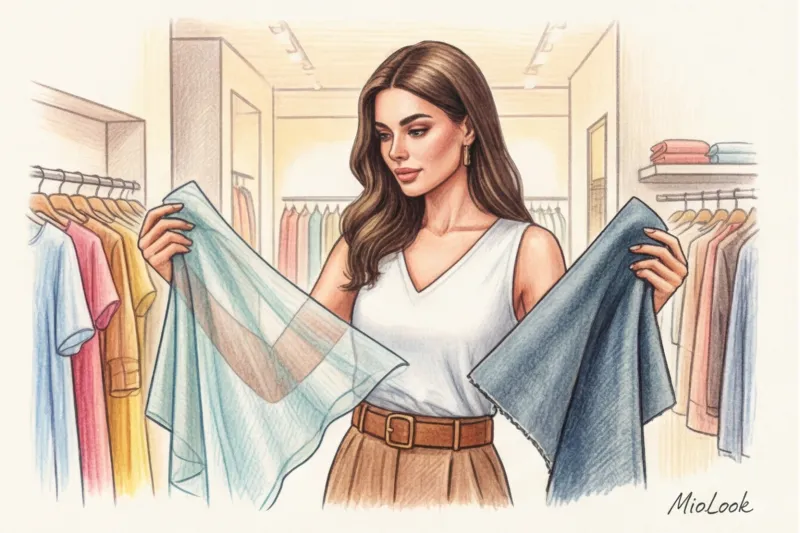
Manufacturers can write a beautiful marketing story on the label, but you can't fool your body. Over 12 years as a stylist, I've developed a physical algorithm for inspecting any fabric right in the store. Here's what you need to do before you go to the checkout:
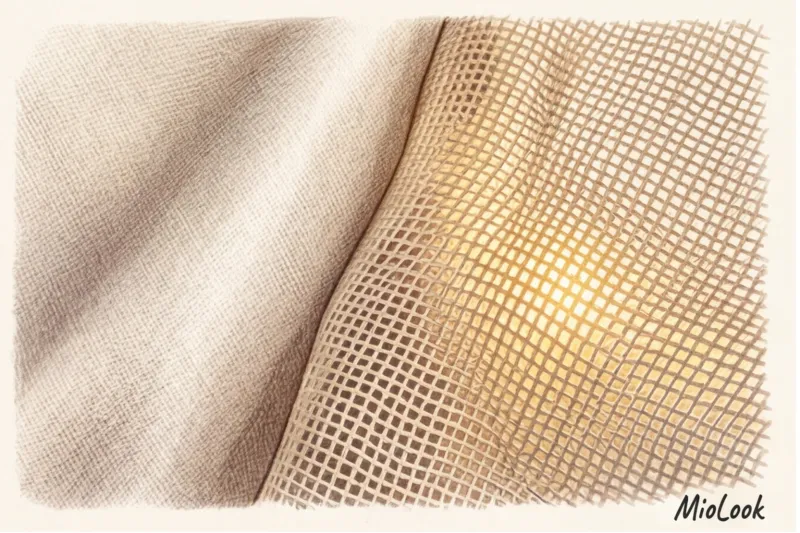
- Translucent test. Hold the fabric close to a light source in a store (or your phone's flashlight). The density of the weave affects air circulation even more than the weave itself. If you can't see the smallest gaps between the threads, the item will become your personal oven at 30°C.
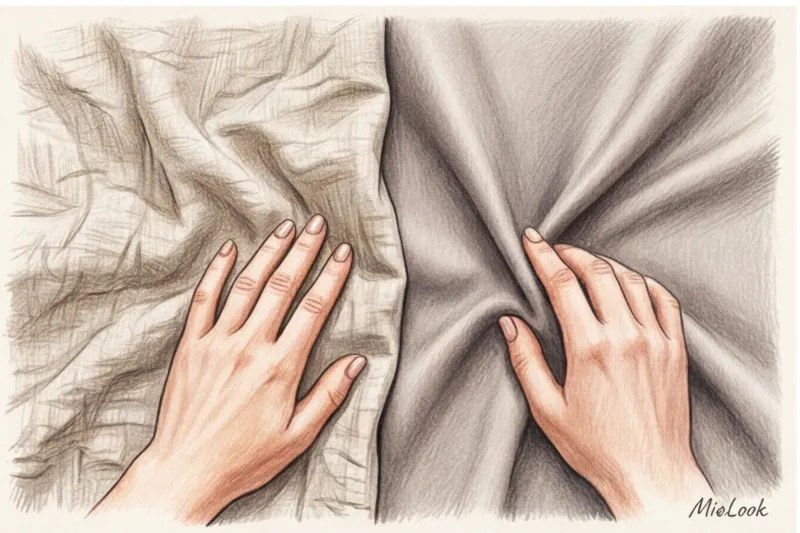
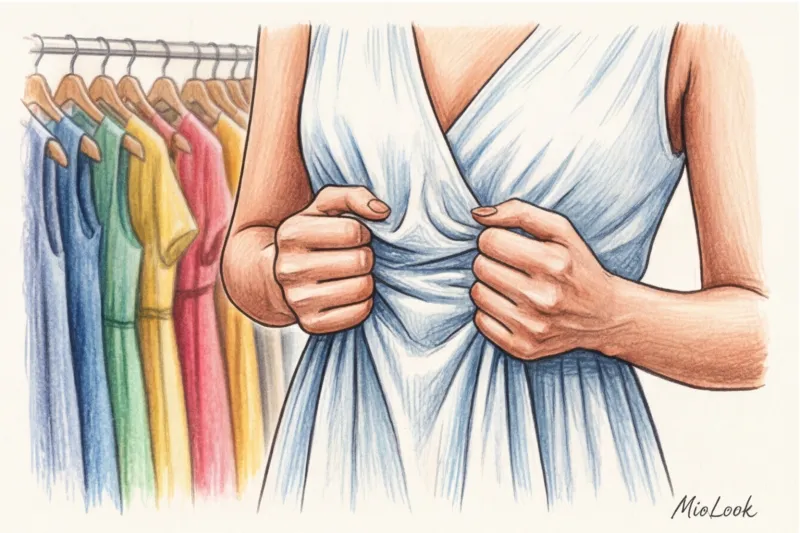
- Crush test. Firmly squeeze the hem of a dress or the edge of a pair of trousers in your fist. Hold for 10-15 seconds to transfer the warmth of your hand to the fabric, then release. If the fabric remains crumpled, it will require constant ironing. If the creases are soft and begin to unravel before your eyes, the composition is ideal.
- Tactile test for "glass". Close your eyes (this heightens your sensory perception) and rub the fabric between your thumb and index finger. Cheap, non-breathable polyester will make a barely audible squeak and slide as if you were touching glass. A properly crafted blend will always have a slight roughness.
- Weight assessment. Weigh the item at arm's length. A lightweight viscose-polyester blend jacket for €120 will always be more comfortable to wear than a heavy cotton version that will feel like dead weight on your shoulders.
Stop demonizing synthetics and start reading labels wisely. A breathable viscose or linen blend with the right percentage of technological fibers is your personal portable air conditioning system. Choose smart compositions, and allow yourself to enjoy summer while remaining flawless.