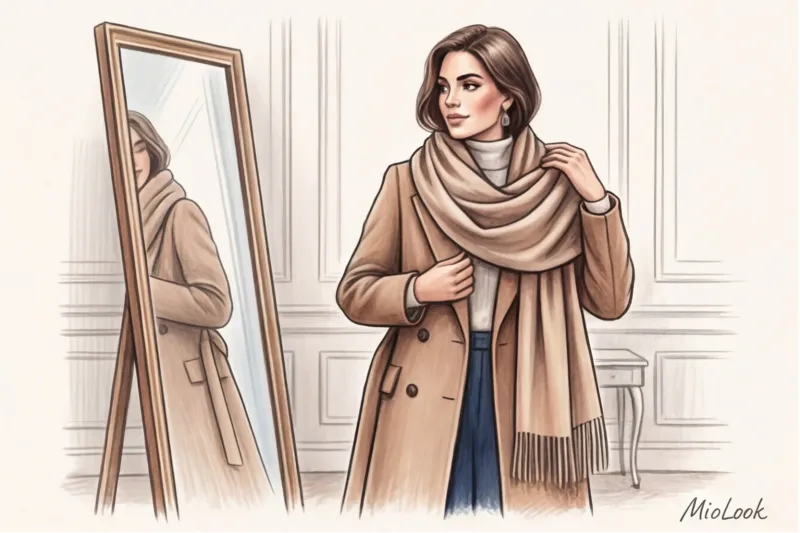
One day, a client of mine, a successful top manager, bought a luxurious 100% cashmere sweater for €800. She was delighted with its incredible softness. But after the first gentle machine wash, it shrank three sizes and was now only big enough for her five-year-old niece. It was then that we first seriously discussed the fact that purely natural materials aren't always practical for today's fast-paced lifestyle.
And here a reasonable question arises: What kind of fabric is acrylic? Why is it so feared, yet it's found in almost every other winter jumper in the mall? We've covered the history and evolution of these materials in more detail in our A complete guide to the pros and cons of synthetic fabrics , but today I want to look at knitwear.
Let's be honest: we've all experienced the situation when a beautiful, fluffy sweater turns into something covered in untidy lumps within two weeks. As a practicing stylist, I've spent hundreds of hours in fitting rooms and sorted through dozens of wardrobes. And I'm willing to challenge the popular belief that synthetics are an absolute evil. The key is to understand the physics of fabric.
Acrylic: What is this fabric and why does the mass market adore it?
To understand how a garment will wear, you need to know what it's made of. Simply put, polyacrylonitrile (the basis of acrylic) is a derivative of natural gas, essentially liquid plastic that's been forced through ultra-fine filters and turned into threads. Sounds a bit uninspiring, right? But these are the very things that entice us most when we see them on display.
Why do brands like Zara, H&M, and even the more expensive COS regularly release collections with a high percentage of this material? It's not just about cheaper production. According to a 2023 McKinsey report on the state of the textile industry, synthetic fibers dominate the market due to their ability to hold dyes impeccably. Natural wool often produces muted, earthy tones. Acrylic, on the other hand, allows for the creation of those neon pinks or rich electric blues that the current trend calls for.
Moreover, in the store, an acrylic sweater often looks much more attractive than a wool one. It's lightweight, incredibly fluffy (the "high-bulk" effect), and, most importantly, completely non-itchy. But this magic fades the moment you start wearing it actively.
The Anatomy of Pills: Why Your Sweater Loses Its Look in Two Weeks
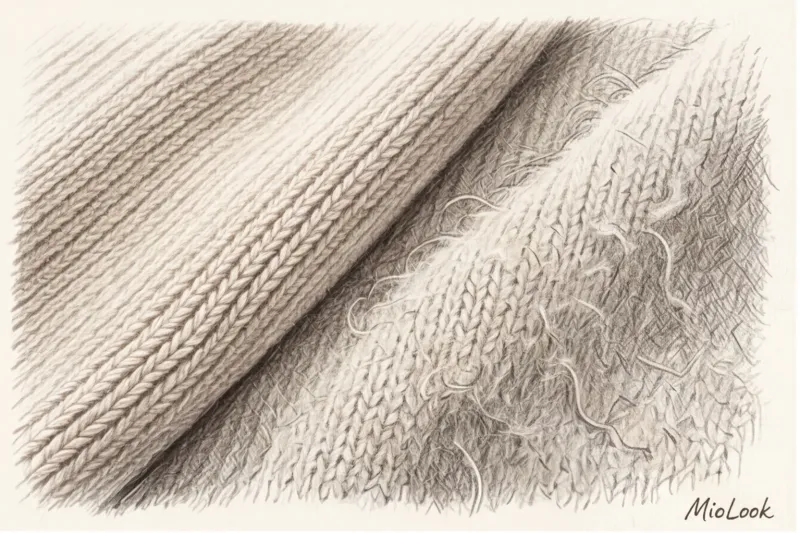
In my experience, 8 out of 10 clients, when sorting through their wardrobe, pull out a sweater from the depths of the closet and say: "It's so beautiful, but I don't wear it because it's all rolled up." Technologists call the formation of these unpleasant balls "pilling." And the mechanics behind it are incredibly simple: friction.
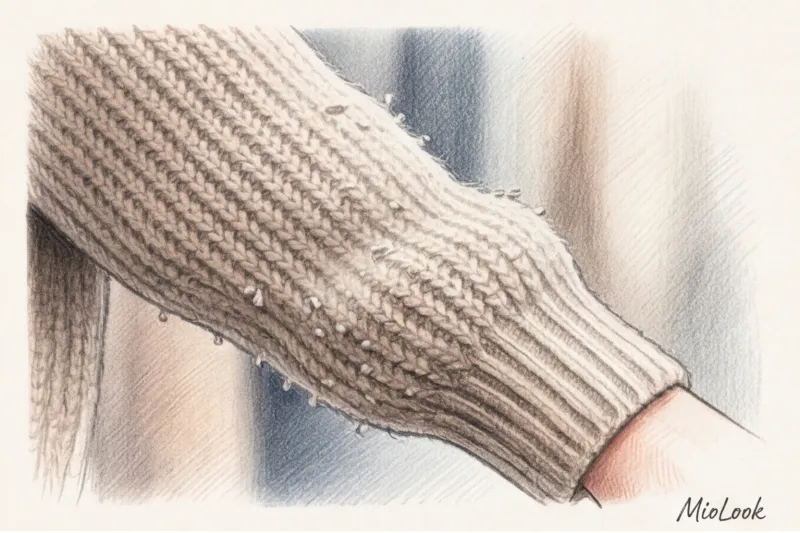
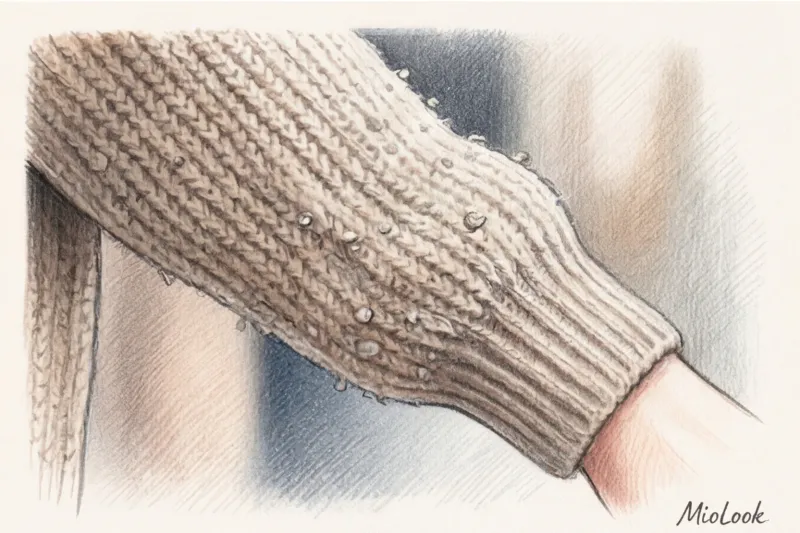
All yarn consists of fibers of a certain length (staple length). The shorter the fiber, the more easily its tip is dislodged from the thread by friction. But here's the secret: natural wool pills too! However, wool thread is fragile. When a pill forms, it simply breaks off over time and falls off on its own. Acrylic thread, on the other hand, has tremendous tensile strength. Pills made of polyacrylonitrile adhere to the sweater tenaciously, collecting dust and lint.
"The most ruthless killer of knitwear is your favorite crossbody bag. A stiff strap that rubs against the side of your sweater as you walk can destroy even a €300 item in just one long walk."
Your perfect wardrobe without mistakes
Upload your items to the app and create everyday looks. A smart AI stylist will suggest which textures work best with each other.
Get access — €0.99 onceHow else can you spot a sweater that will pill in the fitting room?
You don't have to buy something to test its durability. Use my proven techniques right in the store:
- Friction test: Take the edge of the garment and rub the fabric vigorously against itself with your fingers for 10-15 seconds. If lint begins to form on the surface, return the garment to the hanger.
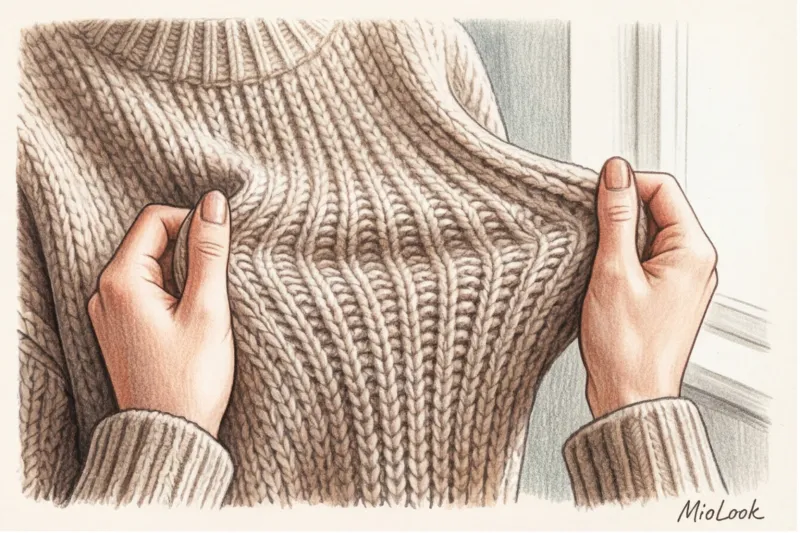
- Looseness rating: Hold your knitting up to the light. Fluffy, lightweight, and loose knits will pill much faster than dense, smooth, and heavy knits. The air between the stitches allows the fibers to tangle freely.
The Heat Illusion: Why You Sweat But Don't Get Warm
The physics of fabrics is merciless. Natural sheep's wool is a natural thermoregulator. It breathes, wicks moisture away from the body, and retains heat in the air pockets between the fibers. Acrylic works like a greenhouse.

Textile experts note that acrylic retains 20-30% less heat than natural wool, while blocking air microcirculation. What happens in practice? You put on a 100% acrylic jumper and go outside in the cold. The fabric doesn't warm you up; you feel chilly. Then you take the subway or get into a hot car. Your skin begins to release moisture, but the plastic thread doesn't absorb it. You instantly sweat. You go outside again—and now you freeze to death because you're wearing damp, non-breathable clothing.
This effect is critical for winter looks. If you're planning an active day with frequent temperature changes (street - transportation - office - cafe), pure synthetics will become your personal microclimate hell.
Breaking stereotypes: when acrylic is included in the composition, it’s a huge plus
And now it's time for the main revelation. The rule of "buy only 100% natural" is hopelessly outdated. For most modern women living in big cities, pure wool is often too warm, difficult to care for, and prone to deformation.
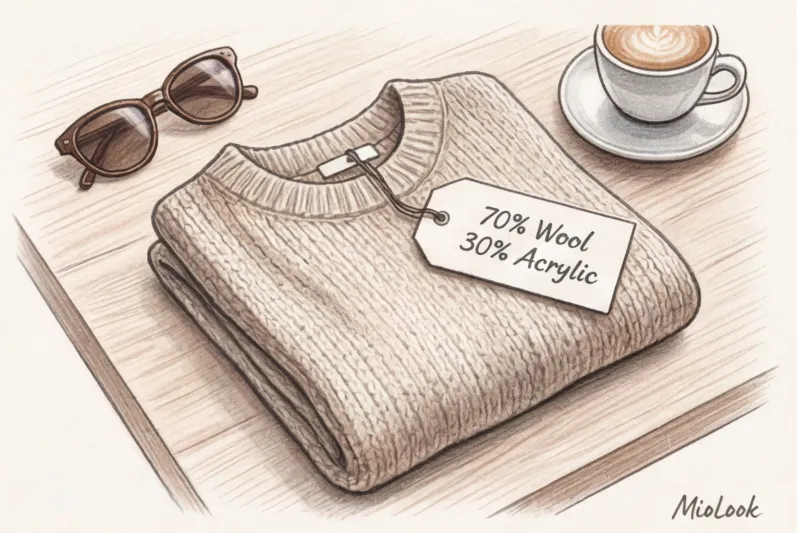
This is where smart blends come into play. Pantone Institute research and WGSN analytics for 2024 confirm that the future belongs to blended fabrics, where synthetics act as a technological backbone. Adding 20-30% acrylic or polyamide to natural wool creates a garment that:
- Shrinks less when washed (the same frame prevents the wool from shrinking).
- It holds its shape better at the elbows (there is no “stretched knees” effect on the sleeves).
- It becomes lighter in weight and more pleasant to the body, reducing the “prickliness” of pure wool.
The secret behind many premium Italian brands in the €150 to €300 price range lies in their perfect proportions: they take expensive merino wool, add a touch of acrylic for softness, and a touch of elastane for a perfect fit. It's not about cutting corners, it's about technology.
A stylist's formula for the perfect winter sweater
To avoid having to play quality roulette, stick to my golden formula for a basic warm wardrobe:
- 70–80% — natural yarn (merino, alpaca, cashmere, mohair). Responsible for warmth and moisture wicking.
- 20–30% — high-quality synthetics (acrylic, nylon, polyamide). Provides durability, lightness, and shape retention.
Important limitation: This advice doesn't work if you're going on an expedition or spending four hours in -20°C temperatures. In such extreme conditions, only pure, chunky-knit wool or high-tech fleece will keep you warm.
Pre-purchase checklist: how to choose knitwear that will survive the winter
When I go shopping with my clients, I always teach them not only to look in the mirror but also to "listen" to the fabric with their hands. Here's a step-by-step guide to choosing a piece that will last for several seasons.
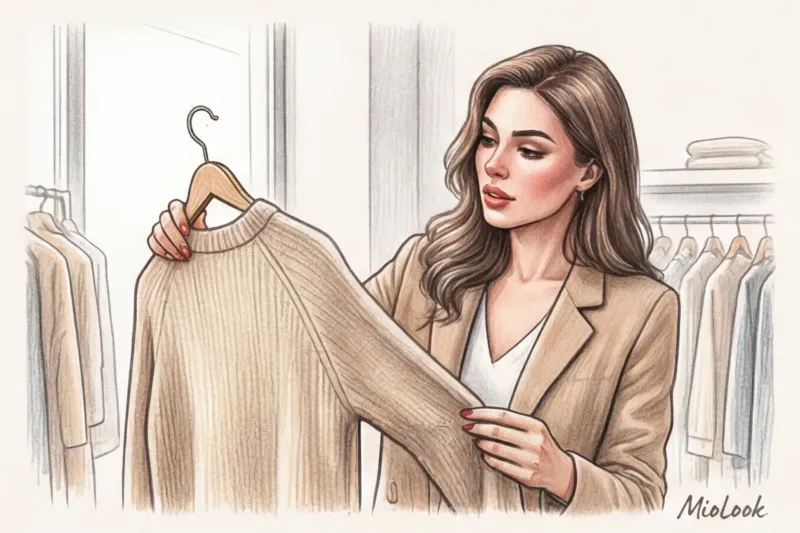
1. Reading the label and care. The composition is important, but check the care label for washing instructions. If it says dry clean only, ask yourself honestly: are you willing to spend €15 every time you get a coffee stain? Blended fabrics are great because they can often be washed at home.

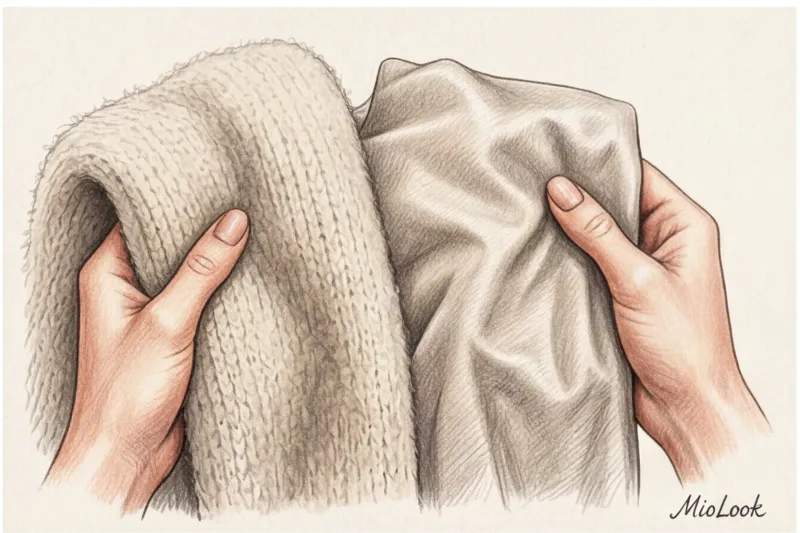
2. Tactile test for “creak”. Squeeze the edge of the sweater in your fist. Cheap, low-quality acrylic will make a characteristic "glassy" squeak or crunch. This is a sure sign that the thread is stiff and the garment will quickly become covered in hard pilling. High-quality, high-volume acrylic in a blend should be quiet and springy.
3. Weight assessment. A good winter sweater, even a blend, can't be weightless (unless it's 100% ultra-fine cashmere). If a chunky knit sweater feels like a feather, it's too airy and the synthetic material is too cheap. It will lose its shape after the first wash.
By the way, to avoid having to remember all these ingredients and successful brands, I recommend adding your best purchases to a digital wardrobe. In the app MioLook It's convenient to create capsule wardrobes for the season, immediately knowing what you'll wear your new thick jumper with—a silk skirt or classic trousers.
Ready to get started?
Try the free plan—no commitments. Upload your items and get ready-made looks from AI.
Get access — €0.99 onceFirst Aid for Knitwear: How to Extend the Life of Blended Sweaters
Even a sweater with a perfect 70/30 composition requires proper care. Over 12 years of work, I've developed three care rules that save 99% of knitted items.
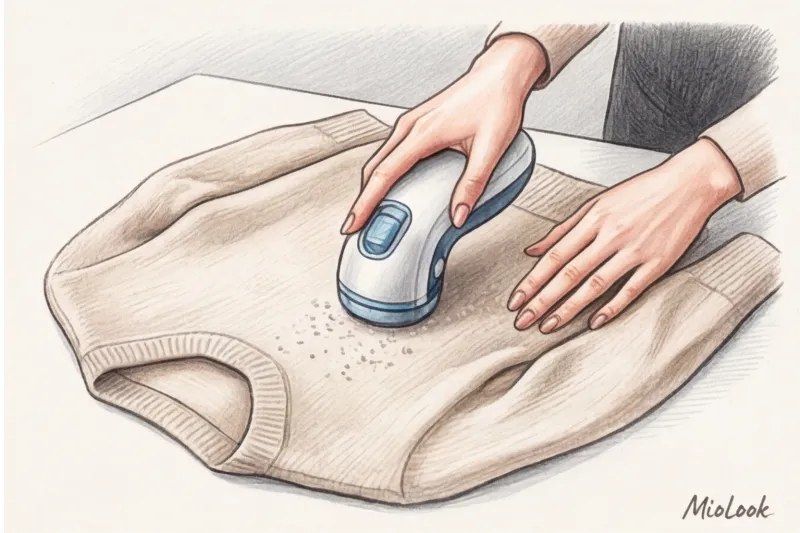
Firstly, an electric pilling trimmer is the best investment in your fall/winter wardrobe (a high-quality model will cost only €15-20). Don't shave your sweater with a regular razor; you'll damage the stitches! Go over it with a trimmer once a month, and your sweater will always look like it came from a boutique.
Secondly, forget about washing at 40°C and spinning at 800 RPM. Blended fabrics, despite containing acrylic, don't like harsh environments. Only cool water (maximum 30°C), liquid wool detergent, and a low spin cycle are recommended. Spinning at high speeds literally "knocks out" the short fibers, causing pilling.
Third, dry knitwear only flat. Natural wool is heavy with water, and if you hang a jumper on a drying rack, the acrylic frame won't hold up, and the garment will stretch a good ten centimeters.
My personal secret: When rinsing blended sweaters, I add a drop of fabric softener with a good anti-static agent. Acrylic tends to accumulate static electricity from friction with outerwear, and this simple step will prevent your hair from "dandelion fluff" when you pull the sweater over your head.
Ultimately, a stylish wardrobe isn't about blindly rejecting modern fabrics, but rather about making them work for you. Find balance, check the knit density, and remember: the perfect sweater shouldn't just look great on the hanger but also give you confidence and comfort every day.