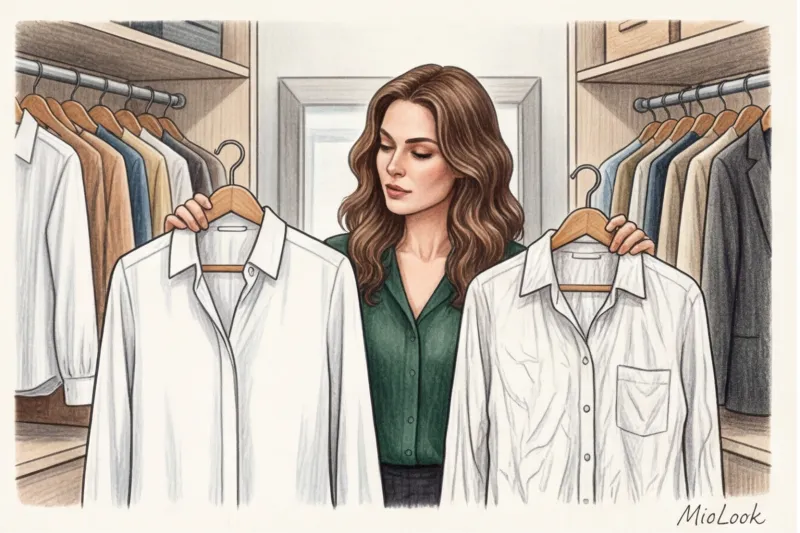
Recently, one of my new clients, Anna, spent 40 minutes meticulously steaming a 100% organic cotton dress before an important presentation. After a 30-minute taxi ride, her outfit looked like it had been slept in for a week. That same day, I arrived at a trade show in Milan after a long flight in a pantsuit that wasn't wrinkled at all. The secret to my flawless look wasn't magic, but its composition: 65% fine wool and 35% polyester.
We have already talked in more detail about the evolution of artificial fibers and their properties in our the complete guide to synthetic fabrics However, today I want to take a closer look at the main villain of the fashion industry. Let's take a look. Polyester: pros and cons which marketers often distort to suit the overall (and not always justified) trend towards everything natural.
The popular advice to "always buy only 100% natural fabrics" is the worst advice for today's busy woman. Purely natural fibers often lose their shape faster, require complex care, and require a huge amount of water when washing. A well-designed blended fabric will last you five years, while a cotton equivalent will be trashed after just five washes.
Anatomy of a Stereotype: Why Are We So Afraid of Polyester on a Label?
In my practice, when sorting through wardrobes, I regularly see the same scene: a client disgustedly sets aside a gorgeous, perfectly tailored jacket simply because she notices the word "polyester" on the tag. Instead, she chooses a shapeless piece made of cheap cotton, fervently believing she's doing the right thing.
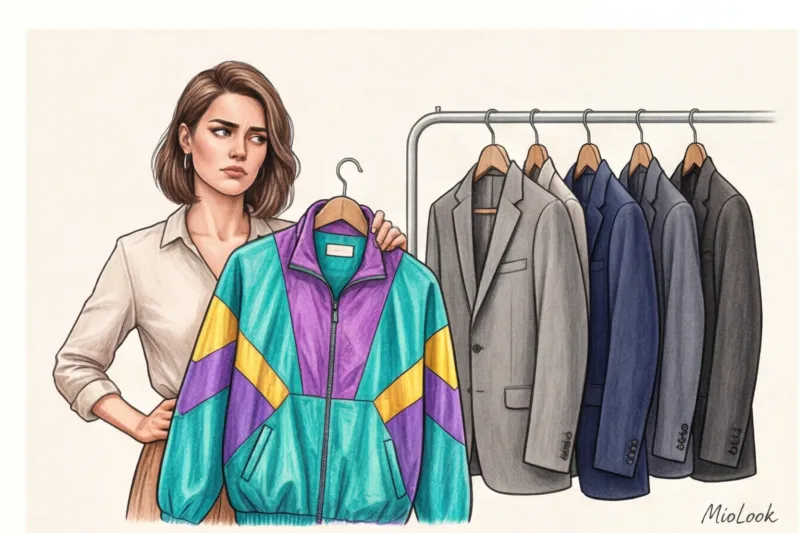
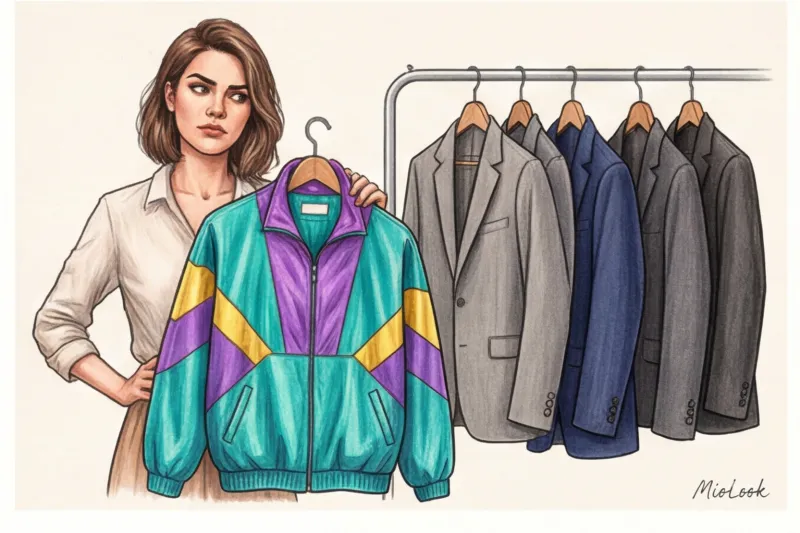
Our collective fear of synthetics is a relic of the '90s fashion era. We all remember those sparkling, squeaky blouses and tracksuits that would clung to the body with every step, creating a portable sauna effect. But technology has come a long way.
What is polyester, really? It's a polyester fiber whose architecture can be manipulated by technologists. The same raw material can be used to mold a dense plastic container, or it can be spun into microfibers that are finer and softer than human hair. It's important to understand the difference between the two. origin of the thread And type of weaving The dense 300 g/m² cotton canvas will keep you suffocated in the summer heat, while the high-tech polyester mesh ensures perfect ventilation.
Polyester: The Pros and Cons That Marketers Don't Tell You
As a stylist and a fan of the wearable capsule concept, I evaluate fabrics not by their natural "purity," but by their KPI (productivity index) in real life. Clothes should work for you, not you for them. Let's look at the facts without emotion.
The undeniable advantages of synthetic fibers
Smart synthetics solve problems that natural fabrics simply can't physically handle:
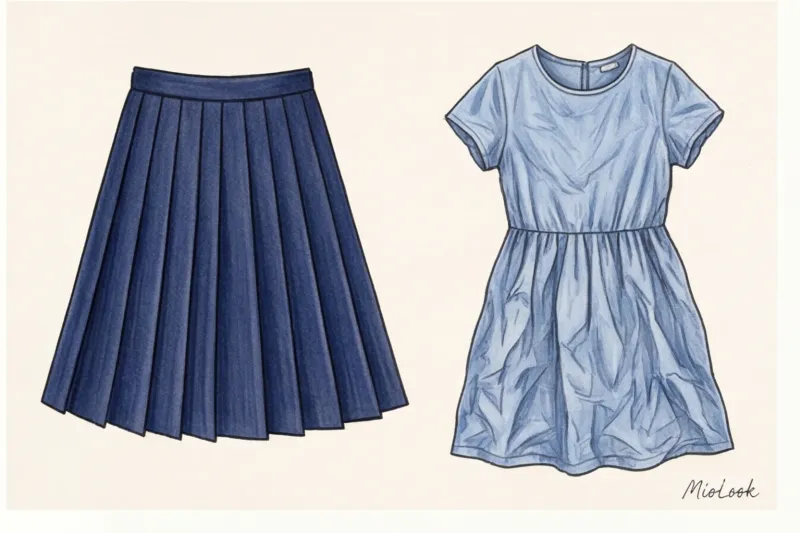
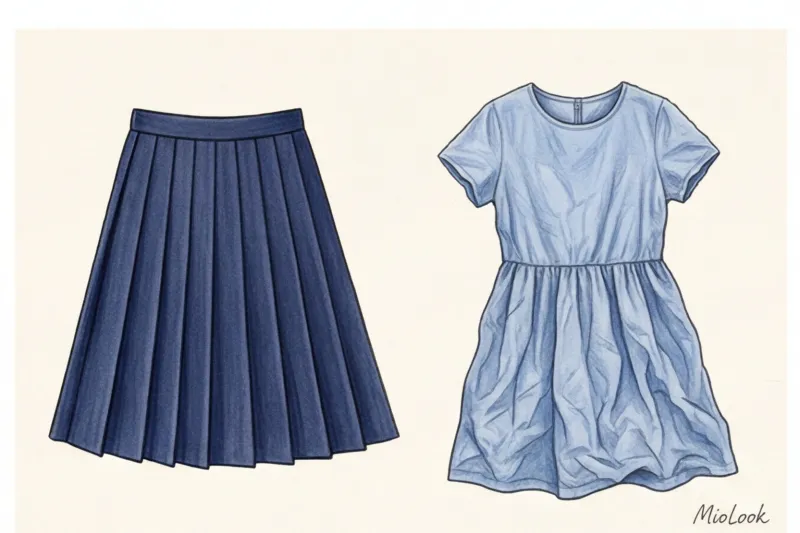
- Cutting architecture: Polyester is thermoplastic. If you see perfectly unbreakable pleats on a skirt or sharp creases on trousers, it's because of the synthetic material. The shape is literally "baked" into the fabric. On 100% silk or wool, the creases will unravel after the first rain.
- Wear resistance: The fabric does not fade in the sun and does not stretch at the elbows and knees (the main problem with pure cotton and viscose).
- Care and travel-friendly: Clothes dry four times faster than cotton and often require no ironing at all. It's an absolute must-have for business trips.
- Anti-pilling: Properly twisted polyester thread in the blend prevents the formation of pellets on knitwear.
Objective disadvantages of polyester
I'm not advocating switching entirely to plastic. Synthetics have real downsides that need to be considered:
- Lack of hygroscopicity: In cheap, dense weaves, polyester does not absorb moisture, creating a greenhouse effect.
- Static electricity: In the dry winter air of an office, a 100% synthetic skirt will inevitably stick to your tights.
- Oleophilicity: Polyester attracts sebum and deeply absorbs odors. This is why cheap T-shirts quickly lose their freshness.
- Ecological footprint: Microplastics are released during washing. However, using special laundry bags (Guppyfriend) solves this problem by 90%.
Tired of reading ingredients on labels?
Upload your wardrobe to MioLook. Our AI assistant will analyze your items and suggest dozens of stylish combinations for any weather.
Get access — €0.99 onceWhen 100% polyester is a fashion crime and when it's a necessity
The biggest mistake is judging a material without considering its function. What's perfect for a run can be a disaster for hours spent sitting at a desk.
A Categorical NO (When It Does NOT Work):
Never buy basic office shirts, underwear, sleepwear, or summer slip dresses made from 100% cheap polyester. Anything that fits tightly against the body for more than 8-10 hours straight should be able to breathe. I'm categorically against synthetic lingerie tops in a business wardrobe—they cheapen the look and cause discomfort by lunchtime.
Absolute "YES":
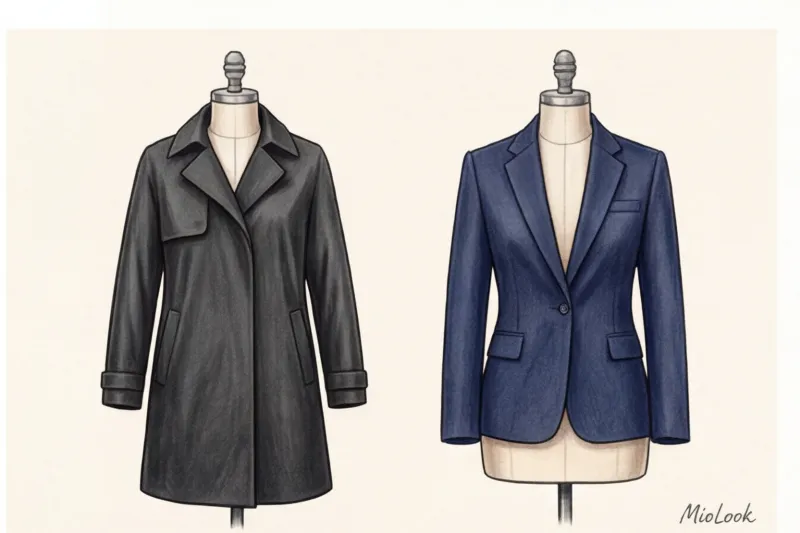
Trench coats, jackets, pleated skirts, swimsuits, and, of course, sports gear. When I was putting together my active training capsule, I tried working out in organic cotton t-shirts as an experiment. It was a disaster: the fabric instantly became damp, heavy, and cold. A modern gym requires 100% polyester (like Dri-FIT technology), which instantly wicks moisture away from the surface and evaporates it.
"Polyester isn't a diagnosis of a product; it's a tool. The only question is whose hands it's in: the mass market, skimping on raw materials, or the premium technologists."
The Perfect Fabric Formula: A Stylist's Guide to Reading the Ingredients
Blended fabrics are the holy grail of a long-lasting wardrobe. Here's my personal cheat sheet with specific proportions that I give to clients before they go shopping. Memorize these formulas.
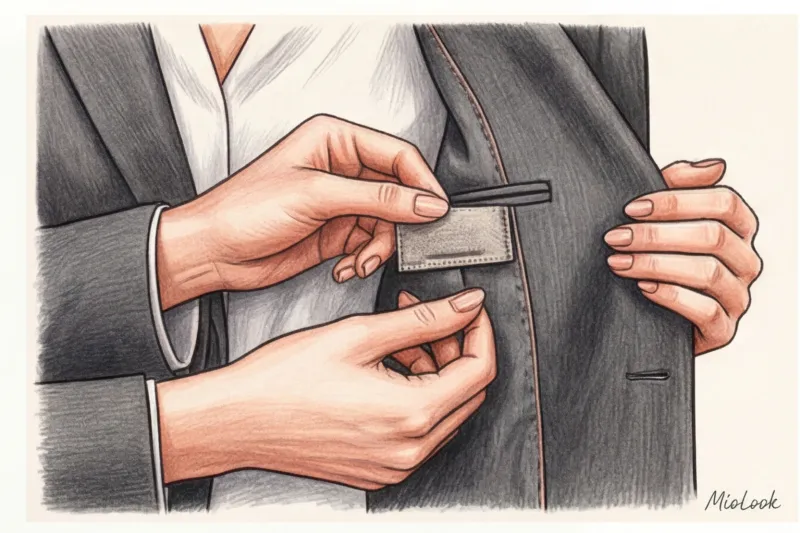
- Suit group (jackets, trousers): The golden ratio is 50–70% wool or viscose + 20–30% polyester + 2–5% elastane Budget-priced suits (€30–€80) are often made of 100% synthetics—they're shiny and don't breathe. But if your pantsuit contains exactly 30% polyester, it will look expensive and won't wrinkle in the washing machine.
- Everyday knitwear: If you see 10–15% nylon or polyester in a cashmere or merino sweater, don't be alarmed. This is the "skeleton" of the garment. The synthetic thread will prevent the luxurious but loose wool from stretching out at the elbows.
- Summer things: Linen is beautiful, but it wrinkles at the first glance. Look for blends: linen or cotton with 10-20% synthetic fiber. You'll get the texture of natural fabric without the crinkled paper effect.
Technological revolution: how to distinguish premium polyester from cheap one
Fashion is currently experiencing a materials revolution. According to the Textile Exchange 2023 report, recycled polyester (rPET), made from plastic bottles and ocean debris, already accounts for approximately 14% of the global market. Brands such as COS, Massimo Dutti, and Arket actively use it in their collections. rPET is more expensive to produce, but it reduces carbon emissions by 79% compared to virgin fiber.
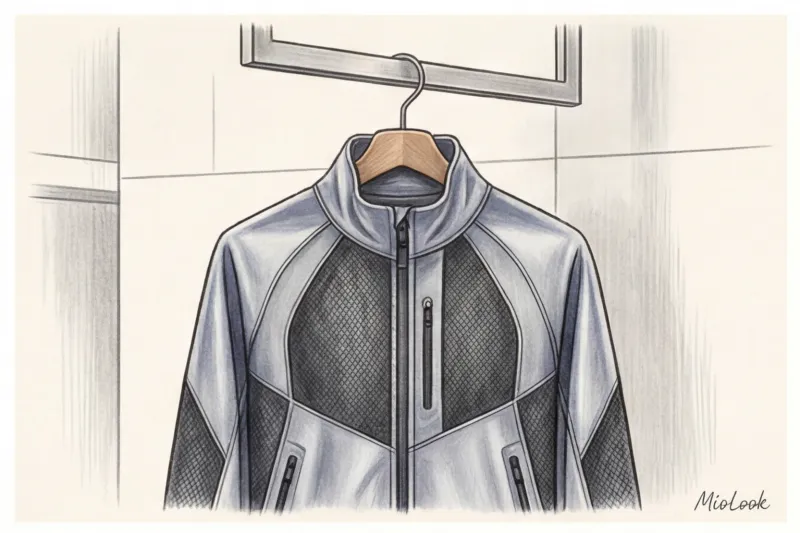
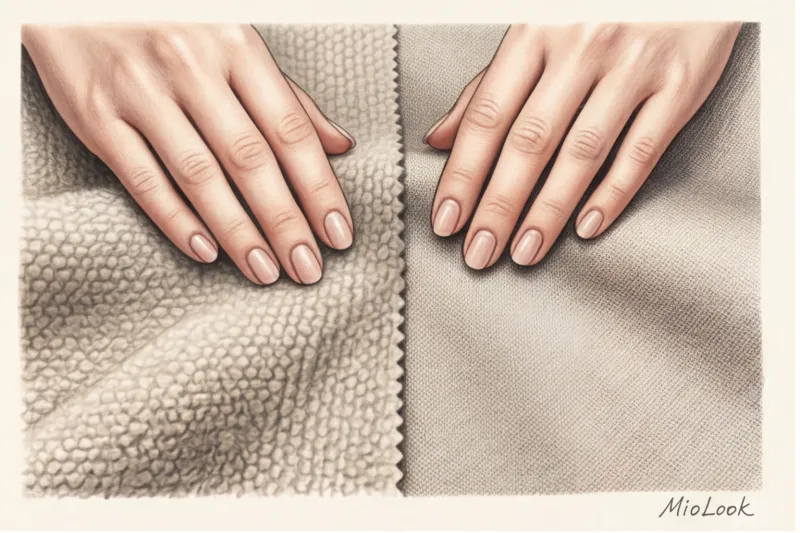
Beyond eco-friendliness, tactile properties are paramount. High-tech microfibers (for example, combined with Tencel or viscose) are indistinguishable to the touch from dense silk, cupra, or the finest, cool wool. Cheap polyester always gives itself away—it squeaks between your fingers and feels like a plastic bag.
Optimize your style with MioLook
Take photos of your best looks, create capsule collections, and track what works best.
Try it nowA practical checklist: how to test mixed-blend items in the store
How can you avoid buying a "plastic" item for €150? I always teach my clients to do a touch test in the fitting room. It takes 20 seconds but saves hundreds of euros.
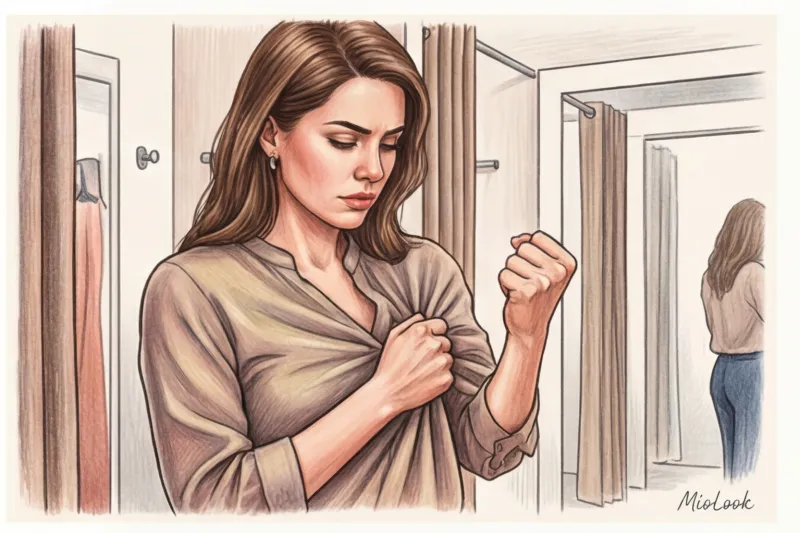
- "Fist Test": Squeeze the fabric in your hand as hard as you can, hold it for 10 seconds, and then release quickly. Is the fabric still chewed? It may not have enough synthetic fiber or it's of poor quality. A high-quality blend will straighten out in a couple of seconds.
- Visual inspection: Look at the item in different lighting. Cheap polyester has a characteristic "glassy," reflective sheen. Premium synthetics are always matte or have a delicate, expensive satin sheen.
- Static test: Rub the fabric lightly against your clothes or hair. If it immediately starts sparking and sticking, leave it in the store. No antistatic agent will solve this problem completely.
- Checking the seams: Pay attention to the stitching. Cheap, stiff synthetic thread often wrinkles the fabric at the seams due to uneven tension. A quality jacket always has perfectly straight stitching.
Summary: A smart approach to modern fabrics
It's time to abandon fashion dogmas and start analyzing the composition of clothing like an investor analyzes a portfolio. Stop panicking at the sight of the word "polyester." Instead, look at the percentage and analyze the intended use of a particular garment.
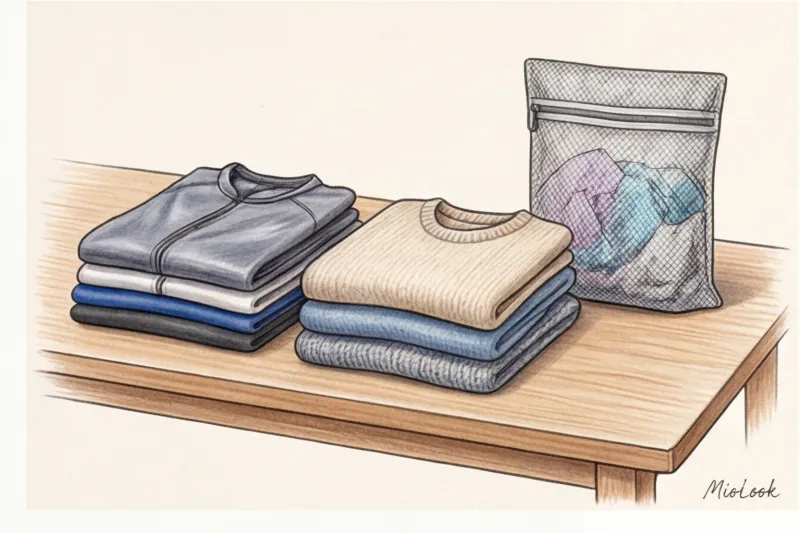
Remember the main rule of a stylist: anything that acts as a "second skin" (underwear, T-shirts) should be as natural as possible, while anything that serves as "armor" (suits, jackets, complexly cut skirts) requires high-tech synthetics to preserve their structure. If you start recording the cost per wear (Cost Per Wear) in MioLook app , you'll be surprised: it's high-quality blended items that wear out the slowest and repay every penny invested in them.