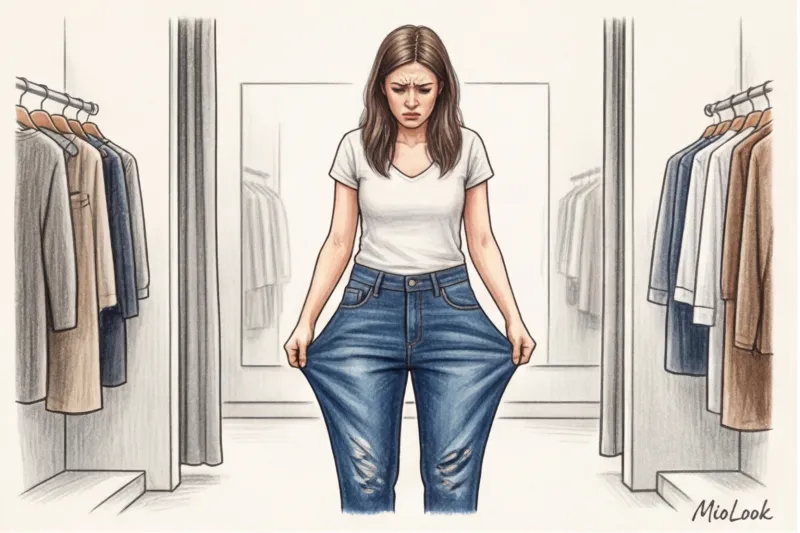
Ladies, admit it: how many times have you bought jeans that fit like a glove in the fitting room in the morning, only to have them turn into a sad sack with bulging knees and a sagging butt by the end of the day? In my 12 years as a personal stylist, I've seen this drama hundreds of times. We're used to thinking that stretch is synonymous with comfort. But when it comes to denim, that logic works against us.
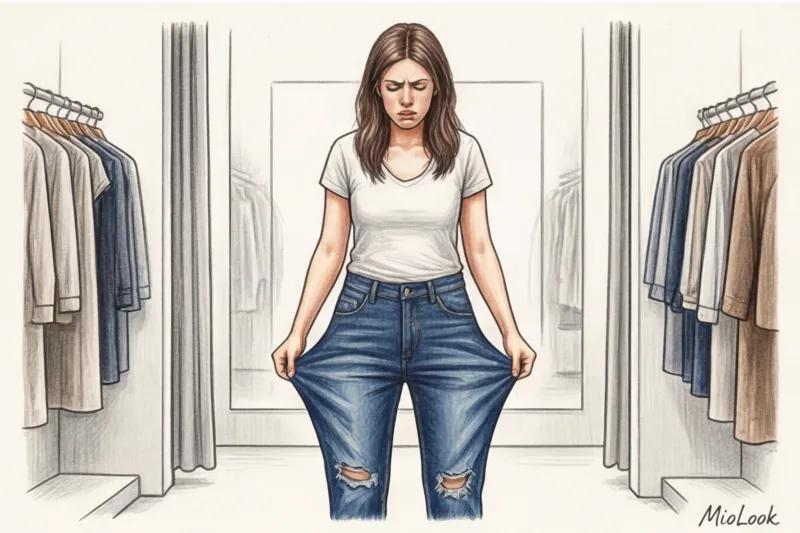
Unlike the standard glossy magazine advice that dryly recommends looking for "1-2% spandex," today we'll dig deeper. We'll explore how the exact amount of elastane in jeans varies depending on the cut, your body type, and even the weight of the fabric itself in ounces. I've already covered how different synthetic fibers and additives affect the properties of our clothing in our complete guide: Synthetic fabrics: pros and cons: the whole truth Now let's save your basic wardrobe from shapelessness.
Why the "Stretchier It Is More Comfortable" Myth Is Killing Your Wardrobe
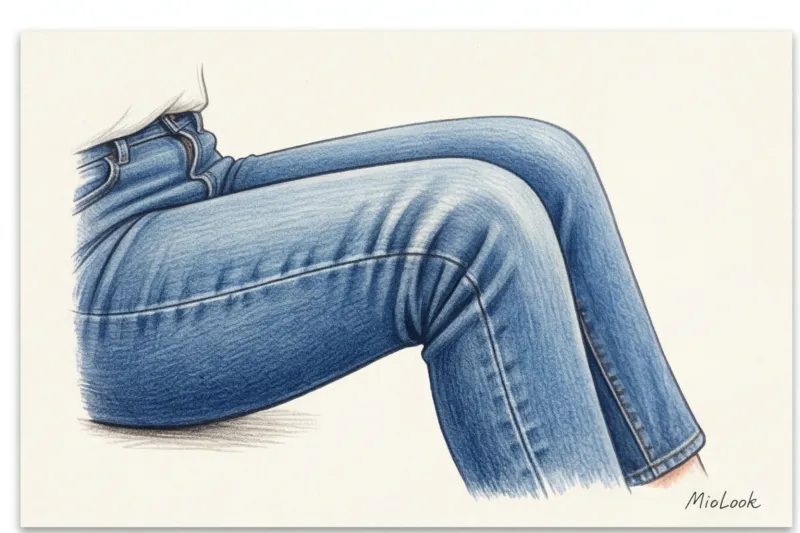
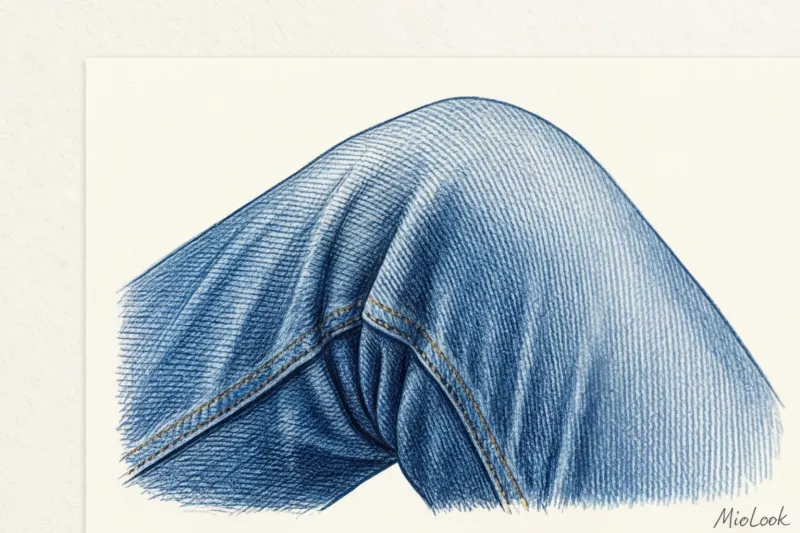
Just a month ago, I had a client, let's call her Anna. During a shopping trip, she happily grabbed a pair of 5% elastane skinny jeans at Zara, exclaiming, "They're so soft, like leggings! And I fit into a size 38 instead of a size 40!" I tried to talk her out of it, but she bought them. The result? Two weeks later, those jeans had stretched exactly two sizes, the waistband was starting to come loose at the small of my back, and there was an unsightly bunching up under the knees.
The biggest mistake 8 out of 10 women make (according to my personal statistics from fitting rooms) is buying stretch jeans a size too small, thinking "they'll stretch out." Yes, they will. But they won't go back.
"Fit is how a garment hugs your body in the first five minutes in front of the mirror. Hold is how the fabric maintains the shape of your silhouette after ten hours of wear. Elastane provides fit, but kills hold."
Herein lies the biggest paradox, especially for plus-size figures. The myth is that plus-size women need jeans that are stretchy enough to avoid any constriction. The truth is absolutely the opposite. A fabric with a high elastane content will treacherously highlight every unevenness, cellulite, and wrinkle. Meanwhile, 100% dense cotton (0% elastane) will act like a true corset, sculpting the figure, flattening the stomach, and creating a smooth, graceful silhouette.
Access to MioLook for €0.99 — one-time payment
A smart AI stylist will select the perfect look based on your body type and preferences.
Get access — €0.99 onceHow Much Elastane Should Jeans Have: A Stylist's Cheat Sheet
First, let's agree on some terms. When reading a label, you may come across the words elastane , spandex or lycra (Lycra). Don't be alarmed; in terms of its performance properties for jeans, they're the same thing: a polyurethane fiber that can stretch and return to its original state. The trick is in its proportions relative to the cotton base.
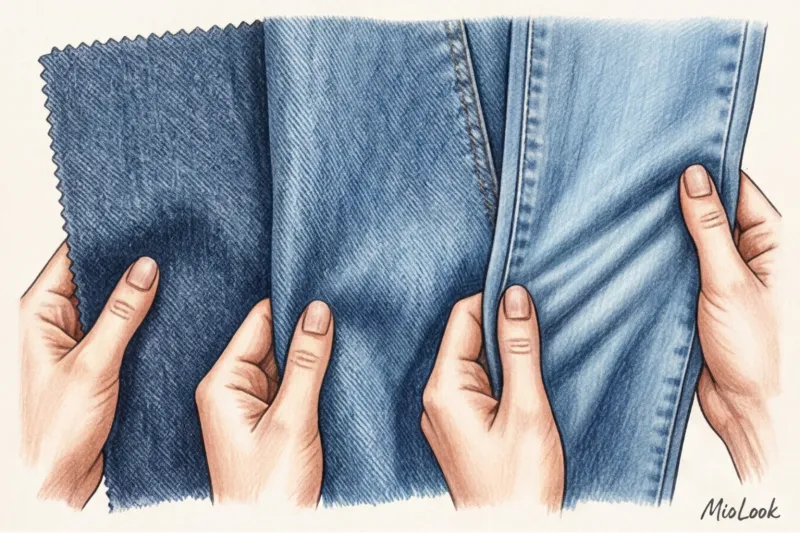
100% cotton (0% elastane): Corset effect and status classic
If you visit a premium denim boutique or browse the latest collections from Swedish brand COS (in the €80–€110 range), you'll see that most items are made of 100% cotton. Real, high-end denim doesn't stretch.
As I mentioned, this is the best solution for curvy women. Yes, these jeans may feel stiff the first few days. There's an unspoken rule for the first two weeks: thick denim needs time and your body warmth to loosen the fibers and mold to your curves. Once this happens, you'll have jeans that feel like they were tailored to your body.
When it does NOT work: Let's be honest: if you have acute sensory sensitivities, irritable bowel syndrome (when your stomach size fluctuates significantly throughout the day), or your job requires constant squatting and bending, 100% cotton will be torture. In that case, let's move on to the next point.
1-2% elastane: The gold standard for a perfect fit
This is the perfect compromise for the modern city woman. If you work in an office and sit for eight hours a day, this is the composition you need. 1-2% elastane provides just enough freedom to bend your leg or get into a car comfortably, without losing the jeans' structure.
&Other Stories and Massimo Dutti regularly release excellent basic styles with this composition (in the €60–€90 range). The elastane thread here acts as a micro-shock absorber.
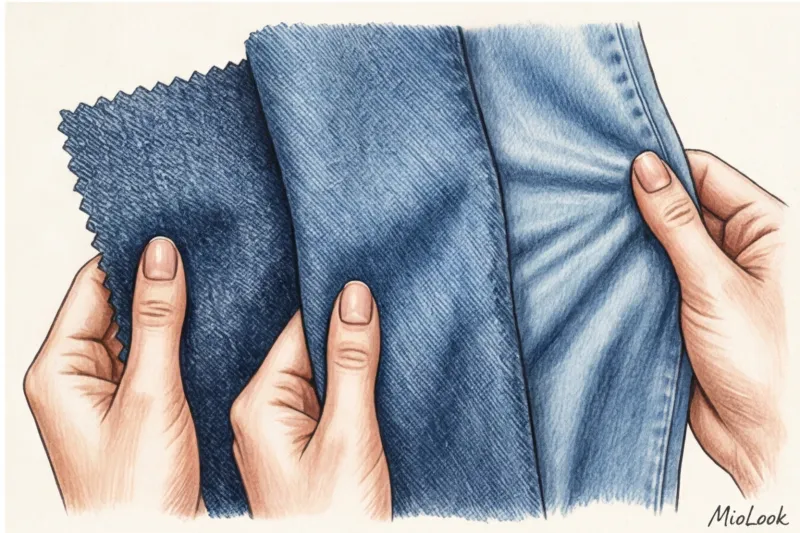
3% to 5%: Danger Zone and Skinny Territory
Seen 5% elastane in your straight jeans? Feel free to return them to the hanger. Such a high percentage is acceptable. only For form-fitting styles: skinny or jeggings. Here, stretch is simply necessary for normal blood circulation in the legs.
Be prepared for jeans containing 4-5% elastane to be a one-season item. According to WGSN textile market research (2024), spandex fibers degrade three times faster than cotton fibers due to frequent washing, temperature fluctuations, and friction. These skinny jeans will lose their elasticity after 6-8 months.
The Mathematics of Style: How Cuts Change Fabric Composition Requirements
My favorite part of consultations is explaining the geometry of the cut. You can't apply the same composition requirements to different silhouettes.
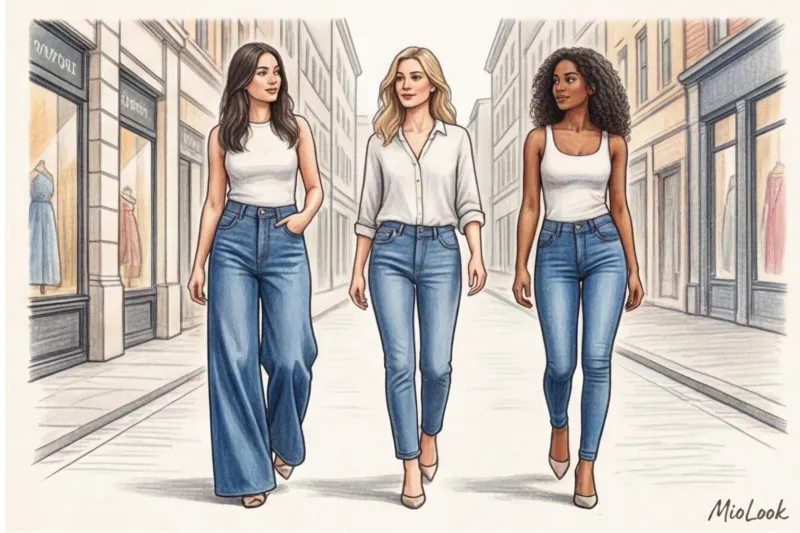
- Palazzo and Wide Leg jeans: strictly 0–1% elastane. The whole point of wide-leg jeans is to fall in a flat, heavy, "stand-up" shape. If you add 3% stretch to palazzo jeans, they'll start off tight at the hip and then hang shapelessly at the bottom. It'll look like cheap sweatpants.
- Mom jeans and Slouchy ("bananas"): 0-2%. The architecture of these models implies volume at the hips and narrowing towards the bottom. They should create shape around your body, not cling to it. Stretchy fabric will simply ruin the silhouette the designer intended.
- Straight: 1–2%. The perfect option. A touch of elastane will prevent the thick fabric from bunching up under the knee when walking, but will also maintain a straight leg line.
- Skinny: 2–4%. As we have already discussed, elasticity here is a matter of physiological comfort.
Elastane in the company of polyester: red flag or smart technology?
Frequently, customers at mass-market stores (especially Zara or Mango) send me photos of tags in a panic: "Katarzyna, these are made of cotton and 2% elastane, plus 15% polyester! Are these bad jeans?" Don't jump to conclusions. Modern textile chemistry works for us.
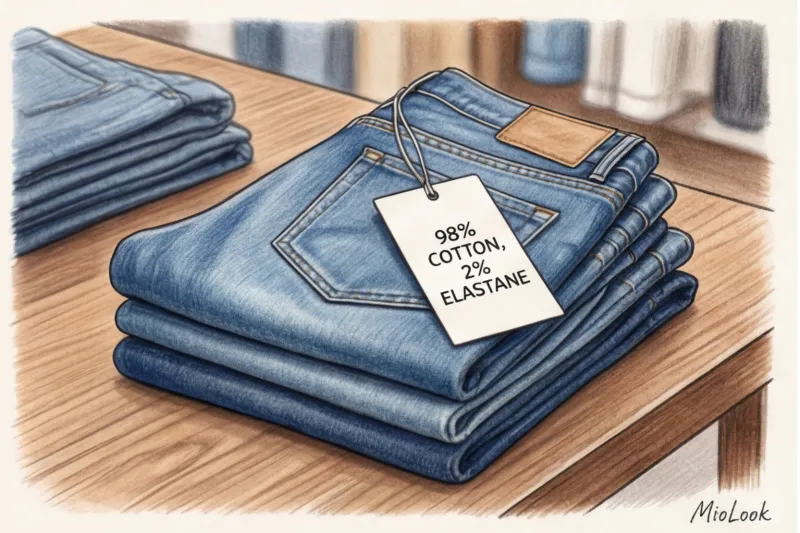
At major textile exhibitions like Premiere Vision in Paris, technologists regularly explain the reason for such blended compositions. The addition of polyester (usually 10% to 20%) to dark denim—deep indigo or black—is done intentionally. Polyester retains dye well and prevents the jeans from fading after the tenth wash.
Moreover, the polyester fiber protects the fragile elastane thread from breaking. Therefore, the "78% cotton, 20% polyester, 2% elastane" formula for black office jeans isn't a cost-cutting measure by the brand, but a clever technological move to ensure durability. The key is to keep the polyester content below 25%, otherwise the fabric will lose its breathability.
Your perfect look starts here
Add your jeans to the MioLook digital database, and the algorithm will suggest dozens of new combinations with your items.
Get access — €0.99 onceThe hidden factor that's more important than elastane: denim weight (ounces)
Now for the real insider information that most fashion blogs keep quiet about. Why do Massimo Dutti jeans with 2% elastane feel stiff and tight, while H&M's basic line jeans with the same 2% feel like rags?
The secret lies in the weight of the fabric itself, measured in ounces per square yard (oz). This number is rarely listed on mass-market labels, but you can learn to determine it by touch.
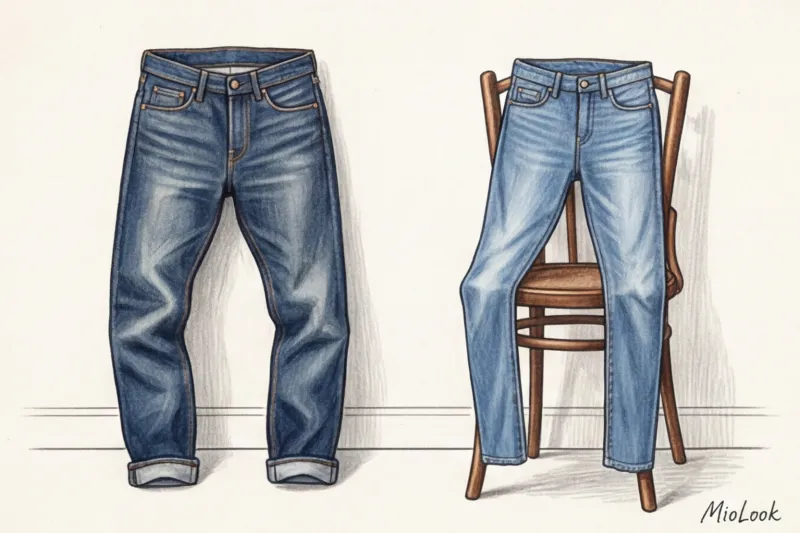
- Summer denim (10-11 oz). This is a thin fabric. If you add 2% elastane, it will stretch too much and quickly lose its shape. Suitable only for vacations and hot weather.
- Medium denim (12-13 oz). The standard for most quality jeans. Combined with 1-2% elastane, it provides an ideal, durable fit.
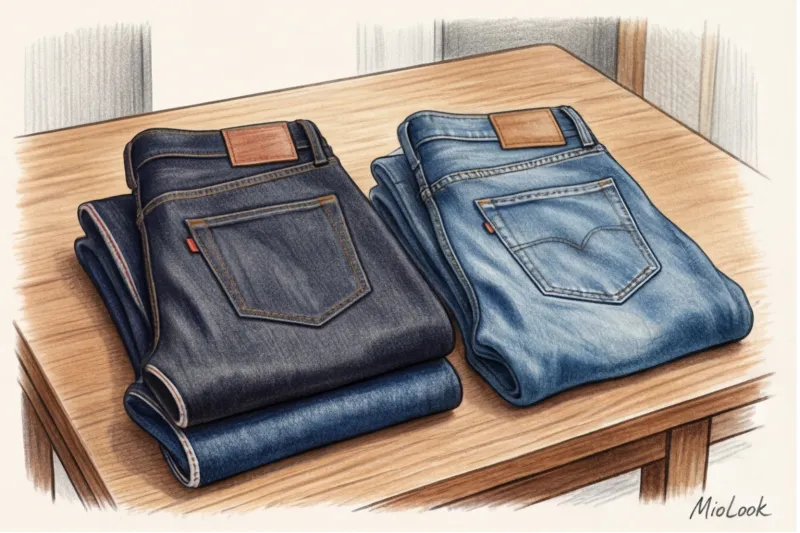
- Heavyweight denim (14+ oz). A stiff fabric (often Japanese selvedge denim). No elastane is used here.
Life hack from a stylist: How do you check the density in a store? Hold one leg of a pair of jeans up to a bright fitting room light. If you can clearly see the gaps between the threads, you're looking at thin denim (around 10 oz). If the fabric is dense, dark, and doesn't let the light through, it's a basic denim (12-14 oz).
Stylist checklist: testing jeans in the fitting room
It's all well and good to know the theory, but how do you put it into practice? I make every client take three mandatory tests before going to the checkout.
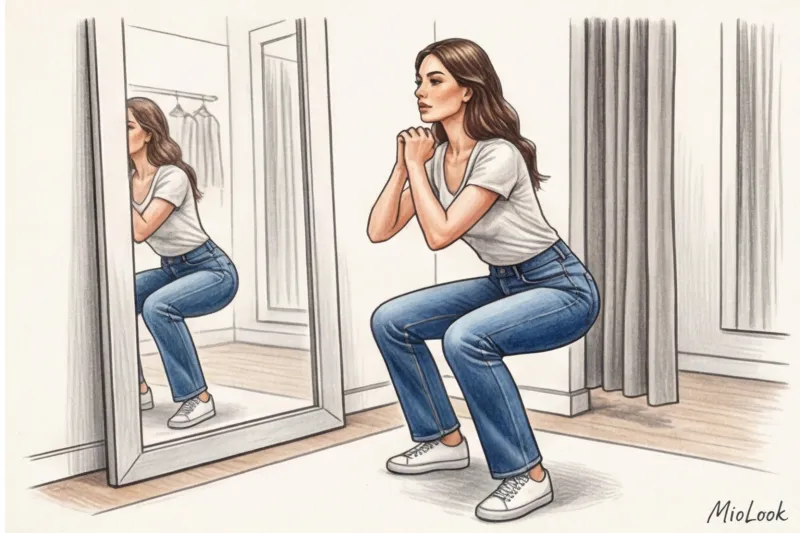
- Squat test. Put on your jeans, button them, and squat down (as deeply as possible). Hold this position for 10 seconds. Then stand up. Look at your knees. If there are stretched bubbles that don't disappear within 3-5 seconds, the elastane is of low quality or there's too much of it. Return the item to the shelf.
- Thigh pinch test. Try pulling the fabric on the outer thigh with two fingers and then release quickly. The fabric, with the right amount of quality stretch, should snap back into place with a soft, barely noticeable click, instantly smoothing out.
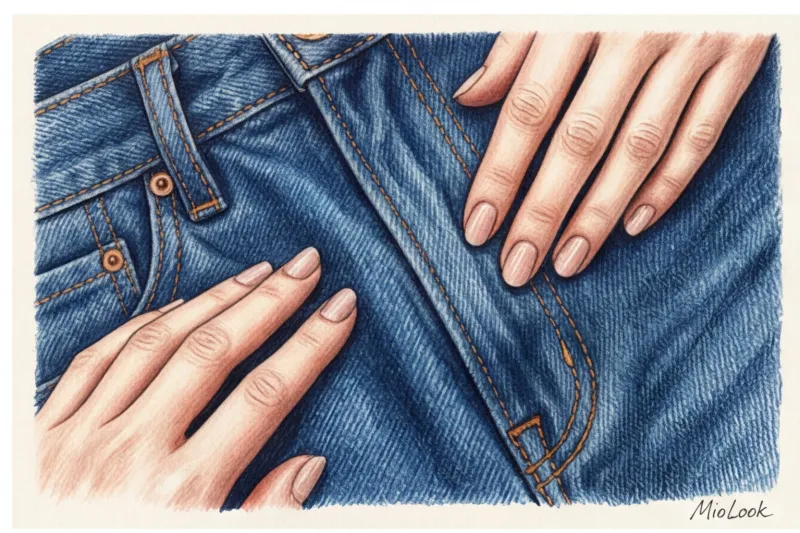
- Belt test. Slide your hand between the waistband and the waistband of your buttoned jeans. You should be able to fit exactly two fingers (index and middle). If your entire palm fits between your body and the fabric, and the jeans contain 2-3% elastane, after an hour of wear, they will slide down your hips, no matter how tightly they hug your buttocks now.
Results: Investing in the right team wisely
Let's summarize. There's no such thing as an ideal elastane level. 0% is status symbol, providing excellent shape retention and a corset-like effect. 1–2% is the golden standard for straight styles and comfortable office wear. 3–5% is a necessary measure exclusively for skinny jeans.
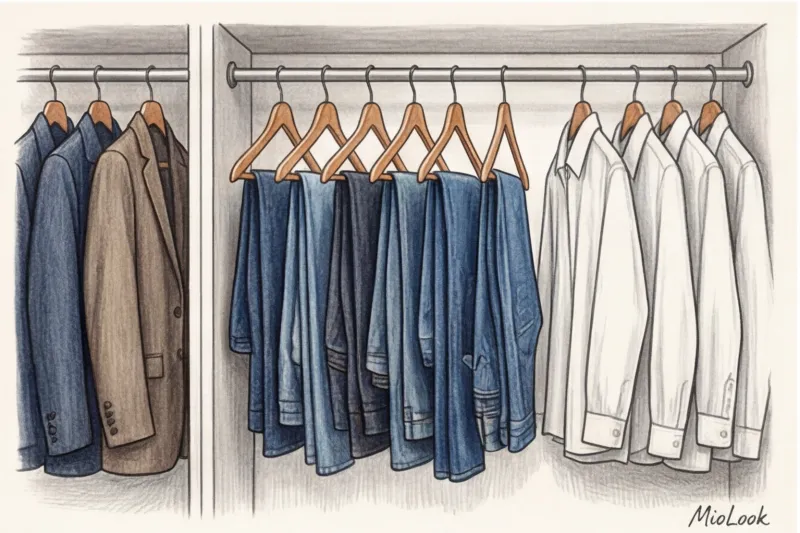
I always encourage my clients to consider their cost per wear. It's better to buy one high-quality pair of straight-leg jeans made of heavyweight denim (13 oz) with 1% elastane for €90 that will last you 3-4 years than three pairs of thin stretch leggings disguised as jeans for €30 that will end up in the trash after two months.
Tonight, when you get home, do a mini-audit. Pull out your favorite jeans from your closet—the ones that flatter your figure, and the ones you absolutely hate. Look at the ingredients. I'm sure you'll now understand exactly why some work for you and others don't. And to help you remember what to pair your perfect finds with, upload them to MioLook app , and let the AI stylist put together ready-made capsules for you every day.