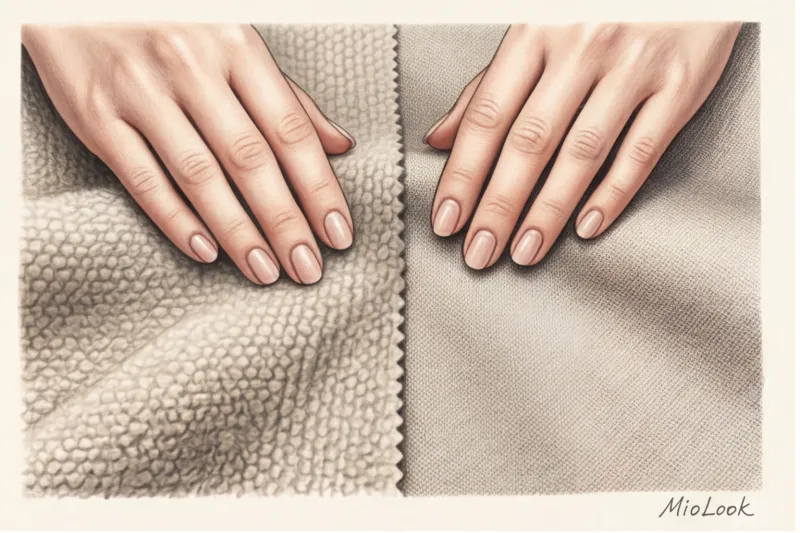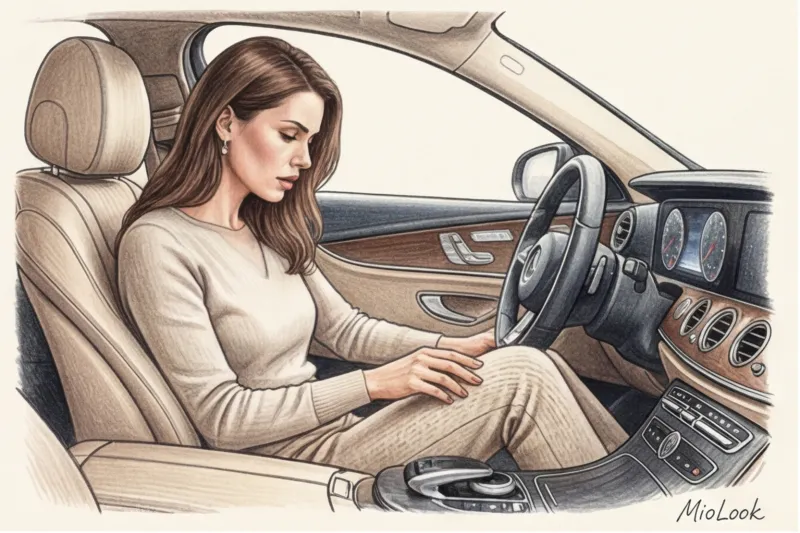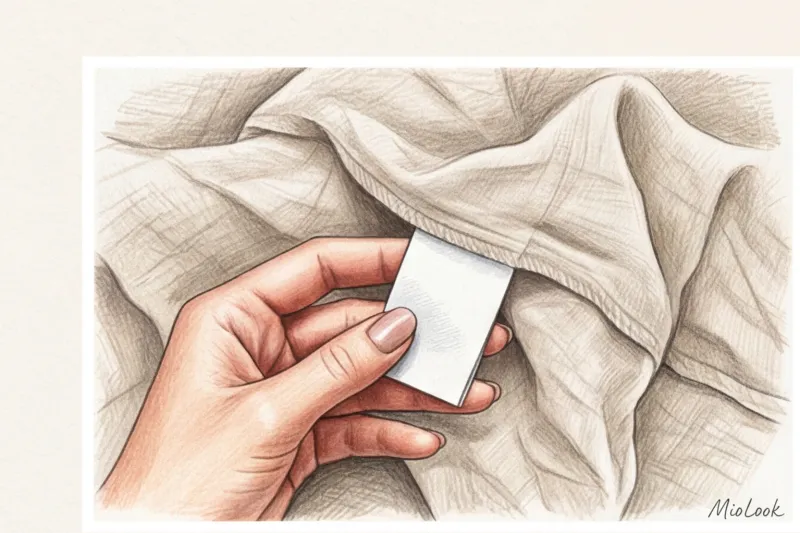
I remember a client of mine, a top manager at an IT company, calling me in a panic from the conference room restroom. She'd invested around €400 in a luxurious 100% linen pantsuit for an important presentation. It was a stunning piece with a complex cut. But after 40 minutes in a taxi and an hour sitting on the podium, the suit looked like someone had slept in it. The pants were covered in deep creases at the crotch, and the jacket had lost all its shape. It was then that we had to urgently salvage the situation, and the client learned her lesson forever: perfection fabric composition for clothing — this is far from always the notorious “100% natural”.
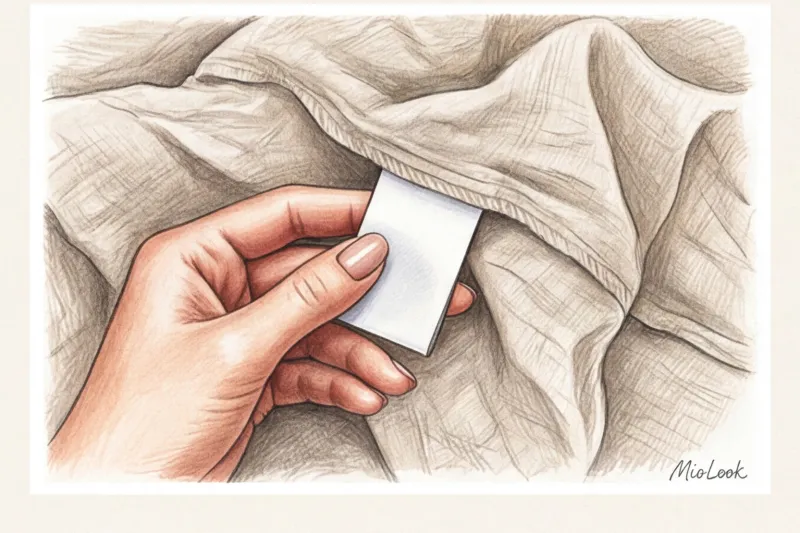
After 14 years of working as a stylist and sorting through hundreds of closets, I've come to a clear conclusion: smart synthetics (blends) aren't the enemy, but rather the "smart architecture" of a modern wardrobe. We explored the physics and chemistry of this process in more detail in our A complete guide to the pros and cons of synthetic fabrics Today, I want to give you specific, proven percentage formulas for various wardrobe items that ensure longevity and a luxurious fit.
The "100% Natural" Myth: Why the Ideal Fabric Composition for Clothing Has Changed
We all grew up with the 90s mentality: synthetics are cheap "glass" that suffocates the body, while natural fabrics are synonymous with quality. But technology has long since advanced. According to a report by a reputable organization Textile Exchange (2023) , modern innovative blends (mixed fabrics) are 2.5 times more wear-resistant than pure cotton.
The difference between premium 100% cotton and mass-market cotton is colossal. Premium brands use long-staple cotton, whose threads are smooth and durable. In the budget segment (€30–€80), brands save money by purchasing short-staple cotton. As a result, your "eco-friendly" 100% cotton T-shirt will become misshapen, sagging at the side seams, and covered in micro-holes after just three washes.
That's why I mercilessly toss stretched-out cotton T-shirts during every wardrobe cleanup. In today's world, blending is a tool for extending the life of a garment. Adding the right amount of elastic or reinforcing fibers transforms a fabric from fragile to functional.
Anatomy of Blended Fabrics: Golden Ratios for Different Types of Items
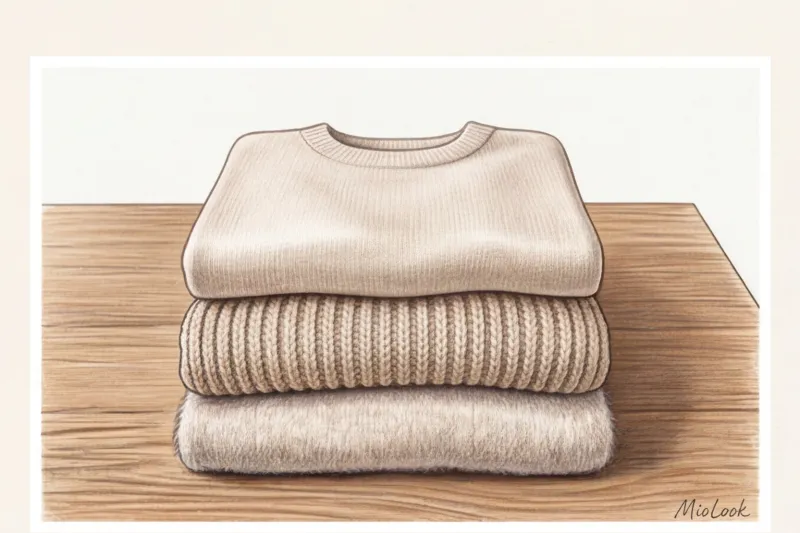
The biggest mistake when shopping is looking for a single "right" fabric composition for clothing. What's perfect for a summer top will be a disaster for a demi-season coat. The secret lies in the synergy of fibers: natural fibers provide breathability and tactile comfort, while synthetic fibers act as an invisible scaffold that maintains shape.
Below I provide the golden formulas that stylists use as a checklist in the fitting room.
Ideal knitwear: T-shirts, tops and long sleeves
A basic T-shirt should be thick (aim for a weight of at least 180 g/m²) and slightly stretchy. If you buy one without elastane, it's guaranteed to stretch out at the elbows and form a "bubble" around your stomach by the end of the workday.
- Stylist formula: 90–95% cotton (or viscose) + 5–10% elastane (aka spandex or lycra).
- Exception: Oversized, rigid-fit t-shirts with a voluminous finish. They don't require elastane, but the cotton should be truly heavy and dense, like men's denim.
Access to MioLook for €0.99 — one-time payment
A smart AI stylist will select the perfect look and help you digitize your new wardrobe with the right fabrics.
Get access — €0.99 onceStatus business suit: jackets and trousers
Many people are wary of polyester in suits, but it's your best friend if you don't want to iron your trousers after every use. In the right proportions, polyester prevents stretched knees, and in a jacket, it helps maintain that crisp shoulder line that elevates a look.
- Stylist formula: 50–70% wool + 20–40% polyester (or high-quality viscose) + 2–5% elastane for freedom of movement.
Basic sweater without pilling
Acrylic is the worst enemy of any winter wardrobe. It offers absolutely no warmth, creates static electricity, and quickly pills. However, an all-wool sweater is often itchy and can shrink up to two sizes with the slightest mistake in washing. To strengthen the yarn, manufacturers add polyamide or nylon.
- Stylist formula: Wool, merino or cashmere (at least 60%) + up to 20–30% polyamide/nylon + maximum 10% acrylic (or better yet, none at all).
Synthetics, Artificial Fabrics, and Naturals: A Stylist's Cheat Sheet
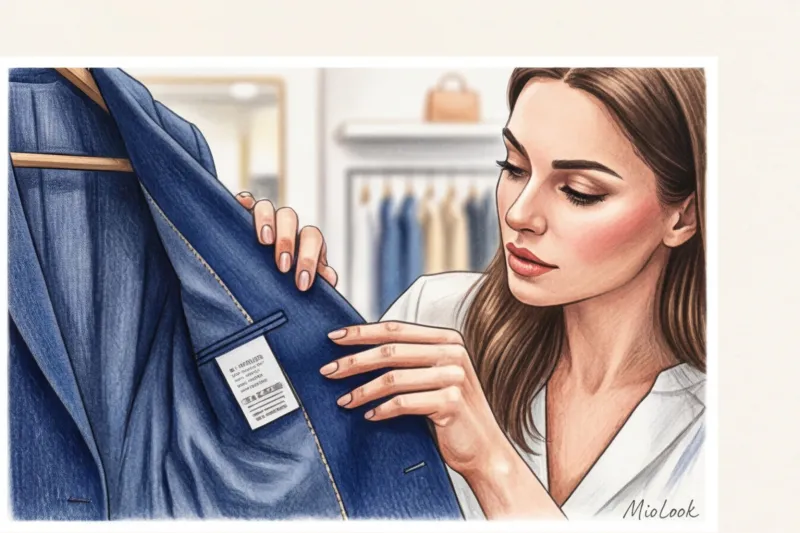
One of the biggest confusions I encounter every day is the difference between synthetic and artificial fabrics. According to standards WGSN (International Trend Forecasting Agency), these are two completely different categories, and confusing them means depriving yourself of amazingly comfortable things.
"Viscose, Tencel, Modal, Lyocell, and Cupro are NOT synthetics. They are artificial fibers created from natural raw materials (wood pulp, eucalyptus, beech). They possess all the properties of natural fabrics, but are man-made."
Their main advantages: they breathe better than regular cotton, flow luxuriously, and visually replace expensive silk. A high-quality Tencel blouse can cost €80–120, and it's worth every penny. The only limitation is that these fabrics require a more delicate wash (no higher than 30 degrees Celsius), as the cellulose fiber becomes brittle when damp.
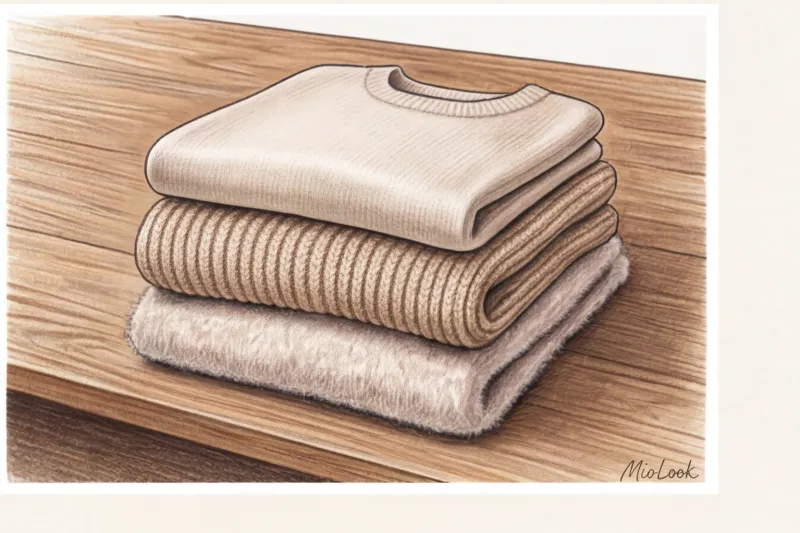
True synthetics are petroleum derivatives (polyester, polyamide, elastane, acrylic). Their function in fabric, as we've already established, is reinforcement and shape retention.
How does fabric composition affect the fit of clothing?
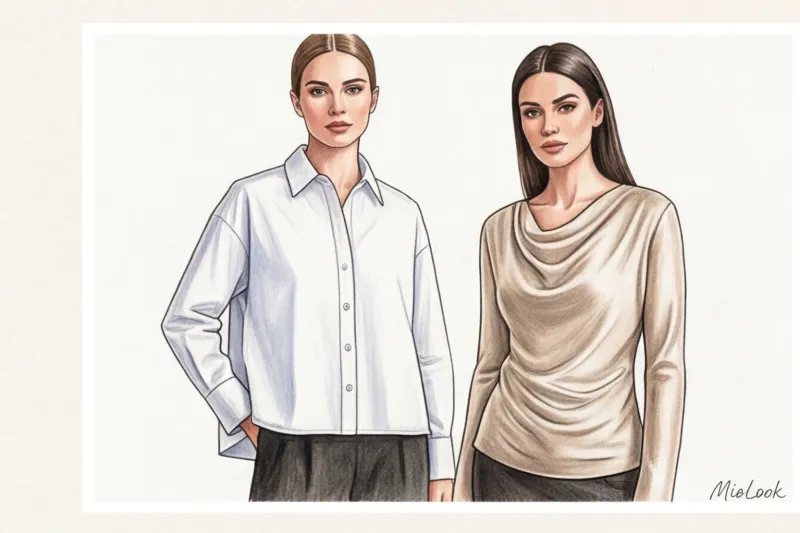
The composition of a garment directly dictates how it will interact with your body shape. Stiff, 100% natural fabrics (cotton, linen, thick wool) are unflattering. If you have a full bust or pronounced hips, a stiff, straight-cut cotton shirt won't flatter your figure but will stretch between the fullest parts, creating a boxy silhouette and visually adding 5-7 kg.
I recently worked with a plus-size client who complained that all her shirts made her look bulky. We simply swapped out the stiff poplin for a 50/50 cotton-modal blend. The flowy fabric instantly provided a soft fit, highlighted her waist, and visually reduced her size.
The secret to luxurious looks lies in the drape effect—the way the fabric falls under its own weight. Viscose and blended fabrics have a high fluidity, making them ideal for contouring the figure.
Your perfect look starts here
Join thousands of users who look flawless every day with wardrobe analysis from MioLook.
Get access — €0.99 onceCommon Mistakes When Reading Labels: The Lining Trap
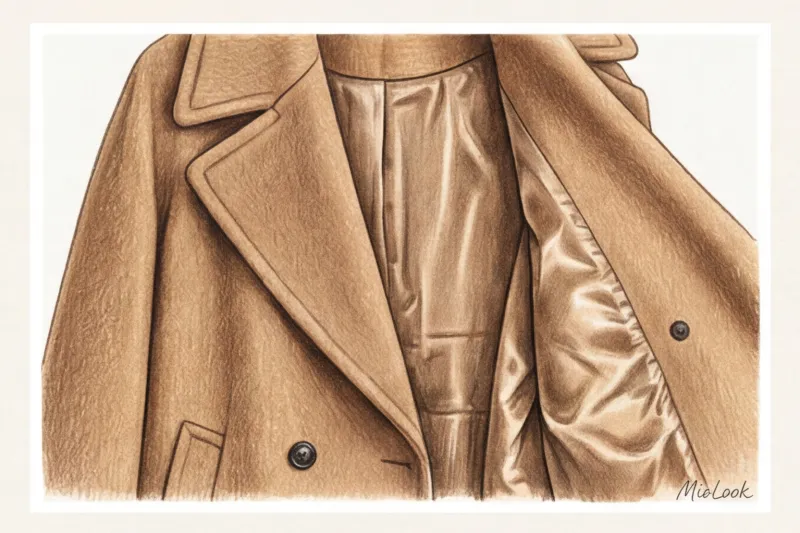
Do you know how stylists check the quality of outerwear? We always start with the inside. The most annoying trap for a buyer is buying an expensive coat (€300–€500) with a luxurious 100% wool or cashmere outer shell, but with a 100% polyester lining.
What happens in this case? The wool on the outside tries to breathe and regulate your body's heat exchange. But the thick layer of polyester between your body and the wool acts like a plastic bag. The result is a harsh greenhouse effect: you sweat on the subway, step out onto the frosty street damp, and instantly freeze.
A rule of thumb in the mid-up and premium segments is a lining made of viscose, cupro, or acetate. They are smooth, durable, and highly breathable.
Another blind spot is greenwashing. Eco , Organic Cotton or Recycled Polyester Labels are heartwarming, but they offer absolutely no guarantee in terms of durability. Recycled cotton, for example, has even shorter fibers than regular cotton, meaning the item will deteriorate faster.
Checklist: How to check fabric quality before buying it in a store
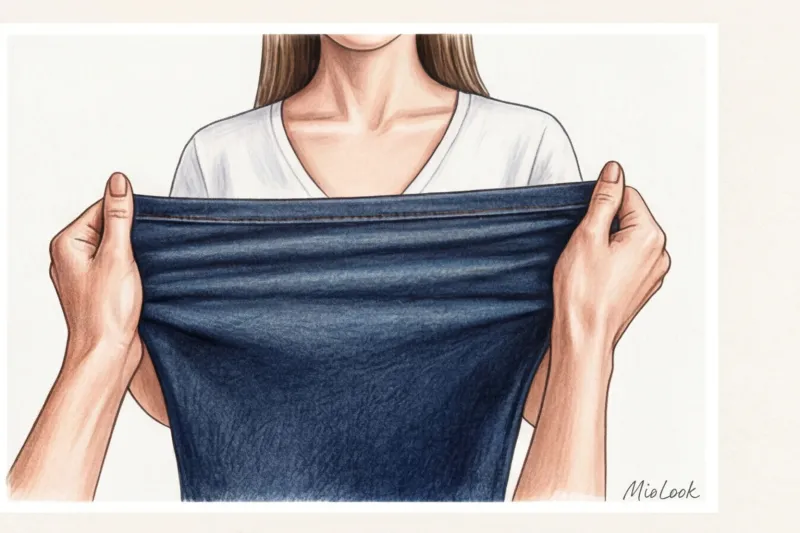
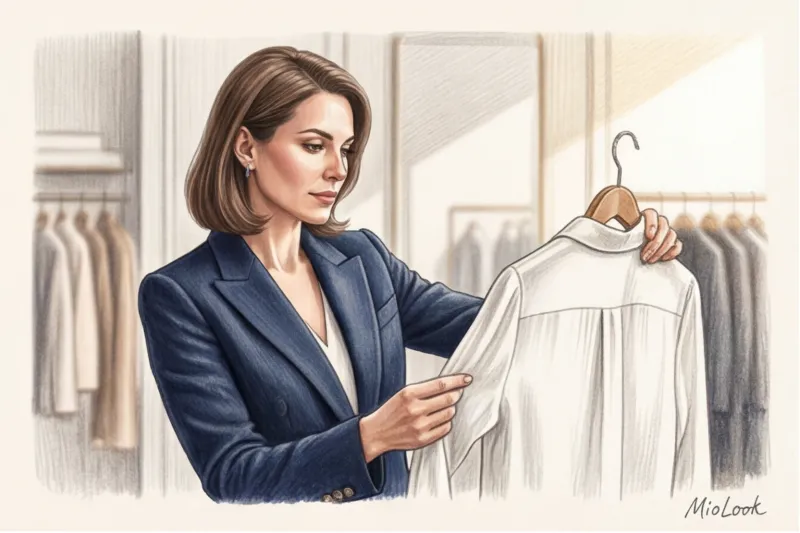
Even if the garment's fabric composition on the tag is perfect, the manufacturer may have used cheap materials. Before taking your item to the checkout, perform this quick physical test right in the fitting room:
- Crease test. Firmly squeeze the edge of the fabric (preferably the hem or sleeve) in your fist, hold for 10 seconds, and then release. If the fabric remains crumpled like paper, you'll be in for a daily steaming ordeal. If the wrinkles disappear almost immediately (thanks to the addition of synthetic fibers), go for it.
- Elasticity test (for knitwear and denim). Stretch the fabric out to the sides a couple of centimeters with both hands and release quickly. A high-quality elastane blend should instantly return to its original state. If a "bubble" or wave remains, the item will quickly lose its shape.
- Visual translucency test. Hold the fabric up to the fitting room lights. If the weave is loose, uneven, or knotted (and this isn't the design intention), the threads will fray quickly.
- Tactile test. Rub the fabric between your fingers. If it makes a characteristic "dry squeak," it's made of low-quality polyester or acrylic, which will quickly pill.
A smart wardrobe starts with the right formulas: results
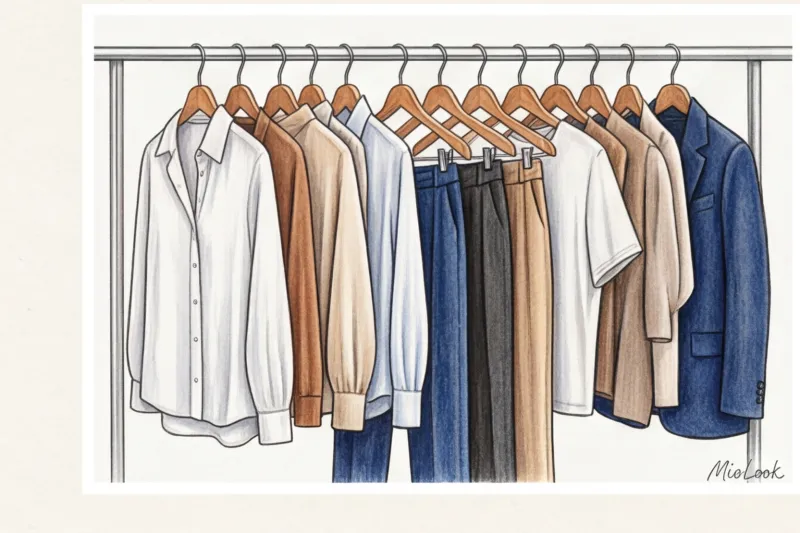
Let's stop fearing blended fabrics and start using them to our advantage. The main architectural rule of a smart wardrobe is this: natural and synthetic fibers (viscose, Tencel) should be worn close to the body, as a base layer; blends with a balanced proportion of synthetics should be used for outer layers, trousers, and jackets where shape is essential.
Investing time in studying compositions saves you huge budgets on endlessly replacing faded T-shirts and stretched-out jumpers. And if you want to tidy up your closet, try digitizing your best pieces with Smart wardrobe features in MioLook — artificial intelligence will help you create sets from them in one click.
Remember: you control your clothes, not them you. And knowing how to read a label is your primary control panel for the quality of your style.