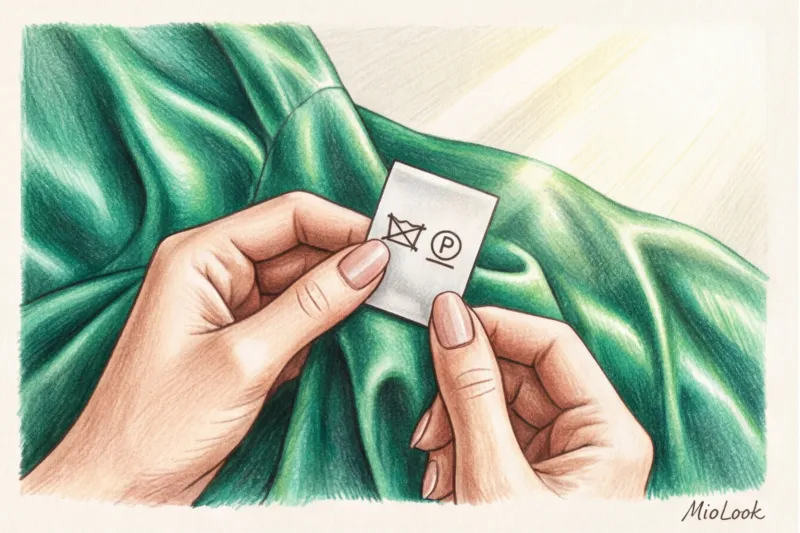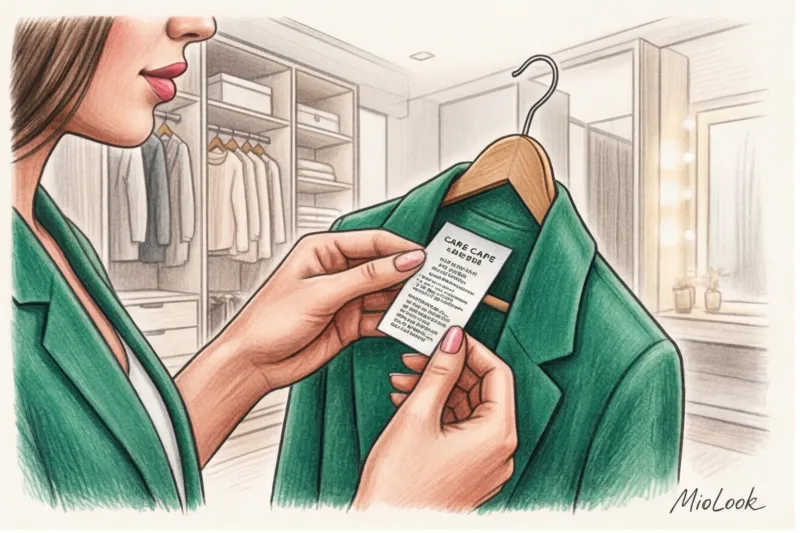
I remember that call. One of my clients was literally sobbing on the phone before an important conference. Her perfect emerald Zara blazer, made of thick polyester (costing around €120), had been turned into a cheap, shiny piece of rag. The cause? One light touch of a hot iron to the lapel without a press. The fabric had microscopically melted, leaving a shiny stain that was impossible to remove.
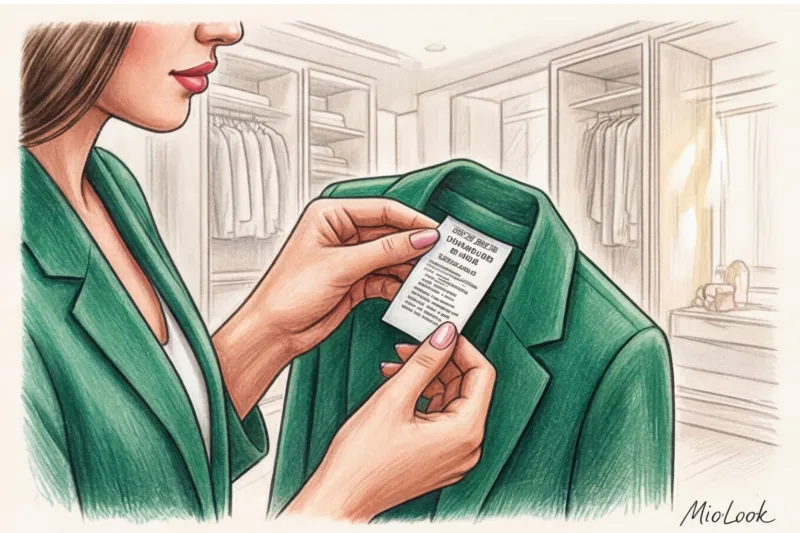
We have already talked about polymer physics in more detail in our A complete guide to the pros and cons of synthetic fabrics But today I want to talk about practice. The question is, How to wash synthetics , occurs to eight out of ten of my clients while sorting through their wardrobes. And most often, I see two extremes: either they obsessively hand-wash clothes in ice-cold water, or they throw them into the drum at 60°C with cotton towels and douse them with a liter of fabric softener.
Over 12 years of working as a stylist and colorist, I've come up with a formula: the durability and visual "value" of a garment depend 80% on care and only 20% on the brand. Let's explore how to care for high-tech fabrics so they last for years, preserving their original color and cut.
Why modern synthetics require a silk-level approach
Forget the "wooden" tracksuits of the 90s. Modern fashion is built on high-tech blends. Today, an architectural top from COS or trousers from Massimo Dutti in the €80-€150 range can look more expensive than natural silk. Cupro, modal, and viscose with added polyester for shape stability—all require delicacy.
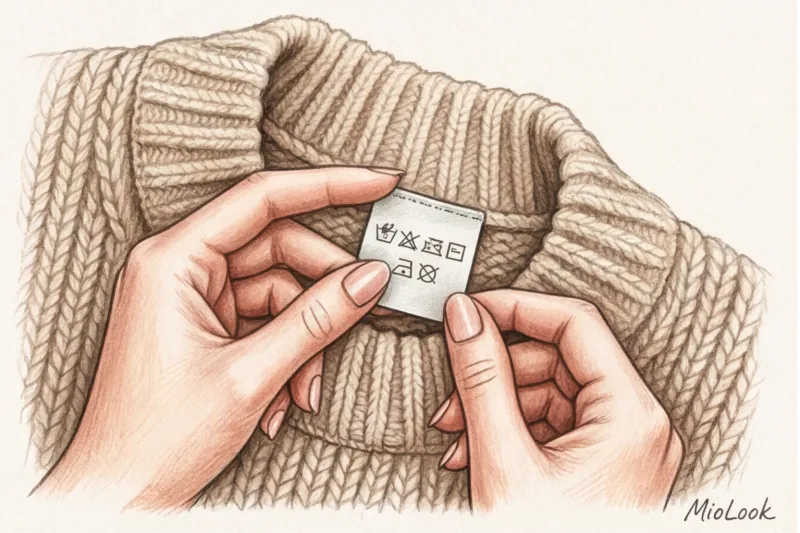
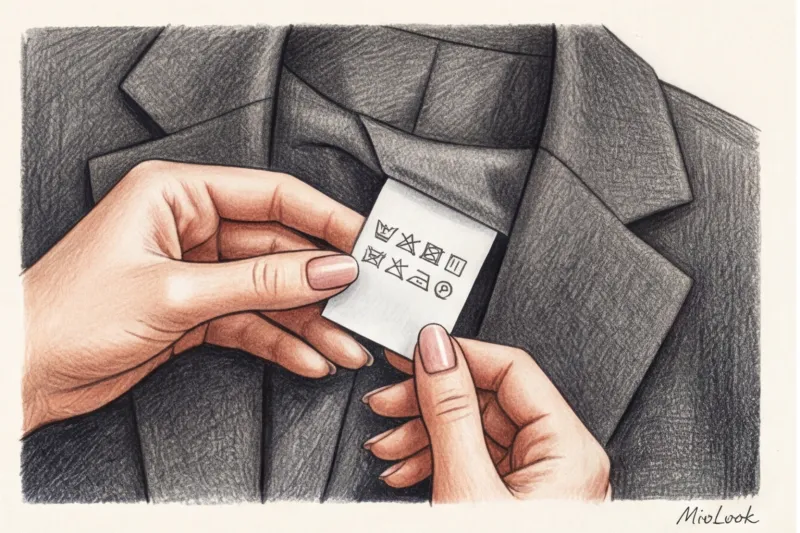
I always tell my clients: if you ignore washing symbols on clothes , you're playing Russian roulette with your wardrobe. According to the international textile labeling standard (ISO 3758), synthetic fibers have completely different wear resistance when wet than cotton. Natural fibers absorb water and swell. Synthetics repel water, but their threads can become irreversibly deformed under heat and friction.
Access to MioLook for €0.99 — one-time payment
A smart AI stylist will select the perfect look and help you digitize your wardrobe so nothing gets lost on the back shelves.
Get access — €0.99 onceInstructions: How to wash synthetics in a washing machine without losing quality
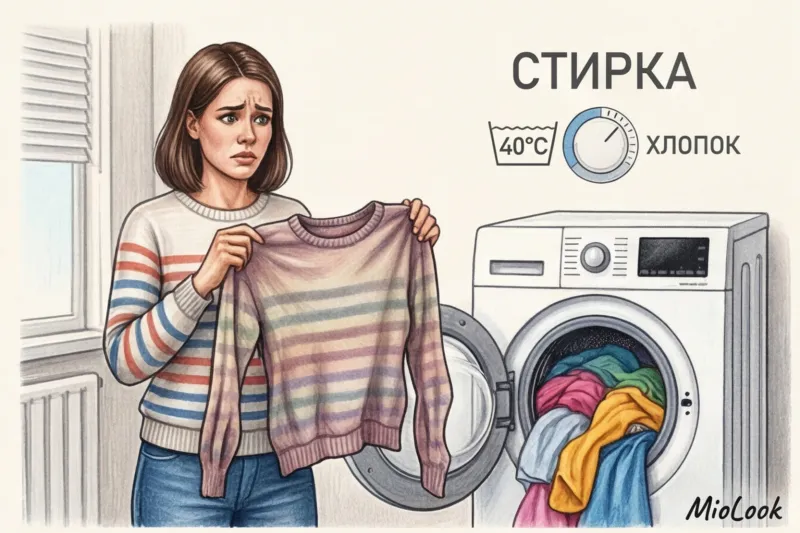
A basic rule to remember: 30°C is the gold standard. The maximum is 40°C for heavily soiled items. Anything higher triggers thermal deformation. The threads begin to lose their elasticity.
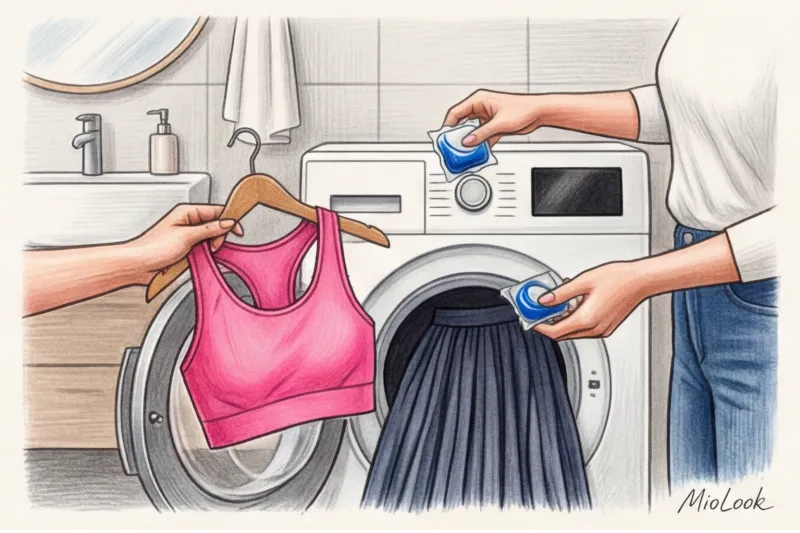
- Spin speed: 1000 RPM or more will turn your garment into a wrinkled rag, and it's downright deadly for elastane. Set it to 600, maximum 800 RPM. The fabric will release excess water, but the fibers won't tear.
- Sorting: Don't wash smooth blouses with jeans. Heavy denim with metal zippers acts like sandpaper on delicate polymers.
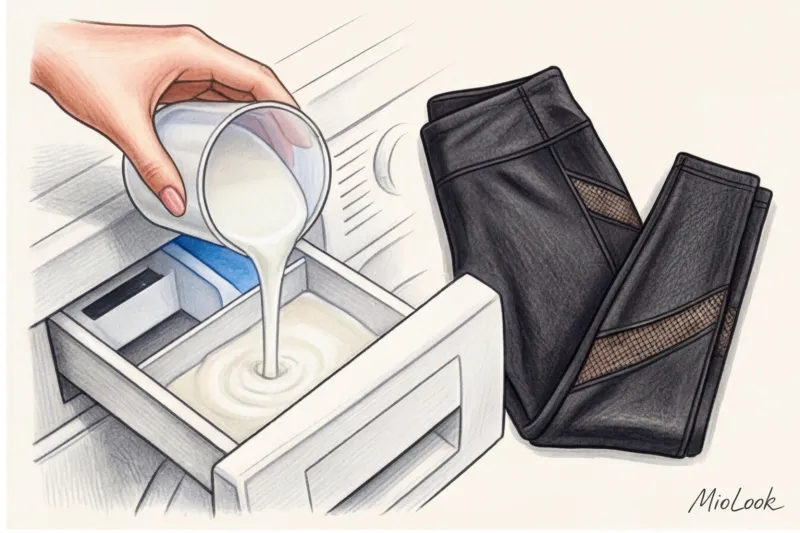
- Product format: Liquid gels only. Dry powder granules don't always dissolve at 30°C and leave micro-scratches on the smooth surface of synthetics, causing the fabric to become dull and faded over time.
Polyester, Nylon, and Acrylic: The Nuances of Different Fibers
Not all synthetics are created equal. When washing, consider the nature of the specific material:
Polyester It doesn't shrink, but it's highly oleophilic—it attracts foreign fats and dyes from the water like a magnet. Therefore, the rule of strict color sorting is critical here.
Elastane and spandex (Even if they're only 5% of the composition) are terrified of high temperatures. Boiling water will cause them to lose their springiness, and your skinny jeans will forever turn into baggy harem pants.
Acrylic — a champion at reducing pilling. Wash it inside out and in special mesh bags to minimize friction in the drum.
The Biggest Mistake: Why Fabric Softener Kills Synthetic Items
This is my favorite counterintuitive fact that 90% of women don't know. Advertising has taught us: if you want softness, use conditioner. But this only works on porous natural fabrics (cotton, linen).
I had a practical example. I bought two identical basic viscose-elastane T-shirts from H&M (about €15 each). I washed one 10 times with regular washing gel, the other with a generous amount of fabric softener. The second T-shirt stretched a size, lost its shape, and developed a strange musty smell.
"The surface-active agents (surfactants) in the fabric conditioner coat the smooth polymer fibers with a hydrophobic film. This film disrupts the fabric's breathability, breaks down the elastane bonds, and literally traps bacteria inside, creating an ideal environment for unpleasant odors."
According to a 2022 study by the Hohenstein Institute, fabric softeners reduce the moisture-wicking properties of sportswear by 70% after just one wash. Simply eliminate them, and your clothes will thank you.
Your perfect look starts here
Join thousands of users who look flawless every day with MioLook. Plan your looks in advance.
Get access — €0.99 onceHow to dry blended fabrics correctly to avoid creasing
Machine-drying high-quality synthetics is a one-way ticket. Heat shrinkage and static electricity will ruin the fit faster than you can press pause.
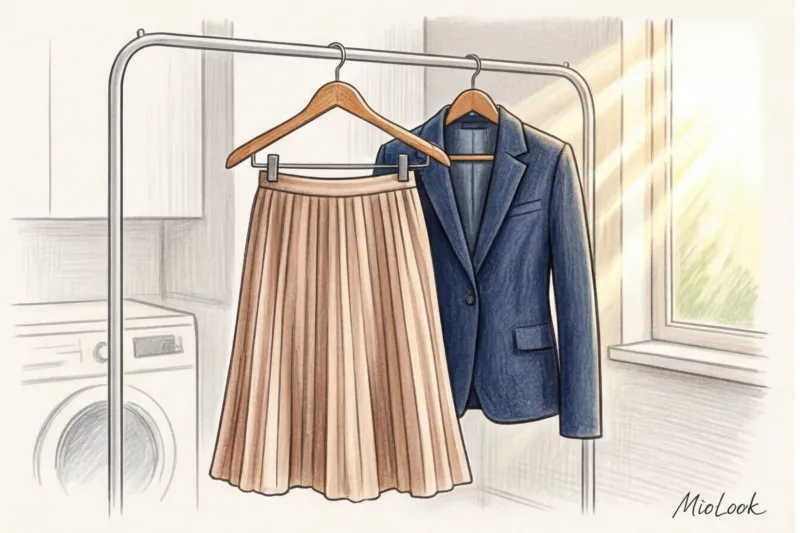
I use a professional life hack from photo shoots: hanger rule Remove the damp blouse or dress from the machine (remember, the spin cycle was set to 600 rpm, so the item wasn't overdried), hang it immediately on a good, wide hanger, and smooth out any seams and creases by hand. Gravity and residual moisture will do the rest of the ironing. As it dries, the fabric will naturally return to its desired shape.
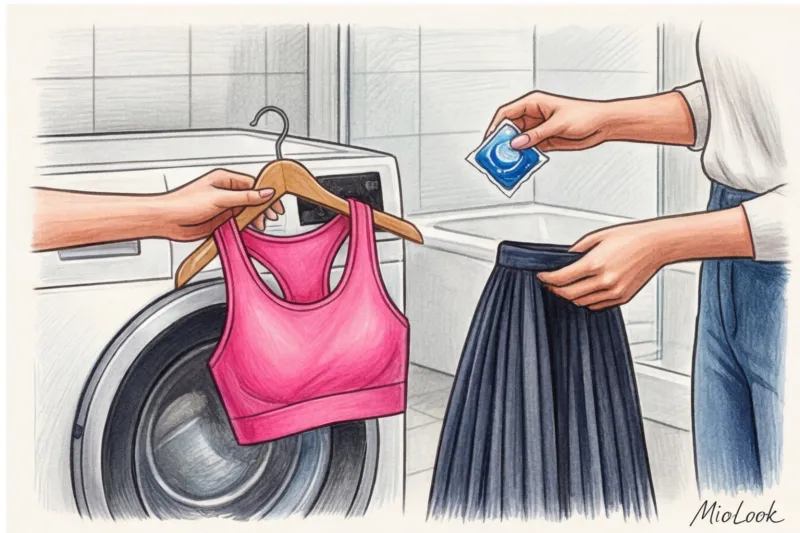
When it does NOT work: Heavy synthetic sweaters (especially those made of acrylic or wool) should never be hung to dry—they will stretch under their own weight. Dry them flat on a towel.
Be careful, it's hot: how to iron synthetics without leaving a "cheap shine"
Let's return to the story of the ruined Zara blazer. What are "glazes" (shiny spots) on polyester? These are areas of the fabric where the fibers have literally melted and flattened under the influence of heat.
The physics of the process are simple: polyester begins to deform at a temperature of 150°C, and melts at around 250°C. A standard iron on the "Cotton" setting easily reaches 200°C. Therefore, if you must use an iron, follow two ironclad rules:
- Heating mode: strictly 1 point (usually marked as Silk/Synthetic).
- Iron the reverse side only. If you need to iron the right side (for example, a complex collar), use a dry cotton ironing pad (a piece of white cloth).
Iron or steamer: which one to choose for blended fabrics?
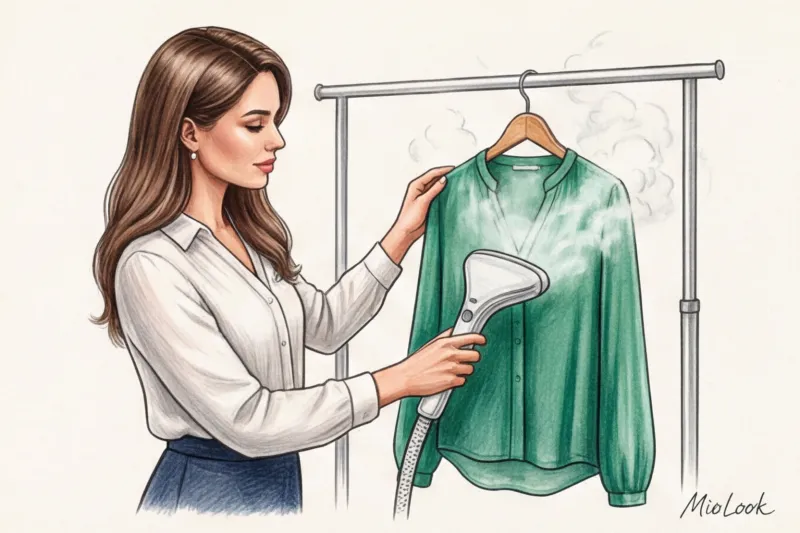
Honestly? Put away the iron. A steamer is a modern wardrobe's best friend. Steam reaches a temperature of approximately 98-100°C, making it completely safe for all polymers. A steamer doesn't flatten the fibers, but rather relaxes them. The secret to perfect steaming: gently stretch the fabric downwards with your free hand, and move the steamer nozzle across the material, keeping it close to the fabric.
Ready to get started?
Try MioLook's free plan—no commitments required. Upload your items and let the AI create daily capsules.
Get access — €0.99 onceSOS Guide: How to Remove Sweat Odor from Synthetic Fabric
"Why does my expensive €100 blouse smell like I ran a marathon after one stressful day at work?" is a common question during consultations. As I mentioned above, polyester is oleophilic: it repels water but loves oils. Sebum and bacteria penetrate deep into the fibers, and a regular wash at 30°C won't remove them.
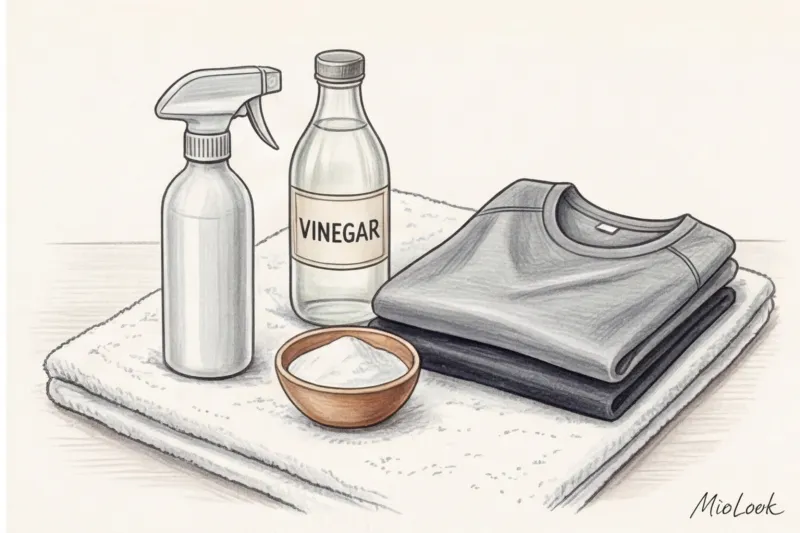
There's no point in pouring perfume on something—it'll create a lethal cocktail. Boiling it will ruin the item.
Working method: Vinegar bath
You'll need regular white table vinegar (9%). Make a solution: 1 part vinegar to 4 parts cool water. Soak the affected area (usually the armpits) for 30-40 minutes before washing. The acid will break down the bacteria's lipid layer and dissolve sweat salts. Then wash the item as usual.
When it does NOT work: If the blouse is embroidered with sequins, has metallic threads (lurex), or delicate hardware, the acid may cause oxidation of the metal. In this case, use only specialized sports enzyme washing gels (these are readily available in the €10–€25 price range).
Stylist's Checklist: 5 Golden Rules for Caring for Polyester
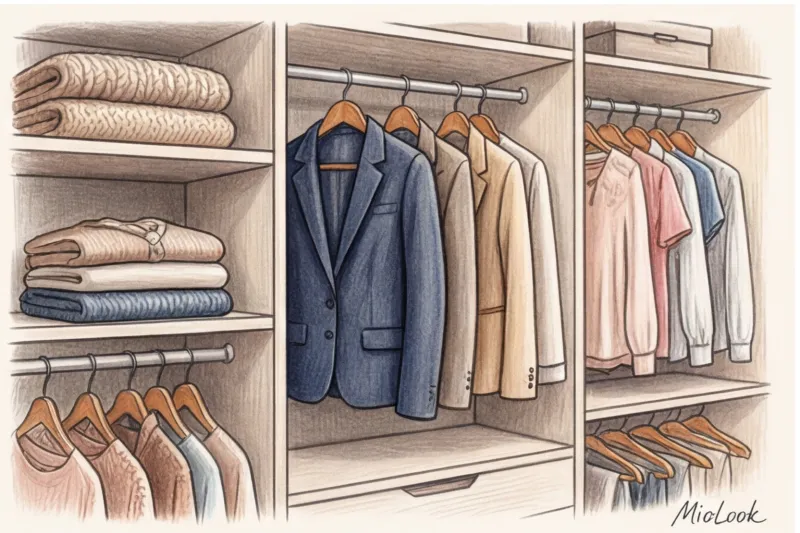
Within the framework of the concept durable wardrobe Save this checklist. By following these 5 simple steps, you'll triple the life of your favorite items:
- Sort by texture. Thin to thin, heavy to heavy.
- Reduce the degree and speed. 30 degrees and 600 rpm is the perfect setup.
- Fire the air conditioner. Replace it with a quality liquid gel.
- Buy laundry bags. Wash thin blouses and items with decoration only in them.
- Switch to steam. Replace your iron with a handheld steamer to say goodbye to shiny spots and burnt holes.
High-quality synthetics aren't a compromise, but a conscious choice in favor of complex shapes and interesting textures. Understanding the chemistry of the material is key. Stop boiling your clothes and treat them with gentle care—you'll be surprised how much more sophisticated your everyday look will be.
", "tags": [ "clothing care", "washing synthetics", "polyester", "stylist tips", "long-lasting wardrobe", "washing mistakes" ] }