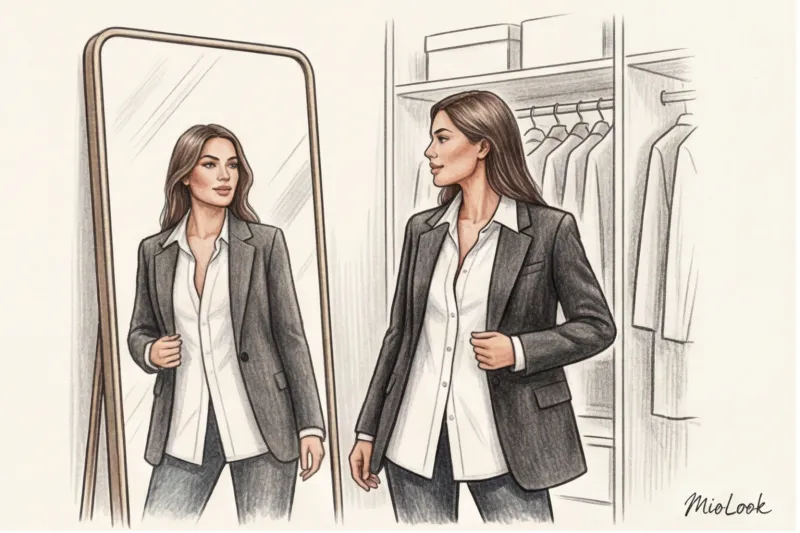
What is proper layering (and why "cabbage" doesn't work anymore)
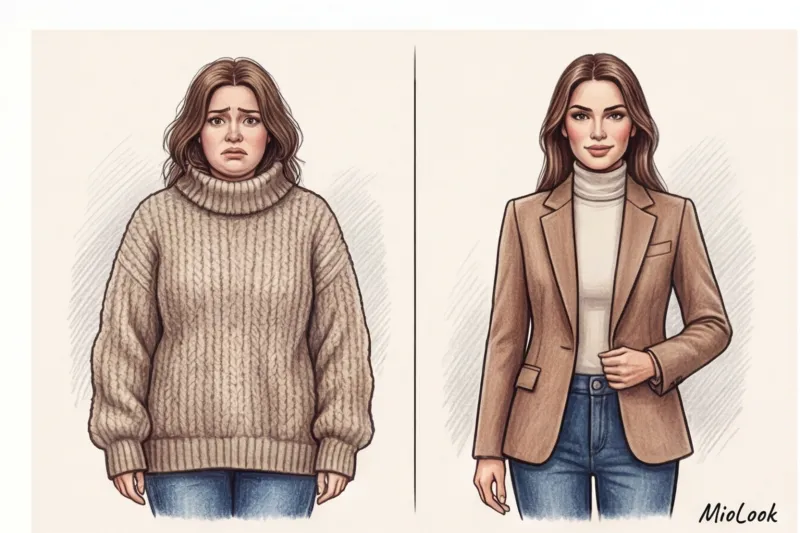
Remember winter circa 2012? To cover up and stay warm, we'd throw on a cotton T-shirt, then a thick turtleneck, then a thick, textured sweater on top, and finally, try to squeeze this "pie" into a tight coat. The result? An extra five pounds, restricted movement, and a persistent feeling of being a cabbage. Forget that nightmare. Today. layering in clothing It's not about surviving extreme cold, and it's definitely not about trying to hide behind mountains of fabric. It's about pure silhouette architecture.
In my experience as a stylist, the approach to layering has changed dramatically. We've moved from bulky utilitarianism to a delicate sculpting of proportions. The main catalyst was a quiet revolution in the textile industry. Modern, high-tech fabrics have permanently replaced thick, unwieldy sweaters, opening up new styling possibilities.
In professional circles we now use the term micro-layering According to research by smart textile labs (such as the Japanese company Toray, which creates fabrics for global brands), modern base layers with temperature-regulating properties are less than 1 millimeter thick. This is a complete game-changer. You can layer three layers, and their combined bulk will be less than that of a classic wool sweater from the last decade.
Over 12 years of working with clients' wardrobes, I've learned something important about the psychology of comfort. The desire to cover up your figure is often driven by a natural need for security. But well-designed layering allows you to feel protected, not "hidden" in a shapeless cocoon. We create stylish armor that highlights your best features and subtly, using optical illusions, draws the focus away from areas you're not yet ready to highlight.
The Anatomy of a Layered Look: The Three-Layer Rule
Let's break down this architectural project in detail. The classic formula taught in styling institutes relies on the three-layer rule. And there are no random elements here—each layer has its own specific function:
- Base layer: This is your foundation. Its main function is to adhere to the body, wick away moisture, and create a neutral base. Ideal options include long sleeves made of Tencel, bodysuits made of micromodal, or ultra-light cashmere (like those from Intimissimi or Falconeri).
- Mid layer: It's responsible for temperature control and, crucial for style, for adding interesting texture. This is where thin button-down cardigans, suit vests, and chambray or heavy cotton shirts come into play.
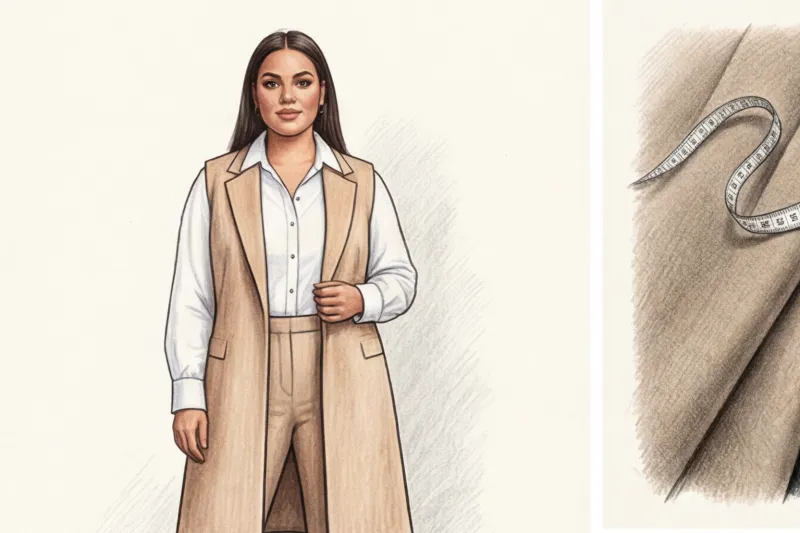
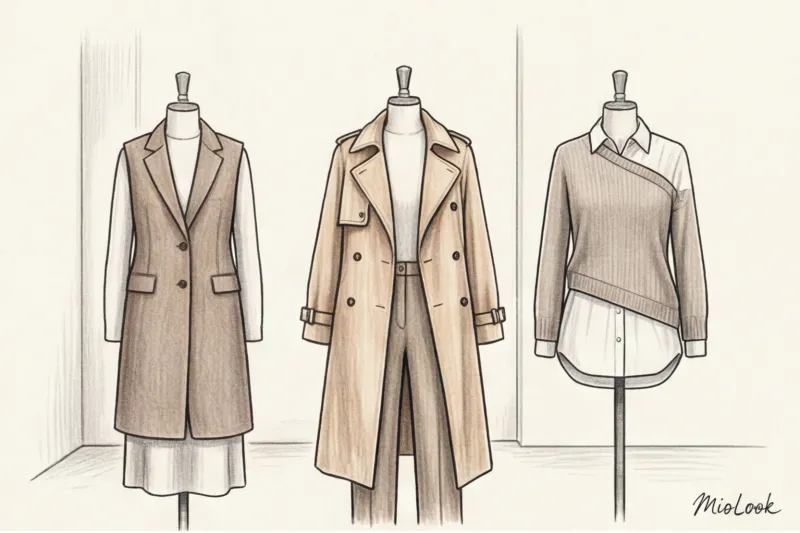
- Structural layer (Outer layer): The most important element for visually shaping your figure. It creates a rigid shape, defines a frame, and establishes those vital vertical lines. These include jackets with a defined shoulder line, trench coats made of thick gabardine, shirt jackets, or straight-cut coats.
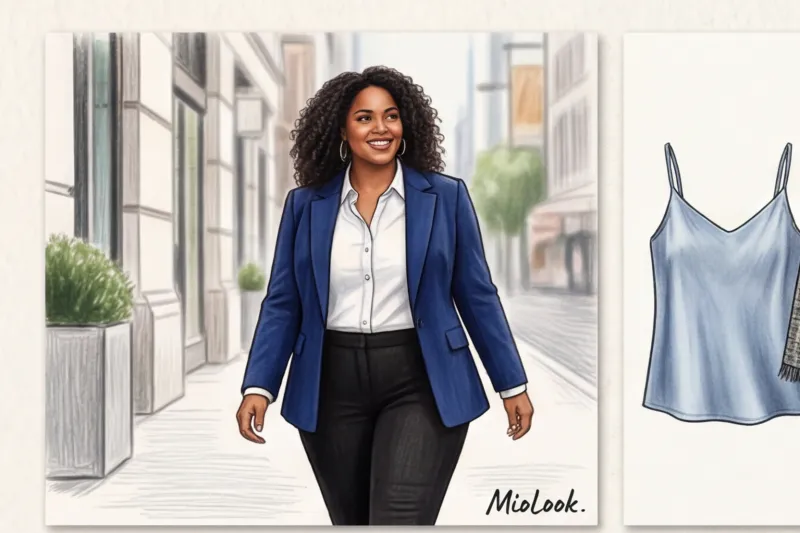
Putting together the perfect three-layer combination can be challenging, especially if your closet is in disarray. To avoid buying a fifth cardigan that won't fit anywhere, I recommend using technology. After loading the base into MioLook app , you can visually estimate how a thin turtleneck will look under a structured vest and jacket by simply dragging and dropping items on your smartphone screen. And the right ones accessories for office style will help to conceptually complete this complex ensemble.
A common mistake: oversized clothing for the sake of camouflage (busting the myth)
Let's move on to the biggest fashion myth I have to debunk at every other consultation: "To hide your curves, you need to buy three sizes too big." Oversized clothing for the sake of concealment is a tricky trap. Why does baggy clothing make you look bigger 90% of the time?
It's all about simple physics and the laws of draping. There's an immutable law of fabric fall: fabric always falls strictly vertically downwards, from the widest point of your figure (be it a full bust, a protruding belly, or voluminous hips). If you're wearing a shapeless tent sweater, the fabric won't delicately cling to your waist—it will fall straight from your chest, turning your silhouette into a monolithic rectangle. The human eye is lazy; it draws the rest of your figure from the outermost points of the garment, so you visually fill in all that extra volume.
The secret to perfect layering balance is this: if one layer of your look is voluminous, the second should be structured or semi-fitted.
This formula works flawlessly. If you're wearing a loose shirt as a second layer, the basic top underneath should hug your body. If you're layering a relaxed, oversized trench coat, opt for a neat, put-together silhouette inside (for example, a turtleneck and straight-leg jeans). By playing with contrasting volumes, you can maintain a feminine shape, cover your figure, and still look a couple of sizes slimmer.
Layering Formulas: How to Cover Your Figure While Maintaining a Feminine Silhouette
Forget the idea that extra fabric always adds weight. According to research by the Institute of Color and Form (2023), the human brain doesn't perceive the actual physical dimensions of the body, but rather the lines and geometry we create with clothing. This is the real mathematics of styling: we use layers in clothing not to cover ourselves up shapelessly, but to strategically shape specific areas.
Last month, a client named Anna, a top manager at an IT company, contacted me. Her main stylistic request sounded familiar: "I want to wear comfortable, covered pieces, but my lack of a defined waist makes me look completely boxy in any layered outfit." The solution turned out to be mathematically precise. We took a basic knit midi dress, which Anna had previously avoided, and added a long, straight-cut suit vest over it, leaving it unbuttoned. Two sharp vertical lines on the vest's lapels instantly defined the waist, visually trimming off any excess volume on the sides.
The main rule that 90% of women break when layering is dividing the figure in half (the 1/1 ratio). If your top layer ends exactly at mid-thigh and the bottom layer ends at the ankle, you visually shorten your height and widen your silhouette. The ideal formula is based on the golden ratio: 1/3 to 2/3 proportion rule For example, a cropped, structured jacket (taking up 1/3 of the figure) and wide, high-waisted palazzo pants (2/3). Or, conversely, a long, thick trench coat (2/3) worn over a top with jeans, the inner edge of which divides the body in a 1/3 to 2/3 ratio.
Abdominal and waist correction: the magic of vertical lines
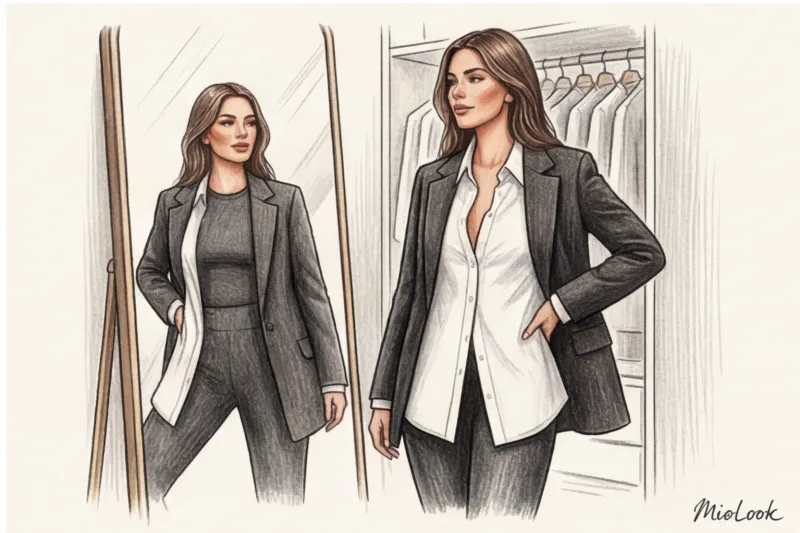
The belly is the most common area people try to hide behind shapeless robes. But total oversize clothing can actually work against you, turning your figure into a massive ball. The secret is to create the illusion of an elongated rectangle within your silhouette.
When clients digitize their closets with a smart wardrobe MioLook , we first look for the "right" contrasts. We put on a light base layer (for example, a silk T-shirt or a thin turtleneck), and then a dark, unbuttoned jacket, a thick-knit cardigan, or a structured shirt. The lapels of the top layer form two slimming vertical lines. Onlookers only notice the light strip of fabric visible between the lapels of the jacket. Visually, you lose up to 5-7 centimeters in waist circumference.
Another powerful tool is asymmetrical hems and diagonal overlaps. Sweaters with side slits, shirts tucked in only at the front (the famous French tuck), or wrap tops draw the eye away from the horizontal line of the stomach, forcing the eye to move diagonally.
Never end the top layer at the widest part of your waist or stomach. The horizontal hemline acts as a highlighter. Drop the length 5-10 centimeters below the problem area or wear layers that end just under the bust.
Hip Shaping: Playing with Lengths and Accents
When the goal is to balance voluminous hips (the classic pear-shaped figure), we apply the architectural principle of visual weight transfer. The entire layered design should be concentrated on the upper body, leaving the lower body as minimalist as possible.
Add accents around your face and décolleté: a peek of the collar of an Oxford shirt under a cashmere V-neck sweater, a sweater draped over your shoulders, or a textured scarf. This instantly draws attention away from your lower body.
The most critical mistake when working with hips is the incorrect length of the structural layer. Remember the golden ratio of lengths: the hem of a jacket or trench coat should end at 3-4 finger widths. higher the widest line of the hips, or significantly lower (at mid-thigh or knee level). If the hem of the garment cuts across the widest point, the hips will appear one and a half times larger.
For an elegant, covered, yet not overly heavy look, try pairing long tunics or shirtdresses with straight-leg trousers. This style is currently being actively promoted by minimalist luxury brands like The Row. It's important that the tunic has high side slits—they'll create movement and highlight your legs while walking, without clinging to your body.
Access to MioLook for €0.99 — one-time payment
A smart AI stylist will analyze your proportions and create the perfect layered look from your own pieces.
Get access — €0.99 onceArm and Shoulder Concealment: Structural vs. Soft Fabrics
The forearms are often the reason why interesting styles are abandoned in favor of boring T-shirts. This is where an understanding of fabric physics comes into play.
There's a common myth that thin viscose or cotton jersey (those popular $25-$30 rag cardigans) will subtly conceal full arms. In fact, it's quite the opposite: soft, textureless fabric instantly clings to any imperfections, creating tension on the biceps and accentuating their definition.
Instead, use structured materials as a second layer. Shirts made of heavy cotton or shape-defining linen (look for a weight of 180 g/m² or higher) are ideal. They create a clear architectural framework, leaving air between the body and the garment. They look sophisticated, completely cover the arms, and completely allow for unrestricted movement.
My favorite styling trick for this area is playing with sleeves. Put on a thin, long sleeve merino wool or modal top (the first layer) and layer a heavy shirt or jacket over it. Then, take the sleeve of the top layer and casually roll it up to the elbow or just below, revealing the long sleeve of the bottom layer. Firstly, you accentuate the thinnest parts of the arms—the wrists—which visually lightens the silhouette. Secondly, the tight roll of the rolled sleeve creates a flattering contrast of volume: against a thick fabric, the forearm always appears more graceful.
Textures and Fabrics: The Mathematics of Perfect Layering
Did you know that texture differences affect not only visual aesthetics but also the physics of heat transfer? Back in 2021, the Textile Research Journal published a detailed study on how the roughness of materials alters the visual perception of volume. This works reliably in styling: if you layer smooth fabrics on smooth ones, the fabrics will "stick together," depriving the silhouette of essential air.
The golden rule of a competent image sounds like an axiom: moving from subtle to dense The inner (base) layer should always be the thinnest, lightest, and smoothest, while the outer layer should be the densest and most structured. This isn't just a stylist's whim, but a matter of freedom of movement. If you try to wear a thin silk top over a heavy cotton turtleneck, the lightweight fabric will bulge, outlining the seams of the bottom layer and creating the illusion of extra pounds.
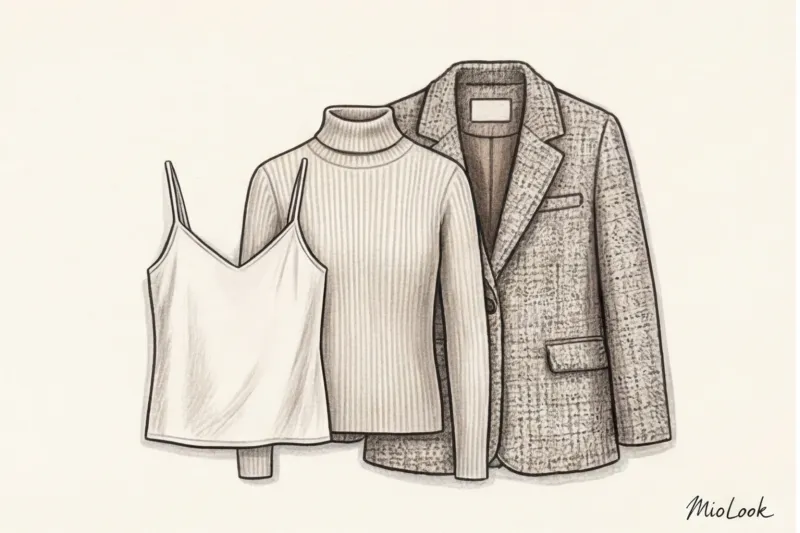
One of the most common and subtle mistakes is overlapping textures. Why is it absolutely forbidden to combine three smooth pieces (for example, silk, satin, and fine viscose) or three knits in a row? Identical surfaces prevent the eye from distinguishing the layers, and the look blurs into a single, flat blob. Three layers of smooth fabric look like pajamas, while three layers of chunky knits transform even the most petite woman into a shapeless cloud of yarn.
To layering in clothing It looked expensive, and needed a clash of materials. My favorite combinations, tried and tested in hundreds of wardrobes:
- Flowing silk and coarse wool. A contrast between tenderness and brutality that always works to enhance the look.
- Thick denim and fine cashmere. The perfect balance between utilitarian everyday life and tactile luxury.
- Smooth cotton and textured leather. It holds its shape perfectly and creates a rigid vertical line.
By the way, when I help clients organize their closet through MioLook's smart algorithms We specifically tag items not only by color but also by fabric density. The app immediately eliminates unsuccessful combinations like "chiffon over tweed" when generating outfits.
But how do you add layers without going crazy from overheating in a heated office? This is where modern materials science comes in. For comfortable base layers without the sauna effect, I highly recommend high-tech fabrics: modal, tencel and merino wool (ideal density - up to 150 g/m²).
The secret lies in air microcirculation. When you wear smooth Tencel under a textured cardigan, a microscopic air gap forms between the fibers of different structures. The smooth inner layer instantly wicks moisture away from the skin (using the capillary effect), while the loose outer layer allows this moisture to evaporate without creating a greenhouse effect. Take, for example, a basic merino longsleeve (priced between €50 and €90). Thanks to the fiber's natural crimp, it absorbs up to 30% of its own weight in moisture, remaining dry to the touch. This natural climate control works better than any air conditioner: your body "breathes," and you feel stylish and protected all day long.
Color Techniques: How to Direct Attention with Layers
Have you ever wondered why someone's gaze glides smoothly in some outfits, while in others it constantly stumbles? Color isn't just an aesthetic choice; it's a powerful optical tool, acting like a GPS navigator for others' attention. This is where the strict laws of visual psychophysics come into play. The main rule I constantly emphasize in my styling lectures is that dark colors always recede into the background, creating optical depth, while light colors come forward, drawing the focus.
In the context of layering, this means we're literally sculpting the silhouette anew, like working with light and shadow on a canvas. If your goal is to cover your figure stylishly and comfortably, forget about a chaotic array of shades. We need a well-thought-out color architecture.
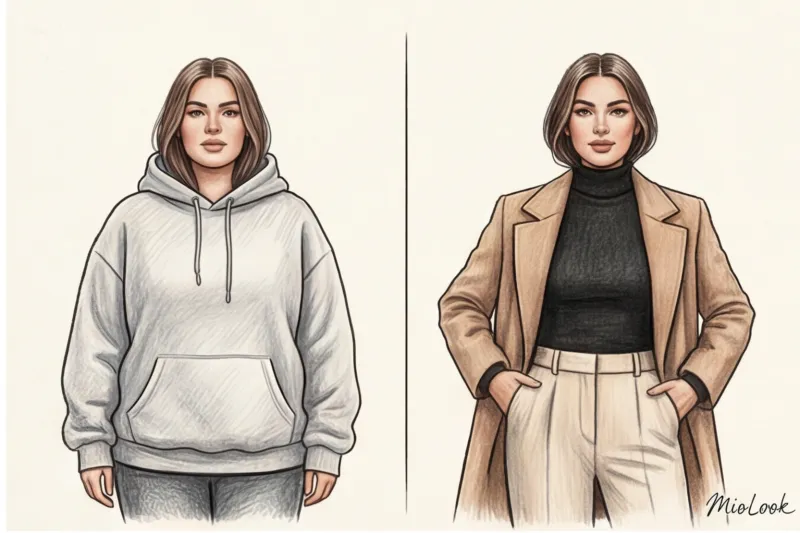
Monochrome inside, contrast outside (Interior Column)
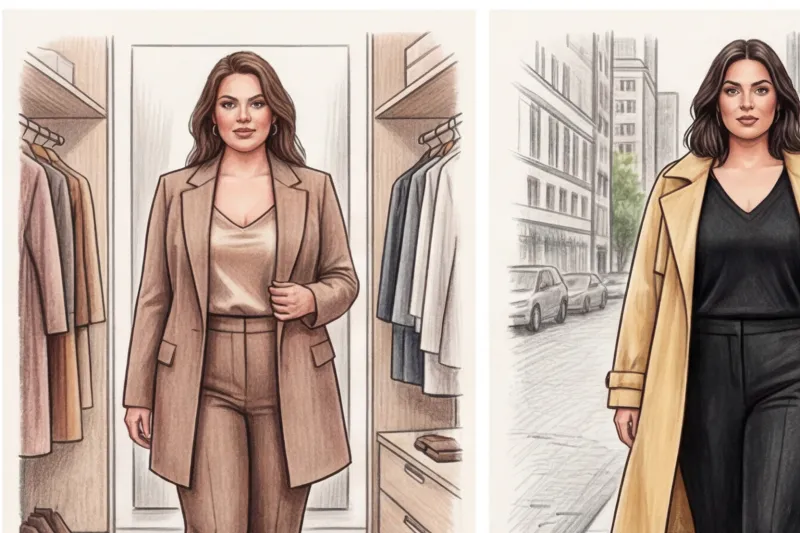
This is my absolute favorite styling trick, which the teachers at London's Central Saint Martins call the "hard framing method." It's incredibly simple: you create a continuous color vertical from a base layer. For example, wear a navy blue smooth viscose turtleneck with tone-on-tone palazzo pants. Then layer on a contrasting structural element—a crisp beige trench coat or a straight-cut terracotta jacket.
What happens at this point? The open, light or bright top layer creates two distinct vertical lines. The viewer's gaze is automatically drawn to the narrow, dark stripe within. This optical illusion visually subtracts volume from the sides of the figure. I tested this technique on myself last fall while packing a minimalist capsule for a business trip: the "minus one size" effect is achieved in exactly 10 seconds, without any shapewear or discomfort.
Access to MioLook for €0.99 — one-time payment
Start creating perfect images with the help of artificial intelligence
Get access — €0.99 onceColor blocking to correct proportions
If the "inner column" works to create overall elongation, then color blocking is a scalpel for precise proportional adjustments. It's breaking the silhouette into geometric blocks to create the desired illusion.
Imagine a classic scenario: you want to define your waist but hate tight leather belts. The solution lies in layers. We wear a light-colored base shirt (which visually broadens the chest and adds volume) and over it a cropped, loose-fitting dark vest. A dark second layer over the light base layer instantly creates the illusion of a narrow waist through the sheer force of contrast.
Another complex but stunningly effective technique is gradient layering. A smooth transition of shades from light to dark from top to bottom (for example: a white top, a pearl-gray cardigan, graphite trousers) stabilizes the figure. It makes the lower half look substantial and composed, leaving the portrait area light and illuminated.
Fair warning: Color blocking is unforgiving of horizontal mistakes. If the contrasting layer ends at the widest point of the hip, it will act like a neon sign, emphasizing volume. Before investing $150-$200 in a new cardigan or jacket, I recommend running your items through the "smart wardrobe" feature in the app. MioLook Combine the layers on your smartphone screen and check where exactly the color join line is to avoid any unpleasant surprises in front of the mirror.
Seasonal layering: from summer heat to winter cold
The most common styling nightmare for a city dweller is the "cold street - stuffy subway - air-conditioned office" route. As a practicing stylist, I constantly encounter requests to adapt my wardrobe to these temperature fluctuations. My approach to assembling capsule wardrobes for such conditions is based on the principle of "detachable modules." A smart approach layering in clothing In this case, it ceases to be just a visual device and turns into your personal climate control system.
When I put together capsule packs for clients who regularly use public transportation, we categorically avoid hybrid pieces (like jumpers with attached shirt collars). The key is to ensure that each layer, left alone after removing the outer layer, forms a complete, neat look. The connecting layer (a thin cardigan or a cupro shirt) should be easy to roll up and stow in a tote bag without the risk of getting hopelessly wrinkled.
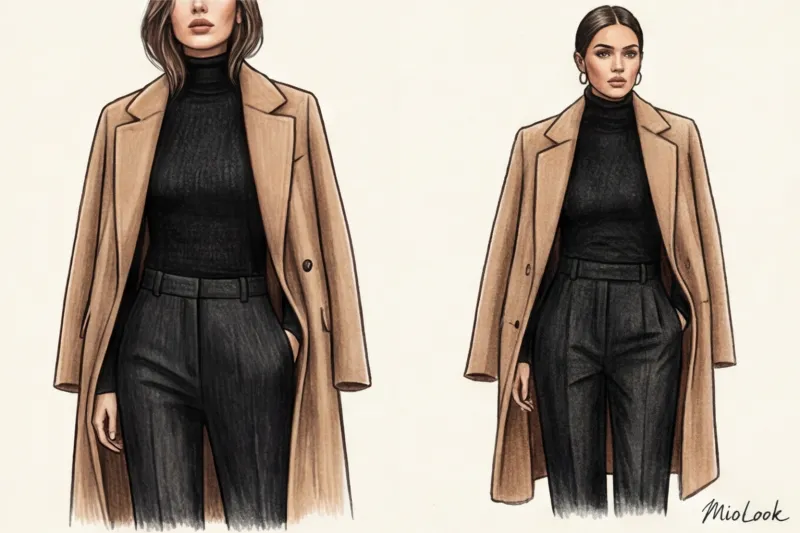
Summer Layering: How to Cover Up When It's Hot
Many people avoid complex summer outfits, fearing simple overheating. But what if personal comfort requires covering your shoulders or you need to adjust your silhouette? Let me be clear: in direct sunlight at 35°C, only shade and a single layer of cotton will save you. However, for everyday city life, we have proven technological solutions.
The main focus of the summer season is translucency and airy architecture. We actively use organza, mesh, and the finest linen. The physics of the process are simple: it's not the minimal weight of the fabric that cools, but the loose weave, which creates a ventilated air gap between the layers. For example, a loosely woven ramie shirt (nettle fiber) costing around $80–$120 will "breathe" many times more effectively than a thin but tightly woven silk.
Another practical everyday trick is to layer unbuttoned short-sleeved shirts over basic crop tops, silk camisoles, or bras. This creates the desired vertical elongation and subtly conceals the forearms while still allowing air to circulate freely around the body.
Winter Layering: Warmth Without the Snowman Effect
In winter, we face a completely different challenge: how to avoid becoming a clumsy ball while trying to stay warm. The days of layering two chunky knit sweaters over a turtleneck are gone forever. Modern comfort is achieved through smart material technology, not material thickness.
Today's winter essentials revolve around the magic of thin thermal underwear and seamless long-sleeved bodysuits. They work like a technological second skin: they perfectly retain body heat, wick away moisture when entering a heated room, and don't add a millimeter of bulk to your silhouette. You can confidently layer a flowy office blouse over such a micro-base layer, followed by a jacket.
My favorite styling trick for harsh winds is to incorporate ultra-light down vests. Tucked securely under a structured wool coat or oversized blazer, these vests provide excellent back warmth while leaving the sleeves free of constricting fabric.
And last but not least: avoid oversized blanket scarves. A bulky scarf worn over a coat inevitably breaks the shoulder line, shortens the neck, and makes the figure appear squat. Use bibs and detachable collars—worn under outerwear, they create the neat texture of a warm sweater near your face while perfectly maintaining the defined architecture of your shoulders.
Smart Wardrobe: How to Use AI and Apps to Plan Your Layers
Let's look at some hard numbers. A few years ago, I conducted a rigorous audit and completely digitized my closet. The results were sobering: despite an impressive clothing collection, I regularly wore no more than 20% of my items. The reason wasn't that I didn't like the styles, but that the remaining 80% had nothing to layer with.
When layering clothes, the classic women's problem of "a full closet, but nothing to wear" reaches a whole new level of complexity. You may own a stunning structured jacket and a luxurious silk top, but their lengths simply don't match or their necklines clash due to different cutouts. As a result, the stylish puzzle falls apart, and you're back to wearing your usual sweater and jeans.
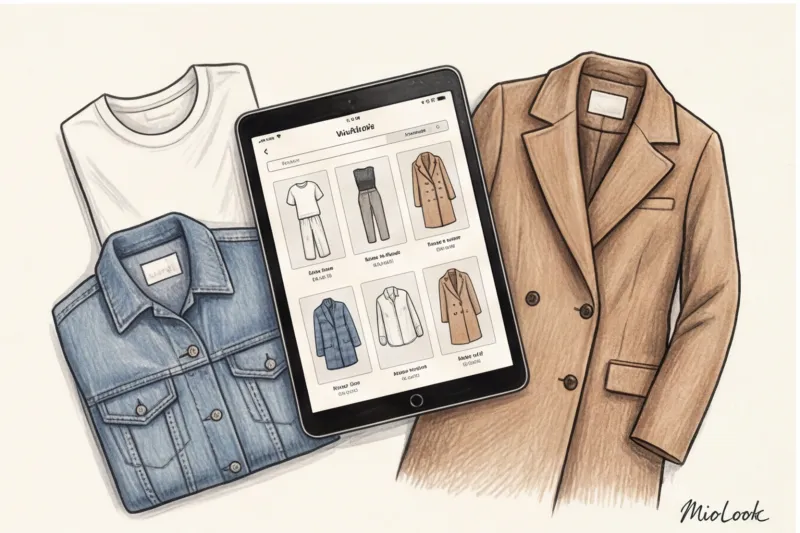
I found a solution to this logistical problem in technology. Digitizing your wardrobe isn't just about transferring photos to your phone; it's about creating a database of your personal style. When I moved my clothes to MioLook The algorithms immediately highlighted critical gaps. It turned out I was desperately lacking in connecting layers: thin, smooth turtlenecks, proper straight-cut cotton shirts, and basic tops without unnecessary embellishments.
Today, virtual fitting has completely changed my routine. I can create complex three-layered outfits on my smartphone screen in advance while riding in a taxi or drinking my morning coffee. Artificial intelligence analyzes textures and helps find the perfect pairings, eliminating the risk of a shirt hem sticking out unattractively under a short sweatshirt. You can see in advance how lengths and proportions will interact, saving up to half an hour of morning time on changing.
Your ideal image
it begins Here
Join thousands of users who look flawless every day with MioLook.
Get access — €0.99 onceAnd perhaps my favorite analytics feature is Cost Per Wear (CPOW) tracking. When you're building a layered wardrobe, your base layers and midlayers become your workhorses. The app clearly shows the harsh math of shopping: a high-quality seamless merino wool long sleeve top for $120, worn under jackets and cardigans 60 times per season, costs only $2 per wear. But a statement vest with intricate embroidery for $50, unmounted and worn exactly once, turns out to be the worst-performing item in your closet.
Using your digital wardrobe data, you stop buying random, individual items and start investing in a smart system where each new item exponentially increases the number of possible combinations.
Technology frees us from the routine of endless fittings in front of the mirror, leaving us with the pure pleasure of the styling process and the ironclad confidence that your silhouette looks flawless.
Checklist: 5 Steps to the Perfect Everyday Layered Look
Theory is great, but in the morning, with 15 minutes left before we head out, we need a clear system. In 2024, The Business of Fashion published a study showing that predictable wardrobe routines reduce morning stress by 40%. My personal approach to putting together a complex outfit boils down to a strict, time-tested algorithm. No lengthy deliberation in front of your open closet—just follow this step-by-step guide.
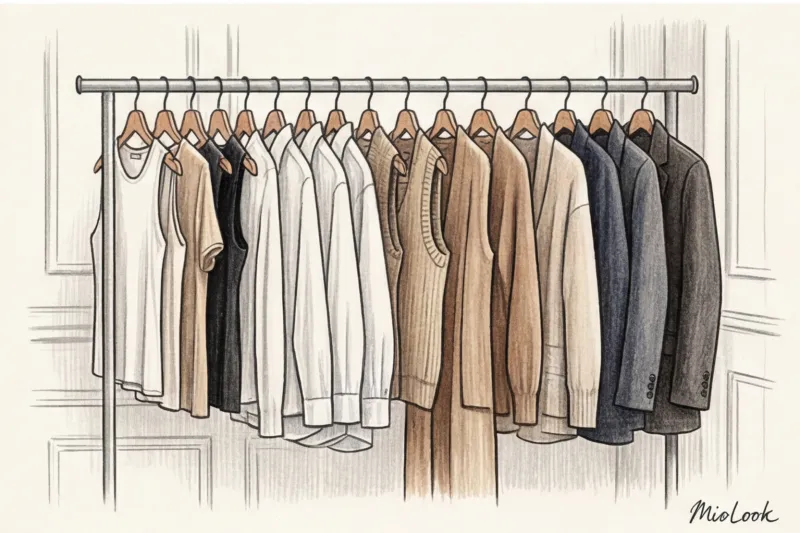
- Start with a "second skin". Your first layer should be thin, form-fitting, and neutral in color. Modal bodysuits, basic long sleeves, or turtlenecks made from a silk-cashmere blend work perfectly. This layer wicks away moisture and prevents creasing. I usually invest in these basics for around $40-$60 each, as they sit closest to the body and wear out the fastest.
- Add a bonding layer with a new texture. This is where the contrast of materials comes into play. If the base layer is smooth, the second layer should be different: a thick matte poplin shirt, a cashmere vest, or a chunky knit cardigan. It's the difference in texture that makes the outfit pop. layering in clothing a well-thought-out stylistic device.
- Add a structural outer layer. The third element is your architectural frame. A jacket with defined shoulders, a heavy trench coat (for example, a classic straight cut), or a jacket made of stiff denim. Its main purpose is to establish a strict vertical line and pull together the relaxed interior volume.
- Conduct a length audit. A crucial point: none of your layers should end at the widest part of your figure. If the hem of your cardigan falls right on the fullest part of your hips, it will visually add a full size. Move this horizontal line 5-7 centimeters above or below the critical point.
- Include the "visible wrists and ankles" rule. Complete the look with stylish details. Roll up the jacket sleeves to reveal the cuff of the long-sleeved shirt underneath. Add an elongated pendant on a thin chain to create an extra vertical V-shape near the face, elongating the neck.
A secret of professional stylists: simply by revealing slender wrists and ankles (for example, by pairing 7/8-length trousers with loafers), the figure becomes visually more graceful, even under three thick layers of clothing. It's an optical illusion that instantly lightens the silhouette.
Conclusion: Your new level of comfort and confidence
In closing our conversation, I'd like to share an observation from my coaching practice. Nine out of ten women come to me with the initial request to "hide figure flaws," but they leave with a completely new skill—the ability to control their body architecture. The paradox is that layering in clothing - this is in no way a way to hide from the world in a dense fabric cocoon. This is your personal, high-precision tool for managing your impressions and your own silhouette.
It's time for us to finally abandon baggy clothing in favor of clever layering. The bulky, shapeless, oversized pieces we habitually pull on during times of self-doubt don't protect us—they erase our individuality and visually add those very pounds we were trying to disguise.
Clothes should serve you. They should function like a stylish exoskeleton that highlights your best features and allows you freedom of movement, not force you to conform to awkward shapes or endure discomfort for the sake of fleeting trends.
When you build your look using the "base + binder + structure" principle, your posture automatically shifts. The crisp shoulder line of the outer jacket establishes a frame, and the soft inner layer provides that tactile comfort that makes you feel secure in any situation.
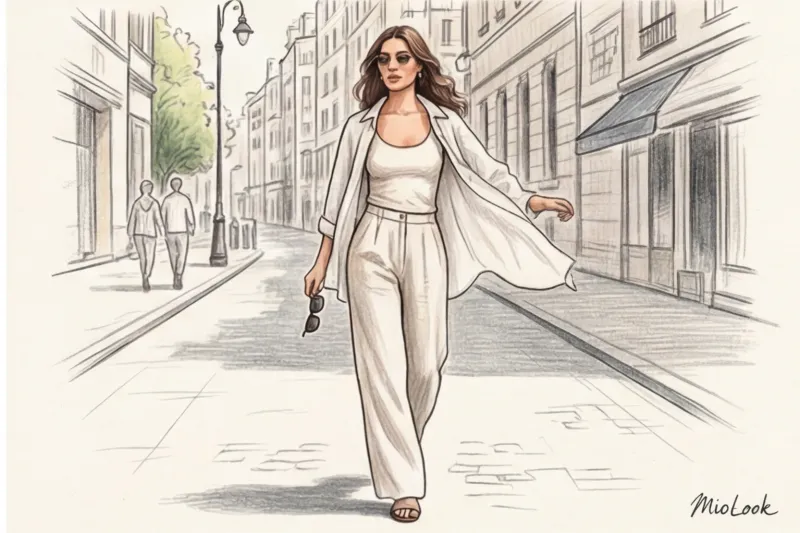
A study published in the Journal of Fashion Marketing and Management in early 2024 confirmed this psychological shift: women who embrace modular layering rated their confidence in their appearance as 40% higher than those who prefer to conceal their figures with monolithic, voluminous pieces.
To make sure this theory doesn't just remain text on a screen, I'm throwing down a practical challenge. My call to action is this: go through your closet this evening and try to create exactly one three-layered outfit, intentionally using pieces from different seasons. Take your clothes out of their usual context!
Here are three surefire formulas for your experiment:
- Summer silk + winter wool: Layer a basic merino wool turtleneck (layer one), top it off with a lightweight summer slip dress with straps (layer two), and finish the look with a heavy, men's blazer that holds its shape (layer three).
- Thick cotton + linen: A basic white long sleeve top, over which is an unbuttoned summer linen shirt, and a classic trench coat as a structural frame.
- Playing with transparency: A tight bandeau top, a semi-sheer organza blouse on top, and the final touch—a strict suiting vest ($80–120—the perfect price for investing in a quality basic piece).
Experience the enormous difference between "wearing something loose" and "creating a well-thought-out composition." If you're having trouble visualizing the result or are worried about getting the proportions wrong, take photos of your chosen items and upload them to MioLook A virtual fitting room will help you see how lengths and textures will work together in advance, eliminating the stress of morning mirror shopping.
The art of layering gives you a true superpower—the ability to be diverse, adjust proportions down to the millimeter, and remain completely comfortable. Approach this process with curiosity, experiment with textures, and remember: your style is your rules.
Guide Chapters
Modest Fashion: Style and Comfort in Cover-Ups
Forget shapeless robes. We'll show you how to dress low-key while maintaining elegance and a modern, modest-fashion cut.
10 Layering Essentials: A Stylish Capsule
How to layer clothes without looking bulky? We explore 10 pieces from the premium capsule collection that create warmth, slim, and look expensive.
Layering for Plus Size Women: How to Elongate Your Silhouette
Forget shapeless robes! Learn how to visually elongate your silhouette and drop up to two sizes with the right layering.