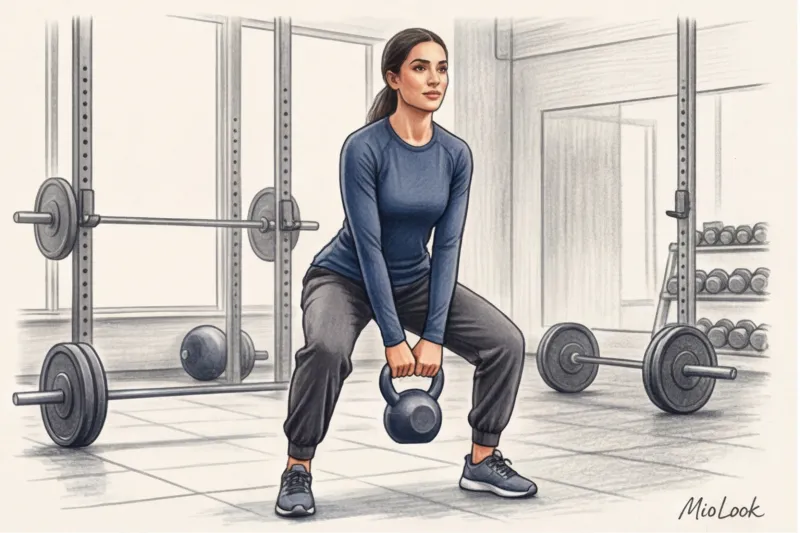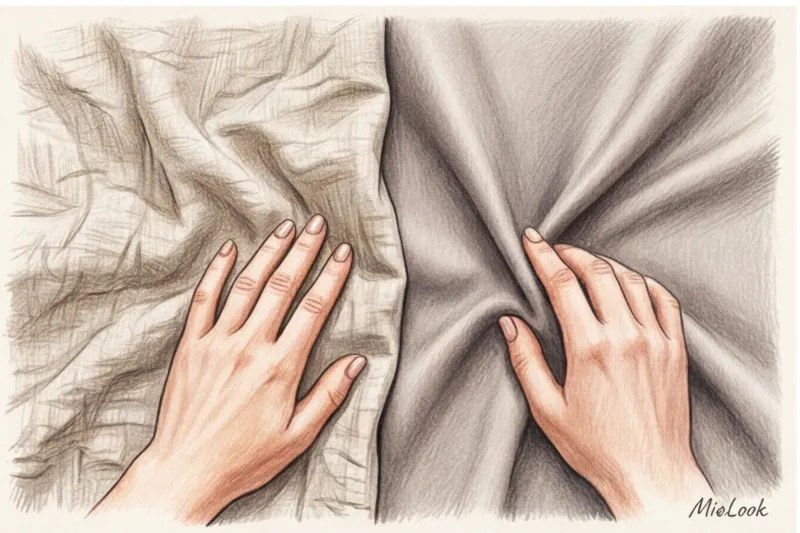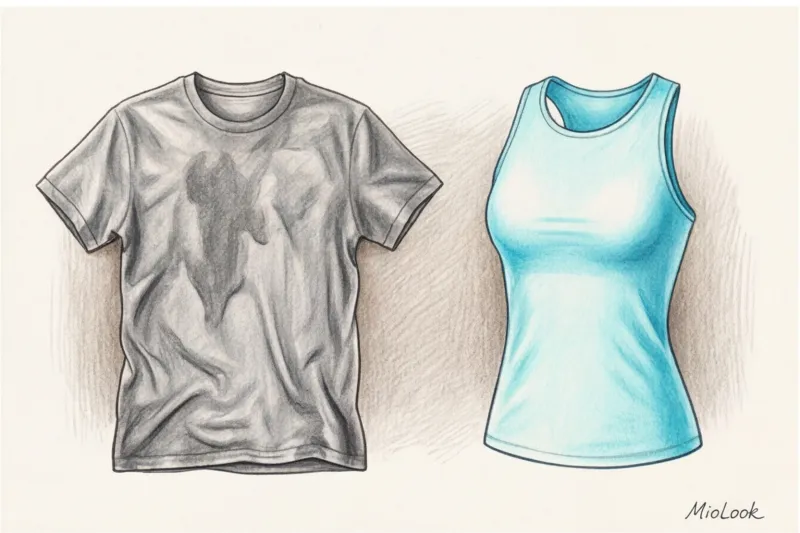
"I'm allergic to my own sweat," a client confidently told me, pointing to a rash along her spine. She came to me for a wardrobe review, asking for breathable clothing for her intense cycling workouts. She sincerely believed she was doing everything right: she bought premium 100% organic, dense cotton T-shirts (€100-€150 each), avoided plastic, and washed her clothes with baby detergent. Spoiler alert: the problem wasn't the allergy. It was the cotton.
The myth that "natural is always better for your skin" is shattered to pieces on the treadmill. If you've ever wondered, What fabric is sportswear made of? and why industry giants stubbornly make leggings from 100% synthetics, this article will set the record straight. We've already covered the historical conflict between materials in more detail in our A complete guide to the pros and cons of synthetic fabrics Today, we'll take a closer look at the pure biomechanics of a high-tech wardrobe.
The Cotton Trap: Why the "All Natural" Rule Doesn't Work in the Gym
For everyday wear, high-quality cotton with a weight of at least 180 g/m² is essential. But during a workout, your favorite eco-friendly cotton becomes a merciless enemy. There's no magic involved, just physics.
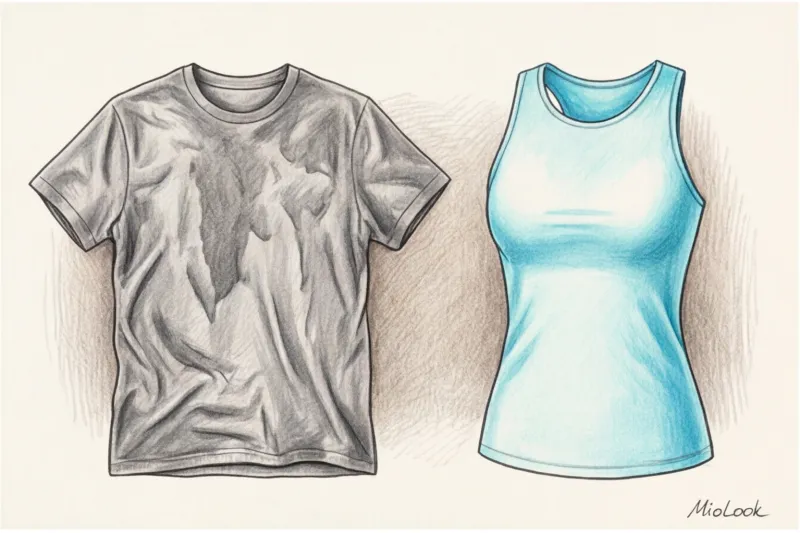
Cotton fiber has a porous, sponge-like structure. It can absorb and retain up to 27 times its own weight in moisture. But the worst part comes later: cotton refuses to release this moisture. What happens to your body during an hour-long HIIT session in a cotton t-shirt?
- Greenhouse effect: Wet, heavy fabric sticks to the body, blocking oxygen from reaching the pores.
- Mechanical acne: Bacteria thrive in warm, moist environments. The friction of wet fabric against the back causes the very same acne rash (acne mechanica) that my client mistook for an allergy.
- Risk of hypothermia: After intense cardio, your body temperature drops. If you're standing in a draft with a wet "sponge," catching a cold is practically guaranteed.
- Rubbing: Wet cotton seams become stiff, chafing the skin until it bleeds during marathon distances.
"After 12 years of practice, I've developed an ironclad rule: if you're going to sweat, leave the cotton in the locker room. This is non-negotiable."
What fabric is sportswear made of: the anatomy of smart synthetics
The paradigm shift occurred long ago, but many still live by the stereotypes of the '90s, when synthetics were associated with cheap, creaky tracksuits that left the body suffocated. Modern sportswear fabric isn't "cheap plastic." It's complex engineering, like microfiber, the creation of which costs a fortune (which is why premium leggings can easily cost €120-200).
Manufacturers no longer use a single material. They create multi-component "cocktails" of fibers to achieve the perfect balance between compression, ventilation, and durability.
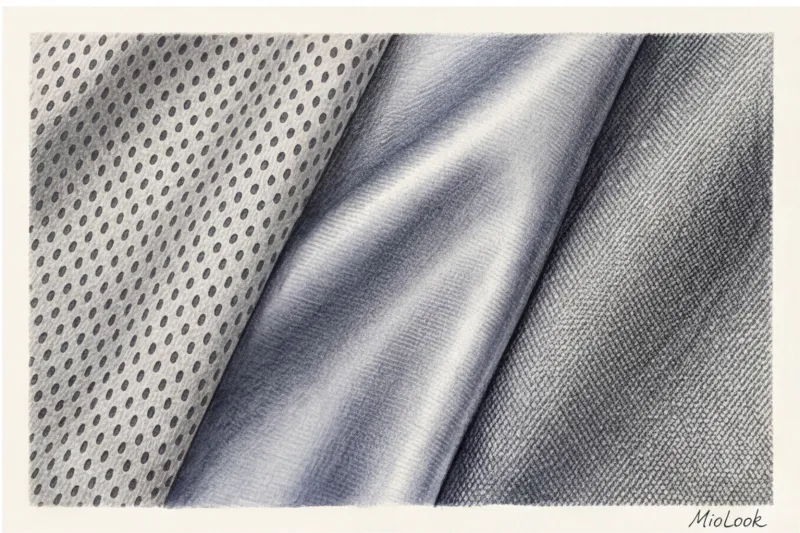
Polyester: The Master Architect of Thermoregulation
If you look at the tag of a running shirt, 90% of the time the base material is polyester. Unlike cotton, the thread of high-tech polyester is smooth and has no porous core. Water physically cannot penetrate the fiber—it rolls off it. Furthermore, this material is phenomenally UV-resistant (it won't fade on outdoor stadiums) and can withstand hundreds of washing cycles, making it the foundation of outdoor gear.
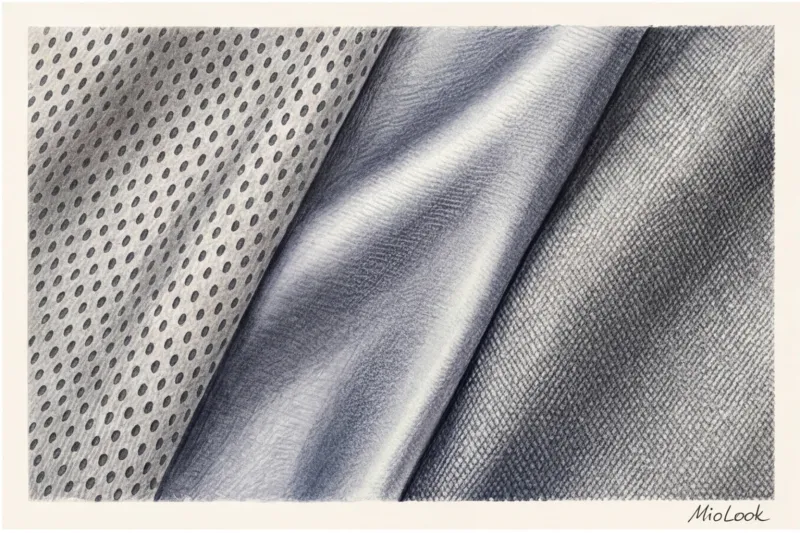
Nylon and elastane: a second-skin effect and freedom of movement
Nylon (also known as polyamide) is the industry's answer to the demand for strength and softness. It has a silky texture and incredible wear resistance. It's this nylon blend that's used to create matte, flawlessly smooth leggings.
But elastane (spandex or lycra) is the secret ingredient without which the uniform simply won't fit. This polyurethane fiber can stretch to 500-600% of its original length and instantly return to its original length without the slightest deformation. Forget about "stretched knees"—with high-quality elastane, this is simply impossible.
Your perfect look starts here
Join thousands of users who look flawless every day with MioLook. Manage your sports and everyday capsule wardrobe with one click.
Get access — €0.99 onceWicking vs. Absorption: The Magic of Capillary Action
"But how does synthetic fabric breathe if it doesn't absorb water?" is the most common question I get during my consultations. The secret lies in the capillary effect (dry-fit technology).
Engineers create microfibers with special grooves on their surface (the cross-section of the thread resembles a star rather than a circle). When you sweat, the fabric absorbs the droplet from the skin's surface and, through these microchannels, instantly distributes it over the widest possible surface area of the garment. The larger the surface area, the faster the moisture evaporates.
To prove this, I once conducted a personal experiment: I wet a regular cotton T-shirt and a high-tech polyester top, hanging them in a room at the same temperature. The polyester dried crisply in 15 minutes. The cotton remained damp for almost three hours.
By the way, in the app MioLook My clients often include fabric compositions in their item cards. The algorithm takes this data into account when selecting outfits: it will never suggest you wear a thick, moisture-wicking garment for an "active outdoor" scenario.
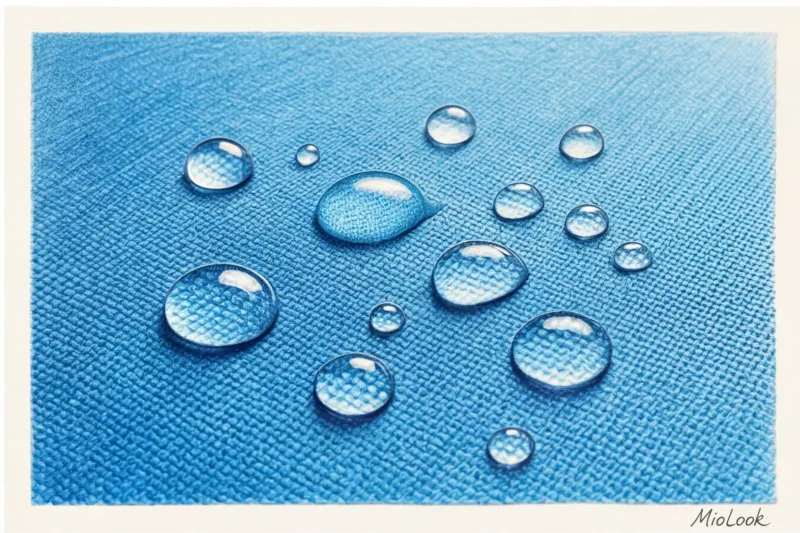
Sports Capsule: Choosing the Perfect Fabric Composition for Your Workout Type
There's no such thing as one-size-fits-all sportswear. What works perfectly in the yoga studio will turn your run into hell. When choosing a sports capsule (and a smart wardrobe is always built on the capsule principle), focus on the biomechanics of your movements.
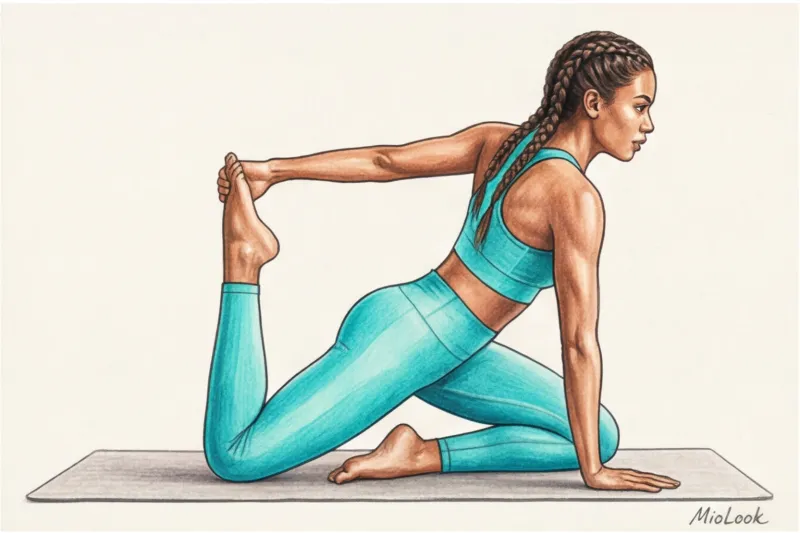
Yoga, Pilates and Stretching
Here, you don't sweat as much, but your body takes on complex, asymmetrical poses. Your priorities are maximum tactile comfort, a matte finish, and compression that doesn't constrict blood vessels.
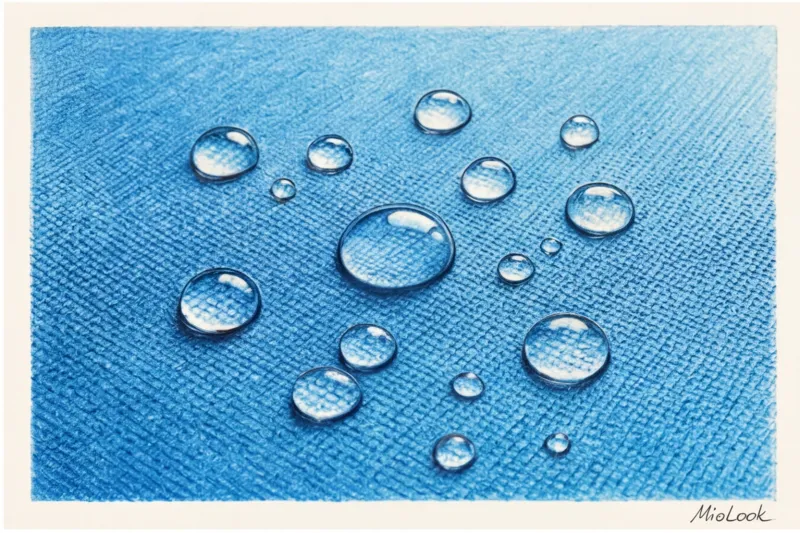
- Ideal composition: 70-80% nylon (polyamide), 20-30% elastane.
- What to look out for: Look for seamless technology. The seams shouldn't dig into your skin when you lie on the mat.
HIIT, running, and CrossFit
Aggressive sweating requires aggressive moisture wicking. The fabric must act as an air conditioner.
- Ideal composition: 85-90% technological polyester, 10-15% elastane.
- What to look out for: Mesh inserts in areas of maximum heat dissipation (underarms, back, behind the knees), laser perforation. If your budget allows (from €80 per T-shirt), look for fabrics with an antibacterial silver ion treatment—they literally kill bacteria, preventing odor.
Ready to get started?
Try the MioLook free plan—no commitments required. Artificial intelligence will help you find the perfect combinations for your living room and office.
Get access — €0.99 onceNew Ethics: When Synthetics Become Eco-Friendly
"But synthetics are microplastics that are killing the planet!" eco-fashion advocates will say. And they'll be right if we're talking about cheap, mass-market items for €10. But the premium sportswear segment has long since transitioned to a circular economy.
According to a major report by McKinsey State of Fashion (2024), over 60% of leading sports brands actively use recycled materials. Today, your leggings could be made from ocean-caught bottles (rPET technology) or from ECONYL regenerated nylon, which is made from old fishing nets.
Let's calculate the environmental footprint. My personal test: cheap cotton sweatpants wear out between the legs and lose their shape at the knees after 2-3 months of wear, ending up in the landfill. I've been wearing high-quality synthetic-blend leggings for €100-120 to CrossFit for five years now, and they look like new. Buying one expensive but durable item made from recycled plastic is much more environmentally friendly than an endless conveyor belt of cheap cotton.
A stylist's checklist: how to care for synthetic sportswear so it works
Even the smartest and most expensive sports fabric can be ruined in one wash if you don't understand the laws of chemistry. Here's a life hack that has saved my clients tens of thousands of euros on replacing damaged gear.
- The mortal sin of fabric softener. Never, under any circumstances, add fabric softener when washing your sportswear. Remember the capillary effect: microchannels that wick away sweat. Fabric softener works by coating the fibers with a silicone film (that's what makes clothes soft). This film completely clogs the pores of the fabric. After washing like this, your expensive €90 T-shirt will permanently lose its moisture-wicking properties and turn into a greenhouse. (Note: This does NOT apply to cotton hoodies that you wear over your uniform after the gym—the air conditioning won't harm them.)
- Only gels, no powders. Dry powder granules are difficult to wash out of dense, elastic fabrics at low temperatures. Use special liquid detergents for sportswear (they contain enzymes that break down sweat proteins in the cold).
- The temperature is not higher than 30 degrees. Elastane is afraid of boiling water.
- Strict ban on batteries and tumble dryers. Hot air literally melts polyurethane threads. If you dry leggings on a hot radiator, they will lose their compression and remain permanently stretched.
A sports wardrobe requires investing in technology, not stereotypes. Next time you go shopping for new gear, don't look for "100% natural" on the label. Look for a smart balance of polyester, nylon, and elastane that will take care of your body while you set new records.