My client Anna was crying right there in her dressing room. Her immaculate €2,800 baby alpaca coat from Max Mara looked like a stray cat had slept in it. A thick, stiff layer of matted fur had formed on the left side. The culprit wasn't the quality of the Italian brand, but the stiff canvas strap of her favorite €300 crossbody bag.
In 12 years of working as a stylist and luxury wardrobe consultant, I've learned one hard lesson: neither price nor a big name on the tag can override the laws of physics. If you don't understand, On what fabrics do pellets appear? Most likely, and why this happens, you will regularly be throwing money away. We have already discussed the properties of artificial fibers in more detail in our a complete guide to the pros and cons of synthetics , but today I want to show you the inside story of textile production.
This material will change the way you shop. I'll teach you how to test fabrics like professional buyers, and we'll explore why 100% natural fabric isn't always a guarantee of smoothness.
The Anatomy of Pilling: Why Do Clothes Lose Their Looks?
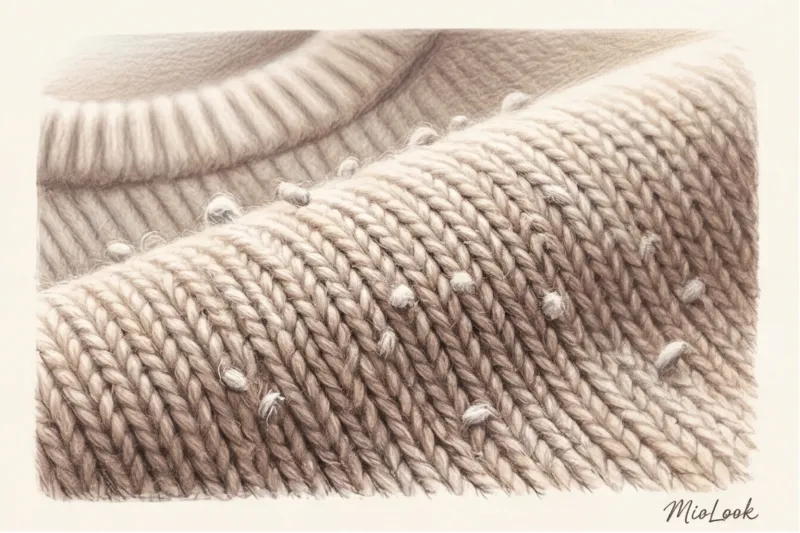
To defeat this enemy, you need to understand how it works. Pilling (as professionals call the formation of pellets) is a purely mechanical process. When fabric is rubbed against itself, against outerwear, or against a bag, short microfibers are released from the main thread. Coming to the surface, they tangle into tiny knots.
"Pilling resistance is not built into the garment factory, but rather during the raw material collection and thread spinning process. If a manufacturer has skimped on the original fiber, no amount of careful care will save the garment," confirms The Textile Institute's quality standards (2023).
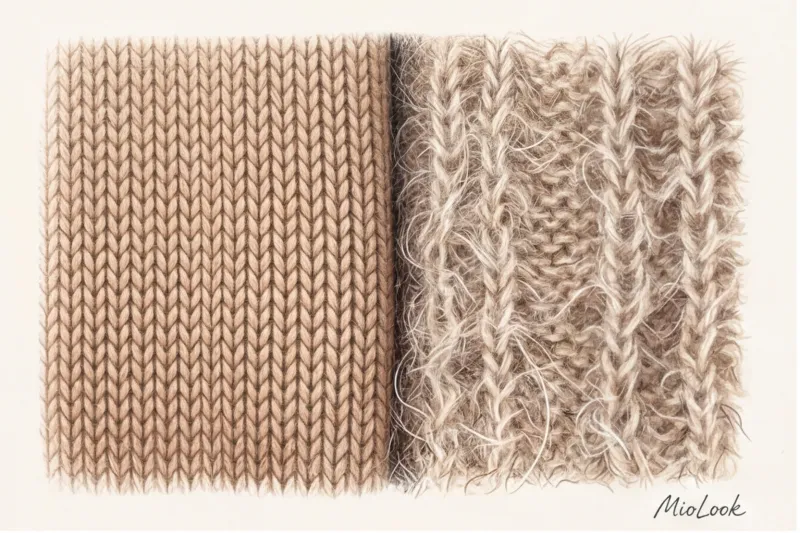
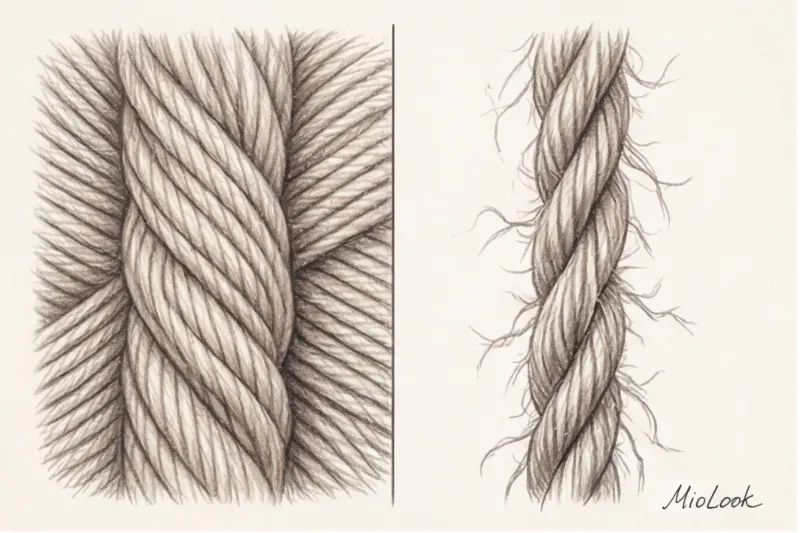
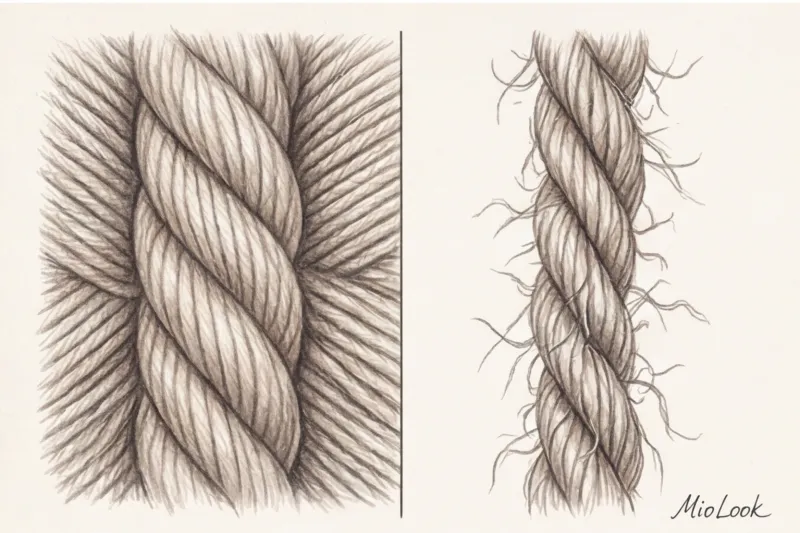
The type of yarn is key. In the luxury segment, it is more often used combed yarn (worsted yarn) - long fibers are carefully combed, removing all the "fluff," and tightly twisted into a smooth thread. It dominates the mass market. carded yarn Woolen yarn is a fluffy, loose yarn made of short, uncombed fibers. It feels softer when first tried on, but begins to pill after just two weeks of wear.
How Fiber Length Decides the Fate of Your Sweater
In the textile industry, there's a term called "staple length"—the average length of a single fiber. Remember the golden rule: the shorter the fiber, the faster its ends will become dislodged from the thread when rubbed. Fibers shorter than 30 millimeters are prone to pilling.
Why do mass-market brands use them? It's simple: short-sleeved raw materials (noils) are 40–60% cheaper than long-sleeved staples. When you buy a €40 sweater at a popular fast-fashion store, you're paying for this production compromise.
Stylist's Anti-Rating: Which Fabrics Pill the Fastest?
In my experience, 80% of customer disappointments are related to three specific materials. If you see these on the tag, the item requires extreme care or isn't worth your money at all.
- Fleece and flannel. Their fleecy texture is artificial—the fabric is specially "backcombed" to trap air and warmth. But this same backcombing instantly clumps at the slightest friction.
- Low density viscose. Thin, flowing viscose knitwear becomes covered with a small, nasty rash of pellets in the armpits and on the sides.
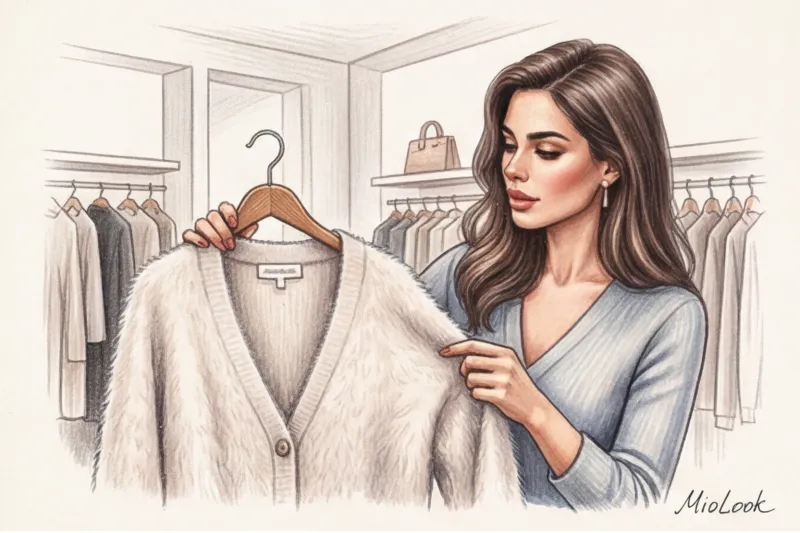
- Overly soft blended knitwear. The incredible, cloud-like softness of a cardigan in the store is a red flag. It often means the fabric is either loosely knit or hasn't been properly finished (washed/pressed).
Access to MioLook for €0.99 — one-time payment
A smart AI stylist will select the perfect look based on your current wardrobe and eliminate the problem of "nothing to wear."
Get access — €0.99 onceDangerous Mixes: Why Wool and Acrylic Are the Worst Investment
A WGSN study on the durability of knitwear (2024) confirmed what stylists have been saying for years: a blend of 70% acrylic and 30% wool is guaranteed to ruin its appearance after 2-3 washes. Why? It's all about the difference in durability.
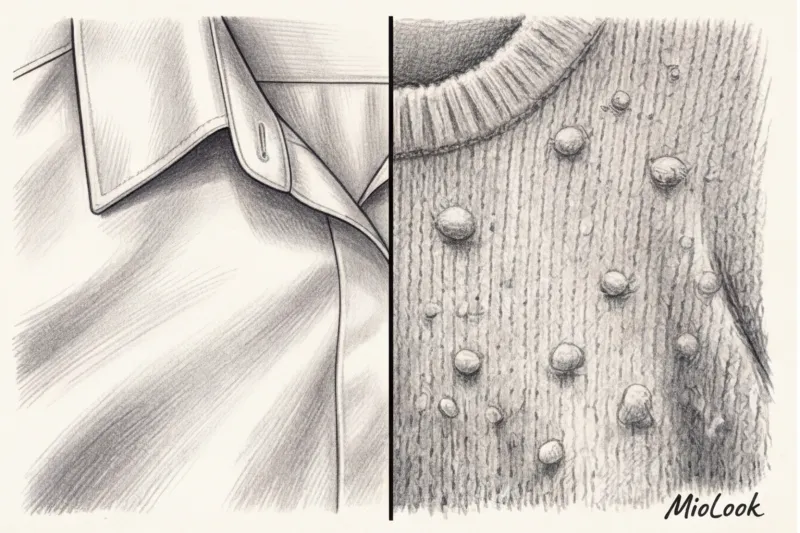
Acrylic fibers are very strong and don't break easily. Wool fibers are weak and easily fall out of the thread. Rubbing causes the wool to come loose, but durable acrylic prevents this fluff from simply falling off. It holds it firmly to the surface, forming hard, stubborn pilling that's impossible to remove even with an expensive machine. Avoid such products at all costs.
The Myth of 100% Naturalness: Why Expensive Cashmere Also Pills
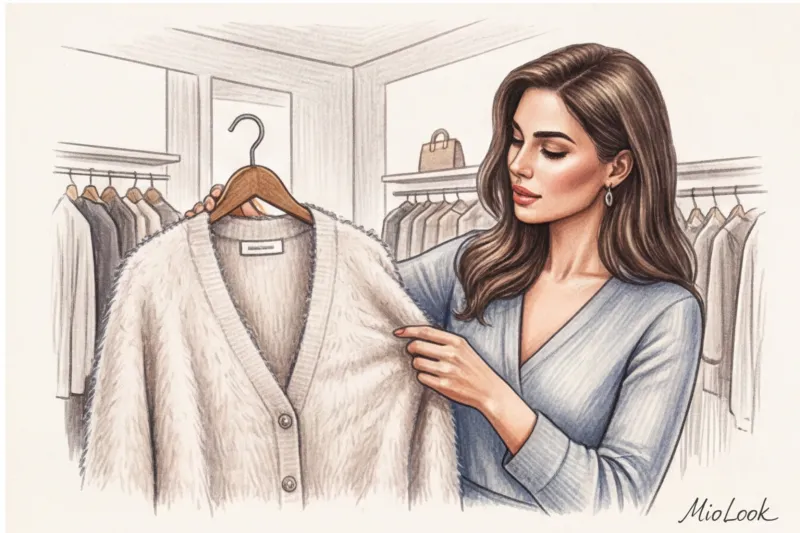
This is the most painful insight for those buying heavy luxury for the first time. "I paid €1,200 for a Brunello Cucinelli sweater, and it's pilled!" is a typical complaint. I'm busting the stereotype: 100% natural, premium cashmere must may shrink slightly during the first few weeks of wear.
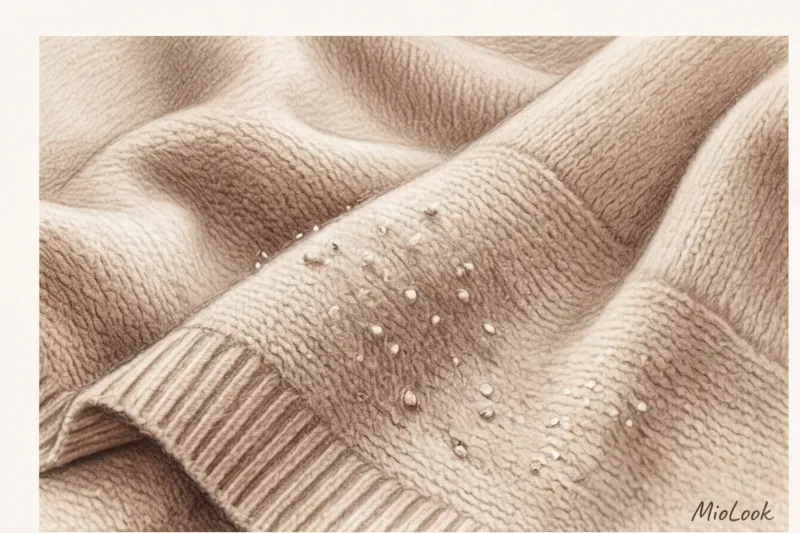
Mountain goat down fibers are only 14-19 microns thick. They are incredibly fine. During the yarn spinning process, some of the shortest fibers remain on the surface. When you wear a garment, these microfibers clump together into light, fluffy clumps due to friction. In professional circles, this is called "shedding."
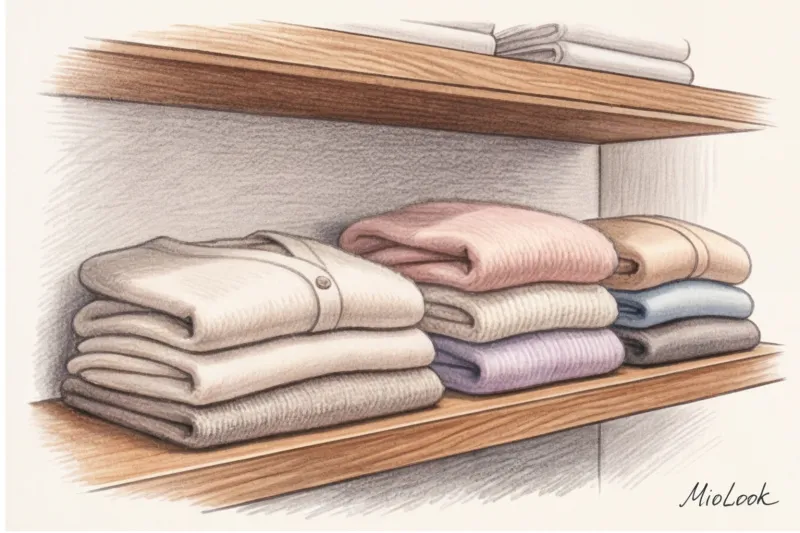
What's the difference between €1,200 cashmere and an €80 mass-market sweater? The noble pilling of natural wool is soft. These pilling particles are easily removed with just your fingers or a special comb, without damaging the thread itself. After 3-4 weeks, the shedding process is complete, and the sweater remains flawless for years. On the other hand, dense, smooth polyester for €30 will never pill. Naturalness doesn't guarantee the absence of pilling; it guarantees that any pilling will be "treatable."
To track which items in your wardrobe are worth the investment (cost-per-wear), I recommend digitizing them in smart wardrobe MioLook You'll clearly see that a cashmere sweater is worn 10 times more often than a cheap acrylic one.
Investment fabrics: materials that stay smooth for years
If you're building a basic wardrobe that works for you, rather than you working for it, look for the following items on tags and in descriptions:
- Mercerized cotton. Cotton treated with sodium hydroxide. The thread becomes perfectly smooth, slightly shiny, and completely resistant to pilling.
- Fine-wool merino wool with high twist. The threads are twisted so tightly that there is simply nowhere for the fibers to escape.
- Smooth silk blends (silk + cotton, silk + cashmere). Silk acts as a reinforcing frame, giving the fabric stability.
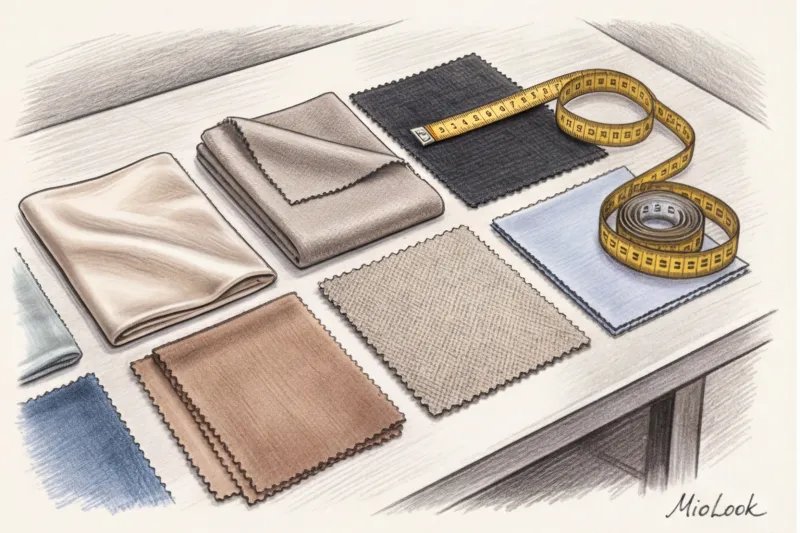
- Complex weave fabrics. Twill, gabardine, dense jacquard. The tighter the threads in a woven fabric are, the less likely it is to pille.
The Right Blends: When Synthetics Work for You
The addition of synthetics doesn't always mean poor quality. If 5-15% nylon (polyamide) is added to fine natural alpaca or merino wool, it's excellent. In such proportions, nylon acts as invisible reinforcement. It prevents the natural fibers from breaking and dramatically reduces pilling without sacrificing the fabric's breathability.
Your perfect look starts here
Join thousands of users who look flawless every day with intelligent clothing selection from MioLook.
Get access — €0.99 onceThe biggest mistake when wearing clothes that ruins even premium items
Let's be honest (and this is an important limitation of my advice): you can buy a flawless sweater made of smooth, high-twist merino wool, but if you spend two hours a day behind the wheel, buckled into a stiff seat belt, your left shoulder and the diagonal of your chest will inevitably become covered in pilling. Aggressive mechanical friction kills everything.
Local peeling usually reveals your habits:
- Armpits and sides: natural friction of the arms when walking (increased if the armhole is cut too narrow).
- Right or left thigh: Say hello to your favorite crossbody bags made of textured leather or canvas.
- Lower back: friction against a rough inner seam or lining of outerwear.
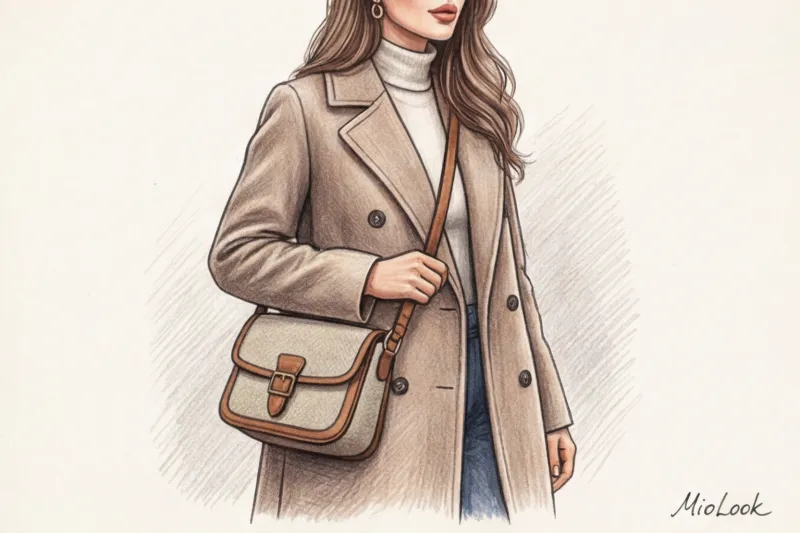
If you're wearing soft cashmere or silky merino, choose smooth leather top-handle bags and make sure your coat is lined with smooth viscose or cupro.
Stylist's checklist: how to test a garment for pilling in the fitting room
Leave blind trust in price tags behind. Here are three tests I always run on customers' items before they're brought to the checkout:
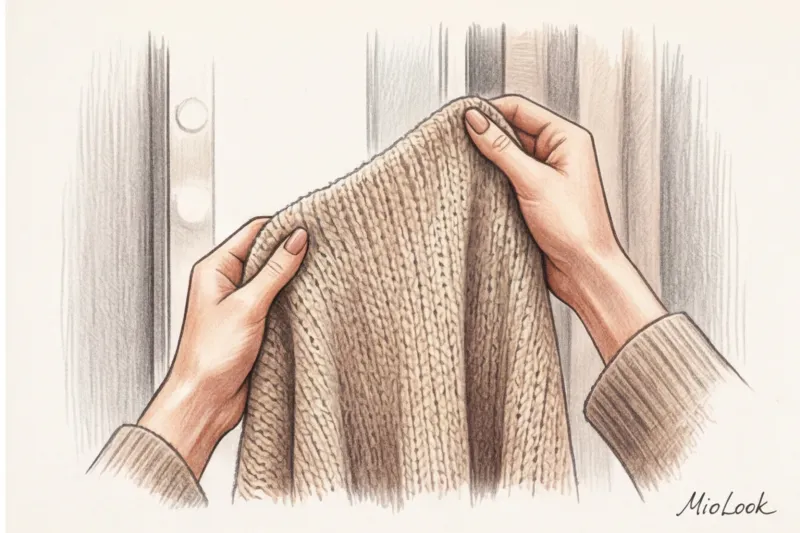
- Twist test. Grasp a thread on the surface of the knit (or the edge of a cuff) with your fingers and gently tug, as if pinching. If short microfibers are easily pulled by your fingers, the garment will become pilled by the end of the first day.
- Friction test. Find an inconspicuous area on the back of the fabric and rub it vigorously with your fingertips for 10-15 seconds. See if any fuzz appears? Return the item to its hanger.
- Evaluation of density by transmission. Hold the knitwear up to a fitting room lamp. Light should be virtually imperceptible to a high-quality, tightly knit garment. If the fabric resembles a sieve, the threads are too loose and will quickly rub against each other.
Care with status: how to remove pilling without damaging the fabric
It's strictly forbidden to pick off the lint by hand. By pinching off a single tangled ball, you pull new fibers out of the thread, starting an endless cycle of destruction.
Electric shavers are a great tool, but only for cotton sweatshirts, coat blends, and socks. Their sharp blades remove not only the lint but also the useful fuzz, making the thread thinner. If you use a shavers on premium cashmere, you'll leave it stiff and bald.
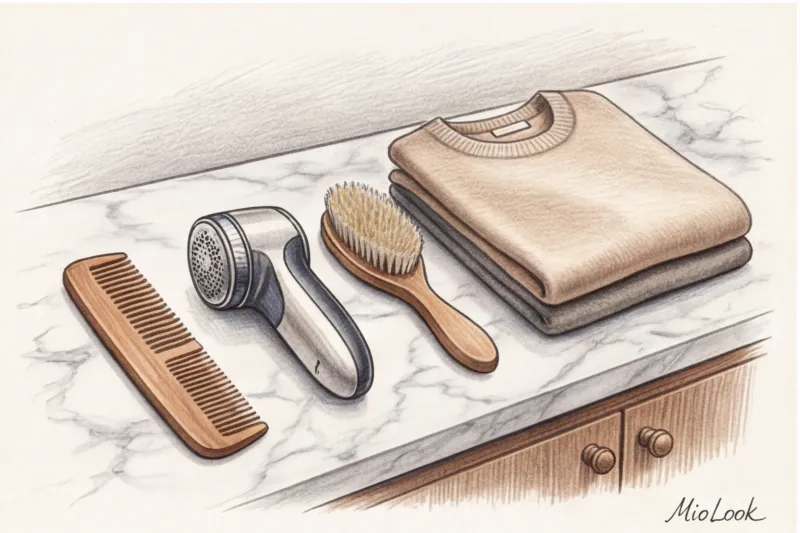
To care for delicate natural fabrics, stylists use special tools:
- Cashmere combs. A metal or nylon mesh carefully catches only the dropped fluff, without damaging the base of the thread.
- Special pumice for sweaters (sweater stone). Ideal for chunky knits and thick wool, it gently removes pilling thanks to its porous structure.
Pilling isn't a brand's downfall, but an indicator of the yarn's physical properties. By overcoming its fear and learning to distinguish the "noble shedding" of cashmere from cheap synthetic pilling, you'll be able to build a wardrobe that looks expensive after years of heavy wear. Pay attention to the fiber length, avoid acrylic-wool blends, and always perform a curl test in the fitting room—this habit will save you hundreds of euros.