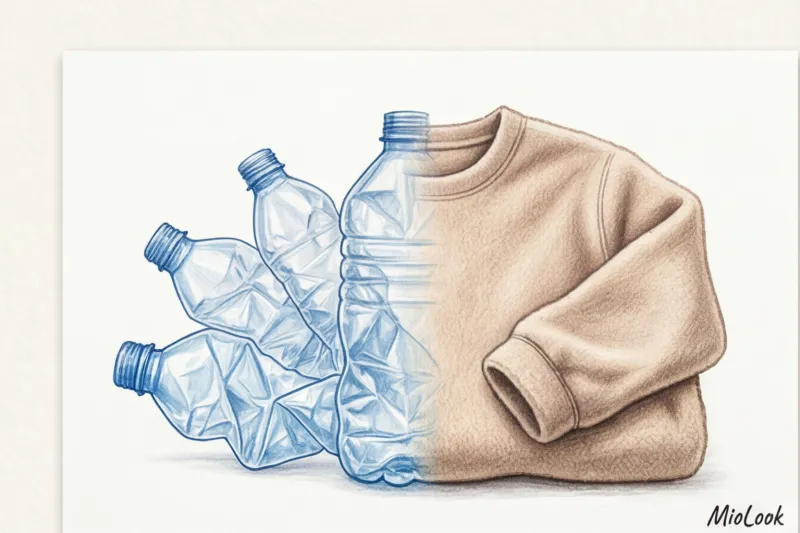
When you buy a hoodie labeled "50% organic cotton, 50% recycled polyester" for €80, you probably think you're doing the planet a favor. The manufacturer attached a green cardboard tag with a leaf on it, and the marketers added touching copy about cleaning the oceans. But as a textile expert and stylist, I'll tell you the hard truth: you've just bought an ecological dead end. It's practically impossible to recycle.
We have already talked in more detail about the evolution of artificial fibers in our A complete guide to the pros and cons of synthetic fabrics However, rPET (recycled PET) deserves a separate, brutal, and honest conversation. Brands love to use it to whitewash their reputations, but behind the pretty displays, there are many nuances—from critical loss of filament strength to the problem of microplastics.
Recycled polyester: the journey from plastic bottle to your wardrobe
In the strict language of textile chemistry, recycled polyester is Polyethylene terephthalate (rPET), made not from petroleum products, but from existing plastics. Sounds optimistic. According to a report from Textile Exchange ( Preferred Fiber and Materials Market Report (by 2023), rPET production requires 59% less energy and reduces CO2 emissions by 32% compared to virgin polyester production.
But herein lies the main catch. There are two fundamentally different ways to create this fabric:
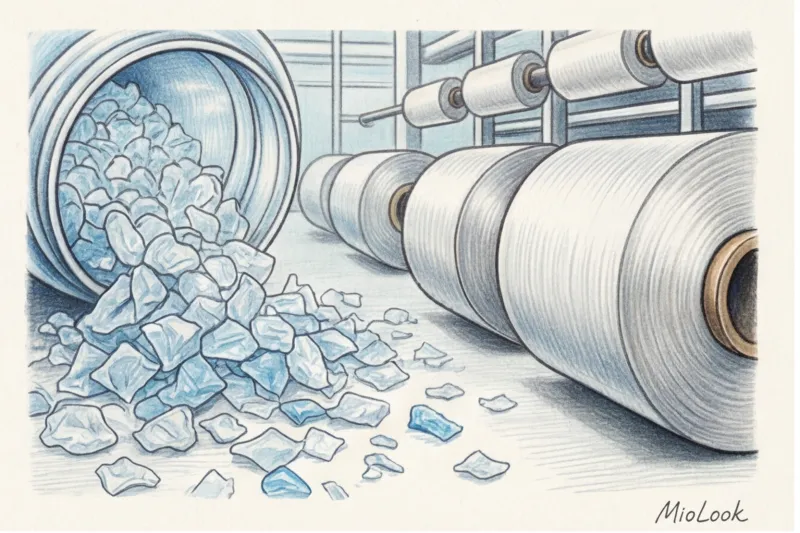
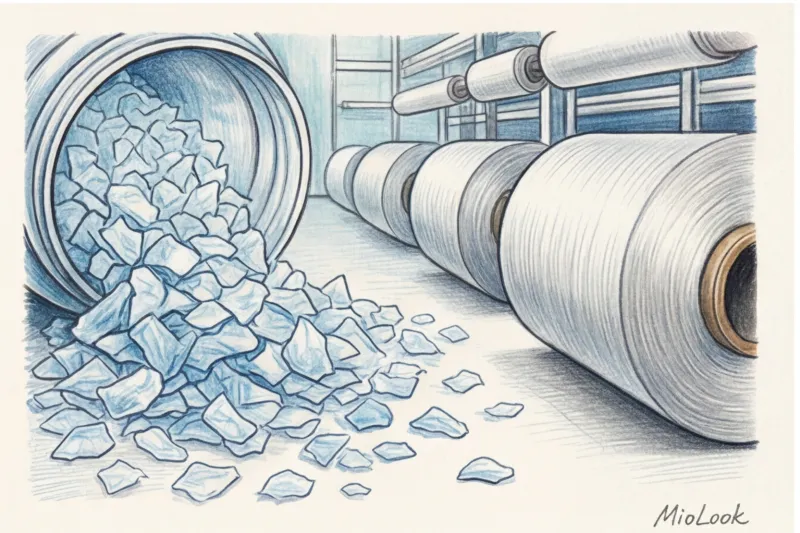
- Mechanical processing: PET bottles are washed, crushed into small flakes (flakes), melted, and spun into new filaments. This is inexpensive, but with each melting, the polymer structure is destroyed. The filament loses 15 to 20% of its strength, and the fibers themselves become short.
- Chemical processing: Plastic is broken down into its basic monomers, and then polyester is resynthesized. The resulting yarn is identical in quality to the virgin material. The problem? It's incredibly expensive, and the market for this type of fabric is critically low.
The statistics are stark: less than 1% of all clothing produced globally is recycled into new clothing (known as textile-to-textile recycling). The recycled polyester you see in mass-market stores is almost always yesterday's plastic soda bottles, recycled mechanically (and cheaply).
Your perfect look starts here
Join thousands of users who look flawless every day with MioLook. Our intelligent AI stylist will select the perfect capsule wardrobe based on the ingredients in your items.
Get access — €0.99 onceTactile examination: can rPET be distinguished by touch?
One of the most common myths I hear from clients is the claim that recycled synthetics are harsher, "glassy," or uncomfortable to the touch. In fact, modern rPET, if it has undergone a proper finishing process (enzyme washing, silicone softeners), is tactilely indistinguishable from virgin.
The problem doesn't manifest itself in the fitting room, but after the second wash. I had a particularly telling case. I was auditing a client's wardrobe, and we came across three basic sweaters from a popular brand's "Eco Aware" line (priced at around €60 each). She'd worn each sweater only a couple of times, but the underarms, sides, and inner sleeves were already covered in a thick layer of stiff pilling.

The reason? The very same short pile of mechanically recycled polyester. Due to the short length of the fiber, the thread begins to fluff and clump at the slightest friction.

"Your fingers may deceive you in the store, but the seams will tell the truth. If you gently tug at the side seam and see the threads have already started to fray, leave the garment on the hanger. It won't last a season."
Instead of relying on tactile sensations, I always look for abbreviations on the sewn-in tag. GRS (Global Recycled Standard) This certificate guarantees not only the percentage of recycled materials but also that no toxic chemicals were used in production.
Greenwashing in the Mass Market: When Eco-Labels Lie
Green labels work like hypnosis. We see the word "eco" and our brain automatically justifies the purchase. Brands are well aware of this and use clever marketing tricks to inflate the prices of perfectly ordinary items.
The most popular trick is playing with percentages. The inscription is in large letters. "Contains recycled materials" According to the RCS (Recycled Claim Standard), a product may contain only 5% recycled polyester, with the remaining 95% being cheap virgin plastic. You're paying a premium for sustainability that doesn't actually exist.
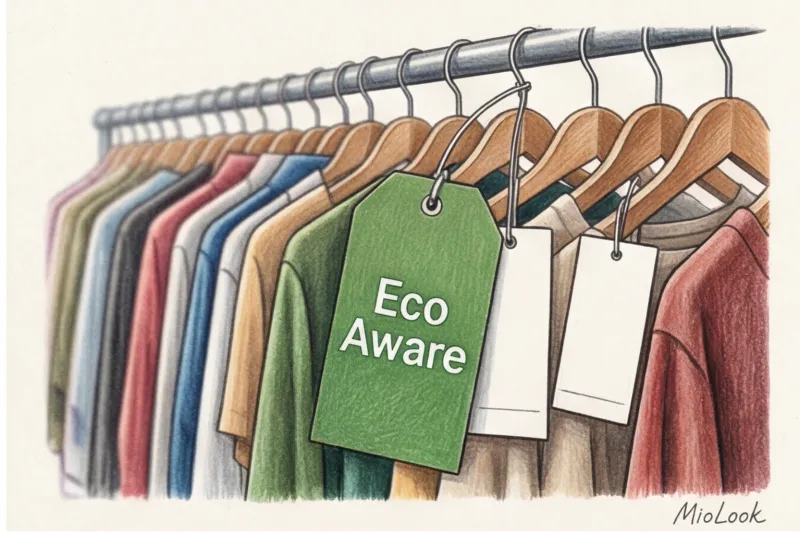
The second illusion is the myth of circularity. Turning a plastic bottle into a fleece sweatshirt isn't recycling; it's downcycling. The bottle could be recycled into a new food-grade bottle several more times. But once the plastic becomes a T-shirt, its life cycle comes to an end. Clothing made from bottles ends up in a landfill in 99% of cases.
Are rPET blended fabrics a dead end for the environment?
Here we come to any sustainability enthusiast's worst nightmare. Imagine a seemingly perfect, basic long sleeve: 50% organic cotton, 50% recycled polyester.
Today, separating natural and synthetic fibers at the recycling stage is so economically and technologically impractical that virtually no plant in the world undertakes it. By mixing cotton with polyester, manufacturers create a "Frankenstein" product that is neither compostable (due to the plastic) nor remeltable (due to the combustible cotton).
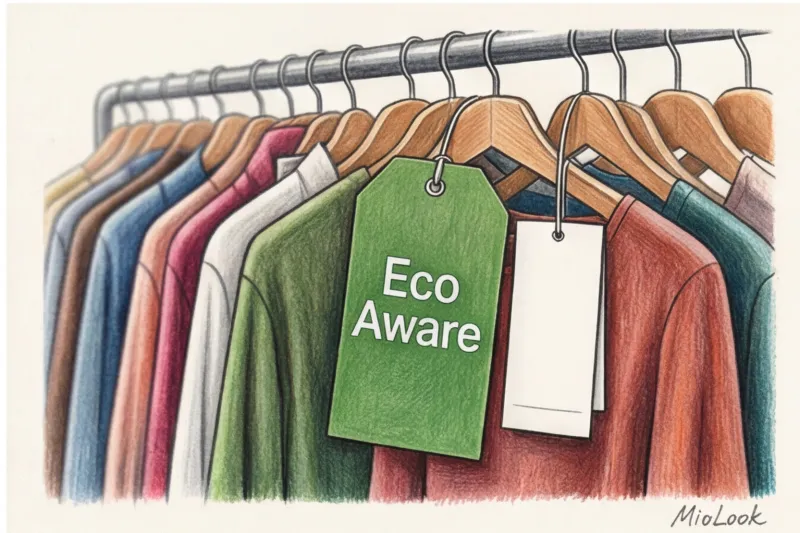
If you want to practice conscious consumption in clothing , adopt the mono-material principle as a rule. If you're buying cotton, make it 100% cotton. If you're buying an rPET sports bra, look for one that's at least 90-95% polyester (the rest is elastane for stretch).
Ready to get started?
Create the perfect capsule wardrobe using high-quality mono-materials. Try the MioLook plan for free—no commitments.
Get access — €0.99 onceThe Hidden Threat: The Problem of Microplastics
There's one fact about recycled synthetics that brands prefer to keep quiet about: rPET releases microplastics when washed, just like virgin polyester. Furthermore, research from the Institute of Oceanography shows that due to the fiber structure weakened by mechanical recycling, rPET fabrics can shed even more microparticles.
How does this happen? In the washing machine drum, items rub against each other. Short synthetic fibers break off and end up in the sewer system. These particles are so small (less than 5 mm) that wastewater treatment plants don't catch them, and they end up in the oceans.

Completely eliminating synthetics in today's world is impossible, but we can minimize the damage. My personal care guidelines for these items:
- No high temperatures: Wash synthetics only at 30°C. Hot water damages the thread more.
- Less RPM: Spinning at 600-800 rpm reduces friction.
- Special bags: Use lint-catching bags like Guppyfriend (costs around €30). They're made of monofilament, which doesn't shed microplastics but traps the fibers of your clothes inside the bag. After washing, simply collect the lint from the corners of the bag and throw it in the trash, not the water.
Which recycled polyester items are actually worth investing in?
Polyester is a tool. It has excellent properties: it doesn't wrinkle, dries quickly, wicks away moisture, and is windproof. My professional approach to wardrobe sorting (which we often use with clients in the app) MioLook ) is simple: we leave synthetics where they provide functional benefits, and not where the brand has decided to save on natural fabric.
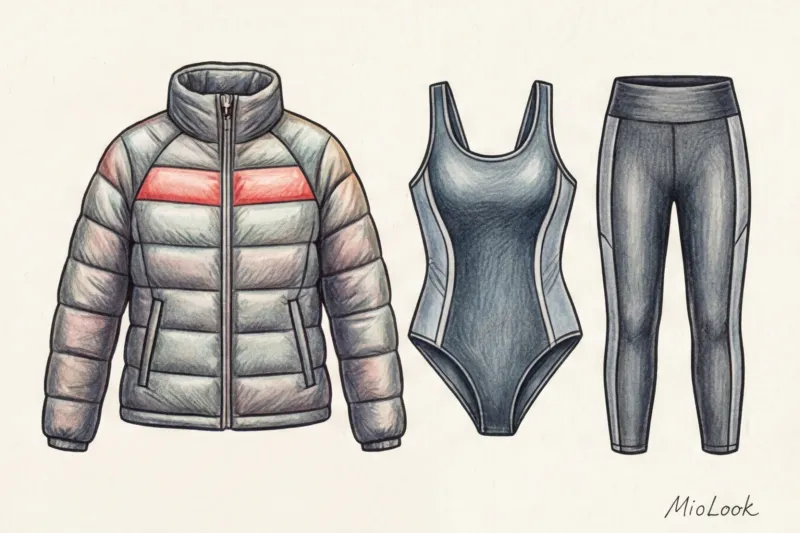
- Category "YES" (justified use of rPET): Down jackets, trench coats, backpacks, sneakers, swimsuits (especially closed burkinis (or models with UV protection) and sports equipment for the gym. These items require wear resistance, membrane properties, and, crucially, we wash them much less frequently than basic T-shirts.
- Category "NO" (avoid rPET): Underwear, everyday summer dresses, basic tops, pajamas. Any close contact with the body, combined with frequent (sometimes daily) washing, guarantees skin discomfort and tons of microplastics in the water.
The question often arises: is recycled polyester acceptable in a business wardrobe? If we are talking about suits for speakers or clothing style for IT specialists For those requiring a neat appearance throughout a 12-hour workday, a small amount of rPET (up to 20-30%) in a wool suit is acceptable. It will reduce creasing at the knees. However, an all-polyester suit will create a greenhouse effect (for more information on choosing fabric for performances, read our article " What fabric doesn't show sweat stains? »).
A stylist's checklist: consciously buying rPET items
Next time you find yourself in the fitting room with a cute coat or sweater adorned with a green tag, don't rush to take it to the checkout. Run a quick checklist with this one:
- Check the percentage of content: Ignore the cardboard label. Look for the sewn-in tag in the side seam. If it says less than 50% recycled polyester, the brand is simply greenwashing.
- Look for mono-materials: 100% rPET or a blend with elastane (up to 5-10%) is fine. A blend of rPET and cotton or rPET and wool is an ecological dead end and cannot be recycled.
- Rate the density of the weave: Stretch the fabric slightly against the light. The tighter the threads are (for example, in windbreaker fabric), the less microplastics the item will release during washing. Loose, knitted textures made from recycled polyester will lose their appearance the fastest.
- Availability of GRS standard: If you see this logo, it means the entire path from landfill to garment factory has been tracked by independent auditors.

Sustainable fashion isn't about buying things with the right tags. It's about buying things that will last for years. Recycled polyester deserves a place in your closet if it's a high-quality, technical running jacket or a reliable raincoat. But if it's a cheap, one-time-use hoodie, no amount of "eco" justifies the resources expended in its creation.