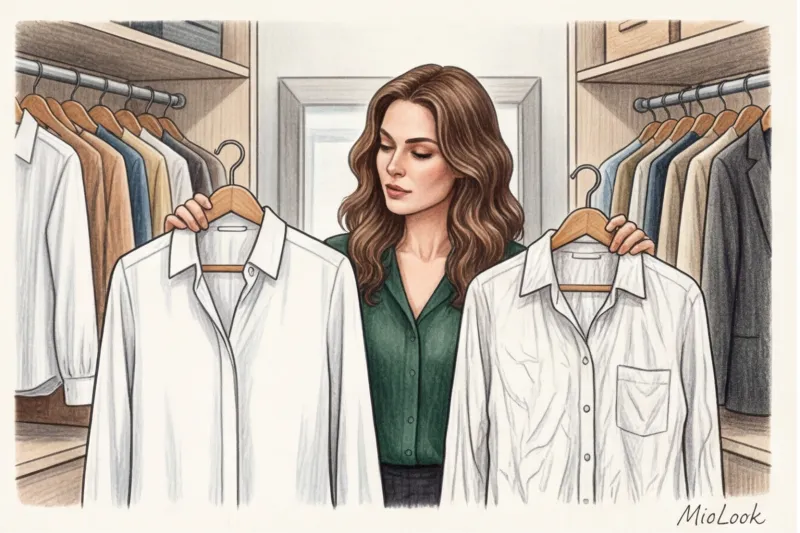
Last season, a client and I were shopping for a basic winter down jacket. I brought her a luxurious, oversized parka from the new collection for €1,200. She touched the smooth, shimmering fabric, and her eyes lit up. That was until she glanced at the tag. "Darina, this is 100% polyamide! I won't pay that much for plastic."

This is the most common and most unfair misconception I encounter as a stylist. Seeking outerwear made from 100% natural fabrics for active urban winters isn't self-care, it's snobbery. Snobbery that will lead to damp shoulders, faded colors, and an incredibly heavy back. Many clients genuinely don't understand when they see the following label: Polyamide - what kind of jacket fabric is it? in front of them, and why it can cost as much as premium cashmere.
We talked about the evolution of artificial materials in more detail in our A complete guide to the pros and cons of synthetic fabrics , but outerwear is a separate, architectural conversation. Forget the myths of the '90s. Today, the best winter and mid-season essentials are made from high-tech synthetics, and there are clear physical and aesthetic reasons for this.
Polyamide: What is the jacket fabric and why do premium brands choose synthetics?
For a long time, the word "synthetics" was associated with cheap, unpleasant-to-the-touch mass-market products. If you walk into an ultra-budget store and touch a €30 jacket, it will likely creak under your fingers and shine like a trash bag. But this isn't a problem with the material itself, but with the quality of the specific thread and cheap polyester.
Polyamide (PA) is a group of synthetic fibers originally created for maximum tensile strength. Miuccia Prada pioneered this material in the world of high fashion. In 1984, she revolutionized the industry by releasing backpacks and later outerwear made from parachute nylon (Pocono nylon). The fashion house proved that a high-tech fabric could be a luxury item. Today, Prada's innovative Re-Nylon costs thousands of euros, and fashionistas line up to buy it.
"Buying natural wool for snowfall is like using a silk scarf as an umbrella. Beautiful, expensive, but completely unusable," I always tell my clients during winter shopping.
Nylon and Polyamide: What's the Difference for the Buyer?
A common question in fitting rooms is, "Which is better—nylon or polyamide?" I'll let you in on a secret: they're the same thing. Nylon isn't a substitute for polyamide, but its most well-known commercial variety.
The formula for the material was patented by DuPont chemists in the late 1930s. The name "nylon" became synonymous with "Xerox" or "Pampers." That's why European brands often label their products as Polyamide (PA), while American brands use Nylon. The essence remains the same: it's a strong, lightweight, and incredibly durable fiber that saved the outdoor clothing industry.
The Anatomy of the Perfect Jacket: Why Wool and Cotton Are Hopelessly Outmatched
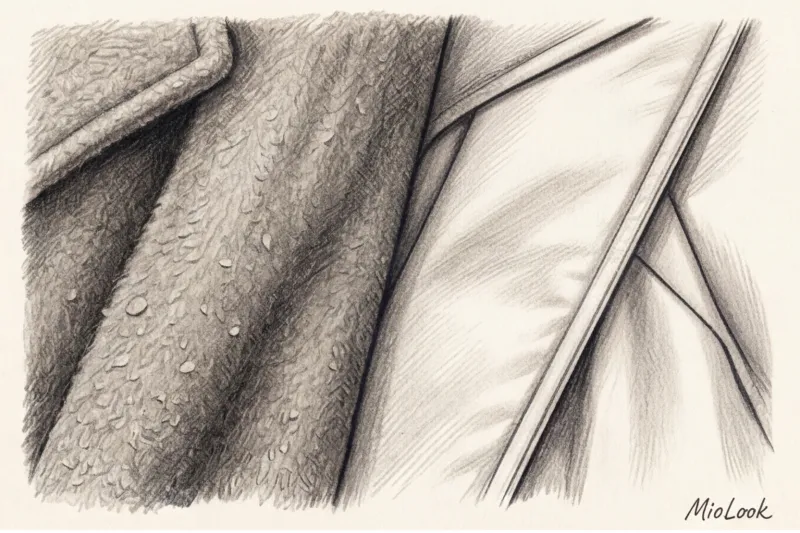
Let's do a mental weather test. What happens to a fashionable wool duffle coat or a thick cotton parka in wet snow? They start greedily drinking water.
Let's look at the numbers: wool can absorb up to 30% of its own weight in moisture before you feel damp. Cotton can absorb even more. As a result, your coat, which already weighed 1.5 kg, becomes like lead armor on your shoulders. It becomes deformed, stretches out at the elbows, and loses its shape.
Polyamide has extremely low hygroscopicity—it absorbs only 4–6% moisture. And thanks to the tightly twisted yarns and special impregnations, water simply rolls off in beads.
Moreover, synthetics excel in terms of cut architecture. Have you noticed how stunning Balenciaga's modern cocoon-like down jackets or COS's sculpted trench coats look? They maintain that rigid, exaggerated volume solely thanks to the elasticity of the polyamide fibers. A soft natural fabric would simply sag.
When it does NOT work: Of course, we don't wear 100% polyamide next to our bare skin. Synthetics are terrible as a base layer—for T-shirts and turtlenecks, we always choose cotton, viscose, silk, or cashmere. But for an outer barrier against the elements, it's unrivaled.
Access to MioLook for €0.99 — one-time payment
A smart AI stylist will select the perfect look based on your outerwear and suggest the best combinations.
Get access — €0.99 onceColor that never fades: A colorist's take on polyamide
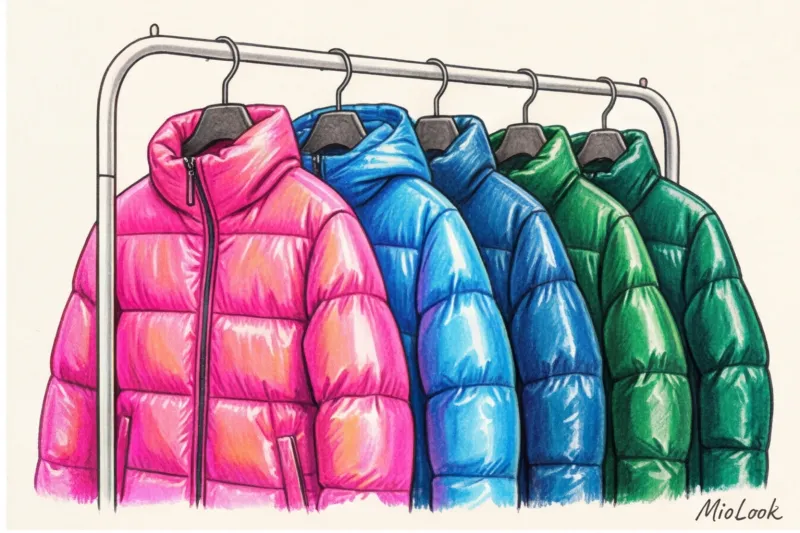
As a certified colorist, I evaluate fabrics not only by feel but also by how they handle pigment. And here, polyamide has a superpower rarely mentioned in fashion magazines.
Women with contrasting color types (especially "Winter") often complain that they can't find outerwear in the perfect, vibrant shade—pure fuchsia, neon electric blue, or deep emerald. It's technically impossible to achieve such colors on 100% cotton or linen—the porous structure of the natural fiber creates a "dusty," muted effect.
Dye molecules are embedded in the polyamide during the melt-forming process, literally locking the pigment within the yarn. According to the WGSN Textile Trends Study (2024), high-tech synthetics enable brands to achieve maximum color rendering and UV resistance. Your expensive cobalt-colored jacket won't turn into a faded rag after just one season in the bright, frosty sun.
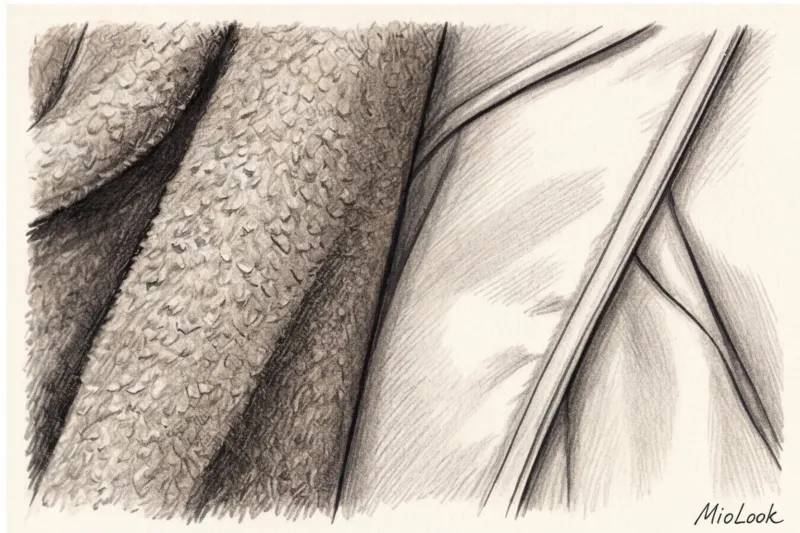
The second bonus is a refined shine. Polyamide can have any texture, from completely matte to a luxurious satin finish. This subtle satin sheen acts as a highlighter, visually illuminating the face and elevating the entire look.
Weaving technologies: Ripstop, Taslan and other codes on labels
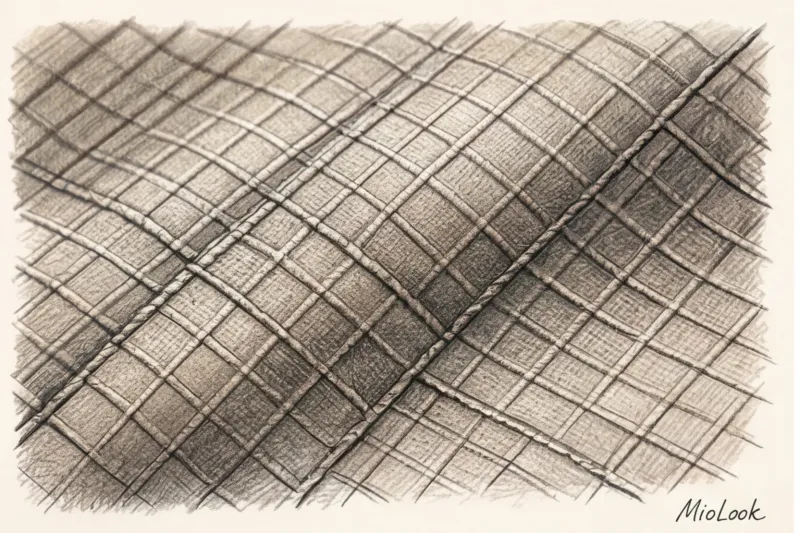
So that you don’t get lost in the store and don’t make mistakes emotional clothing purchases Just because of the beautiful color, let's learn to read labels and textures like stylists do.
- Ripstop: You'll recognize it by the distinctive fine mesh or checkered pattern on the fabric. A thicker reinforced thread is woven into the polyamide structure. Even if you snag a nail, the jacket won't tear beyond this small checkered pattern. Ideal for outdoor activities and premium down jackets.
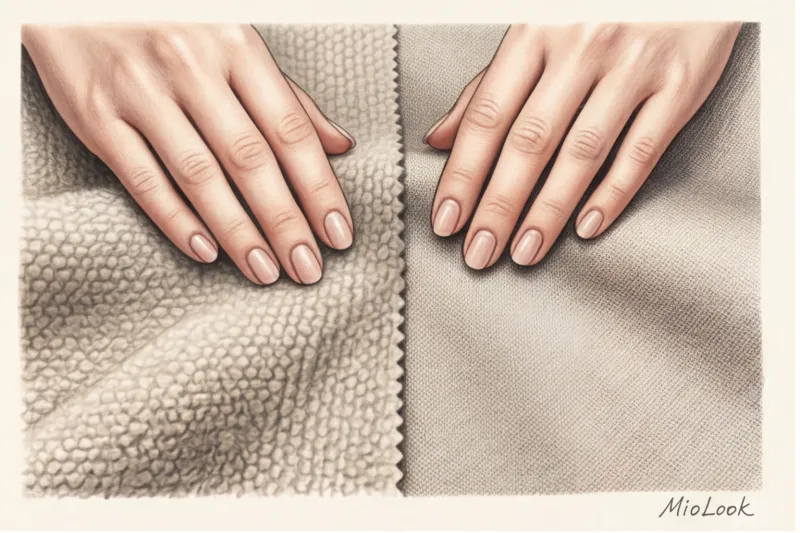
- Taslan (Taslan): Finely ribbed fabric (grosgrain weave). It's incredibly dense, slightly rough to the touch, and highly resistant to dirt. The perfect choice for long walks with the dog or playgrounds.
- Oxford: A woven "rozhka" pattern, where the threads form textured squares. A very durable material, it is often used in parkas designed for extreme cold.
Your perfect look starts here
Join thousands of users who look flawless every day with MioLook. Upload your items and get ready-made capsules.
Get access — €0.99 onceMembrane and polyamide are the perfect pair for the city.
"I sweat in synthetics; they don't breathe!" is another stereotype borne out of the dubious origins of commercial down jackets. A quality modern jacket works on the principle of layering.
The outer layer is made of durable polyamide (protection from wind and snow). Underneath is a porous membrane (such as Gore-Tex), which keeps water droplets out but allows vapor molecules (your sweat) to escape from the inside. If you choose the right base layers, this jacket will be comfortable at temperatures ranging from -20°C outside to +15°C on the subway.
A stylist's checklist: how to choose an expensive-looking polyamide jacket
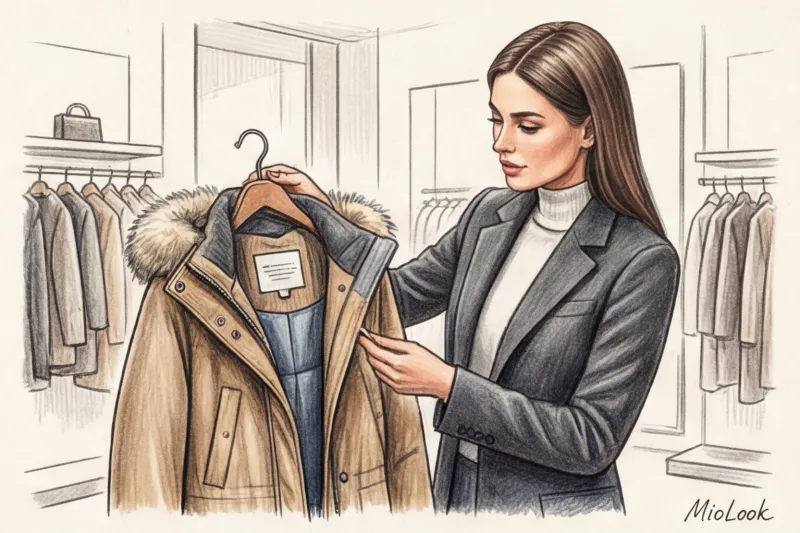
Not all polyamide is created equal. Over 12 years of reviewing wardrobes, I've developed a formula for visually expensive synthetic outerwear. Here's what I check right in the fitting room:
- Texture and shine. Avoid cheap, oilcloth-like or overly glossy sheens unless they're a deliberate stylistic choice (like Moncler down jackets). Look for a deep matte or delicate satin finish.
- Acoustics of things. Crumple your sleeve in your fist right next to your ear. High-quality, thick nylon will rustle softly and dullly. Cheap polyester will squeak and crunch loudly with every movement.
- Quality of seams. If the jacket is advertised as waterproof, check the seams from the inside - they should be taped (sealed with special tape).
- DWR (Durable Water Repellent) test. If you're buying a jacket in the €200-€500 range, it should have a factory-applied impregnation. Lightly spray water onto the sleeve (a drop from a bottle of drinking water is enough). If the drop soaks in and leaves a dark spot, the impregnation is missing or of poor quality. The water should form a springy bead and roll off.
If you've found that perfect jacket but aren't sure how it will fit into your looks, just upload a photo of it to MioLook app Artificial intelligence will instantly create stylish combinations with items from your current wardrobe.
Caring for nylon and polyamide: to make your item last for years
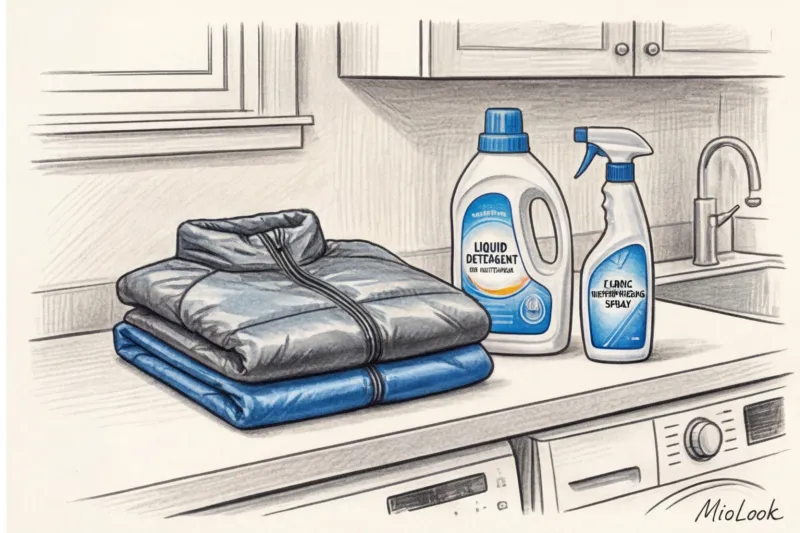
Synthetics are easy to care for, but there are three fatal mistakes that will ruin even a premium jacket in one wash cycle.
First, the temperature. 60 degrees Celsius is fatal to the structure of the polyamide fibers and membrane. We wash strictly at 30–40 degrees Celsius on a delicate cycle.
Secondly, forget about regular laundry detergents. Their fine granules don't rinse out completely, clog the fabric's micropores, and completely destroy the water-repellent finish. Use only specialized liquid gels for membrane fabrics or sportswear.
Thirdly, drying on a radiator is strictly prohibited. Direct heat will cause polyamide to deform. Dry the jacket at room temperature, laying it flat or on a wide hanger.
Stylist's secret: DWR treatments don't last forever. After about 3-5 washes, water will stop beading off your jacket. This doesn't mean the item is ruined. Simply buy a water-repellent textile spray (costs about €10-15) at a sporting goods store and apply it to a clean, dry jacket. It will be as good as new again.
Ready to get started?
Try the MioLook plan for free—no commitments required. Organize your wardrobe and create looks like a professional stylist.
Get access — €0.99 onceSummary: When synthetics are the best wardrobe investment

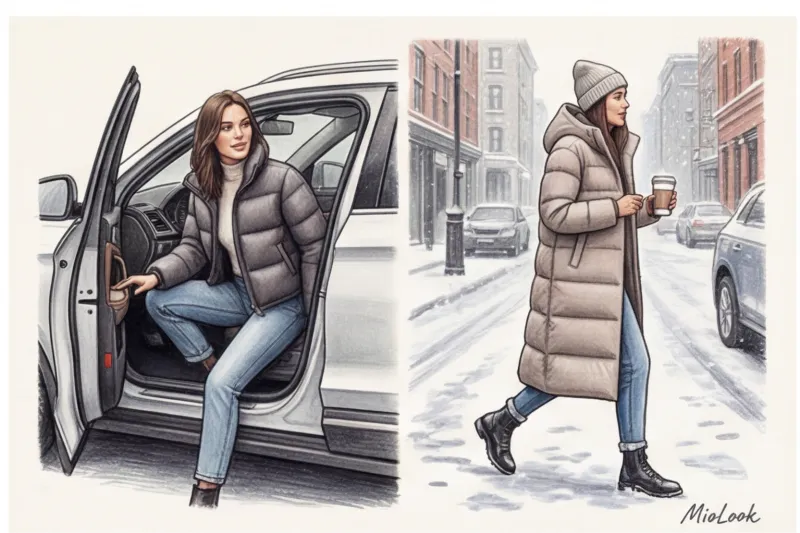
The "100% polyamide" label on a down jacket, trench coat, or parka isn't a brand trying to cut corners. It's a sign of technological advancement, durability, and practicality. This material allows designers to create lightweight (just 300–500 grams!) yet incredibly warm garments that are resistant to wet snow and transport chemicals.
Next time you're shopping, allow yourself to break the "I only buy natural" rule. Try on a quality nylon down jacket, appreciate its weightlessness, and appreciate the sheer color of the fabric. Choose clothes that work for you, not ones that require constant protection from the elements.