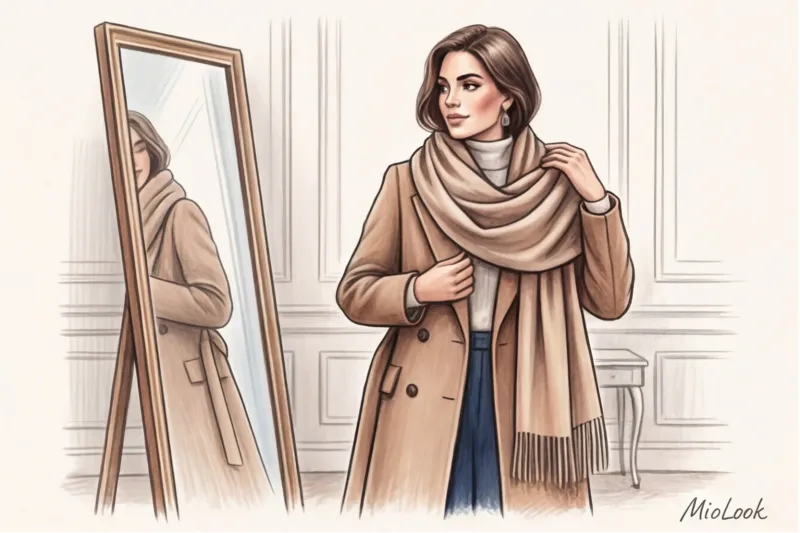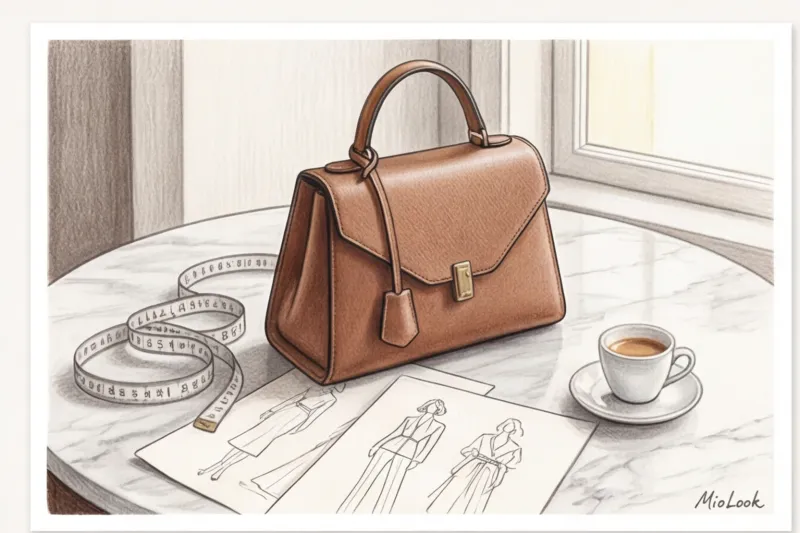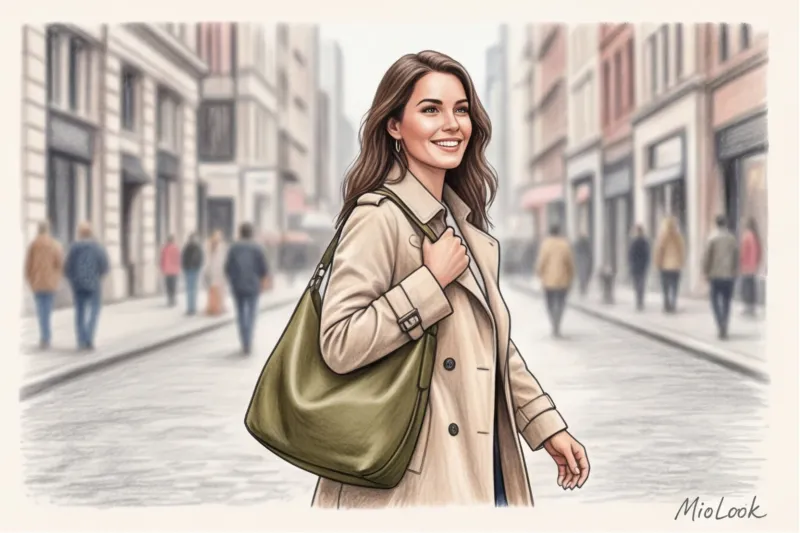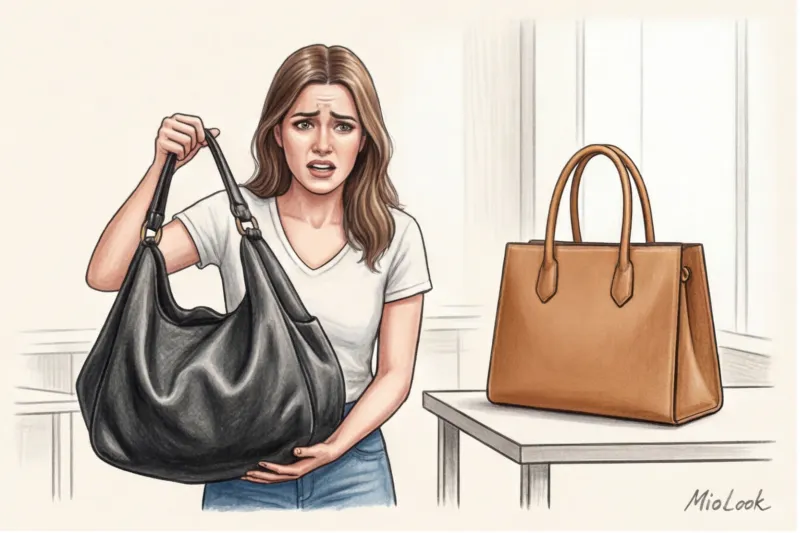
Every week, the same scene plays out in my studio. A client, with a tired sigh, places her bag—heavy, shapeless, and overflowing—on the chair and says, "Katarzyna, I need a new, basic everyday bag. Preferably black, so it goes with everything." And every time, I begin our work by shattering this stereotype.
The perfect everyday accessory isn't chosen based on the season's color or the brand's logo. It's pure engineering: logistics, weight calculations, and geometry. If you want to delve deeper into the theory of shapes and textures, be sure to check out our A complete guide: how to choose a women's bag for every day — there I analyze the anatomy of accessories down to the millimeter. And in this article, we'll move on to the rigorous practical application.
In 14 years of working as a personal stylist, I've learned one thing: most style problems start with a mismatch between your bag and your actual, not imagined, routine. You can buy a stunning micro tote, but if you're carrying a laptop, a lunchbox, and a change of shoes for your child every day, you'll end up carrying a luxurious bag and... an ugly plastic bag in the other hand.
A Basic Everyday Bag: A Rigorous Audit Method
Shopping doesn't start at Massimo Dutti or COS. It starts at your kitchen table. We often choose things for the version of ourselves who leisurely sips espresso on the terrace. But a basic bag should serve the version of us who runs in the rain to the subway or tries to open the car while holding a cup of coffee and keys.
The "throw it all on the table" rule: determining volume
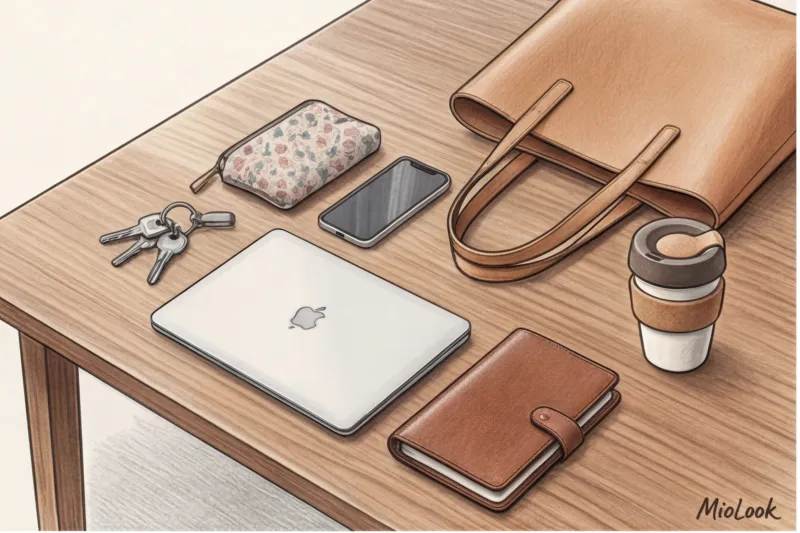
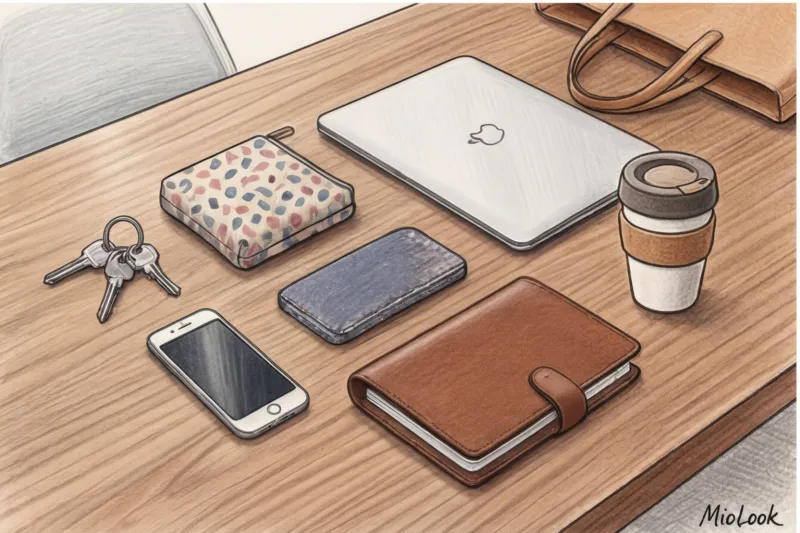
My favorite method for working with clients is to literally empty their current bag onto the table before they go shopping. Now sort it.
On the left, place the "essentials": keys, phone, cardholder, passport, and a basic cosmetic bag. On the right, place anything that might trigger the "Mary Poppins syndrome": three dry pens, a spare umbrella you haven't opened since last year, and a kilogram of receipts.
Your new bag should only fit the left pile plus one of your largest everyday items. If it's a 15-inch laptop, a rigid base is crucial, otherwise the device will pull on your skin and the bag will lose its shape within a month. If it's a food container, look for a wide base (at least 12 cm) to ensure it stands level.
Logistics: metro, car or on foot
How do you navigate? This is the first filter that will eliminate 50% of the store's inventory.
- Metro and public transport: Open totes (shoppers) are your worst enemies here. They're unsafe and uncomfortable in crowds. Your basic bag should have a closed zipper and a long crossbody strap to free your hands.
- Automobile: This is where open totes and top-handle bags really shine. You need to be able to easily throw the bag onto the seat next to you and quickly retrieve your phone at a stoplight.
- Hiking and freelancing: If you log 10,000 steps a day with a laptop, forget about shoulder bags. Stylish convertible backpacks made of thick leather or wide messenger bags are your choice.
Your perfect look starts here
Join thousands of users who look flawless every day with MioLook. Upload a photo of your bag, and the AI will suggest dozens of looks to match it.
Get access — €0.99 onceThe Black Myth: Why a Black Bag Isn't the Best Base
And now comes my main counter-insight, which always shocks me during consultations. A black bag is NOT a universal staple. In fact, in 70% of wardrobes (especially if you love light, pastel, or warm, earthy tones), a black bag looks like a heavy, out-of-place blob.
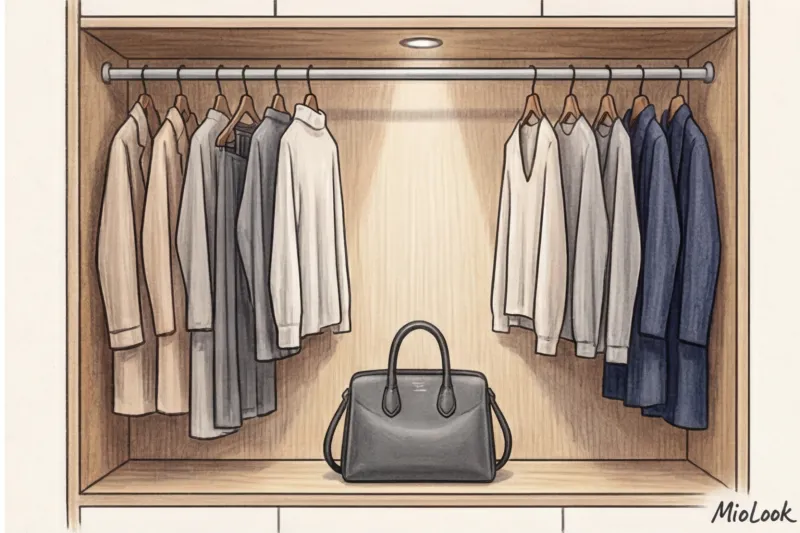
Ever notice how a black bag looks like a black hole against a beige trench coat or powder-colored overcoat, stealing all the attention? Black is a sharp color. It requires support in the form of black shoes, a belt, or dark hair. If your wardrobe is built on shades of camel, gray, off-white, or denim, you need "sophisticated neutrals."
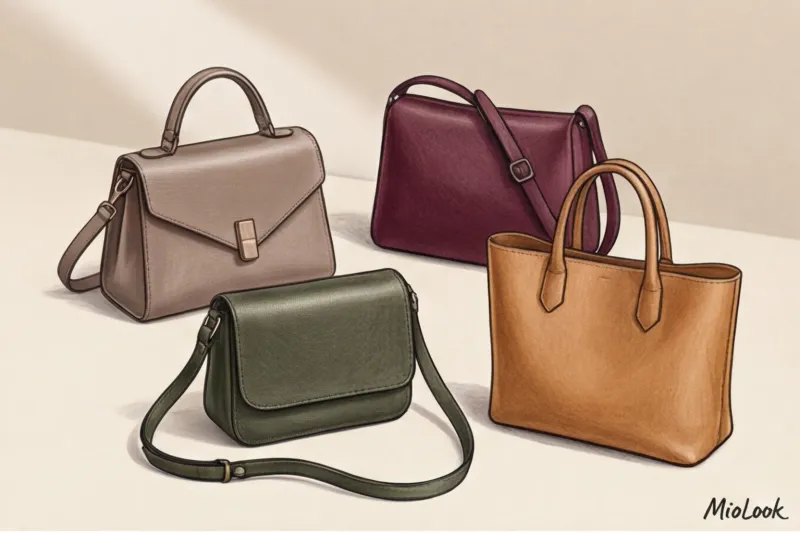
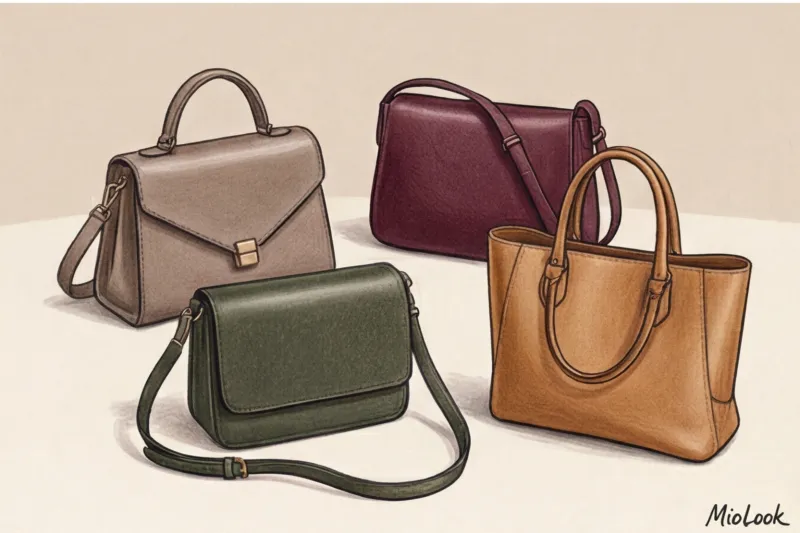
A universal palette: taupe, burgundy, emerald and caramel
According to the WGSN global color trends report (2024), it's the concept of "quiet luxury" that has brought deep alternatives to black to the forefront. Here's what works flawlessly:
- Taupe (grey-beige): A complete chameleon. It mimics both cool colors (gray, blue) and warm colors (beige, brown).
- Burgundy / Oxblood: It looks three times more classy than black and works as the perfect contrast to gray suits and blue jeans.
- Dark emerald and bitter chocolate: An excellent replacement for contrasting looks in the autumn-winter period.
"Switch out your usual black bag for a dark chocolate shade, and watch your everyday look instantly become more expensive and sophisticated without any extra effort."
Geometry and frame: hard form versus soft form
The bag is the focal point of your silhouette. This is where the rule of stylistic contrast comes into play.
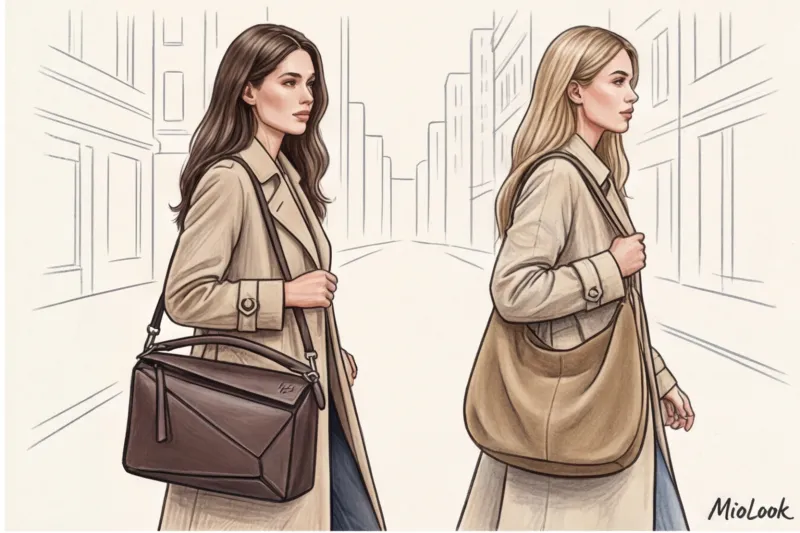
A rigid frame (structured bags, briefcases, totes with sharp angles) conveys status, composure, and discipline. It's the perfect solution for a business dress code. But there's a subtle nuance: if you're wearing loose, loose knitwear (a soft sweater, palazzo pants), a rigid bag will pull the look together and prevent it from becoming sloppy.
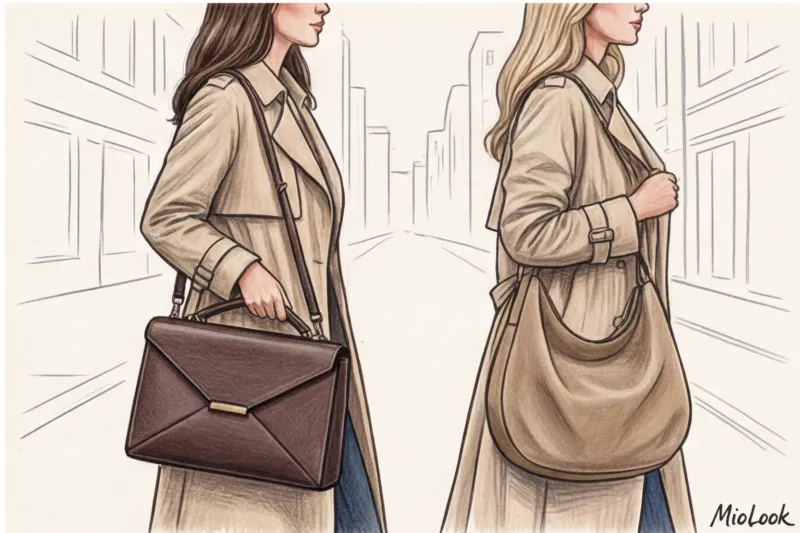
Soft shapes (hobo bags, soft sacks) convey a relaxed feel. They look great with formal suits, softening their formality.
When it does NOT work: Never pair a shapeless soft bag with an equally shapeless down jacket or tracksuit when going to a work meeting. You'll look like you just stepped out of the gym.
Fittings, weight, and materials: an insider's view
Let's talk about health. Medical orthopedic recommendations state that the weight of your everyday bag when filled should not exceed 10% of your body weight. If you weigh 60 kg, your bag with your laptop and makeup bag should weigh a maximum of 6 kg.
Now here's the harsh truth: the average A4 leather tote bag weighs around 1-1.2 kg on its own. Add in heavy hardware, chains, and locks, and the empty bag weighs 1.8 kg. I've had clients complain of chronic shoulder pain from heavy bags with huge metal locks (like the iconic Chloe Paddington). A basic everyday bag should be lightweight—ideally under 800 grams for a large size.
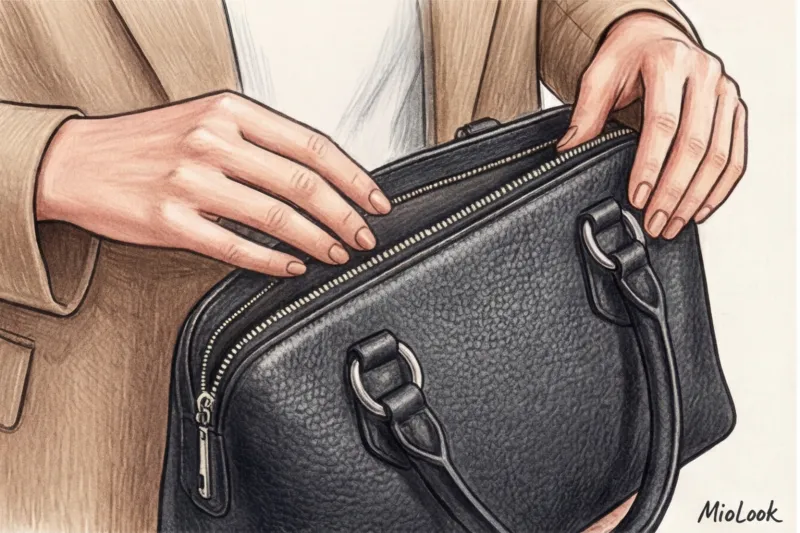
When it comes to materials and fittings, my experience shopping in European mass markets dictates clear rules:
- Fittings: The less metal, the better. An abundance of cheap gold or silver zippers cheapens the look. Look for hidden hardware or minimalist matte elements.
- Smooth skin: It looks luxurious on display, but gets scratched within the first week of riding the subway.
- Pebbled leather: A timeless staple. For example, Massimo Dutti often produces grained leather models that last for years without losing their appearance.
- Thick nylon or canvas: Ideal if you need to drastically reduce the weight of your bag (a nylon shopper weighs only 300-400 grams).
Ready to get started?
Try a free plan—no commitments. Organize your smart wardrobe and create capsule wardrobes in one click.
Get access — €0.99 onceChecklist: 5 Steps to the Perfect Everyday Bag
I love clear algorithms. Before you take your bag to the checkout, run it through this checklist. If even one item doesn't match, return the item to the shelf.
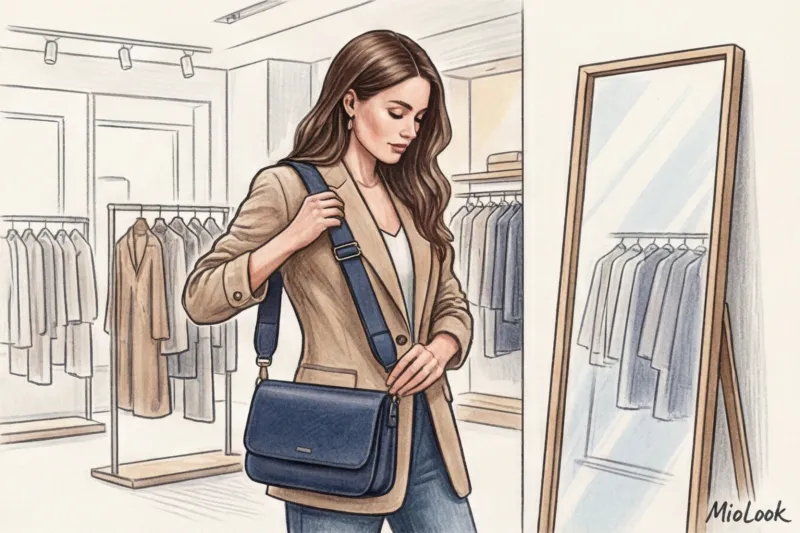
- Does it pass the hands-free test? Can you wear it over your shoulder or crossbody to answer a message or grab a coffee with both hands?
- Does it fit your largest everyday item? A laptop, an A4 folder, or an umbrella. Try them on right in the store.
- Does the color match your outerwear? Think about your coats and jackets. Your bag should match at least three of your closet items. (Hint: To test this in advance, add a photo of your outerwear to MioLook and see how they combine).
- Is it safe? Does it have a zipper, a flap, or even a magnetic snap? Will you be able to ride with it on public transport without worrying about your wallet?
- Is the belt width comfortable? For bags you plan to carry over 2 kg, the shoulder strap width should be at least 3.5 cm. Narrow spaghetti straps dig into the skin and ruin your posture.
Basic Model Examples: Investing Wisely (Cost Per Wear Formula)
A basic everyday bag is the one item in your wardrobe you can't skimp on. You can buy a trendy evening clutch for 30 euros for one season, but a basic bag demands quality.
In styling, we use the Cost Per Wear (CPW) formula. You divide the cost of an item by the number of times you'll wear it. A €300 bag made of excellent leather that you wear five days a week for two years (about 500 wears) will cost you 0.60 cents per wear. A cheap €50 bag made of stiff faux leather whose handles crack after a month (20 wears) costs €2.50 per wear. The math is ruthless: a good basic is always cheaper.
What formats are worth paying attention to right now?
- A4 tote with hard bottom: Ideal for corporate dress codes, choose trapezoid-shaped models—they look more elegant than rectangular "box" ones.
- Medium Structured Crossbody: If you don't need to carry a laptop, models like the Celine Classic Box or minimalist options from &Other Stories are timeless standards.
- Saddle bag: The semi-circular shape perfectly softens strict images, while remaining collected and roomy.
Stop searching for the mythical "one bag for everything." Analyze your day, calculate your volume, choose a sophisticated, deep shade instead of boring black—and you'll get an accessory that complements your style, not clashes with it.