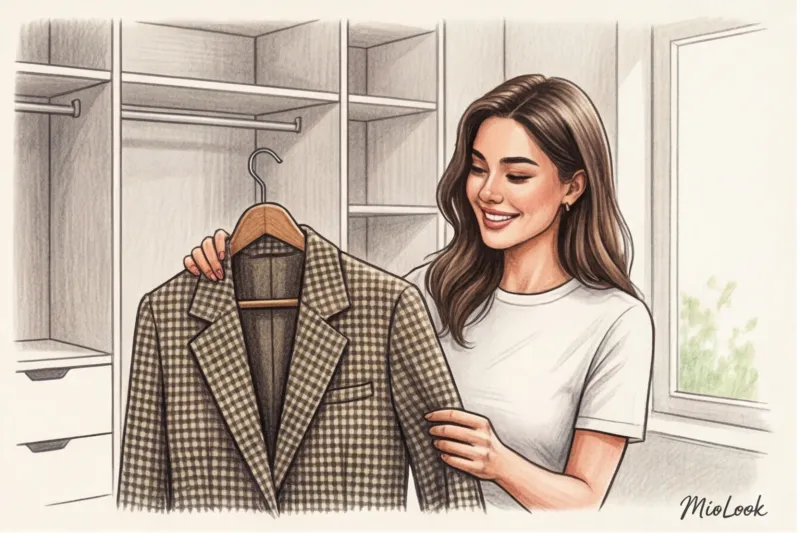
Why do vintage clothes belong in a modern woman's wardrobe?
Have you ever noticed how often a new mass-market item loses its appearance after just three washes? Buttons barely hold on, seams become crooked, and the fabric becomes covered in pills. Over my 14 years as a stylist, I've heard this complaint from hundreds of clients. That's why vintage clothes in the wardrobe — is no longer the preserve of eccentric collectors or budget-conscious students. Today, it's the most intelligent way to dress, solving several key problems of modern shopping.
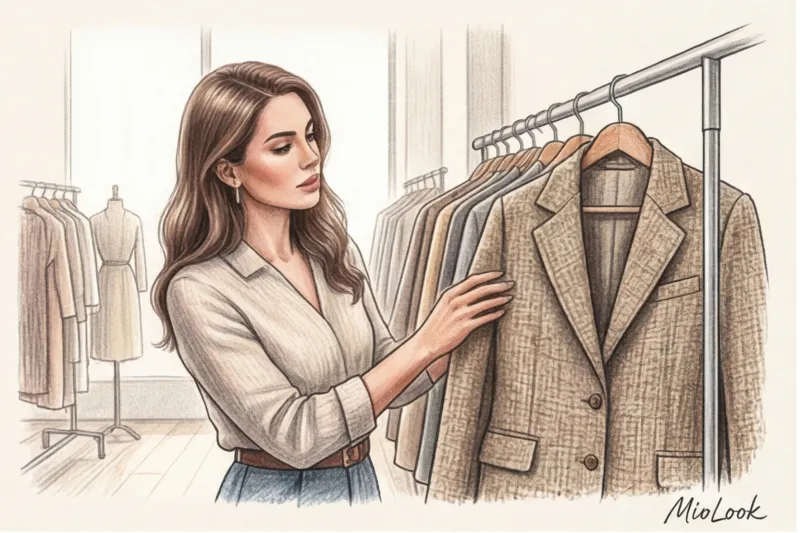
Let's start with the basic mathematics and physics of materials. The main difference between modern mass-market garments and those of the past lies in the very approach to production. In the 80s and 90s, brands strived for durability, not the speed of producing micro-collections. If you pick up a vintage wool jacket, you'll immediately feel the difference. The fabric density was incomparably higher, the compositions purer. Patterns were designed with the body's natural curves in mind, with precise darts and generous seam allowances. Modern fast fashion, on the other hand, often cuts garments along straight lines to minimize fabric waste and reduce the seamstress's time. The quality of the internal seams and lining finishes in garments from 30 years ago easily rivals today's premium segment, where prices start at €500. A vintage original will cost you a modest €50–€100. What fabrics always look expensive? I often talk about this during consultations, and vintage wool is unrivaled here.
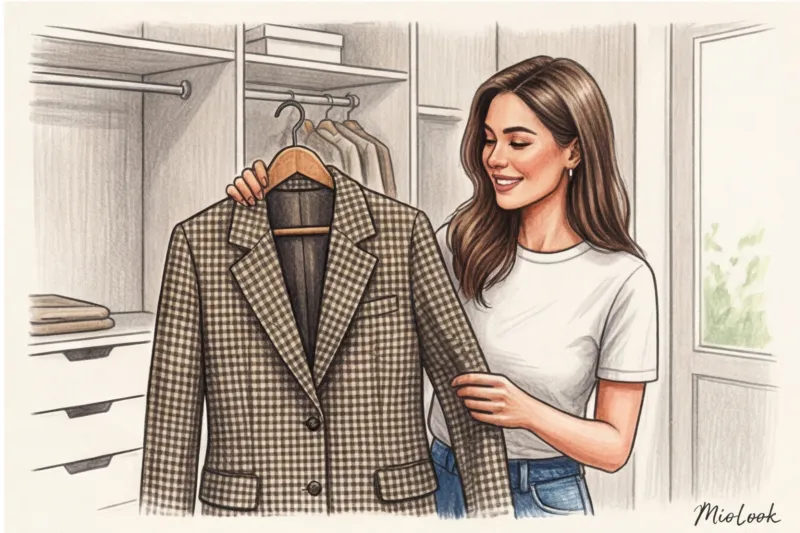
The second, no less important argument is protecting your personal brand. In the corporate world, style functions as your visual signature. What are the chances of showing up to an important office meeting and bumping into a colleague wearing the exact same tweed jacket from the latest Zara drop? In a major metropolis, the odds are close to 100%. Vintage clothing provides an ironclad guarantee of uniqueness. You can be sure you won't become a "clone" in an open-plan office.
I had a particularly revealing experience. My client, a financial director, hated networking events and social pauses. I suggested she incorporate a chunky vintage brooch from the 1980s into her formal, minimalist suit. At the very next conference, this detail proved to be the perfect icebreaker: several people approached her to compliment her and ask about the piece. The piece, steeped in history, became an elegant topic for small talk and helped her make valuable connections without the slightest stress.
Finally, it's impossible to ignore the global context. Sustainable consumption has long since outgrown its status as a passing fad among eco-activists. Today, it's a sign of high social status and good manners. According to an authoritative report ThredUp Resale Report (2024) The global secondary clothing market is growing 15 times faster than traditional retail. By investing in pieces with a story, you convey an important message: I don't fall for short-term marketing gimmicks, I have taste, and I care about the planet's resources. This is one of the most powerful secrets of How to look expensive on a budget.
Integrating such finds into your everyday life may seem daunting at first, but that's where modern tools come in handy. To visualize how a vintage purchase will pair with your modern essentials, I recommend creating a digital wardrobe in an app. MioLook — this way you can mix eras and plan looks in just two clicks.
Vintage, second-hand, and resale: Understanding the terms for smart shopping
Clients often show me their finds with pride: "Look at this awesome vintage Zara cardigan from 2015!" And I have to gently but firmly disappoint them. Confusion over terminology is the main reason why, instead of stylish investments, outright junk ends up in your closet. To ensure that vintage clothing in your wardrobe truly enhances your image and doesn't make you look sloppy, let's once and for all draw the line between these concepts.
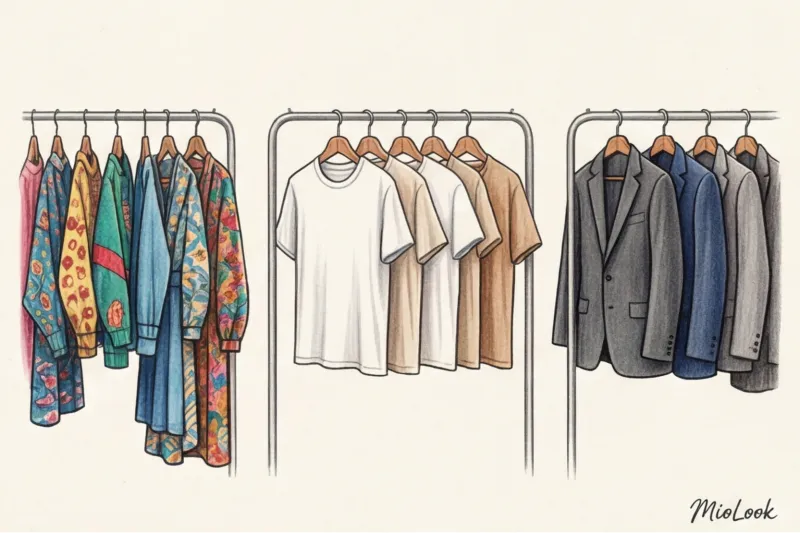
Second-hand — literally secondhand clothing. In 95% of cases, the racks of these stores are filled with modern mass-market items that someone has worn a couple of times and then given away. You can buy things there, but it's more about saving money than about unique style. A basic T-shirt or jeans from a secondhand store offer no value other than utilitarian.
Vintage — that's a whole different league. According to the fashion industry's strict rules, vintage is defined as anything over 20 years old that vividly reflects the spirit and aesthetics of its era. Here's where I must offer a word of caution to newcomers: Not everything that is old is vintage This is the most dangerous misconception, which inevitably leads to the "grandmother's trunk" effect. How do professional stylists distinguish between an old item and a vintage investment? We always look for three markers: the characteristic cut of the decade (for example, the structured shoulders of the '80s), impeccable fabric quality (molded hardware, 100% dense wool, heavy silk), and condition. Remember the golden rule: a washed-out turtleneck made of pilled acrylic from 1998 is just an old turtleneck, its place is in the recycling bin.
Resale — is a civilized resale of modern, branded, and premium items. On major international resale platforms (such as Vestiaire Collective or The RealReal), items undergo rigorous authentication by experts. This is your best and safest option if you want to buy a classic Max Mara coat for €400 instead of €2,500 in a boutique. You get a contemporary design in perfect condition, but at a reasonable price.
Archive collections (Archive) — this is the pinnacle of fashion design and a true coveted prize among fashion insiders. Archival pieces are iconic runway pieces from specific designers' past seasons. For example, those deconstructed Maison Margiela jackets from Martin's era or Tom Ford's early Gucci pieces. Over time, such pieces become works of art, steadily increasing in value and considered a serious financial investment.
Access to MioLook for €0.99 — one-time payment
A smart AI stylist will create the perfect look by integrating your vintage finds into a modern base.
Get access — €0.99 onceUnderstanding this difference immediately changes your focus. Before you go shopping, define your goal. Need a modern, high-status bag at a lower price? Go resale. Looking for a unique jacket with a story to add a touch of style? Go vintage hunting.
Stylist's Rules: How to Wear Vintage Without Looking Like You're From a Chest
According to Lyst statistics (2023), searches for items with a history have increased severalfold. But buying is only half the battle. While strolling the streets of European capitals or browsing street style, I often analyze why vintage items look like couture on some people, while on others they look like utter mothballs. The answer lies in proportions and styling.
The biggest mistake newbies make is dressing head-to-toe in vintage. Let's be honest—unless you're going to a '70s-themed party or participating in a historical reenactment, a total retro look works against you. It instantly ages you, makes your look cartoonish, and takes away from the dynamic.
When creating individual capsule collections, I always follow the 80/20 rule. The formula for impeccable taste is: 80% modern basics and a maximum of 20% vintage accents. All the magic lies in the contrast between eras. Imagine a voluminous men's jacket from the '80s with exaggerated shoulders (you can find such a find in a Berlin or Paris vintage boutique for around €120-150). Pair it with a skirt from the same period, and it will look dated. But pair this vintage top with ultra-modern bottoms—for example, wide-leg straight-leg jeans from 2024 and simple leather sneakers—and you'll get a look worthy of a glossy magazine cover.
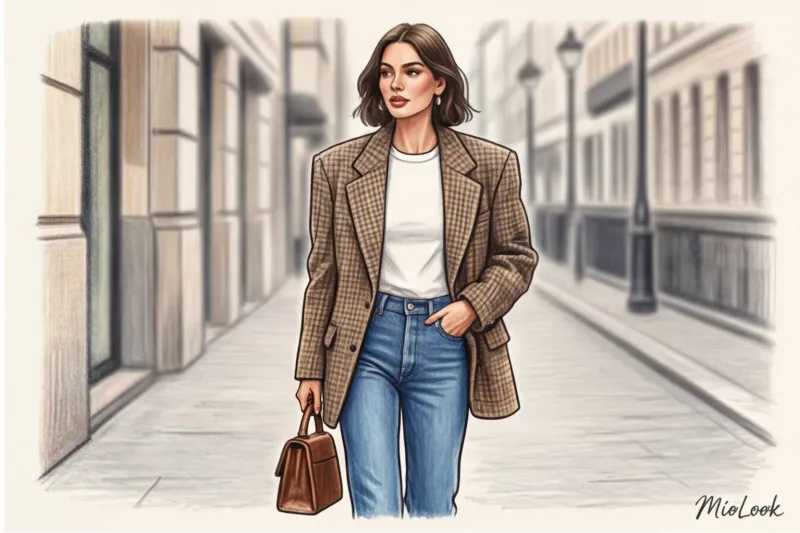
However, even the most perfect eclectic look will fall apart if you forget about the portrait area. The role of makeup and hair is critical here: a modern beauty look is a must when wearing retro pieces. Wearing a tailored jacket in the style of Christian Dior from the 1950s? Forget the red lipstick and perfectly sleek curls. Balance the complexity of the outfit with a relaxed hairstyle—a slightly casual look, a sleek bun, and a dewy, radiant effect without a heavy matte finish. Contemporary makeup serves as the anchor that anchors your look in the present.
Digitizing Finds: Integration into a Smart Wardrobe
As soon as a unique item arrives at your home, it needs to be put to use immediately. Vintage clothes often sit idle in your wardrobe simply because we don't know what to wear them with and forget about them in the morning rush. There's only one solution: digitalization.
How to properly photograph a vintage item for an app like MioLook Fabrics from past decades often have complex textures that are difficult for a phone camera to capture. Photograph the garment only in soft daylight, without a flash, and hang it against a solid, contrasting background (a white or light gray wall is ideal). Carefully straighten the shoulders and collar. If the garment is textured (such as bouclé or thick wool), algorithms will be able to more easily recognize its seasonality if the photo is taken without harsh shadows and distorted perspective.
By adding a new item to your digital capsule, you open up space for experimentation. Using AI to create unexpected outfits with your modern essentials is a true breakthrough in styling. The neural network doesn't have psychological stereotypes like "that's not the right way to wear something." The algorithm will easily suggest pairing a romantic silk blouse from the 70s not with classic trousers, but with sporty joggers or heavy cargo pants. Such innovative suggestions save hours of reflection in front of the mirror and give pieces with a rich history a new lease on life.
Wardrobe Investing: What Vintage Pieces to Look For First
"The thrill of the hunter" is the main psychological trap for beginners. When entering a vintage boutique or opening a resale platform app, it's easy to get overwhelmed by the abundance of unusual prints, flowing floral dresses, or blouses with intricate ruffles. Your hands are drawn to extravagant pieces simply because they're unique. But my main advice, which I've come to after years of managing wardrobes, is: you shouldn't buy everything If you want your vintage wardrobe to be functional every day, rather than just hanging around like dead weight until a costume party, start with structured pieces.
Structure is what defines your silhouette: jackets, coats, and heavy shirts. These are the pieces that look expensive and pull together an outfit. A delicate vintage slip dress often looks like an old nightgown, while a structured double-breasted blazer from the last century looks like runway Saint Laurent.
And here we come to one of the most valuable insights. Many are surprised when I steer them away from women's rails during shopping trips. Why are men's sections in thrift stores a veritable gold mine for women? The answer lies in the history of tailoring. Historically, men's casual clothing was made with much greater attention to durability, quality of cut, and the longevity of materials than women's. There you can find the perfect oversized fit, bonded lapels that hold their shape for decades, and dense natural fabrics.
Three years ago, I was looking for a basic jacket for fall in a small Milanese shop. The women's section was overflowing with fitted synthetics from the 2000s—not exactly the right choice for a modern essential. I moved to the men's rack and found it—a men's cashmere jacket in a deep chocolate brown from a local Neapolitan tailor. It cost me only €45. I just had it slightly taken in at the shoulders at a local tailor. Today, this jacket is a staple in my fall wardrobe. I throw it over silk dresses for a playful texture contrast or wear it with straight jeans and a white T-shirt. It puts any outfit together in a jiffy.
Outerwear and jackets
If we were to rank the best value purchases "with a history," outerwear and suits would rank undisputedly at the top. The difference between the quality standards of the past and the realities of today's mass market is most obvious here.
What to look for first? Classic trench coats made of thick, windproof gabardine (almost like early Burberry), rugged leather aviator jackets with natural distressing that brands today are trying to artificially recreate, and tweed and wool jackets with exaggerated shoulders. The powerful shoulder line is a striking nod to the '80s era of "power dressing," when women occupied leadership positions en masse. Today, this architectural cut is once again dictating trends, so a vintage jacket with wide shoulders will look ultra-modern.
A few words about materials are in order. The huge advantage of vintage wool over modern blends is its density and durability. In the middle of the last century, textile industry standards were different. While you might find a 30% wool, 70% polyester coat in a department store for €150, it'll start pilling within a month. At a resale store, you can easily find 100% dense wool (virgin wool) or even a luxurious alpaca blend for the same price. Such a coat will keep you warmer than any modern down jacket and retain its shape for years.
Bags, jewelry and status accessories
If buying outerwear seems too bold, start with the details. Accessories are those special touches that make a look distinctive and easily fit into even the most conservative office attire.
First of all, pay attention to vintage bags with a rigid shape. Soft bags lose their shape over time and look untidy, while wire-framed models age incredibly beautifully. Consider Coach crossbody bags made of thick, durable leather (models from the 70s and 80s), simple Celine trunks from the pre-Phoebe Philo era, or high-quality no-name Italian brands from the 90s. At local markets, these gems can be found for €50–€200, while the leather quality is comparable to modern luxury.
Clip-on earrings, brooches, and men's watches are another powerful styling tool. How do they elevate your style? It's simple: they create a focal point. By wearing a basic gray cashmere sweater and adding chunky vintage clip-on earrings from the '80s (not even necessarily branded ones), you transform a boring outfit into a sophisticated one. statement-image.
Silk scarves (a classic 90x90 cm square) are perhaps the safest entry point into vintage. They require no trying on, are unaffected by fluctuations in weight, and offer limitless stylistic potential. They can be tied around the neck in a French twist, wrapped around the handle of a framed bag, worn as a bandana, or threaded through the belt loops of jeans in place of a belt.
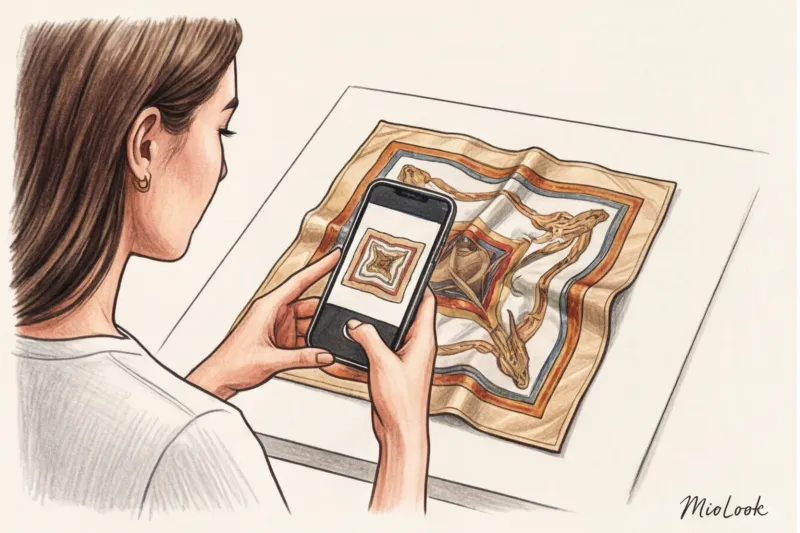
The main problem with accessories is that we often forget about them in the morning rush. A silk scarf bought at a flea market in Paris can sit in the back of a dresser drawer for years. To avoid this, I insist on immediately digitizing all purchases.
Incorporate vintage into your wardrobe
Photograph your vintage finds and upload them to your virtual wardrobe. Artificial intelligence will suggest how to incorporate unusual accessories and jackets into your modern looks.
Digitize your wardrobe with MioLookDanger Zones: What to Avoid When Buying
There's a pernicious but very popular myth: if an item has survived to this day, its quality is impeccable and it will last just as long. Let's be honest: vintage clothing isn't always a good investment. Sometimes it's simply an old item that belongs in a landfill, not on your shoulders. I've seen dozens of clients bring back outright trash from flea markets, succumbing to the magic of the word "vintage."
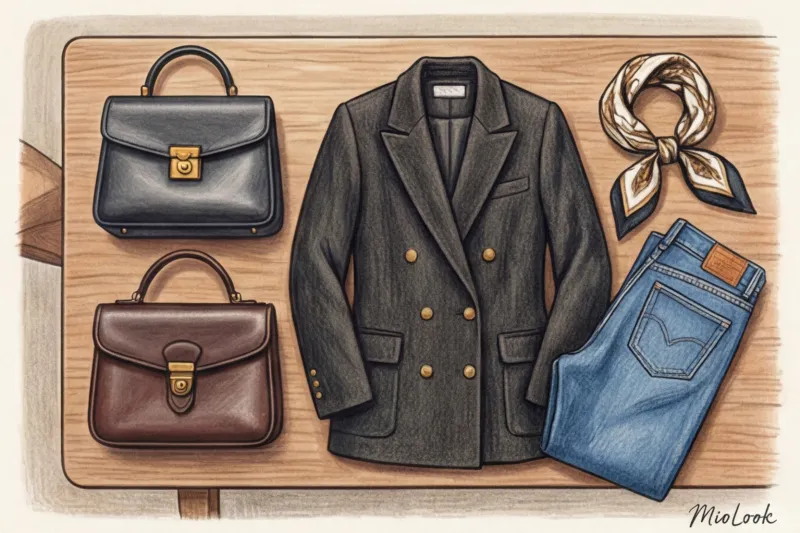
While quality denim and structured jackets are a great start (as we can see in the examples above), there are some categories that, as a stylist, I categorically blacklist. Let's look at the main red flags.
The illusion of office retro and fragile fabrics. I want to debunk once and for all the myth that true mid-century vintage (1950s-60s) is appropriate for the modern office. Women, fascinated by the aesthetics of the TV series "Mad Men," often try to buy authentic blouses from that era. My harsh stylistic assessment: they are an absolute failure. According to textile restoration experts, silk from that era is prone to "shattered silk." The fibers, often treated with metallic salts to make them heavier, literally cut themselves from the inside over time. This fabric is too fragile: it will fall apart at the seams after just one wear, as soon as you reach for a cup of coffee. Leave these things to the collectors.
Vintage shoes. This is the second risk zone. From an orthopedic perspective, wearing someone else's last, which has been deformed over decades to fit someone else's foot, is a direct insult to your health. Furthermore, the physics of materials comes into play. Polyurethane and shoe glue from the 80s and 90s inevitably undergo hydrolysis. You can find a stunning pair of Prada ankle boots in perfect condition for €60, but after a hundred meters of walking, their soles will simply crumble into sticky black crumbs.
The smell of "grandma's apartment". If an item emits a persistent musty or basement odor, hang it back up immediately. Don't get your hopes up: this odor is impossible to remove with vinegar, home ozonizers, or even the most aggressive dry cleaning. This specific odor is caused by mold and mildew spores embedded in the fibers. Buying such a sweater risks permeating the rest of your wardrobe with this odor.
"The main rule of smart shopping: the cost of restoring a vintage item should never exceed its price, otherwise the investment is worthless."
Repairs that don't pay for themselves. Knitwear that's hopelessly stretched out at the hem (restoring the original factory loop geometry is virtually impossible) and broken, complex hardware are common pitfalls. Do the math: replacing an authentic metal zipper on a jacket at a reputable tailor will cost you €40–€80. If the item itself cost €20, the economics of the purchase are ruined.
If you're unsure whether to buy a defective item, pause. Open the app. MioLook Take an objective look at your virtual closet. Ask yourself: Can I create at least three flawless looks with this potentially problematic item from what I already own? If the answer is no, feel free to leave the store without buying anything.
A Guide to Finding Pearls, Not Junk
Did you know that a professional buyer spends no more than 15 seconds inspecting a single, tightly packed rack of clothes? Beginners, however, can get stuck at a single rack for a good half hour, monotonously rifling through each hanger. The secret lies in the right "optics" and a technique we call the "blind touch" method.
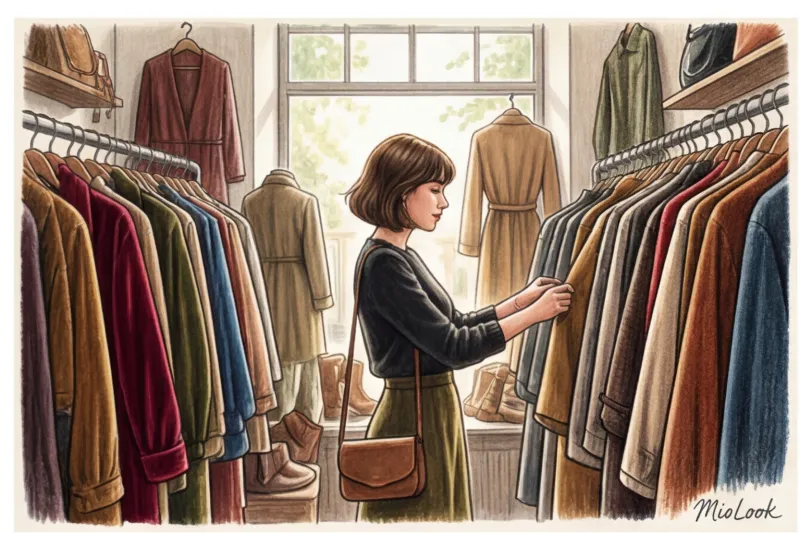
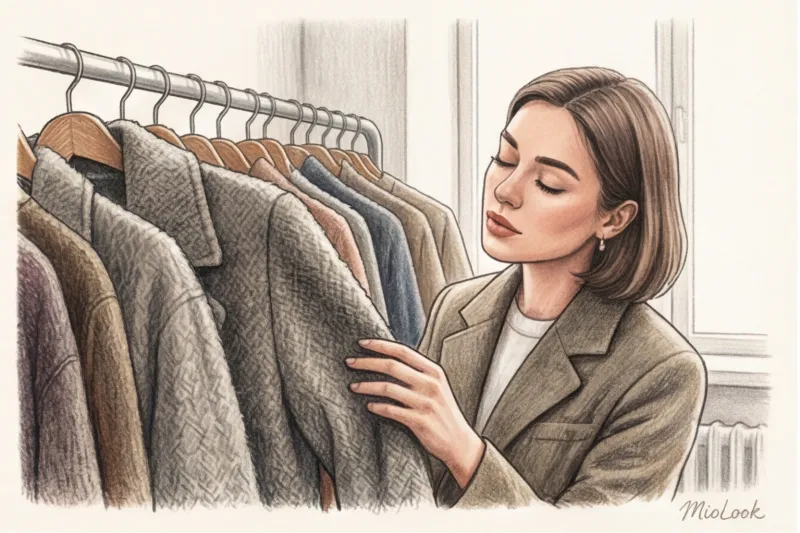
Instead of peering at the fancy styles, you simply walk down the aisle, running the fabric through your fingers. Synthetics, squeaky polyester, and cheap acrylic immediately reveal themselves to the touch. You only stop when your hand feels smooth, dense silk, heavy, textured wool, or high-quality cotton. Visually, you scan the rail solely for color and texture. Looking for a basic jacket? Your eye catches only the refined shades of camel, graphite, and deep navy, while your hand verifies the quality. This skill saves enormous time and prevents impulse purchases.
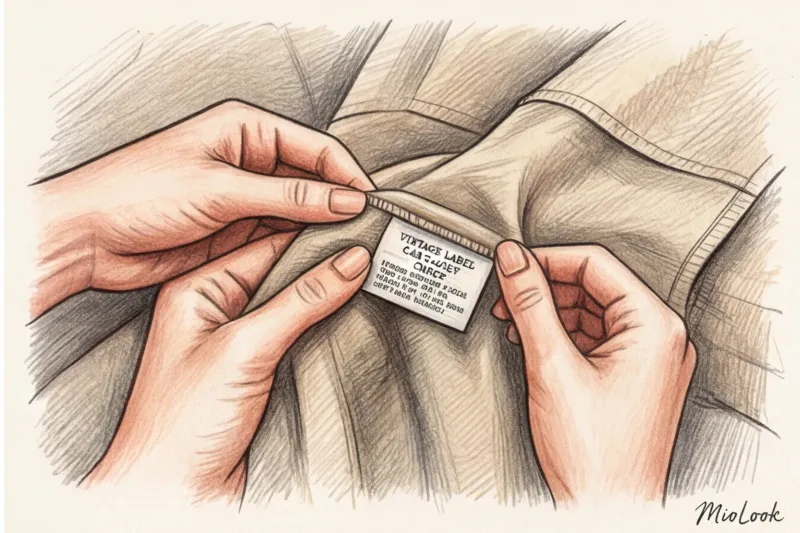
Another surefire way to add unique pieces to your wardrobe is to visit local flea markets while traveling. I often say: forget magnets and the usual mass-market items in tourist areas. The best souvenir from Europe or Asia is something with a story. At Parisian flea markets or Tokyo antique shops, you can find stunning accessories and clothing for next to nothing, usually in the €20–€80 range. A well-chosen vintage wardrobe piece instantly transforms the mood of your look. For example, a chunky Florentine leather men's belt or a silk haori from Kyoto instantly transform a standard casual outfit into a sophisticated, sophisticated one.
Of course, not everyone has the opportunity to regularly fly to European markets. This is where online hunting comes in. The main problem with platforms like eBay, Etsy, or local resale sites is the sheer chaos of millions of products. Here, the strict rule applies: the more precise the search, the more valuable the catch.
The secret to successful online searching is to completely avoid generic phrases. If you type vintage jacket , the algorithm will return hundreds of pages of polyester consumer goods. Learn to think like professional fashion archivists.
Enter specific characteristics, materials, and decades. Formulation '100% wool blazer 90s' or 'heavy silk blouse 80s' It will work ten times more effectively. Be sure to use filters by fabric composition and condition. Here are a few proven online search keywords that I recommend to my clients:
- Deadstock/NWT (New With Tags): Vintage items that have never been worn and still have the original store tags. This is a true Holy Grail for connoisseurs.
- Chunky knit cardigan 80s: to find voluminous, chunky knit cardigans with the right texture, which are incredibly trendy today.
- Made in Italy genuine leather 90s: A great filter for finding quality leather jackets and bags without flashy logos, but with impeccable fit.
Another critical detail when shopping online is sizing. Vintage sizing is radically different from modern sizing. A UK size 12 from the 1970s will barely fit into a modern size 8 today. Therefore, always ask the seller for precise measurements in centimeters: armpit-to-pit, sleeve length, and shoulder width.
When you find a potential "gem," it's important to immediately understand how it will fit into your current style. Before placing an order, I strongly recommend visually trying the item on with your basics. The smart wardrobe feature in MioLook Simply upload a screenshot of your find and check if it will fit at least three times with what's already hanging in your closet. If the puzzle doesn't fit, feel free to close the tab, no matter how enticing the price.
Your ideal image
it begins Here
Join thousands of users who look flawless every day with MioLook.
Get access — €0.99 onceStylist checklist: checking items before buying
Every time I prepare a client for an independent search of European flea markets or vintage markets, I send them the same PDF file via messenger. This isn't a mood board of trends, but a strict technical inspection protocol. Buying items with history is always a gamble, but we can reduce the risk to zero. If you've found the perfect jacket that fits like a glove, turn off your emotions and become a meticulous inspector.
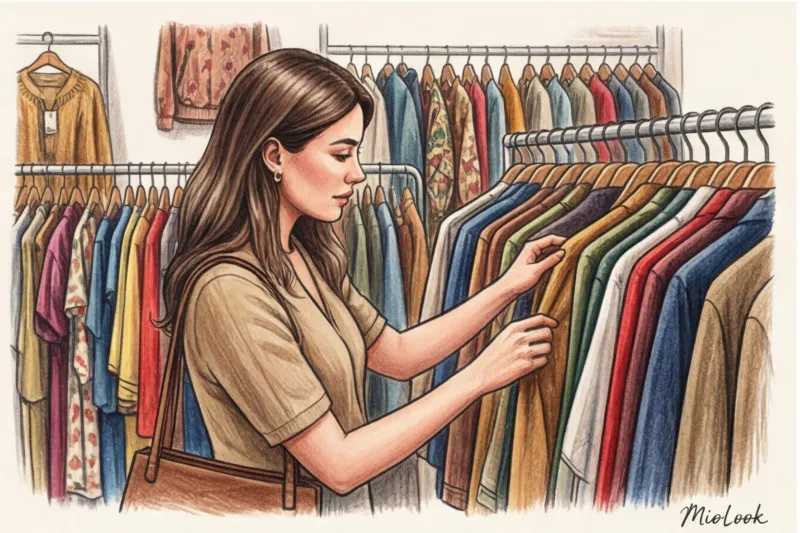
Here are three essential due diligence steps that will save your money from bad investments.
Step 1: X-ray the tissue
Never evaluate woolen items in the dim light of a store. Go to a window or hold the item close to a bright fitting room lamp and gently stretch the fabric. Your main goal is Light testing: looking for moth holes in wool These tiny holes are often invisible on dark fabrics (especially voluminous tweeds or heavy drapes) until you look through them with a bright light source. If there's even one hole, moths have already damaged the fiber structure. After the first professional dry cleaning, a tiny hole will inevitably turn into a gaping hole.
Step 2: Engineering inspection of parts
Authentic details are half the value and aesthetics of retro finds. Be sure to hardware test: zippers, buttons, rivets Firmly zip and unzip the zipper several times (especially if it's a metal zipper on an aviator jacket). Replacing the original hardware at a reputable tailor will cost you between €40 and €80, which often exceeds the original purchase price.
Immediately after this follows Checking the seams: Pull the fabric near the seam to make sure the threads haven't rotted over time. Cotton threads, which were widely used in the 70s and 80s, are subject to natural oxidation. If you hear a characteristic dry crackling sound when gently pulling on the garment, leave it on the tension rail. It will literally come apart at the seams within the first day of heavy wear.
Step 3: Zone of No Return
A garment may look flawless on the outside, but the inside always reveals its true age. Turn the garment inside out, focusing on the armhole. We're interested in Lining assessment: underarm stains that won't wash out (yellowing on silk or cotton) Years of chemical deodorant stains from the last century become deeply ingrained in natural fibers. No modern dry cleaner can remove old yellowing from fragile vintage silk without risking burning through the fabric.
Only if your find passes all the steps of this checklist with flying colors is it worthy of becoming part of your capsule collection. Bring it home, send it to the cleaners, and then get straight to styling.
To prevent vintage clothes from becoming dead weight in your wardrobe, I always recommend adding new purchases to the app immediately. MioLook Artificial intelligence will help you instantly create dozens of unexpected combinations with your modern essentials, turning your vintage purchase into a powerful personal style tool.
Caring for Vintage Clothing: How to Extend the Life of Unique Items
Let's talk about the physics of fabrics. According to the Textile Institute, fibers produced before the early 1990s have a completely different structural density than modern blended materials. A typical modern washing machine cycle exerts mechanical stress on them that exceeds safe limits several times over. That's why buying a unique item is just the first step; the real art lies in preserving it for future use.
My categorical verdict, based on the ruined masterpieces of newcomers: 90% of vintage items require only professional dry cleaning or extremely gentle hand washing. Modern capsules and powders are oversaturated with aggressive enzymes. They work great on stains on modern polyester, but they literally corrode the protein compounds in old silk or natural wool. If you're hand washing, use only neutral liquid detergents and water no hotter than 30 degrees Celsius (86 degrees Fahrenheit), and never twist the fabric when spinning.
"But how do you get rid of that distinctive 'chest smell' if you can't just throw the item in the washing machine?" — this question is asked at every other consultation I have about sorting out vintage finds.
Here, I'm happy to share a professional secret from theater costume designers who work daily with fragile archival fabrics. Buy the cheapest unflavored vodka and pour it into a fine spray bottle. Lightly mist the garment on the inside (test it first on an inconspicuous area if it's bright silk). The alcohol will instantly neutralize the bacteria that cause musty odors and evaporate completely, leaving no stains or residue. For more persistent odors, a household ozonizer (a compact model costs around €30-50) works well. Place the garment in a closed closet for 30-40 minutes, or simply air it out in the shade in the frosty air.
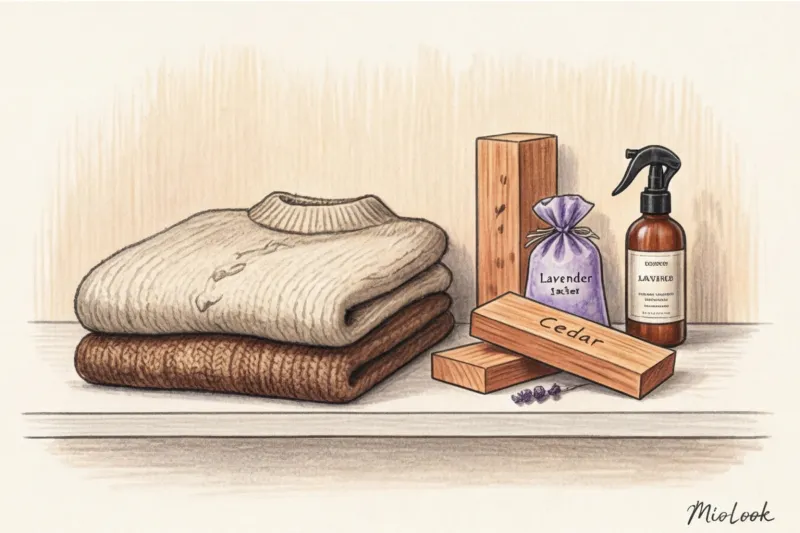
Proper organization is just as important as cleaning. To prevent vintage clothes from turning to dust in your closet, ditch the thin plastic dry cleaner covers. They block air circulation, create a greenhouse effect, and trigger the irreversible process of "dry rot" in old threads. Use only breathable garment bags made of unbleached cotton or dense spunbond.
For heavy wool jackets with exaggerated shoulders from the '80s, be sure to invest in wide wooden or cast-iron hangers. A thin metal hanger will irreversibly distort the cut within a month, stretching the fabric around the collarbone. And for moth protection, forget about chemical mothballs—the smell is impossible to remove even with an ozonizer. Place natural red cedar balls or cubes on your shelves. My personal tip: once a season, lightly sand them with fine sandpaper to remove the top layer of the wood and renew the protective scent.
To wrap up our guide, I'd like to give you one practical task for today. Right now, open your closet and do a quick inventory. Remove the cellophane from old items, check which hangers your structured jackets are on, and take photos of your best finds to upload to MioLook smart wardrobe Once all your treasures are digitized, algorithms will help integrate them into your modern database, creating dozens of stylish combinations for every day. Vintage shouldn't gather dust on shelves—it should be working and telling your unique story right now.
Guide Chapters
Repurposing second-hand clothes: stylish upcycling
Today, upcycling vintage items isn't about saving money, but rather a smart way to build a luxurious wardrobe. We'll show you how to give rail finds a second life.
Investments: Which Vintage Items Are Appreciating in Value?
80% of vintage luxury is simply secondhand. Learn how a true archive wardrobe is formed and which designer pieces actually generate income.
How to spot a vintage fake: a brand guide
Forget logos and serial numbers. We'll tell you how to properly check seams, fabrics, and historical details to avoid buying a fake.
Vintage in a capsule wardrobe: incorporating retro into the basics
Modern mass-market items quickly become outdated, while retro pieces last for years. We'll show you how to seamlessly incorporate vintage into your everyday wardrobe and achieve luxury without breaking the bank.
How to get rid of the smell of second-hand clothes without damaging the fabric
Vintage items often have a distinctive chemical odor. Learn professional stylist secrets to help eliminate this odor without damaging the fabric.
How to buy a vintage designer bag without the risk of counterfeiting
A vintage bag is a sign of impeccable taste and a great investment. Learn how to distinguish an original from a clever fake with a professional's eye.
Vintage clothing sizes: how to determine them accurately
Buying vintage items without trying them on isn't a matter of intuition, but rather strict mathematics. Find out why taking your body measurements before buying vintage is a major mistake.
How to Find Vintage Items from the '90s and '00s: A Y2K Guide
The Y2K trend isn't just about low-rise jeans, it's also about the impeccable cuts of yesteryear. We'll share how to find high-quality archival pieces for a unique wardrobe.
How to choose clothes at a second-hand store: tips from a stylist
A practical guide to smart shopping from a personal stylist. Learn a systematic approach to finding unique and prestigious pieces with a story.
How to Combine Vintage and Modern Clothing: A Stylist's Guide
Vintage pieces add class and uniqueness to your look when worn correctly. We explore the formula for perfectly pairing retro with a modern wardrobe.
Where to Buy Vintage Clothing Online: Top Resale Platforms
Vintage has become a staple of smart shopping, but the online market is rife with counterfeits. We explore the best resale platforms for finding unique pieces with a story behind them.
Digitizing Your Vintage Wardrobe with AI: How to Wear Retro
Do you treasure beautiful vintage pieces but are afraid to wear them? Learn how artificial intelligence can help you integrate archival clothing into your modern wardrobe.