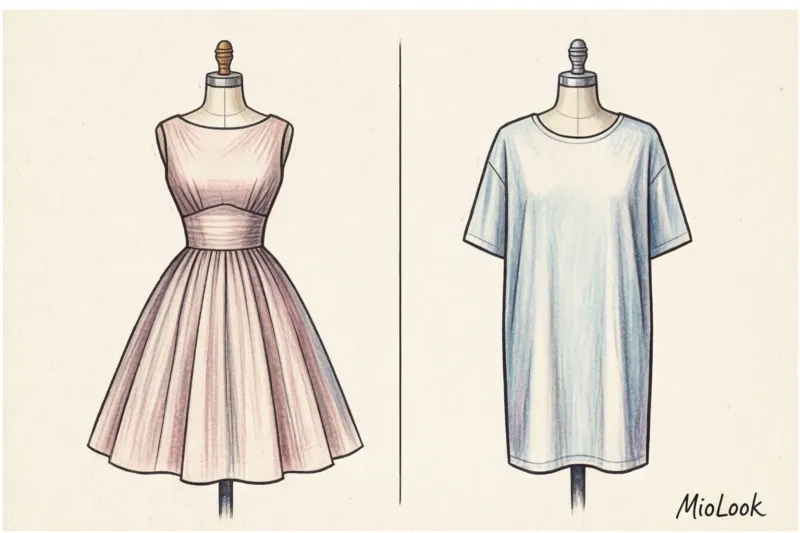
I still remember my disappointment. Several years ago, I ordered a luxurious vintage Yves Saint Laurent jacket in a French size 40. By all rights, it should have fit my current size 36 in a loose, casual oversize. But when the long-awaited package arrived, the jacket barely fit at the waist, and my shoulders felt armored. That's when I realized that How to determine the sizes of vintage clothing — it's not a matter of intuition, but strict mathematics. We discussed the basic principles of resale in more detail in our The complete guide to finding unique retro items , but today we'll delve into the numbers.
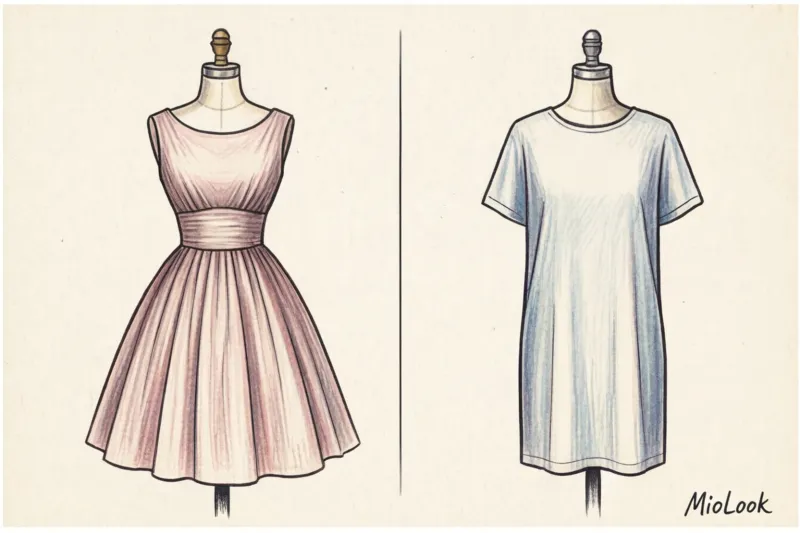
Most online articles offer the same outdated advice: "Take a tape measure and measure yourself." Forget it. Taking your own body measurements before buying vintage clothing is a strategic mistake. Your 90 cm chest measurement won't tell you anything about the amount of "easy fit" allowance the designer intended in 1982. To avoid wasting money on items you'll have to resell, we need a different, more engineered approach: we'll be measuring not you, but your most ideal garment.
Why vintage clothing sizes don't match modern ones
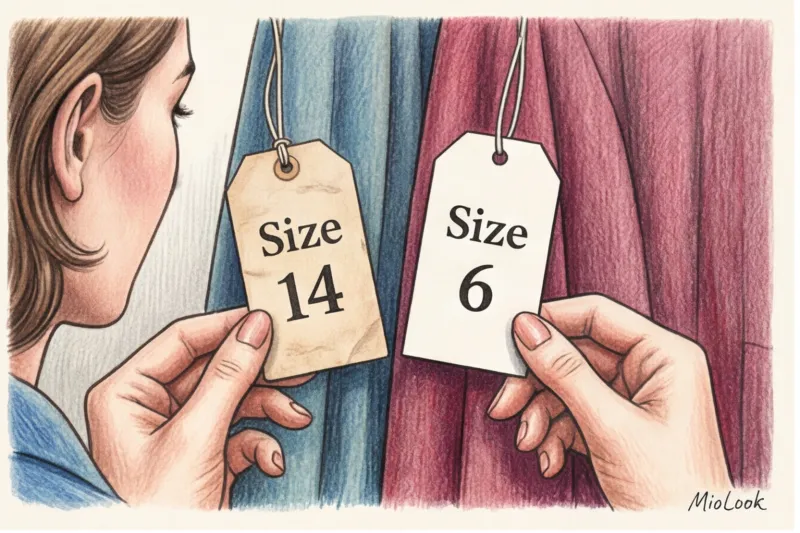
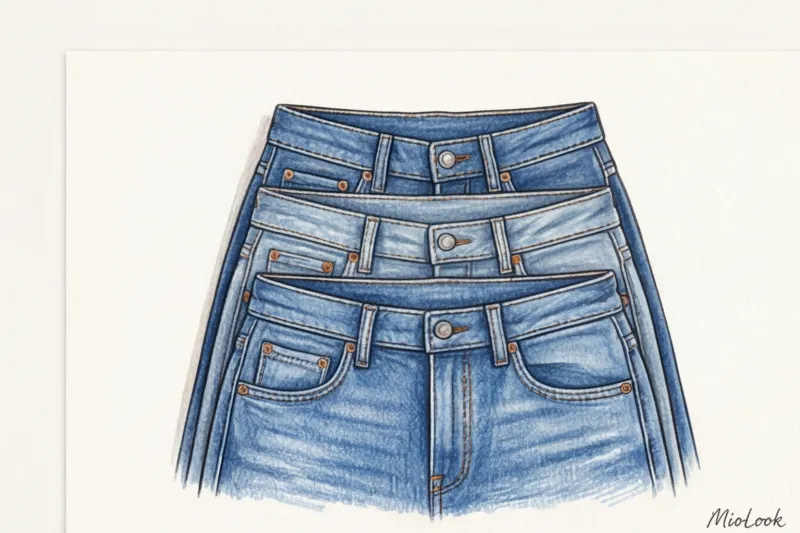
If you go to Zara and buy a pair of size M jeans, and then find a pair of Levi's size M jeans from the 1970s, the difference in circumference will be a whopping 10-15 centimeters. In the fashion industry, this phenomenon is called Vanity Sizing (size vanity) - marketing reduction of numbers on tags for the psychological comfort of the buyer.
Let's look at the hard facts. Research by ASTM (American Society for Testing and Materials) and data from the National Bureau of Standards reveal a shocking evolution in standards. In 1958, the standard waist size for a US size 14 was exactly 66 cm. Today, according to modern mass-market measurements, a size 14 is calculated for a waist of approximately 86 cm. That's a difference of a whole 20 centimeters!
"Marilyn Monroe wore a size 12" is a favorite myth women console themselves with. But by today's standards, her dresses from the 1950s would be a US size 4 or 6.
The conclusion is simple: the tag on a vintage item is simply a decorative historical element. It is not a purchasing guide.
Time factor: wool shrinkage and hidden alterations
The numbers on the tag lie for another reason: time changes the fabric itself. Add to this the harshness of laundry detergents and the first hot dryers of the 1980s. Improper washing could turn a thick men's size L sweater into a stiff women's XS in one cycle. Wool, cotton, and viscose naturally shrink up to two sizes over the course of decades.
Over 12 years of working with clients' wardrobes, I've come up with a sad but true statistic: about 30% of vintage items on the market have been altered by previous owners. In the 1960s and 1970s, custom tailoring and home fitting were the norm. Items would be tailored to the wearer's figure, the length would be cut, the darts would be adjusted, but the original "Size 10" tag would remain.
Access to MioLook for €0.99 — one-time payment
A smart AI stylist will select the perfect look based on your actual measurements and preferences.
Get access — €0.99 onceStylists' secret: how to determine vintage clothing sizes without trying them on
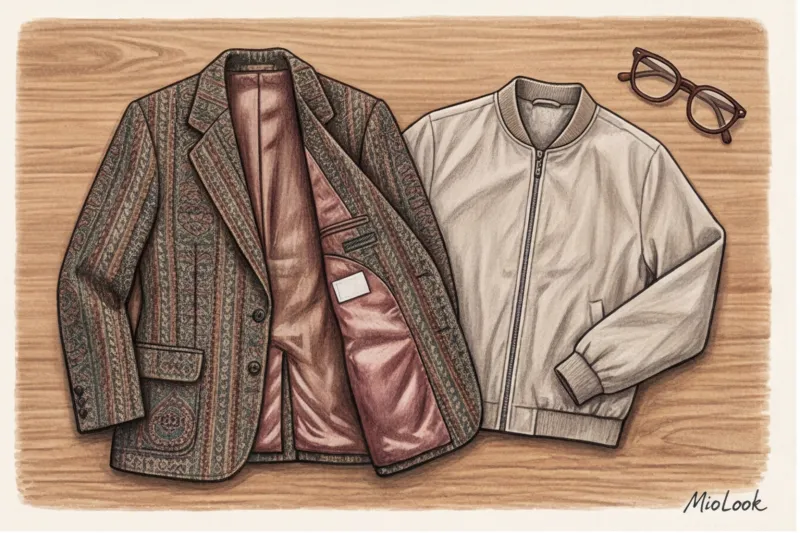
Let's move on to the most important rule of mindful shopping: measure your ideal clothes, not yourself. Find a jacket in your closet that fits you perfectly. Lay it on a flat table, button it, and smooth out any wrinkles with your hands. This is called the "flat measurement" method. These are the measurements you'll compare with the seller's measurements on the resale platform.
You need to fix 4 key points:
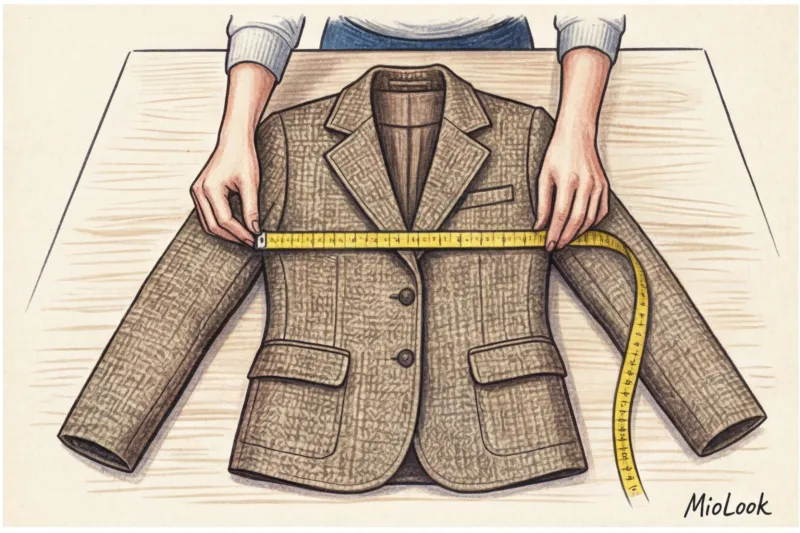
- From armpit to armpit (Pit-to-pit): The most important measurement. Multiply it by two to get the chest width.
- Shoulders: from shoulder seam to shoulder seam in a straight line on the back.
- Waist: the narrowest part of a garment (for trousers, the width of the waistband).
- Length: from the base of the collar along the back to the bottom edge.
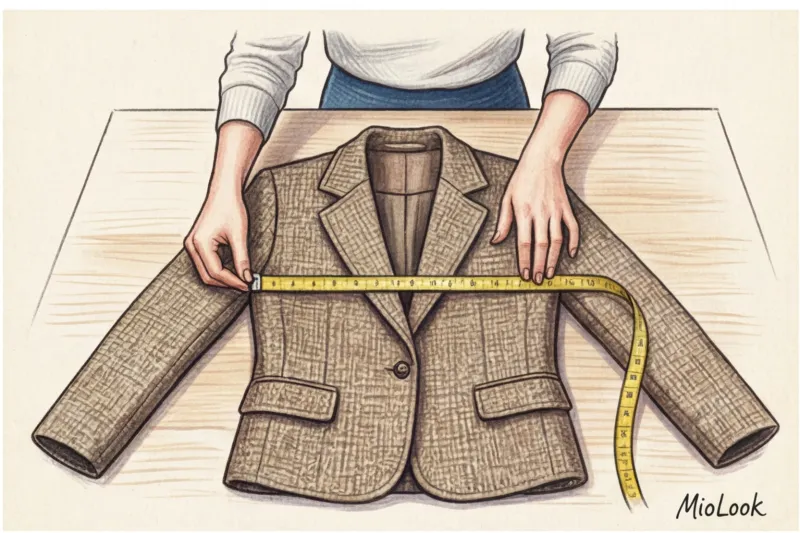
Why does this work better than body measurements? Because of the concept ease — freedom of fit. If your chest measurement is 90 cm, you simply won't be able to button a jacket with a 90 cm chest measurement. You need a jacket with a chest measurement of 98-102 cm. By measuring a finished, well-fitting garment, you automatically account for this necessary air space between the fabric and your body.
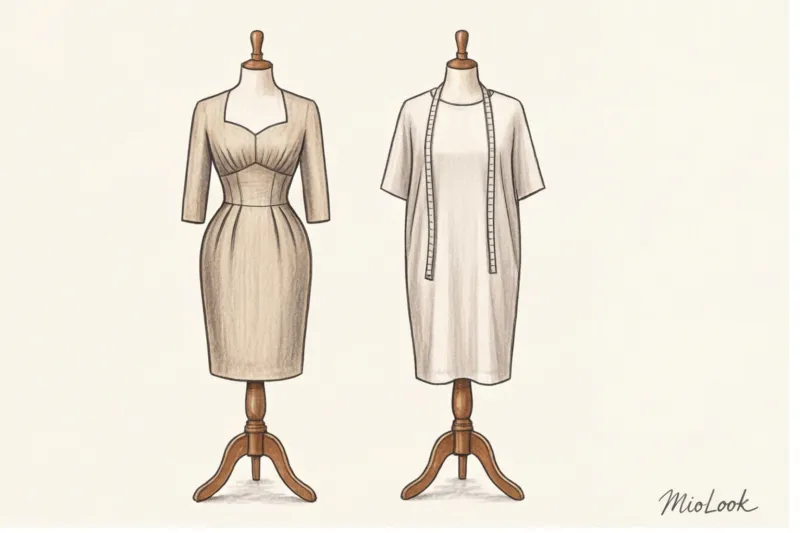
But I'll be honest, this method has a limitation. This does NOT work when You're buying vintage textured knitwear or bias-cut dresses from the 1930s. These items look tight on the table, like children's dresses, but stretch and drape on the body. For these, it's best to ask the seller for a photo of the item on a mannequin or body.
How to read silhouettes and cuts across decades
Knowing your measurements isn't enough. You need to understand the architecture of the times. Patterns changed every decade, and how volume was distributed dramatically impacts the fit.
Anatomy of the 70s: narrow armholes. Clothing from this era (especially blouses and jackets) featured very high, narrow armholes and tight sleeves. The silhouettes were tightly fitted. If you're looking for a 70s blouse, always ask for the sleeve width at the biceps—9 out of 10 times, it's too tight for modern women.
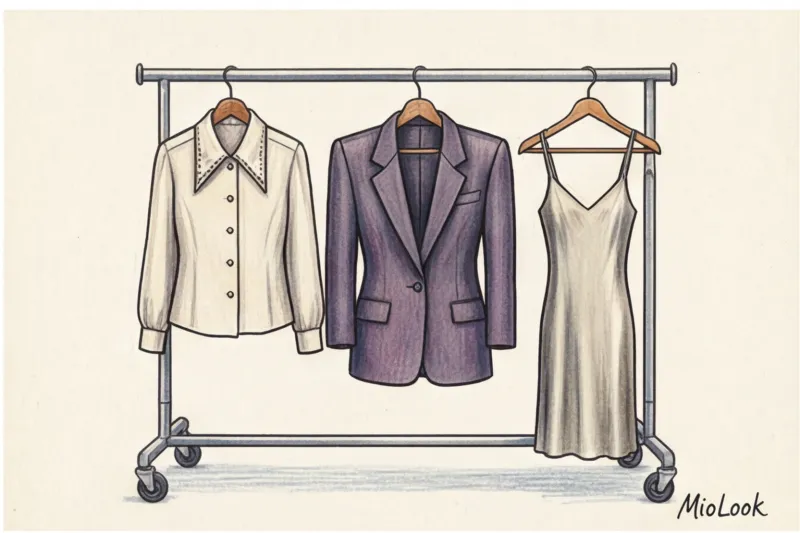
Architecture of the 80s: power dressing. Enormous shoulder pads dictated their own rules. If you see a vintage blazer from the '80s with 46 cm shoulder width, don't assume it's for a wide back. This width was designed for two-centimeter foam pads. Removing them (which almost everyone does) leaves comically drooping shoulder seams. '80s clothing is always voluminous on top and extremely tight on the bottom.
90s Minimalism: Straight Lines. A decade when clothing became more closely aligned with modern patterns. Straight cuts, no rigid darts, a relaxed fit. Vintage '90s clothing is safest to buy online—it's forgiving of 1-2 centimeter errors.
Digital Card Index: How Technology Simplifies Vintage Shopping
Keeping all these numbers in your head is impossible. Writing them down in a notebook is pointless, because you might stumble upon the perfect vintage find on eBay or Grailed while you're sipping coffee in line and you left your notebook at home.
Create digital profiles for each type of clothing: "my ideal jacket," "my ideal jeans," "my comfortable shirt." I keep this database on my phone.
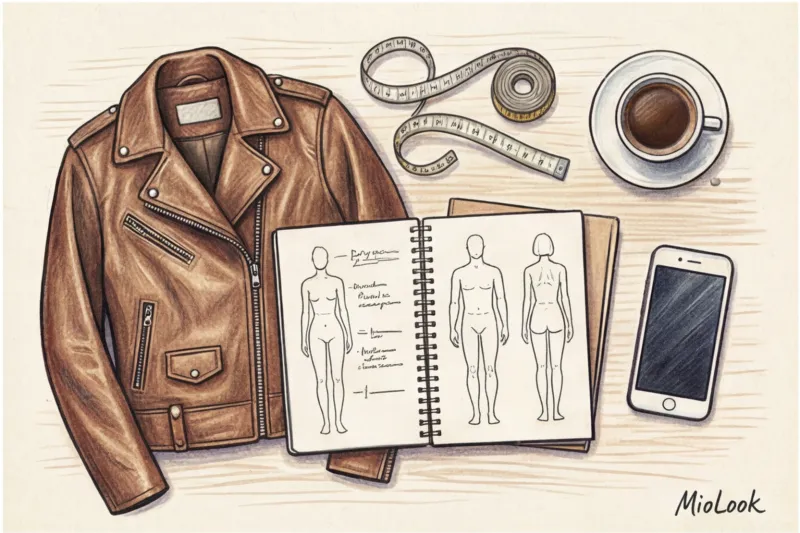
In the appendix MioLook Besides creating capsule collections, it's convenient to track which silhouettes from your collection work best. Simply open the card for your favorite item, look at the "Pit-to-pit 52 cm" measurement, and instantly compare it to the retro cardigan seller's measurements. This turns chaotic shopping into a precise sniper hunt.
Your perfect look starts here
Join thousands of users who look flawless every day with MioLook. Digitize your wardrobe today.
Get access — €0.99 onceChecklist: 5 Questions to Ask a Seller Before Purchasing Online
Don't be shy about being meticulous. Professional resellers respect buyers who know what they want. Copy this list and send it to the seller before transferring money:
- "Can you send a photo of the item with the tape measure attached to it?" Text containing measurements often contains errors. A photograph of the tape lying across the jacket's chest eliminates the possibility of deception or incorrect measurement.
- "What is the condition of the fabric, are there any signs of shrinkage?" Especially important for wool (vintage coats) and cotton (old jeans).
- "Is there any extra fabric in the seams?" Before the 1980s, tailors often left generous seam allowances (2 to 4 cm) to allow for hemming. In modern mass-market clothing, these allowances are trimmed to the root to save money.
- "Does the fabric stretch?" Remember: true vintage clothing contains almost no elastane! Spandex only became widely used in the late 1980s. What fits snugly and stretches comfortably today would have been digging into your ribs in 1970.
- "What is the front rise?" For trousers, this is critical. It's measured from the crotch seam to the top of the button. Vintage jeans with a 25 cm and 32 cm rise will fit completely different body types.
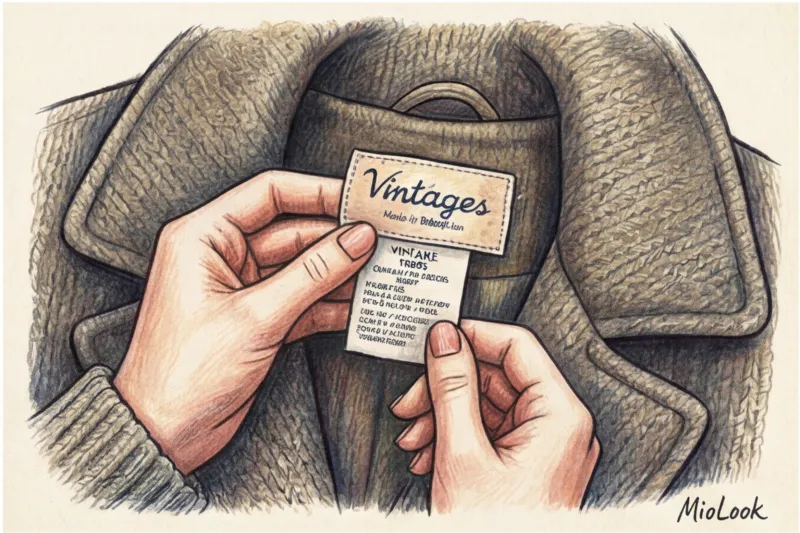
Wrong size? Why is this a reason to visit a tailor instead of returning it?
Even with perfect measurements, an item may fit incorrectly. This is normal. The golden rule of vintage shopping: when in doubt, always buy a half size up. While it's possible to make an item smaller, it's extremely difficult to make it bigger.
Investing in quality vintage tailoring always pays off. I once found a stunning 1980s wool trench coat at a Paris flea market for €120. It was two sizes too big. I took it to a tailor and paid €45 to have the waist taken out and the buttons rearranged. Now it fits like it was custom-made in a Savile Row atelier and looks like a €1,500 piece.
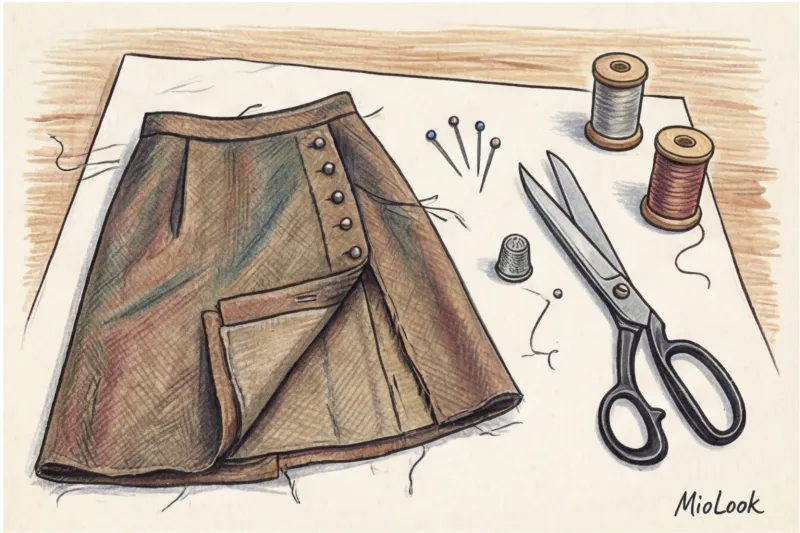
What a tailor can do easily and inexpensively: shorten sleeves, tapered pant legs, tighten a skirt at the waist, and remove excess volume at the side seams. What a tailor will charge a lot for (or refuse altogether): narrowing shoulders, reshaping armholes, and widening garments (if there are no seam allowances).
Buying vintage isn't like going to the nearest mall to buy a T-shirt. It's about working with archives, fabrics, and history. Stop treating size tags as the ultimate authority. Your best investment is a tape measure, knowing your ideal garment's measurements, and a skilled local tailor who will perfect your unique find.