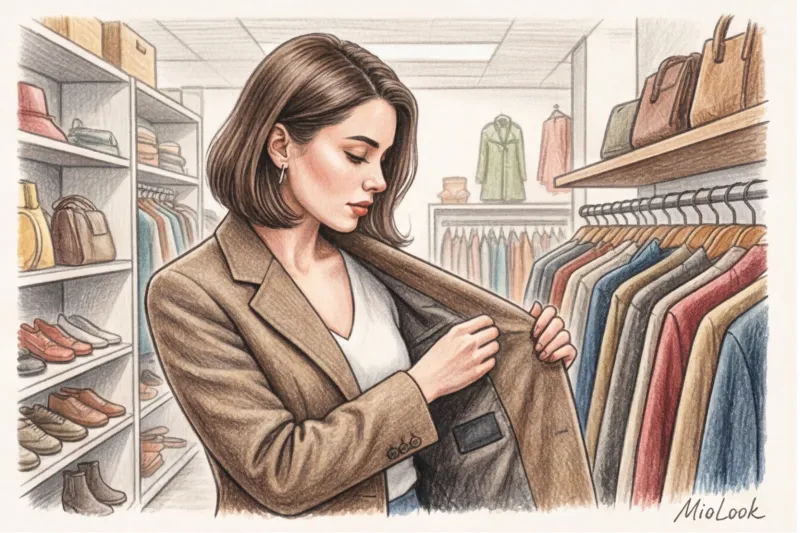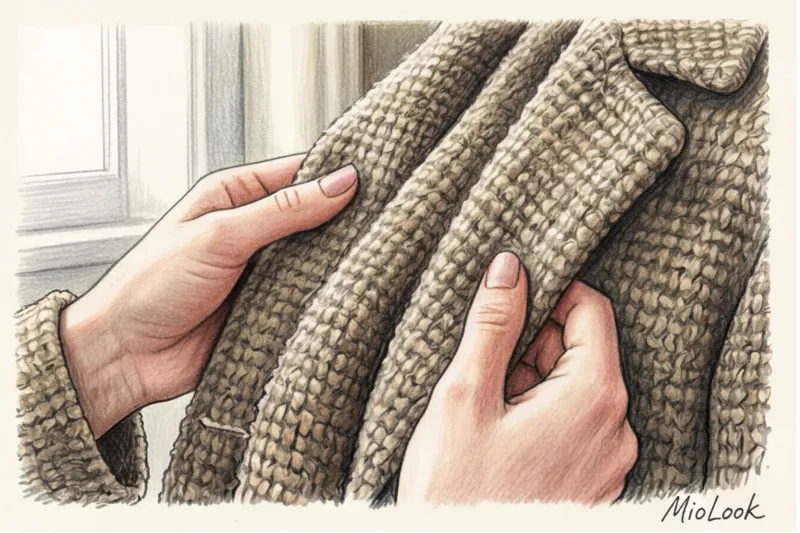
Last month, a client came to me for a consultation, her eyes sparkling and carrying a Chanel jacket straight out of the '80s. "Look, Sophia, it's in perfect condition, not a single snag, and for only €450 in a Paris boutique!" she exclaimed. The jacket truly did look flawless. And that's exactly what alerted me. I turned it inside out, ran my finger along the inseam, and regretfully pronounced my verdict. It was a fake. The giveaway was the modern, machine-made, lined overlock, which physically couldn't have been present in a couture garment from that decade.
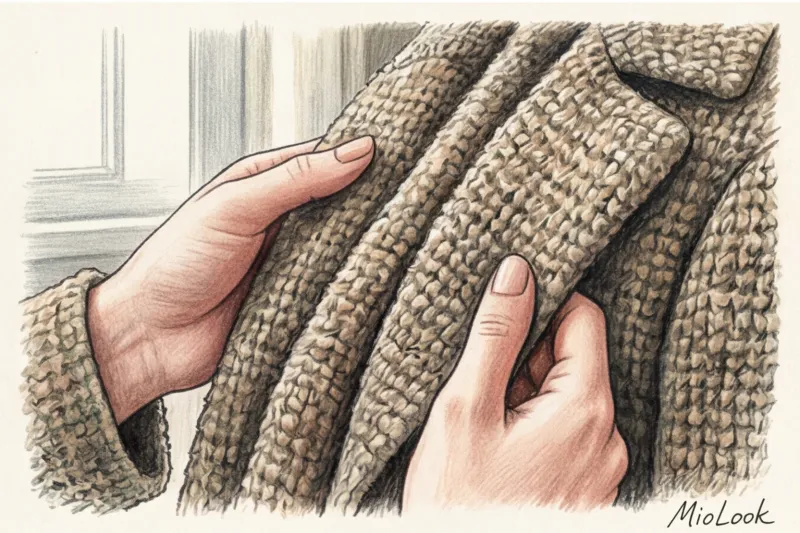
This is a classic rookie mistake. If you're looking for a working method, How to spot a vintage fake Forget about logos, authenticity cards, and serial numbers for a while. We've already covered how to properly incorporate such rare finds into a modern database in our comprehensive guide— Vintage clothing in your wardrobe: how to find unique pieces Today we'll discuss how to learn to "read" clothing with your hands, drawing on textile materials science and historical context.
Anatomy of an era: why the "how to spot a vintage fake" guide doesn't start with the logo
Modern "superfakes" have masterfully replicated holograms and fonts. According to a WGSN study (2024), the shadow market invests millions of euros in original logo stamping equipment. But they can't fake the laws of physics or the economics of fabric production.
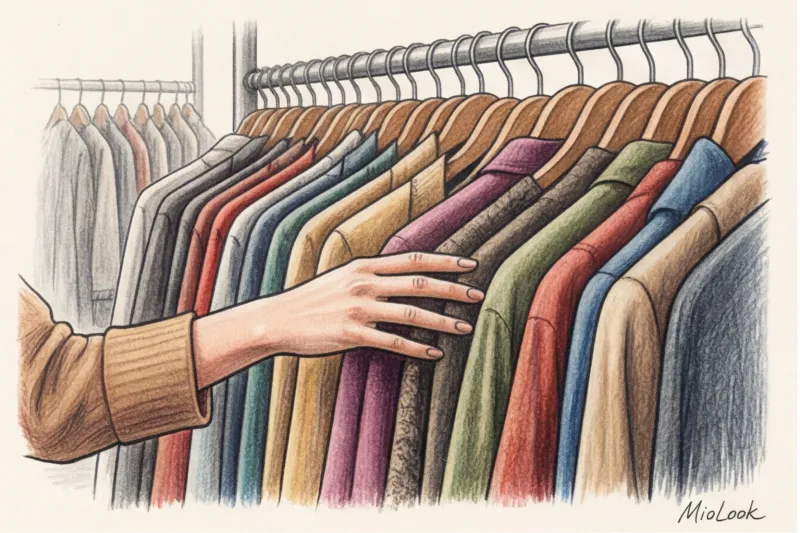
Fabrics produced 30-40 years ago were woven on machines that no longer exist. In the 80s and 90s, fabric density standards were completely different. Forget just looking at the label—close your eyes and touch the item.
The original heavy wool gabardine or tweed from the '90s weighs around 400 grams per square meter. It drapes under its own weight, creating a monumental, architectural drape. Modern mass-produced counterfeits use lightweight wool (maximum 250 g/m²) with added acrylic to reduce costs. They tend to be stiff or, conversely, wrinkle shapelessly. If a "vintage" YSL jacket made of thick wool feels suspiciously light on your shoulders, you're looking at a fake.
Accessories as a passport of time: zippers, buttons and rivets
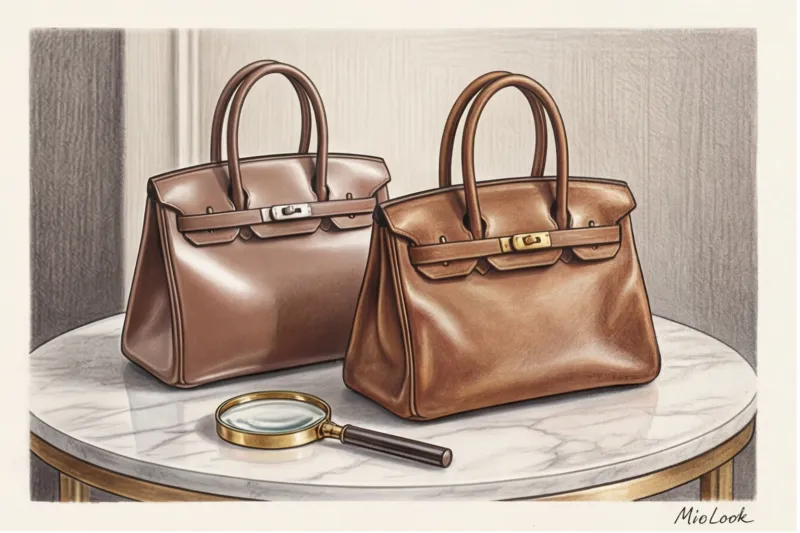
Fittings are the weakest link for counterfeit manufacturers. Casting heavy brass buttons using last-century patterns is too expensive for shady factories.
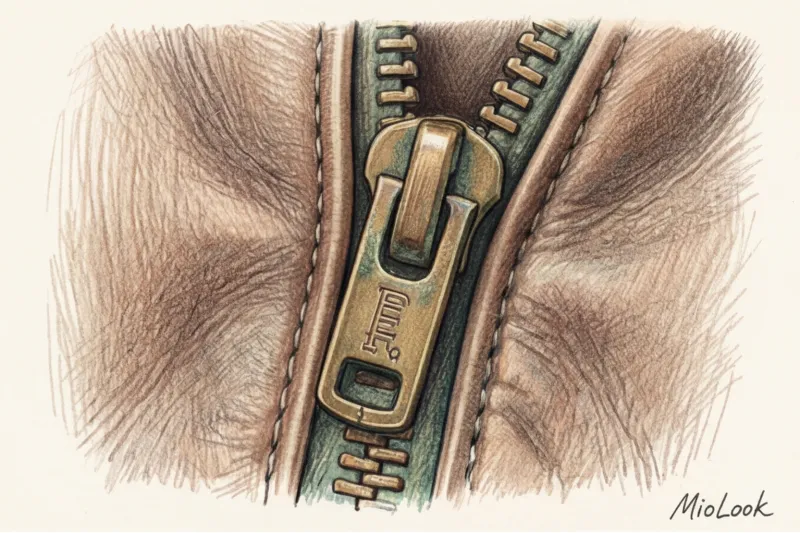
Pay attention to the weight of the metal and its response to time. Authentic hardware from luxury brands of past decades was often made of solid brass or copper. Over time, these alloys oxidize. If you see a slight greenish patina in the corners of zipper teeth or around rivets, that's a good sign. As archivists at the Kyoto Costume Institute (2023) note, the chemical composition of hardware alloys changed in the mid-1990s due to strict EU environmental restrictions. The natural patina of those years cannot be imitated by modern chemical aging, which typically produces a flat black or gray matte finish.
The Evolution of Zippers: Riri, Lampo, and Historical YKK Marks
A zipper often speaks louder than a brand tag. If you're buying vintage Gucci from the '80s, look for the Lampo stamp. Vintage Prada and Hermès bags and jackets from that era often featured riri zippers.
"When assessing vintage items, we first look at the back of the zipper pull. If a Dior bag from 1985 has a modern, thin YKK zipper without the characteristic thick font of that era, the negotiations are over."
However, there's an important caveat here. In my experience, I've encountered completely original jackets with replaced zippers. If the fabric, pattern, and seams scream authenticity, but the zipper is modern, it's possible the item was simply repaired at a tailor's shop. Assess the item holistically.
The Backside Doesn't Lie: Seams, Lining, and Pattern Architecture
The architecture of luxury goods of the past was built on generosity. Expensive fabrics for clothing They didn't economize as aggressively as they do today. Look inside a vintage skirt or trousers: the seam allowances on the originals were up to 3-4 centimeters. This was done so the client could have the garment tailored to their figure. Modern counterfeits (and even modern mass-market items) leave a measly 0.5-1 cm, cutting the fabric down to the roots.
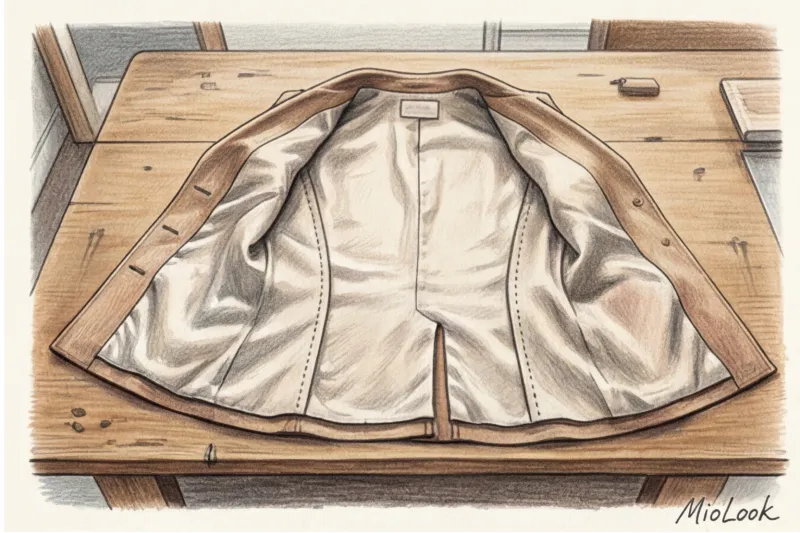
The second marker is stitch type. That very Chanel jacket I started this article with was punctured by an overlocker. The modern five-thread overlocker, which neatly and quickly overcasts fabric edges, has only become a standard for mass production in recent decades. In couture and luxury garments of the 1970s and 1980s, edges were often finished by hand, bound with bias binding (Hong Kong binding), or closed with a French seam.
The lining also reveals the origin. Look for thick cupra, silk, or high-quality viscose. If the inside creaks and statics (100% polyester), and the seller claims it's a vintage Dior for €600, walk away without looking back.
Your perfect look starts here
Join thousands of users who look flawless every day with MioLook. Smart digitization will help you incorporate vintage into your style.
Get access — €0.99 onceThe Myth of Perfect Condition: How Originals Age
We've reached the most counterintuitive rule of vintage shopping. The "perfect" condition of a 30-year-old item is often a major red flag.
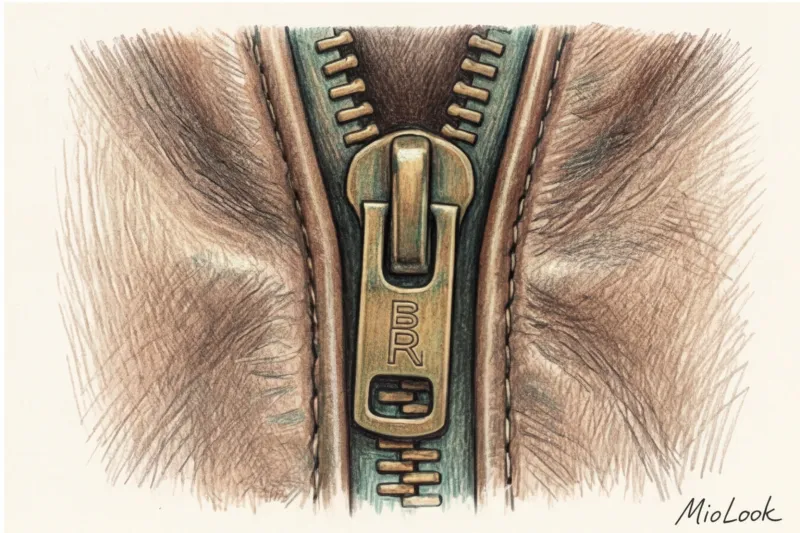
Natural fibers and leather age according to specific patterns. Genuine leather (especially aniline leather) develops microcracks, softens, and changes shape under the influence of gravity. Cotton and wool fade slightly along the shoulders and sleeve creases.
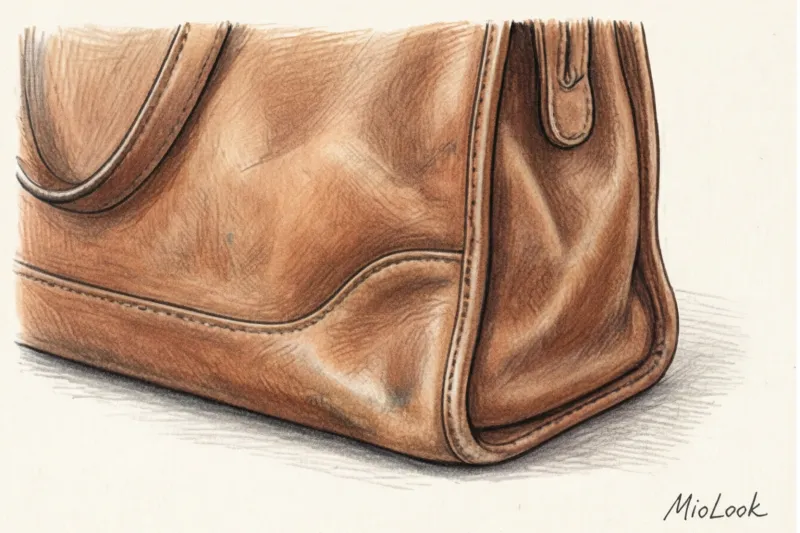
The machine-made perfection of modern copies lacks "life." In the original pieces from older collections, a significant portion was crafted by hand. For example, buttons were sewn on with a distinctive thread shank, and the inner stitching of the lining could be slightly uneven. This human imperfection is the hallmark of true couture, unlike the soulless, machine-made churning of factory counterfeits.
Paper trail: tags, fonts, and country-of-origin markings
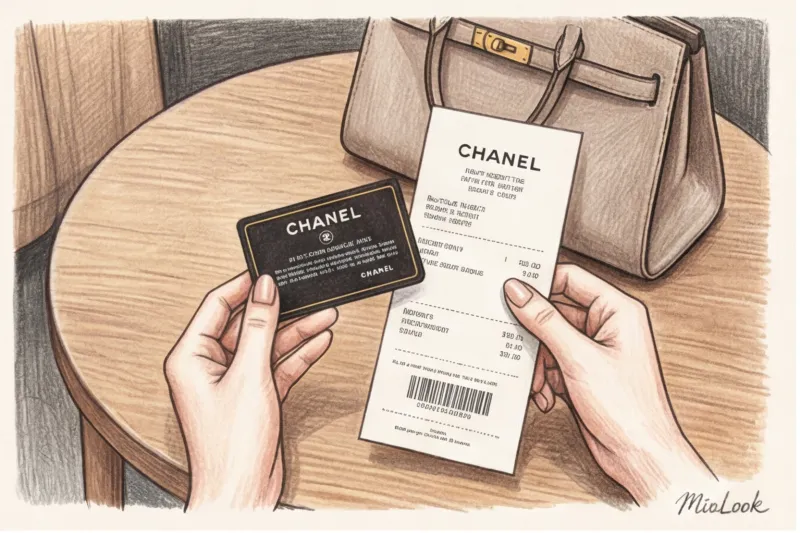
Geopolitical history is your best friend when checking authenticity. Text markings on tags can give away a fake in a matter of seconds.
For example, marking Made in West Germany could not appear on anything released after October 1990. Label "Made in British Crown Colony of Hong Kong" disappeared in 1997. If the seller claims that this coat is from the 1999 collection, but the tag says West Germany, you are being deceived.
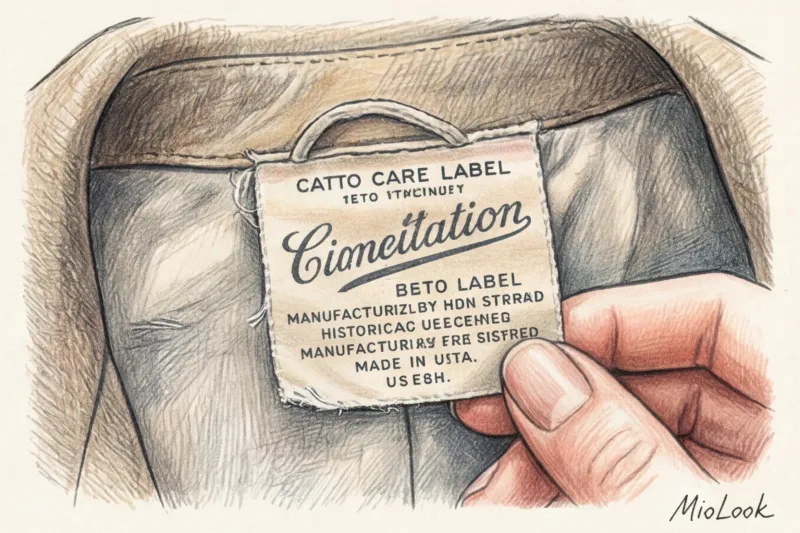
Pay attention to care labels. The international standard ISO 3758, which regulates washing, ironing, and dry cleaning symbols, underwent significant revisions in 1990 and 2005. The crossed-out triangle symbol (no bleaching) on older items often appeared as an empty triangle with a cross inside, while modern counterfeits print the current symbols on "old" tags.
A stylist's checklist: how to spot a vintage fake
To avoid getting lost in a vintage boutique or flea market, use this algorithm. Save it on your phone—it will save you hundreds of euros.
- Weight and density test (blind touch test). Close your eyes. Real vintage wool or silk should feel heavier and denser than their modern counterparts from Zara or H&M.
- Checking allowances and backing. Turn the garment inside out. See the scant 0.5 cm seam allowances and the cheap, squeaky overlock? Return it to the hanger.
- Inspection of fittings. Look for a green or dark natural patina on brass. Check the stamp on the back of the zipper pull (riri, Lampo).
- Analysis of tags. Check that the country of manufacture matches the stated era and pay attention to the tag material (older brand tags were often woven from cotton or silk, rather than printed on smooth nylon).
- Smell check. Natural aging smells of dust, old wood, or perfume. Modern counterfeits often give away their presence with the pungent odor of industrial glue, formaldehyde, or cheap plastic.
Access to MioLook for €0.99 — one-time payment
A smart AI stylist will choose the perfect look for you and help you incorporate vintage finds into your everyday wardrobe.
Get access — €0.99 onceInvesting in History: Building a Smart Wardrobe Without Risk
Finding authentic vintage isn't just shopping; it's an investment in quality, something modern fashion rarely offers in the mid-price range (€100 to €300). Knowing textures, understanding thread count, and being able to read the history of seams will protect you better than any certificate of authenticity.
Integrating these pieces into your everyday look requires balance. Don't dress head-to-toe in vintage unless you're going to a themed party. The ideal formula is one statement vintage piece (like a structured '80s jacket) paired with modern staples (straight jeans and a simple T-shirt). This is a great technique for dressing for, say, a casual Friday at the office, where everyone wears jeans, but you want to look a little more put-together and classy.
To avoid cluttering your closet with disparate historical artifacts, digitize your database. MioLook app Allows you to upload your current items and, using artificial intelligence, check how well a new vintage find will fit into your wardrobe before you buy it.
Remember: true luxury doesn't scream logos. It whispers with perfect French seams, the weight of natural silk, and the noble patina of darkened brass.