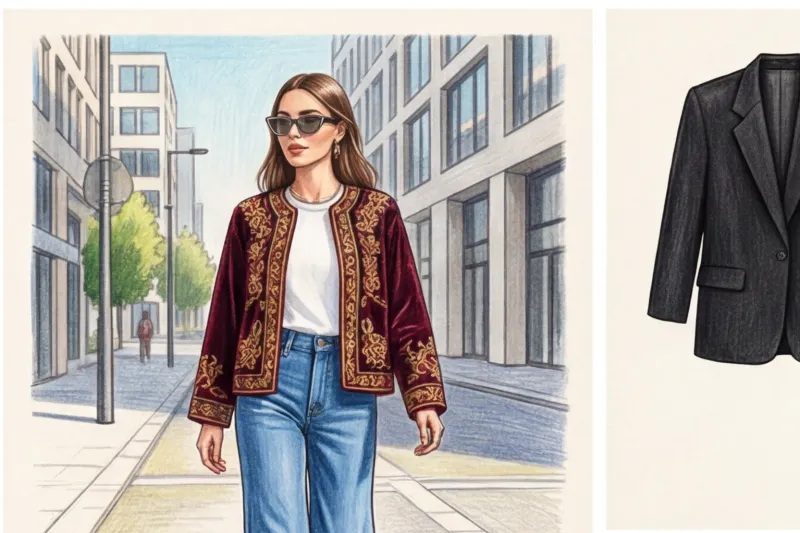
Do you know what the most common complaint I hear in my consultations when it comes to retro items is? "Katarzyna, I bought a stunning jacket at a thrift store in Paris, wore it to work, and a colleague asked if I was going to a costume party that night." It's a classic situation. The main problem is that many people perceive vintage as a theatrical prop or an element of bohemian style. We've already discussed the basics of searching in our complete guide to how to look for unique things , but today I want to break stereotypes.
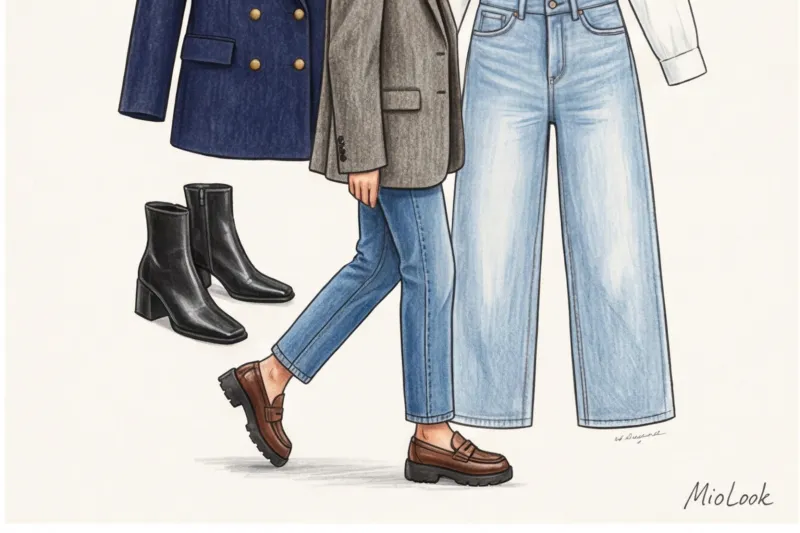
As a practicing stylist, I maintain that combining vintage and contemporary clothing is a matter of simple math and a pragmatic approach. A well-crafted piece with a historical edge adds status, luxury, and sophistication to a look. Without it, you risk looking like a mass-market mannequin. Let's explore how to integrate finds from the past into the formal, casual, or work wardrobe of a modern career woman without turning into an actress from a period film.
The Golden Rule: How to Combine Vintage and Modern Clothes Without Looking Mothballed
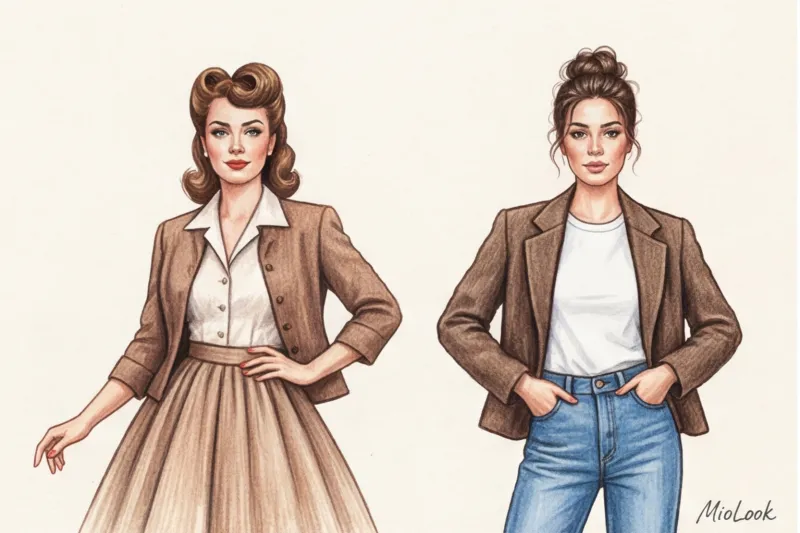
A total look from a bygone era is your worst enemy. When you wear a blouse from the '70s with a midi skirt from the same decade, you don't look stylish. You look older than your age. Clothes from the past carry a powerful message, and if not grounded, it will overwhelm your individuality.
One of my clients, a top manager, really wanted to add some personality to her work wardrobe. She bought a gorgeous vintage silk blouse with a full flounce and tried pairing it with a classic pencil skirt, which also had a retro silhouette. The result? She looked like a stern schoolteacher from a Soviet movie. Once we swapped the skirt for modern wide-leg trousers with pleated waistbands and added trendy loafers with chunky soles, she received dozens of compliments around the office.
The secret is in the formula 80/20 Your look should be 80% modern, neutral, and straightforward, with only 20% vintage accents. Shoes, a bag, and a modern, casual hairstyle are the anchors that will anchor your outfit in 2024.
The 80/20 formula in a basic wardrobe
For this proportion to work flawlessly, you need the right "canvas." Minimalist brands like COS, Arket, and Massimo Dutti are perfect for this role. Their minimalist pieces don't compete with their textured flourishes.
The second secret is contrasting textures. Never pair vintage tweed with retro corduroy. If you have a textured, complex vintage jacket made of thick wool, the base layer should be a smooth, high-tech modern cotton or matte silk. This contrast creates that sparkle that distinguishes a stylish woman from someone dressed casually.
Why Men's Jackets and Coats from the '80s and '90s Are Your Best Investment
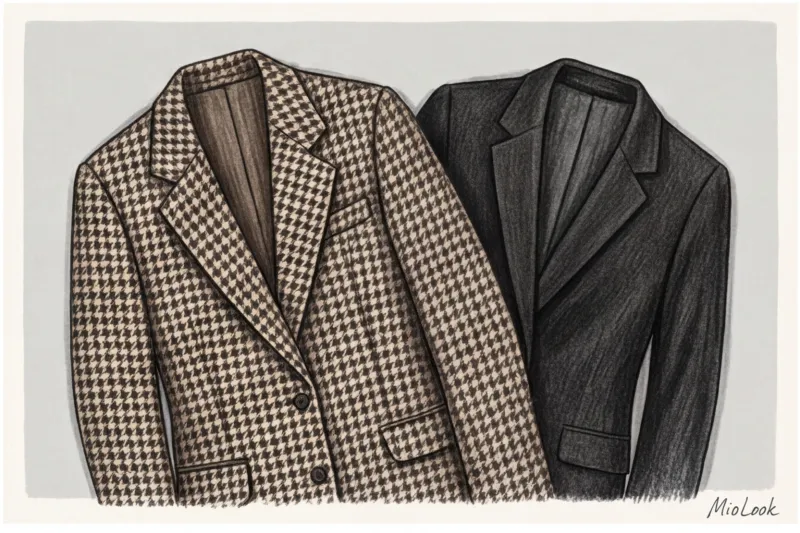
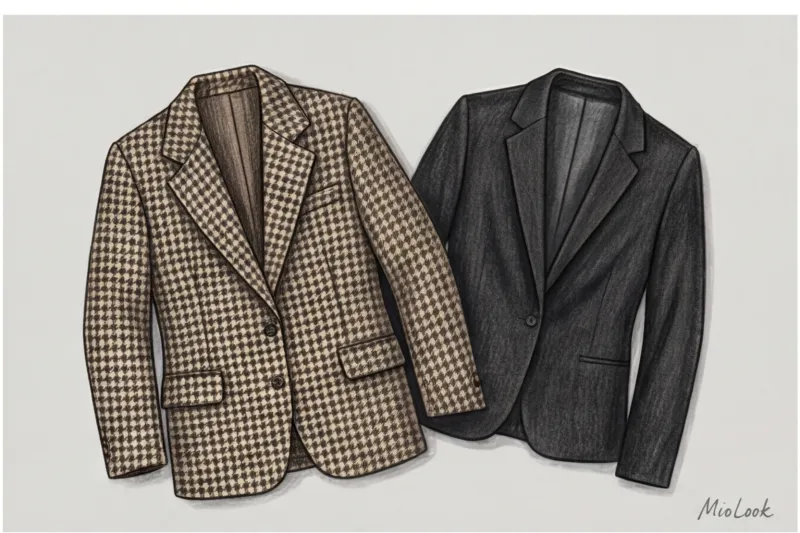
I often tell my clients: stop buying everything. If you want to make a truly smart investment, go to the men's section of a good vintage store and look for jackets or coats from the 80s and early 90s. Why? The answer lies in the numbers and production technology.
The mathematics of the modern wardrobe is merciless. According to textile institutes, the density of wool fabrics in mass-market clothing is steadily declining. In the 1990s, the standard density of good wool suiting was around 300–350 g/m². Today, in a popular fast fashion store, you'll find fabric with a density of, hopefully, 200 g/m², and even then, it contains 30% acrylic.
"You can buy a vintage men's 100% wool jacket for €50-€100. To get the same quality of tailoring, lining, and fabric today, you'd have to go to a premium store with a price tag of €500 and up."
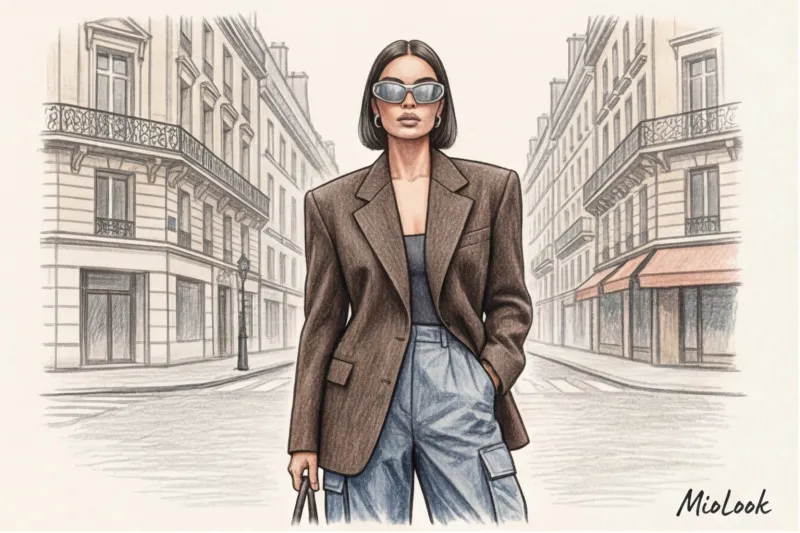
Men's broad-shouldered jackets from the past possess magnificent architecture. They feature genuine padding, a high-quality interlining that retains its shape for decades. To incorporate such a masculine garment into a modern feminine look, simply roll up the sleeves to reveal slender wrists and wear a fitted top or silk camisole underneath.
Cut Comparison: Vintage vs. Fast Fashion
Beyond the fabric, a huge difference lies in the backing. In previous decades, manufacturers didn't skimp on linings and seams as aggressively as they do today.
- Seam allowances: Vintage clothing often had generous seam allowances (2–3 cm), allowing a tailor to easily tailor the garment to your figure. Modern mass-market clothing often leaves millimeters, making it impossible to embroider.
- Darts: The anatomical cut of yesteryear included complex darts that ensured clothing would fit perfectly to the figure rather than hang in a shapeless sack.
Your perfect look starts here
Join thousands of users who look flawless every day with MioLook. Our smart AI stylist will help you integrate any find into your current wardrobe.
Get access — €0.99 onceThree Fatal Mistakes That Will Turn You Into a Historical Film Actress
Having observed the women who come to me for wardrobe reviews after their first independent trips to thrift stores, I've identified three pitfalls. These are the ones that ruin the whole experience.
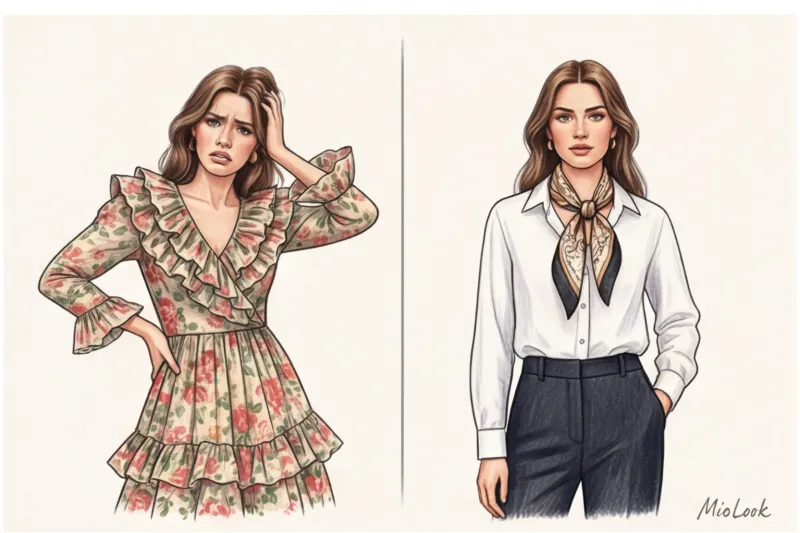
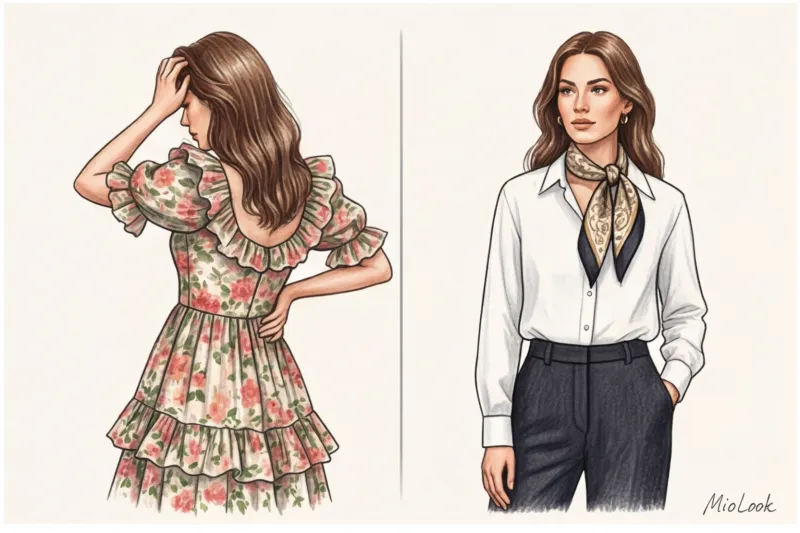
Mistake 1: Buying vintage floral dresses. This is my harshest, but most necessary, advice. Stop buying vintage dresses with tiny prints, ruffles, and elastic waists. Their silhouettes are hopelessly outdated. In the modern metropolitan lifestyle, they look out of place, creating a "granny trunk" effect. The best investment is structured tailoring (coats, trench coats, jackets).
Mistake 2: Retro makeup paired with retro clothes. If you're wearing a blouse with a '70s pussy bow, forget about red lipstick and perfect eyeliner. Red lipstick + eyeliner + vintage = Halloween costume. Modernity calls for a fresh face, natural eyebrows, and slightly tousled hair. You should look like you threw it on casually, not like you spent three hours getting ready.
Mistake 3: Ignoring modern footwear. I can't stress this enough: shoes are what set the tone for an entire look. You can be wearing the perfect '80s outfit, but if you're wearing outdated pumps with a hidden platform, the look is a bust. Pair that outfit with chunky lace-up boots, minimalist sneakers, or pointed mules, and you're in 2024.
Ready-made schemes: 4 win-win looks with vintage items
How do you mix eras correctly? The main rule: don't mix adjacent decades in one look. Combine the 70s with the 2020s, the 90s with the 2020s. Relying on contrasting styles (strict vintage with relaxed casual) works flawlessly.
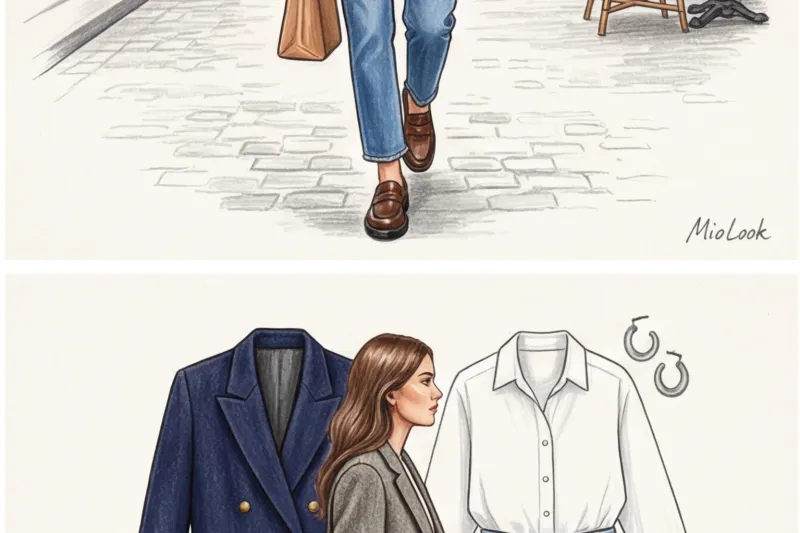
Office Chic: Vintage Blazer + Trendy Jeans
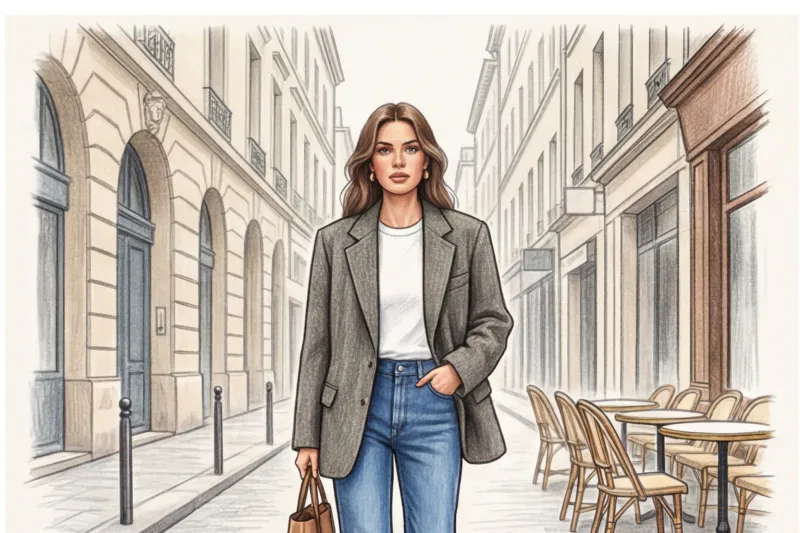
For a Friday dress code when you want to look put-together but not boring, opt for a well-made men's plaid blazer. To balance out the bulk, pair it with the right jeans—straight, wide-leg, or even slightly baggy—but always high- or mid-rise. Layer it with a crisp cotton architectural shirt or a crisp white T-shirt.
Evening Out: Vintage Silk + Formal Dress
Instead of a boring slip dress, try this duo. Find a vintage silk blouse with a bow or puff sleeves. Tuck it into modern, perfectly tailored pleated palazzo pants. Since the blouse itself is a complex piece, jewelry should be as minimal as possible: thin rings or simple studs.
Access to MioLook for €0.99 — one-time payment
A smart AI stylist will create the perfect look based on your closet. Upload your retro finds and get ready-made combinations.
Get access — €0.99 onceVintage Accessories: The Safest Way for Beginners
If buying a shoulder piece seems too bold, start small. Accessories are a safe haven. They don't require complicated adjustments and instantly elevate your style.
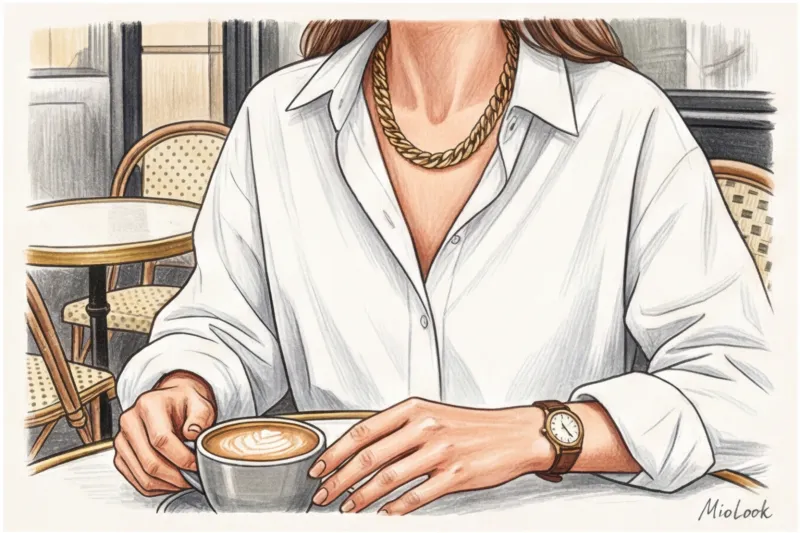
My personal style hack that I use constantly: chunky vintage YSL or Dior clip-on earrings from the '80s paired with a basic gray sweatshirt and jeans. It's the perfect example of how "quiet luxury" with a touch of irony works. Large gold clip-on earrings or chains can save even the most boring white office shirt.
Consider vintage, rugged bags. An old Coach, Celine, or even a high-quality, no-name bag made of thick, vegetable-tanned leather will serve you well for decades. Unlike modern, mid-priced bags (in the €150–€300 range), which lose their appearance after a season due to cheap polyurethane coating on the edges, vintage leather ages beautifully, acquiring a refined patina.
Don't forget about silk scarves. A vintage Hermès square, tied around the handle of a modern minimalist tote or casually draped over a basic trench coat, instantly ties together an outfit.
A Stylist's Checklist: How to Adapt a Vintage Purchase
A vintage item in a store isn't a finished product. It's raw material. Material for creating your perfect wardrobe. Over 12 years of experience, I've developed a strict post-purchase protocol.
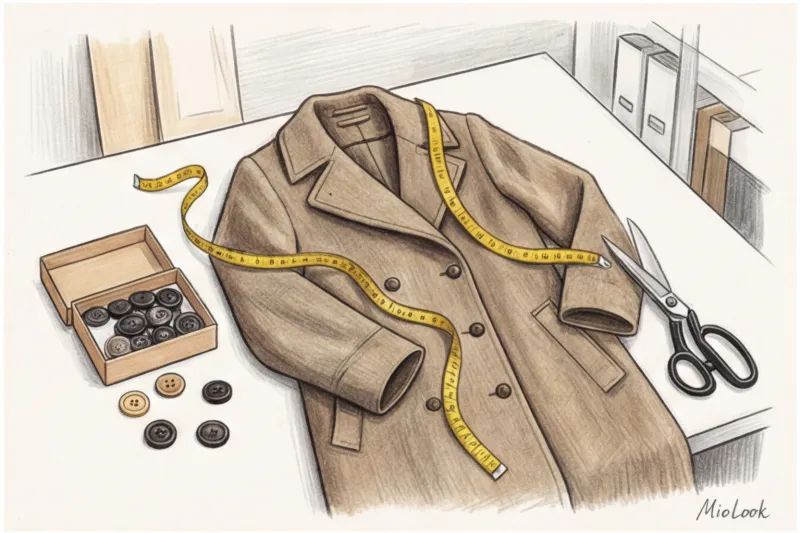
- Dry cleaning and ozonation. No compromises. The distinctive smell of an "old wardrobe" can ruin any elegance. Ozonation is a modern way to remove deep-seated odors without damaging the fabric.
- Replacing buttons. This is the cheapest and fastest way to modernize an item. Cut off the old shiny plastic buttons from a coat or jacket and sew on modern ones: matte horn, tortoiseshell, or fabric-covered. The item will visually appreciate several times over.
- Visit to the tailor. Never skimp on tailoring. What you should almost always do: shorten the sleeves (they should expose the wrist bone), nip the waist a bit, or remove those giant '80s shoulder pads and replace them with thin, modern ones.
But there is an important limitation here that I must warn you about: These tips won't work if the garment is too small in the shoulders, tight in the armholes, or requires a complete re-tailoring. If the garment's design is flawed or doesn't suit your anatomy, leave it on the hanger. Re-tailoring will cost more than the garment itself, and the result will be disappointing.
Integrating retro pieces requires a certain amount of courage and a keen eye. But once you master the formula of contrasts and learn to appreciate the quality of fabrics, you'll never want to return to the faceless rows of identical clothes again. Treat vintage not as a museum piece, but as a high-quality construction kit from which you can assemble your own unique modern style.