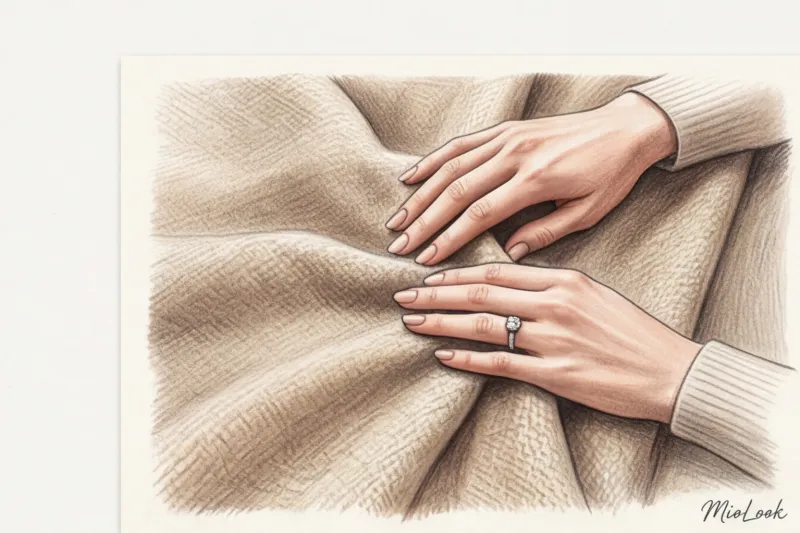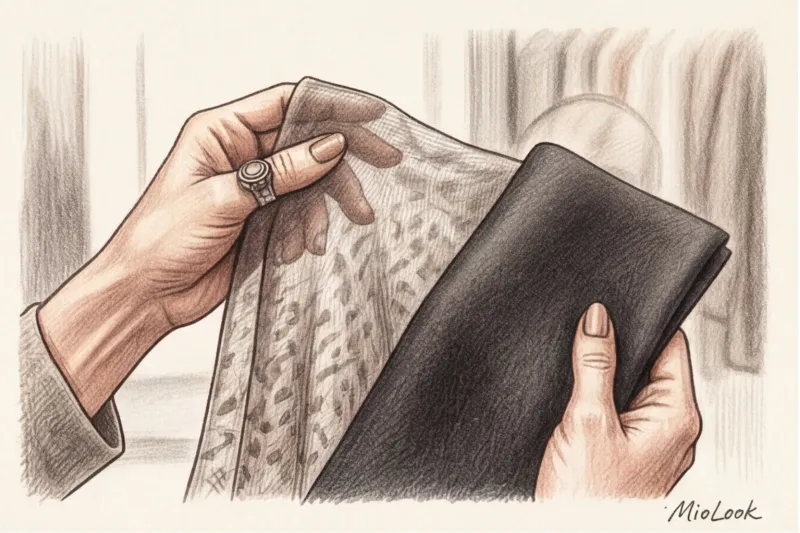
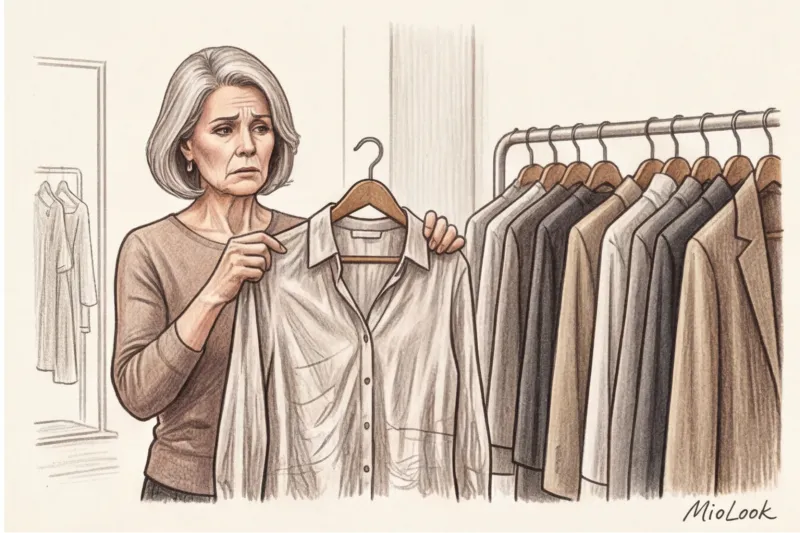
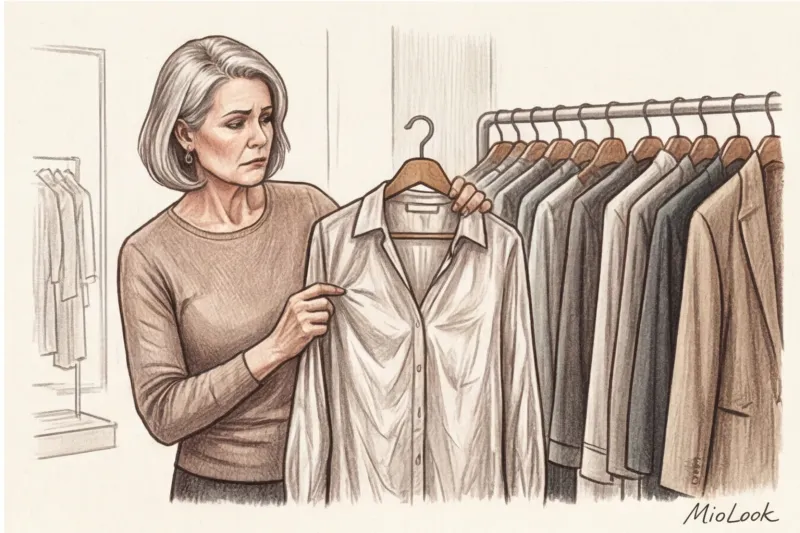
Кілька місяців тому до мене звернулася клієнтка, засмучена до сліз. Вона інвестувала близько 120 € у «статусну» 100% шовкову блузу відомого мас-маркету бренду для важливого заходу, але після першого ж делікатного ручного прання річ перетворилася на мляву марлю, втративши і колір, і форму. Цей випадок чудово ілюструє головну пастку сучасного шопінгу: ми сліпо віримо складу на етикетці, забуваючи про фізику текстилю.
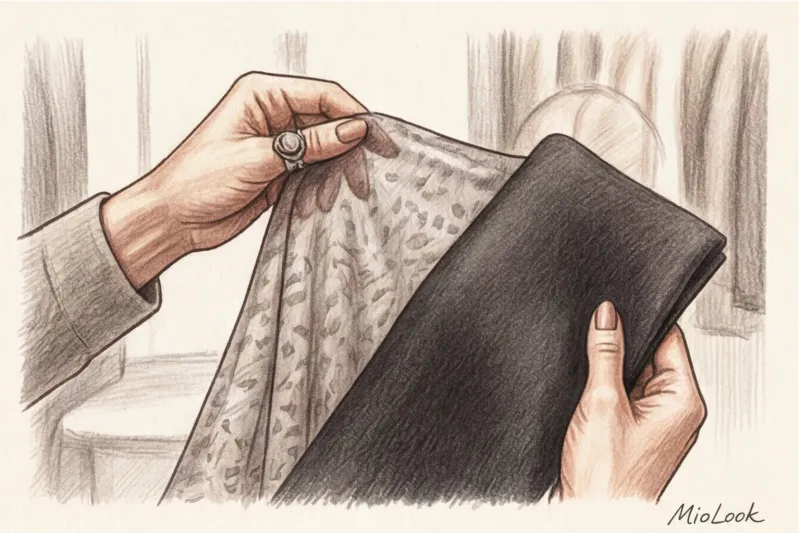
Коли ми говоримо про базовий гардероб для жінки 50 років: сучасний стиль , я завжди наголошую: архітектура силуету починається з правильного матеріалу. Намагаючись зрозуміти, які тканини виглядають дорого , багато хто за інерцією ділять матеріали на «натуральні – добре» та «синтетика – погано». Однак це застарілий підхід. Текстильна промисловість давно пішла вперед, і сьогодні якісний еко-тенсель може виглядати набагато розкішніше за дешевий натуральний шовк.
Давайте розвивати «текстильний інтелект» і вчитися читати тканину не за буквами на ярличку, а за щільністю плетіння, крученням нитки та здатністю поглинати світло.
Ілюзія ціни: чому склад на етикетці це ще не все
Напис «100% бавовна» або «100% шерсть» не гарантує зовсім нічого. Волокно – це лише сировина. Візуальна вартість речі на 80% залежить від конструкції тканини: щільності плетіння, довжини вихідних волокон та ступеня їх скручування.
«Якість тканини визначається не лише її походженням, а й показником GSM (Grams per Square Meter) – вагою у грамах на квадратний метр. Саме він відповідає за те, чи буде річ тримати форму, чи повисне безформною ганчіркою».
У моїй практиці роботи з клієнтками 50+ я часто бачу, як тонкі матеріали зрадницьки наголошують на найменших нюансах фігури. Щільні, візуально важкі тканини, навпаки, працюють як легкий корсет. Вони задають чіткий контур плечей, рівну лінію стегна та автоматично асоціюються зі статусом.
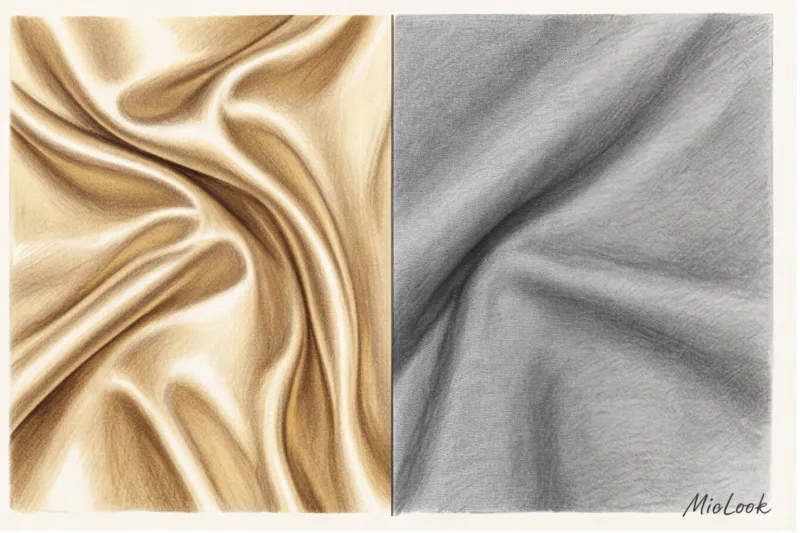
Другий найважливіший фактор – світловіддзеркалення. Дешеві тканини (особливо низькоякісний поліестер або пересушений акрил) відбивають світло плоско, створюючи нав'язливий різкий блиск. Дорогі матеріали світло поглинають (Як оксамит або щільна матова вовна) або мають глибоке, делікатне внутрішнє свічення (як хороший шовк або купро).
Доступ до MioLook за €0,99 — разовий платіж
Розумний AI-стиліст підбере ідеальний образ на кожен день та допоможе організувати гардероб.
Відкрити доступ — €0,99 разовоЯкі тканини завжди виглядають дорого: 5 благородних фактур
Щоб виглядати дорого , Не обов'язково скуповувати люкс. Достатньо інвестувати у матеріали, які історично та візуально зчитуються як ознака високого класу. Вони гарантовано підвищують градус стилю та працюють на ваш імідж.
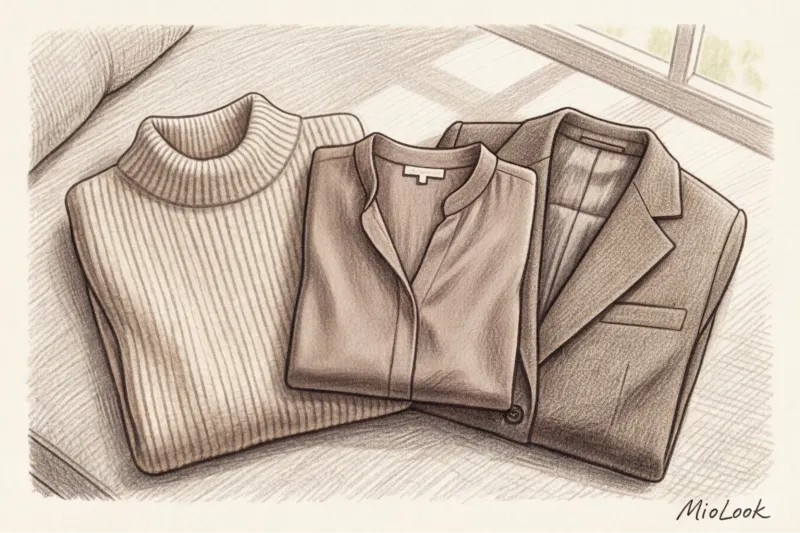
Щільний шовк та його екологічні альтернативи (Купро, Тенсель)
Дешевий блискучий шовк щільністю менше 16 моммі (одиниця виміру щільності шовку) зношується за 1-2 сезони. Він електризується, липне до тіла та підкреслює білизну. Статусний шовк - це завжди щільність від 19 моммі і вище, і найчастіше він матовий: креп-де-шин (crepe de chine) або "прання" шовк (washed silk).
Але що якщо бюджет обмежений? Тут на сцену виходять інноваційні екологічні альтернативи: купро (волокно з бавовняного пуху) та тенсель (ліоцелл із деревини евкаліпта). Ці матеріали мають приголомшливу плинність. Щільний купро служить до 5 років, драпірується важкими, красивими складками і володіє тим самим благородним «припиленим» світінням, яке неможливо зімітувати дешевою синтетикою.
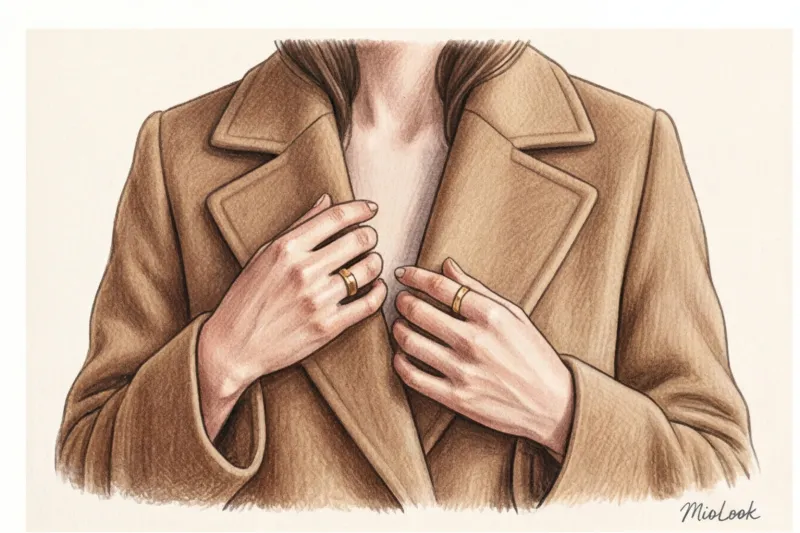
Костюмна вовна (Super 100s-120s) та твід
Якщо ви коли-небудь вибирали чоловічий чи жіночий діловий костюм преміум-класу, ви напевно бачили на етикетці індекси Super 100s, 110s чи 120s. Це показник товщини шерстяного волокна. Чим вище цифра, тим тонша і м'якша нитка, з якої зіткана тканина.
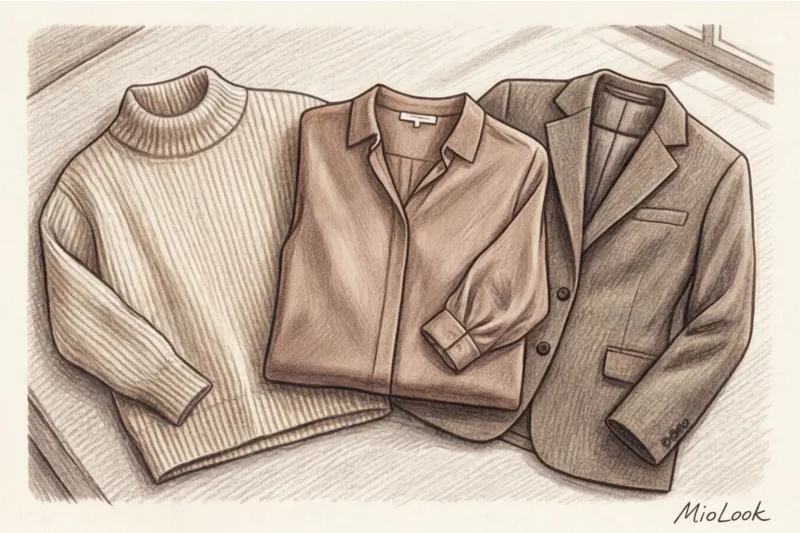
Для повсякденного смарт-гардеробу ідеальний індекс від 100 до 120с. Така вовна має феноменальну здатність до самовідновлення. Ви можете провести весь день в офісі, але якщо ввечері повісити жакет на правильну вішалку, на ранок дрібні заломи розійдуться самі собою завдяки природній пружності волокна.
Правильний кашемір та сумішові варіанти
Мас-маркет бренди часто приваблюють покупців бірками «100% кашемір» за 50–70 євро. Не обманюйтесь. Для виробництва такого трикотажу використовуються найкоротші волокна (очеси). Результат? Через два тижні шкарпетки светр покриється шаром катишків (пілінг), а через місяць втратить форму.
Справжній статус – це довговолокнистий кашемір. Якщо він не вписується в бюджет (ціна на якісний светр зазвичай стартує від 250 €), набагато розумніше купити бленд: 70% вовни мериноса і 30% кашеміру. Така річ служитиме роками, зберігаючи м'якість кашеміру та зносостійкість овечої вовни.
Анатомія дешевизни: матеріали, які миттєво псують образ
Навіть бездоганний крій не врятує річ, якщо вона пошита із «зрадливої» тканини. При аудиті шаф через розумний гардероб MioLook я насамперед прошу клієнток позбутися кількох категорій речей.
- Тонкий тонкий трикотаж. Головний ворог елегантності, особливо для жінок після 50-ти. Він облягає тіло нерівномірно, збирається в складки на спині, просвічує контури бра і позбавляє силует необхідного каркаса. Замініть його на щільний джерсі або бавовняний пік.
- Глянсовий поліестер та скрипучий акрил. Акрил – це пластик у чистому вигляді. Він не гріє, змушує тіло потіти і миттєво скочується. Глянцевий поліестер (що часто маскується під атлас) видає себе характерним скрипом при терті та дешевим відблиском на фотографіях. Якщо ви шукаєте тканину, на якій не видно плям поту , дешева синтетика - найгірший із можливих варіантів.
- Пухка віскоза. Сама по собі віскоза – чудовий штучний матеріал з целюлози. Але якщо тканина має рідке плетіння (просвічує на світ), після першого ж прання вона сяде на розмір або перекоситься по бокових швах.
Міф про 100% натуральності: коли синтетика грає на вашому боці
Один із найбільш укорінених стереотипів: статусна річ повинна складатися на 100% з натуральних волокон. Це контрінтуїтивний інсайт, але чиста натуральність часто виглядає неохайно. Стовідсотковий льон без домішок до середини робочого дня виглядає так, ніби ви спали в ньому. А 100% бавовна на строгих штанах швидко витягується на колінах.
Звіт Textile Exchange Preferred Fiber and Materials (2023) підтверджує: технології створення інноваційних сумішових волокон здійснили революцію. Якісний поліестер чи еластан більше не вороги екології та стилю, якщо використовуються з розумом.
Додавання 2-5% еластану до складу костюмної вовни або щільної бавовни збільшує здатність виробу зберігати первісну форму на 40%. Спандекс рятує лікті на жакетах від витягу, а поліамід (в межах 10-15%) робить вовняне пальто в рази більш стійким до стирання.
З погляду стійкої моди, річ із сумішевим складом, яка ідеально сидить і служить вам 5 років, набагато екологічніша за футболку зі 100% органічної бавовни, яку ви викинете через місяць через втрату форми.
Ваш ідеальний образ починається тут
Приєднуйтесь до тисяч користувачів, які щодня виглядають бездоганно з MioLook. Зробіть фото своїх речей, а ІІ підбере стильні поєднання.
Відкрити доступ — €0,99 разово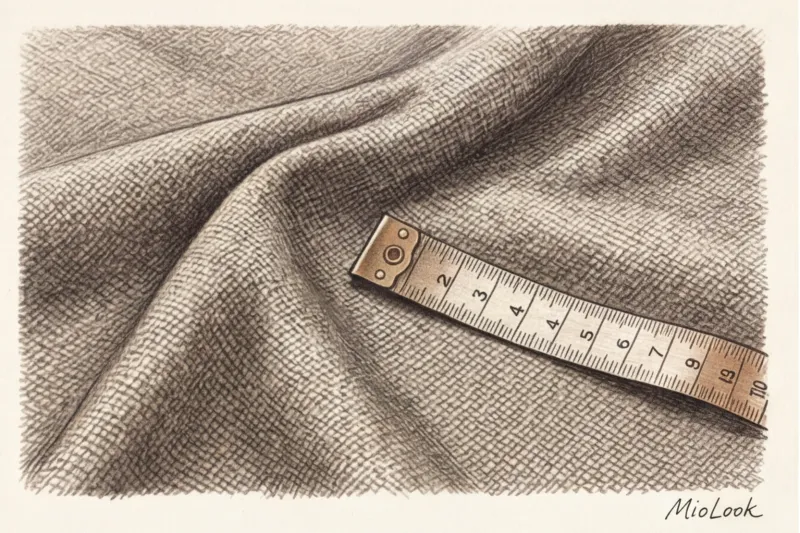
Тест стиліста: як перевірити якість тканини прямо в магазині
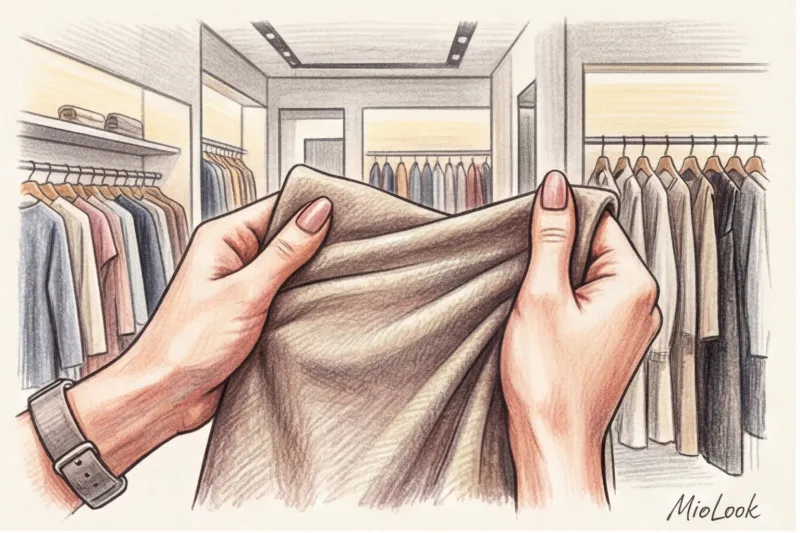
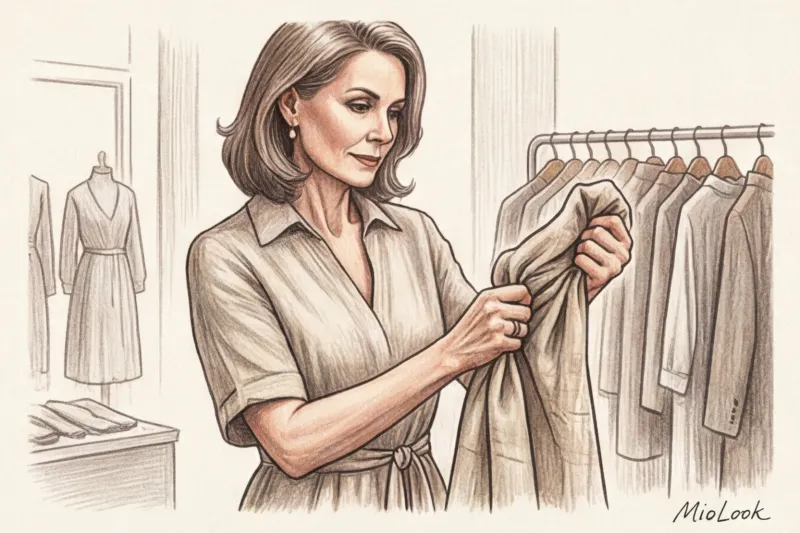
Вам не потрібна лабораторія, щоб визначити якість матеріалу. Достатньо 15 секунд у примірювальній. Ось як я перевіряю речі перед покупкою для своїх клієнтів:
- «Тест у кулаку» на зминання. Щільно стисніть край тканини в кулаку і потримайте 10 секунд. Потім відпустіть. Якщо тканина залишилася жуваним папером — річ виглядатиме неохайно через годину носіння. Якщо заломи м'які і на очах починають розправлятися - перед вами якісна тканина з гарною ниткою. Виняток: цей тест не застосовується до літнього льону, для якого зминання - природна норма.
- Тест на просвіт. Піднесіть тканину (особливо бавовну, шовк або віскозу) до лампи в магазині. Чим менше світла проходить через переплетення ниток, тим вища щільність плетіння. Пухка структура - ознака швидкої деформації.
- Оцінка швів. Злегка, без фанатизму, потягніть тканину в обидва боки від шва. Якщо ви бачите дірочки від голки, а нитки натягуються як струни — річ пошита з неякісної тканини, яка скоро поповзе швами («ефект розсування»).
Як зберегти статусність гардеробу на роки
Навіть тканину найвищої якості можна вбити неправильним доглядом. За даними досліджень WGSN (2024), 60% зносу преміальних тканин походить не від носіння, а від надмірного агресивного прання.
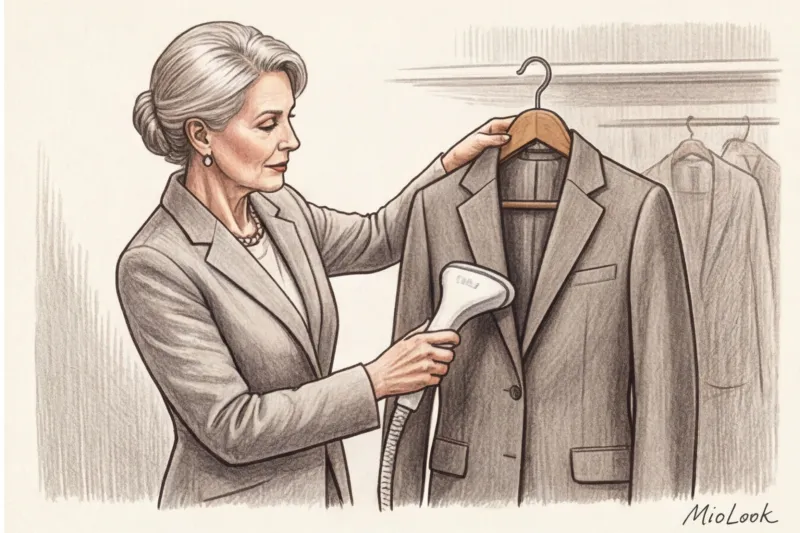
Забудьте про звичку кидати вовняні жакети, кашемірові светри та шовкові блузи у пральну машину після кожного виходу. Дорогі матеріали потребують делікатності. Інвестуйте в хороший вертикальний відпарювач: пара не тільки розгладжує заломи, а й убиває бактерії, що викликають запах, відновлюючи об'єм волокон. Для вовни часто досить просто провітрювання на свіжому повітрі протягом ночі.
Складання статусного гардеробу - це завжди інвестиція в меншу кількість речей, але радикально кращої якості. Замініть п'ять хистких водолазок на один ідеальний джемпер із щільної вовни суміші, і ви помітите, як зміниться ваша постава.
Зрештою, вибір правильних тканин – це не просто данина моді. Це прояв поваги до себе, свого комфорту та свого особистого часу. Вибирайте матеріали, які працюють на вас, а не проти вас, і ваш гардероб завжди виглядатиме бездоганно.