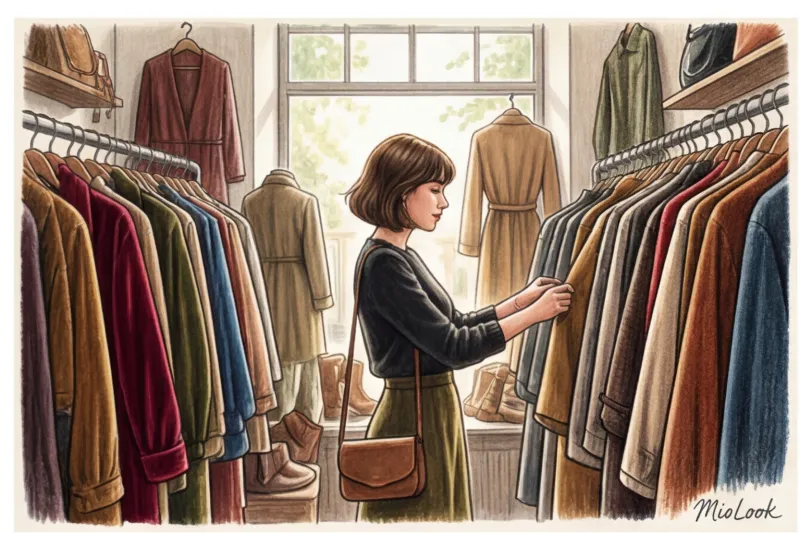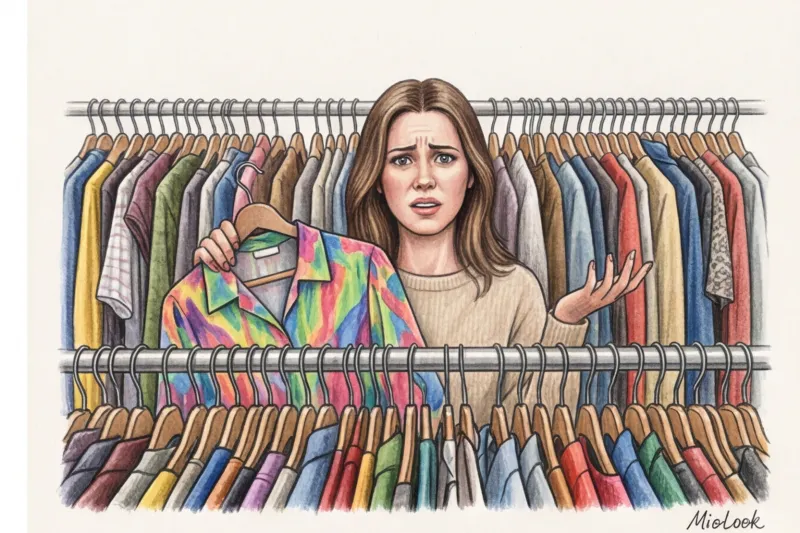
Over 14 years of working as a personal stylist, I've reviewed hundreds of women's wardrobes and noticed a pattern. The most stylish, expensive-looking, and unique looks almost always include pieces with a story. But when my clients try to replicate this trick themselves, the results are often disappointing: the items hang in the closet with the tags still on, and shopping becomes a frustrating experience. If you don't know, How to choose clothes at a second-hand store , then instead of a stylish capsule, you risk getting a warehouse of unnecessary things that you have nothing to wear with.
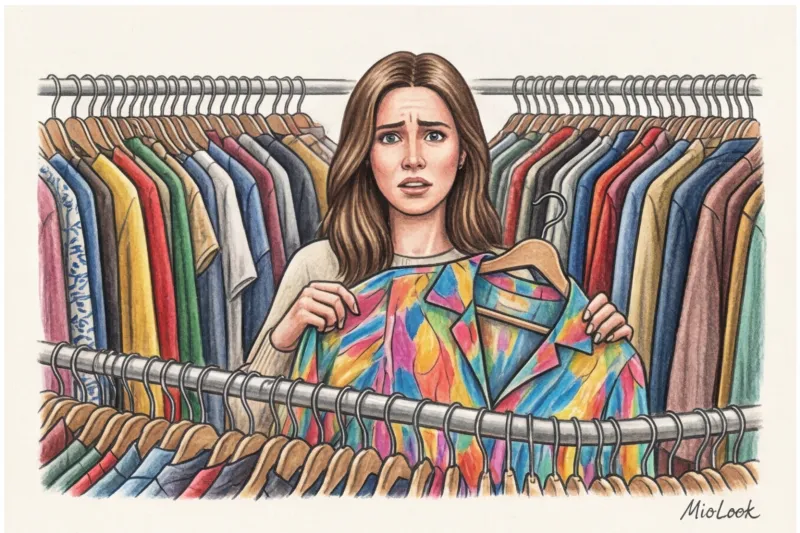
We talked about the philosophy of conscious consumption in more detail in our the complete guide to vintage clothing , and today I want to share some purely practical, practical tools. Forget the clichéd internet advice like "look for brightly colored pieces" or "arrive on delivery day." We'll take a systematic approach: learn to "read" fabrics with your hands, use the men's section to create classy looks, and budget for a tailor's appointment.
The biggest mistake newbies make: why second-hand stores turn into warehouses for unwanted items
According to ThredUp's annual resale market report for 2024, the secondary clothing market is growing 15 times faster than traditional retail. But these statistics don't tell the whole story: how many of these purchased items are actually worn? In my experience, when I'm sorting through wardrobes, I often find entire shelves filled with spontaneous purchases from secondhand stores. In 80% of cases, they even still have the price tags on them.
Why does this happen? The main trap is the magic of low prices and the thrill of a treasure hunt. When a seemingly high-quality jumper costs €5, the brain switches off critical thinking. Women buy worn-out T-shirts just because they have the Ralph Lauren logo embroidered on them, or buy shoes a size too small—"After all, they're practically new Pradas for next to nothing!" This is the psychology of buying a brand for the sake of buying a brand, which kills your individual style.
"If an item doesn't fit you in size, color, or cut for €100, it certainly won't fit you for €5. A cheap mistake is still a mistake."
And herein lies my first, rather counterintuitive piece of advice. All the online guides scream, "Go to a thrift store on the day the new collection arrives!" As a professional stylist, I say: do the exact opposite if your goal is basics.
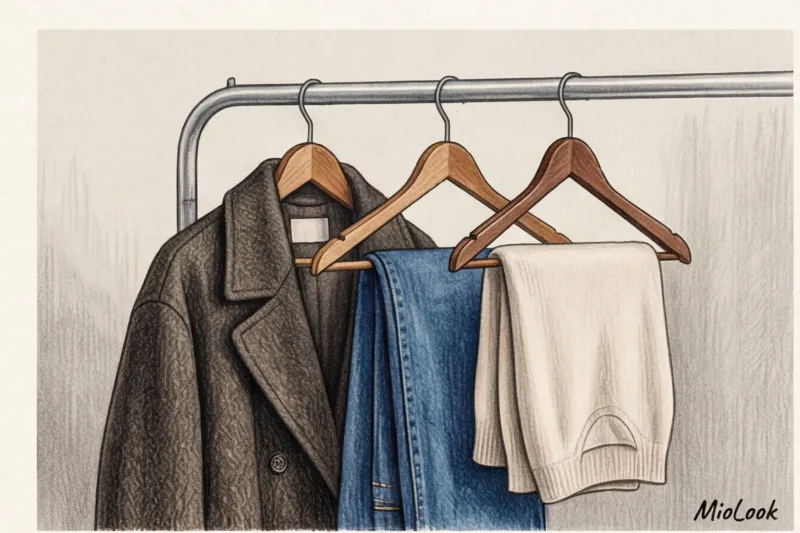
On delivery day, resellers and trend-hunters snatch up the bright, recognizable fast fashion and luxury logos. But premium, yet visually "boring," basics (perfect straight-leg trousers made of thick wool, gray cashmere sweaters, classic coats) are of no use to anyone. They quietly await the days of maximum discounts. Ultimately, you can buy luxurious cashmere for €2-3 while others are scrambling for a polyester blouse from Zara from last season.
Access to MioLook for €0.99 — one-time payment
A smart AI stylist will select the perfect look from your items and suggest what's missing.
Get access — €0.99 oncePreparing for Shopping: A Stylist's Strategy
Spontaneity is great on vacation, but not at a discount store. You need to know exactly what you're looking for. The optimal formula for a smart wardrobe I've developed for my clients is: 70% modern, high-quality basics, 30% vintage, secondhand, and statement pieces.
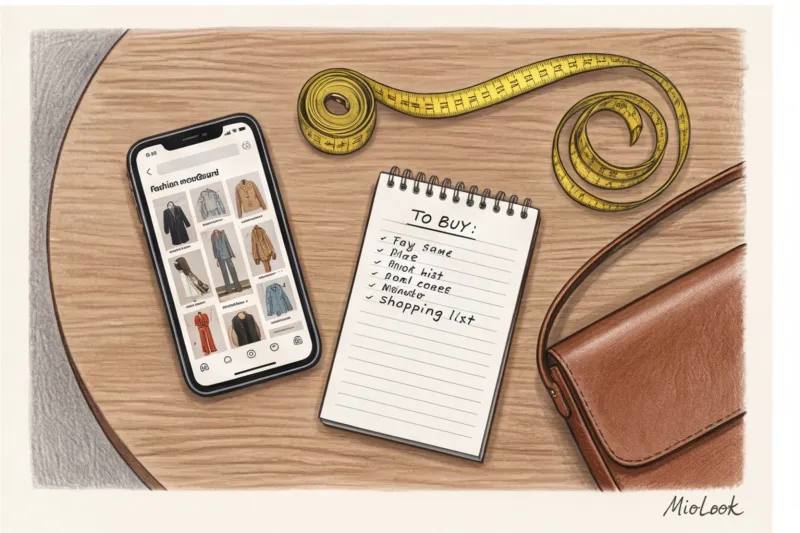
Before you go out, analyze your closet. Identify any gaps in your wardrobe. For example, you need a voluminous jacket for layering and a light, crisp shirt. Then, create a mood board on Pinterest. A keen eye is your main filter, helping you ignore outdated cuts, even if the fabric is gorgeous.
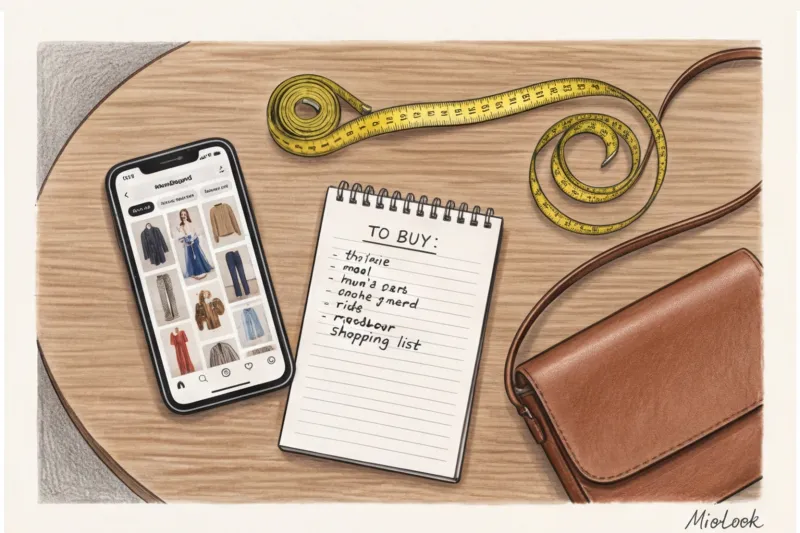
Another professional life hack of mine: dress appropriately for the shopping experience. Trying on clothes in cramped stalls can get tiresome after just five items. My "try-on uniform" rule: wear a form-fitting top (or bodysuit), thick black leggings, and comfortable slip-on shoes (loafers or slip-ons). This way, you can try on cardigans, jackets, shirts, and even some skirts right there in front of a large mirror in the store. And be sure to pack a measuring tape in your bag—knowing your waist and hip measurements will save you 50% of unnecessary trips to the fitting room.
How to choose clothes at a second-hand store: the three "T" rule
To avoid getting lost among thousands of tightly packed hangers, I use a proprietary evaluation system I call the "Three T's Rule": Fabric, Tests, Trends. If an item fails even one of these steps, it goes back on the rack.
Fabric: Learning to "read" things with your hands
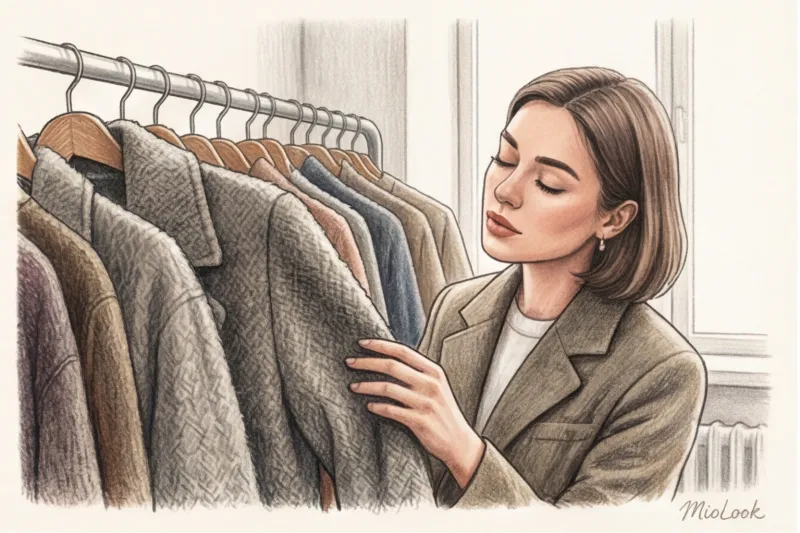
I teach clients to identify natural silk, wool, and cashmere by touch, literally with their eyes closed. Modern mass-market fashion has accustomed us to tactilely flat synthetic materials, but garments made 10-20 years ago had completely different standards of density and weave.
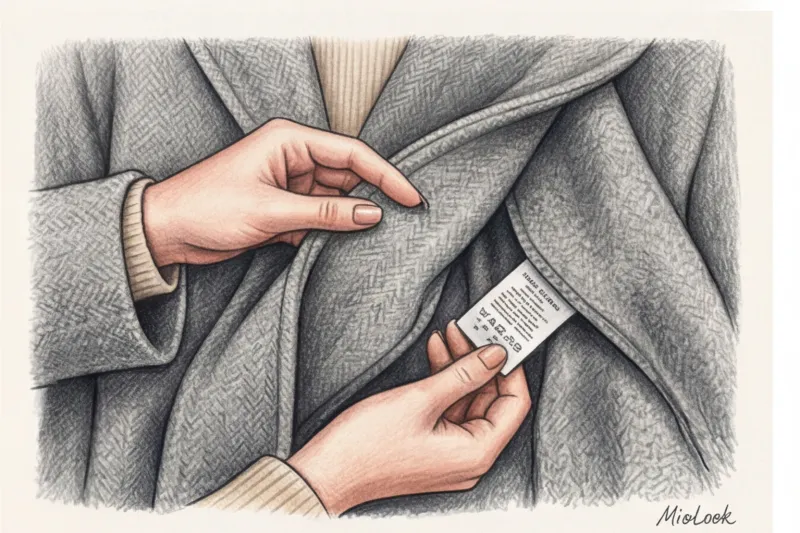
How do you do this in practice? Run your hand down a row of garments. Look for the slight roughness of wool (it shouldn't be unpleasantly scratchy), the pleasant heaviness of thick cotton (180 g/m² and above), or the fluidity of natural viscose. If the fabric "squeaks" under your fingers, becomes staticky, or is too shiny under artificial light, it's cheap polyester; feel free to pass it by.
Keep the math in mind: a high-quality vintage wool jacket will cost you €50–€100, while similar quality fabrics in the modern premium segment today start at €500. Find out more about What fabrics look expensive? to filter rails immediately.
Flaws Test: What Can and Can't Be Forgiven
Things with history are rarely perfect, but you need to be able to distinguish between fixable flaws and fatal ones.
- Red flags (leave in the store): Indelible yellow stains under the arms, a persistent musty smell (not to be confused with the smell of sanitizing, which goes away after the first wash), felted cashmere that has shrunk due to improper washing, and thinned silk that is falling apart at the seams.
- Green flags (reason for bargaining): A broken button (it's best to replace them anyway), a loose hem, or pants that are too long. These are minor issues that can easily be fixed for a few euros at your local repair shop.
Trends and cuts: how to avoid looking like you're wearing something out of a chest
The difference between trendy vintage and simply outdated clothing lies in proportions. Narrow, stubby shoulders, a low waist, and a flared hem (unless it's a deliberate Y2K look) will give away a piece's outdated appearance. Look for a straight cut, a slight oversize, and the right length—maxi or confident midi. If a piece fits too tightly, it will automatically add a decade to your age.
Your perfect look starts here
Join thousands of users who look flawless every day with the MioLook app.
Get access — €0.99 onceBrand Hunting: Hidden Gems Only Stylists Know
One common mistake is chasing after big-name logos (Gucci, Chanel, Louis Vuitton) in regular neighborhood thrift stores. The chances of finding an original there are slim to none, but buying a good fake and looking ridiculous is extremely high. For luxury items, there are proven resale platforms with authentication.
Instead, focus on the European middle market of the 1990s and 2000s. As fashion historian Amber Butchart notes in her research, before the mass relocation of production to Asia in the early 2000s, local no-name brands from Italy, France, and Germany produced clothing to incredibly high standards.
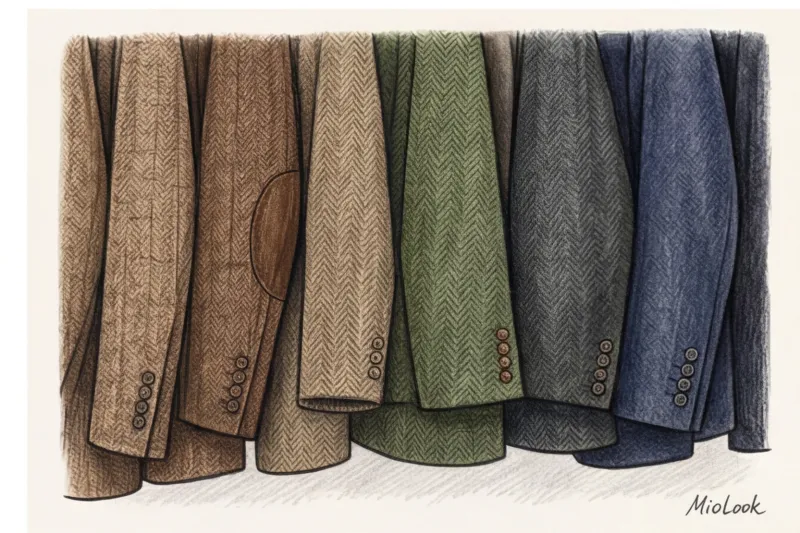
Look for names on the tags like the old St. Michael line (a vintage Marks & Spencer renowned for its durable wool), early collections from Max Mara, Gerry Weber, Escada, or local German brands. A sign of a high-end item is always the hardware. Look at the zipper: if it's stamped YKK or riri, you're looking at a quality piece. Pay attention to the lining: in high-end items, it's made of viscose or cupro, not polyester.
The men's department is a hidden treasure trove for women's wardrobes.
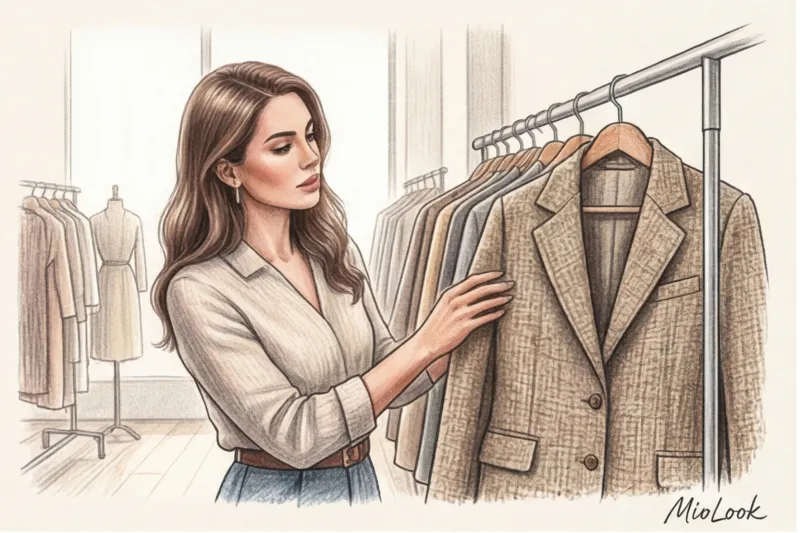
If you only shop in the women's department, you're missing out on half the potential for brilliant finds. I'll share some personal statistics: I find about 80% of the perfect oversized jackets for my clients in the men's department. Why would a woman go there? For three specific items:
- Perfect white shirts. Men's shirts are made from a thicker, more structured cotton that holds the collar perfectly. They create that timeless masculinity.
- Men's cashmere sweaters. Yarn for men's collections is often twisted more tightly, so these sweaters are less prone to pilling and fit more relaxed, concealing figure nuances.
- Straight cut jackets. They add a touch of class to your look and work beautifully when contrasted with feminine silk slip skirts or skinny tops.
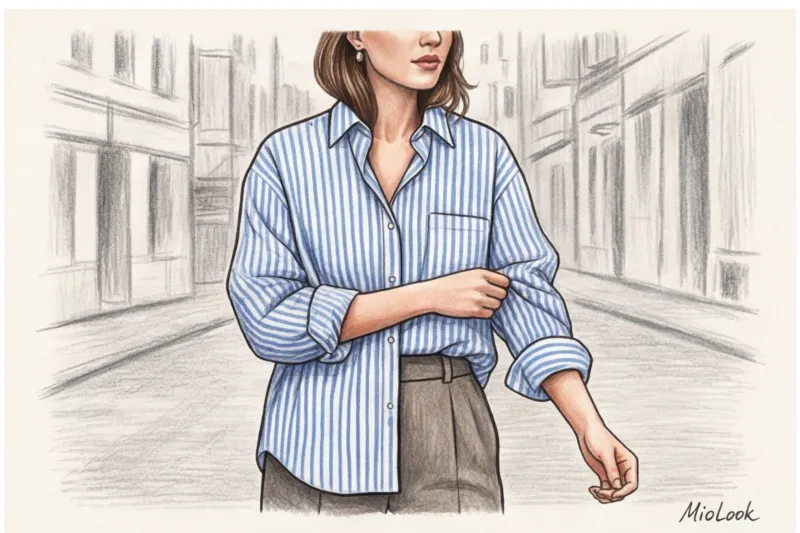
But here I must mention the limitations. I must admit honestly: this technique It won't work For women with a pronounced pear-shaped figure (where the shoulders are significantly narrower than the hips) or petite stature (under 155 cm), this garment can be worn without major alterations. Men's styles are narrow at the hips and long in the sleeves. In such cases, the garment will need to be not just shortened, but completely reshaped.
The Atelier as an Extension of the Second-Hand Shop: The Mathematics of Smart Style
Never buy vintage with the firm expectation of "wearing it as is." The peculiarities of old patterns often require some fine-tuning. Successful secondhand shopping always includes a tailor's budget.
I have a telling story. One day, a client and I found a wonderful men's wool jacket with a small check pattern for just €10. It had a gorgeous fabric and the right lapels, but the back was too wide. We took it to a trusted tailor, where for €35, the tailor adjusted the center seam and shortened the sleeves slightly. For €45, the client received a perfectly fitting jacket, which her colleagues now constantly mistake for Celine or Saint Laurent.
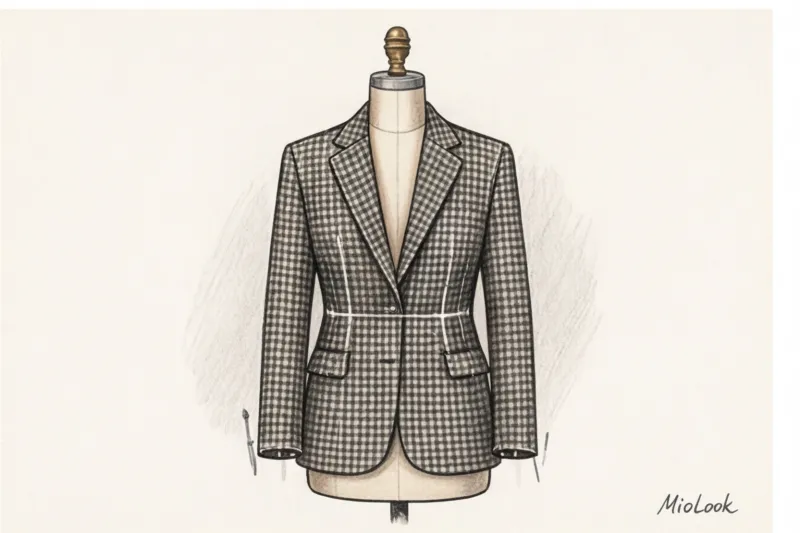
What you need to know about working with a studio:
- What's cheap and easy to remake: shorten the length of trousers, skirt or sleeves (if there are no complex cuffs), fit the jacket at the back, take in the trousers at the waist.
- What can't be re-sewn (or is very expensive): Changing the armhole (where the sleeves are sewn in), adjusting the shoulders, or going down more than 2 sizes. If the shoulders don't hang where you want them, don't buy them.
- The magic of fittings: Replacing buttons is the cheapest way to dramatically increase the value of an item. Cut off the cheap plastic and sew on metal buttons, imitation horn, or mother-of-pearl. The item will be instantly transformed.
Stylist Checklist: 5 Strict Questions to Ask Before Checkout
You've found a few items, tried them on, and you love them. Before you pay, stop and ask yourself five stark questions. This one-minute pause will save you from cluttering your wardrobe.
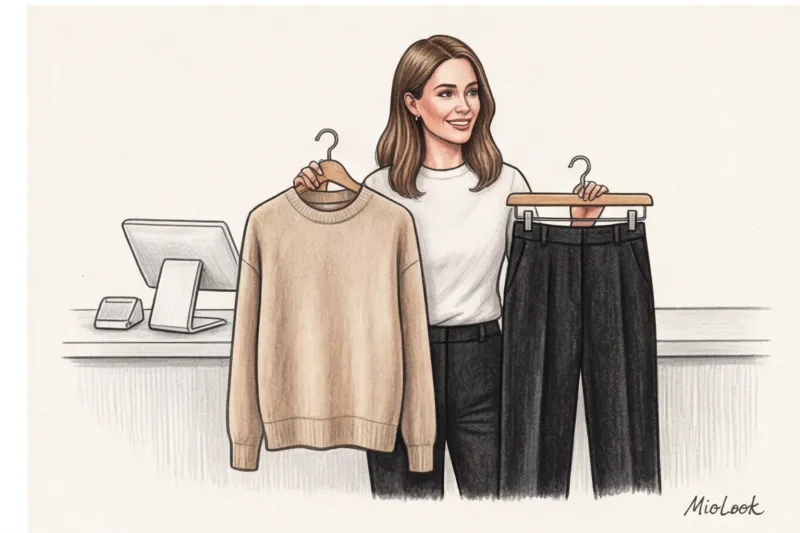
- What am I going to wear this with tomorrow? You must immediately, without much thought, name at least 3 combinations of those things that they're already hanging in your closet.
- Am I willing to take this to a dry cleaner/tailor? If an item costs €5 but will require €25 in repairs and €15 in dry cleaning, do you still consider it a good buy and are willing to spend time on it?
- Would I buy this at full price? If this jumper were hanging in the window of a regular boutique for €100, would you like it? If the discount is the only thing that's appealing, put it back on the shelf.
- Am I physically comfortable? No itchy fur or digging seams. No amount of cost-cutting compensates for discomfort.
- Does this item reflect my personal brand? Does she help you feel like the woman you want to be?
Mindfulness is a major trend these days. To avoid having to remember all your belongings while shopping, start digitizing your wardrobe. Learning to choose quality clothes from secondhand stores, pairing them with modern basics, and regularly analyzing your looks will make your style unique and truly luxurious.
Try MioLook
A smart AI stylist will select the perfect look for you, taking into account your real clothes.
Get access — €0.99 once