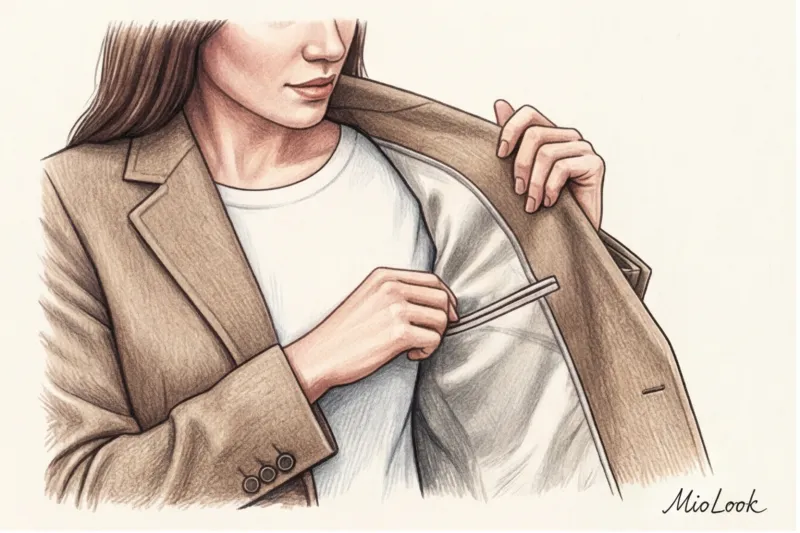
The inside is more important than the outside: how to determine the quality of clothing at first glance
Over 14 years of working as a stylist, I've developed one infallible professional reflex. When I approach a new client for a wardrobe audit, the first thing I do with the basic items in question is ruthlessly turn them inside out. This often causes a mild shock. Once, a client laughed indignantly and said, "Olena, we're not going to wear this with the seams on the outside! What difference does it make what's inside?" The difference is colossal. This simple test allows me to discard "disposable" clothing in seconds.
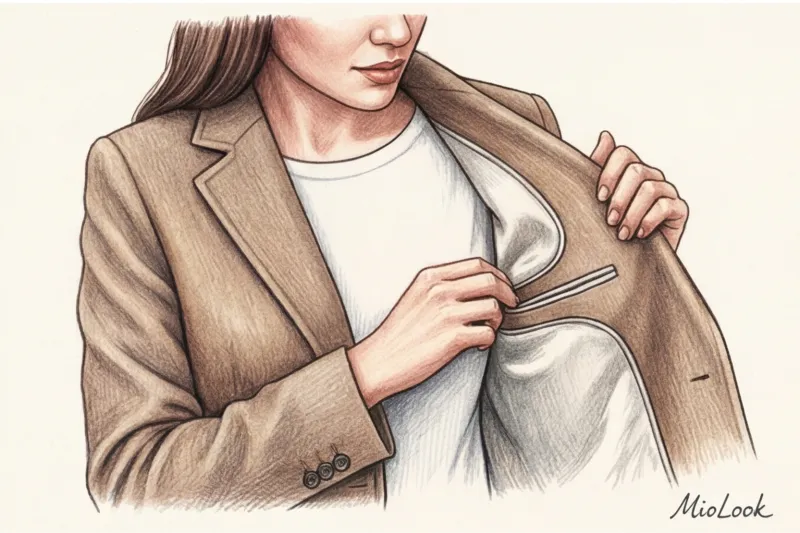
If you are wondering, How to determine the quality of clothing Before you even take it to the checkout, forget about the front. The front of an item is all about window dressing and marketing. The back is the harsh truth.
The difference between mass-market and premium tailoring comes down to one ruthless metric: the cost per minute of labor. Mass-market tailoring is a philosophy of rapid assembly. To produce a jacket retailing for $40, a factory must sew it in 15-20 minutes, saving every millimeter of fabric and every centimeter of thread. The premium segment operates under completely different rules: it invests time in the garment's architecture and its durability.
The appearance of the backing speaks directly and honestly about the brand's attitude toward its customers. Loose threads and warped edges scream, "We just wanted to sell you a one-season trend." In contrast, a clean, aesthetically pleasing backing conveys, "We respect you enough to create beauty even where no one else can see."
I discussed in detail how such details step by step shape the status of your style in our article. How to Look Expensive: Secrets of a Status Wardrobe.
Finishing seams: overlock vs. closed seam
Let's move on to visual details, which you can appreciate right in the fitting room. The most common appearance on the back of inexpensive clothing is an overlock stitch (a wide, zigzag-weave stitch along the very edge of the fabric). Let's be fair: an overlock stitch isn't an absolute evil in all cases. It's technically necessary and perfectly acceptable when working with stretch knits. Basic T-shirts, hoodies, and joggers are all sewn with an overlock stitch, as this stitch can stretch with the fabric without breaking the threads.
But when I see a rough, constricting overlock on a silk blouse, a flowing viscose dress, or a delicate, thin cotton shirt, it's a red flag. For such fabrics, it's a sign of extreme cost-cutting, instantly revealing the low cost of production. When washed, such an edge will quickly fray, and the seam itself will become unsightly and wavy.
In high-quality clothing made from thin, non-elastic fabrics, it is used French (underwear) seam Visually, this is a closed seam, where the raw edge of the fabric is completely hidden within the stitching itself. You won't see any protruding threads—only a neat, tight ridge. To create a French seam, the seamstress must sew the stitch, iron it, turn the fabric inside out, and sew the stitch again. This takes three times longer than one quick pass on an overlock machine.
For finishing the hem of silk skirts or edges of scarves, premium brands use Moscow seam — a jeweler's double hem, literally 1-2 millimeters wide. It requires perfect thread tension and surgical precision, otherwise the delicate silk will become hopelessly warped.
A distinctive marker of high status and impeccable taste is the binding of interior seams with bias binding. You've probably noticed how luxurious the inside of expensive items looks—especially jackets, summer linen coats, and unlined trench coats. Instead of simply overcasting the fabric edges, each edge is wrapped with a special thin tape cut on the bias (often in a contrasting shade). This isn't just a designer's aesthetic whim. This finish securely holds the seam in place, preventing the garment from deforming, stretching, or losing its shape even after dozens of dry cleanings.
When you start paying attention to such nuances, your approach to shopping changes forever. You begin to invest in things you want to wear and cherish. It is precisely these impeccably tailored essentials that I strongly recommend digitizing. By uploading your high-quality foundation to MioLook , you can effortlessly create dozens of new looks right on your phone. You'll know for sure that whatever you choose in the app today will fit perfectly in real life and won't let you down with a treacherous seam that comes undone at the most inopportune moment.
The architecture of cut: why some clothes fit perfectly, while others “cheapen” the look
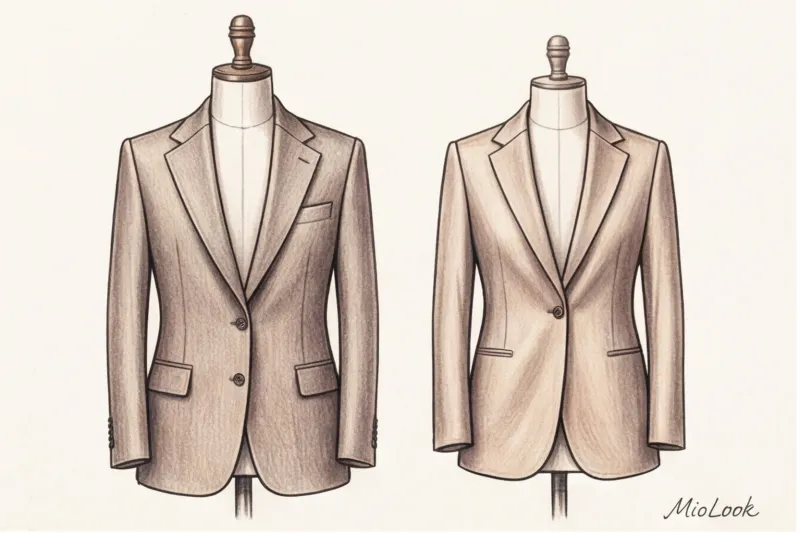
Have you ever noticed how luxurious an expensive coat or jacket looks even when simply hanging on a hanger? In the professional world of tailors and stylists, we call this "cut architecture." A quality garment always has its own invisible framework. It doesn't hang like a shapeless rag, but rather maintains the shape intended by the designer. Cheap mass-market items are often constructed flat, like clothes for a paper doll, to speed up the production process. Premium items, on the other hand, are created in 3D, with careful consideration of the human anatomy and how the fabric will behave in movement.
The most common example of poor design, encountered by absolutely everyone, is twisted side seams on basic T-shirts. It's a familiar situation: you buy a perfectly good cotton T-shirt, wash it just once, and suddenly the side seam insidiously skews toward your stomach. Why does this happen? The answer lies in strict cost-cutting and poor sewing practices. shared thread.
To squeeze the most out of a roll of fabric during mass cutting, budget-sector manufacturers often lay out patterns at an angle, ignoring the natural grain direction. As a result, the knitwear tends to return to its natural state after being wet, permanently deforming the garment. High-end garments strictly follow the grain line, even if this increases the amount of fabric scraps by 15–20%.
Another hidden foundation of quality clothing is interfacing. To ensure collars, jacket lapels, and shirt cuffs are tight, hold their angles, and prevent them from wrinkling, they are reinforced on the inside with special interlining materials (fusible interlining or interfacing). And this poses a huge trap for the buyer.
Last year, a client came to me with a classic blazer from a popular mid-up brand (priced at around $350). After the first professional dry cleaning, the jacket's fronts were covered in fine ripples—literally, "bubbling." The fabric had peeled away from the adhesive backing. It turned out the manufacturer had skimped on the quality of the interlining and hadn't pressed the right temperature at the factory. It's practically impossible to save such a garment.
Luxury jackets and high-quality tailoring often use traditional horsehair or cotton lining, sewn on with hidden stitches, rather than cheap fusible backing. It's flexible, breathable, and never warps after cleaning. Advice from practice: To check the quality of the interfacing in the fitting room, lightly rub the jacket lapel between your thumb and index finger. You shouldn't feel a hard, cardboard-like crunch or feel any glue bubbles rolling around inside. The fabric should be firm but vibrant.
Access to MioLook for €0.99 — one-time payment
A smart AI stylist will select the perfect look based on your body shape and your existing wardrobe.
Get access — €0.99 oncePrint matching: a premium tailoring marker
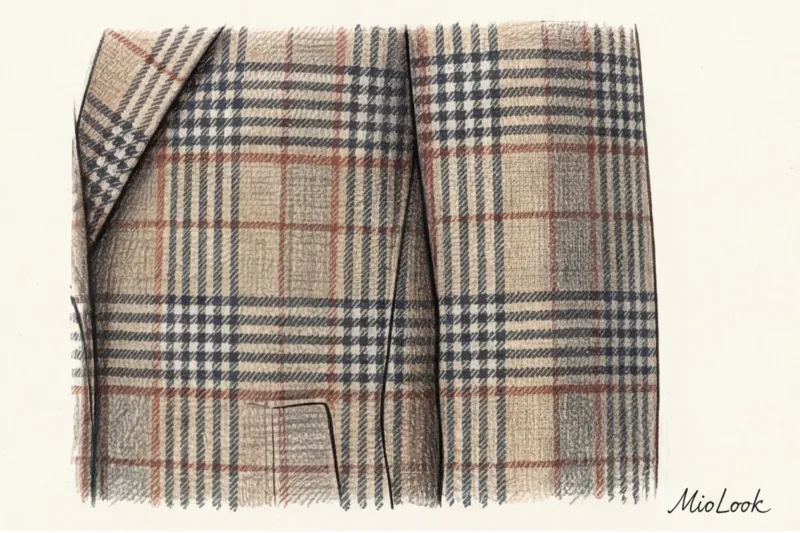
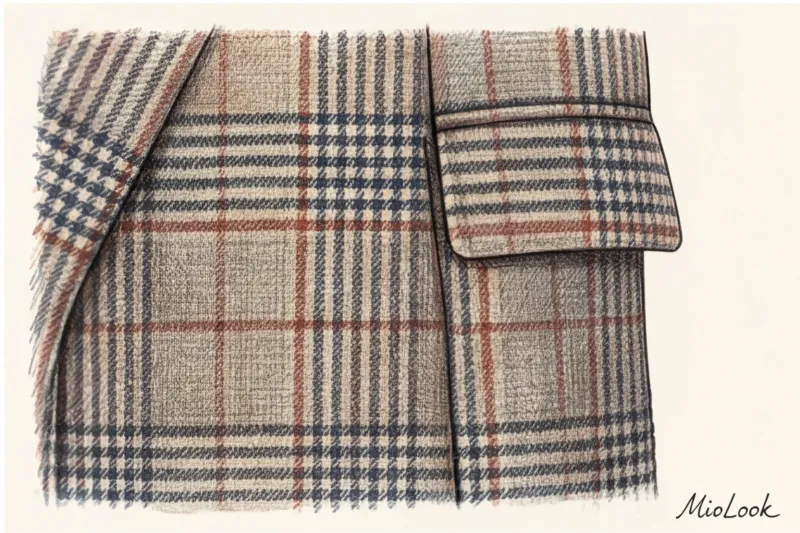
While it's easy for manufacturers to hide minor assembly imperfections with solid-color fabrics, geometric prints are a merciless quality detector. Checks, pinstripes, houndstooth—any rhythmic pattern requires pinpoint precision.
The main rule of premium tailoring is: the pattern should match perfectly on the side seams, the center back seam, the junction of the sleeve and armhole (as far as the cap allows), as well as on the patch pockets and lapels. A well-tailored pocket should be literally "invisible," visually not interrupting the pattern of the main fabric.
Why do inexpensive brands almost always have checkered patterns that "dance" in different directions? It all comes down to cost. Perfectly matching the print increases production costs for two reasons:
- Colossal waste of fabric. The cutter must manually shift patterns to match the pattern repeat (pattern pitch). This can result in up to 30% of high-quality material being wasted.
- Time costs. This requires either time-consuming manual layout or complex setup of expensive laser equipment. High-speed extras simply can't afford this.
When you see an $80 basic coat in a mass-market store with a crookedly stitched checkered pattern on the sides, it's expected and forgivable. But if you're looking at a $600 designer trench coat and notice a glaring misalignment of the stripes on the seams, return it without hesitation. This nuance immediately reveals the brand's true commitment to quality, and no self-respecting fashion house would tolerate such visual clutter in its collections.
Debunking the myth: 100% natural ingredients aren't always a sign of quality
It's high time to acknowledge that the fashion industry has come a long way since the days when a "100% polyester" label inevitably meant non-breathable, static-producing armor, and "100% cotton" served as the only guarantee of a garment's noble origin. According to experts at the Textile Institute, modern microfiber technologies allow for the production of synthetic fibers that are thinner and more delicate than silk. The stereotype that "synthetics are always bad and cheap" is hopelessly outdated. Today, the blind pursuit of exclusively natural ingredients often prevents women from assembling a truly functional and prestigious wardrobe that works for them, rather than requiring constant maintenance.
Imagine a typical situation: you've purchased a luxurious, light-colored, 100% linen pantsuit for €400 for an important business meeting or summer conference. In the morning, you look impeccable in front of the mirror—the fabric drapes beautifully, conveying effortless chic. But let's be pragmatic. How will you look by midday, after several hours at your desk or behind the wheel? Deep, unsightly creases in the groin, behind the knees, and at the elbows instantly ruin the shine. 100% linen or thin summer cotton often look downright sloppy by 3 p.m.
Herein lies an important, albeit counterintuitive, insight from my styling practice: for a business wardrobe, a high-quality polyviscose blend is often far preferable to pure linen or soft wool. The right blend of viscose, polyester, and a small percentage of elastane maintains the cut and creases of trousers like a glove for 12 hours straight. Technological blended fabrics aren't an attempt by premium brands to cut corners. The addition of cupro, tencel, or modal imparts a delicate matte sheen and stunning fluidity, which visually enhances the look. To systematically track how different blends perform during wear, I recommend my clients make notes on the fabric when uploading new items to MioLook — this way you can quickly collect personal statistics on the most unpretentious and “expensive” materials.
When synthetics extend the life of things
Pure natural fibers have two significant physical limitations: poor shape memory and low resistance to repeated abrasion. This is where carefully dosed synthetics come in handy, acting as the product's engineered framework.
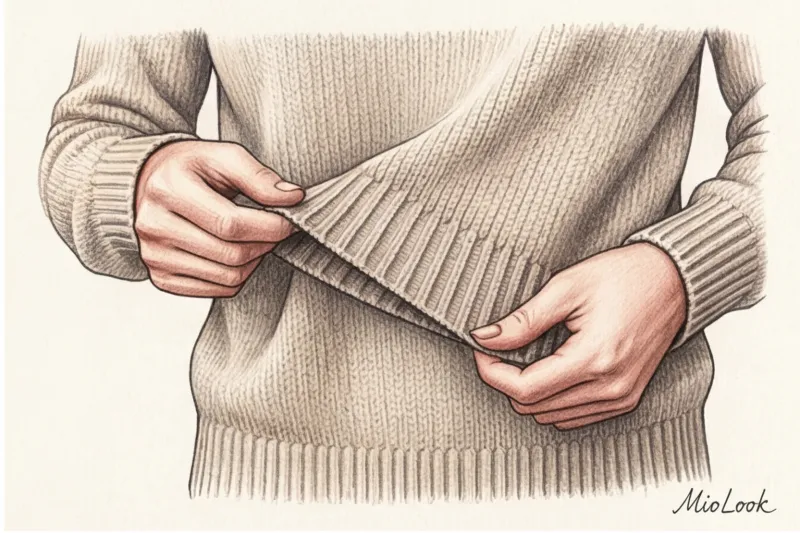
The presence of 2–5% elastane (or spandex) in cotton jeans or wool dress pants is your insurance against stretched, baggy knees and sagging buttocks by the evening of the first day of wear. And if you examine the tag of an expensive basic jumper and see "85% merino wool, 15% nylon (polyamide)," don't be too quick to accuse the manufacturer of greed. Nylon has phenomenal tear resistance. In knitwear, it is used deliberately to protect the delicate yarn from rapid fraying at the elbows and significantly reduce the risk of pilling.
Another critical marker that helps determine clothing quality, but is almost never indicated on mass-market clothing labels, is the fabric density, or GSM (grams per square meter). Often, a cheap item isn't identified by the presence of polyester, but by its critically low density—the fabric is loose, flimsy, and treacherously see-through.
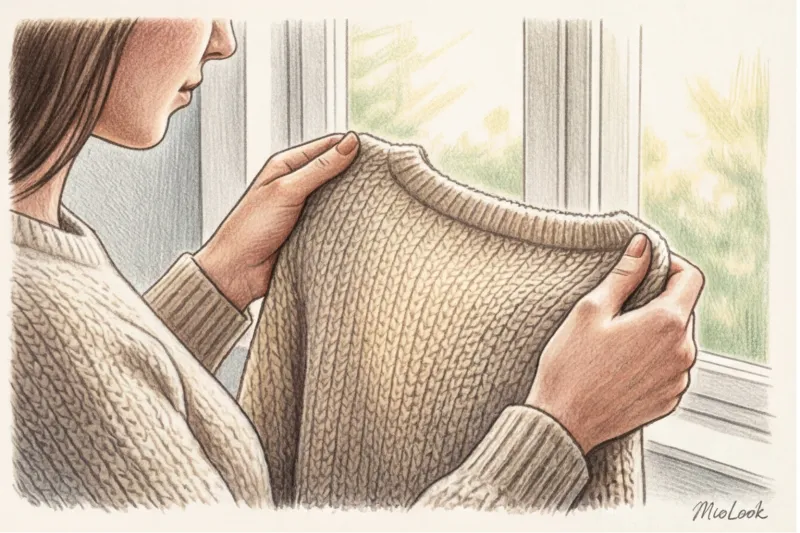
How can you evaluate this parameter in a store? Conduct a simple blind tactile test. Take the edge of the product and lightly rub it between your thumb and forefinger. Cheap, low-quality synthetics will make a characteristic micro-squeak, slide unnaturally smoothly, and leave a cold, plasticky feel. Expensive, high-tech fabric (even 100% polyester) will feel dense, elastic, slightly silky, and pliable. Squeeze the fabric in your fist for a few seconds: a high-quality blend with a good GSM rating will spring back to its original shape, while a cheap material will be covered in a fine mesh of "dry," hard creases.
Accessories that reveal the true value of a product
In the mass-market clothing industry, there's a strict rule of marginality: when a brand urgently needs to reduce production costs, the first thing it cuts is the hardware budget. Fabric takes up too much visual space to be unnoticeably cut, while buttons, hooks, and zippers are often purchased by the pound for fractions of a cent. This is why even a well-cut jacket from a mass-market store often looks downright cheap—it's betrayed by tiny details that clash with the overall look.
The main indicator of total cost-cutting is an unnatural shine. Cheap metal alloys or, even worse, lightweight plastic with a gold or silver galvanic coating always have an aggressive, almost mirror-like sheen. Such hardware not only looks vulgar but also scratches easily, and the paint begins to peel at the edges after the first dry cleaning. In the premium segment, metal behaves differently: it is often elegantly matte, patinated (artificially aged), or delicately brushed. It doesn't shout about its presence, but rather contributes to the overall design of the piece.
Over the years of styling, I've developed a favorite secret trick for myself and my clients: simply replacing buttons can visually increase the value of a garment several times over. It's true upcycling, accessible to everyone. I recently experimented with a basic structured blazer at Zara for €60. The cut was excellent, but it was ruined by the empty plastic buttons inside, which jingled pitifully when I walked. I cut them off that same evening and sewed on heavy vintage brass buttons I found at a European flea market for €15. The next week, my fellow stylists were seriously asking if they were from the new Saint Laurent collection. Now I always advise: when buying mass-market items, budget $10-20 for quality hardware.
Buttons and zippers: how to visually assess quality
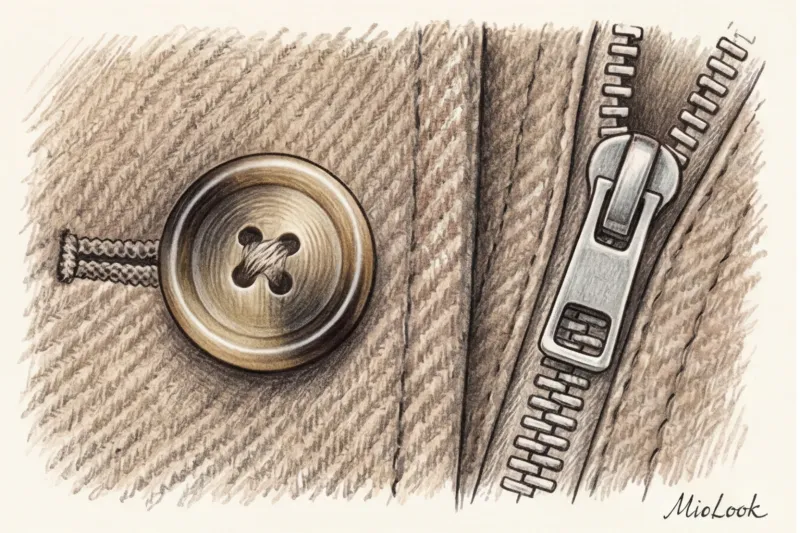
If you want to understand how to determine the quality of a garment even during the first fitting, always pay close attention to the material of the fasteners. Brands that value their reputation and respect their customers use natural materials. This could be horn, natural mother-of-pearl, corozo (walnut), or covered with the main fabric of the garment. Horn buttons have a remarkable property: their natural pattern is never exactly repeated, each detail is unique. Natural mother-of-pearl feels slightly cool against the skin and has a deep, not flat, iridescence. Thin, jingling plastic that bends easily under your fingers is a red flag.
Another critical detail that reveals the quality of tailoring is the sewing method. For outerwear, coats, and heavy jackets, buttons must be sewn on a shank (a small column of thread). This isn't an aesthetic whim, but a technical necessity. The thread shank creates the necessary space for the thickness of the fabric when you button the buttonhole. If the button is sewn tightly to heavy wool, the fabric around the buttonhole will inevitably ripple, stretch, and deform with every movement.
When it comes to zippers, the rule of absolute smoothness and concealment applies. High-quality skirts and dresses should have a concealed zipper that's truly invisible—once fastened, it disappears completely into the seam, leaving only a tiny puller visible, dyed exactly to match the fabric. A convex, undulating zipper on the back of a dress instantly disrupts the silhouette. Be sure to look for the YKK mark on the pull—this is the basic global standard for reliability, indicating that the teeth are polished and won't tear the fabric. In the luxury segment, you'll also find Swiss Riri or Italian Lampo zippers. Perform a simple crash test right in the store: zip and unzip the item three times. The movement should be buttery smooth, without the slightest snag.
Try MioLook
for free
Start creating perfect images with the help of artificial intelligence
Get access — €0.99 onceFitting Room Inspection: 5 Steps Before Purchasing
When I'm shopping with someone, I always turn the fitting room into a mini-test lab. My new clients initially freeze when I start vigorously wrinkling, slightly stretching, and tugging at the seams of $300 pants. But this practical algorithm for in-store behavior is the only way to avoid buying a pretty picture that falls apart within a month. If you want to understand once and for all how to determine clothing quality in the field, simply follow these five steps before you go to the checkout.
Step 1. The ruthless wrinkle test. Grab the hem of a dress, the edge of a sleeve, or the leg of a pant and squeeze the fabric tightly in your fist. Hold it there for 10-15 seconds, then release. Natural fabrics with a good twist or carefully crafted blends will instantly straighten out, leaving only a soft, graceful wave. If the garment looks like it's been chewed and the creases remain stiff, return it to the hanger. By mid-work, you'll look unkempt in it, no matter how much time you spent ironing it in the morning.
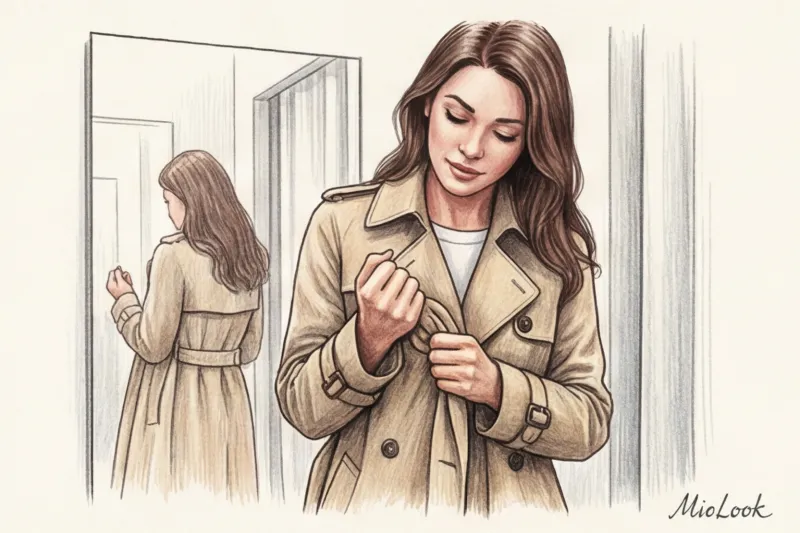
Step 2. Assess the fabric allowance in the seams. Turn the garment inside out and examine the side seams, as well as the center seam of trousers or skirts. Premium brands that respect their customers leave seam allowances of 1.5–2 centimeters. Mass-market brands leave a paltry 3–5 millimeters. Why is this critical? A wide seam allowance indicates that the manufacturer didn't skimp on every millimeter to reduce production costs. Moreover, having extra fabric allows the tailor to allow for some extra bulk if you gain a few kilograms. A cheap garment with micro-allowances is impossible to alter.
Step 3. Form return test. Gently tug the fabric at the elbows (for knits) or knees. Good fabric should spring back and return to its original shape immediately. If a "bubble" remains where the tension is applied, the garment will lose its shape after just one wear.
Step 4. Evaluating the hem. High-quality classic trousers, skirts, and dresses never have visible machine stitching at the hem (unless they're jeans or sporty styles). Instead, they use a blind stitch, which doesn't pinch the fabric and allows the garment to flow beautifully and gently.
Step 5. Inspection of vulnerable areas. This point is so important that it requires a separate, more in-depth analysis.
Organize your closet like a pro
Have you put together a capsule collection of high-quality pieces, but are having trouble finding what to wear with them? Upload your looks to the app to keep your perfect combinations at your fingertips.
Try the MioLook smart wardrobeChecking Tension Points
There is a term in clothing design tension points These are the areas that bear the most physical stress while moving: armholes, vents on skirts and jackets, pocket corners, fly bases, and belt loops. These are the areas where fabric is most likely to tear when you get into a car abruptly or reach for a cup of coffee on the overhead bin.
These vulnerable areas must be bar tacks Visually, this is a tight, short zigzag seam, literally a few millimeters long. In good jeans and high-quality jackets, you'll find these bartacks on the edges of pockets and at the base of the zipper. According to statistics from technical clothing manufacturers, the lack of proper bartacks reduces the lifespan of a garment by 40%, as a regular straight seam simply cannot withstand dynamic stretch.
A separate area to check is the quality of buttonholes. This is a micro-detail that can be a significant indicator of a product's quality. Cheaply made items are always rushed: buttonholes are sewn loosely, fabric shows through the stitches, and untidy threads stick out inside the hole. Over time, such a loop will stretch, and the button will begin to unfasten spontaneously.
In high-quality tailoring (especially in coats and suits), the buttonhole is overcast as tightly as possible. Furthermore, artisans often insert a special underwire cord inside the overcast stitch. (gimp thread) It creates a beautiful, raised relief around the hole and firmly holds the loop's shape, preventing it from deforming for decades. If you see a loop like this on a jacket in a store, buy it—you're looking at a well-made garment.
How to Visually Assess the Quality of Clothing Online: Shopping Secrets
Professional studio lighting and expert retouching can transform a downright cheap item into a premium look. In online store shoots, stylists often use clips on the model's back to create the illusion of a perfect fit (sometimes ironically referred to in the industry as "clothespin architecture"), while powerful softboxes tone down the cheap sheen of polyester. That's why remotely assessing clothing quality is always a game of detective work, where relying solely on a pretty cover photo in a catalog is utterly unacceptable.
Your most important tool when shopping online is to zoom in on detailed photos. Never make a purchasing decision based on a general shot. Open a frame showing the texture of the fabric or a close-up of the collar and examine the grain. You should be able to see the weave of the threads: if the surface looks completely smooth and "soapy" even at high magnification, there's a 99% chance you're looking at low-quality synthetics.
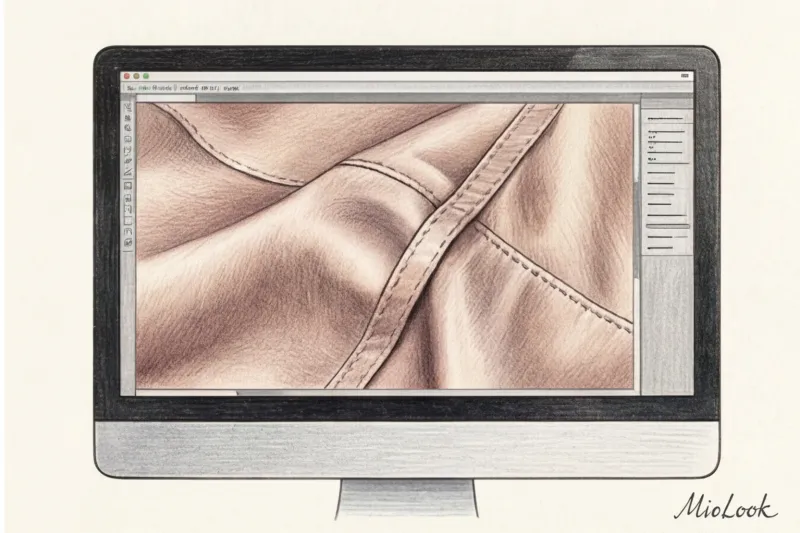
Be sure to pay attention to the bottom edge of the garment (the hem) and the side seams. If the stitching is looping or the fabric around it is slightly bunched (wrinkled) in a studio photo, in reality, this seam will be completely distorted after the first wash. Examine the hardware closely: if plastic seams from the molding are visible on the buttons, and the loops are loosely wrapped, with gaps between the stitches, you're looking at a mass-market item of extremely low quality. Also, evaluate the color of the lining in slightly unbuttoned jackets: if it has a distinctly glassy, unnatural sheen, it will significantly cheapen the overall look.
But the main pitfalls lie in the text descriptions. Brands have masterfully mastered the art of disguising cheap raw materials behind noble names. Think about how many times you've seen enticing phrases like "silk effect," "French knitwear," or trendy "eco-cashmere" in descriptions?
According to strict international textile labeling regulations, manufacturers are required to truthfully disclose the technical composition of the garment, but the law allows for almost any degree of freedom in the name of the garment itself or its marketing description. This is where "Silk Touch" dresses made from 100% polyester come from.
Last month, we were sorting through a client's wardrobe, and she proudly showed me a basic $120 sweater she'd bought online. The tag, in large print, read "eco-cashmere blend." When I checked the "Materials and Care" section of the product page, I discovered that the bold label actually contained 85% acrylic and 15% recycled polyester. It didn't even smell like cashmere.
Remember this hard and fast rule: the words "eco-," "vegan" (unless we're talking about certified innovative leather), and the prefix "-like" in 90% of cases mean pure plastic. That same notorious "silk effect" is always polyester or, at best, thin viscose. Real silk is simply called silk.
To avoid falling victim to such tricks, always scroll to the very bottom of the page, ignoring the advertising text, and look for the strict "Composition" section. If an online store doesn't specify the exact fiber percentages at all (for example, it simply says "cotton, elastane" without any numbers), that's a red flag. Before adding such an item to your cart or planning new combinations with it using the "smart wardrobe" feature in MioLook , try finding the same article number on large multi-brand platforms—they have much stricter controls over filling out the exact composition.
Your ideal image
it begins Here
Join thousands of users who look flawless every day with MioLook.
Get access — €0.99 onceChecklist: A Cheat Sheet for Smart Shopping
Having studied the theory of cutting, the physics of fabrics, and the mechanics of seams, it's time to move on to practical application. There's a golden rule in styling: we don't just buy clothes—we invest in our visual capital. And to accurately understand how to assess the quality of clothing right in the store without the help of a professional, you need a strict and clear algorithm.
Below, I've compiled Olena Kovalenko's signature checklist to help you build a long-lasting and stylish wardrobe. Go through these four steps before you take anything to the checkout.
- Seams and backing: Turn the garment inside out. Look for closed seams or French seams on thin fabrics. If you see an overlock, it should be close, tight, and without a single loose thread. Bias binding on jackets immediately adds a ton of value.
- Fabric and density: Squeeze the edge of the garment in your fist for ten seconds. If the fabric straightens out without any hard creases, buy it. Check the density (GSM) by holding it up to the light: a high-quality basic T-shirt shouldn't show through the contours of the underwear. Look for the right blend (for example, 90% wool and 10% cashmere or nylon).
- Architecture and cut: We check the print alignment on the side seams and pockets—the checkered and striped patterns should match millimeter for millimeter. We check the collar and lapels for overlap (gluing). We assess the seam allowances: in good trousers or skirts, the manufacturer leaves at least 1.5–2 cm of fabric in the seams.
- Fittings and stress points: We examine the buttons (natural horn, mother-of-pearl, covered) and check whether they are sewn on a shank. We look for bar tacks on the pockets and vents. We test the zipper – it should move smoothly, and the pull should preferably be marked with a reputable manufacturer (YKK, riri, Lampo).
How can you make this checklist work on autopilot? I have a practical assignment for you this weekend, which I give to students in my style courses. Go to a flagship boutique of a high-end luxury or premium brand—for example, Loro Piana, Jil Sander, or Max Mara. Your goal is not to buy anything. Your goal is to touch.
Examine their basic jumpers, turn their trousers inside out, run your fingers along the seams of their coats, and feel the weight of their hardware. Your goal is to imprint this reference standard into your tactile and visual memory.
Once your hands memorize the density of the right cashmere and the geometry of a perfect French seam, you'll automatically scan items across any price range. You'll learn to instantly spot a perfectly tailored $150 blazer at a high-street store and easily reject a poorly tailored $400 dress at a mid-range store.
As a final piece of advice, I'd like to remind you of the simple math of wardrobe. It's always better to buy one perfectly tailored item than three mediocre ones. A basic sweater with a flimsy neckline for $40 will lose its shape after the third wash, and you'll be back to the store. A high-quality sweater for $150 will last you five years, reducing your cost per wear to mere pennies.
To manage these investments wisely and avoid creating clones, I recommend digitizing your purchases. By adding a new, perfectly tailored item to MioLook smart wardrobe , you'll begin to see the big picture of your style. You'll notice how easy it is to combine quality pieces, creating dozens of looks without constantly buying new ones. Choose your clothes with self-respect, and your wardrobe will reciprocate.
Guide Chapters
Checklist: How to Choose a Good Wool Coat
The ideal composition doesn't always mean 100% wool. Learn how to evaluate the quality of a coat based on its cut, seams, and hidden details to avoid overpaying for a brand.
How to determine fabric quality: stylist's tips
A personal stylist's tips on how to inspect items in stores without a lighter. Learn to "read" natural and synthetic materials with your hands.