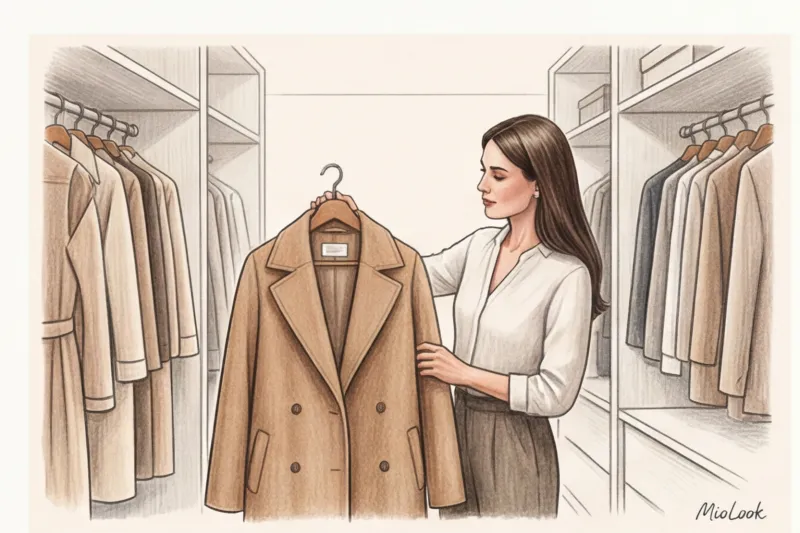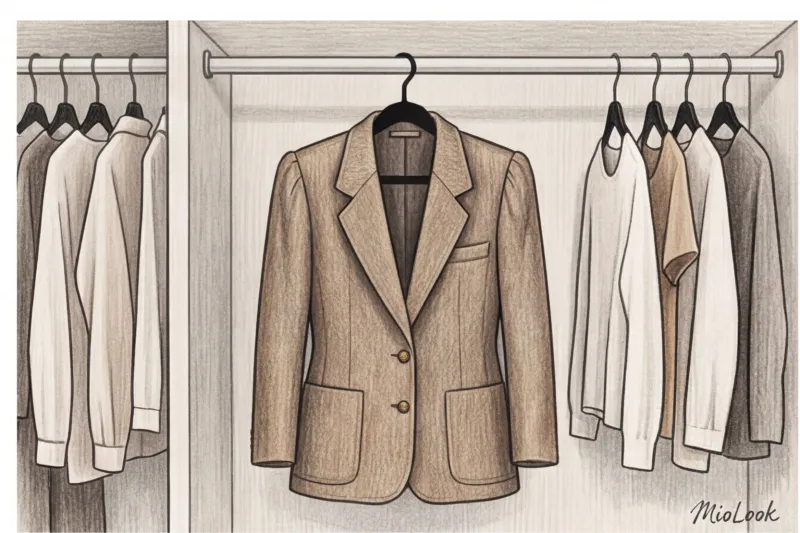
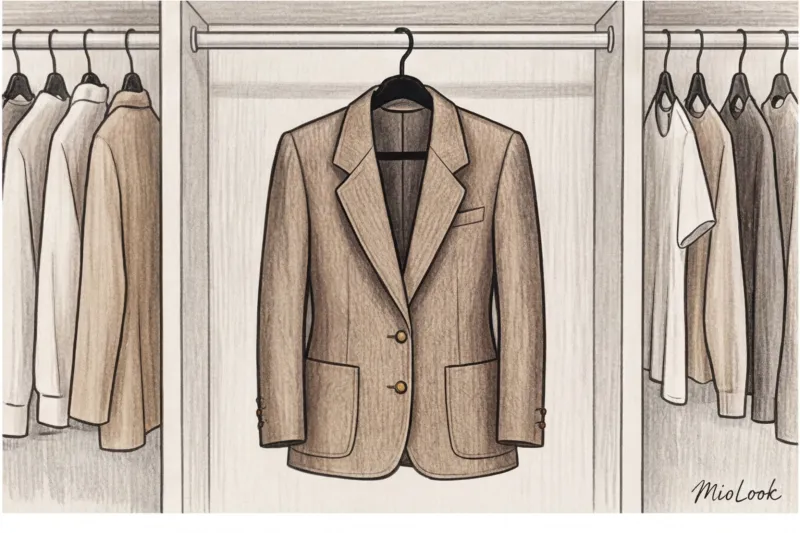
You know what I see most often when I open a new client's closet for the first time? The "museum shelf." These are hangers in the farthest corner, where stunning archival pieces languish: heavy silks, impeccably cut wools, historic hardware. Women buy them in a rush of love for the art of tailoring, and then... just look at them. Putting them on is terrifying—what if you look like the town madwoman or an actress from a costume drama?
As research by consulting agency WGSN (2024) shows, 70% of vintage purchases end up on shelves precisely because owners don't understand how to integrate the "era" into the modern rhythm of life. We love the idea of conscious consumption, but we lack the tools to implement it. That's why competent digitizing a vintage wardrobe Using artificial intelligence isn't just a nod to digitalization. It's the only working bridge between the tailoring of the past and your morning routine today. I've already covered where to find such things in more detail in our a complete guide to finding unique finds And today we'll talk about how to make them work for you.
Why Vintage Clothes Gather Dust in the Closet: The "Complicated Things" Trap
We buy vintage for the quality that's simply impossible to find in mass-market fashion today. Thick cashmere, genuine brass buttons, a perfectly shaped collar. But when it comes to styling, a paradox arises: the higher the quality, the more difficult it is to wear.
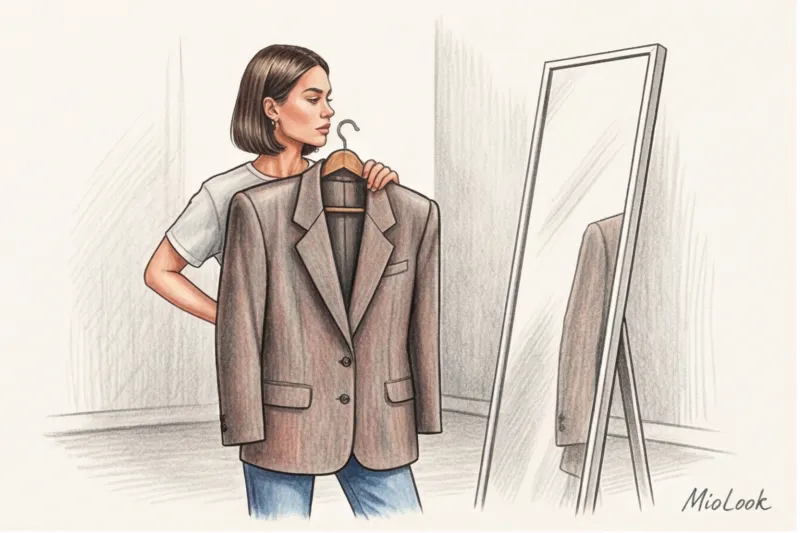
The thing is, the patterns of the past decade (or century) dictate their own rules. A different shoulder line, a dropped or extremely high armhole, a specific waistline. One of my clients, the CEO of an IT company, once bought a stunning Yves Saint Laurent jacket from the late 1980s for €250. The wool gabardine was of incredible quality. The jacket hung in her closet for three years. The reason? The exaggerated shoulder pads just didn't fit in her head with modern trousers, and she was afraid of looking like a cartoonish "businesswoman from the nineties."
It's important to understand the difference in texture here. The tactile and visual difference between the dense wool of the pre-2000s era (often weighing over 300 g/m²) and modern blended fabrics is enormous. If you wear such a jacket with thin viscose trousers from Zara, a dissonance will occur. The garments literally "fall apart."
Access to MioLook for €0.99 — one-time payment
A smart AI stylist will find the perfect look for your complex items.
Get access — €0.99 onceDigitizing Your Vintage Wardrobe: How to Get Started with the App
Ordinary things can be photographed on the run. But digitizing a vintage wardrobe requires respect for the material. Algorithms MioLook you need to "see" what you see.
Before you take out your smartphone camera, you need to prepare the item. Dry cleaning is a must—the fabric needs to be free of creases. Steam the item and check the fit of the hardware. If a button is hanging by a thread, it will distort the silhouette in the photo.
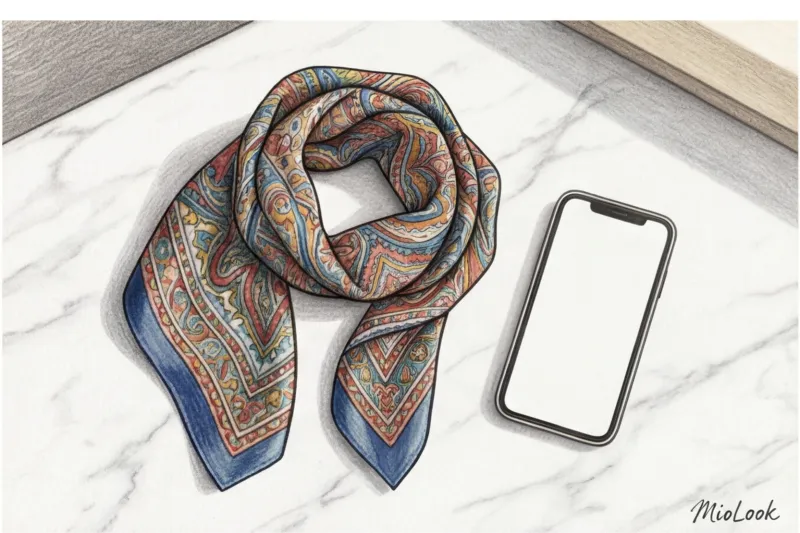
The key to conveying texture for an AI stylist is daylight without direct sunlight. Vintage fabrics, especially heavy silk (22 momme and up) or bouclé, often have complex, multifaceted undertones. If you photograph them under a yellow household lamp, the neural network will misread the shade and suggest muddy combinations. Shoot near a window, spreading the garment so its true volume is visible.
Tagging: How to teach AI to understand era and style
Once the photo is uploaded, the tagging magic begins. It's not enough to just write "blue jacket." Use custom tags. I always teach my clients to add the year or era: "80s power dressing," "70s boho," "90s minimalism."
Be sure to specify the cut's features: "exaggerated shoulders," "high waist," "bias cut." The more precisely you specify the texture (not just "wool," but "heavy tweed" or "shaggy angora"), the better the MioLook algorithm will understand the garment's physics. The AI can't touch your sweater, but with the right tag, it will never suggest wearing a heavy angora over a light silk dress, which would look awkward.
The "One Thing" Rule: How to Avoid Looking Like an Actress in a Retro Movie
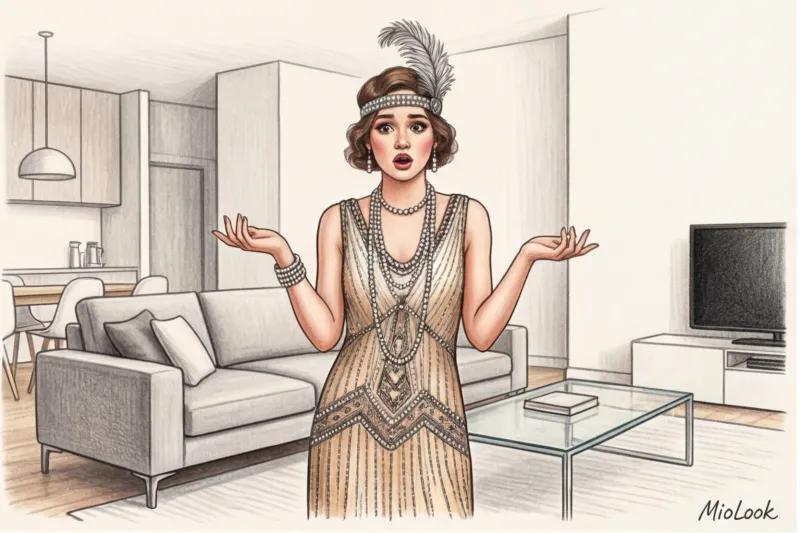
Let's debunk the biggest myth: to look elegant in vintage, you need to embrace the retro aesthetic. No! On the contrary. The secret to an expensive look is to intentionally subvert that retro vibe by pairing it with ultra-modern, minimalist, or even sporty elements.
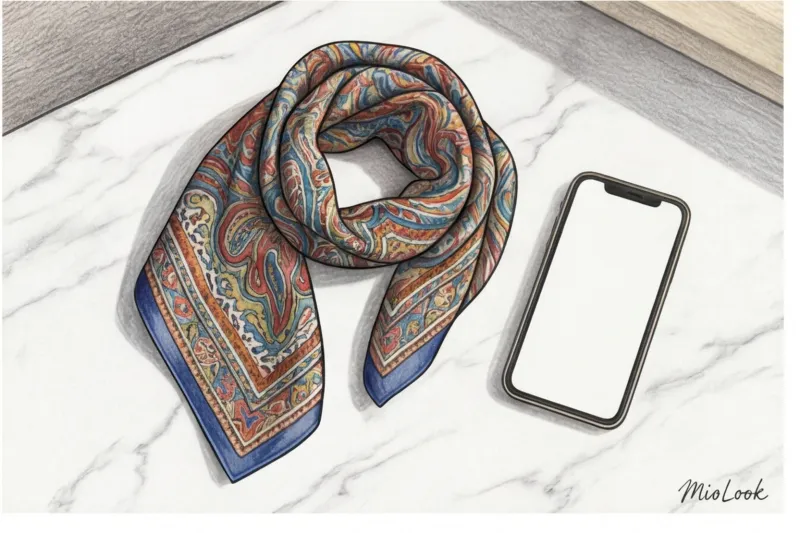
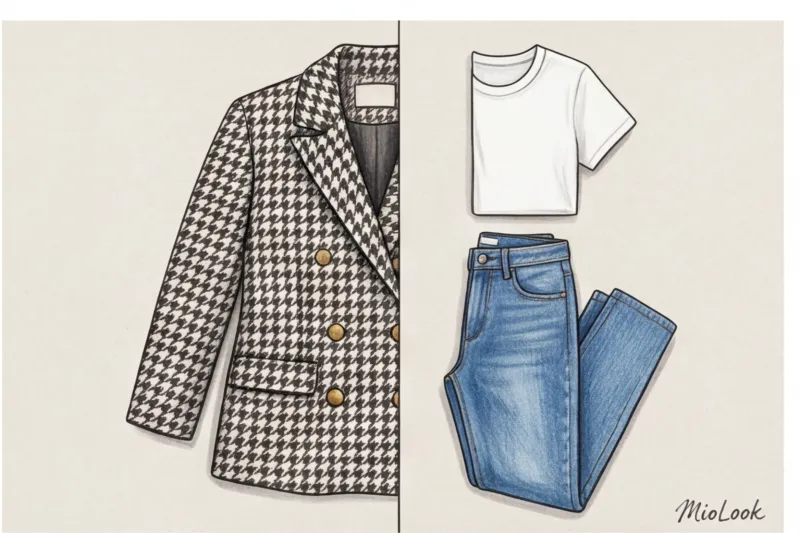
My formula for status: one accent vintage piece plus 3-4 modern basics.
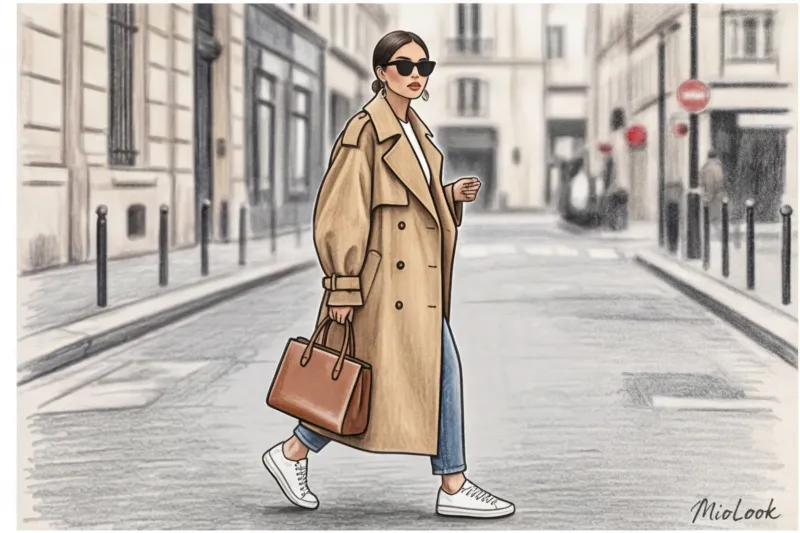
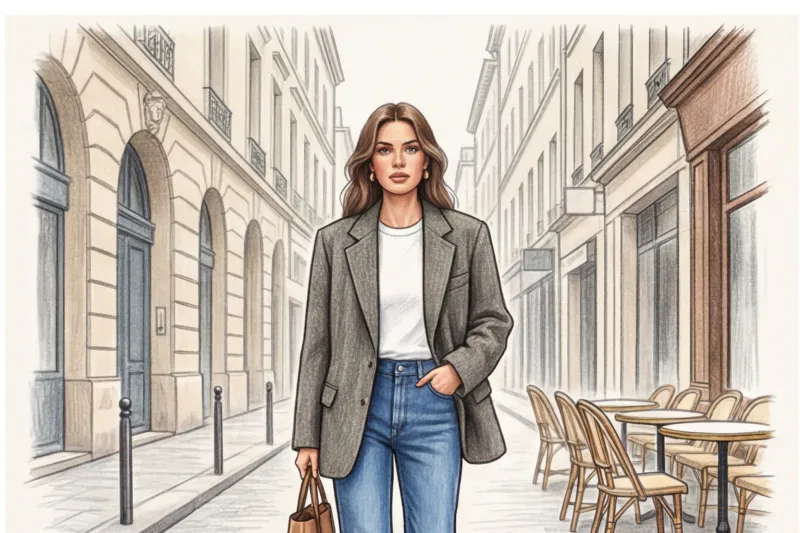
"The perfect pairing for classic vintage Chanel tweed isn't a strand of pearls and pumps, but modern straight-leg jeans, a basic white T-shirt, and chunky boots. You have to tone down the pretentiousness of the piece to make it feel modern."
AI Stylist Algorithms MioLook are tuned to achieve precisely this balance. The app analyzes your tags and automatically blocks stylistic overload. If you choose a vintage jacket, the system is 99% likely to suggest a modern, simple bottom rather than a skirt from the same era (unless you're going to a themed party).
Your ideal image begins Here
Join thousands of users who look flawless every day with MioLook.
Get access — €0.99 onceEra Integration: How an AI Stylist Mixes Vintage with a Modern Base
How does a machine even know what's beautiful and what's not? The answer lies in geometry and color. The structured cuts of the '80s (remember the rigid shoulders of Thierry Mugler or Dior) require a visual counterbalance. The algorithm analyzes proportions: it will match a voluminous vintage top with a minimalist bottom.
But the most interesting thing happens with color. Vintage pieces often have slightly dusty, time-faded hues. Pairing them with neon or the overly overly "chemical" colors of today's mass-market fashion is a bad idea. MioLook's look generation feature takes the color wheel into account. The "Pair with Vintage" button produces looks where a complex retro hue is supported either by a neutral modern base (camel, ecru, graphite) or a complementary solid color.
Time Capsules: Creating Status Looks for the Office
What about work? Many are afraid to wear vintage to the office, believing that business dress codes don't tolerate it. In fact, it's in business that archival pieces enhance your personal brand like nothing else.
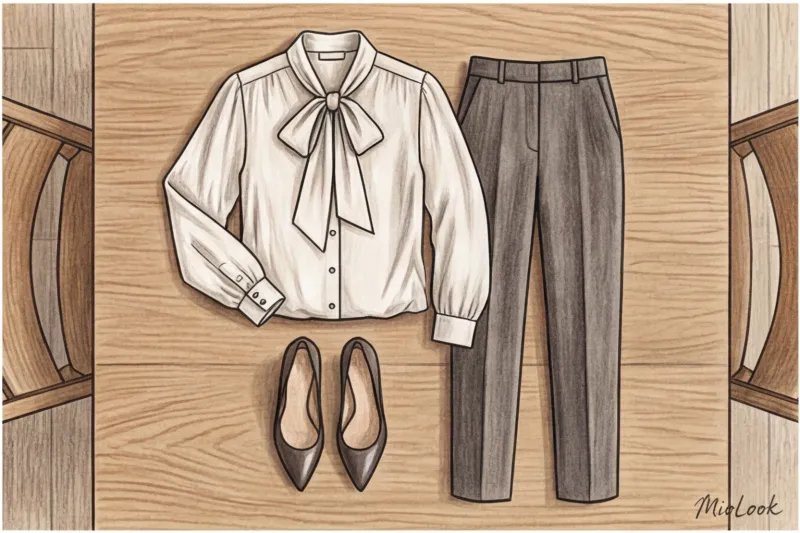
A silk pussy-bow blouse from the '80s, worn under a modern oversized men's jacket, reveals a man with an incredible eye for detail. Classy vintage accessories (like a belt or a silk Hermès scarf) against a clean, minimalist base instantly elevate the overall look. In the app, you can create a separate "Office Capsule," mixing tailored modern suits (say, from COS or Massimo Dutti) with two or three archival pieces.
Investment Valuation: How Smart Wardrobe Calculates Vintage Cost-Per-Wear
Let's talk about money and the mathematics of conscious consumption. The concept of Cost-Per-Wear (CPT) in the context of vintage is eye-opening.
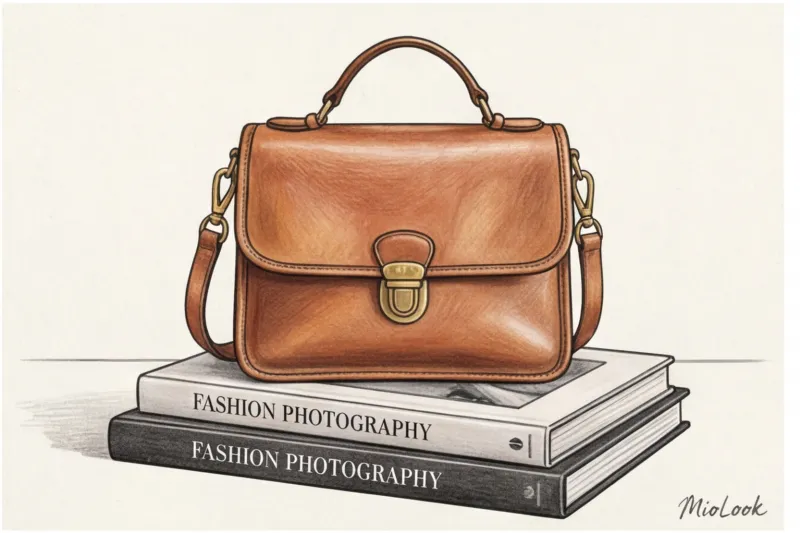
Let's do the math. You buy a vintage jacket for €150. Thanks to the AI stylist showing you 10 ways to wear it with your current basics, you wear it 50 times per season. Cost per outfit: €3.
Alternative: you buy a jacket from a fast-fashion brand for the same €150. After five washes, it loses its shape, the interlining peels off, and the item is sent to the dacha. Cost per outing: €30.
By tracking statistics in the app, you can see how often a complex item actually works. It's the increased wearability that turns an impulsive, emotional purchase into a smart investment in your style.
Checklist: 5 Steps to a Modern Wardrobe with History
Let me be clear: this approach doesn't work with everything. Those 100% polyester dresses from the '70s with their rotten synthetic linings are best left in the past. We're talking about quality tailoring and natural materials. If you have such items, here's your plan for today:
- Revision: Select vintage items that are worthy of digitalization (no stubborn stains, with good fittings).
- Light and frame: Steam them and photograph them in natural daylight.
- Deep tagging: Add items to the app, detailing the silhouette, era, and fabric density.
- Creating pairs: Ask the neural network to collect at least 3 virtual images for each item, using only your current database.
- Test drive: Plan your looks for the coming week. Wear vintage to places you usually wear casual.
Vintage isn't a museum piece, but a tool for creating a unique style that can't be copied at the nearest mall. Digitize your treasures, let algorithms handle the routine of proportional selection, and let history work for your modernity.