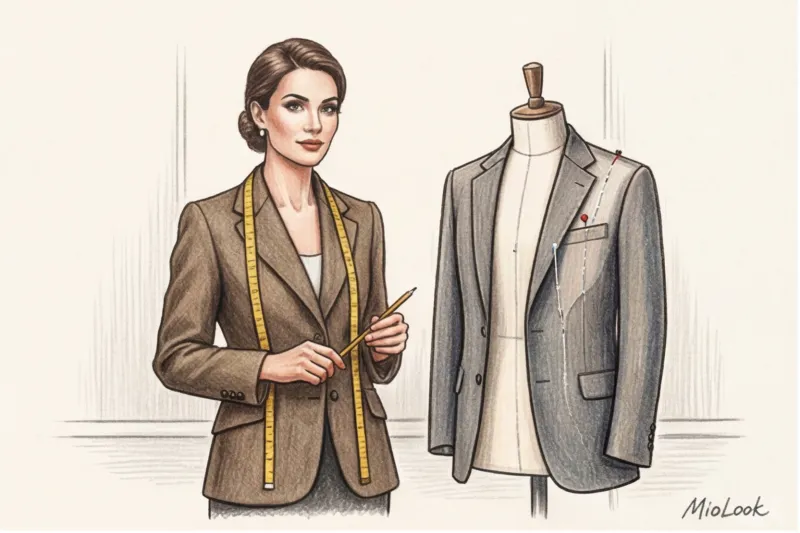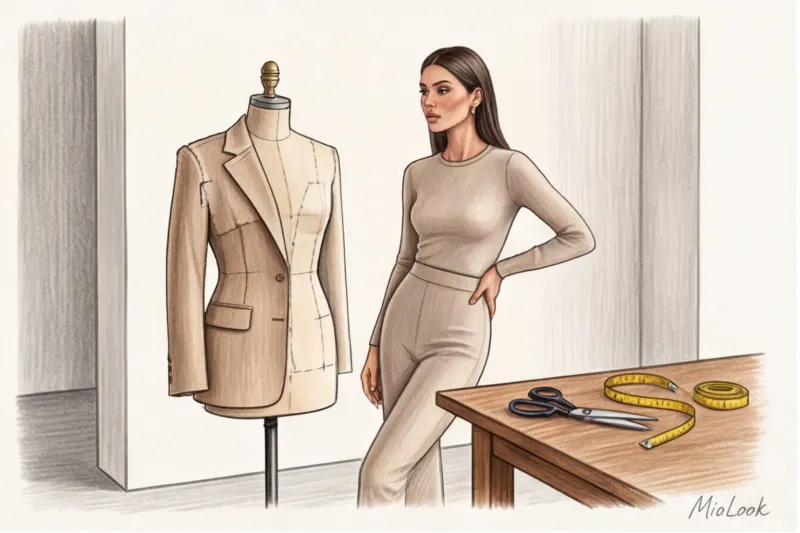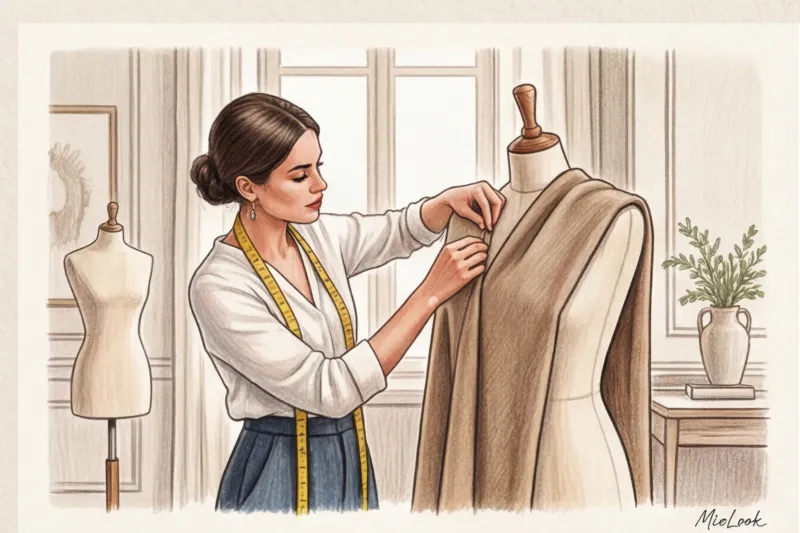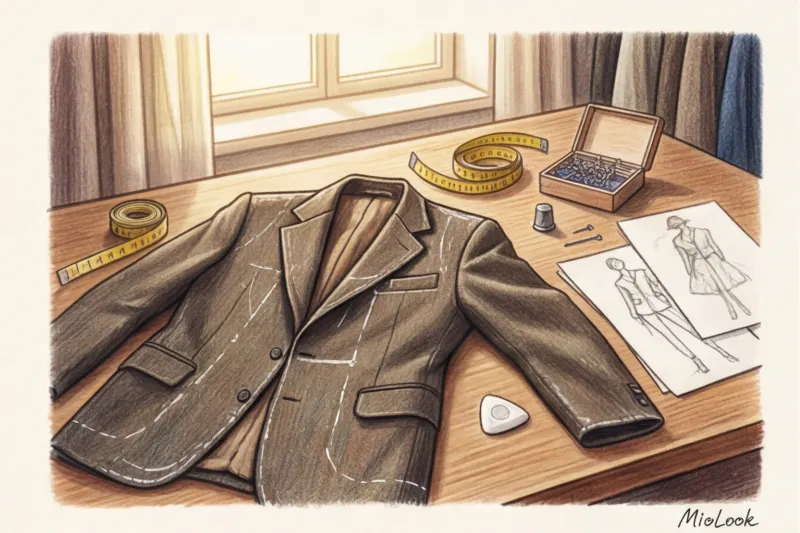
Do you know what item in my closet gets the most compliments at industry conferences? It's not a jacket from The Row or a conceptual minimalist piece from COS. It's an Armani men's jacket straight from 1994, bought for €20 and completely tailored to fit my figure. A smart choice. reworking second-hand clothes — this is no longer about forced savings. Today, it's the smartest way to assemble a status wardrobe that looks like it costs thousands of euros, but costs tens of times less.
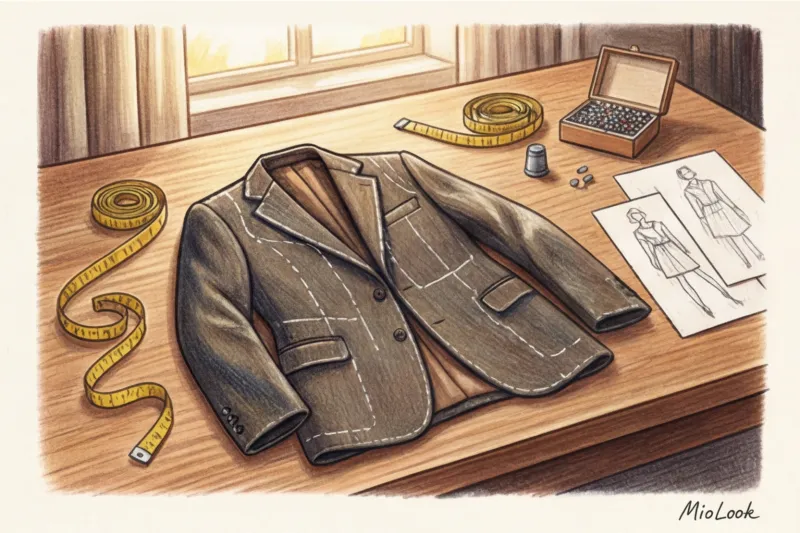
We talked about the origins of this trend in more detail in our The complete guide to vintage clothing in your wardrobe But today I want to talk about practical magic. About how to transform a shapeless find from the rail into something tailored to Savile Row standards. If you use the app MioLook When digitizing your closet, you've probably noticed that it's the perfectly cut pieces that become the basis for 80% of your looks.
Why High-Quality Reworking of Second-Hand Clothing Is the New Couture
Over 12 years of working as a stylist, I've learned one hard and fast rule: altering modern mass-market clothing is unprofitable. This isn't due to snobbery, but to the simple strength of fabrics. According to the Ellen MacArthur Foundation's 2023 report on the circular economy, the quality of cotton and wool produced in the fast fashion segment has declined by 40% over the past two decades due to faster production cycles.
When you bring a modern jacket from Zara to a tailor, they cry. The seam allowances are a measly 0.5–0.7 cm. The grain is often crooked to save space on the fabric layout. Altering such a garment is like building a house on sand.
"Vintage clothing and high-quality secondhand from the 1990s and 2000s are your personal storehouse of premium 'raw materials.' Seam allowances are up to 2-3 cm, the fabric holds its shape, and the wool doesn't pill after the first dry cleaning."
Today, a coat made of 100% dense cashmere will cost you at least €800–€1,200. At a thrift store, you can find a men's cashmere coat with a slightly dated shoulder band for €50–€80. You're not buying a style—you're buying three meters of magnificent fabric. And that's where the real magic of couture begins.
Access to MioLook for €0.99 — one-time payment
A smart AI stylist will select the perfect look based on your individual parameters.
Get access — €0.99 onceThe biggest myth about upcycling: forget about patchwork in a high-status wardrobe
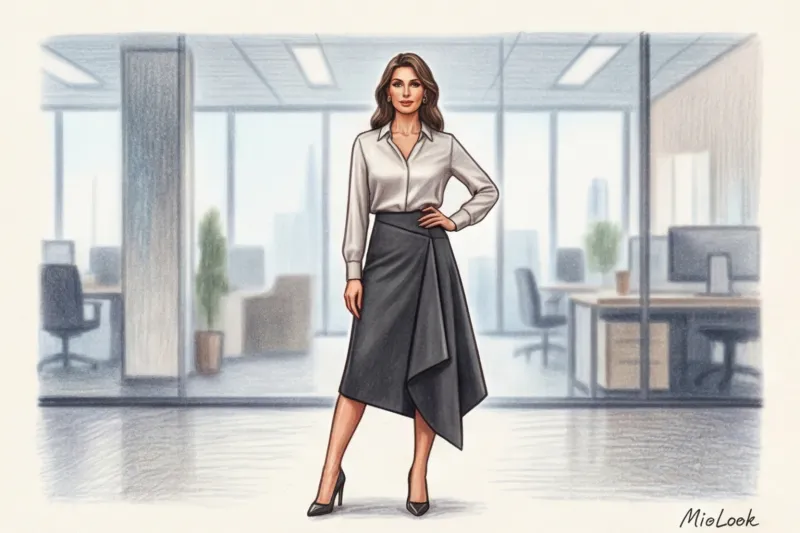
Let's be honest: when you hear the word "upcycling," many people still picture hippie chic, Frankenstein jeans, beaded embroidery over stains, and macramé made from old T-shirts. It works great for street style or Coachella, but it's absolutely detrimental to the business world.
Only works in the status wardrobe structural upcycling (tailoring). The focus should be on changing the silhouette, not on decoration. Embellishing flaws—for example, a flashy appliqué over a worn area—always betrays a homespun approach and detracts from the garment's status.
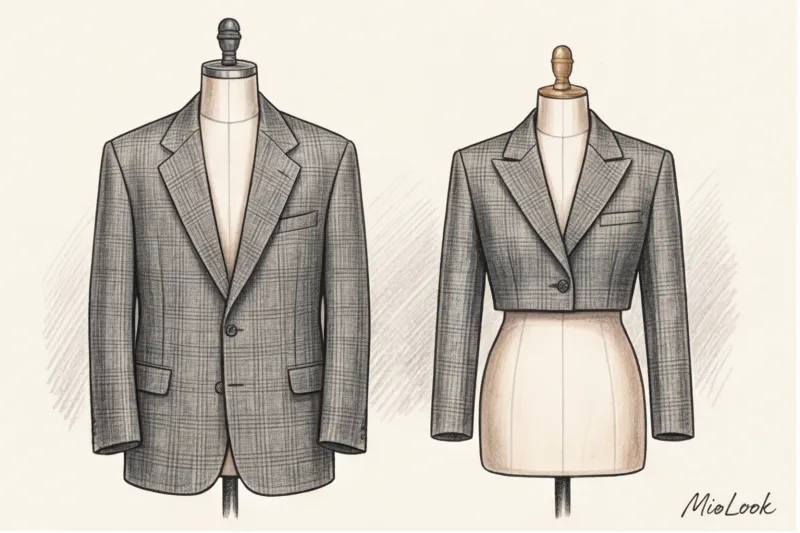
I worked with a client (a commercial director in the IT sector) who adored vintage men's jackets, but they made her look bulky. We took a vintage textured wool jacket for €20, took it to a trusted tailor, removed the bulky '80s shoulder pads, reshaped the armholes, and tapered the sleeves. This cost another €60. The result? A sharp, architectural oversized jacket that looks like a €2,000 Saint Laurent. Now it's her favorite piece for investor meetings.
Cutting architecture: what a tailor will undertake, and what is better not to buy
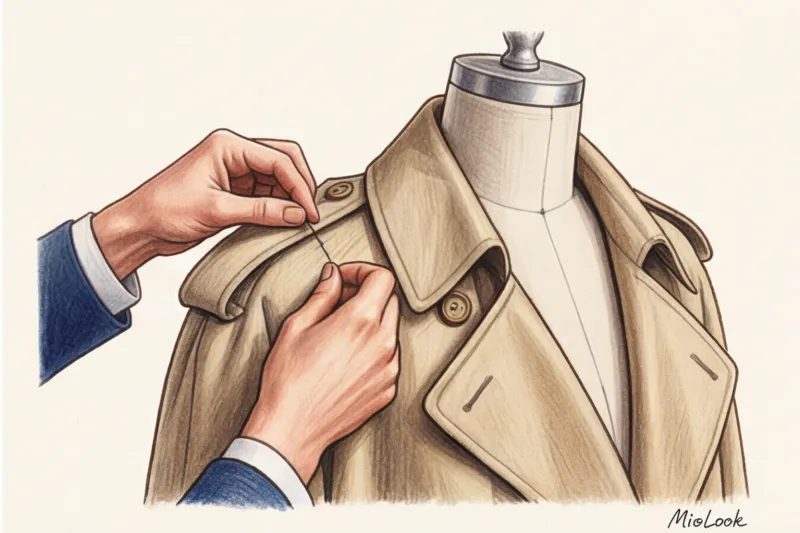
The art of tailoring is subject to the strict laws of physics. The main rule: clothes can always be taken in, but they almost never can be lengthened or widened without losing their shape (the exception being those generous vintage seam allowances).
There is one golden rule that I always repeat to my clients: Never buy an item if the shoulder line is out of place (and you don't plan on making it extremely oversized) or if the armhole is too narrow. Even if it's a vintage Chanel for €5, altering the armholes and transferring the sleeves is the most expensive, risky, and often impossible procedure, as it entails deformation of the front and back.
A goldmine for rework: what to look for on rails
- Men's jackets made of 100% wool. The perfect base for creating oversized women's jackets or trendy crop jackets with raw edges.
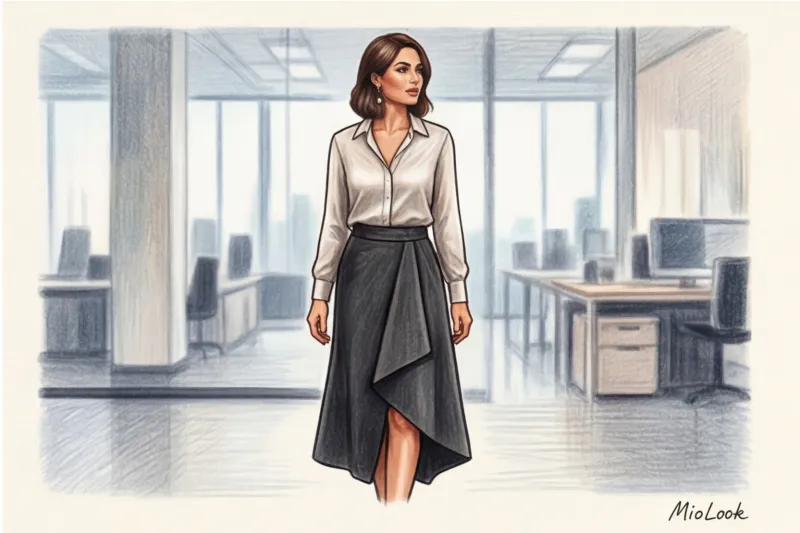
- Maxi skirts made of thick fabrics (wool, gabardine). They can easily be transformed into midi skirts in a trendy A-line silhouette or strict pencil skirts.
- High quality men's poplin shirts. A wonderful material for altering collar shapes, cutting off cuffs or creating blouses with intricate draping.
Red flags: items that cannot be upcycled
Let's be honest—repurposing doesn't always work. There are some things that are better left in the store, no matter how attractive they look:
- Bias-cut clothing If a vintage slip dress has stretched and lost its shape, it's almost impossible to straighten it again; the fabric will twist.
- Items with many small darts. Corset tops or elaborate dresses from the 1950s can't simply be "undone and re-sewn"—the marks from old seams on vintage fabric are impossible to iron out.
- Fine knitwear. When cut, it immediately “creeps”, and it will not be possible to assemble it without specialized equipment (an overlock machine for knitwear).
Your perfect look starts here
Join thousands of users who look flawless every day with our smart app.
Get access — €0.99 onceInvesting in Hardware: The 10 Percent Rule That Changes Everything
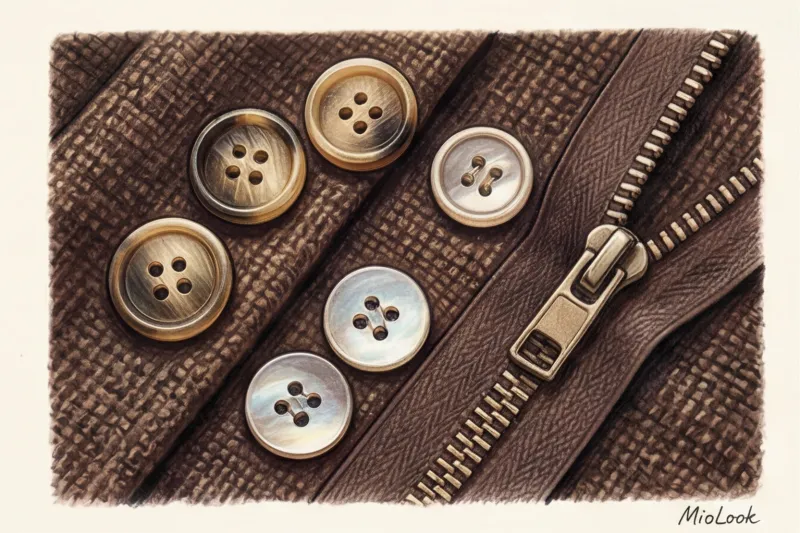
Even a perfectly altered item will look cheap if it still has plastic buttons imitating metal or a frayed polyester lining. In styling, there's a "10 percent rule"—that's how much of a garment's surface area is taken up by details, but they account for 90% of its perceived value.
Replacing cheap hardware with genuine horn, bone, mother-of-pearl, or heavy vintage metal instantly changes the look. Spending €30 on hardware and a new lining for a jacket bought for €10 isn't absurd; it's a smart investment in a premium look.
One day, a client and I found a wonderful, basic trench coat made of heavy cotton in a discreet second-hand store in Berlin. The fabric was superb, but the plastic buckles cheapened it to the level of a Chinese mass-market item. We replaced the buckles with genuine leather-covered ones and the buttons with horn. After dry cleaning, the trench coat was indistinguishable from a Burberry runway collection. Art is in the details.
A stylist's checklist: how to evaluate a second-hand item before buying it
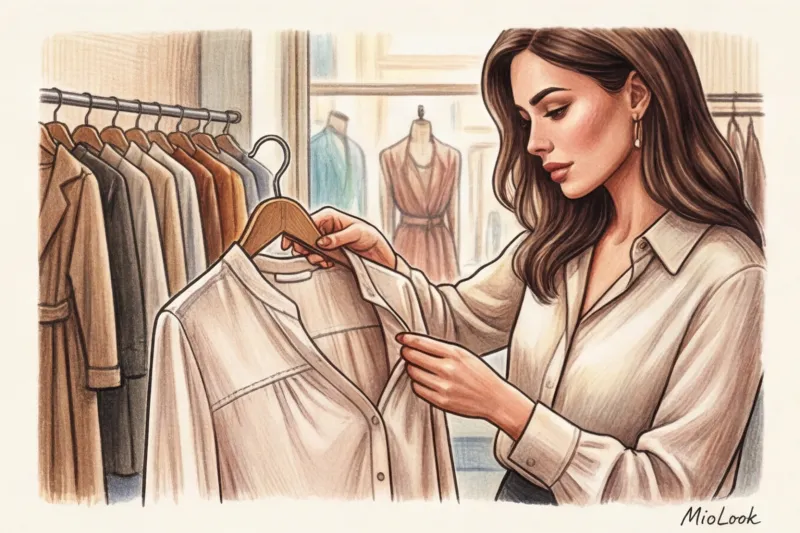
To ensure that repurposing secondhand clothing doesn't turn into a waste of money, it's important to properly inspect the item before you even reach the checkout counter. Here's my professional inspection process:
- Dry rot test. This is the bane of vintage silk and cotton fabrics that have been improperly stored. Grasp the fabric with both hands and gently tug it in different directions (don't overdo it!). If you hear the characteristic cracking sound of fibers tearing, the item is dead; no tailor can save it.
- Checking allowances. Turn the garment inside out. If the seam is finished with a thin serger and less than 1 cm of fabric is left, the garment can be taken in, but it cannot be let out if there is a mistake. Look for generous seam allowances of at least 1.5 cm.
- Assessment of wear on bends. Take a close look at the collar and cuffs of jackets and shirts. The fabric there wears out first. If the wear is severe, ask yourself: "Is it technically possible to cut this collar off to create a stand-up collar, or flip the cuffs over?" If not, don't buy it.
- Olfactory control. The smell of old perfume (especially heavy amber ones) or a slight mustiness disappears after a good ozonation and dry cleaning. But the persistent smell of mothballs penetrates the wool's structure at the molecular level. It's almost impossible to remove.
How to integrate repurposed pieces into a modern capsule wardrobe
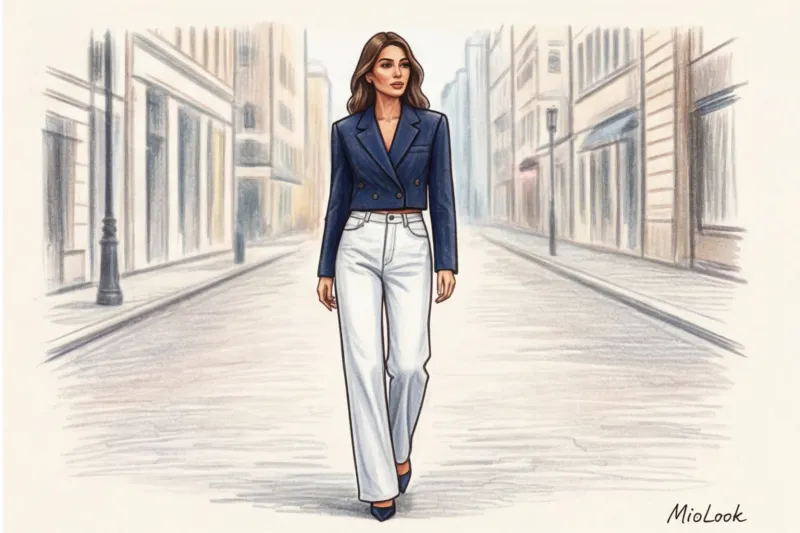
The biggest mistake after a successful upcycling is trying to wear all your vintage and repurposed treasures at once. You risk looking like an actress from a period drama. The secret to elegance lies in balance.
Use the one-piece rule. If you're wearing a complex, tailored men's jacket with exaggerated shoulders, pair it with the most modern, sleek pieces possible: a basic white T-shirt made of heavy cotton, straight-leg jeans without any fraying, and simple shoes.
Play with contrasting textures. Dense, slightly dry vintage wool works beautifully with modern, smooth silk or technical nylon. To avoid confusion in combinations, I recommend my clients use the creating images in MioLook By uploading your newly remade item to the app, you can visually try it on with your existing base and immediately see if the look has the right modern flair.
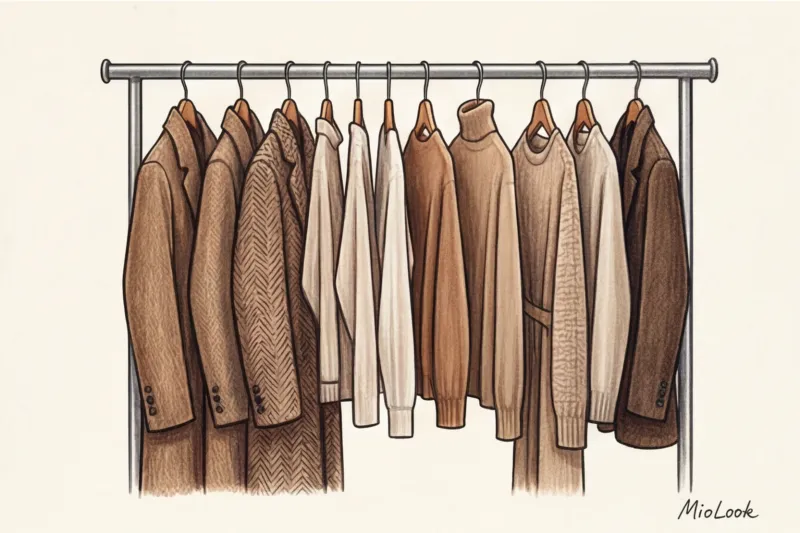
Summary: Your Action Plan for Building a Smart Wardrobe
Repurposing secondhand clothing isn't about saving time. Finding the right pieces, trying them on, and discussing them with a tailor—all of this takes time. But it's an investment that pays off a hundredfold. You get a garment with a perfect fit, premium fabric, and 100% uniqueness. No one else in the office will have that jacket or skirt.
Your quick plan of action for next weekend:
- Find something made from 100% high-quality fabric (wool, cashmere, thick cotton) at a thrift store or on a resale platform.
- Make sure the shoulder line is in place and the fabric is not prone to dry rot.
- Buy expensive fittings (natural horn or metal from 15–30 € per set).
- Find a good tailor who understands the difference between garment repair and structural alterations.
Don't be afraid to experiment with complex cuts. After all, true personal style begins where the cookie-cutter clothes from the mall end. Take a look at your closet right now—the perfect candidate for a transformation might already be hanging there, waiting for its moment.