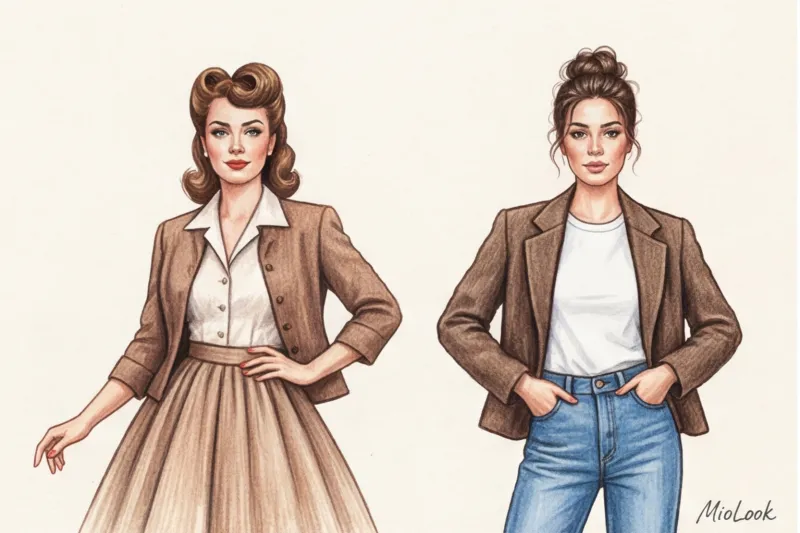
Over six years of working as a personal stylist and digitizing over 300 wardrobes, I've compiled a stubborn statistic: modern wool jackets from the mid-market lose their shape after an average of eighteen months of active wear. Meanwhile, vintage blazers from the '80s, bought secondhand by my clients, last for years without losing their shape or texture. Funny, right? We live in an era of technological advancement, yet for quality basic clothing we're forced to hunt back to the past.
For me vintage in a capsule wardrobe — it's no longer about shock value or trying to look "different." It's a purely pragmatic hack. A way to get luxury-quality fabrics and cuts at a modern mass-market price. We've already covered the mechanics of finding such treasures in more detail in our The complete guide to choosing vintage clothing , and today we'll talk about how to make these things work for your everyday base.
Why Vintage in a Capsule Wardrobe Is a Systemic Upgrade, Not Just a Trend
Let's look at the numbers. According to the report Business of Fashion By 2023, over the past 20 years, mass-market brands have reduced the density of their fabrics by an average of 30-40% to maintain retail prices in line with inflation. What was considered standard quality for an average brand in 1995 is now labeled as "premium" and comes with a corresponding price tag.
I conducted a personal experiment. I bought a vintage 100% cashmere sweater. Pringle of Scotland for €80 and a modern equivalent in the well-known mid-range segment for €250. I added both items to MioLook to track Cost Per Wear (CPW). After a year, the modern sweater was covered in permanent pilling (CPW was €8.30), while the vintage one looked like new after dry cleaning (CPW dropped to €1.50 and continues to decline).
"The architecture of vintage fabrics is fundamentally different. The yarns were twisted more tightly, and the percentage of synthetics in basic pieces from the '80s was often zero. That's why they hold their shape so luxuriously."
The biggest mistake beginners make: why you should start with "boring" vintage
When I suggest adding retro pieces to my clients' capsule collections, 9 out of 10 girls picture feathered dresses, pillbox hats, or crazy '70s prints. The biggest myth is that vintage is always theatrical.
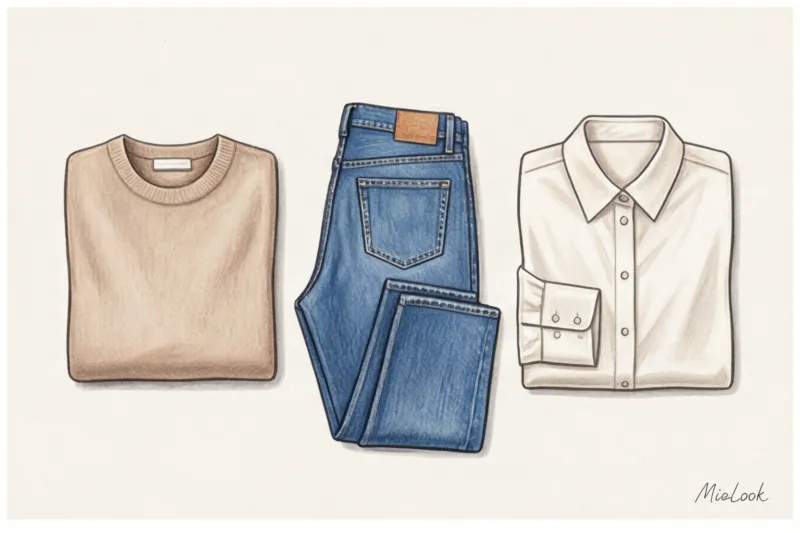
But here's the paradoxical fact: to make your capsule look expensive and modern, you need to buy the most boring Vintage. The ideal investment isn't a leopard-print maxi dress, but a tailored men's jacket, a classic trench coat, or a white shirt.
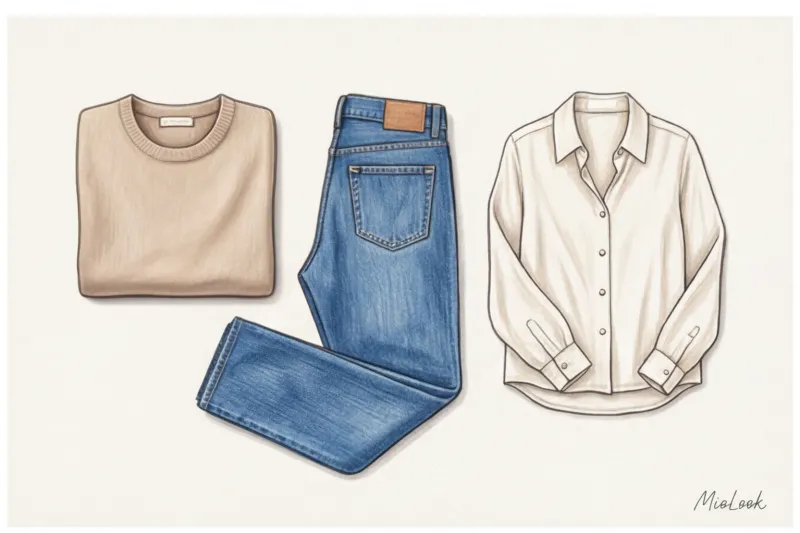
Top 3 Retro Essentials for a Modern Capsule Wardrobe
If you're just starting to incorporate pieces with history into your closet, focus on these three:
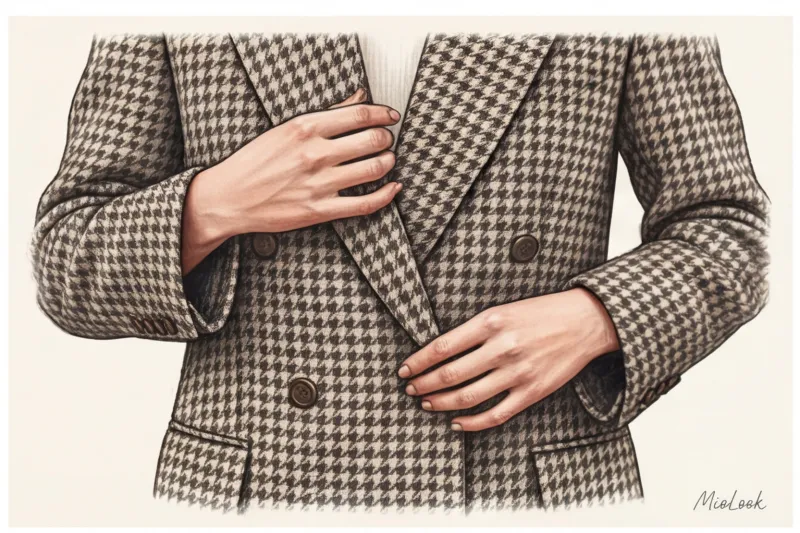
- Men's jackets from the 80s and 90s. Look for brands of the level Hugo Boss or Cerruti 1881 Their main feature is a fantastic shoulder line and dense, wrinkle-resistant wool. For €50–€120, you'll get something that would cost €800 today.
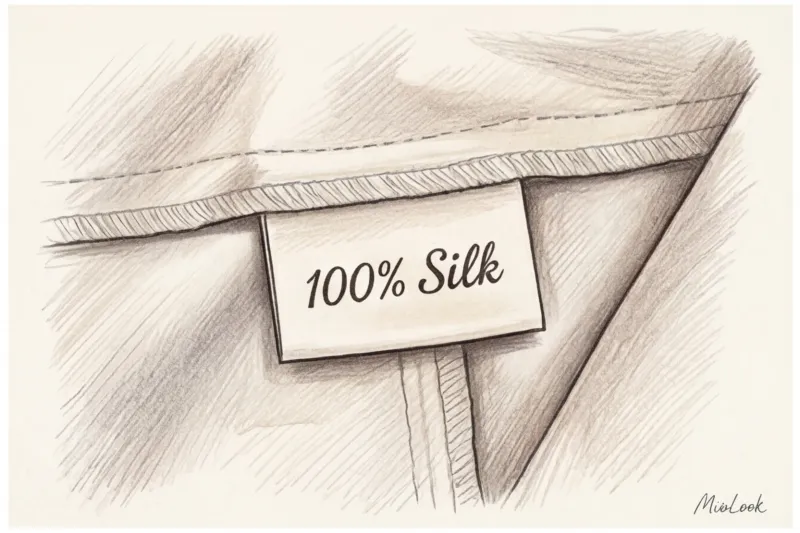
- Silk blouses. Modern mass-market silk often has a density of 16 momme (it's thin, prone to static, and translucent). Vintage, dense crepe de chine falls in heavy, elegant folds.
- Classic denim. Old ones Levi's 501 or Wrangler They were made of 100% cotton, without a drop of elastane. Yes, they're harder to break in, but they shape like a corset and never stretch out at the knees.
Access to MioLook for €0.99 — one-time payment
A smart AI stylist will create the perfect look based on your base and vintage finds.
Get access — €0.99 onceThe 80/20 Formula: How to Incorporate Retro Pieces Without Looking Outdated
Buying a great piece is only 10% of success. The other 90% depends on styling. The golden rule I use in my work is: an outfit should be 80% modern basics and only 20% vintage.
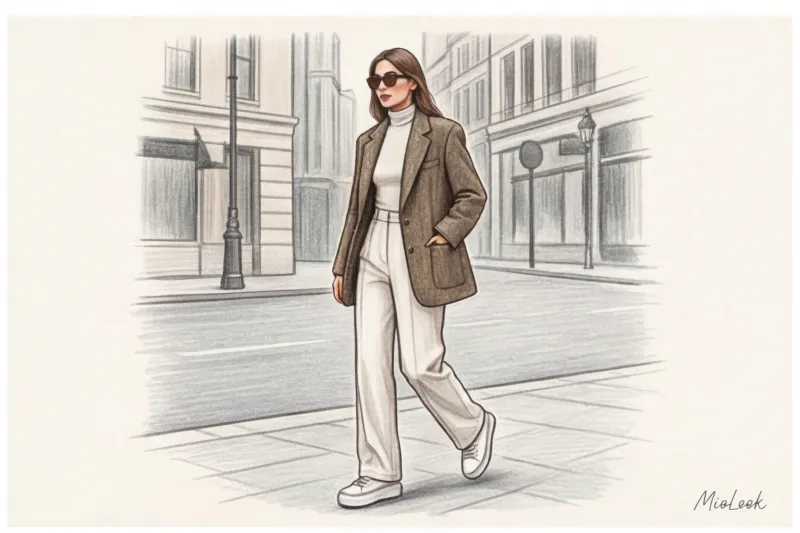
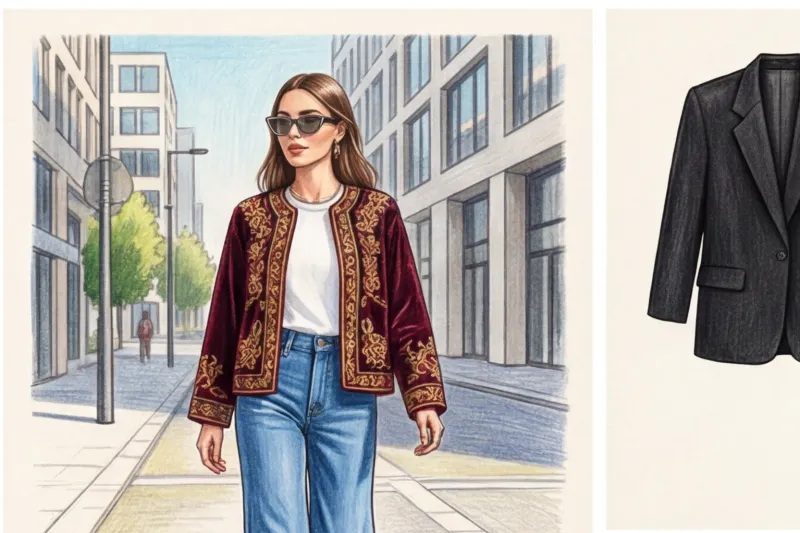
The principle of neutralization works. If you're wearing a heavy vintage tweed jacket (a retro touch), you need to "neutralize" it with something ultra-modern. For example, wide-leg jeans in a trendy cut (like Agolde ), a basic white T-shirt and clean, minimalist sneakers or loafers with chunky soles. Add a modern, sleek hairstyle, and the look will be sharp, not mothballed.
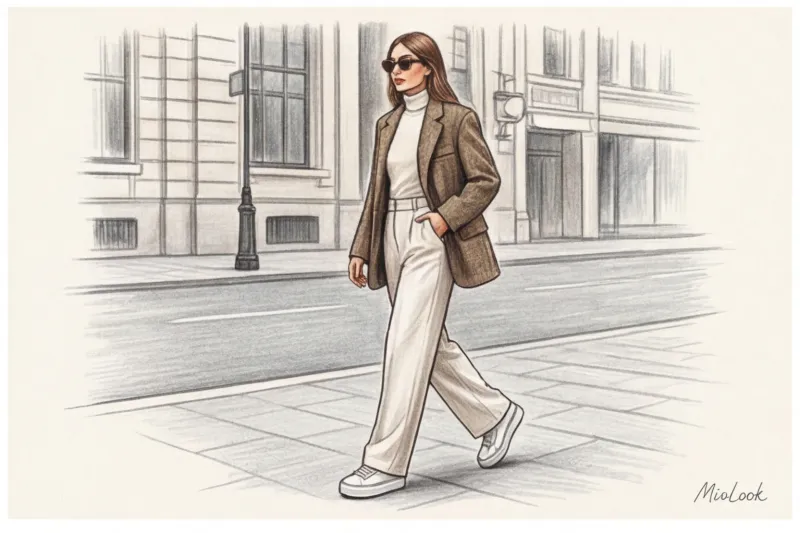
Business Wardrobe Integration: Logo-Free Status
For a smart casual office, vintage is a real lifesaver. A blazer Armani or Ralph Lauren late 90s instantly increases the degree of status.
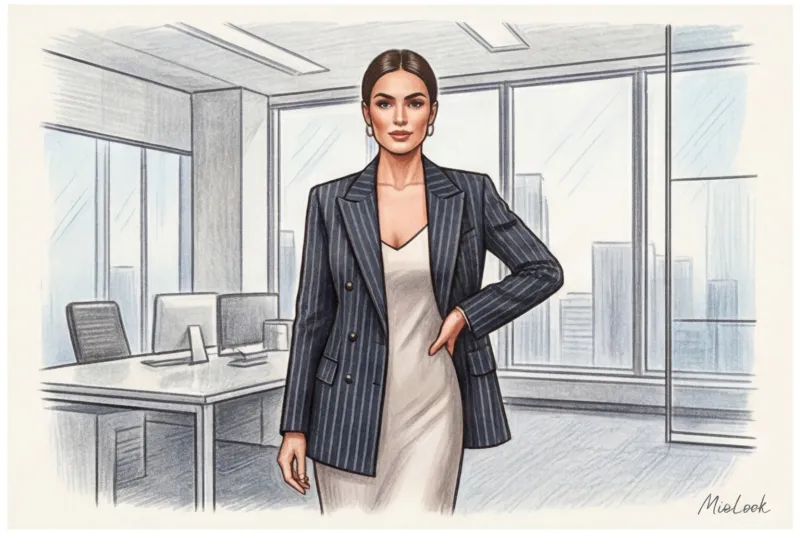
When it does NOT work: I always warn my clients who work in banking or law, where business formality is a strict requirement. Formal dress codes require a perfect match between the trousers and jacket. Putting together a two-piece suit like this from vintage is practically impossible; it's better to invest in modern tailoring.
A stylist's checklist: how to evaluate a vintage item before buying it
Professional buyers and stylists look beyond the brand, looking at the inside. Here's my personal checklist for checking out a retro base:
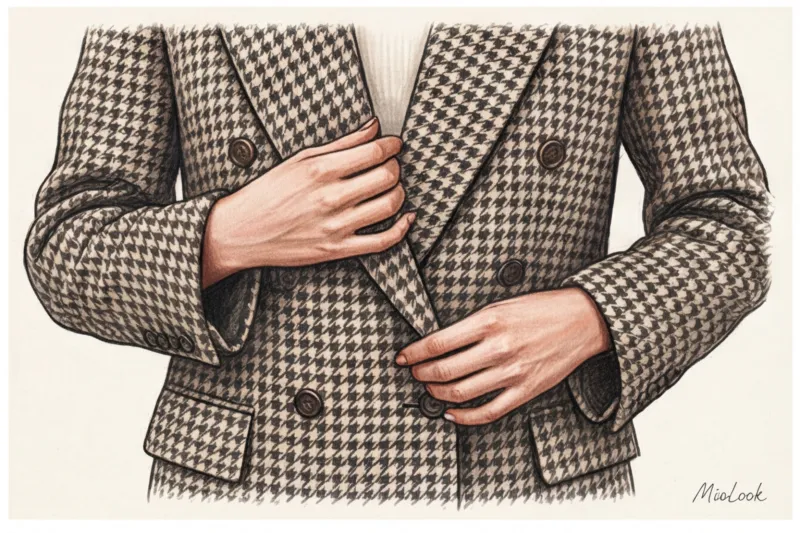
- Generous seam allowances. Take a look inside your trousers or jacket. High-quality vintage pieces always left 3-4 cm of fabric at the seams. This was done intentionally so the garment could be adjusted or tailored to accommodate changes to the body. Modern mass-market pieces leave a measly 5-7 mm—it's impossible to adjust such a garment.
- Fittings. Real horn buttons, mother of pearl, heavy brass on zippers (often branded YKK or riri (old style). If the buttons are plastic, you're most likely looking at cheap mass-market ones from that era.
- Traces of time. One of the most important rules: never buy wool with even the slightest moth marks, no matter how attractive the price. Moths lay eggs in the fibers, and you risk infesting your entire closet. But don't let that lingering smell of grandma's trunk scare you—professional ozone treatment at a dry cleaner (around €15-20) removes it forever.
Your perfect look starts here
Join thousands of users who look flawless every day with MioLook, mixing new pieces with vintage.
Get access — €0.99 onceA Technological Approach: Digitizing and Caring for Retro Finds
Vintage jackets require a little more care than polyester hoodies. Avoid hot irons—use gentle steaming instead. Heavy wool jackets from the '80s with massive shoulder pads require wide hangers, otherwise the sleeves will quickly become deformed under their own weight.
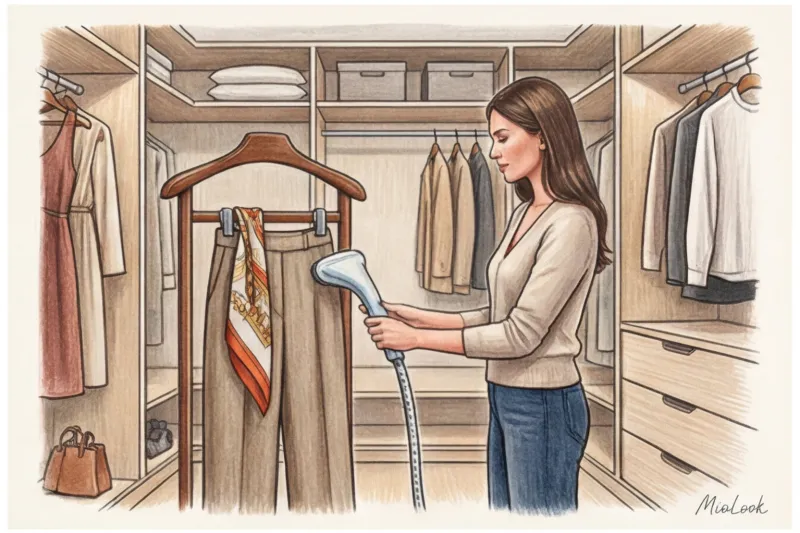
Since vintage pieces often have a complex palette and texture, it can be difficult to keep track of all the possible combinations with your basics. Upload your finds to your virtual wardrobe: the algorithms often suggest combinations of old silk and new denim that I wouldn't have thought of on my own in a rushed morning.
Incorporating vintage into your capsule wardrobe doesn't mean abandoning modern trends. It's a smart strategy for balancing your wardrobe. By replacing just two or three basic items (a jacket, a coat, a white shirt) with a high-quality retro alternative, you won't just save hundreds of euros. You'll create a sophisticated, visually expensive look that's impossible to replicate at the local mall.