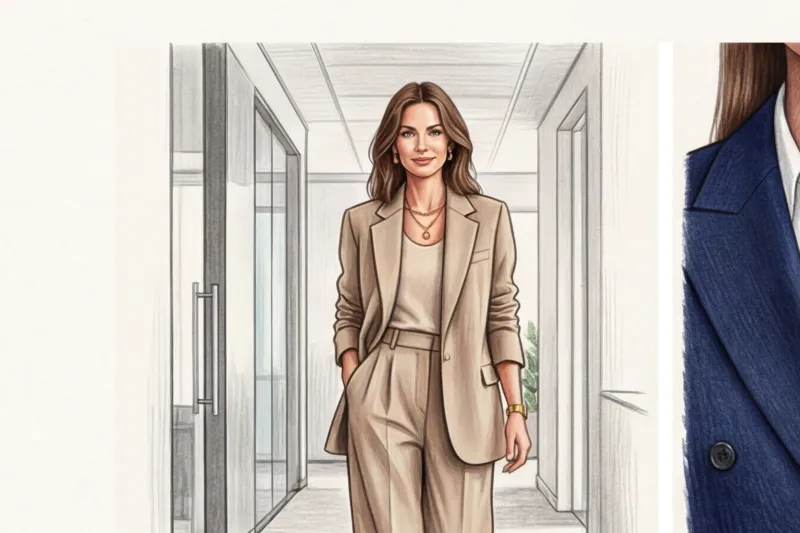
Do you know what phrase I hear most often from clients? "Isabella, I hate suits; they make me look like a boxy clerk from the 2000s." And every time I smile, because the problem isn't the figure. The problem is that we've been taught to choose women's business pantsuit according to outdated patterns and dubious theories of “apples” and “pears”.
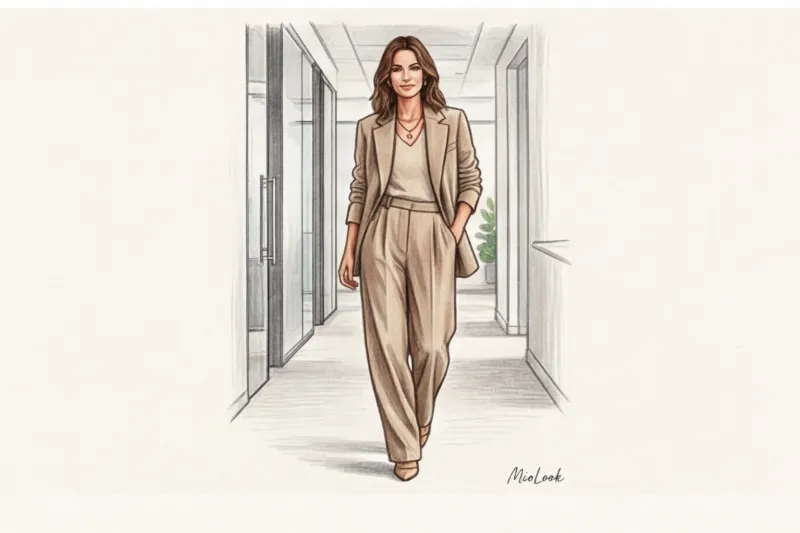
Over 12 years of working as a personal stylist, I've learned the most important thing: a perfect fit isn't just the size on the tag. It's pure design. It's the armhole height, the perfect trouser leg crease, and the millimeters in the shoulder line. When you learn to see these details with the eyes of a professional tailor, your style will change forever.
We have covered the basic capsule in more detail in our The Complete Guide to Business Wardrobe for Women , but today we're going to take a magnifying glass and examine the anatomy of one of the most important pieces of your work armor—the pantsuit.
The Architecture of the Perfect Silhouette: Why the Size on the Tag No Longer Matters
We've long since moved on from the rigid "armor" of the 80s with their exaggerated shoulder pads. Modern fashion dictates the concept. Soft Power (soft power). Analyzing the latest shows by The Row and Jil Sander (2024-2025 seasons), one can notice a clear trend toward relaxed tailoring. These are suits that convey confidence not through the stiffness of the fabric, but through a relaxed freedom.
"A relaxed cut suggests you don't need to strain yourself to prove your status. You've already proven it to everyone."
Herein lies the main paradox that so frightens many women. A popular myth holds that clothes that are too tight or too small make you look slimmer. This is a disastrous misconception. Stretched fabric, cut-in seams, and horizontal creases instantly add visual weight and cheapen your look.
A slight oversize—that "air" between the body and the fabric—on the contrary, creates the illusion of fragility. I often ask clients to try on a jacket one or two sizes larger than their usual size. And I almost always see a surprised look in the mirror: the larger garment makes their silhouette more graceful, creating that very Mediterranean vibe. effortless elegance (casual elegance).
A Perfect Jacket Fit: A Professional Stylist's Checklist
Buying a suit starts with the jacket. It's the most technically challenging item in a woman's wardrobe. While trousers can be easily altered, a poorly cut jacket is almost impossible to fix.
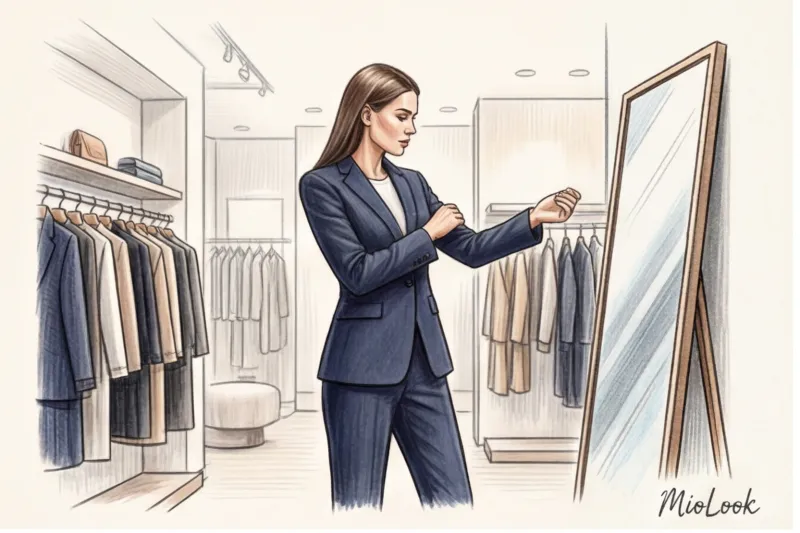
In the fitting room I always make clients do hug test Put on the jacket, fasten it with one button, and wrap your arms around your shoulders. If the fabric is ragged and the seams are digging into your back, it's not your size, even if your shoulders appear to be in place. A women's business pantsuit should not restrict your movement.
Shoulder line and armhole: the invisible foundation of the image
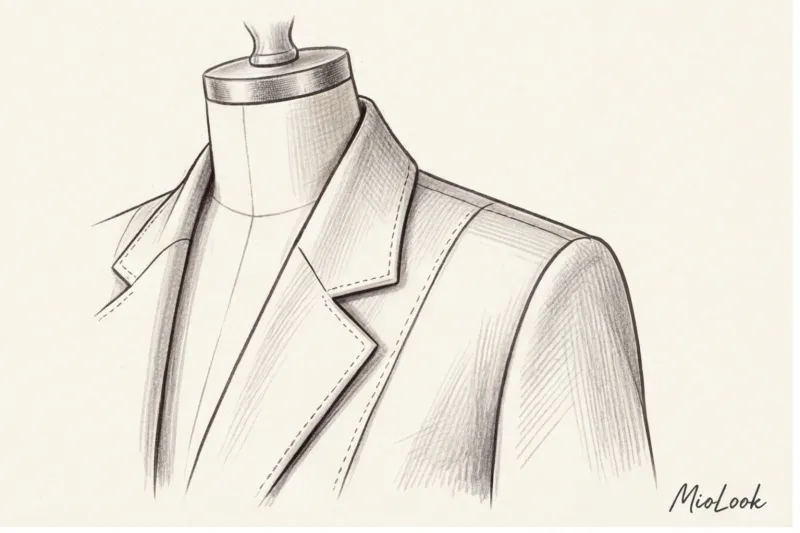
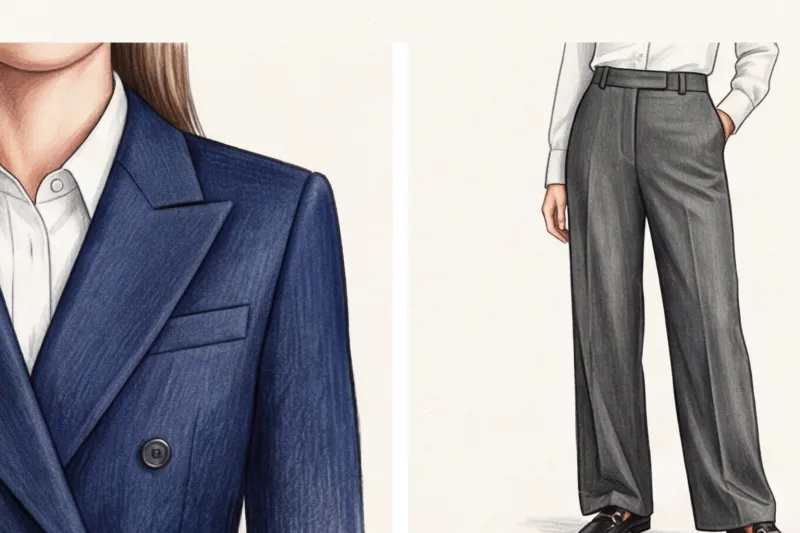
Unless we're talking about hyper-oversized clothing (which is inappropriate in a strict corporate dress code), the shoulder seam should strictly align with the anatomical end of your shoulder. But there's a detail that only the tailors at Savile Row know— armhole height.
One day, a client, a top manager at a major bank, came to see me. She'd bought a stunning fine wool suit for $2,000, but complained that she looked sloppy in it. The problem was the armhole (the opening where the sleeve is sewn in) was too low. When she raised her arm, the jacket would rise with her, bunching up like an accordion. We took the suit to a tailor, who raised the armhole for $50, and the suit finally looked like it deserved its $2,000 price tag. High armholes are the key to expensive suits; they allow freedom of movement without distorting the silhouette.
The right length and a relaxed fit
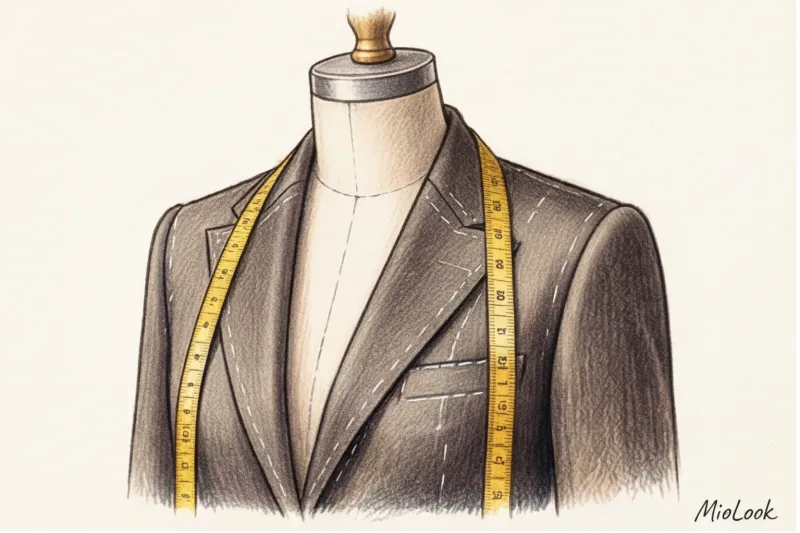
The standard ease for a modern jacket is at least 4-6 cm around the chest. How can you check this without a measuring tape?
Pay attention to the button. The "X-shaped fold" rule is unforgiving: if the button is pulled tight so tight that deep X-shaped folds radiate outward, the jacket is hopelessly small. As for length, avoid jackets that end right at the widest part of your hips—this will cut off your figure. Choose either a cropped style that hits just below the hipbone or a longer style that reaches mid-thigh.
Access to MioLook for €0.99 — one-time payment
A smart AI stylist will analyze your figure and select the perfect business look in seconds.
Get access — €0.99 onceTrousers that work for you: from the waistline to the right crease
Let's face it: we spend 80% of our working time in the office sitting. And this fundamentally changes the rules for choosing trousers.
I strongly recommend avoiding extremely tight skinny jeans. They cut off circulation and look out of place. Palazzo pants, straight pipes, or slightly tapered (carrot fit) are your best bet. If you're bothered by the "bags" on your hips, look for pants with deep pleats at the waist. A good tailored pleat opens up as you move, adding volume where needed and elegantly concealing figure flaws.
Waist and groin area: key indicators of quality
There are only two waistband styles for business dress codes: high (at the natural waist) and mid (a couple of centimeters below the belly button). The low-rise waist from the 2000s is great for street style, but it will make you look less authoritative in a boardroom setting.
Pay close attention to the groin area. If you see any when trying it on smile lines If you see horizontal smile folds radiating from the center, take these pants off immediately. This means the balance of the garment is off: either you don't have enough volume in the hips, or the saddle seam depth isn't cut to suit your proportions. This is the kind of situation where even a tailor can't help.
Trouser length and shoes: the rule for the correct break
In classic men's tailoring, there is a clear terminology for trouser length that we women have successfully borrowed:
- No break (no crease): The trouser leg ends just above the shoe. Ideal for cropped styles and loafers.
- Half break (half break): The fabric forms a single, light fold at the front of the shoe. Ideal for straight trousers.
- Full break (full hall): The trousers fall over the shoes in a voluminous fold. This only works with very wide palazzo pants and flowing fabrics.
There is a harsh truth here that many do not want to hear. You can't wear the same wide-leg trousers with 10cm heels and flat sneakers. If your trousers are hemmed to match your heels, you'll be sweeping the floor in sneakers, wearing them with the heel, destroying the edge of the fabric in a single day. If they're hemmed to match your loafers, they'll look like awkward "shoot-ups" with heels. Choose a basic shoe for a specific outfit and tailor your trousers to match it.
Fabric is everything: how material is changing a women's business pantsuit
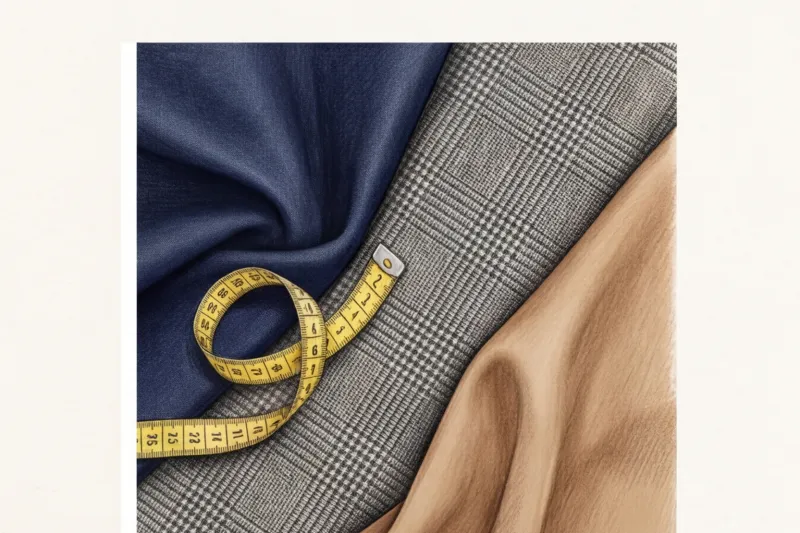
According to the PANTONE Color Institute (2025), basic shades like deep sea peony (Navy) or rich taupe remain the foundation of a business wardrobe. But color is secondary. Texture is primary.
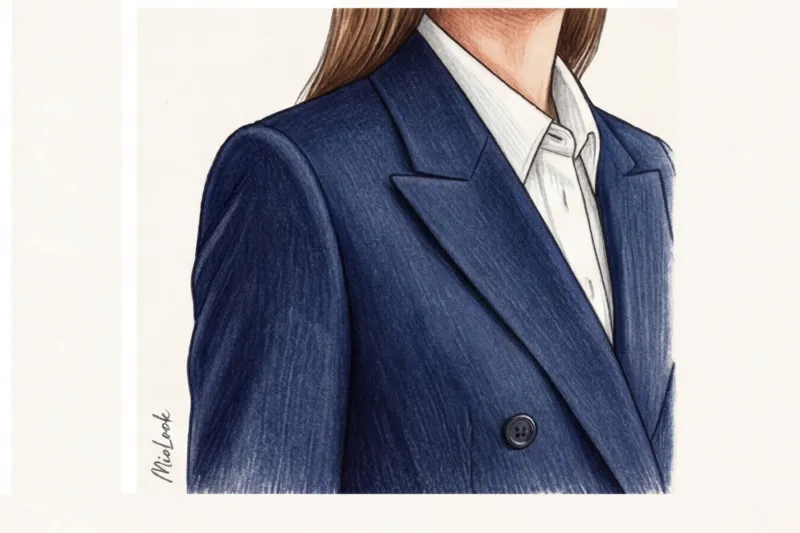
There's a myth that only stiff, rigid fabrics can "pull" the figure together. In fact, materials that are too dense create a boxy effect. Flowing fabrics work smarter—they gently envelop the silhouette, concealing what needs to be concealed through their dynamism.
When it comes to composition, I caution my clients against extremes. Yes, 100% wool labeled Super 120s is luxurious. But this is the finest yarn that will wear out between the thighs after a couple of months of heavy wear. On the other hand, 100% polyester will create a greenhouse effect.
Golden mean: A wool blend with 5-10% silk for a luxurious matte sheen and 2-5% elastane or polyamide for durability. This blend will withstand a 10-hour workday, a flight, and an evening dinner without losing its shape.
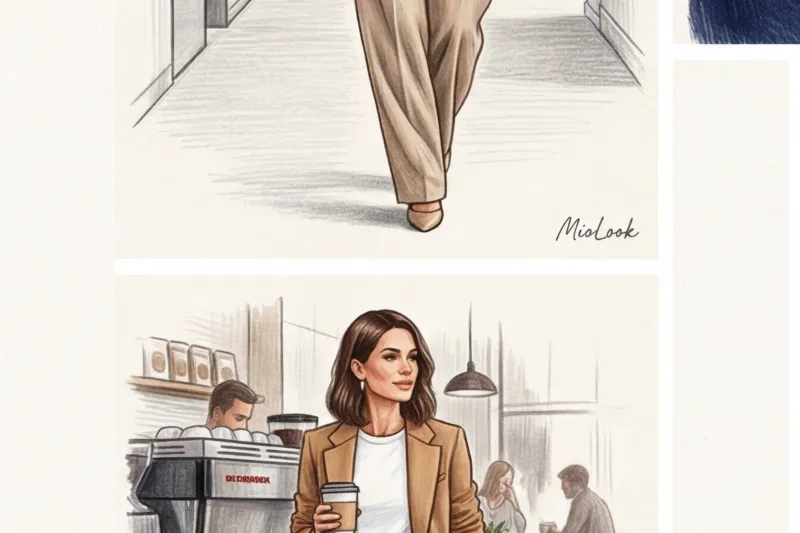
Myths about body proportions that are time to be forgotten forever
Every time I hear a woman call herself an "inverted triangle" or an "apple," I want to throw out those old glossy magazines. Modern styling isn't about fruit, but about vectors of attention and visual balance.
A monochrome pantsuit is the most powerful visual vertical, elongating the silhouette better than any diet or heels. The uniform color of the top and bottom keeps the eye drawn continuously.
And now counterintuitive advice , which shocks clients. Old-school stylists insist, "If you're curvy, be sure to accentuate your waist with a belt over your jacket." Forget it! If you have a fuller midsection, a belt worn tightly over thick fabric will only accentuate it, creating the effect of a constricted waist.
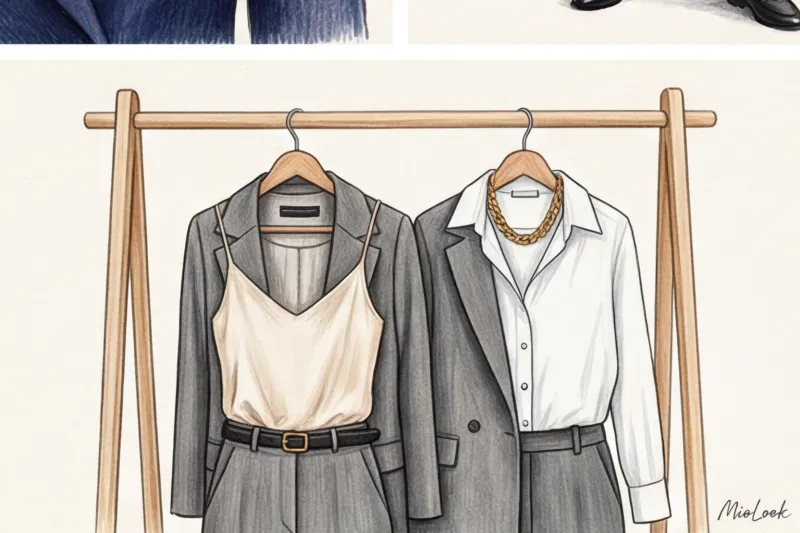
What to do instead? Wear a contrasting top (like white) and layer an unbuttoned dark jacket over it. The jacket's lapels will create two sharp vertical lines that visually "cut off" the sides, leaving only a narrow, light stripe down the center. You'll instantly drop a couple of sizes in the eyes of others.
Your perfect look starts here
Join thousands of users who look flawless every day with MioLook. Digitize your wardrobe now.
Get access — €0.99 onceThe Secret Ingredient: Why You Need a Good Tailor
Let's be honest: no suit from a mass-market brand (Zara, Mango) or even a mid-range brand (Massimo Dutti, COS) will fit 100% of women perfectly. We have different back arches, different shoulder heights, and different bust sizes, all with the same waist size.
Don't be afraid to buy a garment if it's perfect in the shoulders but too big in the waist. Implement the "$50 Rule" (or the equivalent in your city for basic tailoring services) into your life. A small investment in tailoring can transform a $200 suit into something that looks like it costs $1,000.
What a tailor can do easily and inexpensively:
- Shortens the length of trousers (while maintaining the original edge).
- Removes excess volume at the waist of trousers along the center seam at the back.
- The jacket fits slightly at the back.
- Shorten the sleeves (if they don’t have working loops with buttons).
What is better not to do (it’s easier to return the item to the store):
- Changing the shoulder width (you will have to completely re-cut the sleeve).
- Expansion of trousers at the hips (if there is not a significant amount of fabric inside).
- Correcting the balance where the front of the jacket rides up due to a large chest.
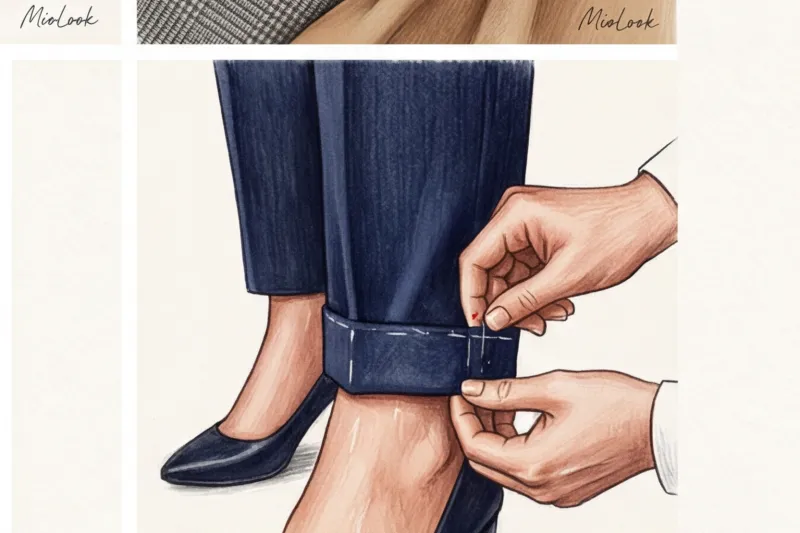
Style Formulas 2024-2025: From Formal to Smart Casual
To prevent a suit from hanging in your closet like dead weight, it needs to be versatile. Here are three formulas, proven across hundreds of wardrobes, that will help you out in any situation.
Formula 1: Casual Friday
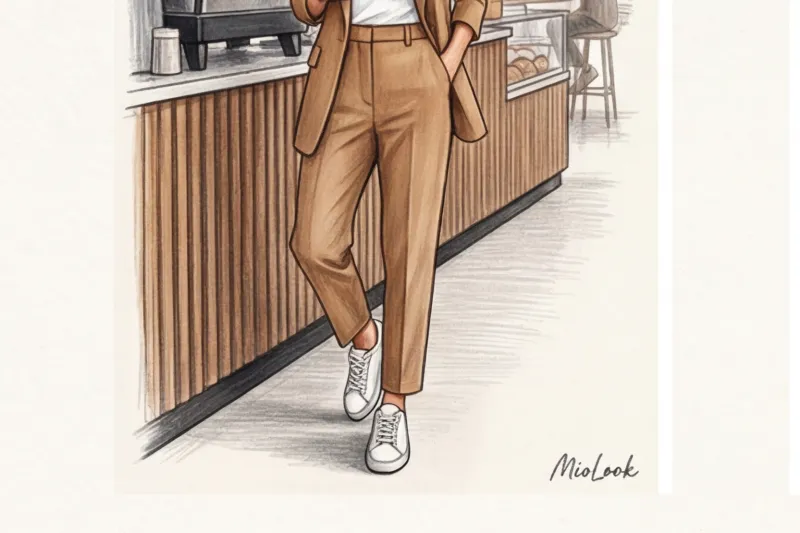
Relaxed jacket + wide-leg trousers + basic white t-shirt + white leather sneakers.
The secret to this formula is the T-shirt. It shouldn't be thin or translucent. Look for a thick cotton (at least 180 g/m²) that holds the shape of the collar. Sneakers should be minimalist, without any flashy logos.
Formula 2: Board of Directors (Power Dressing)
Three-piece suit with a vest + slingback shoes + an accent brooch on the lapel.
A vest worn over bare skin (or a thin silk blouse) instantly elevates formality while maintaining a feminine touch. Kitten-heeled slingbacks add a touch of elegance without sacrificing comfort.
Formula 3: Evening Networking (After 5)
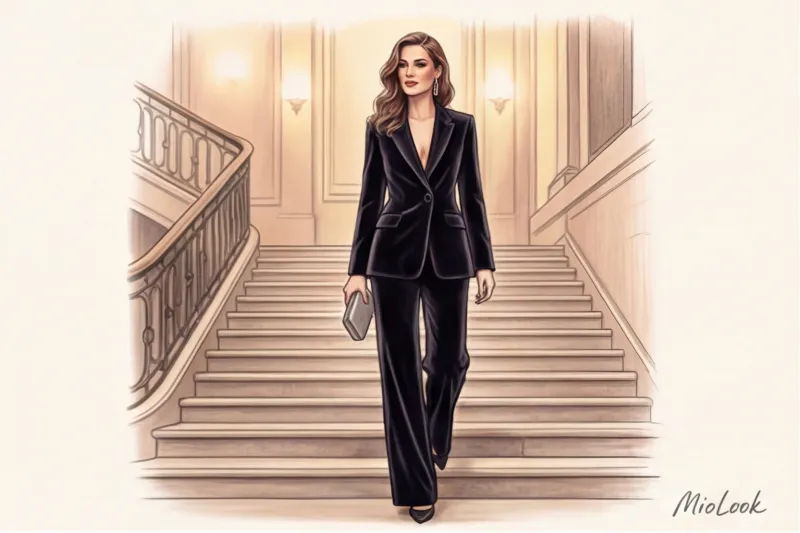
Jacket + silk lingerie top + loafers with a chunky buckle + red lipstick.
The contrast between the formal suit fabric and the delicate sheen of silk works flawlessly. Chunky loafers ground the look, preventing it from drifting into overt romanticism.
If you have trouble keeping all these combinations in mind, use modern technology. I often recommend that clients upload photos of their items to MioLook virtual wardrobe The app's artificial intelligence helps you pre-create outfits for the week based on your actual clothes, so in the morning you can simply open your phone and know exactly what to wear.
Remember: a women's business pantsuit isn't an office straitjacket. It's your best supporting actor, designed to highlight your competence, not detract from it with a poor fit. Choose airiness, find your tailor, invest in the right fabrics, and you'll feel your posture change every time you put it on. mine perfect suit.