

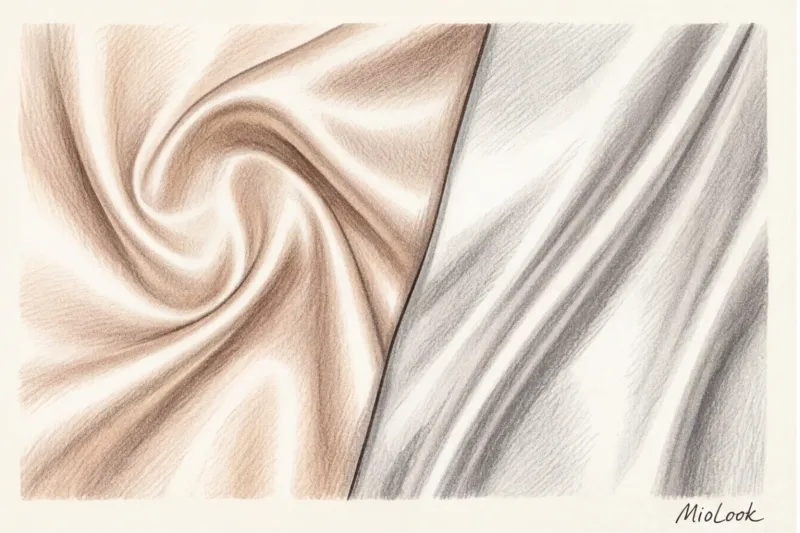
The Magic of State-Friendly Fabric: Why Natural Silk Is Worth the Price
In twelve years of working as a personal stylist, I've witnessed the same scene hundreds of times. A client emerges from the fitting room in her usual high-street blouse—shoulders slightly slumped, movements fussy. Then I suggest she change into a similarly cut garment, but made of 100% natural silk. Magic happens: her back straightens, her chin lifts, and her gestures become fluid. Thinking about... How to distinguish natural silk When it comes to high-quality synthetics, we often focus on the tags, forgetting that the main difference lies in our physical sensations and the status they convey.
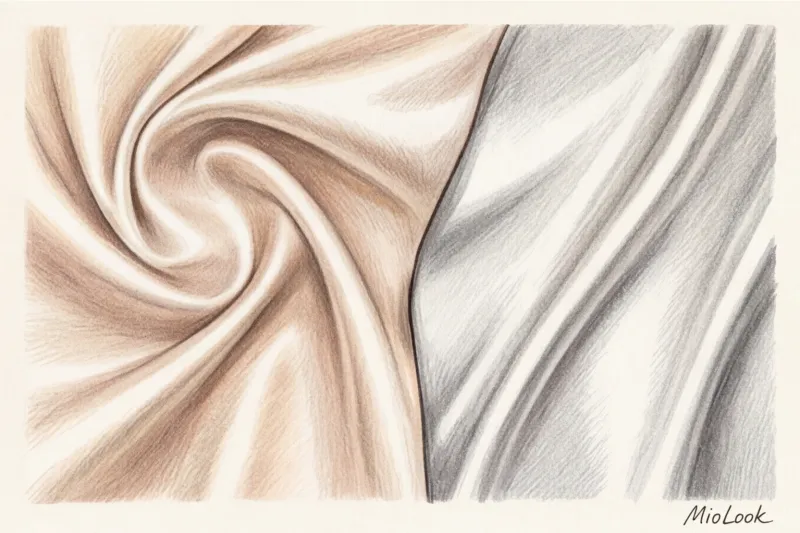
In the philosophy of fine fabrics, texture always speaks louder than logos. That's why the Old Money aesthetic and relaxed Mediterranean chic are built on materials you want to touch. Unlike flashy brands, prestigious fabrics work on a subconscious level. Smooth, flowing fabrics create an aura of well-groomedness and privilege that cannot be replicated by even the most expensive polyester. Incidentally, replacing cheap, shiny synthetics with fine silk is the first and most effective step if you want to eliminate it from your wardrobe. clothes that visually age a woman.
Why is there such a colossal visual gap between the original and the copy? The answer lies in physics and microscopy. The cross-section of a natural silk fiber is shaped like a triangular prism. This natural geometry doesn't simply reflect light, as a flat synthetic thread does, but refracts and scatters it multiple times. As a result, we see not a flat, glossy sheen, but a deep, pearlescent glow that plays and changes hue with every movement.
But visual aesthetics are just the tip of the iceberg. Silk's main superpower lies in its uncompromising thermoregulation and hygroscopic properties. Being a natural protein fiber (similar in composition to human hair), silk can absorb up to 30% of its own weight in moisture while remaining completely dry to the touch. That's why a silk slip dress will keep you remarkably cool on a sultry August day on the Amalfi Coast, and a silk blouse worn under a wool jacket will keep you cozy and warm on a chilly winter day. Synthetics, on the other hand, always create a greenhouse effect. This is especially critical when choosing outfits for long events—for example, studying wedding dress code for guests I always insist on choosing breathable textures so that you can dance until the morning, and not suffer from stuffiness.
"Clothing dictates the flow. The feel of cool, fluid natural silk against bare skin acts as a powerful psychological anchor that physically prevents you from slouching."
As a stylist, I'm convinced that high-quality silk transforms body language. One of my clients, a top manager at an IT company, after switching to silk shirts (an investment of around $200-250 for a basic style), admitted that it's simply impossible to tense up nervously in a chair during difficult negotiations in this fabric—it demands a regal posture. My favorite formula for getting ready quickly and with style: A loose-fitting silk shirt + straight-leg jeans + loafers = instant polish.
To ensure that such valuable investments work for you every day, rather than just sitting in cases waiting for a "special occasion," they need to be skillfully integrated into everyday capsule collections. By digitizing your silk pieces in MioLook app , you can create dozens of unexpected outfits right on your smartphone screen, reducing the cost per wear to a minimum and enjoying the magic of fabric every day.
How to distinguish real silk from fakes right in the store
Imagine a classic situation: you're standing in a sophisticated boutique somewhere in central Europe or immersed in the rails of a premium vintage store. In your hands is a flowing €350 dress, which the salesperson breathlessly describes as "pure silk." The fabric is enticing, but your stylist's inner voice is sounding the alarm. The problem with shopping in such places is obvious: you can't simply pull a thread from a side seam and light it with a lighter right in front of a stunned salesperson or security guard. We need completely legal, discreet, yet foolproof verification methods.
Understanding how to distinguish natural silk from high-tech modern imitations isn't just a perfectionist's whim. It's a basic skill of conscious consumption. Synthetics, masterfully disguised as a noble texture, won't give you that regal feeling of coolness and will never fit your figure with the same incredible flexibility. Over the years, I've learned to "read" fabrics by hand, and now I'll pass this skill on to you.
The first line of defense is always a label analysis. When examining the ingredients, you'll inevitably come across the words Silk (in English version), Seta (in Italian) or Soie (If the brand is French). However, I must warn you: the proud "100% Silk" label is only half the truth. It speaks exclusively of the raw material composition, but does not guarantee the durability or premium quality of the product.
The secret lies in the type of thread. True connoisseurs always look for details on tags or in the product description. The most valuable and prestigious option is Mulberry (Mulberry). This is a benchmark silk, created by silkworms raised in strict greenhouse conditions and fed exclusively on white mulberry leaves. Mulberry thread is incredibly long, perfectly even, and strong. It is this thread that gives this fabric its pearly sheen, which is why we love it so much.
If you're looking for a relaxed Mediterranean-style vacation, consider Tussah (tussilago). This is the so-called "wild silk." The caterpillars feed on oak or cherry leaves, so the fabric has a light caramel or sandy undertone, and its texture is slightly rough, with characteristic knots. And here Habotai (Habotai) is the finest, most basic silk. I most often encounter it as a delicate lining in expensive jackets or lightweight beach tunics.
Now for the industry's biggest secret, one that mass-market brands prefer to keep quiet about. Silk's durability is determined not only by the origin of the thread, but also by its density. In the silk industry, this is measured not in the familiar grams, but in momme (often indicated on labels as "mm").
One momme is the weight of a piece of silk measuring 45 inches by 100 yards, or approximately 4.3 grams per square meter. When you buy a cute silk top at a fast fashion store for $50, you're almost certainly getting a fabric with a density of only 10-12 mommes. This is extremely thin material. It will come apart at the seams after a few heavy wears, and no expensive dry cleaner will save it.
As an expert, I always give my clients clear instructions: for a good investment blouse that won't show through your underwear and will last for years, look for a fabric with a minimum weight of 16-19 momme. This is the perfect balance: the material remains fluid and lightweight, but also acquires a solid, classy heft. Anything above 22 momme is heavy silk, the kind used for expensive pajamas, wedding gowns, or stiff evening dresses. If the brand doesn't specify the momme weight on the tag, your job is to learn to judge it by touch. A quality garment should never feel like tissue paper.
Visual test: noble glow versus cheap gloss
When you find yourself in the fitting room with a prospective purchase, turn off your emotions and turn on physics. The main visual difference between a fine material and polyester is how it interacts with light.
Natural silk thread has a triangular prism cross-section. This allows it to not only reflect light, but refract it like a diamond. flickers If you twirl the fabric in your hands, you'll notice that it shimmers with subtle, subtle hues—the color becomes multidimensional, deep, and vibrant.
Polyester, even produced in cutting-edge modern factories, is a smooth, extruded plastic. It reflects light perfectly flat. Synthetics always shines - its finish gives off a white, glassy, sharp glossy glare.
My favorite life hack for a dimly lit fitting room: take out your smartphone and turn on a flashlight. Point the beam directly at the fabric from about ten centimeters away. Natural silk will softly diffuse the beam, creating a delicate, warm, pearlescent halo around the glowing spot. Polyester, on the other hand, will act like a mirror—you'll see a sharp, blinding white circle without any halftones.
Tactile test: temperature, glide and "silky crunch"
Our sense of touch is a powerful tool for experts. Consider this for a second: silk is a natural protein, chemically similar to human hair. That's why the temperature test works so reliably.
Place the fabric on the inside of your wrist, on your neck, or simply hold it tightly between your palms. Real silk instantly absorbs your body temperature. In just two or three seconds, the boundary between your skin and the material disappears, becoming warm and incredibly cozy. Polyester or viscose will remain lifeless and cool, creating a slight chill, and if held for too long, they will create an unpleasant greenhouse effect.
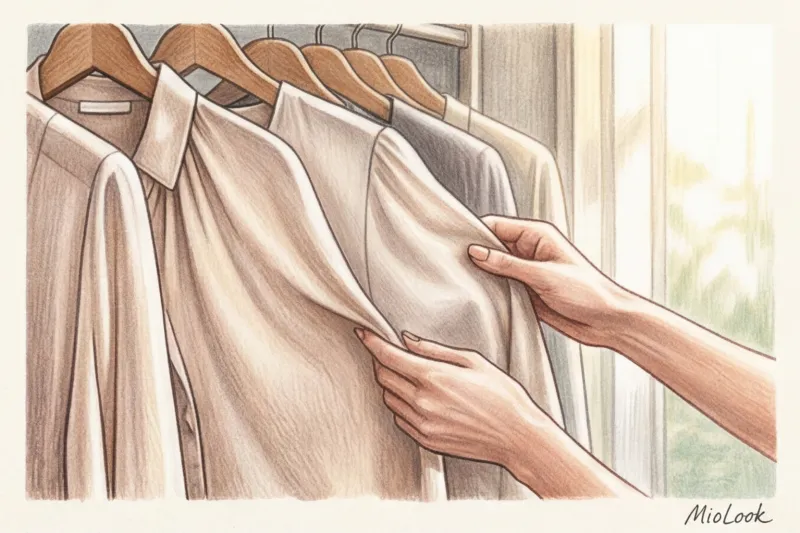
The next step is the slip test. There's a popular myth in the fashion world that real silk should be incredibly, extremely slippery. This is a big mistake! Natural silk has microscopic, natural irregularities. Run your fingers over the surface with light pressure. You should feel a very delicate, velvety resistance. If your hand glides over the fabric like skates on freshly poured ice, encountering absolutely no resistance, it's 100% synthetic.
And finally, my favorite technique is the sound test. Among professional tailors and stylists, this phenomenon is called the "scroop." Take two layers of fabric (for example, the hem of a dress) and gently but firmly rub them together near your ear. Natural fabric will produce a quiet, dry, and very distinctive crunch, strikingly reminiscent of footsteps on freshly fallen, frosty snow. This is the sound of sericin—the residual silk glue within the fibers, which cannot be imitated by any chemical process. Polyester will slide absolutely silently when rubbed.
Organize your investment wardrobe
Found the perfect silk blouse and convinced of its quality? Add it to your digital capsule wardrobe. MioLook's smart AI stylist will help you create dozens of stylish looks using your best pieces for any dress code.
Crease Test: Exposing SyntheticsThe final step of our express examination in the boutique is a deformation test. It's an excellent way to distinguish natural fabrics not only from polyester, but also from viscose (which, being a cellulose fiber, is often disguised as a noble texture on price tags under the clever label "rayon").
Choose a small, inconspicuous area of the garment—for example, the very edge of a sleeve or the lower back. Clench the fabric in your fist, squeeze as hard as you can, hold for about five seconds, and then release quickly. Now carefully observe the result.
Natural silk doesn't have a rigid memory effect, so it won't stay perfectly smooth. However, any creases that do appear will be soft, rounded, and smooth. Moreover, under the influence of the residual warmth of your hands and the weight of the fabric, these wrinkles will gradually smooth out before your eyes.
Cheap viscose will fail this test with a vengeance: it will wrinkle completely, covered in sharp, deep creases with sharp edges, like crumpling a sheet of paper. Restoring it to a presentable state will be impossible without a powerful steamer. Polyester, on the other hand, will behave completely differently: it will spring out of your fist like a spring and instantly flatten out, leaving no trace of your grip. Plastic always strives to return to its original flat shape.
Home Testing Methods: From Burning to Chemicals (for Vintage and Second-Hand)
A few years ago, at an antique market in Florence, I came across a stunning scarf of a deep emerald hue, completely unmarked. The seller insisted it was a rare Italian vintage and was asking €45 for it. To verify its authenticity, with his permission, I carefully pulled a tiny thread from the fringe and held a lighter flame to it. The distinctive aroma dispelled all doubts—it was a true gem. If you're hunting for vintage finds or are reviewing your own wardrobe (by the way, it's convenient to immediately add such investment pieces to MioLook (to see the percentage of fine fabrics in your closet), physical and chemical experiments will become your best truth detector.
The most accurate and fastest way to find out the truth is burn test Since natural silk consists of animal protein (fibroin), it behaves in a completely predictable manner in fire. Safety rules: Always test over a ceramic saucer or metal sink, holding the thread with long tweezers. Silk doesn't ignite. It smolders slowly, emitting a sharp, unmistakable smell of scorched hair or a burnt bird feather. As soon as you remove the source of ignition, the burning stops immediately. The remaining ash is black, brittle, and crumbles into fine dust with the slightest friction of your fingers.
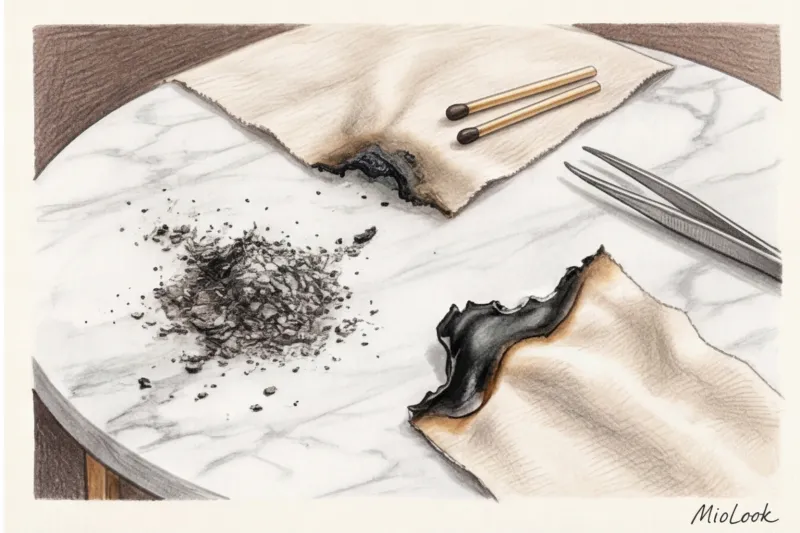
Modern imitations in fire immediately reveal their industrial origin:
- How polyester burns: Being a synthetic derivative of petroleum products, it melts rather than burns. You'll immediately see black smoke and smell a pungent, chemical plastic odor (sometimes with a slightly sweet tint). The flame often continues to burn even after you remove the lighter, and a hard, molten ball forms at the end of the thread, which is impossible to crush with your fingernails.
- How viscose burns: This artificial fiber is made from wood cellulose. When exposed to fire, viscose ignites rapidly and burns brightly, almost like a dry autumn leaf. You'll smell the familiar scent of burnt paper or a campfire, and after combustion, all that remains is a light, almost invisible, light-gray ash.
But what if you have a tricky blended fabric (for example, 70% viscose and 30% silk) and burning it produces a tangled result? For the most meticulous, there is an uncompromising chemical solubility test — a favorite technique among textile technologists. You'll need regular liquid bleach based on bleach (sodium hypochlorite). Cut a microscopic piece of fabric from an inside seam and dip it in the concentrated solution. Natural silk will completely dissolve in the bleach in 15 minutes to an hour, turning into a yellowish, cloudy substance with no sediment. Polyester, viscose, or cotton, however, will withstand this aggressive chemical attack and float on the surface completely unharmed.
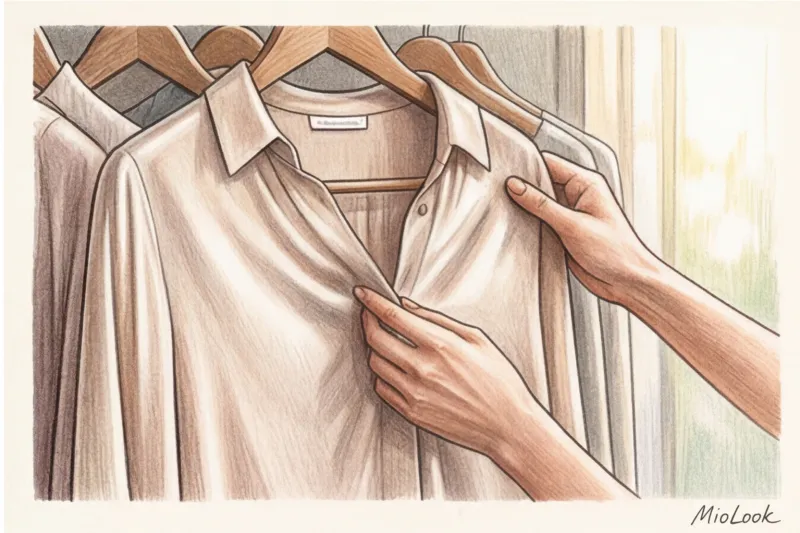
Rayon: When are polyester, viscose, and cupro okay?
Let's be honest: we've become so accustomed to demonizing anything that isn't 100% natural that the very word "synthetic" sends shivers down many people's spines. When new clients come to me with a strict demand for "exclusively natural fabrics," I often have to give them a quick education. The fact is, in today's premium fashion industry, there's a huge gap between cheap mass-market products and high-tech fibers.
The main mistake that even experienced shoppers make is confusion between artificial And synthetic materials.
- Synthetics (polyester, nylon, acrylic) is made from petroleum products. In budget versions, it's practically non-breathable, creating a greenhouse effect on the body, and is highly static-prone.
- Artificial fibers (Viscose, Modal, Cupro) are made from natural raw materials—wood pulp or cotton linters. While they undergo complex chemical treatment, they retain their key natural properties: excellent breathability and moisture absorption.
Take, for example, cupro, affectionately known among professional stylists as "copper silk." It's an absolute favorite of Italian designers. It's made from the finest pile that envelops the cotton seeds. The result is stunning: the fabric breathes as impeccably as premium Egyptian cotton, but flows, drapes softly, and feels cool on the skin like the most expensive silk. In the hot Mediterranean climate, a cupro slip dress is just as comfortable as linen, yet looks luxurious and classy.
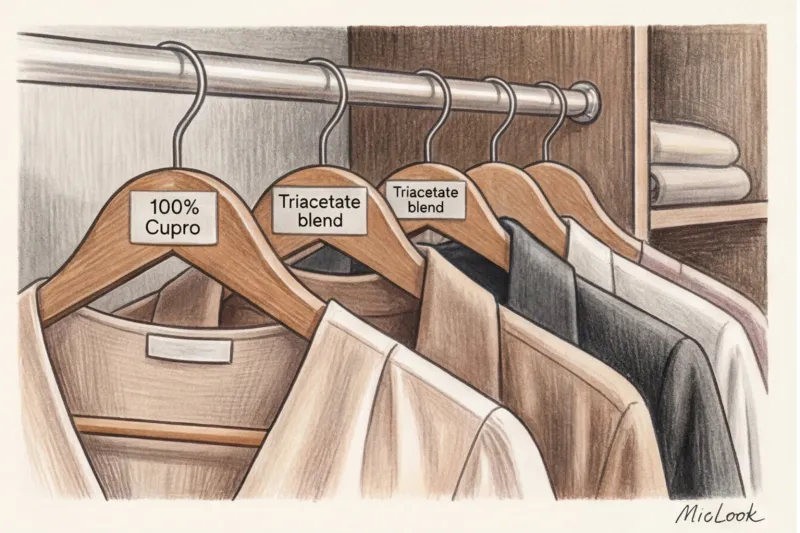
Now, let me share my key, and rather counterintuitive, insight. I regularly discourage my business clients from buying 100% silk trousers for business trips. Yes, it may sound strange coming from a personal stylist, but trust me: after a six-hour flight, your silk palazzo pants will look like you slept in them.
My secret weapon for business travelers is premium triacetate (Japanese, for example, from the high-tech Mitsubishi factory, is especially prized). Trousers, jackets, or flowing trench coats made of high-quality triacetate can cost between €400 and €800, which is absolutely comparable to the price of natural silk. So why do we knowingly pay so much for something that's not silk?
"The secret to a smart wardrobe isn't blindly adhering to the "100% natural" label, but choosing the right texture for the task at hand. For a relaxed dinner on the Riviera, silk. For a transatlantic flight and a business meeting, triacetate."
It's all about the physics of the fabric. Triacetate holds its shape phenomenally, practically doesn't wrinkle when sitting for long periods, doesn't stain with the slightest drop of water (unlike fickle satin silk), and has a deep, elegant matte sheen. You can step off a plane in Milan and head straight to a board meeting looking like you just left your hotel room. To visualize such combinations and pack a flawless travel capsule in advance, I recommend digitizing your items through MioLook app - this really helps to combine complex textures without lengthy fittings.
Access to MioLook for €0.99 — one-time payment
Start creating perfect looks with the help of artificial intelligence and pack your travel capsule without unnecessary stress.
Get access — €0.99 onceSo, when you're researching life hacks for identifying genuine silk in the store, remember: the goal isn't always to buy it. Understanding the differences between fibers gives you true freedom of choice. Sometimes, a well-chosen alternative—heavy triacetate for a suit or breathable cupro for a summer top—is a much smarter investment, saving you dozens of hours of steaming and dry cleaning.
Silk in an expert's wardrobe: how texture influences perception and photogenicity
Camera lenses and theater spotlights are utterly merciless when it comes to clothing compromises. Last year, while curating wardrobes for top executives at a series of major technology conferences, we conducted mandatory test runs on stage. And here, a crucial property of fabrics became evident: polyester produces a harsh, cheap white sheen under bright studio lighting. On video, this synthetic sheen looks as if the fabric is coated with a thin plastic film, which often ruins color correction and cheapens the look. Natural silk, by contrast, absorbs and softly diffuses harsh light, creating a delicate, vibrant glow around the silhouette.

That's why a silk blouse worn under a tailored wool jacket isn't just aesthetically pleasing, but a strategic tool for a business dress code. My favorite formula, "structured blazer + silk top + palazzo pants," works flawlessly. The combination of the jacket's rigid structure and the fluid texture of the silk conveys the perfect balance: you're competent and composed (the jacket), yet flexible and empathetic (the silk). Furthermore, the right pearlescent shade near the face acts as a professional lightbox, illuminating the skin and erasing signs of fatigue after a long flight. A fresh, confident expert automatically inspires more trust in the audience.
But let's be honest: this noble fabric has one insidious flaw that can turn public speaking into a nightmare. Silk instantly darkens with the slightest drop of moisture. Sweat stains on a luxurious €250 blouse become visible even before you reach the microphone, due to nervousness or the heat in the studio.
As a practicing stylist, I've developed a strict safety protocol for my speaker clients. If you plan to perform or be photographed wearing silk, adhere to these three rules:
- The right cut makes all the difference: Absolutely avoid set-in sleeves that fit tightly under the armpits. The safest styles for stage performance are dolman sleeves, loose bias-cut tops, or classic oversized shirts that don't touch the risk area.
- Life-saving layering: Use silk as a base layer. A lingerie-style top or sleeveless blouse under a heavy blazer is the perfect layering option. It looks classy, and the jacket will reliably conceal any unexpected situations.
- Secret weapon - inserts: If the dress code requires only a blouse (for example, an elegant ascot), be sure to use disposable dress shields. These are discreetly attached to the inside seam of the armhole, protecting the fabric and ensuring a flawless appearance throughout the event.
To avoid panic before important business trips, I strongly recommend creating "safe" performance capsules in advance. Keep your proven stage personas in MioLook app When you have a digitally tested wardrobe at your fingertips, you can fully concentrate on your speech, confident that you look flawless.
Delicate Fabric Care Guide: Saving Your Investment
You just bought a flawless silk slip for €300, and it fits you like a second skin. The worst thing you can do next is throw it in the washing machine with your cotton t-shirts and douse it with your usual detergent. To ensure your investment in premium fabrics pays off for years to come, you need to understand the basic chemistry of fabrics.
The main thing to remember: natural silk is a protein It's based on fibroin, whose structure is incredibly similar to human hair. Now look at the ingredients in your regular laundry detergent or capsule. They'll probably list enzymes ( enzymes ) — proteases and lipases. Their primary function in household cleaning products is to mercilessly break down protein stains like blood, sweat, and food residue. The problem is that enzymes can't distinguish between an ice cream stain on a collar and the fabric itself. During washing, they literally "eat" the fibers of your garment. The aggressive alkaline environment breaks down protein bonds, causing silk to become dull, thinner, and covered in micro-tears after just two or three cycles.
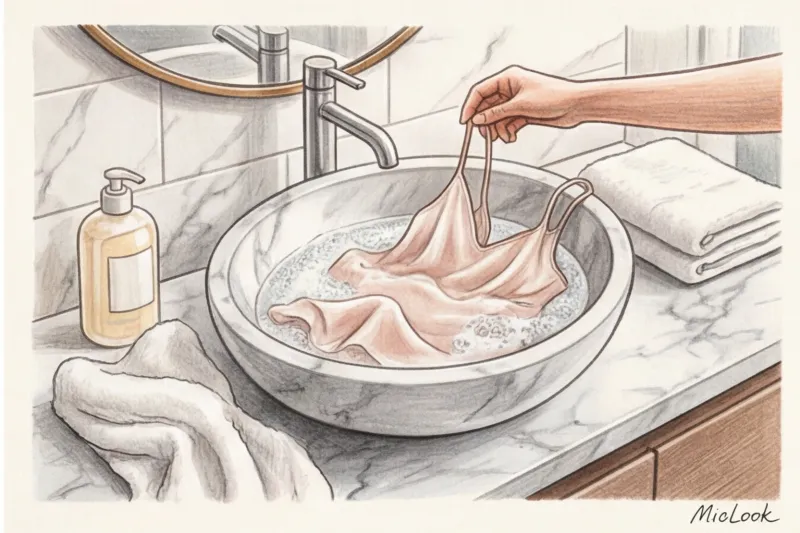
I hear your question: "Maybe I should just dry clean everything then?" This is one of the most common misconceptions, which I regularly dispel. Spoiler alert: frequent commercial dry cleaning is detrimental to delicate fabrics. Harsh solvents like perchloroethylene strip the silk threads of their natural oils. Over time, the fabric becomes brittle, over-dried, loses its signature flowing elasticity, and begins to resemble stiff paper.
Gentle home washing isn't a compromise; it's the best way to prolong the life of silk. My professional life hack: if you don't have a special, expensive, pH-neutral silk gel on hand, use a high-quality sulfate-free baby shampoo. It will cleanse the protein fibers as gently as baby hair, preserving their elasticity.
Proper washing and drying without surprises
Water isn't the enemy of silk, as long as you follow a strict protocol. The temperature shouldn't exceed 30 degrees Celsius (the water should feel slightly cool to your hands). The most common mistake that leads to shrinkage is temperature fluctuations. If you wash an item in warm water and then rinse it in ice-cold water, the fibers will experience shock and shrink. The temperature must be absolutely uniform throughout all stages.
And now my favorite secret for preserving that pearly shine we talked about earlier. During the final rinse, add just a teaspoon of white vinegar to the water. The acidic environment neutralizes any remaining detergent and smooths the microscopic scales of the silk thread. The fabric will instantly regain its smoothness and begin to reflect light again.
The drying process requires no less delicacy:
- No twisting: Wet silk loses up to 20% of its strength. Simply remove the item from the water and let it drain.
- Roll technique: Place the damp item on a dry terry towel, roll them together into a tight roll, and press gently. The towel will absorb excess moisture.
- Horizontal drying: Lay the item out on a dry surface away from direct sunlight. Drying it on a radiator or heated towel rail is strictly prohibited (heat "bakes" the protein, causing the fabric to permanently yellow and become stiff).
Your ideal image begins Here
Join thousands of users who look flawless every day with MioLook. Digitize your wardrobe and plan the care of your premium items.
Get access — €0.99 onceIroning and storage: to make silk last for decades
When it comes to ironing, silk requires impeccable timing. The ideal moment is when the fabric is still slightly damp. Iron strictly from the reverse side at the lowest temperature setting ("Silk").
Many people ask me about steamers, as they seem safer. I urge extreme caution: steamers pose a hidden risk to smooth satin silk. If the device accidentally spits a drop of boiling water, it will leave a clear water mark on the fine satin weave, which cannot be removed without completely washing the entire garment. If you use a steamer, hold the nozzle at least 15 centimeters away from the fabric and always use a protective nozzle.
And finally, storage. Please remove the plastic bags you return items in from the dry cleaner! Silk needs to breathe. Microscopic condensation accumulates in plastic, which can cause yellow stains and thread damage. Use only cotton bags. To prevent the shoulders of blouses and dresses from stretching, invest in soft, fabric-covered hangers.
To avoid confusion about care instructions and washing delicate items by mistake, I strongly recommend digitizing such purchases. You can add your investment items to MioLook smart wardrobe , tag them as "hand wash," and track their wear history. This will prevent you from washing them too often and help keep your wardrobe looking premium for decades to come.
Pre-purchase checklist: investing wisely
According to statistics from the consulting firm McKinsey (2024), over 60% of mass-market clothing ends up in landfills within the first year of purchase. With fine fabrics, the math works differently: a high-quality item can last for decades, reducing its cost per wear to literally pennies. However, to make the investment worthwhile, simply knowing how to read labels isn't enough. Knowing How to distinguish natural silk Distinguishing a product from a cleverly disguised counterfeit is only the first step. A true examination involves a comprehensive assessment of the product.
Let's condense all our knowledge into a short action plan that I make every client learn. Right in the boutique, without leaving the rail, take a quick four-step test:
- Look at the light: Look for a deep, pearly glow that shifts in hue as you angle it, rather than a flat, white highlight.
- Touch it: Run the cloth between your fingers, feel the slight resistance and that microscopic “crunch” (scroop).
- Warm up: Squeeze the edge of the product between your palms. The genuine protein material will warm up to your body temperature in exactly two to three seconds.
- Compress: Tightly crumple a piece of fabric (preferably at the hem) in your fist. If you still have hard, paper-like creases, it's viscose. If the fabric smooths out perfectly, it's polyester. Natural thread will leave soft, smooth shadows that will gradually straighten out.
If the authenticity test is passed, we move on to the stage where many modern mid-range brands fail—evaluating the seams. Natural silk thread is incredibly loose and delicate. I strongly advise against purchasing silk items with inner edges finished with a regular overlocker. The only sign of truly premium quality is a closed French seam, where the edge of the fabric is hidden inside the seam itself. Also, pay attention to the size of the stitching: factories skilled in working with complex textures use special micro-needles and set their equipment to 4-5 stitches per centimeter. See the gaping holes left by a thick needle along the stitching? Leave this item in the store; it will inevitably "creep" after the first wash.

My final piece of advice for stylists concerns the creation of the basics themselves. Over the years, I've developed a strict top-three silk pieces that are a 100% essential in any woman's wardrobe, regardless of age, profession, or body type.
1. Lingerie style top (Camisole). This bias-cut V-neck sweater is a total chameleon: by day, it takes the edge off a heavy office blazer, while by night, paired with red lipstick and a chunky knit cardigan, it creates flawless, relaxed chic.
2. Classic men's cut shirt. Look for a fabric count of at least 19 momme—the fabric shouldn't be see-through. I have an ivory shirt from Equipment in my personal wardrobe that I bought eight years ago for $280. I've worn it over two hundred times, and it now costs just over a dollar per wear. A $40 polyester blouse would cost me more, as it would lose its shape after a season.
3. Square scarf (90x90 cm). A perfect fit, crafted from dense silk twill, it can be used as an accent on a structured bag handle, as a belt on summer trousers, tied as a top on vacation, or worn on the head in a Grace Kelly-inspired style.
To clearly see the profitability of such purchases, I recommend adding them to your digital profile on MioLook The app will help you calculate the actual Cost Per Wear for each item and, more importantly, automatically generate dozens of innovative looks, incorporating the new silk texture into your everyday capsule wardrobe.
Treat fine fabrics not as a capricious luxury for special occasions, but as a reliable foundation for your style. After all, the confidence that comes from the touch of real silk against your skin cannot be imitated by any synthetic alternative.
Guide Chapters
How to restore shine to silk: saving fabric after washing
Natural silk often loses its luxurious appearance due to improper care. Learn how to professionally restore your favorite item and bring back its pristine shine.
Types of silk fabric: how to distinguish natural silk
The label "100% Mulberry silk" doesn't tell you anything about the fabric's properties. We'll explore textures and weaves to help you choose the best fabric.
How to distinguish silk from viscose: safe testing methods
Setting fire to threads in the fitting room is a bad idea. We'll share reliable ways to distinguish natural silk from viscose without destructive testing.
How to Store Silk Items: Care and Protection Tips
Buying expensive silk is only half the battle. Learn the key rules for storing delicate fabrics to prevent your items from yellowing and ensure they last for years.
How to recognize silk in a second-hand store by touch and sight
Forget the lighter tests! Let's learn how to spot genuine vintage silk among polyester using only sight, sound, and touch.
How to remove stains from silk: remove sweat, oil, and makeup
Got foundation stains or a grease stain on your favorite silk blouse? We'll tell you how to safely clean the delicate fabric without damaging it.
The Difference Between Silk and Satin: A Stylist's Secrets
Many people confuse silk with satin and overpay for cheap polyester. We explain the real difference and how to choose the perfect piece for your wardrobe.
Do silk sweaters make you sweat in the summer? The whole truth from a stylist.
Natural silk is great for cooling in the heat, but it has its own secrets. Learn how to choose the right silk clothing for summer to avoid embarrassing stains.
Silk pillowcase: benefits for facial skin and hair
Why don't expensive creams work if you sleep on cotton? We explore how natural silk helps preserve youthful skin and healthy hair.
How to Iron Silk: Safe Ironing Techniques and Stylist Secrets
One wrong move with an iron can ruin an expensive item. We're sharing stylist secrets for safely ironing silk without creasing or losing its shine.
How to Test Silk with a Lighter: An Accurate Authenticity Test
Modern polyester is difficult to distinguish from natural silk by eye. Learn reliable methods for verifying fabric authenticity from an experienced stylist.
How to wash silk: to prevent the fabric from shrinking and losing its shine
Natural silk can easily be ruined with just one wash if you don't understand the fabric's physiology. Learn scientifically proven care tips from your personal stylist.
Frequently Asked Questions
What dress code suits you?
Find out what style of clothing for work and life perfectly reflects you
About the author
Unlock MioLook
for €0.99
Start creating perfect outfits with artificial intelligence
Get access — €0.99 onceRelated Articles
How to Identify Real Silk: A Guide to Flowing Fabrics
Forget about burning threads in boutiques. We'll tell you how to easily inspect ...
Types of silk fabric: how to distinguish natural silk
The label "100% Mulberry silk" doesn't tell you anything about the fabric's prop...
The Difference Between Silk and Satin: A Stylist's Secrets
Many people confuse silk with satin and overpay for cheap polyester. We explain ...
Is silk too hot to wear in summer? Stylist advice.
Is it true that natural silk can create a sauna-like effect? We'll explore the p...