The Myth of "Setting the Thread on Fire" and the Reality of Modern Boutiques
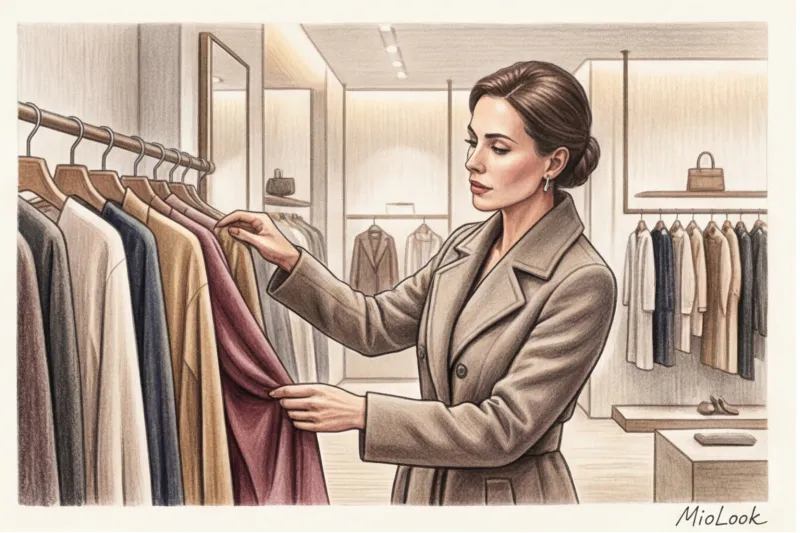
"Do you have a lighter?"—this innocent question from a client of mine once sent the consultants at the Max Mara flagship boutique into a panic. After reading online advice, she decided to test the composition of a silk blouse costing almost a thousand euros in the most drastic way possible. Of course, destructive fire tests in the fitting rooms of luxury stores are absurd. No boutique would allow you to pull threads out of seams and stage a fire show.
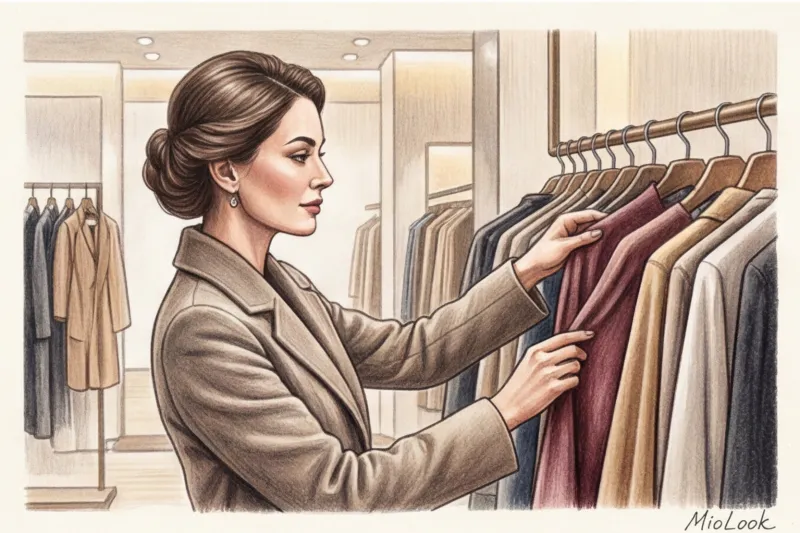
The internet is full of outdated instructions on how to distinguish silk from viscose using matches. But let's be realistic: when you're standing in a store or accepting an order from a courier, you need clean, non-destructive methods of evaluation. We've covered the basic principles in more detail in our The Complete Guide: How to Identify Natural Silk: Stylist Tips.
Over 12 years of working in luxury retail, I've realized one thing: technology for creating synthetic fibers has advanced so far that even an experienced buyer can be visually deceived. Modern, high-quality viscose can imitate the texture of crepe, while polyester can mimic flowing satin. Professionals have long abandoned lighters in favor of organoleptic analysis: we evaluate light refraction, thermal conductivity, and fabric flexibility. These skills are what will save you from buying a cheap imitation at the price of the original.
The Anatomy of Shine: How to Distinguish Silk from Viscose by Eye
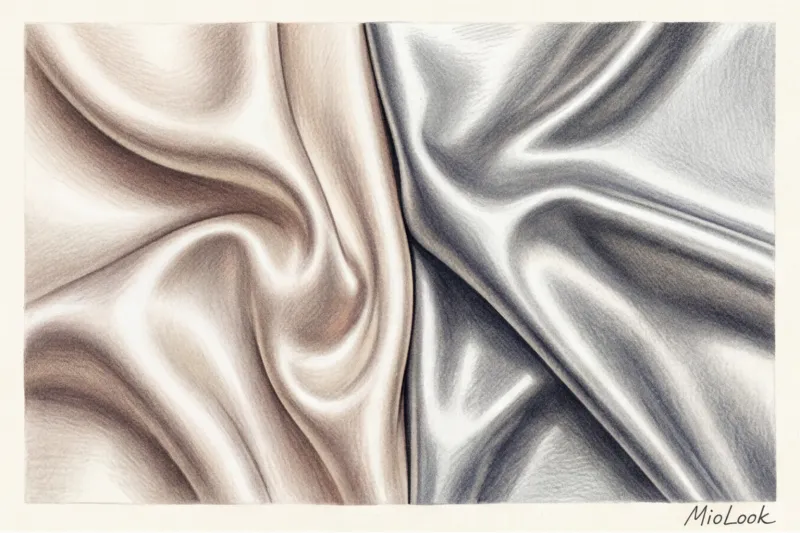
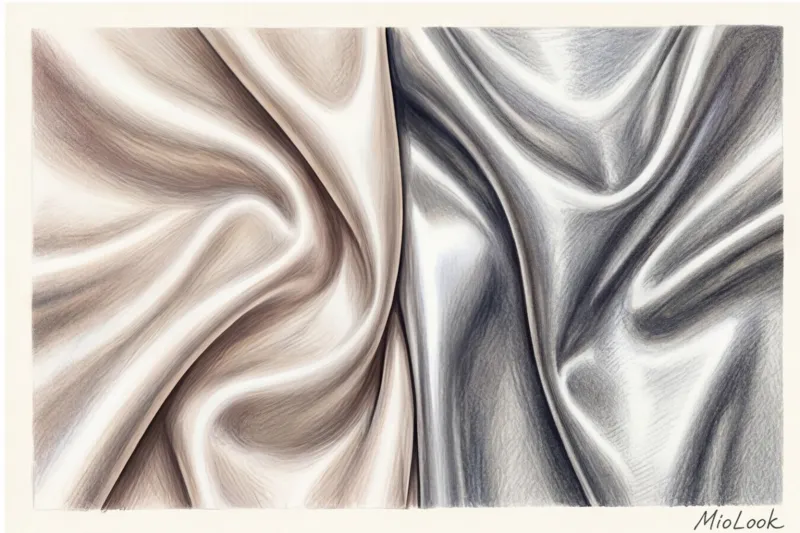
The first thing our eyes react to is shine. But shine comes in different forms. According to research by the Textile Institute (2023), differences in light reflectivity are rooted in physics. If we look at a section of natural silk thread under a microscope, we'll see a triangular prism. Light hitting it is refracted and scattered at different angles. In the professional world, we call this "pearl scattering".
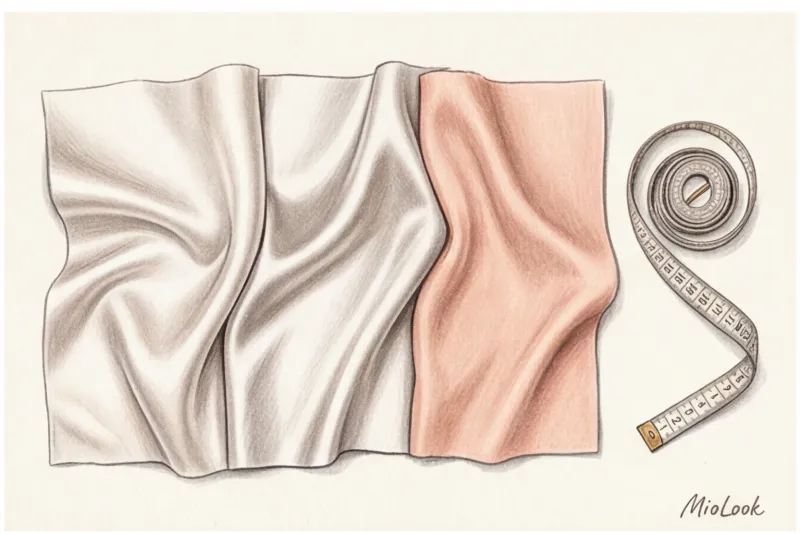
Silk doesn't just shine—it glows from within, changing hue depending on the angle. Its shadows always have depth. Viscose, on the other hand, is shaped like a perfect cylinder. It reflects light flatly and linearly. The sheen of viscose, and especially polyester, is always sharper, metallic, and glassy.
Here's an important point: fitting room lighting can play tricks on you. Harsh halogen lighting from mass-market stores will make even burlap shine, while soft LED panels with a high color rendering index (CRI>90) in premium boutiques highlight the refined glow of natural fibers. My advice: always ask the sales assistant to let you approach a window. Only in natural daylight does the difference between the flat sheen of viscose and the three-dimensional shine of silk become apparent.
Your perfect look starts here
Join thousands of users who look flawless every day with MioLook. A smart AI stylist will help you put together a capsule wardrobe of the perfect fabrics.
Get access — €0.99 onceTactile examination: temperature, plasticity and sound
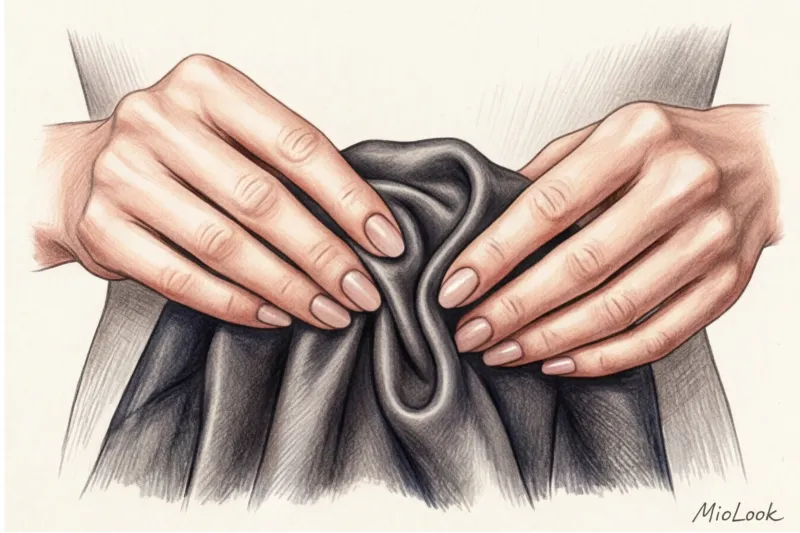
Our hands are a much more precise instrument than our eyes. Forget about simply stroking the fabric. Buyers use cheek test Or they apply the cloth to the inside of the wrist. Why? These are the areas with the thinnest and most sensitive skin.
Silk has phenomenal thermal conductivity—it warms up to your body temperature in just 1-2 seconds, blending seamlessly with your skin. Viscose, on the other hand, will stay cool for significantly longer, and polyester will create a greenhouse effect. This is why natural silk is called a "second skin."
The second test is acoustic. Squeeze the edge of the item in your fist near your ear. Natural silk will produce a subtle but characteristic creaking or crunching sound, which in English terminology is called scroop (from the combination of the words scrape and slip). Viscose will wrinkle absolutely silently.
But I must make a disclaimer here: this method does NOT work on sandwashed silk, which has undergone a strong enzyme treatment to give it a velvety feel. It loses its signature crunch.
Hidden Features of Drapery
Observe how fabric behaves dynamically. Take a blouse by the shoulders and shake it gently. Natural silk flows heavily, like liquid mercury. Its folds are always rounded and fluid, instantly springing back into place after movement. Viscose fabric of the same density will form lighter, slightly papery or wooden folds. Silk literally comes alive on the body, following your every step, while synthetic silks have a life of their own, separate from you.
Cupra – a noble compromise or an expensive fake?
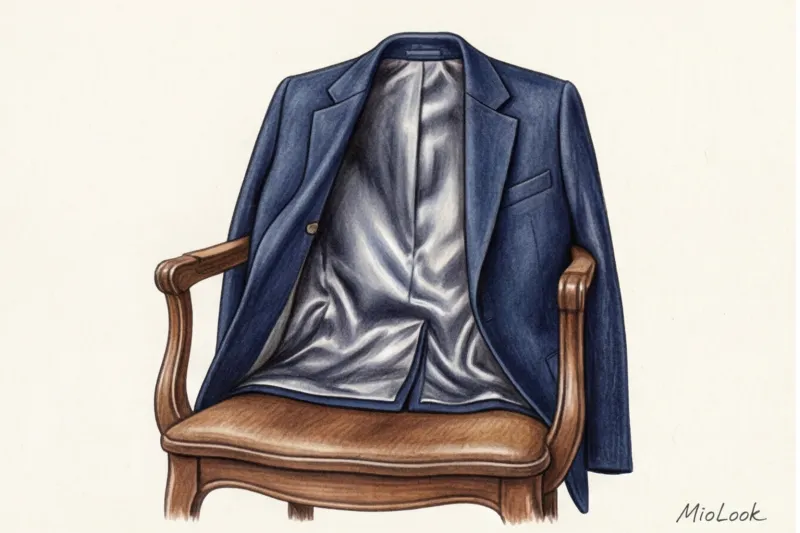
Clients often complain: "I paid 3,000 euros for a Brioni suit, and the lining is made of some kind of copper! Why isn't it silk? Is it a scam?" This is one of the biggest misconceptions in the fashion world, and one I have to combat.
Cupra (a patented fiber often used in the premium segment) Bemberg Cupra is not a cheap synthetic. It's an artificial, but not synthetic, fiber made from the finest cotton linter that envelops the cotton seeds. Its tactile properties resemble "boiled silk"—it has a stunning velvety surface.
Why do titans like Tom Ford, Brioni, and Max Mara deliberately use cupra in the lining of their jackets and coats? It's all about physics. Cupra is superior to silk in its hygroscopic properties: it absorbs moisture twice as fast and instantly wicks it away. Silk, on the other hand, quickly deteriorates from sweat (the threads literally rot) and becomes covered in indelible yellow stains. In multi-layered looks, high-quality cupra is a technological masterpiece, justifiably commanding a high price.
Access to MioLook for €0.99 — one-time payment
Start creating iconic looks with AI. Upload your wardrobe and get ready-made combinations.
Get access — €0.99 onceThe Art of Reading Labels: How Brands Hide the Truth
Mass-market marketers are masters of illusion. They know that the word "silk" sells products three times faster. That's why mysterious materials that have nothing to do with the silkworm appear on shelves.
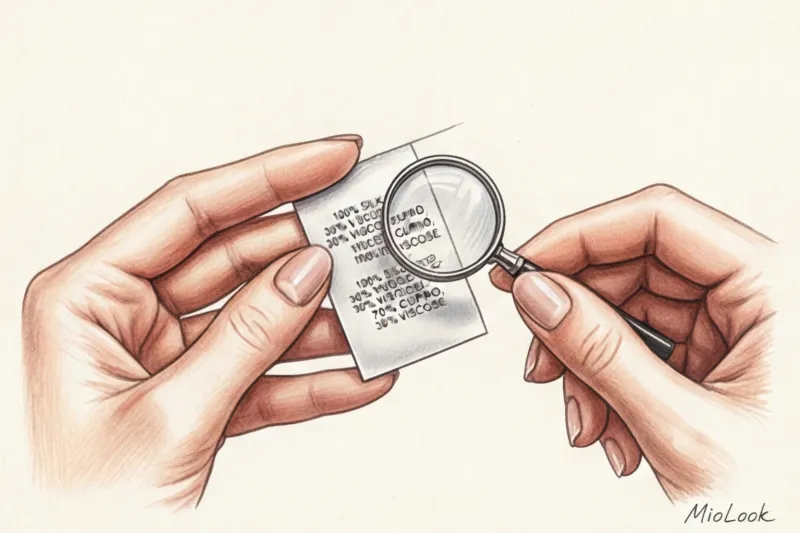
The most common trap is silk-armani Sounds luxurious, right? It's actually 100% polyester with a special satin weave. The same goes for the lettering. Silky (silky) or Silk-touch (with a silky touch). This isn't the thread composition, but a description of the fabric's texture. To avoid being misled by wordplay, look for only clear, international designations on the sewn-in side label: Seta (Italian), Soie (French), Silk (English), or Seide (German).
Blends are a different story. Is it worth buying a viscose blouse that proudly boasts "5% Silk"? My answer: no, not if they're asking a significant premium for it. According to textile technologists, adding less than 10% silk to a viscose or cotton base doesn't change the physical properties of the fabric. This is done solely to legally display the word "silk" on the front label.
Wardrobe Investments: When It's Really Worth Paying Extra for Silk
Building a status wardrobe always requires budgeting wisely. You can read about how to build a basic wardrobe without spending too much in this article. How to Look Expensive: Secrets of a Status Wardrobe Not every item in your closet has to be silk.
I always recommend my clients use the cost-per-wear formula. Let's do the math. A basic silk shirt costs about $300. With proper care, you'll wear it at least 50 times over a couple of years. That's $6 per wear. A $50 polyester equivalent will lose its shape, become clogged, or simply absorb sweat odor so strongly that you'll throw it out after three washes. That's $16 per wear. The cheaper item costs more.
- What we invest in (only natural silk): Slip dresses, lingerie tops with thin straps, classic pussy-bow blouses, and scarves. These items are in direct contact with the skin and shape the silhouette.
- Where viscose and cupra are preferable: wide summer palazzo pants (silk stretches out too quickly at the knees), casual shirt dresses (viscose is easier to iron), linings for jackets and trench coats.
Checklist: 5 Steps to Check Fabric Before Buying
Next time you're at the mall and a beautiful flowing dress catches your eye, just follow this buyer's algorithm:
- Appreciate the shine. Move to a window or out of direct light from lamps. Look for an inner pearlescent glow, not a flat metallic glint.
- Conduct a temperature test. Place the cloth on your wrist or cheek. Time it for 2 seconds. Does it match your body temperature? Excellent.
- Listen to the fabric. Pinch a corner (preferably closer to the hem) near your ear. Listen for the soft crunch of fresh snow.
- Check the plastic. Lightly shake the garment on the hanger. The fabric should flow heavily and smoothly, like water.
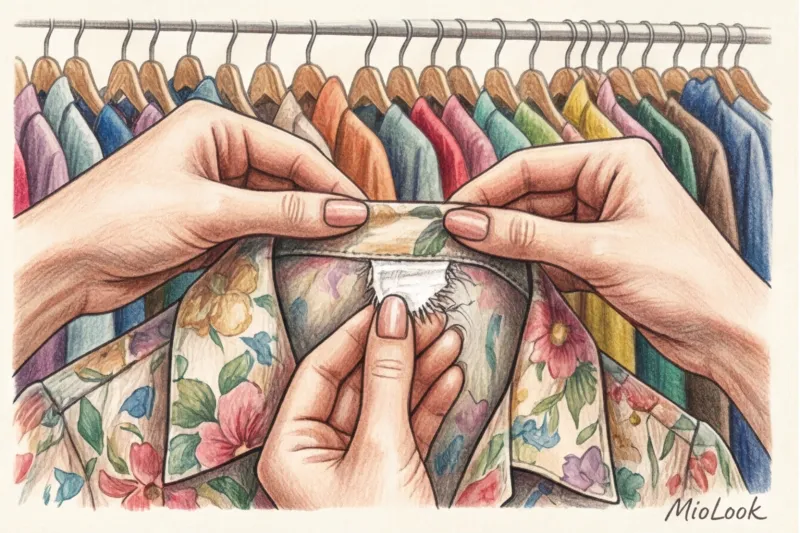
- Find the sewn-in label. Ignore the cardboard tags with fancy fonts. Your main identification is the white nylon tape in the left side seam of the garment.
Natural silk is more than just a stitch in the composition. It offers a completely different feeling on your body, a different level of comfort and self-confidence. By learning to read fabrics with your fingertips, you'll forever protect your wardrobe from marketing counterfeits.