Have you ever noticed how one wrong move with an iron can transform a luxurious, expensive blouse into something resembling cheap polyester? You remove the item from the ironing board and discover that the noble pearly shine has disappeared, the fabric has become stiff, and telltale flat streaks have appeared along the seams. While researching the issue, How to iron silk Most women are looking for a way to simply get rid of wrinkles. But as a stylist with 14 years of experience, I think differently. Ironing high-end fabrics isn't a household chore. It's the only way to preserve that premium texture we pay for.
We have written in more detail about the physics and properties of this amazing fabric in our A complete guide to identifying genuine silk There, I discuss in detail why investing in such things always pays off. But for this investment to last for years, it needs to be properly cared for.
Today I'll share some insider tailoring techniques with you and dispel a very dangerous myth about steamers that has already ruined several of my clients' dresses.
Why Silk Is So Easily Ruined (and How to Avoid It)
To understand how to work with silk, you need to be a technologist for a second. Why does the fabric lose its "expensive" luster when overheated? The secret lies in physics.
According to the International Silk Association's specifications, the core of natural silk is the protein fibroin. Its chemical structure is incredibly similar to human hair. This is why natural silk burns, emitting a burnt horn smell, rather than melting like synthetics. And just as you can burn your hair with a straightening iron without heat protection, you can literally "cook" the protein fibers of silk with superheated metal.
"The magic of this high-status fabric lies in the triangular cross-section of the silk thread, which acts like a prism, refracting light. If you overheat the fabric, the protein deforms. The prism is destroyed. The silk becomes dull and lifeless forever."
But the main rule that is often forgotten is: Preparation for ironing begins at the stage of proper drying Overdried silk with stiff creases is the main reason why an expensive item is consigned to the back of the closet. If you leave a blouse to dry on a radiator or in direct sunlight, it will be virtually impossible to smooth it out without damage. Silk should be ironed only when slightly damp.
How to Iron Silk: A Step-by-Step Guide from a Stylist
When I help clients make up Capsule Wardrobe: A Complete Guide to Creating One For items that require attention to detail, we always discuss care for basic items separately. And the first thing I make them do is throw away the spray bottle when working with silk.
No spot spraying! Drops of water leave sharp edges and stains, especially on smooth satin weave. If the garment is too dry, use a tailor's secret: towel-drying.
- Take a clean terry towel and slightly dampen it (it should be barely damp, not wet).
- Wrap a dry silk item in it like a roll.
- Leave it for 15–20 minutes. The fabric will absorb just enough moisture for the iron to glide perfectly.
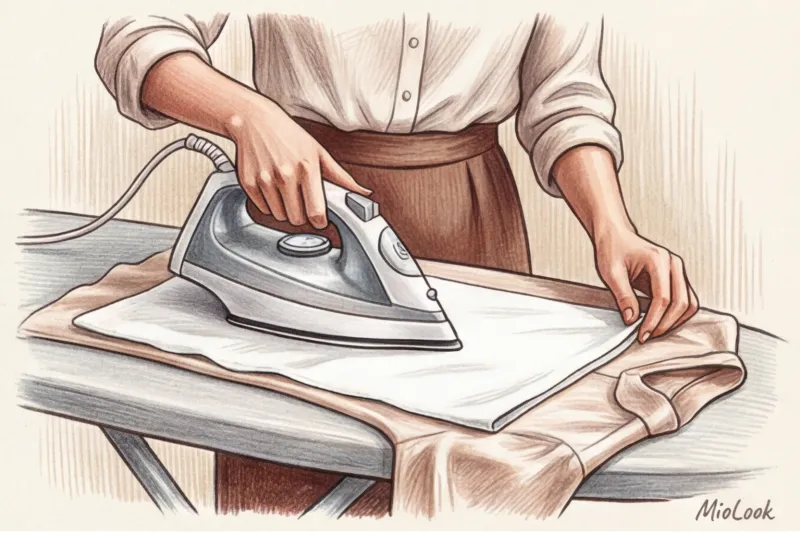
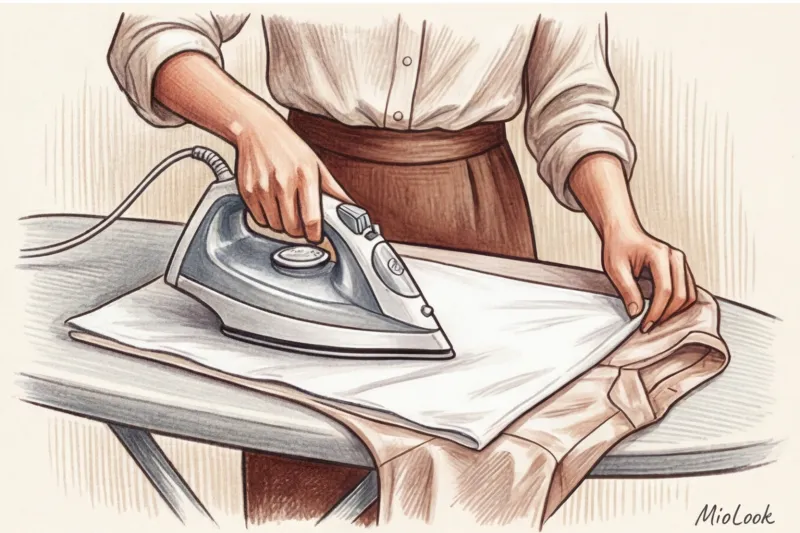
Choosing an iron. Forget about cheesecloth—its mesh structure will imprint on delicate fabric when pressed. Use only a piece of smooth white cotton fabric (cambric or heavy chintz).
Technique of movements. Never press hard on silk, as you would with bed linens. Instead, move the iron back and forth. Lower it, hold it for a few seconds, lift it, and move it to the next section. Move strictly along the grain (from top to bottom) to avoid stretching the garment horizontally.
Temperature Controls: Reading Labels Correctly
The exact temperature limit for silk is 110 to 150°C. On modern irons, this is the "Silk" setting or the "1-2 dot" mark. Never blindly trust the thermostat on an older iron.
Before lowering the platform to the center of the blouse, test it on an inconspicuous area. The inside side seam, close to the hem, is ideal. If the fabric doesn't stick, doesn't darken (a sign of scorch marks), and straightens easily, the temperature is correct.
Ready to get started?
Try the free plan—no commitments required. Start creating perfect looks with AI.
Get access — €0.99 onceSteamer vs. Iron: Which is Better for Natural Silk?
This is where the counterintuitive insight sometimes gets me criticized by appliance salespeople. A common piece of advice from the internet reads: Always steam silk, it's 100% safer than ironing. This is a dangerous myth.
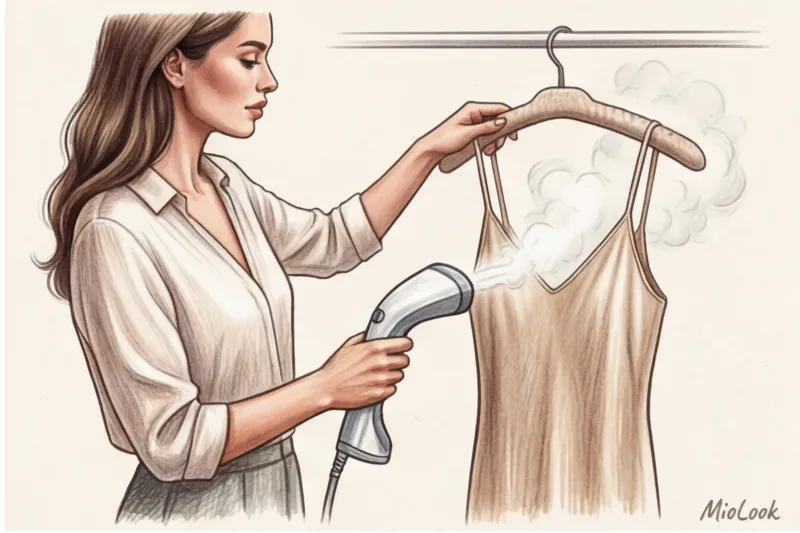
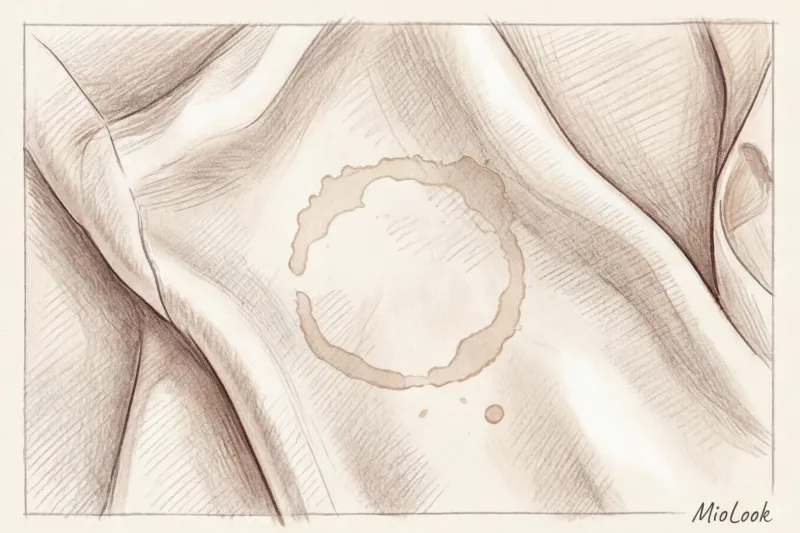
Three years ago, 40 minutes before an important formal event, my client's handheld steamer suddenly spat rusty water directly onto the chest of her emerald crepe de chine dress. For such intricate weaves, drops of hot water from a steamer can be fatal—they destroy the twist of the threads, leaving dull stains that even dry cleaning can't remove. That evening, only a hairdryer and the dim lighting in the room saved us.
So when to use steam and when to use contact heat?
- What is a steamer ideal for: slip dresses, complexly cut blouses with lots of drapery, flounces, ruffles, bias-cut skirts.
- Why you only need a dry iron: collars, stiff cuffs, and plastrons on classic blouses. Steam will never provide the crisp lines required. status capsule wardrobe for the office.
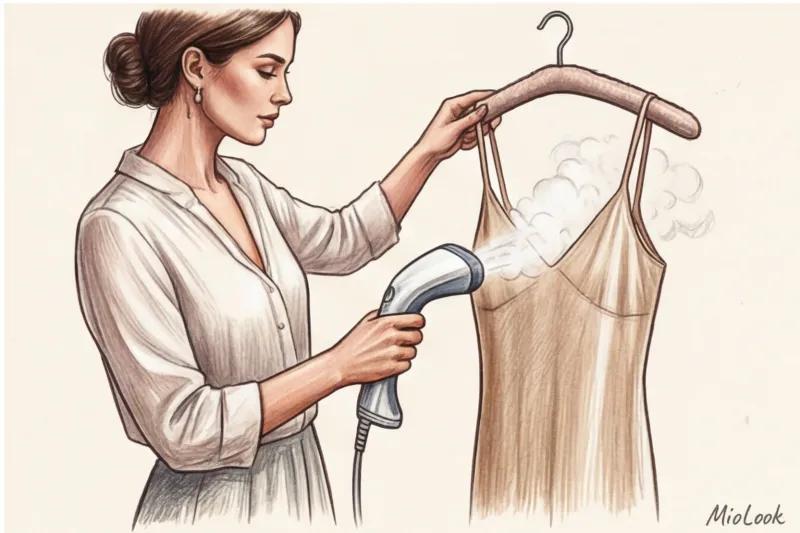
If you do choose steam, maintain a safe distance: the nozzle should be at least 15–20 cm from the fabric. Be sure to use a special mesh attachment to prevent accidental condensation.
Emergency Methods: How to Remove Wrinkles from Silk Without an Iron
What do you do if you've landed in a new city, unpacked your suitcase, and there's no good iron in your room? I often solve this problem by putting together images based on the theme of What should a woman wear to a business conference? , where time to get ready is always tight.
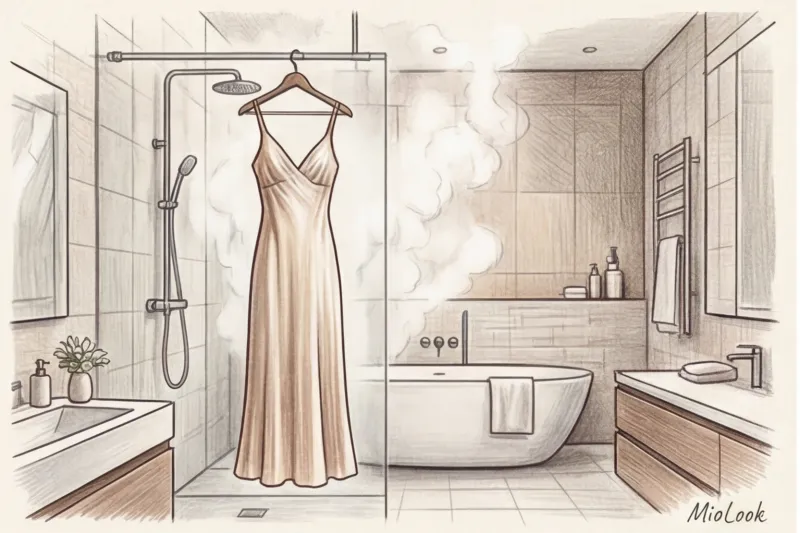
Steam method in the bathroom. This is a classic trick that works. Hang your silk garment on a hanger in the bathroom while you take a hot shower. Keep the door closed. The soft, diffused, moist air will relax the fibroin fibers for 15 minutes, and any slight creases will disappear under the fabric's own weight.
Fair Limit: This trick is absolutely useless for hard creases on thick silk like duchesse or taffeta.
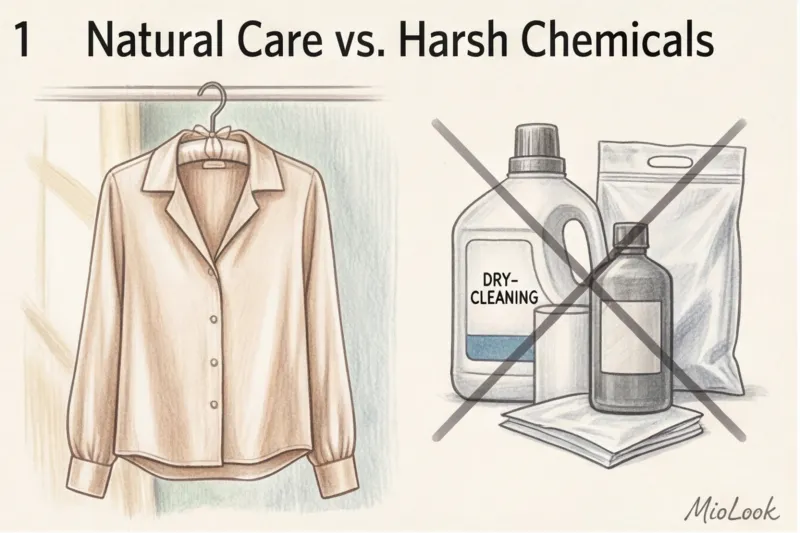
What you absolutely must avoid is using chemical sprays like "liquid iron." These often contain silicones and alcohols, which are great for straightening cotton but will leave permanent greasy marks on natural silk.
The best cure is prevention. When packing silk, never stack it. Place sheets of tissue paper between the garment and roll it into a loose roll. The paper will absorb excess friction, and the lack of creases will prevent creases.
Your perfect look starts here
Join thousands of users who look flawless every day with a smart wardrobe manager.
Get access — €0.99 onceCommon mistakes that turn premium silk into a rag
Over the years of sorting through wardrobes, I've seen hundreds of ruined items. And almost always, the cause was one of these four mistakes.
1. Iron on the front side.
Even at the lowest temperature, the soleplate of the iron seals microscopic fluff into the fabric. This results in shiny, glossy, and tarnished areas appearing along seams, darts, and hems. Silk should only be ironed from the reverse side.
2. Stretching fabric cut on the bias.
Iconic slip dresses are cut diagonally (at a 45-degree angle to the grain). As premium brand artisans point out, if you pull this fabric under the weight of an iron, the hem will permanently ripple and the side seams will become crooked. Only apply it lightly, without tension.
3. Using steam on dry silk.
Instead of ironing a uniformly damp garment with a dry iron, many people try to "break through" dry silk with a powerful blast of steam. The result? Uneven shrinkage and those water spots.
4. Trying to smooth out creases in trousers without any technique.
Silk palazzo pants don't tolerate razor-sharp creases. If you try to iron them without a stiff iron, you'll simply burn the creases. Silk is designed for soft, flowing shapes.
Checklist: Storing Silk After Ironing
Your work doesn't end when you turn off the iron. Proper storage determines the lifespan of an item and how often you'll need to iron it.
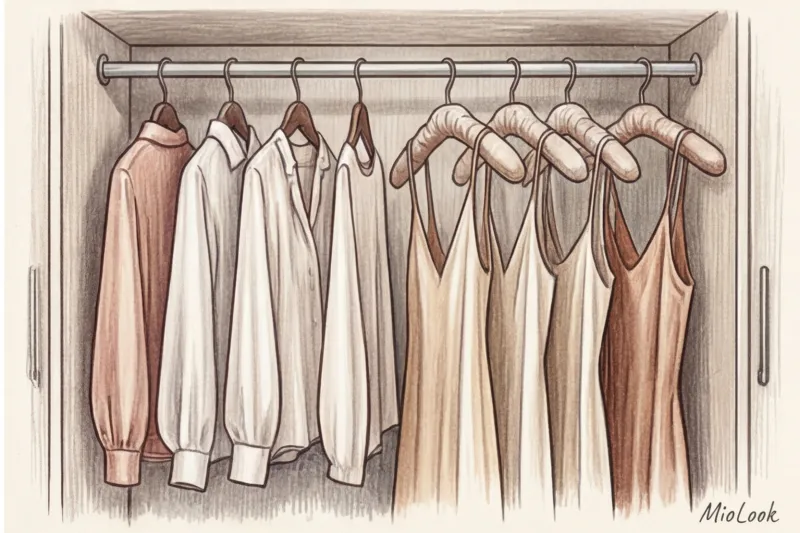
Here's my personal checklist that saves clients half the time they spend getting ready in the morning:
- Cooling down rule. Never wear an item immediately after ironing or steaming. Silk should be left to dry for at least 30 minutes. The hot, damp fibers will immediately create new creases as soon as you step into the machine.
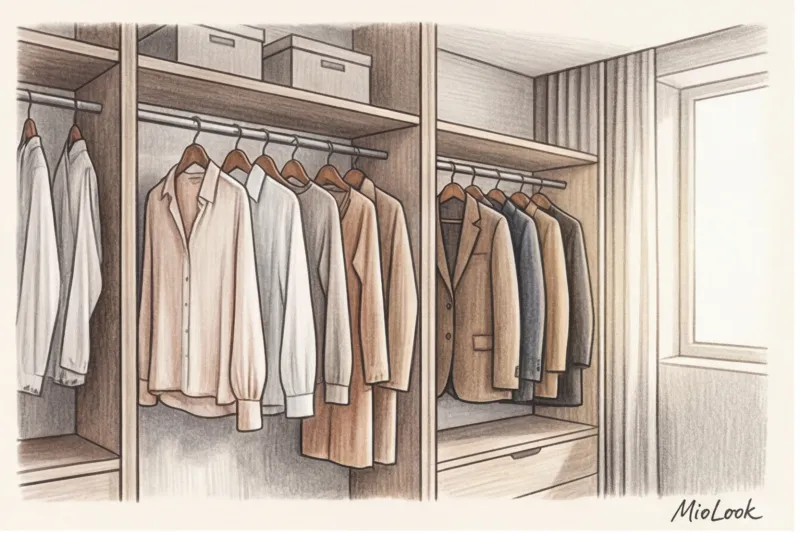
- Down with thin metal. Wooden hangers can have micro-hooks that can pull the threads, while thin metal hangers from the dry cleaners can leave unsightly "bubbles" on the shoulder line. Your only choice is soft satin or thick velvet hangers with anatomical shapes.
- Freedom in the closet. Silk needs to "breathe." If blouses hang so tightly that it's difficult to push them apart by hand, they'll wrinkle simply from the pressure of their neighbors on the rail.
To avoid filling your closet with wrinkle-prone items, I always recommend a seasonal detox. If you're having trouble organizing your clothes, try MioLook — This smart AI assistant lets you digitize your wardrobe. You'll see all your silk tops on your smartphone screen and plan your looks in advance, without having to sort through physical items or wrinkling them unnecessarily.
Caring for silk requires a little more thought than ironing a cotton T-shirt. But it's a small price to pay for the incomparable feeling of confidence that comes from the touch of cool, radiant, flawlessly smooth fabric against your skin.