Over 12 years of working as a personal stylist and textile expert, I've heard the same disturbing question hundreds of times: "Sofia, am I really forbidden from wearing my favorite black now, and should I buy a strand of pearls?" For years, society has been feeding us stereotypes about how after a certain age we should immediately switch to pastel colors and tuck our jeans away. But the truth is, this rule is hopelessly outdated.
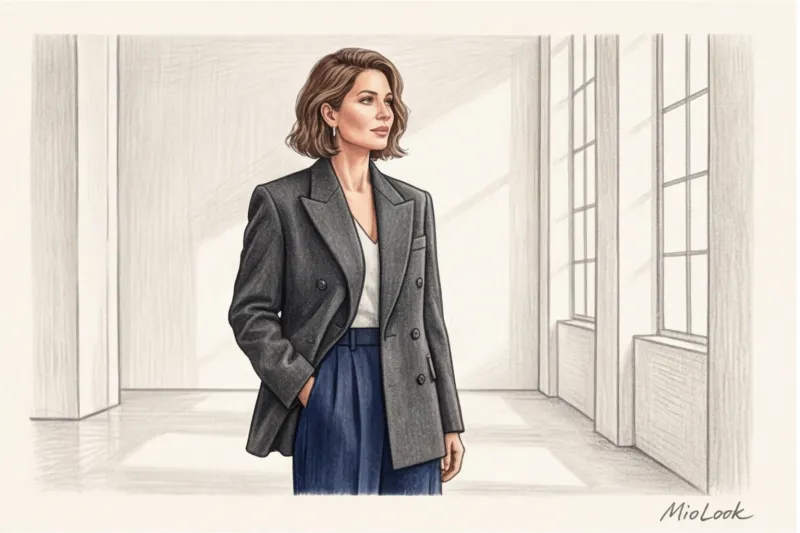
In fact, clothes that make a woman look older , does this not at all because of the "wrong" shade or bold print. The problem lies in the physics of the fabrics, the loss of shape stability, and the disruption of the silhouette's architecture. We discussed global shifts in fashion in more detail in our a complete guide to anti-trends in clothing , but today I want to dig deeper and explain the mechanics of how things add an extra decade to our lives.
Silhouette architecture: how clothes age a woman
The way we perceive our age is largely a matter of geometric interpretation. According to the WGSN Institute of Color and Trend Forecasting, macrotrends in silhouettes change approximately every seven to ten years. When a woman continues to wear a cut that was at the peak of popularity 15 years ago, others' brains subconsciously register: "She's stopped evolving, her time has passed." This is precisely how outdated patterns work.
Think back to the 2000s: total slim fit, clinging garments that accentuated every curve. The problem with clinging is that it acts as a magnifying glass for any age-related changes in the figure. The semi-fitted cut, which is fashionable today (with at least 3-4 centimeters of air between the body and the fabric), creates a lifted effect. The fabric supports your frame rather than clinging to your curves, allowing others to only guess at your true contours.
"The secret to a lifting effect in clothing is always the presence of air between you and the garment. As soon as the fabric begins to dig into the body, we get a visual marker of fatigue and heaviness."
To be fair, this advice doesn't work for everyone: if you have a pronounced "romantic" body type according to the Kibbe system (sloping shoulders, prominent hips, and a bust), a tight, men's oversize will make you look bulky. In this case, we choose fitted but still firm, shape-defining pieces, eschewing hyper-volume in favor of structure.
5 Key Anti-Trend Wardrobe Items After 40
When auditing the wardrobes of female executives, I regularly find the same items. These items seem comfortable, "basic," and safe to their owners. But in reality, they act as a negative investment in their image. Let's look at specific examples and find smart replacements.
Flimsy knits and shapeless waterfall cardigans
Thin viscose, cheap acrylic, and fine-knit polyester are the main enemies of elegance. These cardigans with asymmetrical, sloping edges ("waterfalls") not only went out of style back in 2015, but also treacherously highlight the slightest folds on the back, the contours of underwear, and the texture of the skin.
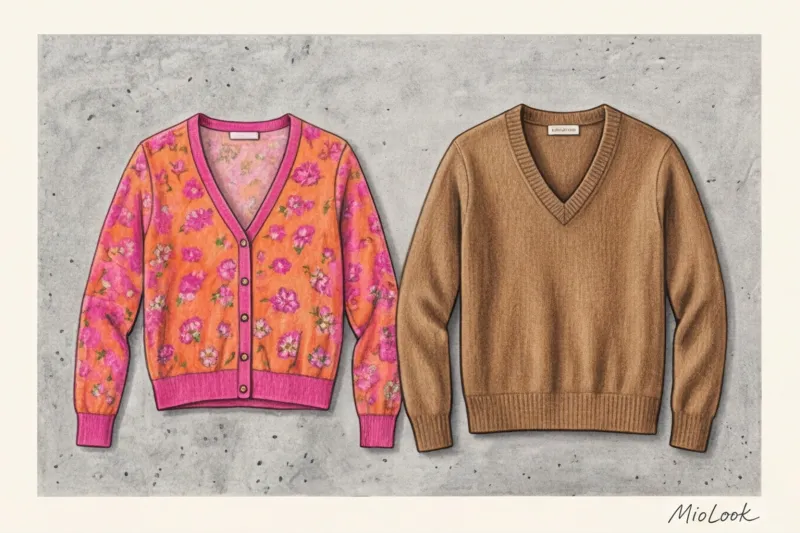
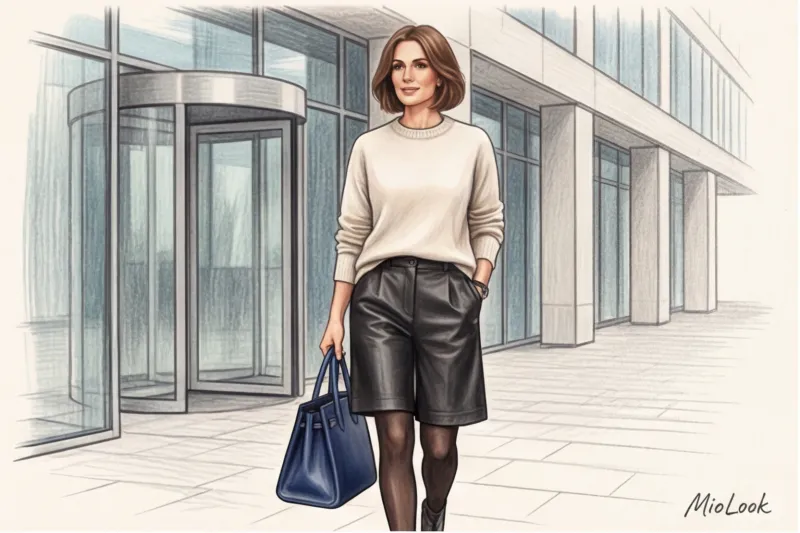
Alternative: Choose a thick, smooth-knit cotton or merino jersey. A structured, chunky-knit cardigan with a V-neck and large buttons is the perfect alternative to a shapeless sweater. It should hug the shoulders and end either at the waist or cover the crotch, but not cut into the widest part of the thigh.
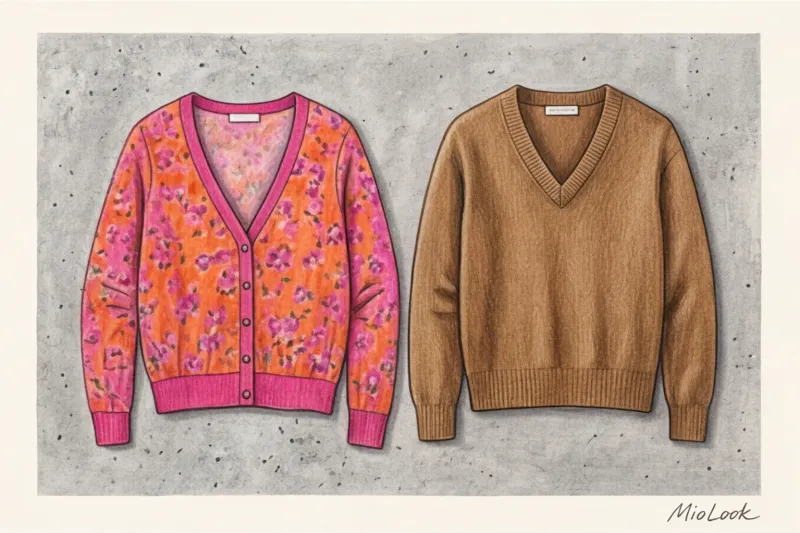
Slim, cropped jackets that fit the figure (short cut)
One day, a client named Elena (42, a financial director) came to see me. For important negotiations, she wore her favorite, insanely expensive Italian suit, purchased 10 years ago. The jacket was narrow, short, with tiny lapels. In it, she looked less like a high-status boss and more like a schoolgirl who had outgrown her uniform. The cropped cut visually enlarged her hips and made her shoulders appear hunched.
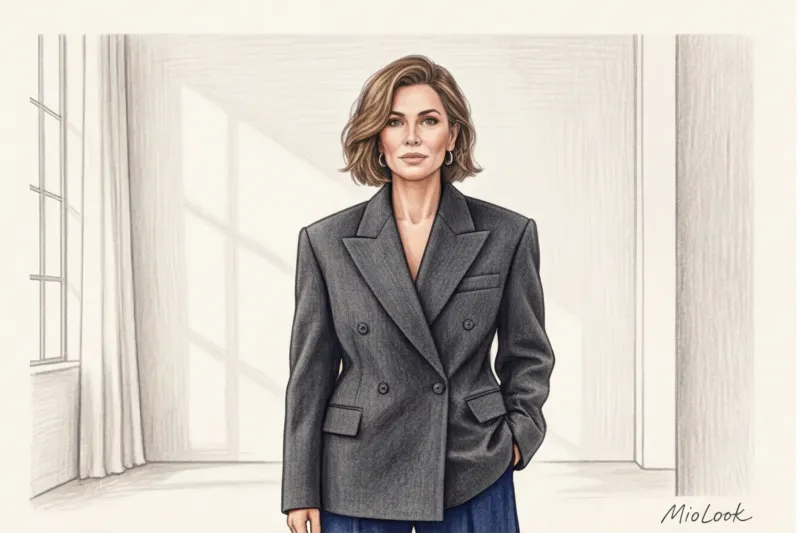
Alternative: Straight-cut, masculine-style jackets or slightly fitted styles (hourglass blazers) are recommended, but they must have a defined shoulder line and a full length that covers the buttocks. The right jacket literally brings the figure together, creating the illusion of perfect posture.
Low-rise jeans with lots of embellishments
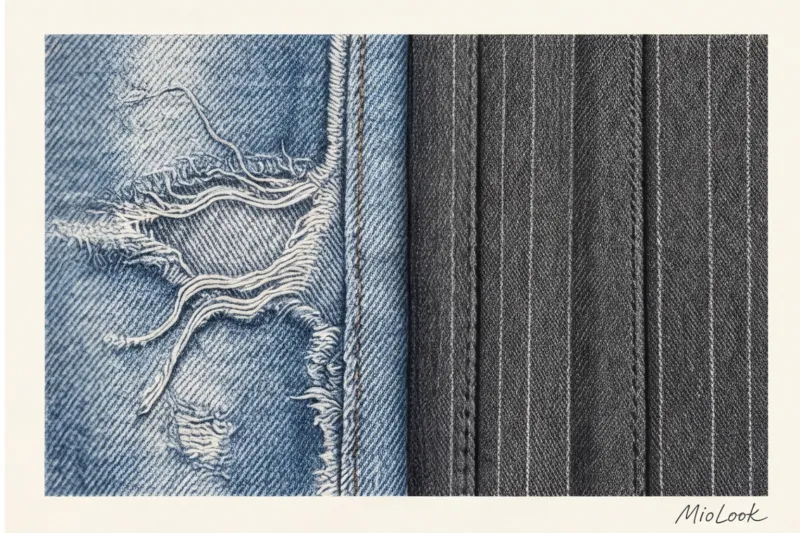
The fit of jeans is a pure mathematical exercise in proportion. A low waist visually elongates the torso and dramatically shortens the legs. Add rhinestones and pronounced frayed thighs (which create a widening effect), and you have a recipe for a lower-body look.
Alternative: Straight or wide-leg jeans with a mid- to high-rise. Look for denim with a minimal elastane content (no more than 1-2%) or 100% heavyweight cotton. Yes, they take a couple of days to break in, but they'll hold their shape for years, cinching your stomach and buttocks like a good corset.
Your perfect look starts here
Tired of wondering what really suits you? Join thousands of women who look flawless every day with smart recommendations.
Get access — €0.99 onceTextile Aging: How Wear and Tear Adds Age to Fabrics
Many people forget that clothing physically ages. As a fabric expert, I'd like to draw your attention to polyurethane fibers—the same elastane (spandex) that makes clothes stretchy. The problem is that elastane has a finite lifespan. Contact with body heat, sweat, and laundry detergents causes it to degrade after about 3-4 years of active wear.
Research by textile laboratories proves that cheap mass-market knitwear loses up to 40% of its fit density (the so-called recovery stretch (The ability of a fabric to return to its original shape after being stretched) after just 10 washes. The garment begins to bubble at the elbows and knees. This "sagging" effect is subconsciously perceived by others as age-related sagging.
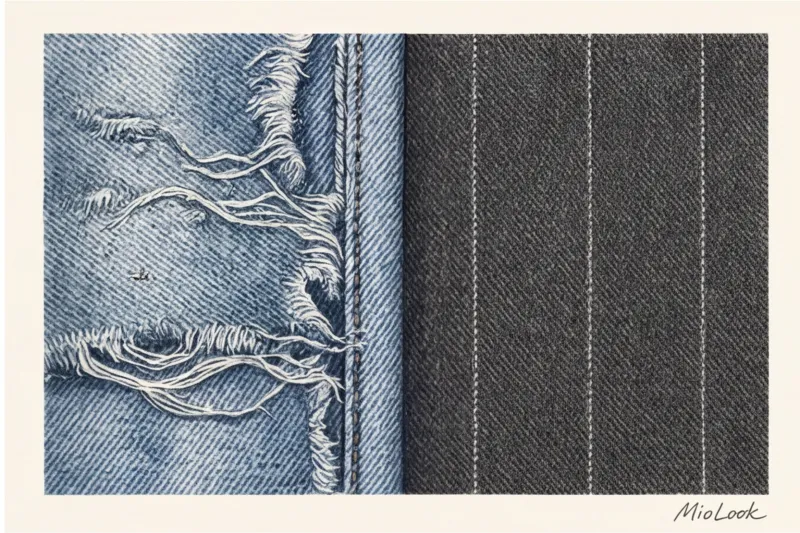
Also, pay attention to pilling and pigment fading at the seams. Our brains associate unkempt fabrics with fatigue and poor grooming. Investing in a sustainable approach—buying fewer items but made from dense 100% wool, cashmere, or silk—has a powerful lifting effect solely due to their texture.
The Fast Fashion Paradox: Why "Youthful" Microtrends Age People
Herein lies the most subtle, counterintuitive law of style. Trying to look younger, many women head to the teen sections of mass-market stores for cartoon-print T-shirts, ripped jeans, and neon tops. And they get the exact opposite result.
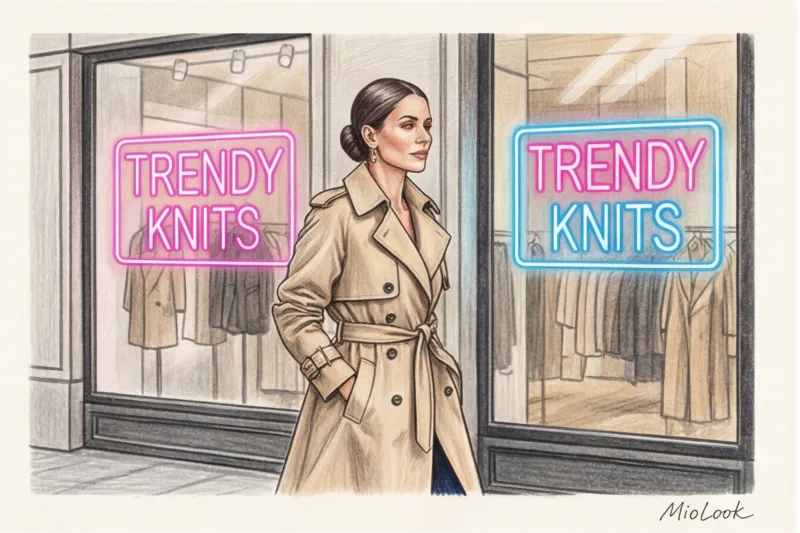
According to McKinsey & Company's 2024 State of the Fashion Industry report, the life cycle of microtrends has shrunk to just a few months. By wearing a hyper-trendy, infantile garment, a woman doesn't "borrow" its youth. A stark contrast arises: against a backdrop of frivolous clothing of dubious quality, a mature, noble face appears older. The garment functions as a marker of inappropriateness.
A true anti-aging effect comes from what many mistakenly consider "boring": a perfect beige trench coat, impeccably tailored wide-leg trousers, and a crisp, crisp white shirt. When the cut is modern and the fabric is luxurious (even if only visually), you convey status, confidence, and timeless luxury.
A smart wardrobe on your smartphone
Try MioLook for free: A smart AI stylist will help you digitize your clothes and create stylish looks from what's already in your closet.
Digitize your wardrobeA stylist's checklist: how to audit and eliminate anti-trends
To figure out which clothes are truly aging you, you don't have to throw out half your closet. Conduct an audit using my professional method, which consists of three simple tests.
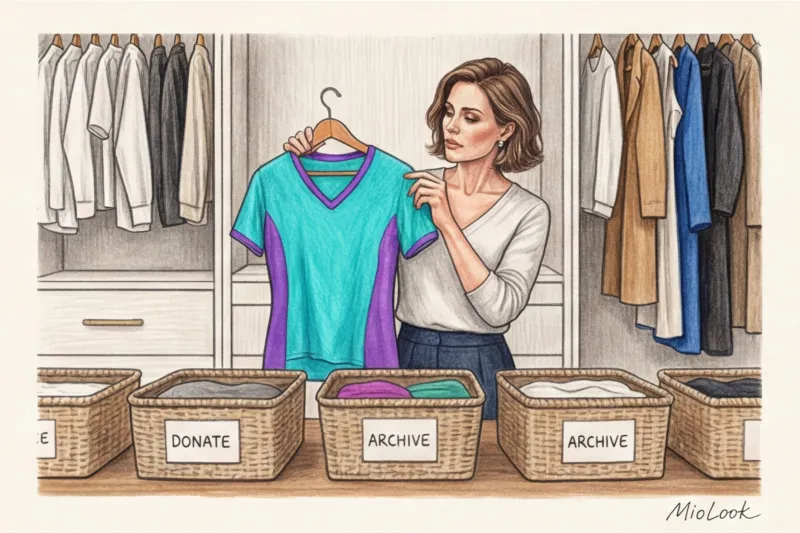
- Tactile density test. Grab the garment by the shoulder seam and tug gently. If the seam is loose and the fabric feels like gauze, the garment won't hold your figure. Get rid of it without regret.
- 5 year rule. Ask yourself: "Was this item ultra-fashionable 5-7 years ago?" If so (for example, skinny jeans with ripped knees or sneakers with a hidden wedge heel), then its macro-trend life cycle is over. Basic items last longer, but micro-trends fade quickly.
- Air test. Put the garment on and sit on a chair. Look at your waist, hips, and sleeves at the forearm. If the fabric is stretched so tight that the contours of your underwear or skin are visible, you need a larger size or a different cut. Looseness is your best friend.
Smart wardrobe management without age-related mistakes
Rejecting anti-trends isn't a transition to dull, drab fashion. It's a shift toward consciously choosing the design of your clothes. You stop buying things that ruin your figure and start investing in your individuality.
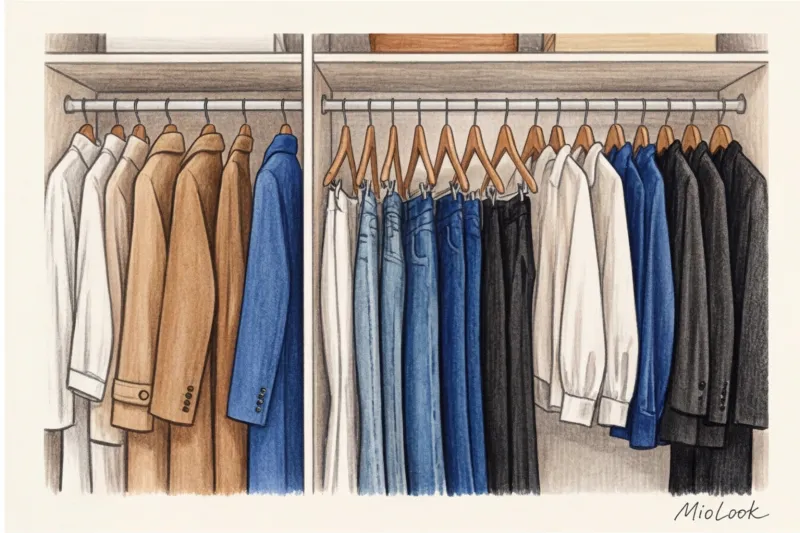
In practice, visualization helps me keep track of the relevance of things and avoid impulse purchases (when my hand reaches for that flimsy cardigan on sale again). I always recommend my clients use Smart wardrobe features in the MioLook app When all your items are digitized, you can clearly see your color palette, understand which textures are missing to create modern looks, and plan your capsule wardrobe without the risk of slipping into old-fashionedness.
Age isn't a reason to hide behind shapeless robes or try to cheat time with children's T-shirts. It's a reason to become more demanding about the quality of fabrics, the precision of patterns, and how your clothes represent your personal brand. Choose clothes that respect your body, and you'll always look flawless.