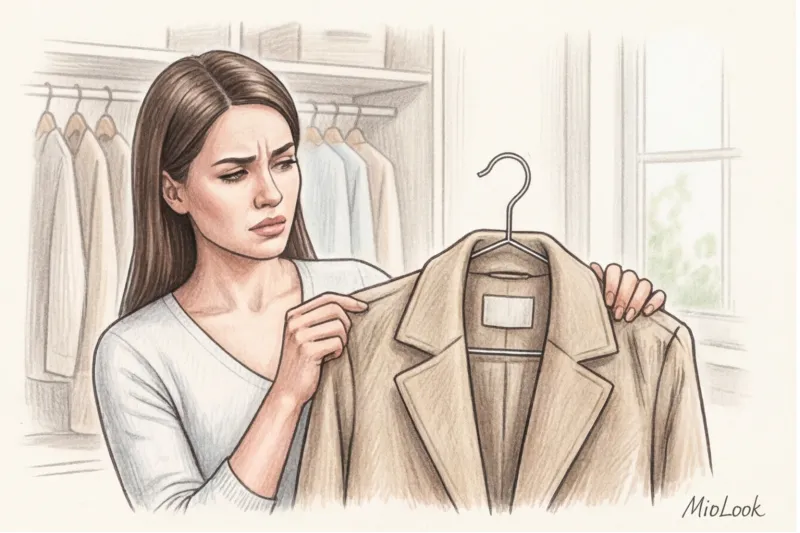
A year ago, my client was crying right there in my studio. She was holding a vintage ivory Yves Saint Laurent blouse—immaculate, flowing, bought at auction for a pretty penny. Or rather, it had been ivory before it spent nine months in the closet. Now, ugly yellow stains, reminiscent of old parchment, were spreading across the shoulders and collar.
"But Isabella, I did everything right!" she lamented. "I picked it up from the most expensive dry cleaner and hung it in the closet right in their protective bag!"
It was at that moment that I realized we needed to have a serious conversation about tissue physics. We'd already covered it, How to distinguish natural silk: stylist's tips , but buying an original piece is only 10 percent of success. The other 90 percent is what happens behind closed doors. If you don't know how to store silk items, your investment in a basic wardrobe literally vanishes into thin air.
The Anatomy of Status: Why Silk Requires a Beauty Routine, Not Just a Hanger
I always tell my clients: stop treating silk like just another fabric. Treat it like your hair.
From a textile chemistry perspective, natural silk consists primarily of fibroin, a protein whose structure is strikingly similar to human hair. It reacts to temperature fluctuations in the same way, dries out without moisture, and needs to "breathe" in the same way. Would you put a plastic bag over your head for months? Unlikely. So why do we do it with our best dresses?
According to the Drycleaning & Laundry Institute, it's the microclimate that deprives silk of that pearly glow we pay hundreds of dollars for. Caring for your high-status items isn't a boring household chore. It's an extension of the ritual of self-love and respect for your choices.
The Hidden Enemy in the Closet: The Main Reason Silk Yellows
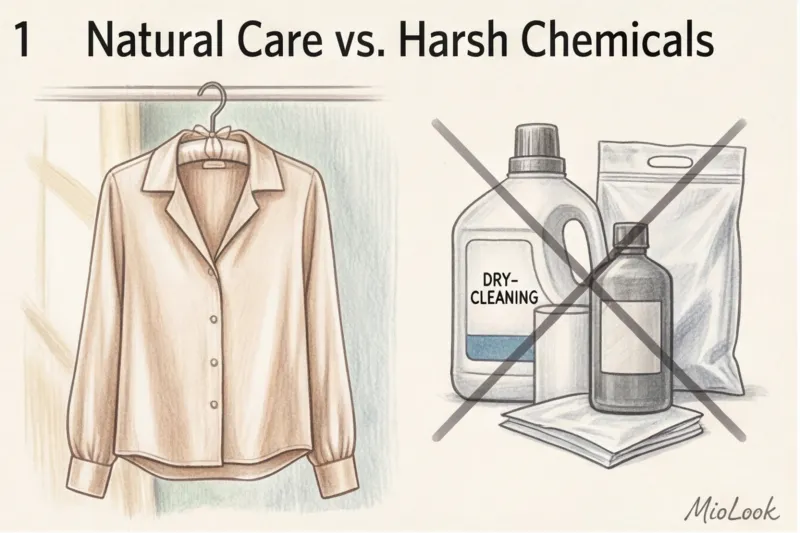
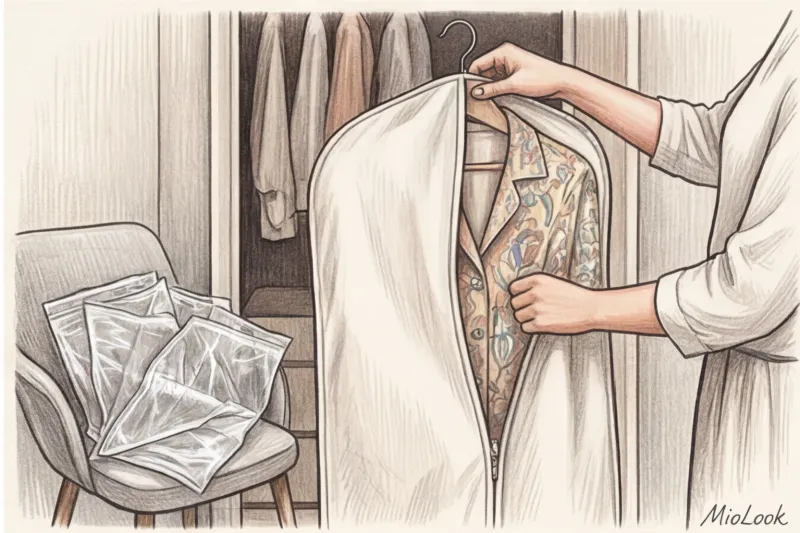
It's time to debunk the most dangerous myth about clothing care. It goes like this: Dry-cleaned items should be stored in the bags they were delivered in to protect them from dust..
This isn't protection. It's slow tissue destruction.
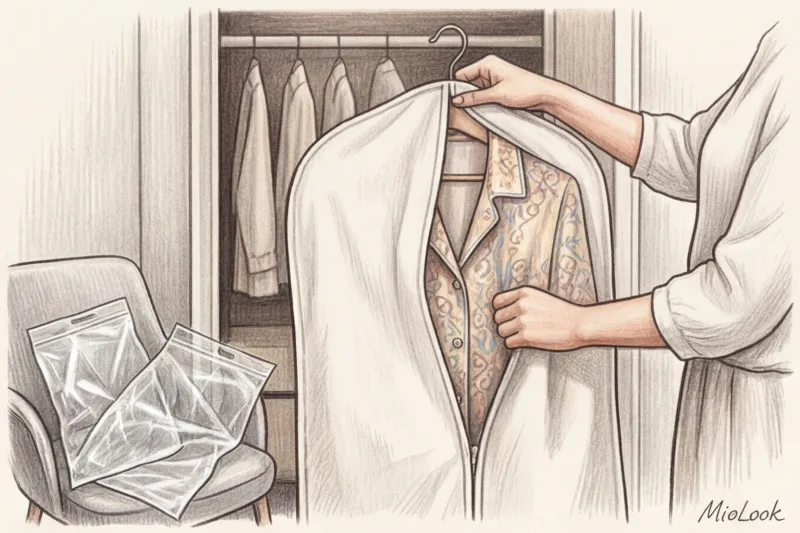
Polyethylene covers emit BHT (butylated hydroxytoluene) gases. In the confined space of a closet, these gases react chemically with cleaning product residue and microscopic moisture. The result? Irreversible yellowing of the fibroin in just a few months. That's exactly what happened to that YSL blouse.
The second invisible enemy is your perfume and deodorant. Even if the item appears perfectly clean in the evening, microdroplets of alcohol and perfume oils remain between the fibers. Over time, they literally "burn" the silk, making it brittle. Therefore, closed plastic containers are the worst storage option. They create a greenhouse effect, where chemical processes are tripled.
Your perfect look starts here
Join thousands of users who look flawless every day with a smart wardrobe manager. Digitize your clothes once and for all.
Get access — €0.99 onceHow to Store Silk: Basic Rules and Styling Formulas
Proper storage of silk items is all about space. Silk hates being cramped. If your shirts are hanging so tightly that you have to force yourself to remove one, the fibers are constantly rubbing against each other, losing their smoothness.
My favorite formula for an investment wardrobe is:
Breathable cotton + darkness + free space = eternal youth of the fabric.
Use only undyed cotton or linen trunks. If you're digitizing your closet through MioLook , make it a rule: items with the status "in the archive for the season" should be packed according to this formula.
Hanging is not allowed: where to put the comma?
Not all silk is created equal. How you store your garment depends on its cut and weight.
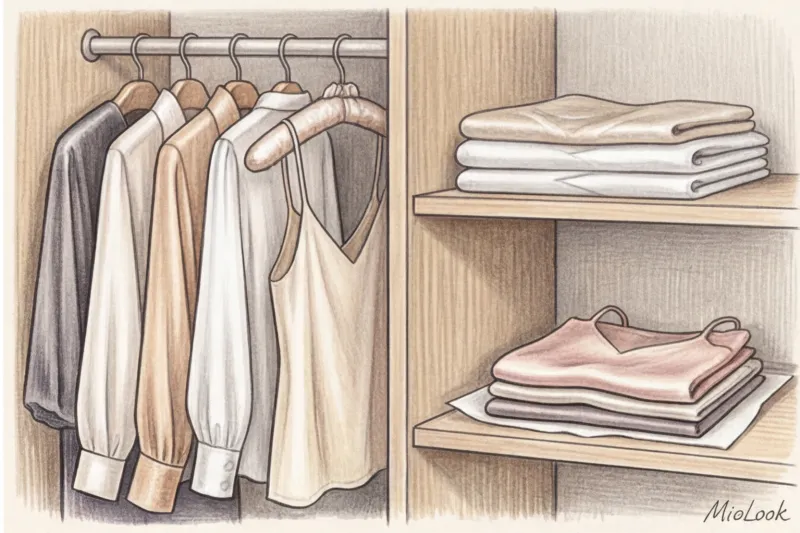
- Just fold: Heavy bias-cut slip dresses and silk knits. If you hang them on hangers, the threads will stretch under their own weight, permanently losing their shape. Fold them on shelves, placing acid-free tissue paper between each fold to prevent creasing.
- Just hang: Light silk blouses, classic shirts and flowing skirts.
The Perfect Silk Hanger: My Personal Top
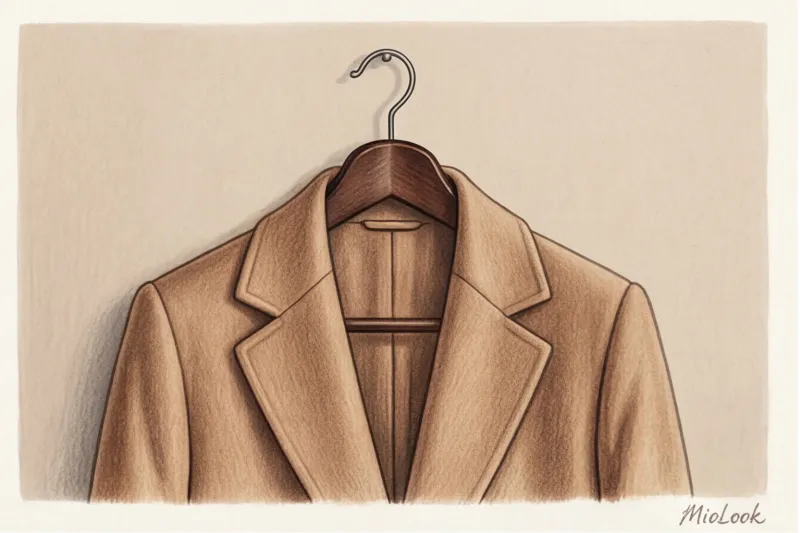
Over 12 years of experience, I've conducted dozens of test drives of wardrobe equipment. Throw away thin metal hangers from the dry cleaner immediately—they'll deform the shoulder seam in a couple of weeks. Unsanded wood will leave micro-snags.
For the delicate shoulder lines of blouses, there's nothing better than soft satin hangers (padded hangers). Yes, they take up a little more space, but they're a safety net for your garment. Velvet (flocked) hangers are great for preventing deep necklines from slipping, but there's a catch. Fair warning: Cheap flocked hangers leave a dark, lint-free dust on light, smooth silk. If you have a white silk shirt, use only satin.
Protection from moths and insects without toxic odor
Several years ago, I was invited to sort out a wardrobe in an ancient palazzo in Florence. The client complained that moths ignored piles of cotton and synthetics, but methodically destroyed her cashmere and silk. Why?
Moths are gourmets. Their larvae feed exclusively on protein (keratin in wool and fibroin in silk). Cotton is simply inedible plastic for them. So, your most precious items are always at risk.
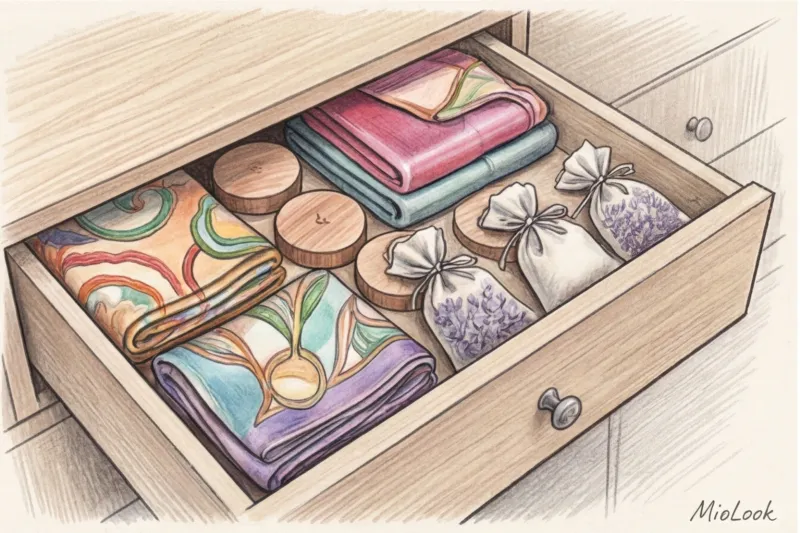
Forget mothballs if you don't want to smell like grandma's trunk. We use a Mediterranean approach: natural repellents. Round blocks of American red cedar, sachets of French lavender, dried cloves, and rosemary create a scent that moths simply can't stand.
The most important rule: Never drip essential oils onto sachets if they're stored near clothing. The oil evaporates and can leave permanent greasy stains on silk. Allow the wood and dried herbs to do their job naturally.
Fading and Humidity: Creating a Microclimate in Your Dressing Room
Did you know that wet silk loses up to 20% of its strength? And that direct UV rays destroy the molecular bonds in this fabric in just 3-4 months?
If your closet has a window, make sure it's covered with thick, UV-protective curtains. Silk should be stored in the darkest part of the closet. UV rays don't just fade the color; they make the thread itself brittle, like old paper.
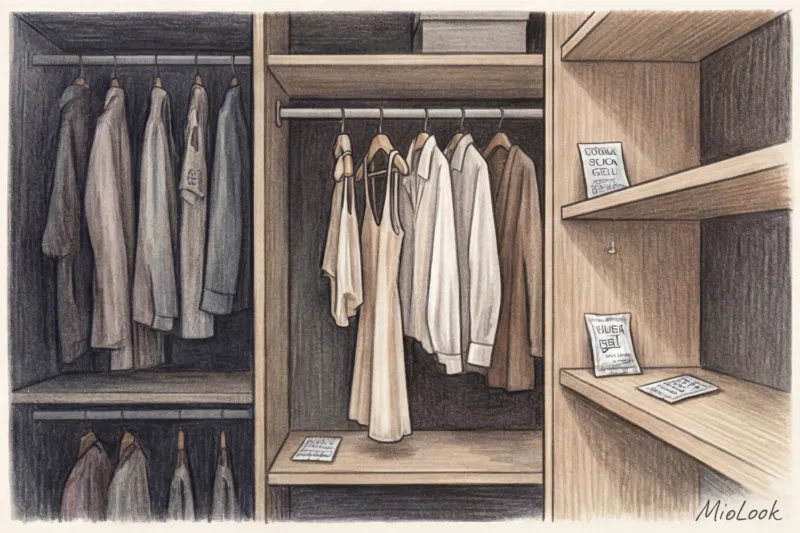
Humidity is another critical factor. The ideal level for a walk-in closet is 40-50%. High humidity can cause mold to form on protein fibers immediately. Dry air (especially in winter due to heating) can cause static electricity and damage fabrics. My secret trick: scatter silica gel packets (the kind you find in new shoe boxes) throughout your shelves and drawers. They're great for balancing the local microclimate.
Access to MioLook for €0.99 — one-time payment
A smart AI stylist will choose the perfect look for you. Free up time in the mornings and stop racking your brain over outfit combinations.
Get access — €0.99 oncePreparing for long-term storage during seasonal changes
When we put away our summer capsule wardrobe and prepare it for the cold weather, many people make a fatal mistake.
Rule number one: never, under any circumstances, put away an item you've worn even once. Even if you only wore it for a couple of hours. Invisible traces of sebum, sweat, or body lotion will oxidize over six months of storage, turning into permanent yellow halos.
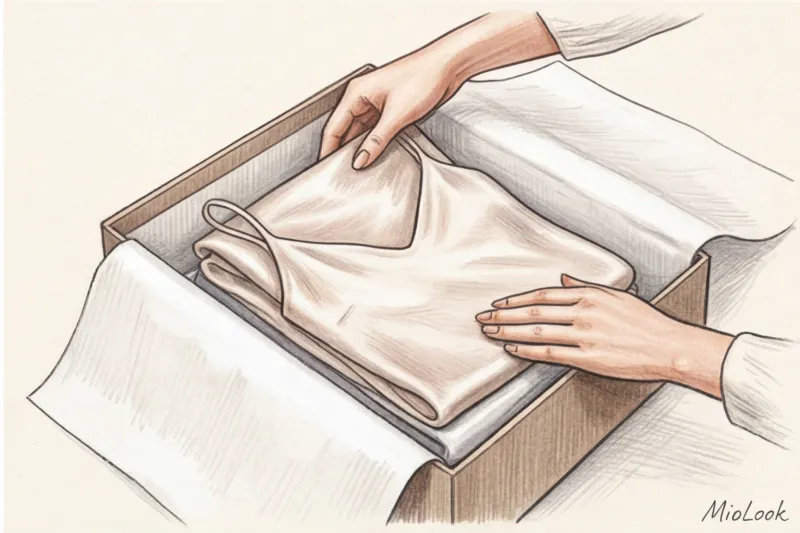
When packing silk dresses into trunks, choose rigid boxes made of archival-resistant cardboard, lined with the same acid-free paper. And most importantly, the location. Basements and attics are the worst enemies of an investment wardrobe. Temperature fluctuations there are catastrophic. Clothes should be stored in the same place where you live comfortably—in a room with a stable room temperature.
Checklist: A 15-Minute Silk Wardrobe Storage Audit
Theory without practice is dead. I suggest you take 15 minutes right now, go to your closet, and do a quick inventory. Trust me, this audit will save you hundreds of dollars in replacement costs.

- Step 1: Get rid of plastic. Remove and discard all plastic bags from the dry cleaner. Order breathable cotton covers.
- Step 2: Conduct a hanger casting. Replace thin metal wires with soft satin blouse hangers.
- Step 3: Save the knit and bias cut. Remove heavy silk dresses from hangers. Place them neatly on a shelf, interspersed with tissue paper.
- Step 4: Organize aroma protection. Place sachets of natural lavender or cedar pieces in drawers, making sure they don't touch light-colored fabrics.
Your style isn't just what people see on the street. It's about respecting your belongings even when the closet doors are closed. Give your silk the proper care, and it will reward you with years of impeccable, classy fit.