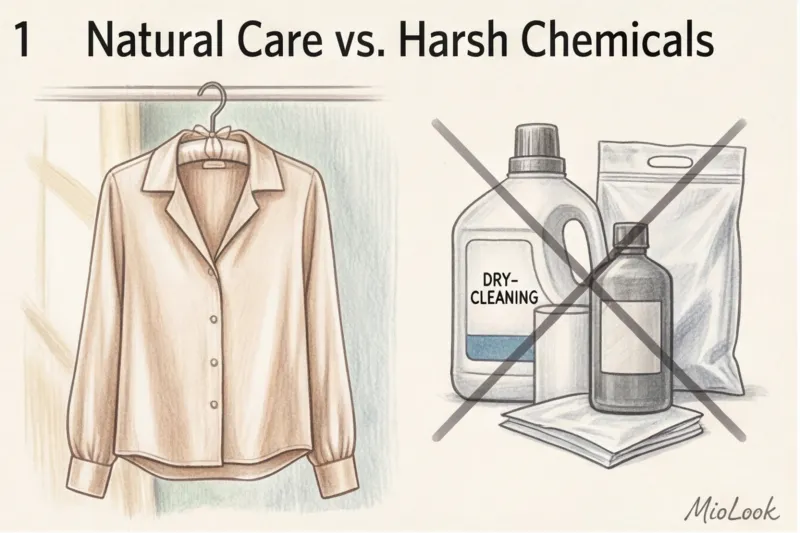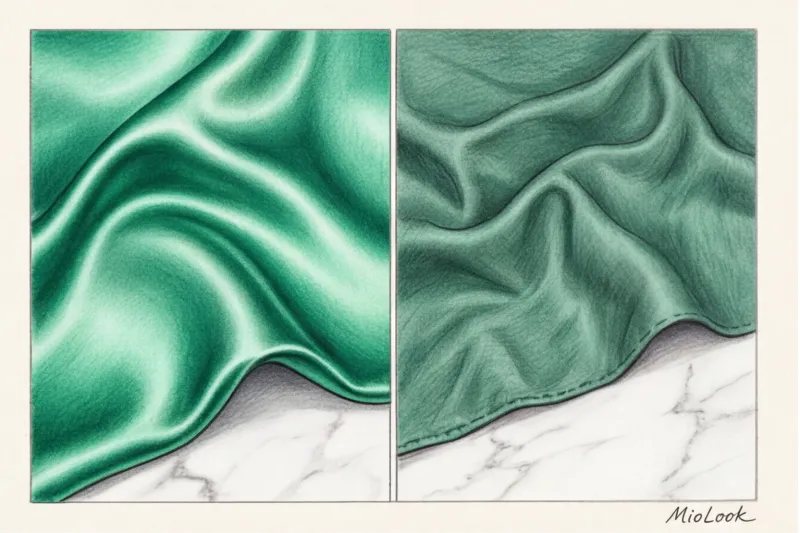
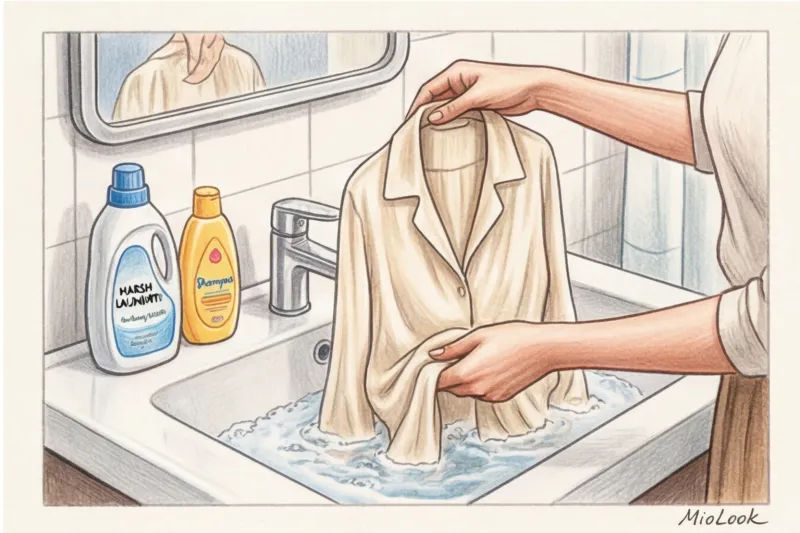
Recently, a client came to my studio with a ruined $500 silk La Perla slip. She was almost in tears: after just one home wash, the luxurious, flowing garment had turned into a stiff, matte rag, more like cheap polyester. "Julia, I washed it with the mildest baby shampoo, just like they recommended online!" she asked, perplexed. And it was at that moment that I had to explain to her the harsh chemicals of delicate fabrics.
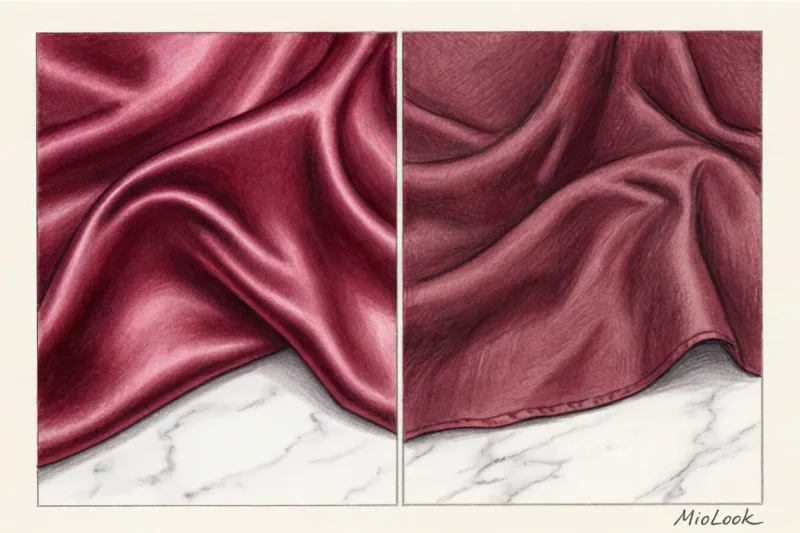
As an investment wardrobe expert, I often see expensive items lose their status not through wear and tear, but through improper care. Natural silk is an investment that should last for decades. If you're facing this problem and are looking for a proven solution, How to restore shine to silk , you will have to forget your grandmother's advice and look at this fabric through the eyes of a chemist and restorer.
By the way, before saving an item, make sure it's not a synthetic counterfeit. We've covered how to test fabrics for authenticity in detail in our comprehensive guide: How to distinguish natural silk: tips from a stylist If you have a 100% original in front of you, let's perform emergency resuscitation.
The Physics of Lost Glow: Why Status Fabric Fades
Silk's luster isn't due to some coating applied to it in the factory. The secret lies in the unique geometry of the fiber itself. Unlike round synthetic threads, silk thread (fibroin) is shaped like a triangular prism. When light hits this prism, it refracts and reflects at different angles, creating that deep, pearly glow that's impossible to fake.
According to the Textile Conservation Institute, if the smoothness of the fiber is microscopically damaged, silk loses up to 70% of its reflectivity. What happens if you wash it improperly? Imagine a hair under a microscope. Fibroin, like human hair, is made of protein covered in microscopic scales. In an aggressive environment, these scales open, bristle, and begin to cling to each other.
Instead of a smooth, light-reflecting surface, we get a loose texture. The light diffuses, the fabric becomes matte, stiff to the touch, and visually cheapens your entire look. What looked luxurious yesterday now looks like sloppy mass-market fare.
The main washing mistakes that kill pearl shine
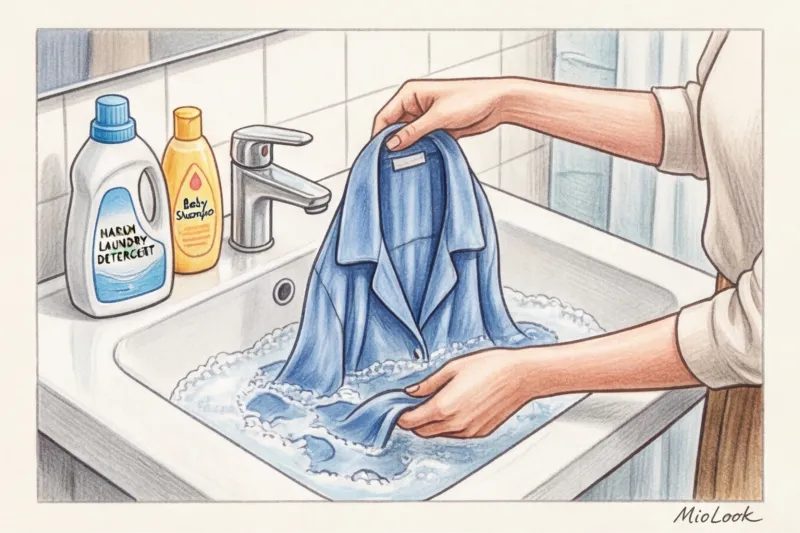
Over 12 years of working with premium wardrobes, I've compiled a personal anti-rating of the actions guaranteed to destroy silk. Mechanical friction ranks first. Even on the "delicate" cycle, the machine's drum abrades the damp (and therefore vulnerable) fibers.
The second problem is hard tap water. Calcium and magnesium salts adhere to the protein fibers, forming a whitish, matte coating. But the main problem lies in the choice of detergent.
The Baby Shampoo Myth: Why It's a Bad Idea
Perhaps the most harmful internet advice is to wash silk with "tear-free" baby shampoo. It sounds logical: if it's safe for a baby, it's safe for delicate fabrics. But physics disagrees.
"Baby shampoos are labeled 'tear-free' because their pH is artificially raised to 7.2–7.4 (slightly alkaline) to match the pH of human tears and avoid eye irritation. However, silk, like our hair, requires an acidic pH of around 4.5–5.5."
Alkali is the absolute enemy of protein structure. It's precisely because baby shampoo opens the fibroin scales, moisture evaporates, and the fabric instantly loses its elasticity and shine. If you don't take care of the fabric at this point, you're literally drying it out from the inside.
Your perfect look starts here
Join thousands of users who look flawless every day with MioLook. This smart assistant will help you organize your wardrobe and choose the right care for your items.
Get access — €0.99 onceHow to restore shine to silk: emergency resuscitation at home
If the problem has already occurred, don't rush to throw the item away. Since silk is a protein, we'll treat it the same way a professional trichologist treats damaged hair. Our goal is to close the fibroin scales, smooth the surface, and restore the threads' ability to reflect light.
Acid Bath: A Professional Method with White Vinegar
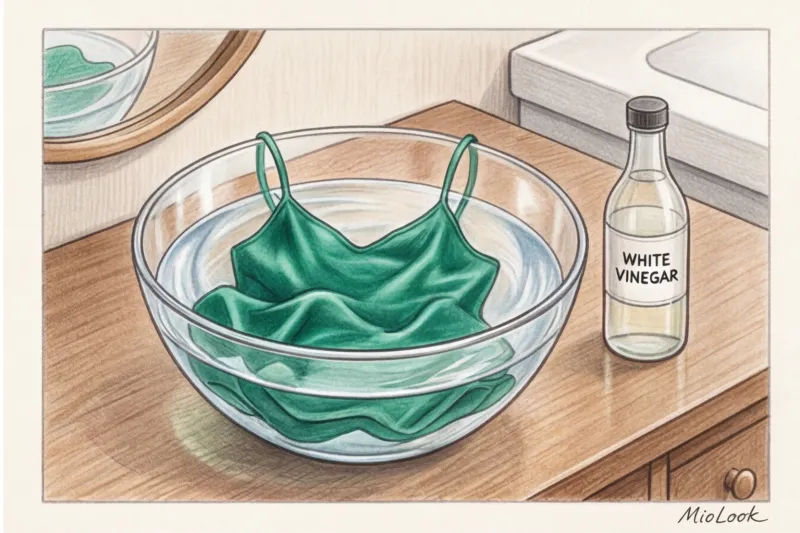
This is the gold standard for textile restorers. The addition of acid neutralizes residual alkali from powders and hard water, instantly "sealing" the fiber.
The exact protocol of actions:
- Pour 3.5 liters of cool water (no higher than 25–30 degrees) into a clean basin.
- Add exactly 1/4 cup (about 60 ml) white distilled table vinegar Please note: apple cider vinegar, wine vinegar, or balsamic vinegar are not suitable—they contain sugars and natural dyes that will stain light-colored fabrics.
- Immerse a clean, damp silk item in the solution for exactly 3–5 minutes. No need to leave it longer, as excess acid can be harmful.
- Rinse the item gently in cool water to remove the vinegar smell.
Glycerin rinse for dry fibers
Sometimes, after aggressive washing, silk not only fades but also becomes papery and crisp to the touch. In this case, acid alone isn't enough—moisturizing is essential.
Buy regular liquid glycerin at the pharmacy. Add 1 tablespoon to a basin of cool water during the final rinse. Glycerin acts as a powerful humectant, penetrating the fibers and restoring the fabric's fluidity and heavy elasticity that we love so much about premium silk.
Heavy artillery: restoring stiff and shrunken silk
I often buy vintage Hermès silk scarves at auctions. Sometimes they arrive in poor condition—clearly washed in hot water or with enzyme detergent. For such serious cases, I use a salon trick.
Get a quality moisturizing hair conditioner. It's very important to: there should be no silicones (Dimethicone) and bright dyes, otherwise you will simply cover the fabric with a film, which will then attract dust.
Dilute a teaspoon of conditioner in a basin of warm (not hot!) water. Submerge the silk and begin gently pressing the solution into the fabric with your palms. No rubbing. No wringing. Just gentle, pulsating movements, like a massage. Leave on for 10 minutes, then rinse thoroughly with cool water and a drop of vinegar.
Fair Limit: This is an SOS measure. Don't use these masks after every wear, otherwise the protein will become oversaturated and the fabric will become heavy and greasy.
Access to MioLook for €0.99 — one-time payment
Start creating your perfect capsule wardrobe with AI. Upload your reclaimed silk pieces and see what to pair them with.
Get access — €0.99 onceProper drying and ironing as the final stage of polishing
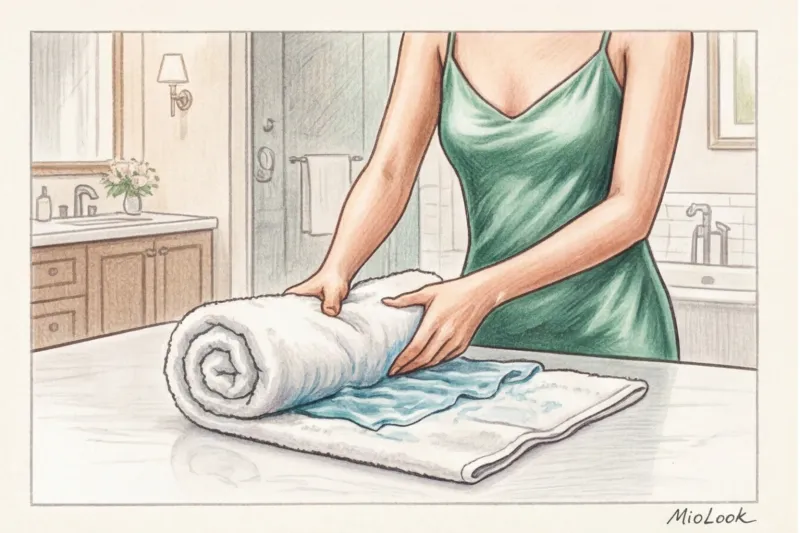
You can wash an item perfectly, but ruin it during the drying process. Wet silk is incredibly fragile. If you hang a wet blouse on a hanger, the weight of the water will stretch the fibers and permanently deform them. Drying in the sun? UV rays literally burn out the protein, making it brittle.
Use the "roll" technique. Place the wet item on a clean, thick, white terry towel. Roll the towel tightly together with the item and apply gentle pressure with your hands. The towel will absorb 80% of the moisture.
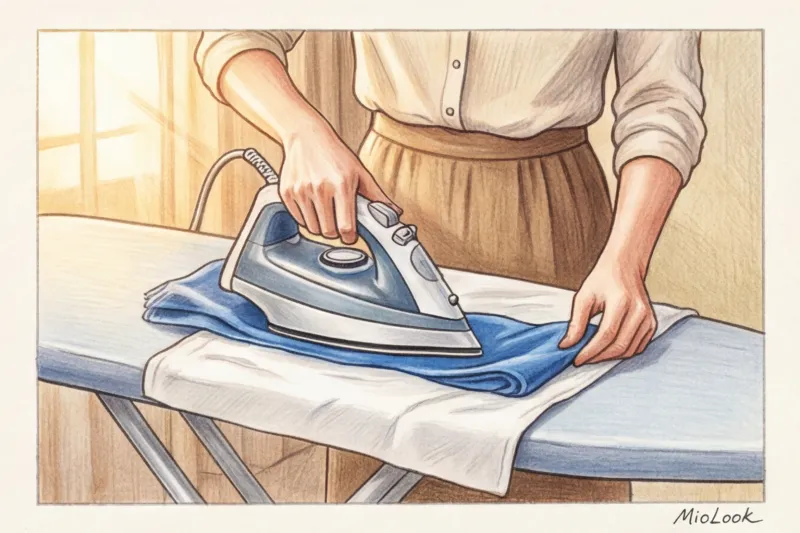
Silk should be ironed while it's still slightly damp—that way, the steam will lock in the smoothness of the fiber. And here I want to warn you about the biggest fear of all tailors: lashes.
Lasy — these are shiny, flattened marks left by a hot iron on seams and darts. This occurs when the temperature is too high, and the whites literally begin to "bake." To avoid this, iron your high-status item only from the inside out, at the lowest temperature, and strictly Iron it with a thin white cotton cloth. Cotton will absorb the heat, while silk will only receive safe warmth.
Investment Care Checklist: How to Maintain Your Status Fabric
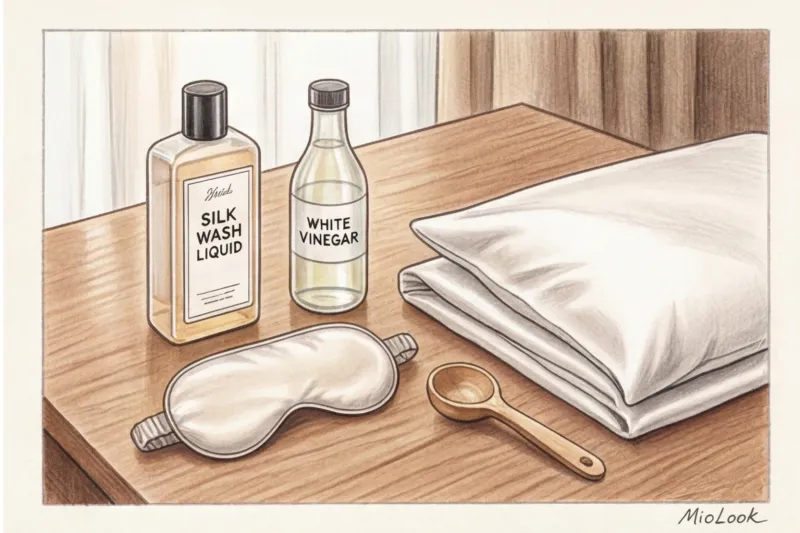
To avoid having to Google recipes for saving your favorite blouse again, save this basic care protocol for investment textiles:
- No enzymes. Read the detergent's ingredients carefully. Enzymes (proteases) are added to break down protein stains (blood, sweat, food). But silk is also a protein. Powder containing enzymes will literally "eat" your blouse.
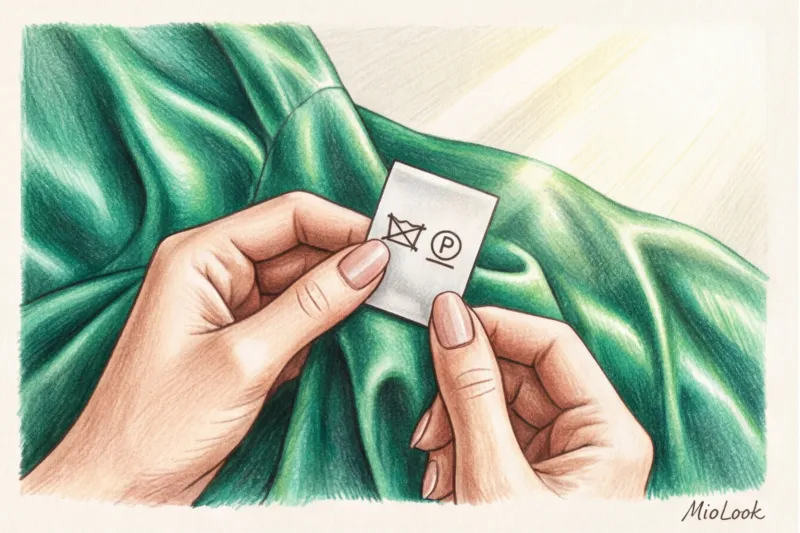
- Special means. Use only liquid gels labeled "for silk and wool." They have the correct pH, slightly acidic or neutral.
- Temperature conditions. The water should not exceed 30 degrees (slightly cooler than body temperature).
- Hand mechanics. Avoid rubbing. When washing, simply tumble the item in soapy water. Remember how much your item costs and treat it accordingly.
Summary: When a silk item can no longer be saved
I believe in proper care, but I'm also a realist. There are situations where chemicals or physics have caused irreversible damage, and even museum restorers are powerless.
If you tried to remove a stain with chlorine bleach, the silk won't just turn yellow—it'll suffer a deep chemical burn. The fiber will melt. The same applies to burns from a hot iron (you'll notice the characteristic smell of burnt hair). The baked protein cannot be restored, and the fabric will tear at the slightest tension.
But in 90% of cases, loss of shine is simply a consequence of open micro-scales and alkali deposits. High-quality natural silk is a fantastic investment that pays for itself over the years. Treat it with respect for its natural structure, regularly "pamper" it with acid baths, and it will respond with that flowing pearly shine that makes a truly luxurious look.